
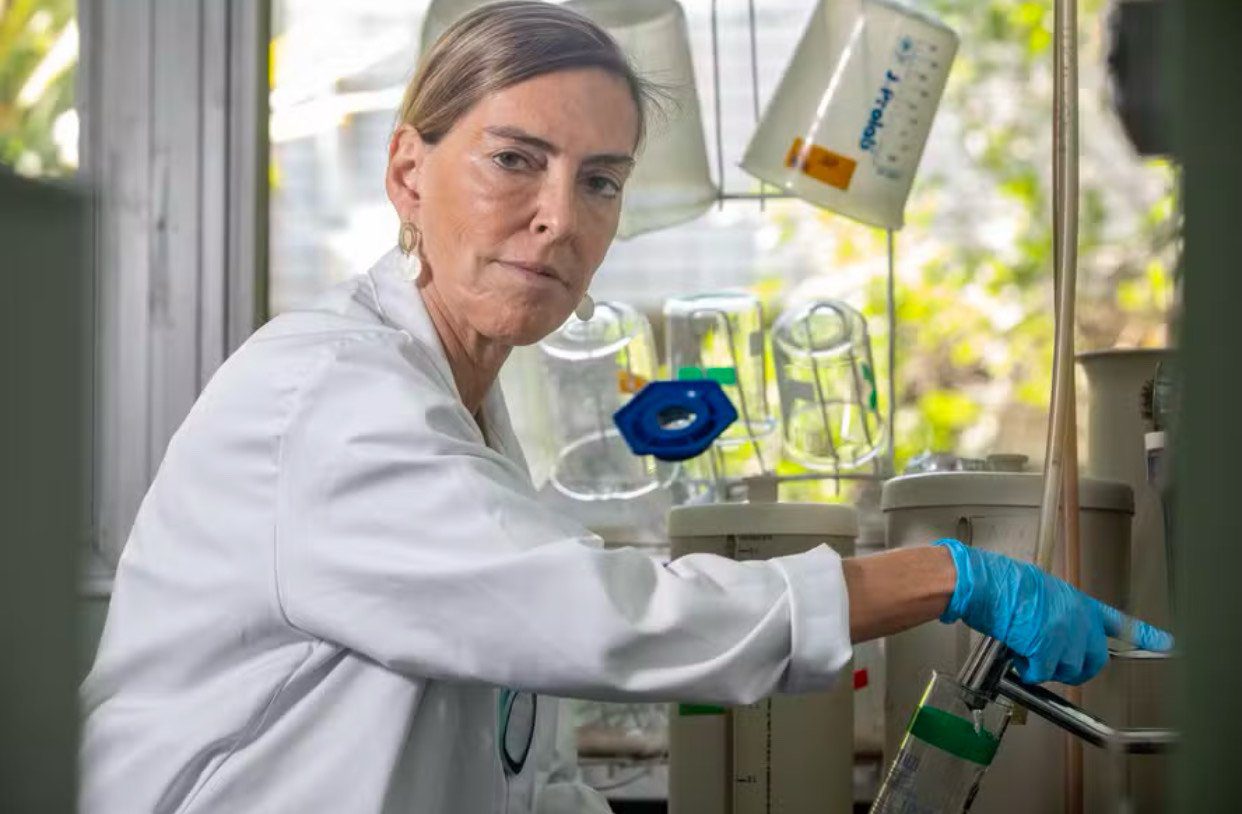
In September, a study presented by the Federal University of Rio de Janeiro (UFRJ), in Brazil, revealed a discovery that could change the lives of patients with spinal cord injuries. The research, conducted at the public university, uses a protein extracted from the human placenta called polylaminin.
The study represents hope for those who suffer from spinal cord injuries, a condition that can cause partial or total loss of limb mobility and, until now, has had no treatment capable of reversing the damage.
It is expected that, when applied to the injured area, polylaminin will stimulate nerves to create new pathways and enable partial recovery of movement. The experiment has already shown promising results in animals and small groups of volunteers.
The research is coordinated by the Carlos Chagas Filho Foundation for Research Support of the State of Rio de Janeiro (FAPERJ) and has been ongoing for over 20 years. It is currently in the testing phase but already raises great expectations for the future of medicine. The study also received support from Cristália Laboratory, which invested R$31 million (about US$5.6 million) in the project.
The goal is to recreate the natural protein laminin, produced during embryonic development and responsible for communication between neurons. The lab-produced medication aims to replace this protein, which becomes scarce in adulthood.
Researchers discovered that it is possible to recreate it from proteins extracted from the placenta, forming a kind of mesh that reestablishes communication between nerve cells. Polylaminin is applied directly to the injured area through a single surgery, preferably performed within 72 hours after the accident, which increases the chances of recovery.
Researchers are optimistic that, as the study progresses, people who have been paralyzed for years may also regain movement and mobility.
Recent studies have also shown that polylaminin, when combined with other therapies, can be effective in chronic spinal cord injury cases.
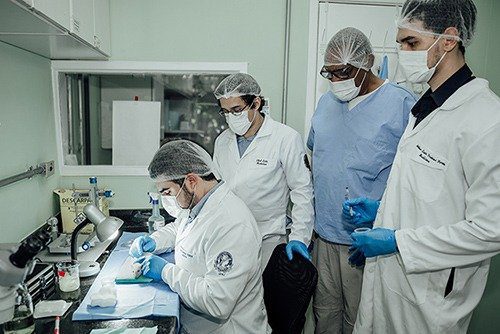
Results
The research is led by Tatiana Sampaio, biologist and researcher. In an interview with FAPERJ, she explained that the choice of polylaminin was due to its better cost-effectiveness, ease of production, and safety regarding the predictability of the cellular reaction, compared to stem cell therapies, which are more complex.
“We are simply imitating nature, since this protein is naturally produced by the body during the development of the nervous system,” she explained.
In August, a study published in Frontiers in Veterinary Science tested polylaminin on six paraplegic dogs. Even after surgeries and months of physiotherapy, the animals remained unable to move their legs.
After applying the protein directly to the lesion, four dogs showed improved balance and managed to take a few steps, while the other two had more modest progress. All were monitored for six months and showed no side effects.
In addition to animal testing, the medication was applied to an experimental group of Brazilian volunteers. In total, eight people participated in the study, carried out under academic protocols.
Among the patients, some fully recovered mobility, something considered unlikely without intervention, while others reported significant improvements, such as trunk control and the ability to walk with assistance.
Among the volunteers is Bruno Drummond, a banker who, in 2018, suffered a severe cervical injury after an accident that crushed part of his spinal cord. With his family’s authorization, Bruno participated in the experiment using cells extracted from the human placenta.
Initially, he had no movement in his limbs, but only two weeks after the procedure, he was already able to move a toe. Years later, Bruno regained much of his mobility and managed to resume an independent life.
In an interview with TV Globo, he said:
“Nowadays, I can move my whole body—of course, with some limitations. My leg is moving. I can stand, walk, dance, fly. I’ve regained my independence.”
Expectations
The National Health Surveillance Agency (Anvisa) reports that there is still no request for approval for the clinical use of polylaminin. So far, the results presented correspond to non-clinical stages, that is, laboratory tests and preliminary observations.
Among those following the progress with hope is Alexandre Costa, 51, who was shot in the shoulder during a robbery in 2018 and became paraplegic. After seven months in the hospital, he began his so-called “real battle,” the process of rehabilitation and adaptation to a new life.
Even with family support, he faced difficulties accessing treatment and public healthcare. The pandemic interrupted his rehabilitation efforts, and new health complications forced him to pause therapy more than once. “There are many problems that come with the ‘spinal cord injury package,’” Alexandre says.
Costa reports not only physical but also emotional effects of the injury: “I sank into depression, lost the will to live, and just let life carry me.”
In 2024, a new health complication led to the need for an ileostomy, which he makes a point of mentioning:
“These are different disabilities, but it’s important that people are aware […] the second can be avoided in some cases.”
Because of this, he now runs an Instagram profile (@falailesionado), where he seeks to raise awareness, share his experience, and receive feedback from other people with spinal cord injuries.
In an interview with Yuvoice, he says he watches research like UFRJ’s polylaminin study with caution but also hope:
“I’m hopeful that maybe I can be one of the volunteers. I haven’t signed up yet. I’m waiting for things to advance a bit more. But I’m optimistic, because even a small improvement in your condition, any gain in quality of life, is already a big step forward.”
The road to making the medication publicly available is long. First, laboratory studies must be completed and safety proven in animals. Then, with Anvisa’s approval, large-scale human trials can be conducted, evaluating both acute and chronic injuries. Only after full regulatory approval can the drug be marketed.
The progress observed in animals and volunteers provides an optimistic outlook for improving quality of life and the future of medicine. However, until the research is complete, there is still no definitive treatment for spinal cord injuries.