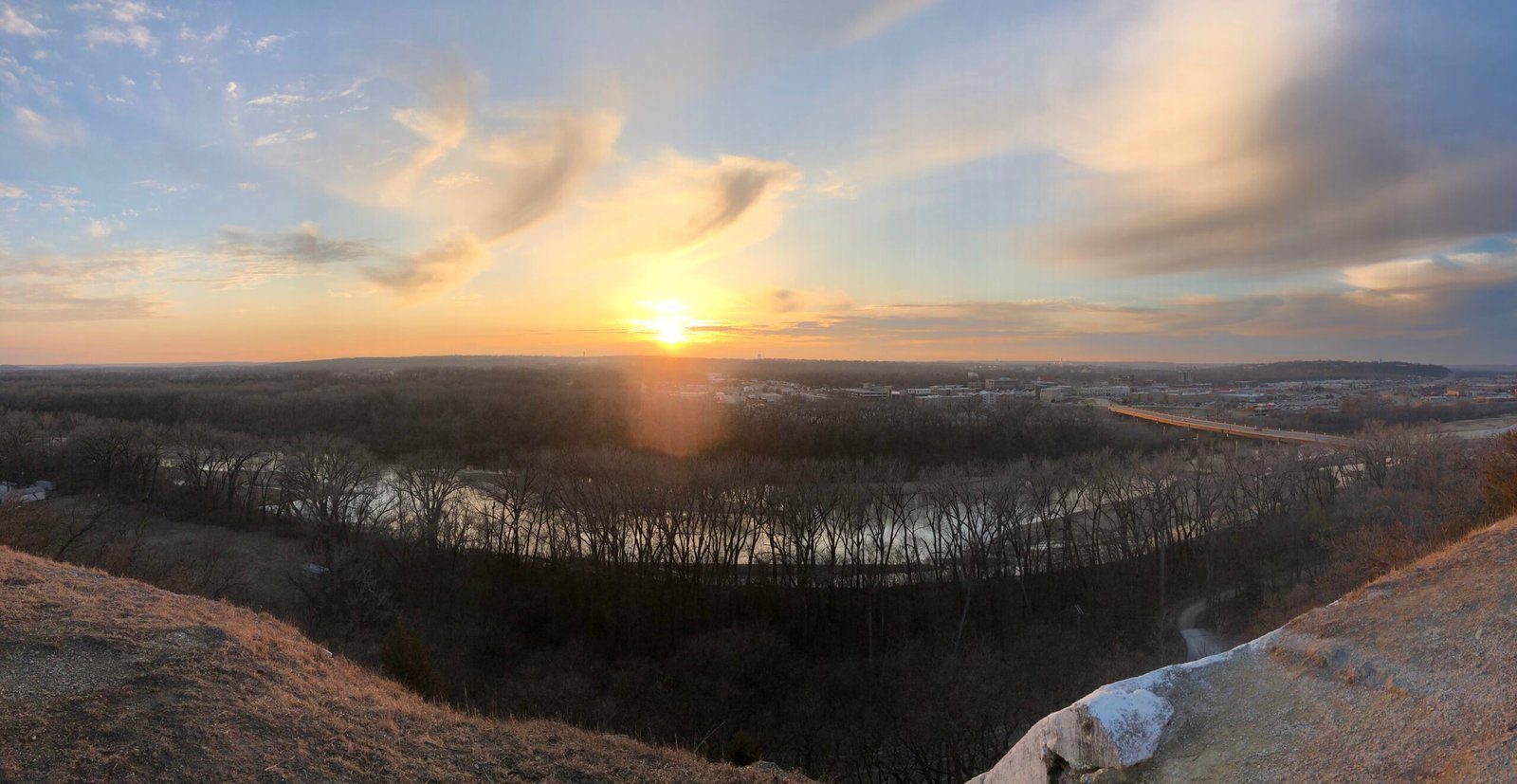
Urban Puberty

When I was 15, my family moved back from the rural Kansas countryside closer to my hometown of Manhattan, Kansas. 

Yes, I was born in Manhattan, Kansas. I was raised, however, 30 minutes east out into the countryside of Pottawatomie County. The first 15 years of my life were spent on several acres of land that would be considered a nontraditional homestead to urbanites, but was really just a simple house with a lot of land to roam.

At an already dynamic age, the Uhmerican Male Teen Years, we relocated closer to Manhattan, to just outside the city limits as they stood at the time. The cultural shock was rivaled in chaotic effect only by puberty.

On a map, it was only a few miles or minutes away. But moving from the open and free prairies of my youth to the confined urban landscape changed my perception of the world. In the country, I felt I was making my own way and learning my own lessons about life. 

Urban living served lessons more about how to survive in an impolite society — surviving in a manner that was interpersonal, rather than independent, as rural living provided. 

Urbanization is a nationwide trend in the US  where people migrate from a rural living situation to an urban one. People raised in the uncrowded country way of life take it upon themselves to seek new opportunities available in a city setting such as employment, education, and life experience.

Phased burns and other rural milestones

Growing up in the countryside of Pottawatomie County, I knew I was being raised in a different way of life from that of my school friends who lived in the town of Manhattan. Our family had chores, a horse, and an hour commute before and after school on the bus. 

When our neighbors needed help around the house, it wasn’t just to help with mowing the lawn or fetching their mail. We often were volunteered by our parents to help harvest crops, maintain livestock, and any number of other rural-specific jobs that my urban classmates never had the opportunity to enjoy. Or whole-heartedly abhor. 
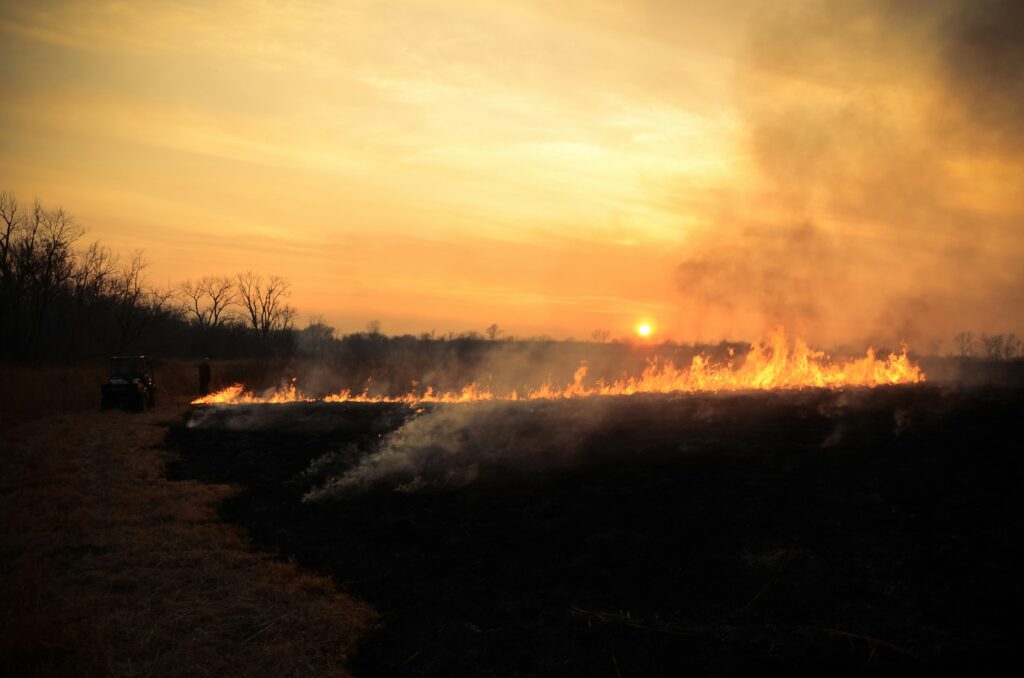
(Image courtesy of Jeromey Balderrama via Unsplash)

In Kansas, phased burns are an annual aspect of life. Farm and grasslands, which may have sat dormant all year, are burned off in a controlled manner every spring, killing off detritus of the previous year and clearing the way for new growth. As a child, these spring months were often filled with roiling clouds of smoke across the skylines in all directions, with the occasional wails of fire truck sirens when a farmer’s phased burn passed control.

My first piece of farm equipment with which I became proficient was a Heckendorn lawn mower. This lawn mower brand was created in Kansas, provided industrial-grade landscaping equipment, and required OSHA training to operate. The model I operated had a 6’ cutting span, a 3’-wide steering bar, and manual transmission.

By the time I was 12, I could navigate the Heckendorn around our rural property as part of my weekly chore regimen. I would wake up on Saturday mornings — or afternoons if I was lucky – to grab my latest literary selection and retire to the sweaty mechanical noise of the lawn mower for the better part of the day. Our more rural neighbors likely thought it odd that a child was reading a book while mowing acreage.

Westward down Highway 24, or down I-70, from where I was raised sits Fort Riley, America’s staging point for every major deployment in our nation’s history. What used to be family farmland, subject to imminent domain in pre-WWII America, is now part of a large ordnance range on the army post. Growing up, anyone within 50 miles of the post knew when the army personnel were practicing with live ordnance, as the concussions from the explosions radiated outward across the plains like orchestrated thunder.

On a smoke-filled day in the heartland, operating a lawn mower the size of a piece of construction equipment, perhaps reading Twain, Steinbeck, or Crichton, with the controlled burns scalding the land and the army practicing war down the road, one could not help but feel they were being raised for some kind of fight.
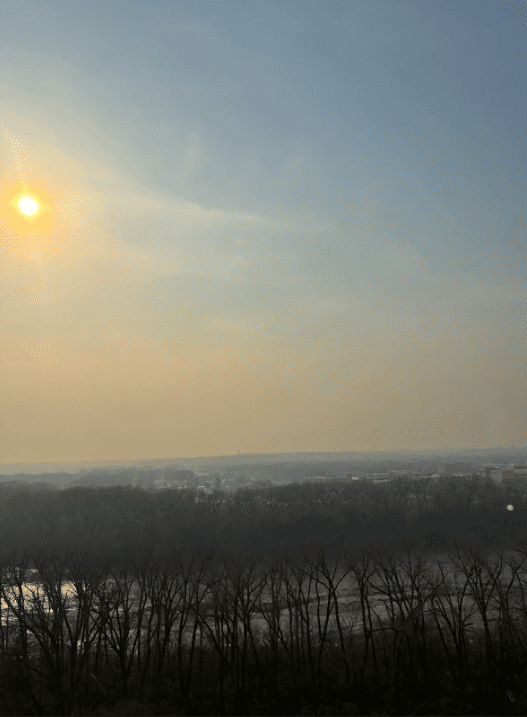

(Image “Smoke Filled Manhattan, Kansas” courtesy of the writer, 2025)

Summer in the city

By my teens, things in the family changed. My grandparents, who were our closest neighbors, were getting a divorce. My father, who had taken over the family business, was moving up in his industry and wanted to be closer to work. My mother, adoring as she always will be of rural Americana, wanted her children to have the “better opportunities” urban life could provide. 

So, during the summer between my 8th grade and freshman year of high school, we moved. The new house sat just on the outskirts of town, technically outside the city limits. Still, the change also paired with a change of perspective for me personally. While we were transitioning literally from rural to urban life as a family, I was transitioning internally. 

As time passes

My grade school education was at the local private Catholic school. Now, I would be attending the town’s only high school; a public amalgamation of all local middle school classes. I was tired of being the so-called “smart kid” or “gifted kid” or even just different. I wanted to fit in. 

So, I started playing high school football. I figured anyone who could play football would fit in, and maybe I could even get a girlfriend out of the deal. While my grades did not suffer like so many students adapting to puberty and public school, my personality changed. I started to care how I dressed, how I presented myself, and how I was perceived. 

At 15, I had a State of Kansas Learner’s Permit. Even though my address was still technically outside of city limits, I had the legal right to drive a car to work and to school. I began to stay out late on the weekends. I began to discuss ideas about my upbringing and its dynamism with my new life. My friends were inevitably going to change, as well as my life in general, but now that I could drive into town on my own, I could be anywhere in town in minutes.

Puberty being as difficult for anyone as it surely is, I apparently welcomed the eclectic adjustments to my lifestyle that our family’s urbanization allowed. Parties were fun, even if consisting only of a few vehicles around a bonfire. Manhattan, Kansas, is surely still rural today by most standards.

Chasing glory

By sophomore year of high school, our varsity-level football team had made the playoffs, and I was invited by the varsity coaches to practice on the scout team — the group of players who imitate the next week’s opponents in order to prepare our starters for the game. As an immature, arrogant, oafish sophomore, I welcomed the opportunity to stand out among my peers, to prove myself to my betters, and potentially impress next year’s coaches. 

With the postseason success of the Manhattan High School Indian Varsity Football team, my social life found a new, and unmanageable level of success as well. By the end of the 2001 Kansas State 6A football season, our varsity program was state runners-up by a rather large margin and I was officially a cool kid for the first time.

Junior year, 2001-2002, we were living in a post-9/11 America. As students, we did what was expected of us. We went to school, played sports, partied on the weekends (at least), and got ready for college. President Bush told us to keep spending money, so anyone who had any did just that. Having been raised in the war zone of Manhattan, Kansas, many of us were initially fully gung ho about shipping off to war. Time proves fools of us all.

Navigating the sprawl of life

After four years of urban living in Manhattan, I enrolled in Kansas State University, my hometown university. After completing a bachelor’s degree in political science, I took the first job I could find to take me out of Kansas. I ended up in New Jersey, then Southern California, and many places in between in the years since. Talk about cultural shifts.

Manhattan, Kansas, is a joke relative to Manhattan, New York, or even Manhattan, New Jersey, at least with regard to any concept of urbanity. The East Coast Megalopolis was outdone in scale and effect only a year later by the suburban sprawl which was San Diego and SoCal in 2010. But urban areas  only appear to expand. 

Urban sprawl, like so many man-made realities, is by definition intended to expand. Today’s urban world constantly requires more. More information, more wealth, more labor; more and more. Each of these components of urbanization requires continual renewal through precious and limited resources like water, energy, and space. The sprawl continues seemingly unabated from coast to coast.

While my rural upbringing is in the past, lessons of that phase linger. I work hard at my goals, I make an extra effort in the task at hand, and I go out of my way to help others. While I am sure these lessons are learned in urban areas as well, my life since leaving the country feels like it has sped up incrementally over the years. 

The balm of calm

This acceleration is likely due to a variety of factors both internal and external, but in the midst of change, I find a sense of calm in recalling the countryside. Out there, you can get away from the speed, stress, and conflicts of everything urban, even if only for an hour. All that subsides in the country, or is at least replaced by the more familiar aspects of the life of my youth. 

Wide-open plains, shifting winds, warm open sunlight — the peace of mind eases my troubles like nothing else does.
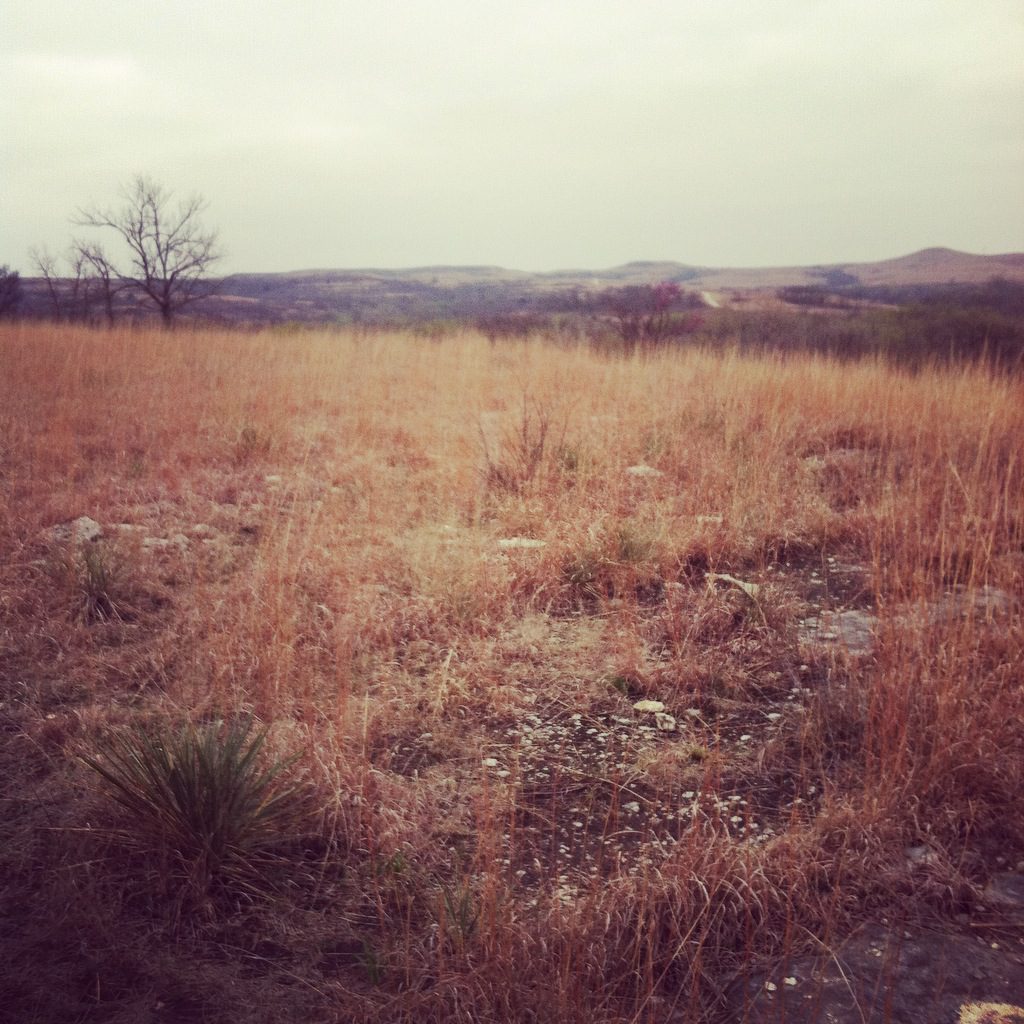

(Image “Prairie Home 2017” courtesy of writer)
My Invitation to the Wellness Table

Well, isn’t that perfection?

My own experience with body dysmorphia began young. I was big as a child and, after a significant loss in my life, began quite the crash diet at 16, accompanied by near nightly hour-long runs. Yup. At 16, no dietician or for that matter remotely wise. I did very much lose the desired weight, but the cost on my body and self-image would last long after this driven attempt at taking control of it.

Disordered eating and its traits are prevalent. I’d go as far as to say in an increasingly visual, screen-drenched society, it may be more implicitly encouraged than ever. Johnathan Haidt’s The Anxious Generation gives a comprehensive overview of the unmitigated harm social media has dealt young people. The most pronounced strand is entirely wound around image, and inevitably, with society’s construct of beauty standards; body image. 

With young women definitely the most vulnerable on the front line of this danger, young men on a much smaller scale are incrementally falling to unhealthy self-image standards, too.

Yes, men, too

I’m using the term disordered eating because I contend its traits are easily found. One may or may not be ‘diagnosable’, but a rundown of the diagnoses may sound uncannily familiar. Orthorexia would be defined as ‘clean eating to an obsessional level’. Bigorexia would be defined as a ‘monomaniacal pursuit of desirable body definition with clean eating’, particularly prevalent among men. Contemporary gym culture seems to be a hotbed for both of these with an online environment fueling a culturally accepted fire.

Night Eating Syndrome is a consumption of 80% of a day’s calories at night. Well, I’ll openly admit after a night out with enough beers in me I must have done that more than once. Binge Eating Disorder can be characterized as always on and off diets, always going on a diet tomorrow, finding it extremely difficult to control eating outside of three meals per day. 

Let me be clear, a diagnosable condition is an urgent matter in need of professional intervention. Yet, I wholeheartedly believe the traits of many of these patterns are easily found among many millions.

I’ve always believed mental illness to a dangerous extent is projected in the greater public psyche to some ill-fitting cartoon. It’s the ‘outsider’: they’re male, they are muttering to themselves, their eyes are wild, they’re either wiry or huge so an explosion of violence is imminent. Yet statistical reality points in the opposite direction. The highest mortality rate of any psychiatric disorder belongs to anorexia nervosa. It’s not a guy who’s an overt danger to those around him, it’s a woman who’s a danger to herself. A young woman, barely noticeable, who wants to avoid confrontation, who doesn’t want to take up space, who wants to be small, who wants to get smaller and smaller till she disappears altogether. This young woman is desperate to take control and her means of doing so become her lethal enemy.

My contact with ‘The Underworld’

Working for an eating disorder program was a juxtaposed experience. Half was pure inspiration — witnessing vulnerable young women support one another as they hauled themselves out of hell one day at a time. The other half was a nigh-on Orwellian affair — abetting strict, unnatural conditions to bring acutely unwell individuals back to health in profoundly punishing ways. We would accompany them for three meals and two snacks across a day at the ‘Wellness Table’. People who desperately psychologically did not want food in their bodies. They say bringing an addict out of an addiction is like caging a tiger. The table was more like bringing a tiger out of a cage and taking it for a walk several times a day.

Returning home having worked with the eating-disorder patients was a singular experience. I have no problem admitting I usually came home either feeling somewhat shaken or stressed. In the same facility, I was regularly working with alcohol and drug misuse treatment, but that was rare to leave a mark the way this work did. There was a haunting quality to this work, to be engaged with people whose mortality was in question. Who at times would present as if they were just young girls ‘playing up’. Who could be genuine allies to each other’s progress, or need separating for being a danger to another’s wellness. It was truly difficult work to not take home and feel full of fear or frustration. 

Any resistance in their work could be a win for an illness on board that wanted them dead.

The most accessible psychology I found at the time was Carl Jung’s. In very broad terms, his psychoanalytic school of thought is half medical framework and half literature of mythology and folk tales. His psychological contention of archetypes and symbols in psychology has been greatly expanded and explored by many, most notably by Donald Kalsched. His work Trauma and the Soul holds incredible accounts of mythic symbology and archetypes found in depth psychology work. Angels, demons, gatekeepers, child gods continually recur in the dreams and imagination of people who dig such depths. What I never expected was to get a genuine sense of such hallmarks right in front of me, in reality.

The Wellness Table brought the most staggering encounter of transference I’ll ever have. Coming to the end of any of the three meals a day would leave me either exhausted, furious, or wired. This was not my energy, this was not my emotional state or thinking, it belonged to the brave young women on the program. But just 45 minutes of sharing that terrain with them left me in an entirely different and uncomfortable space. Some glimpses, sometimes, at their most resistant and unwell, when what was killing them was winning the fight, they would be archetypes walking the earth.

After having spent enough weeks witnessing these people take on their greatest challenge, the whole experience changed. How they appeared and felt to me was now different. The depths of just how unwell these young people were was staring me in the face. Bodies hardly sustaining their own running. 

On a slow track towards death and barely able to take that which would keep them alive. These people were liminal. Neither quite alive nor exactly on their deathbed. I was face to face with the Undead. 

Did the overwhelming majority of clients I worked with leave the facility in better health of body and mind than when they arrived? Yes. Many had made friendships during their stay that I’m confident lasted beyond. I would also be remiss to imply that every last patient was suffering from anorexia, as it wasn’t so. 

Yet in all cases, they had that flicker of something mythical, much of it stirring to witness. Embers of Promethean fire and a courage worthy of Athena herself. All warmed with hope. 

(Image courtesy of Aedrian Salazar via Unsplash)

All Hail Zindar!

Three and a half years ago, when I was just starting my second undergraduate year, I found myself developing an attachment to a mysterious and unnerving activity called…

Improv comedy

*dramatic gasp* Believe me when I say that taking up improv was a jarring change of character. I was no stranger to performance but improv had always terrified me. The very thought of dashing onstage unprepared with no safety net was a waking nightmare.

Aside from a rather embarrassing moment (that I desperately try to avoid reliving) at a preteen summer school, my improv experience was basically non-existent. Outside of acting, I was straight-laced, introverted, and most certainly shy in public scenarios. I could barely talk to people. For most of my first year at Royal Holloway: University of London, I was content with my quiet, online writing society. There were only five members in the group and every one of them was heavily reserved and terrified of giving any criticism. Just my cup of tea!

My second term took place during the COVID-19 lockdown, and as a result, I got involved with some online shows. As expected, I didn’t foster many strong bonds during these performances. The distance and lethargy were affecting all of us, especially in the drama and theater sphere. By the time we were back on campus in term three, I felt I hadn’t made many lasting connections. I hadn’t found my people.

Reflecting upon it now, improv found me at an important turning point in my life. I never would have sought it out on my own, especially not with my reservations. In fact, the only reason I can talk about this today is because of one person.

The Anna effect

Out of all my former course mates, Anna is certainly the wackiest. She is completely  unique, quick-witted, fiercely intelligent, and progressive. Technically, she was the very first person I’d met at Royal Holloway. We sat together for an exercise during our induction day, only to be paired up again in our first module on campus for a devising activity. She still terrifies me as she did back then (in the best possible way).

Toward the end of the year, she bullied me, albeit playfully (I think) into joining the university’s improv troupe, the Holloway Players. What struck me was not just her conviction but the way she idolized the people in this group. They’d become family to her. They were her obsession. She had no problem voicing that quite violently to me. Her recommendation arrived at a perfect moment: I’d had a particularly bad experience with my flatmates and was searching for an escape. I was willing to try something a little different, even just to play some drama games, watch some goofy improv, and go home.

I took her advice, and it was one of the greatest decisions I’ve ever made.

Stepping out of my comfort zone

The first session I attended took place on the campus meadow in the gorgeous summer heat. I saw a small group of funnily dressed people, a bunch of snacks laid out on two picnic tables. I could see Anna enthusiastically waving me over. Around then, I was thinking, “Well, I’ve been recruited into a cult, haven’t I?” A couple of their leading members introduced themselves. They were third years and social engineers. Complete strangers. I lingered awkwardly, not really pushing myself to enter any conversations about sacrificial lambs or the strange deities they were bound to worship.

Mercifully, the drama games began quickly. We gathered into a circle to play everyone’s favourite theatre staple…

Zip, Zap, Boing!

For those who haven’t attended a single drama class in their life, it’s an energizing warm-up game with very simple rules. At any time, one person holds a ball of energy that must be passed around the circle. They can either:

Zip, and pass the energy to the person adjacent to them.

Zap, and pass the energy to any person standing across from them in the circle.

Or Boing, reflecting an incoming Zip to reverse the direction of play.

Simple enough, right? Well, this wasn’t like any game of Zip, Zap, Boing I’d ever played.

Bending the rules

Within the Holloway Players, there were certain house rules: player-created bits and routines, collected and preserved throughout the years in addition to the typical moves. 

To name but a few, you could call upon Reflector to block a Zap, which would lead to about five or six further utterances passed back and forth in an epic battle sequence. You could turn the Zip into a Boomerang or Ball, causing everyone to duck or jump in turn respectively. Shouting “Andy’s Coming” would have everyone dropping like a ragdoll to the floor like the toys in Toy Story. “Eleanor Cobb” would set off a repetitive chant of “feed me teeth, feed me teeth, feed me teeth” as everyone pranced around and swapped positions in the circle.

So, yes, my initial fears about joining a cult were quickly confirmed.

One of the committee members, Aaron, had cautioned the house rules for newer members by stating that “if you don’t know what’s going on… scream,” which was a surprisingly effective pep talk. He’d also encouraged people to embrace mistakes and improvise around new rules, should they crop up.

I may have taken this a tad too literally.

By this point, the game has been playing for a while. Many exotic and strange rules have been demonstrated. I am given the Zip and turn to Aaron on my left. The word then escapes my mouth before my brain has a chance to process it.

Zindar!

An excruciating moment of silence follows. I begin to regret every life decision that has led to this moment. “What possessed me to say something like that? Where did that stupid thought come from? I have to switch universities. That’s the only option. Anna must think I’m such a buffoon –” 

Then, all of a sudden, Aaron starts to raise his arms while bowing his head in reverence.

All hail Zindar!

Something amazing happens. The entire group repeats the phrase, bowing their heads to Zindar. The president walks over and shakes my hand. Aaron starts singing my praises as a rousing applause picks up.

Not even ten minutes into my first session, “All hail Zindar” was born. A rule that has been preserved and still gets quoted in Zip, Zap, Boing to this day.

I’d cemented my Holloway Players legacy.

Something clicked then. I felt embraced. Comfortable. So much so that toward the end of the session, I mustered the courage to join an official improv game. It went terribly! My whole character arc revolved around a watch that exclusively tells you the time since you last ate a radish.

Naturally, I was given areas to improve in, but this criticism was framed with the most overwhelming encouragement and support. These people were fully geared to laugh with you – that is, to remove the fear of mistakes. They were completely unserious and whimsical. Most importantly, they made me feel proud of the steps I’d taken getting to this point. I’d taken the leap and I wanted to do it again.

I suddenly understood why Anna had been so obsessed. I’d found my people.

Moving forward

To make a long story short, the Holloway Players became my home away from home. We took a comedy set to the now-defunct One Night Records venue in London to rousing success. I’ve additionally performed in two fully improvised musicals and an amateur, spin-off version of “Taskmaster.” I was voted “Player of the Year” in my second year and gifted a “Shining Light” award in my third. Moreover, I became the secretary of the society in my final year alongside Anna as president, working to encourage an unprecedented spike in membership and to further develop the inclusive values the society embodies. I’ve stepped into the role of compère for dozens of sessions and pub shows. I even started running some improv workshops at Goldsmiths University in my Master’s year.

When I think back on all these achievements and memories, I wish I hadn’t been hesitant for so long. Since finding improv, my confidence has skyrocketed, both on stage and off. I’ve become more proficient at networking, applying improv skills in conversation to foster greater communication. I’ve directed several short performances and radio episodes – something my younger self would have paled at the thought of. My greatest and dearest friends are all Holloway Players. I continue to credit so many things to that one moment of pushing my boundaries, forcing myself into strange company, and taking an unprecedented leap.

It transformed my life.

Give it a go!

Whether it’s improv or another skill or activity you’re anxious about, I implore you to set aside your apprehensions. Listen to your friends. The only way you’ll discover if something is for you is by doing it. Get out there!

Ctrl+Alt+Layoff

“So, you’re a pro at this. You know what you need to do.”

My therapist was trying her best to cheer me up amidst a shitstorm — our country falling apart and my being laid off. It will be my third time —I have to submit for unemployment again. 

“Imagine if this was your first time around,” she continued. “That’d be even worse — trying to figure out what to do with all of this happening. So, you at least know what you need to do.”

Where’s the safety net?

Thing is, I wish I didn’t. 

I actually don’t remember what I need to do at all as I write this. My brain has blanked out those parts of my memory, likely in an attempt to preserve a shred of my ego.

I hate this. I’m a proponent of welfare systems and safety nets — have been for as long as I can remember. I’ll tell you wholeheartedly that people who end up unemployed deserve help, regardless of what happened. I still stand by that.

I’m also the person who was always commended for my diligence and work ethic growing up. The overachiever. I never did the bare minimum. To do that would be to fail, to be lazy. And now, here I am, completely through no fault of my own — according to my former employer.

The one needing unemployment benefits for the third fucking time in my life.

I’m trying to apply now as I write this, and lo and behold, the NYS Department of Labor unemployment website is down. That feels… ironic? Fitting? Like some sort of sign from the universe stating a message in big, celestial letters? I don’t know anymore.

From the inside then to the outside now

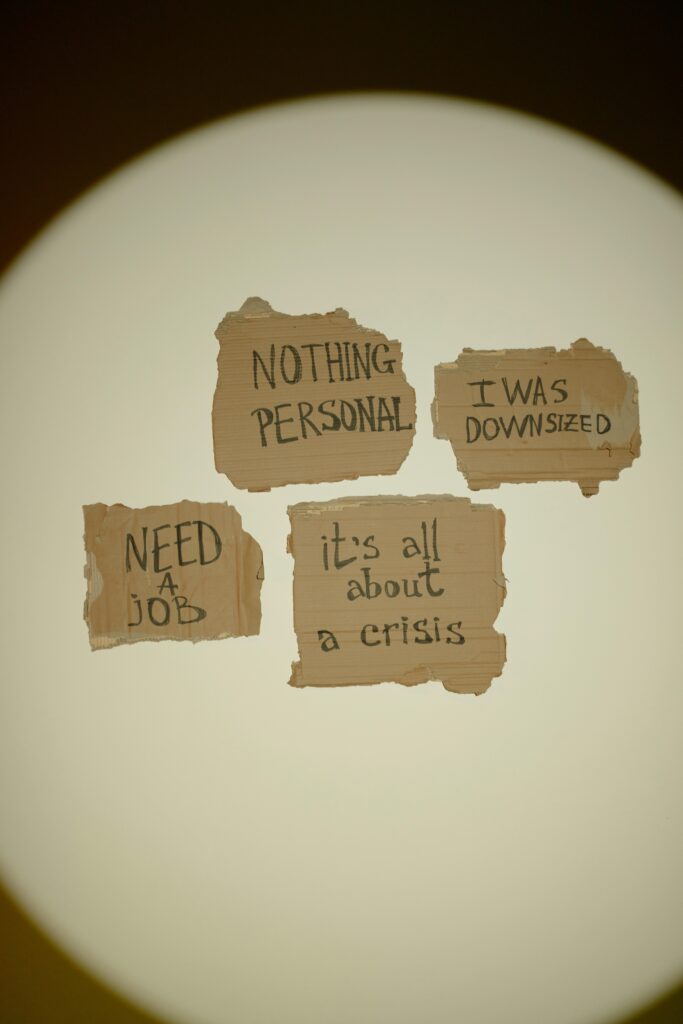
(Image courtesy of Cottonbro Studio via pexels)

Here’s the thing: I interviewed people in my last three positions. And that’s how I know that all of these recruiters online saying you just need to tailor your every cover letter more or “use your network” are entirely out of touch with reality.

For one role,  literally over 700 people had applied. The founder of the company, because it was just the two of us at the time, asked me to do a first pass — and maybe a second and third. Out of those 700, maybe half fully met the qualifications. So, we had 350 individuals. 

We couldn’t interview them all, especially with just the two of us. We had to become pickier. So, who had more experience? Who had a more robust portfolio? Who had more education? On it went, until we could finally narrow it down to 15 or so individuals for an interview. 

We could hire only one person out of the 350, all of whom could definitely have done the job. We had to choose one

What do you do in that scenario?

Fast forward to another position, and my company was hiring for the person who would become my manager! It was very exciting, given that our marketing team was so small — just two of us — and we desperately needed the support. 

I can’t recall the exact number of individuals I helped interview. What I can say is that they had started interviewing for this position at least three months before I joined; it wasn’t until four or five months into my working there that they finally hired someone for the job. 

There were plenty of applicants, but some folks involved in the hiring process — who were much higher up the corporate ladder than my coworker and me — found something wrong with almost every single candidate. 

Some of the reasons: 

“He doesn’t seem to learn ‘actively’ enough.”

”She probably wouldn’t be able to push back against the SMEs (our experts) when needed.”

 And, of course, the classic, “Her attitude wasn’t great.” 

Eventually, they made a decision. It worked out that the person who was hired became one of the best managers I’ve ever had. Only for him to be laid off less than a year later.

At another job, we were hiring for an additional marketing team member — something we very much needed. I don’t know the total number of applicants. All I know is the three of us in the marketing team were provided about ten or so resumes and portfolios, give or take a few. The ones that had made it to this stage where we were interviewing them had already passed the initial interview process, so they clearly were qualified. 

So, how do you choose then? That answer depended on who you were talking to. 

Honestly

One applicant made a joke about Star Wars on their resume, and one of my coworkers thought that was too “cringe” to take him seriously and decided not to move forward with him.

Another applicant made the mistake of telling the truth. She confessed lacking knowledge in a specific area when another interviewer told her, “There are no wrong answers.” This coworker, after the meeting, explicitly stated that they had said the purpose was to “make the candidate feel more comfortable being honest,” so they could discern whether or not she had the right skills. Her honesty was her downfall. 

I know ethics can be subjective, but I was highly disturbed by this action.

So, no. It’s not about tailoring your resume or writing a perfect cover letter. And networking? It’ll help, but only to a degree. 

You need to have everything lined up — the experience, the tone, the timing.  And then you need a hiring team whose subjective views will accept you out of hundreds of equally qualified, if not more qualified, applicants.

I’ve seen both sides. Honestly, they’re both awful.  But at least on that side, I was getting paid.

Money, please

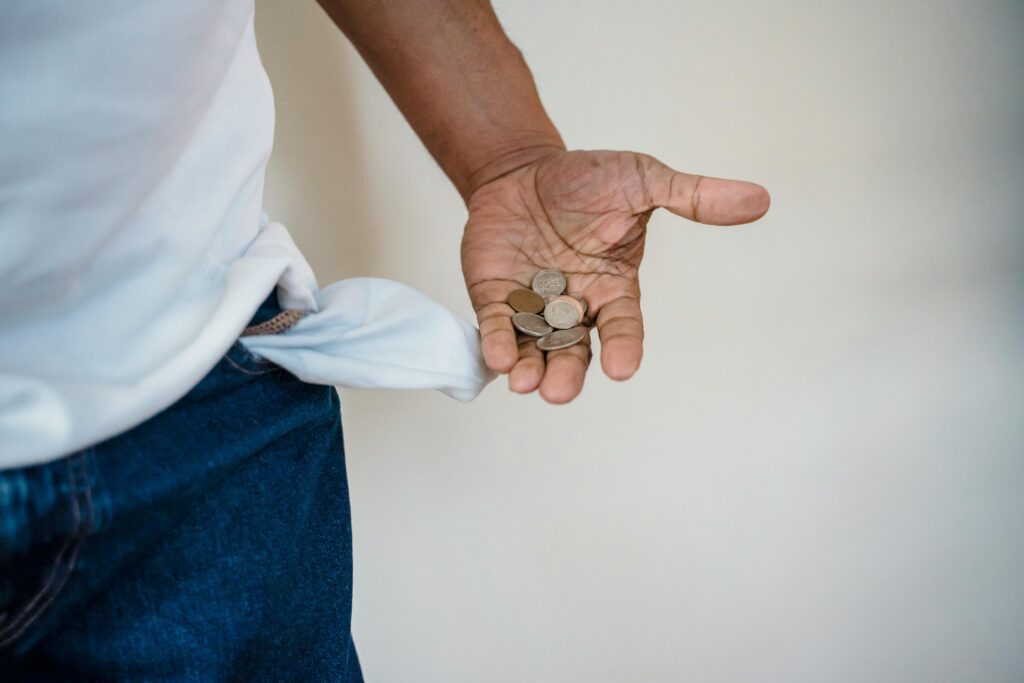
(Image courtesy of Nicola Barts via pexels)

It’s not like I’m doing nothing at all. I still have my dog-walking and pet-sitting side gig, and I’m doing a little freelance work here and there. I also hold a volunteer position, much as the title I have there gnaws at my imposter syndrome — Director? Me? What could I possibly contribute that would make it right for me to be the director of anything? I can’t even keep a fucking job.

My job tracker stares back at me as I type this. Sterile-white spreadsheet cells. No hope offered. Over 300 applications now — full-time, part-time, freelance, contract. And only two calls back. 

Well, technically, three. I had a recruiter reach out to me for a position with a major social media giant whose CEO met a revelation of needing more “masculinity” in the company and had just laid off thousands of highly qualified individuals. I turned down that conversation and job, thinking ‘You want male energy and called a Jessica; you’re a pig and called this Jessica; and if I took the job out of need despite all that, I’d still get canned due to the wrong energy field.’ Maybe only to also be labeled as an underperformer, with no evidence to back up that title.

I may feel like a fraud half of the time in my work, like I don’t deserve my title or my salary, but I know I’m not an underperformer. I am Jessica Day. If nothing else, I am a hard worker.

And yet, I’m left here with so many questions. So many frustrations. So many concerns.

How long will it take me to find a job? 

Will I ever find a job again?

Am I bad at everything I do? 

Am I always going to be laid off or furloughed? 

Is this going to happen again? And again? 

Can I trust any employer? 

Is it me? Is it them? What is it? 

Why has this happened? 

Why is our economy here yet again? 

When will people stop using “unprecedented” to describe this shitty moment in time? 

Will my generation ever know any semblance of calm? 

Will we ever be able to buy houses and have families and just have normal fears like what milk to buy instead of whether or not we can afford groceries?

I don’t know. 

I don’t know I don’t know. I don’t know. I don’t. Fucking. Know. 

I wish I knew.

Where do we go from here?

(Image courtesy of Ron Lach via pexels)

In the meantime, I’ve been tracking the layoffs happening in our country. I’ve currently tallied tens of thousands of individuals laid off since the beginning of January. I’m one of the many. 

It’s horrific to think of everyone who’s lost their position, their livelihood. They lost their stability, their sense of direction.

And no, they can’t all be underperformers. That’s highly improbable, as anyone with any understanding of statistics could tell you.

Spiraling would be the word I’d use here. For myself. For the economy. 

There’s no easy way out of this situation, and everyone has their own idea of what the best way out is. The fact is, there is no best way out. 

I have a friend who just finally found another job, and I’m so proud of and happy for her. She’s worked with globally known companies and at an upper-management level. It still took her over six months to finally land a job offer — and as a vice president no less, which is very exciting and so deserved. 

But I look at her, with her impressive resume and years of experience, and then I look at mine….

It took her over six months. 

How long will it take me? 

What if my partner loses his job, too? 

Will we be able to survive? 

Will we ever find jobs again? 

Will we be able to retire? 

Will we have Social Security?

See how the spiraling is easy to fall into? 

Once you fall in, you can’t pull yourself out.

But I’m a pro at this, as my therapist said. Not just applying for unemployment, though still feeling shame, but also surviving scary events in history.

I’ve lived through the ice storm of ‘98, Y2K, the dot-com bubble, the 9/11 attacks, the 2008 financial crisis, the H1N1 scare, COVID, and now… whatever we want to call this chaos we’re living through that is our entire world right now — right alongside the rest of my generation.

I’m a pro at surviving. 

I can do this. 

I’ve got this.

Right? 

right?

(Image courtesy of Luca via pexels)

State, Crime, and Power: Ramaphosa’s Inquiry Opens a Window into South Africa’s Political Underworld

In a country battling record high crime, collapsing public trust, and deep political fragmentation, President Cyril Ramaphosa’s announcement of a judicial commission of inquiry into allegations of collusion between senior politicians, law enforcement, and organised crime marks a defining moment for South Africa’s democracy.

The inquiry, announced in a national address on July 13, follows claims by KwaZulu-Natal’s provincial police commissioner, Lieutenant General Nhlanhla Mkhwanazi, that a powerful criminal syndicate had infiltrated the state. The syndicate allegedly influenced political assassinations, compromised murder investigations, and manipulated senior police appointments. Most disturbingly, Mkhwanazi alleged that the task team investigating political killings in the province had been disbanded under pressure from political actors.

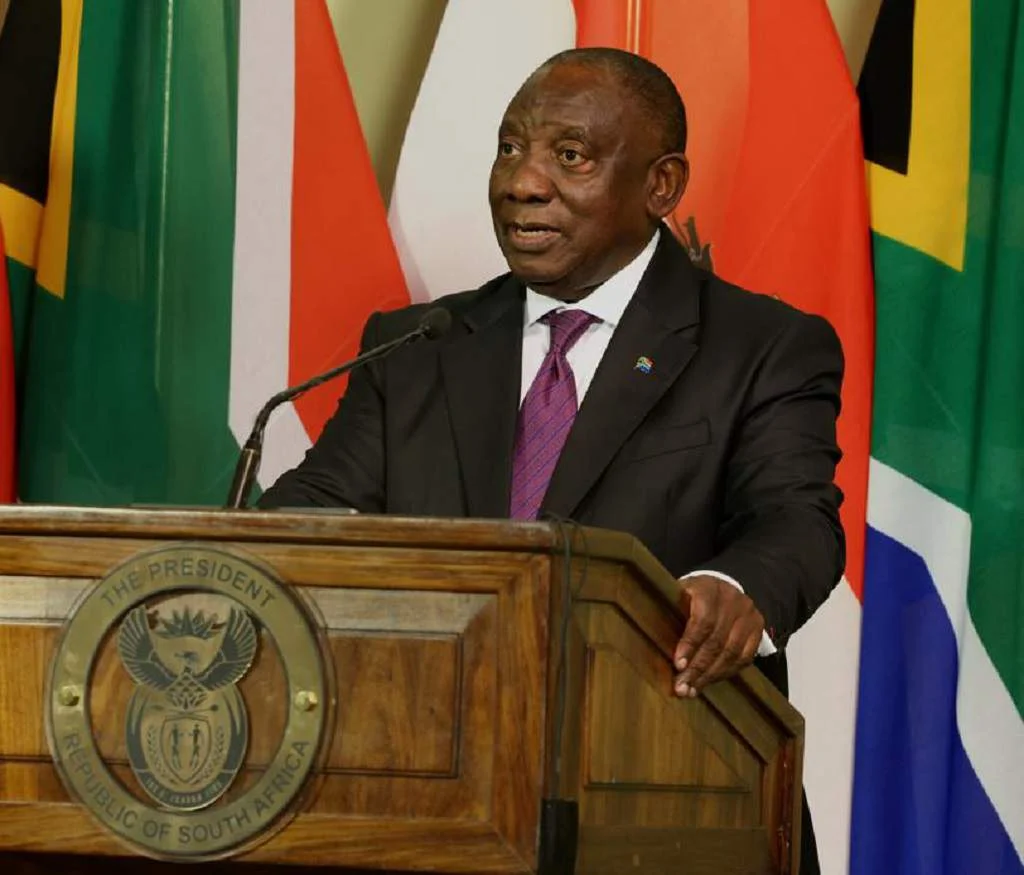
In response, Ramaphosa suspended Police Minister Senzo Mchunu and appointed Acting Deputy Chief Justice Mbuyiseli Madlanga to head the commission, which has been mandated to investigate “the alleged capture of the South African Police Service, the Directorate for Priority Crime Investigation (Hawks), and the justice system by criminal networks.” The president called the allegations “serious” and “threatening to the credibility and integrity of state institutions,” noting that “no person or institution is above the law.”

Shortly after the announcement of the commission, civil society in Durban mobilized in support of Lt-Gen Nhlanhla Mkhwanazi. Ntokozo Mkhize, national spokesperson for the Concerned Citizens of South Africa (CCSA), affirmed the groundswell of local support, stating: “We are not a political party or affiliated with any political entity… we are just ordinary citizens who are fed up with the lies propagated by politicians.

While shocking, these claims are not entirely surprising. South Africa has long battled blurred lines between state institutions and criminal enterprises, most notably during the “state capture” years under former President Jacob Zuma. But this moment feels different. These are not only claims of corruption or mismanagement. These are allegations that the state has become a vehicle for organized crime.

The stakes are high. The violence plaguing South African communities ranging from assassinations, extortion rackets, drug trafficking to illegal mining, is no longer simply a policing issue. It’s a governance crisis. According to a 2024 World Bank study, crime costs the South African economy roughly 10% of its GDP annually, due to lost investment, reduced productivity, and overburdened healthcare and justice systems.

Globally, South Africa is not alone. In Italy, the infiltration of the ’Ndrangheta and Camorra into politics and public procurement became so entrenched that entire municipalities were dissolved. In Germany, investigations into drug trafficking at the Port of Hamburg revealed a 750% increase in cocaine seizures since 2018 and evidence of public officials being bribed by transnational cartels. In Mexico, political assassinations and narco financing of campaigns have allowed organized crime to shape who governs and how resources are allocated.

In South Africa, political assassinations, especially at the local government level, have become a chilling norm. The Global Initiative Against Transnational Organized Crime, recorded at least 10 politically related assassinations between January and April 2024. This contrasts with 31 political assassinations recorded across 2023.

Ramaphosa’s move to establish a commission is intended to send a message: the state will no longer tolerate criminal capture. But critics are wary. Civil society groups and opposition parties argue that commissions of inquiry have become an expensive substitute for prosecution. The Zondo Commission, which exposed state capture during the Zuma era, cost over R1 billion and took four years to complete. Although some progress has been made, over R2.9 billion recovered and R12.9 billion in assets frozen, and only a handful of high profile arrests have followed.

The credibility of the new inquiry hinges on several factors: whether it leads to prosecutions; whether it names sitting political leaders; and whether it delivers interim findings quickly. The inquiry has been given 12 months to complete its work but is expected to submit reports to the president and chief justice at three-month intervals.

Ramaphosa’s commission may be his final opportunity to prove that the rule of law still matters in South Africa. The question now is not whether syndicates exist, they definitely do, but whether the state has the political courage and institutional muscle to fight back.

Me: The Kenyan Father, and the British Father

Dreams of opportunity

“I finally get out of this frustrating country and explore!’’ 

It’s not that I lack patriotism for my country, but honestly, that is how I felt when I finally secured my visa to the United Kingdom.  What could be more exciting for someone like me from a “Third World” country like Kenya than securing an opportunity to live and work among the citizens of Great Britain? 

My destination? Oxfordshire, a far cry from Nairobi City, the alleged capital of Africa. I am heading to a whole new world of hope. 

Migrating to the UK was like a golden opportunity for my family and me, and for my daughter specifically, since I believed she would be able to get a top-tier education, better social amenities, and, of course, get to interact with a different cultural community. At least, that is what I thought. Little did I know that all that awaited me was but exhaustion and stress from relocating and missing my family, my friends, and the warm tropical weather back home. In fact, by the time I landed in the UK, I immediately found myself appreciating the climate and weather back home in Nairobi.

Migrating from expectation to exhaustion

(Image courtesy of Alexander Dummer via Pexels)

I convinced myself that it was just a matter of time before I’d get used to this cold weather. At least this seemed to be the least of my problems. But in reality, things were difficult, more so since I was an immigrant and I was not used to life here. I was navigating an unfamiliar environment. I had to look for a school for my young daughter, get a mortgage, and, of course, settle into my new job. It was at this point that it hit me — I now had a caretaking role to fulfill. 

I got my daughter into a primary school, but here, things were very different. For instance, once you enroll your child in a school in Kenya, they become the responsibility of the school; you are not obligated to pick up your child from school because the school bus would drop them right at their estate. Then, typically, the maid would go and pick them up if the drop-off point happened to be far from your house. If the school is in a rural setting or the child is old enough, they are free to walk back home without fear of jeopardy, since even strangers can act as carers. But here in the UK, it was a different story.

First of all, the language barrier was a heavy stone to roll, especially for my daughter, who was used to a creole of Swahili and English. However, in the UK, there was only English with a strong British accent. It was a challenge for her. Then, the environment was like a monster to her. Often, she would catch flu due to the cold climate here – unlike in Kenya, where the warm climate is easier on the immune system. 

The pressure of caregiving started weighing on my shoulders. I was the primary caregiver here. You see, a benefit to living in Kenya is that there was a network (family, friends, neighbors) who helped hold everything together. But here I was alone with just my immediate family. We lacked other support to lean on.

(Image courtesy of Franco Debartolo via Unsplash)

Back to my daughter and her school routine. Daily, I had to wake up at 6:00 a.m. to get sorted for work and at the same time prepare my daughter for school, as she was supposed to report to school at 8:30 a.m. Furthermore, I had to make sure that her breakfast was ready before 7:00 a.m. and also pack her lunch, all before I even thought about my own day. 

Back in Kenya, this was never a problem, as her nanny took care of this. But here in the UK, hiring a nanny is very expensive. Because children cannot be left alone, everything was for her mother and me to do.

As if that was not enough, I also had to pick her up from school. School ends at 3:15 p.m., which is an hour and forty-five minutes early, given that my work day ends at 5 p.m. There are school clubs, but there is a fee to participate. If you want to coordinate home drop-off with the school, it is double the price of picking her up by yourself.

My caregiving role does not end here. After school is the most exhausting part. When we get home, I have to help her with her homework and any projects she may have. All this I do, and at the same time, I have to keep up with my job. The school encourages registering children for weekend clubs, and this, too, requires a parent’s presence and extra expense.

Other school-related tasks include: being up to date with school news, attending the parent-teacher meetings, talent shows, and exhibitions that are sometimes scheduled on workdays. In order to accommodate all of these activities, I have to build them into my work schedule. With school trips, I have to plan properly so that she can also enjoy herself as the other students do, and not feel left out. At times, I felt overwhelmed by these responsibilities, and wished I could return home. Seriously, why did no one tell me about what’s involved in transitioning from the Kenyan school system to the UK one?

Transition and growth

(Image courtesy of Ryan Stefan via Unsplash)

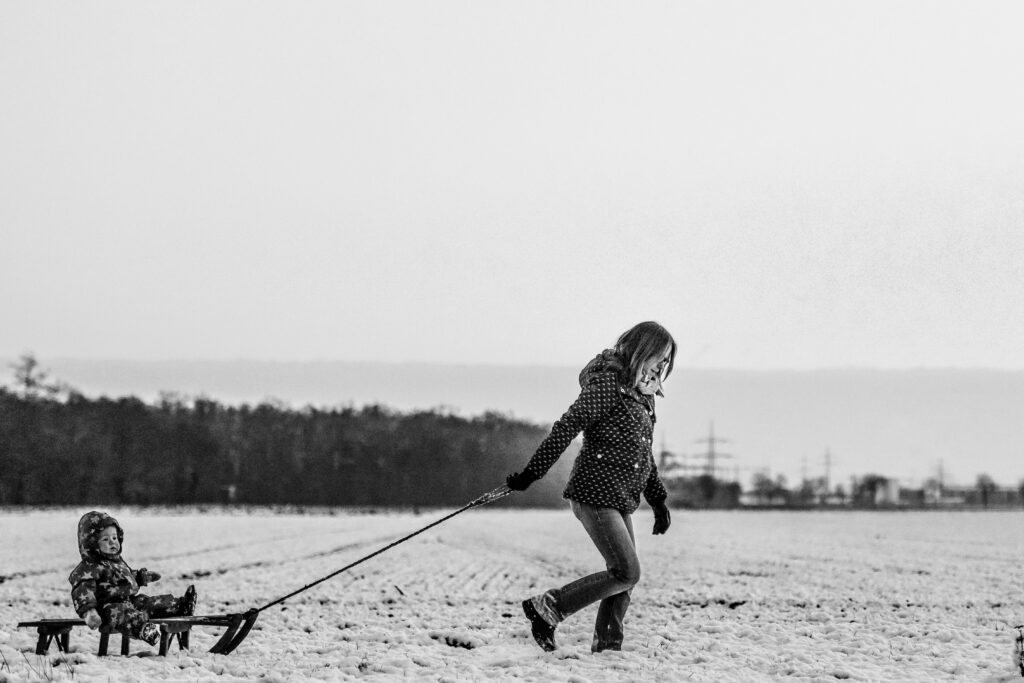
Eventually, with repetition, my daughter and I adjusted to her new schedule and academic requirements and soon, some of the responsibilities, like picking her up from school, were reduced because she could come home by herself. The parenting culture clash I experienced was not just about changing and securing greener pastures and a better living environment for my family, especially for an immigrant. It entailed much more than that. This process taught me how to be present for my family and what kind of a caregiver, teacher, cultural guide, and loving parent a school-age child needs. 

Living in a foreign environment, I felt like every interaction and activity that contributed to my adaptation to the new culture robbed me of my strength emotionally, physically, and mentally. I was confronted with customs that nobody ever told me about. In my role as a parent, I felt like my burnout was an endless tunnel and that I would never see the light. But gradually, I learned to work my way through it until I finally reached the other side.

Indeed, sometimes, to survive, you just have to be present, even when everything around you feels overwhelming.

Late Former President of Nigeria, Muhammadu Buhari Laid To Rest In Hometown

Condolences pour in from around the world as the former president of Nigeria, Muhammadu Buhari, who passed away on the afternoon of July 13th, 2025 at the age of 82, was laid to rest in his hometown, Daura, Katsina State.

Buhari, who was receiving treatment at a clinic in London before his death, had battled with years of ill health. The exact cause of his death, however, remains undisclosed to the public.

The Governor of Katsina State, Dikko Radda, revealed that preparations immediately began to transport the former president’s body for his burial the following day, “I just left his family at the hospital where he died and the decision is that his remains will be taken to Daura for burial, the plan is to leave in the morning,” he said while speaking to DW Hausa.

Vice President of Nigeria, Kashim Shettima, who was in the United Kingdom at the time of his passing, disclosed that he will be escorting the remains of Buhari back to his hometown, Daura. 

As the country mourns the loss of the former leader, the current president, Bola Ahmed Tinubu, assures that the government will pay its final respect to Buhari by lowering the national flag to half-mast across the nation. He also declared Tuesday, July 15th 2025 a public holiday to honour his death.

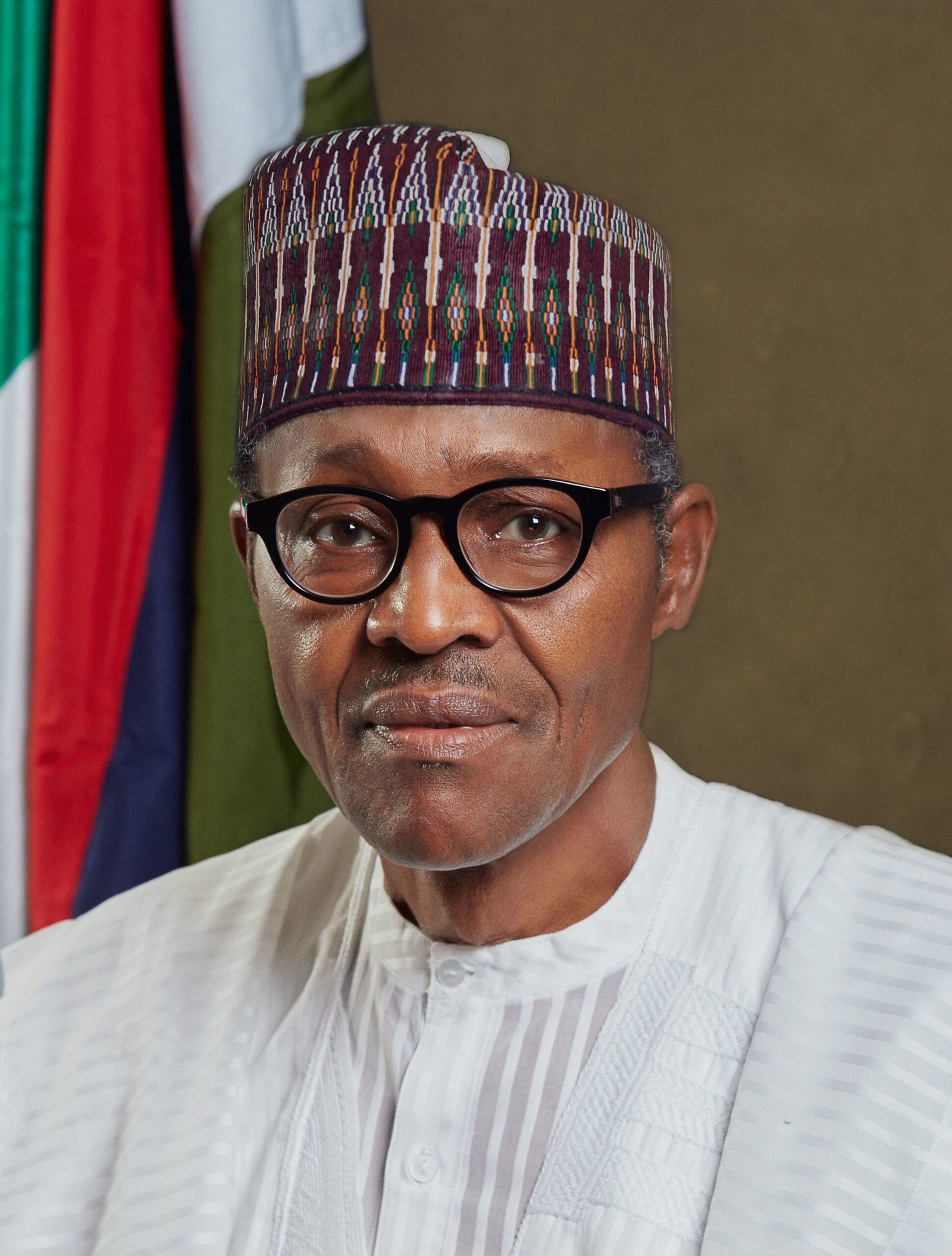
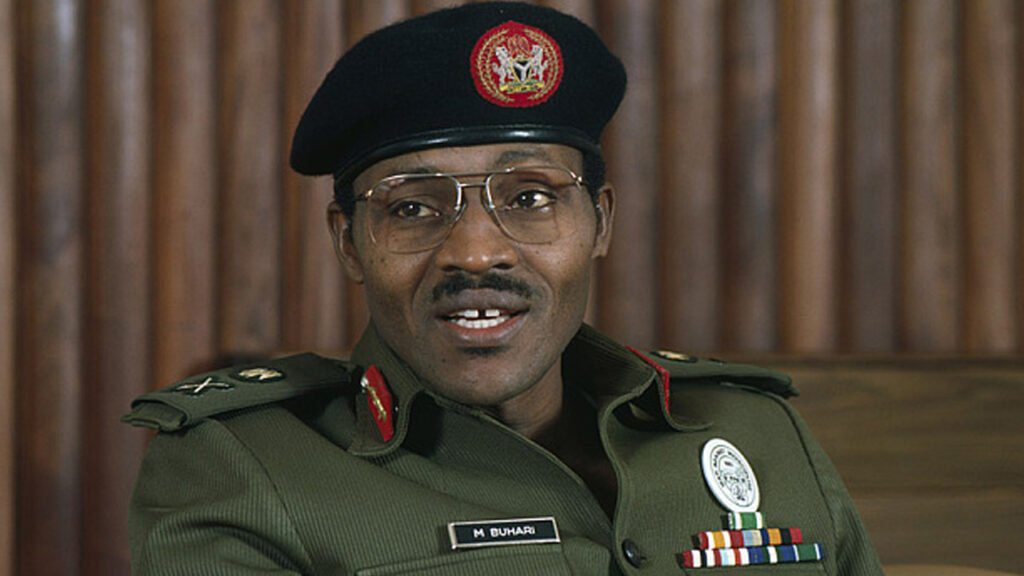
Muhammadu Buhari was a politician who served as both a military head (1983-1985) and a civilian president (2015-2023) in Nigeria. 

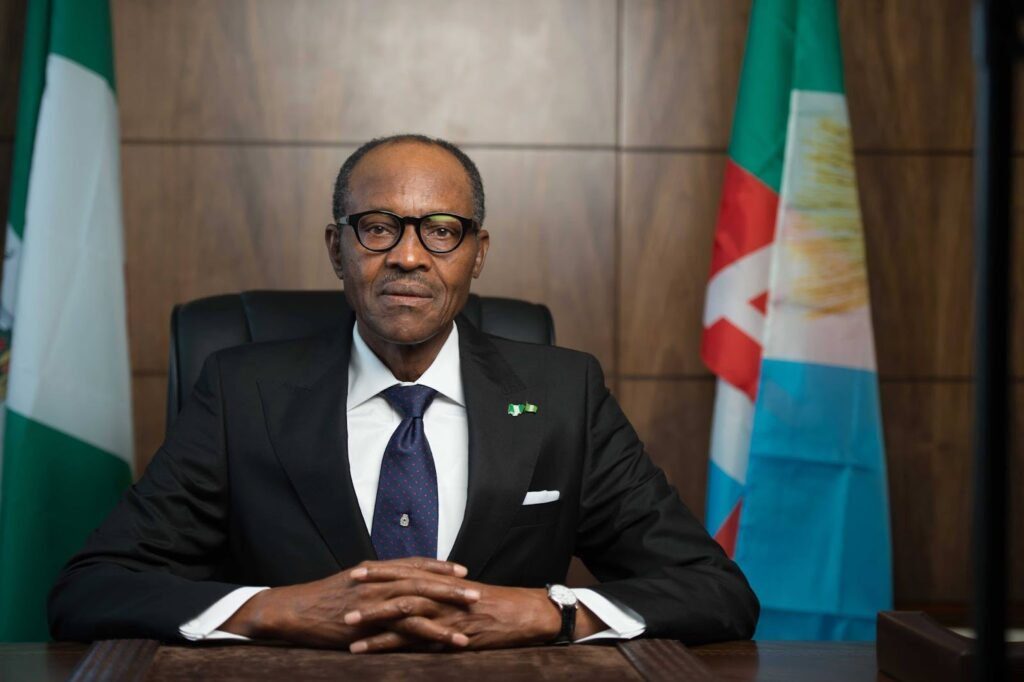
Muhammadu Buhari as Military Head of State (Photo by The Guardian)
Muhammadu Buhari as Civilian President (Photo by Nairametrics)

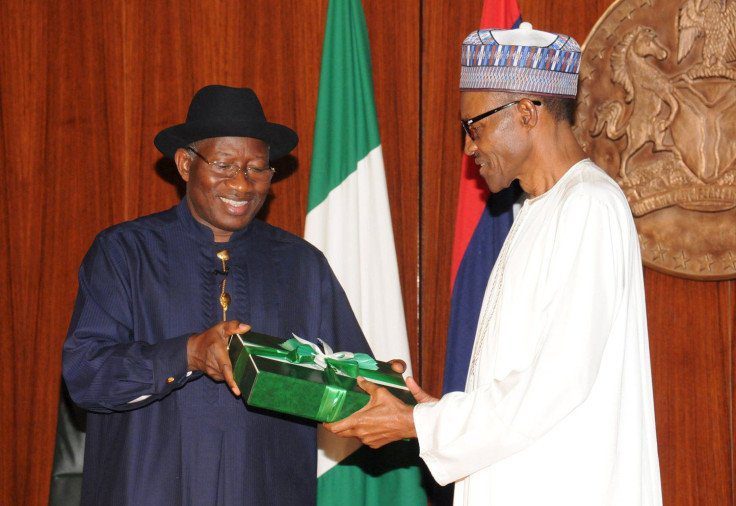
He assumed his last position as president after defeating the incumbent president, Goodluck Ebele Jonathan, in the 2014 elections, which was the first time in Nigeria’s history that an incumbent president lost re-election to a new candidate.

Ex Presidents Goodluck Ebele Jonathan and Muhammadu Buhari (2015) (Photo by IBMTimes)

Many Nigerians tagged Buhari’s tenure as the worst of its kind as a result of the country’s worsened economy and hardship faced by citizens during his time in office. Senator Adams Oshiomhole blamed the challenges brought by Buhari’s administration on the kind of policies the former president enforced.

The senator said while speaking with Channels television, “At some point, before the last President left office, I lamented loudly what I saw as reckless policies that were designed to dehumanise the population that was already in pain.”

There have been mixed reactions from Nigerians on social media regarding the death of the former president. While some expressed shock and sadness, others jubilated upon hearing the news about his death. A video on social media showed several youths in a Northern part of Nigeria chanting and dancing to songs celebrating the leader’s death.

While some took to the streets, others shared their feelings surrounding  death on various social media platforms. One X user wrote, “May Muhammadu Buhari’s death give us all hope to see our enemies and tormentors perish while we’re still alive to celebrate.”

Key figures around the world have also reacted to the death of the former president and extended their condolences to the family and country at large.

An Islamic speaker, Mufti Menk, wrote, “He was definitely one of those who made me develop a much better perception of Nigerians as a people…May Allah make it easy for his family, friends, and the nation of Nigeria.”

His majesty, King Mohammed VI of Morocco offered his condolences saying,”I share your grief and want you to know how much I appreciated the working sessions I had with the deceased.”

Several notable figures including immediate Vice President, Yemi Osinbajo and business man, Aliko Dangote were seen present at Buhari’s burial in Daura which was held on the 15th of July.

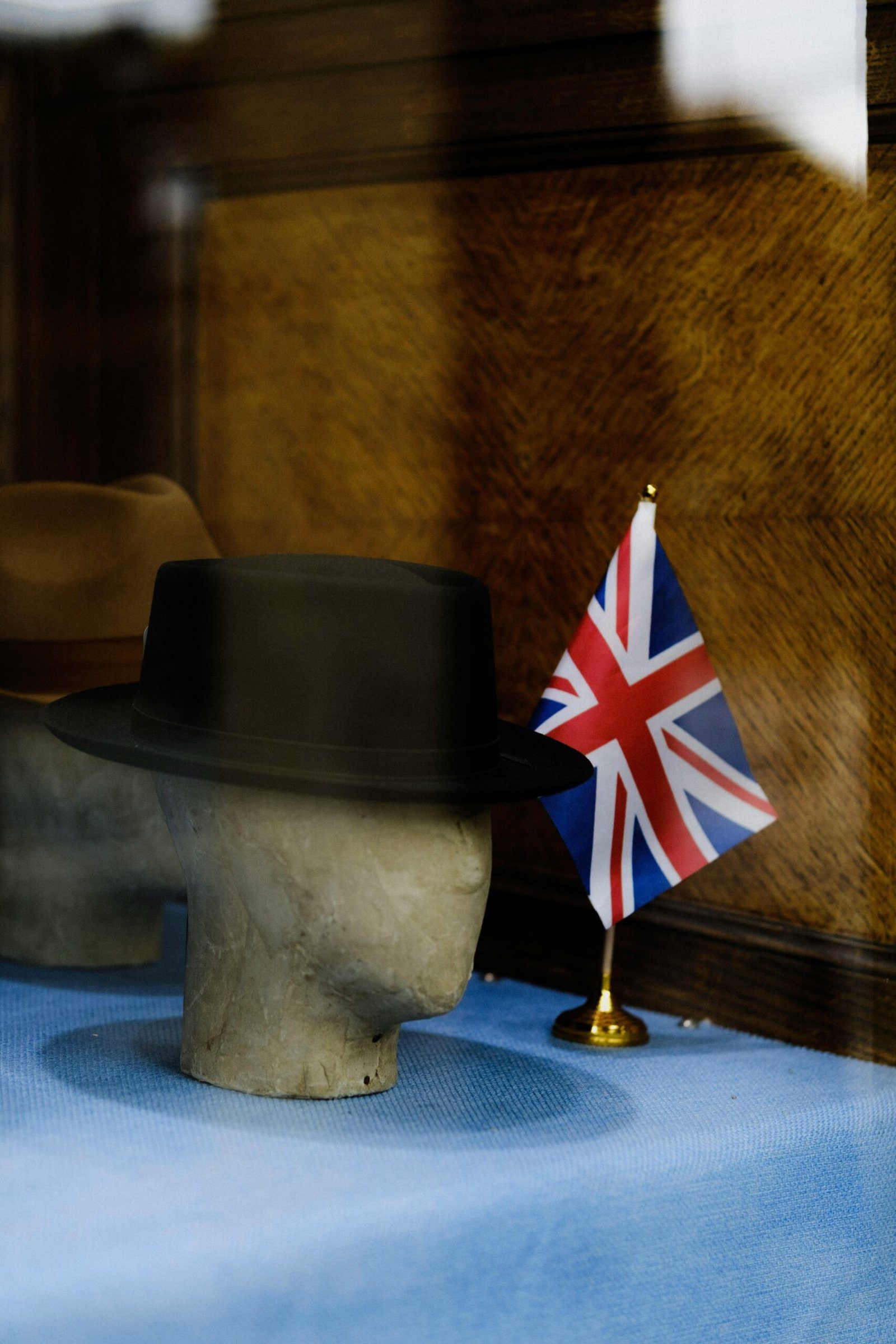
The Doors of Misconception

A Hard Day’s Night  

It was a Thursday. The New Friday. The penultimate day of the working week. Not just any working week, either: my first working week earning a paycheck as a trainee lawyer. This was it – where all roads led. All the absurdly-late law library nights with book and pen in the heart of a traditional Red-Brick, Russell Group institution. The reward for such dedication was to be a career of even later nights behind a screen, waiting for something to happen. Those twilight hours would blur their way into early mornings, just as the lines were blurred between work and life. 

But that came later. This first week was the honeymoon period. A soft launch before the rough ride. It was a time for celebration and to reap the rewards of years of academic toil and social sacrifice. Just one day until that Friday feeling… 

It was autumn, but a cold one. The combination of unseasonal weather and a desire to look the part I was playing required a wool overcoat. I lived in the city, only a ten-minute walk from the office. This gave me enough time for a final check of the email inbox to top up a sense of self-importance that couldn’t quite be filled by the resentful looks that I mistook for awe from passersby who’d only ever seen a courtroom from the other side.

My work phone lit my face: one unread email, to the whole Corporate department, from a partner:

“Hi all, 

It seems that someone has taken my coat from the cloakroom. I’m sure this is just a misunderstanding and, whoever you are, you need not ‘Reply All,’ but please do let me know if you have it and make sure that you safely return it tomorrow morning. 

Thank you”

I walked into my apartment where my girlfriend was getting ready for bed. It would soon be rare to see her on the safe side of midnight. I told her of my day at the office and the funny email I’d just received, reading it out in a mocking impression of the partner in question. I distinctly remember saying, “Who’d be stupid enough to take someone else’s coat?” as I was rudely interrupted by the appearance of said partner’s wallet landing heavily on my bed as I emptied “my pockets” like some sort of evidentiary exhibit in a burglary case. 

Revolver 

This was merely one of many baptisms by fire that my legal career had in store. But I recount it because it was my realization that the job I had begun bore very little connection to my legal education. Sure, I could write a thought-provoking, debate-contributing thesis, full of brilliant reasoning and endless ethical arguments while also compliantly-referenced within an inch of its life. Sure, I could produce reams and reams of color-coded revision notes with a matching stack of flashcards tall enough for a makeshift dinner table. Sure, I could regurgitate legislature, academic criticism, and textbook quotes to fill the blank pages of a three-hour exam–

But when it came to understanding the strange etiquette of an office environment – the employee hierarchy; how much small-talk was appropriate in the restrooms; how to distinguish between an “open door policy” and a door that had been slammed in anger; how much procrastination to build into each day to ensure there’d be at least two hours’ work remaining at contracted home time so I could stay late; putting 1,000 numbered pages into lever-arch files while a pin-striped millionaire barked Millennial-hating orders; or to which political faction of the “team” to align myself to maximise career prospects – I was out of my depth.

In this gladiatorial arena, it seemed one needed to arm oneself. And, it seemed, the only weapon with which my enviable university education had sent me into battle was a robotically-high tolerance for alcohol.  

“If you have a law degree you’ll be able to do anything,” they said. “It’ll open a lot of doors for you.” 

(Image courtesy of Tomás Robertson)

Will I? Did it? It opened plenty of doors to rooms I didn’t want to stay in, that’s for sure. It’s now eight years hence and I’m three months into my new career as a writer. Other than a couple of forward-looking organizations that have provided me with an outlet to build my portfolio on a voluntary basis, it’s been nothing but tumbleweeds. 

No employers are interested in my A*s or my Bachelor’s Degree (with Hons), my MSc in Business, my commercial awareness, research skills, forensic attention to detail, managerial and budgeting experience, written and verbal communication, ability to put people at ease, or my unique sense of perspective. What they want is “at least 3 years of employed experience as a writer.” If I can’t get experience until I’ve had a job and I can’t get a job until I’ve had experience, then the doors opened by my fancy degree are revolving ones, at best. 

If I could make legal submissions to the UK job market as it waxes lyrical about “transferable skills,” I’d say that for my seven years in the legal industry I was a writer. 

Every day (and they were many and long), I crafted detailed audience-focused advice notes for sophisticated and unsophisticated clients. I drafted witness statements to High Court specifications. I instructed barristers of the Queen’s (and King’s) Counsel. I wrote articles to promote my firm’s expertise in the market, optimized for SEO clicks before anyone knew what SEO even meant. And, at least once a day, I was fine-tuning my passive-aggression via email whilst defending some historical decision somebody had made but nobody could remember.  

Help! 

Sometimes, in my life’s quest to find The Doors of Perception, I think that the only doors I’ve opened are The Doors Of Misconception and, sometimes, I wish I hadn’t – for those who live in blind ignorance of their own warped sense of reality are often more content. 

I jest, of course. As my wife keeps telling me, it’s still early days for my writing and I’m sure my experience will pay dividends soon. Something will turn up. For all the disappointing actuality in the face of expectation and for all the surprise that nothing is quite as I imagined it would be, if my life has taught me anything thus far (as you might guess from my subheadings), it’s that The Beatles weren’t wrong about much. And if The Beatles have taught me anything, it’s that “there’s nowhere you can be that isn’t where you’re meant to be.”

I’m prepared to trust the process, as exhausting as it may be – at least until my savings run out. 

Adolescent Takes His Own Life After Online Extortion

Caleb Aaron Moore, a 14 year old of El Dorado, Kansas, USA, died June 10th, 2025 at 1:32 pm in his father’s home due to a self-inflicted gunshot wound.

He took his own life after an incident of online extortion in which an adult convinced the adolescent within 35 minutes of revealing their true identity to load their father’s gun and shoot themselves in the head.

According to Morgan Moore, Caleb’s Mother, in the brief encounter Caleb had he believed he met a young girl his age via Tik Tok, who was interested in getting to know a boy her age, and in less than an hour, the extortionist posing as a minor convinced Moore that killing himself was the only option he had to protect himself and his family.

Caleb’s father, Tarrel (Ty) Moore, was alerted to an emergency at his home by a security device upon which he saw his children fleeing their home in an alarming manner. The last text Ty received from his son Caleb, less than an hour prior, stated, “Everything is going to be ok, dad.”

“Caleb was such a sweet kid. He never wanted us to worry about anything,” says Ms. Moore. She said she had spoken with Caleb previously about online safety and appropriate behavior on social media platforms.

She believes Caleb’s guilt over having violated those boundaries made him more vulnerable to manipulation.

“I’ve talked to five other families whose teenage sons committed suicide as a result of similar extortions,” Ms. Moore added.

Unfortunately, not much authority exists in the digital realm with regard to what local, regional, or even federal authorities are capable of in extortion cases such as Caleb’s.

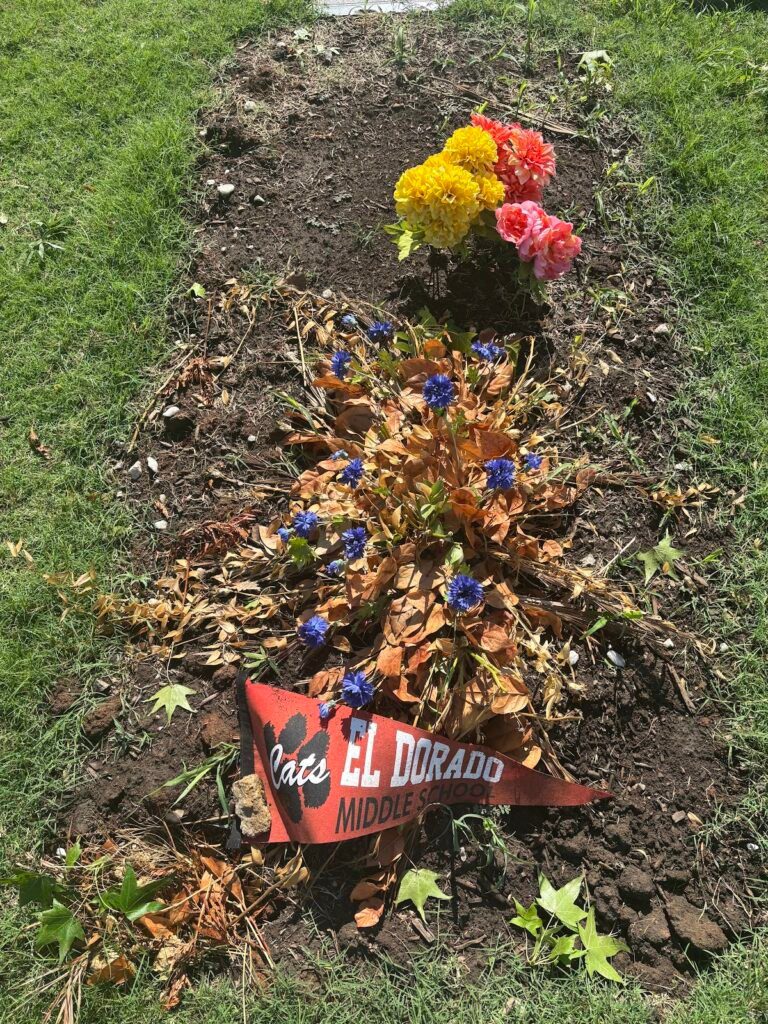
Caleb Moore, the 14 year old boy’s Grave

“A constant conversation,”, is Ms. Moore’s solution to such digital extortion, specifically with regard to children and social media, adding, “TikTok and Snapchat are pretty big foes to throw stones at. They don’t know what to do about it either.”

Ms. Moore also argues a solution to this digital problem, given the vast power of the shapeless Internet, has to be found in humanity. Caleb’s death is one example of the exponential growth of negative consequences of digital life, running right along with digital life’s exponential growth. “I can’t go to Snapchat to fix the problem,” she lamented.

There is no official statement on Caleb’s case as the death is part of an ongoing investigation. Caleb’s parents are hopeful that the investigation will provide further insight. 

“There’s only so much justice you can get from one person getting caught,” Ms. Moore noted with regard to how expansive the problems of the digital age are occurring.

The Day A Stranger Saved Me

Sometimes, superheroes aren’t our friends, siblings, or even our parents. 

Sometimes, they are a complete stranger — someone who appears out of nowhere and changes everything, and I mean every single thing. 

My graduation day had finally come — the long awaited day. Excitement kept me awake the night before as I imagined being called a senior student. I couldn’t wait to wear the beautiful dress my grandma had gifted me and step into my senior student era.

That morning, I woke up before everyone else, so happy and eager to get ready. But when I checked the reservoir, I realized that there was no water left for my bath.

 If I wanted to prepare for my big day, I had to fetch some water.

It was too early to wake our neighbor who had a water pump, so I had only one option: the nearby river.

Without thinking twice about it, I grabbed my bucket, slipped on my clothes and the slippers my mother had recently bought for me, and walked to the river. 

On my way, I was so excited that I swung my arms and played with the beads in my braids, already picturing how I’d style my very cute hair.

From stranger to superhero

When I reached the river, I rolled up my trousers so they wouldn’t get wet and stepped into the cool water. In a few seconds, I carefully filled my bucket and turned to leave. However, just as I took two steps forward, my right slipper slipped off and floated away. 

Oh my God, I was so scared and panicked.

My mother had warned me not to lose or destroy my slippers because she wouldn’t buy me a new pair anytime soon. Without thinking twice about it, I dropped my bucket and rushed to grab my floating slipper.

That was a mistake.

Before I realized it, the water had already swept me off my feet. Gosh, it was not funny.

I kicked, struggled and struggled, reaching for anything to hold onto, but nothing was within my grasp, and I didn’t know how to swim at that time. 

(Incidentally, I am now an expert swimmer, and I’m sure I could compete in the Olympics if I wanted to).

The harder I fought, the deeper the river pulled me. Water rushed into my lungs. My legs became weak. I couldn’t fight anymore.

 Just as I was about to give up, a man — a stranger, my superhero — jumped into the river.

I barely saw him before his strong hands grabbed mine. I was too weak to hold on, so he pulled me out of the water and carried me to the shore.

I sat there, shaking, confused, and scared. Tears filled my eyes, not just because I had almost drowned, but also because my slipper was gone. 

My mother would be upset because she had already warned me not to go to the river alone, but I never listened. There was nothing left to do but return home and prepare for the day.

My superhero walked me back. Our house was only a short distance from the river. When we arrived, my mother was angry, but also filled with gratitude.  

I was alive and not dead. She thanked my superhero repeatedly in Yoruba (a major language in Nigeria), saying, “Ese gan ni.” She invited him to dinner that same day, but he never showed up.

As soon as he left, she turned to me, and let’s just say that I received the beating of my life.

After that, she sent my older brother back to the same river to fetch water so I could finally bathe and prepare for my graduation.

 I tried, tried really hard, but no matter how much I tried, I couldn’t feel the excitement anymore. The long-awaited day had turned out to be one of the saddest of my life at the time.

(Image courtesy of Gabriel Bassino on Unsplash)

A stranger’s kindness can change everything

Looking back to that day, I realize that sometimes, the people who save us aren’t the ones we expect. It’s not always family or friends. Sometimes, it’s a complete stranger.

And just like how my superhero saved me, we, too, can be someone else’s superhero.

While my graduation day did not go as planned, and I felt sadness from it all, I am still grateful for the man who saved my life. He taught me that we should care for each other and be kind to each other, even when we are strangers.

Because kindness isn’t limited to those we know, and these acts of kindness can make the world a better place.