
Every Day Is Halloween in Iran

Halloween comes once a year for most. A night of masks, spooky movies, and pretend scares. But in Iran, under the rule of the mullahs, every day is Halloween.

The mullahs hide behind the mask of religion while practicing a reign of terror. They turn faith into fear and laws into lethal weapons. The world celebrates Halloween as a once-a-year fantasy. For Iranians, it is a daily horror. 

I am Iranian. It was for me. 

A death that sparked a movement

On September 16, 2022, Mahsa Amini, only 22 years old, died after being taken into custody by the frightening gasht-e ershad patrol — “Guidance” in Farsi, but we Persians call it the morality police. 

She was arrested and taken to the notorious Vozara detention center because of her hair. Too much of it showed from beneath her hijab. Three days later, she was dead. 

The regime insisted it was a heart attack, the people knew it was murder, something a UN report later confirmed. Protests swept across the country. People took to the streets with courage, but unlike in the West, they could not carry painted signs. In Iran, even holding a sign is enough to be detected, arrested, and imprisoned. The images of banners you may have seen come from protests abroad, where Iranians in exile have the freedom to speak in ways that are impossible inside the country. The government responded with full metal jackets. 

More than 500 people were killed to prove that Mahsa’s death was not their fault. Proof this is the Islamic Republic within Iran

Iran protest for Mahsa Amini - signs read “Women.Life.Freedom” - Santa Monica, CA - October 08, 2022
(Image courtesy of Craig Melville via Unsplash)

Since then, executions have become the regime’s loudest weapon. More than 10 protesters have been executed since the uprising, their deaths meant as warnings. In just the first nine and a half months of 2025, more than 1172 people were executed, about three every single day. Imagine this in the 21st century: a state that takes lives on an industrial scale to prove its power. More proof

The cruelty is not limited to the streets. On January 8,  2020, Ukraine International Airlines Flight PS752 was shot down by Iran’s Revolutionary Guards just minutes after takeoff from Tehran. All 176 people on board, men, women, children, even an unborn baby, were killed. Iran became the only country to shoot down its own civilian plane in its own airspace.

The horror stretches back to the beginning. After the 1979 Islamic Revolution (recall that the country became known as The People’s Islamic Republic of Iran), thousands were executed. Opposition to the regime was framed as opposition to God. 

Graves of hundreds remain unknown. 

In the 1980s, the Iran–Iraq war was prolonged. not to defend the nation but to silence dissent under the slogan of “wartime unity.” To this day, the true cost of human horror in that meaningless war is hidden.

A dried lake, a dried future

The regime’s brutality is not only against people, but even against nature. Lake Urmia, once the largest saltwater lake in the Middle East and the place of childhood summers for many, has dried. Neglect, mismanagement, and corruption drained this natural treasure and place of cultural heritage, leaving behind salt plains and despair. 

Even the land bears scars and wears the mask of this misrule, bereft and humiliated.

A real-life Halloween

What kind of regime kills its women for the way they wear their hair, shoots down its own people in the sky, drains its lakes, and executes three people a day, all while demanding respect? 

I know this horror personally. As an academic, my work and my voice put me at risk. The same regime that silences women on the street has no tolerance for those who speak up in universities or in public life. In solidarity with the ‘Woman, Life, Freedom’ movement, I resigned from my position in Iran in 2022. That act of conscience made me a target. Like so many others, I was forced into exile, not out of choice, but out of necessity, to protect both my life and my ability to continue my work.

Here in the West, I have witnessed Halloween in its sweetest form. Children knocking on doors in costumes, candy-filled buckets, laughter under streetlights. I have seen a tiny mermaid holding her father’s hand, a Glinda the Good Witch skipping along with friends, and even a toddler dressed as Sonic the Hedgehog racing up and down the sidewalk. This is what Halloween should be: play, imagination, and community.

Back in Iran, the most dangerous Halloween costume in the world is worn every day. This is the cloak of the mullahs, because behind it is not a happy face, but a machine of death.

The difference between once-a-year Halloween in the West and everyday life in Iran is simple: during Halloween, your fear is pretend. Your nights are filled with trick-or-treat candy and fun. Your daylight brings safety. In Iran, our nightmare does not end at dawn. It just continues to haunt.

Yet Iranians endure. Despite decades of brutality, they remain among the kindest, most resilient people. They hope that there will be light at the end of this darkness. One day, the mask will be torn away, so the nightmare will end. 

This Halloween

Soon, I will stand at my door and see children on my street dressed as witches, superheroes, and fairy-tale characters; their laughter will no doubt echo into the night. Their joy in a world where fear is only pretend gives me hope. Hope that one day, children in Iran too will know only the sweet kind of fright, the kind that ends with candy at dusk and safety at dawn. And perhaps then, the mullahs and their reign of horror will be nothing more than a dark fairy tale told of the past.
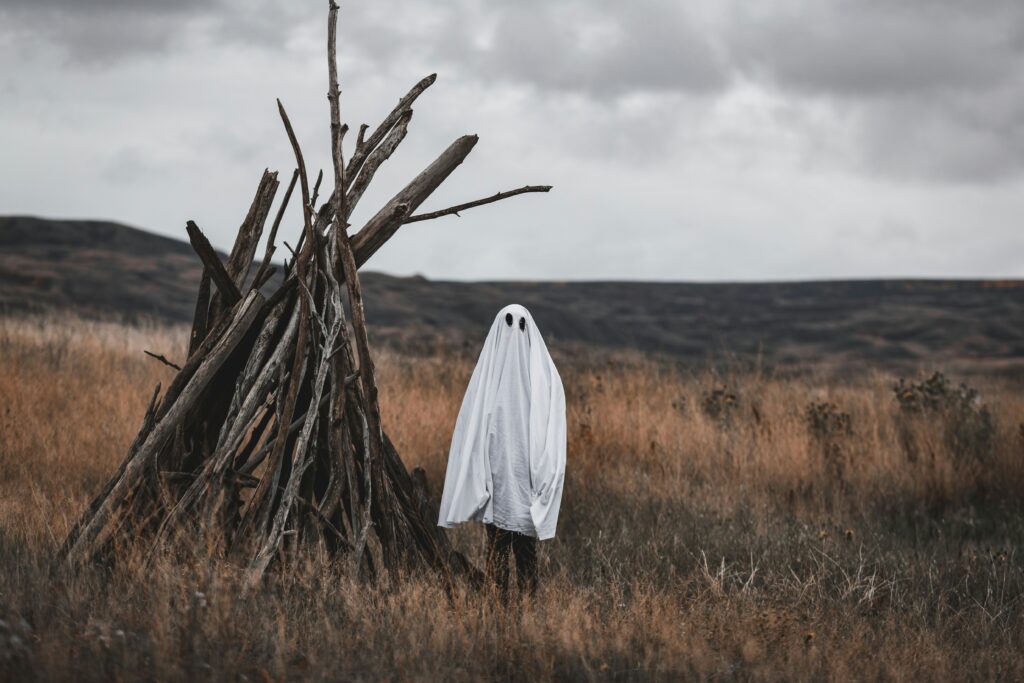

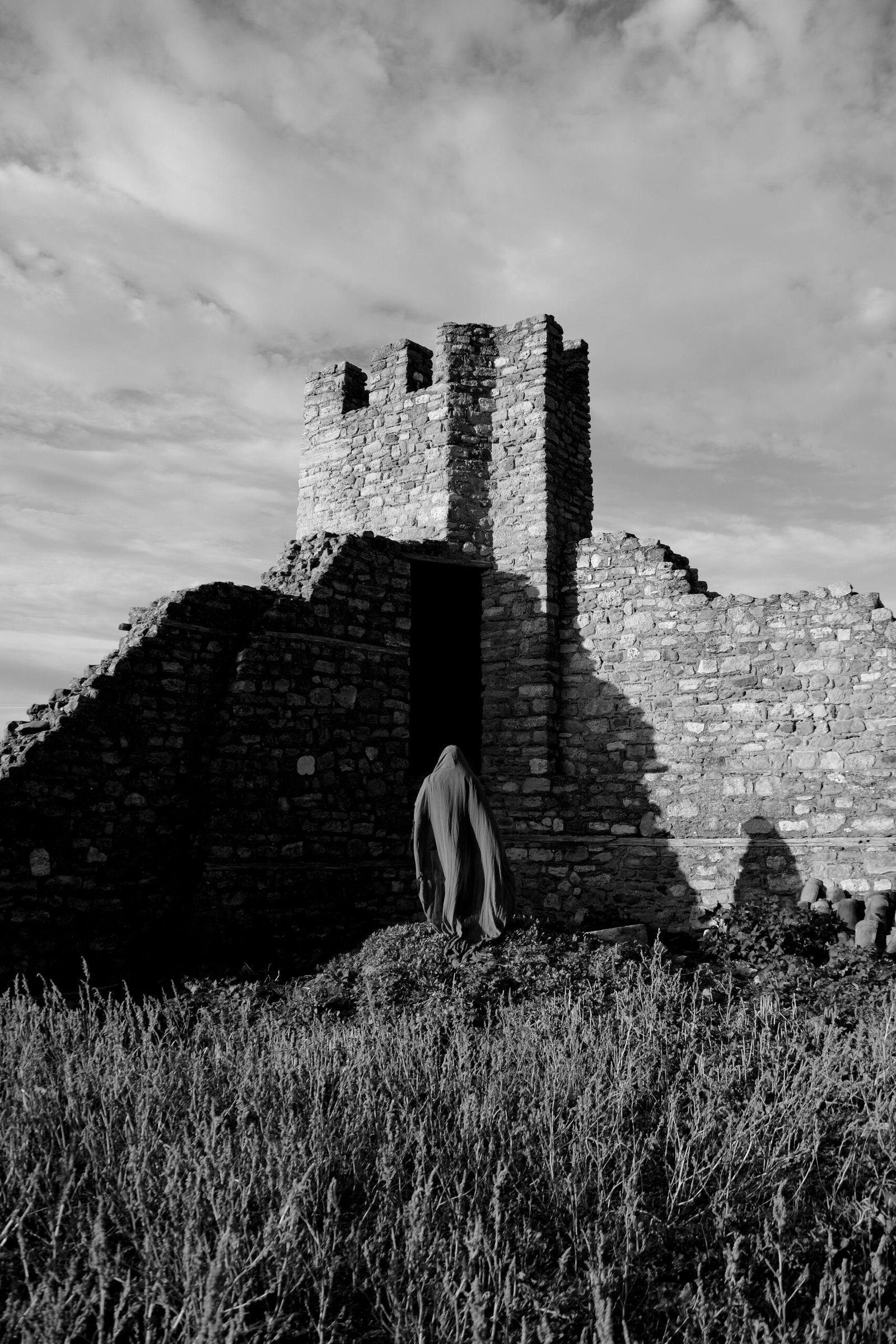
Ghostly costume beside unlit pyre in bare field, Saskatchewan, Canada
(Image courtesy of Tandem X Visuals via Unsplash)

A Moment to Breathe

As the year comes to a close, a sense of panic and the need to hurry often rises in the air with back-to-back family dinners, unneeded arguments about pointless topics, and the occasional yet unavoidable political conversation. The tension is often inescapable. 

I would know, as my family is well-versed in participating in all of these topics, yet family is still family and nothing will change that. But for me, the feeling of a true change in the air occurs between the months of October and November. The excitement of summer is over, people are back in school, so for me it feels like the world is starting to slow down in the best way possible. 

Even though I’ve lived in Florida my whole life, I’ve never experienced a “true fall” before or a real shift in the seasons where the leaves turn from green to orange, red, and yellow. While we do have a “Florida winter,” it does not happen until the months of January through March, and there’s no surprise of snow. Without the seasons changing in the South, the air does change for me. I feel the summer heat go away after a while, and the air feels fresher in my neighborhood as well as in Central Florida where I grew up and still spend most of my time. 

This shift brings a sense of peace to me and makes me feel motivated to make lifestyle changes. Whether it be eating healthier, working out before the New Year, or wanting to finish a book that has been collecting dust for weeks, I only get this motivation towards the end of the calendar year. As the year is soon over and while all the craziness of Thanksgiving and Christmas is about to take place, I know I’ve got a few good weeks before that happens. 

A cup of latte on a wooden tray with scattered pumpkin-pie spices and ladyfinger cookies
(Image courtesy of grafmex via Pixabay)

During the months of October and November, it is usually the time for pumpkin-spiced lattes and reading scary novels. I am mainly trying to catch up on my extensive reading list and going crazy for all of the caramel-apple-flavored snacks. By this I mean my household will devour an entire bag of caramel apple flavored lollipops, while my Dad and I still talk about Robert Egger’s Nosferatu and how he is still amazed at Bill Skarsgård’s use of Dacian in the film  (now the Romanian language). 

With this sense of peace and even normality approaching, I can’t help but wonder why this happens at the end of the year rather than at the beginning. I think it’s because everyone knows that the year is about to end – good or bad – and that we all want to move forward with happiness and a new set of goals. 

Brrr!

While I don’t take part in New Year’s resolution’s anymore, I technically start them around this time because I know they’ll stick. This just adds another reason as to why I believe that the “ber” months bring a different kind of a reset to my life. I feel more motivated, energized, and even more fulfilled when I accomplish my goals during this time of the year. I’m so thankful to have this change happen within recent years. It feels like I can, as well as the world, truly breathe again. 

Even with all of the good food and much loved family time, there’s something so special about the months of September through November. But November feels the most chaotic, yet peaceful at the same time. I know that I can actually check items off my seemingly never-ending list that never gets any smaller since I graduated from UCF last year.

I no longer have that “holiday stress” of getting essays and other projects done within a short amount of time. I know that I can truly take my time with life, and I no longer experience that ‘burden’ of falling behind in life both personally and professionally. I know that I can dawdle on goals that I have set for myself or if my Mom wants to join in. November especially brings us the time to slow down and appreciate life in all of its chaotic neutrals to remind us what life is all about. Taking a moment for yourself and for family is what matters the most, so we have to enjoy it while it lasts. 

You Wake Up In Your Childhood Bedroom

You wake up in your childhood bedroom, and the bad things that happened to you haven’t happened to you yet. It should make you happy, but instead it aches. You can’t curl up inside your childish innocence because it isn’t there. You could pretend it was, if you really wanted to, but you don’t want to really. As you watch the early morning sunlight dance across the wall, you wonder if you can change things this time. You wonder who you’d be if the bad things that happened to you never happened to you. Did they make you better? Did they make you worse? If the bad things that happened to you never happened to you, would you truly be you?

You wake up in your childhood bedroom, and the bad things that happened to you haven’t happened to you yet. You realise that you’ll need to pretend that nothing has changed, and so you go downstairs, your bare feet treading on stairs that you haven’t touched for years. Your brother is already in the kitchen, and he is still your brother because he doesn’t hate you yet. His face is the same as it once was, trapped in the liminal space between boy and man, and his eyes meet yours with that look that only a brother can master, halfway between awe and disgust, respect and embarrassment, shame and love. Before it really occurs to you what you’re doing, you pull him into a hug, the kind of hug that clamps and tightens, the kind of hug that suffocates but is all love, so much love, love that can maim you and love that can mend you. He stiffens at first, then realises that there is no audience to perform for, no jeering friends lingering in the corners of the room, and, as his bony arms wrap around you, a thought solidifies in your mind that things cannot decay this time, that you must hold onto this bond for dear life, grasping and gasping until the rope burns your palms, because this time you cannot lose your brother.

Your sister is not there. Your sister is never there. Your sister is an absence. Your sister is the space between heartbeats, the gap between ribs, the sound of silence on the other end of the telephone. 

You wake up in your childhood bedroom, and the bad things that happened to you haven’t happened to you yet. Your dad comes down and makes breakfast, because that is what he always used to do, and the crackling of bacon and the music on the radio hit you like the melody of a song you haven’t heard in years; first slowly, then like a fierce punch in the stomach with all the force of a car crash. You realise now that you never used to appreciate these tender moments, too tired to do more than sit and watch the breeze dancing through the kitchen blinds. You never appreciated these moments, because you hadn’t realised yet that one day they would be over. You never noticed that, morning by morning, your father was getting older, his presence less resolute, his voice and body less strong. You never considered the fact that one day your mornings would be silent, that one day your father would be gone. But now, burdened by the knowledge that your father’s time is running increasingly short, you wish that you could live in this moment forever, eternally untouched by the sands of time.

You wake up in your childhood bedroom, and the bad things that happened to you haven’t happened to you yet. You make your way back upstairs after breakfast, and, as you reach the hallway, the scent of your mother’s perfume drifts towards you, as gentle as the lullaby she would whisper across your fevered forehead on unsettled nights: a balm of words, a remedy of song. There was always a tenderness to your mother, but there was a sharpness too. She was quick to comfort but even quicker to blame. She was there to take you into her arms after the bad things happened, but she was also the first to suggest that you might have deserved it somehow, that perhaps you had been too forward, too bold, too reckless, too impulsive, too much, too yourself. She was a confidant and an accuser, an ally and a judge, a friend and a stranger. She was your mother, and yet you never truly knew her. You knew only the masks she would present to the world, the image she would carefully curate while the rest of the family was eating breakfast, the perfume, the final act of the performance. You do not knock on the door, because you don’t want your mother to see you. You never wanted your mother to see you, and yet, at the same time, you wanted nothing more. You don’t want your mother to see you because your mother could always see through you, and she would be the first to know that something was different, that you weren’t the child you had been the day before, that you never would be again.

You wake up in your childhood bedroom, and the bad things that happened to you haven’t happened to you yet. You realise with a sense of certainty that you cannot stay. You have long overgrown the mold that was cast for you there. Trying to live out a life that you have experienced before makes you feel ungainly, a giant trying to live in a miniature cardboard town. You’re the only living soul in a house of ghosts, and you can feel yourself slowly becoming haunted. The bad things that happened will happen, have happened, will never not happen, and you would be foolish to try and change that. You wake up in your childhood bedroom, but you do not fall asleep there. You close your bedroom door for the last time, walk down the stairs, open your front door, and walk out into the mild summer night. You don’t know where you are going, but you know that you can’t return. You try and tell yourself that things are better this way, but the lost child inside you knows that that is a lie.

Vampyr

Editor’s Note: This poem is inspired by for-profit healthcare.

Vampyr

Damned immortals,
Congregating in shadowed,
Towering temples of
Sacrilegious declinations;

Unholy meat Grinders
Drain flesh with
Bloodied syringes,
Syphoning tonight’s supper–

None dare yield.

Blood suckers–
Alabaster babes who grew hollow–
A summoning,
Under preordained doom.

Clandestine blood bags,
Meetings conducted in
Morningstar’s heralding grace,
Warning of daylight’s revelations…

Sharpen your stakes,
Adorned in runes and pockmarks,
Spelling their incineration,
Harkening the collapse of parasitic empires.

Let’s Conjure Up Some Jump Scares!

As someone who loves horror films, they still find ways of haunting me. Even now, I occasionally wake up in the middle of the night from a nightmare that feels as real and chilling as Halloween night. In my eyes, these cyclical terrors reveal how expertly crafted the creatures and jump scares of fictional films are. Anytime a jump scare occurs, especially in the Conjuring films, which are personal favorite frights of mine, I have to turn my attention to a random corner of the screen or not look at all. That’s how much they get under my skin. 

With its final film premiering this past September, The Conjuring film series has made its impact as a horror film staple for many horror buffs. The films are fictional retellings of notable, real life cases of paranormal investigators, Ed and Lorraine Warren. Whether or not you believe the events of these chilling ghost hunts are factual or fanciful, the films are a perfect example of what horror films should be: fun and entertaining to watch. Furthermore, the franchise contains jump scares that have lingered in the dark recesses of my mind for years, and they remain insidious reminders of the art of a great scare.  

Prior to the franchise’s final film release, I have been rewatching the previous installments in anticipation of the new horrors that inevitably await me. However, of the four previous films, I cannot seem to get past The Conjuring 2 because of one specific performance that always manages to send shivers up my spine. The character of the “Crooked Man” is a standout ghoul of the second film, invading the household through a toy zoetrope (a spinning lantern) and his eponymous children’s song. I am so terrified of this menace that I have to hide my face behind my hands throughout the sequence – I still don’t entirely know what happens!  What I do understand is that the talented actor who plays the “Crooked Man,” Javier Botet, is able to move his body in such a foreboding way that it makes the character unnerving and desperately uncomfortable to watch. Acting directly against Patrick Wilson (who plays one of the series’ protagonists, Ed Warren), Botet moves like a horrific animatronic, sending the audience spinning like the zoetrope he leaps out of in the dark. 

Speaking of the dark, watching any horror film in the middle of the day seems like the best option for me despite the fact that any little noise after the credits roll will make me question everything that’s going on in my own home. And that is an extremely effective way to prove that these jump scares and other techniques awaken my fight-or-flight mode and rattle me when I’m home alone. A prime example of this manifests whenever my family and I make the mistake of watching a scary film at night. It is my job to take our beloved dog outside for the evening, so, every night without fail, I always glance into the dark garage just to double-check that nothing is lurking in the dark despite the tiny security light remaining on continuously. I still don’t understand why I do this; it has just become a habit at this point, probably as a result of the malignant shadows that my loved ones and I so enjoy watching on screen. Consequently, I have learned that family ties are often tethered to fear as well.

A while back, I decided to watch Hereditary, a petrifying film about how some family secrets continue plaguing future generations in truly horrific ways. I viewed it in the middle of the day, being home alone, and the sunshine brought me little comfort. The physical act of Toni Collete, who plays one of the film’s main characters, climbing the ceiling in her family’s home, her head banging continuously against the wall as her terrified son screams, “Mommy, I’m sorry,” will always haunt me because of her character’s unnerving silence and erratic, inhuman movements. The sight and sounds (or lack thereof) of that particular scene never fail to make my blood run cold. And other films continue to use visual and auditory storytelling to incite dread in their audiences masterfully.

I can’t even watch The Exorcist anymore because of Linda Blair’s incredibly nuanced performance as a child actress portraying a girl who is possessed. The words and actions that leave her mouth shook me to my core when I first watched the film. I was shocked beyond belief that not only was this level of brutalistic horror achieved in the early 1970s, but that my seemingly fearless mom and uncle had a hard time watching it as teenagers. While The Exorcist has produced some incredibly famous imagery, the mental image of Regan (the young girl possessed by a demon that Blair plays) profusely cursing and spitting at the priest and her family trying to save her/exorcise the demon is something I’ll never get over. The very sight of Regan’s appearance changing as she swiftly loses her humanity and the gruff sounds of the young girl’s voice as the demon possessing her fights for control are expertly done, and the film has rightfully achieved its goal of being one of the scariest films of all time. 

More recently, horror continues to expand and include the terrors of the everyday. In Longlegs, a film about an FBI agent investigating the grisly murders of a supposed occultist serial killer, there is an emphasis on how the smallest acts can infuse horror that make one’s heart ache. Nicolas Cage plays the titular villain of the horror crime film and is an incredibly eerie character. His performance perfectly encompasses dread and an inhuman rage as he wails, “Mommy, Daddy, unmake me!” in his own car after being thrown out of a hardware store. Such a small act, as being asked to leave a store, sets Cage’s character into a spiral that utterly terrifies me and showcases how quickly someone can devolve to disastrous degrees. Understanding the additional context of the film, Longlegs’ personal yell is horrifying. Cage’s line delivery played on repeat in my mind for a few days afterwards, and it’s unlike anything I’ve ever seen and heard. 

Horror films are such a delight to experience, whether at home or in the theater, because they often expose us to things, concepts, and characters we would not dare to dream up. And, if the jump scares give me goosebumps, then I know I’ll be in for a wild ride! Additionally, horror films are a great way for my family to connect with one another. Half of my family (including myself from time to time) will binge true crime podcasts, documentaries, and macabre tv shows across all of the streaming platforms, fueling our never-ending love of the genre. My family loves good scares, whether we get them from horror films or one of the countless documentaries we have watched with bated breath and many gasps. Effective jump scares and thrills from horror films make my skin crawl, get my heart pumping, and provide terrors that I believe most individuals can’t truly fathom in the modern world. Finally, the creativity sparked by horror films continues to stand alone as an irreplaceable form of gruesome (and sometimes gratifying) entertainment. 

Grief in an Underwater Volcanic Vent

There’s this childhood  film that, no matter how outdated the CGI clearly is, just seems to get me — even today. “The Adventures of Sharkboy and Lavagirl” made me feel seen in my perceived difference from others my age; I was naturally more of a loner, more of someone on the outside. As I’ve gotten older, however, I’ve come to relate to the movie’s plot through a different understanding —that of losing loved ones.

An unexpected loss times two

At seventeen, I lost my maternal grandfather, Grampy, to stage four brain cancer. A year later, I lost my maternal grandmother, Hud,  due to an incident at her assisted living space during the pandemic. Both deaths were unexpected for our entire family.

I couldn’t process it all at the time. It was too much, too fast.

As Grampy and Hud’s only grandchild, we had a strong bond, and they were an integral part of my support system. I felt their encouragement no matter where I was in life. They celebrated me and consistently showed up for events like Girl Scouts, choir performances, birthdays, and more.

I don’t think I’d be the person I am today if it weren’t for both of them.

I often reminisce on the memories I have of my grandparents, looking through scrapbooks we made together and  watching movies we loved — like “The Adventures of Sharkboy and Lavagirl.” Over the course of the last few years, I’ve begun to process my grief through these actions. I’ve also managed to retain a connection with my grandparents despite their deaths.

Reconnecting with the things I enjoyed when I was younger allows me to experience how life was when Hud and Grampy were alive  — easier, more fun. It’s a temporary escape from the stress of daily life, from adulthood.

Grampy and Hud on one side, Sharkboy and Lavagirl on the other

 In “The Adventures of Sharkboy and Lavagirl,” the protagonist, Max, uses a fantasy realm as a method of coping with bullying and family issues; the dream world is his safe place. Like Max in his dream world, my dreams allow me to  continue my life with Grampy and Hud as it once was.

In my own dream world, my grandparents regularly appear. We carry out everyday tasks together, like shopping, going out to eat, and having Tuesday night dinners at their house. I wish that time was infinite in those dreams. In other dreams, they’re alive, and I’m trying to prevent their deaths to no avail. Those dreams can’t end fast enough.

I now have a constant fear of unexpectedly losing more loved ones. Emergency medical situations are anxiety-inducing, as are travel plans. My  grief is also hard to contain — it overflows, causes me to do things out of the ordinary, and makes me want to punish myself. It’s agonizing, and intensifies my depression and suicidal thoughts. I blame myself for what happened to them, even though I know it wasn’t my fault.

When life doesn’t feel as heavy, I speak about who Grampy and Hud were in honor, much like Max proudly sharing the legacies of Sharkboy and Lavagirl to his peers.

Image of a sailboat floating on the water. Above is a night sky filled with stars.
(Image courtesy of Johannes Plenio on Unsplash)

I don’t know where they went

Mentioning Hud and Grampy in the past tense reminds me of Max in the beginning of the film, when he’s unable to explain where Sharkboy and Lavagirl are. Another character asks him: “Why don’t you bring Sharkboy and Lavagirl to class tomorrow?” Max explains, “They went away. I don’t know where they went.”

Much like Max, I don’t know where Hud and Grampy are or where they went. I’m not religious, nor do I have any particular beliefs about what happens after. In all honesty, I don’t really want to think about in what state they might — or might not — exist.

Max knows that Sharkboy and Lavagirl are real, and he knows where they are when he’s asleep — they come alive when he’s dreaming. At the behest of his family and peers, Max tries to tell himself that Sharkboy and Lavagirl don’t exist, but he finds it difficult to believe. This reminds me of the first stage of grief: denial. 

Immediately after Hud and Grampy’s deaths, I found it challenging to refer to them in the past tense. It was an internal denial of their passing; I just couldn’t accept it.

The aftermath holds so many questions

I daydream often about how differently my life would have turned out if my grandparents were still alive. Would I be happier? Would I still have admitted myself to a psychiatric facility last year? Maybe it’s unrealistic to think their presence would have changed much, but the questions remain for me.

There’s a moment in the film where Lavagirl asks Max to dream about her so her identity will become stronger. She tells him, “Dream about me next, Max, I need to know who I am. Not just destruction, or a simple flame. Dream of me as something good.”

I frequently wonder which pieces of my identity are a result of Grampy and Hud’s love  and which pieces were lost when they died. More questions bound through my brain during these moments.

Would they think I’m a good person? Have I made them proud? What advice would they give me? I’ll never know the answers to these questions, and I never will.

I can’t change the past or bring them back to this earth. However, I can focus on how much love they had for me, and I for them. Those recollections are my safe place, especially when life feels heavy. 

I can’t yet  mend the parts of myself that were broken when they died  back together, but I can hold onto their memory. And like Max, I can dream of them — where life goes on just as it used to.

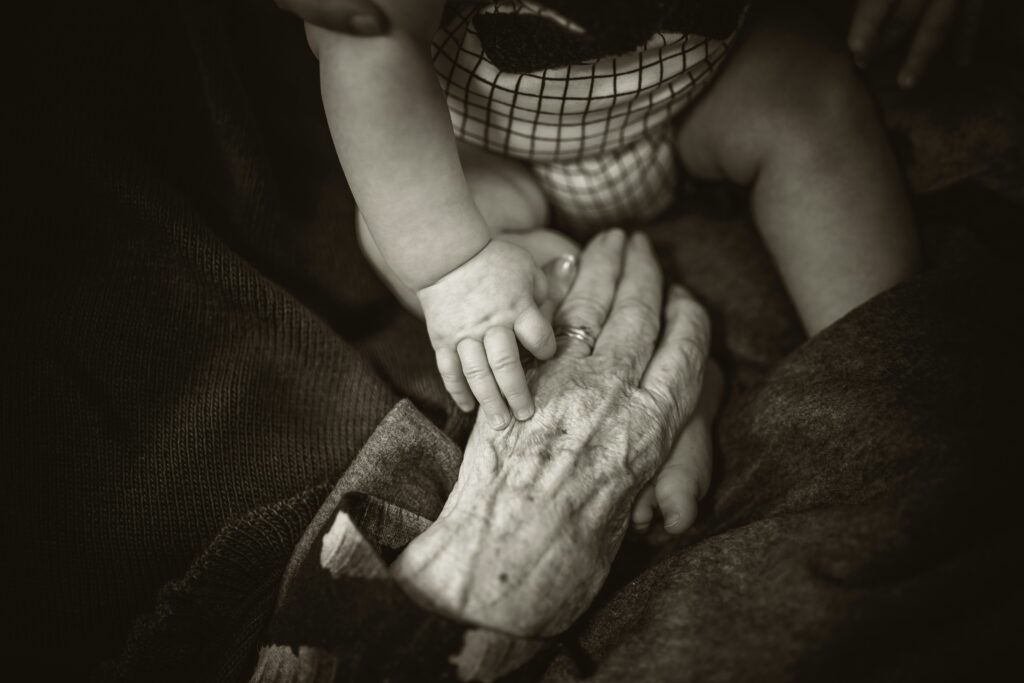
Image of a grandparent holding a small grandchild’s hand.
(Image courtesy of Rod Long on Unsplash)

The Boulevard of Yesterday

The Boulevard of Yesterday

To my great surprise, the year has turned its cogs once more through their cycle, delivering us to the dreary descent of winter and everyone’s favorite pumpkin-slaughtering holiday — Halloween. Now, the day itself doesn’t represent a great deal for me or my family. I know Mum will be tucked up in a blanket next to her expensive log burner, enjoying the autumnal chill that October heralds — the excuse for tucking away on lazy evenings. Dad will have forgotten (not for the first time) to stockpile any sweets before the inevitable stragglers in threadbare costumes come salivating at the door. There’s never been much ceremony for ghosts and goblins, or any of that materialistic nonsense, but this year will be special.

Not to blow smoke up my ass, but I am my parents favorite (and only) son, and I will be blessing them with my company.

Feels like an age since I saw them last. Life just escapes you, doesn’t it? One’s parade of self-importance and fractured completeness overwhelms everything; that’s to say, I’d be perfectly happy to kick my feet up with the wife in Hoxton… sneak in a signature mocktail. Perhaps bump uglies over the ominous tones of Michael Myers rampaging through Haddonfield (such a ridiculous franchise — I mean, it’s iconic and undoubtedly transformed the slasher genre, but Michael, my buddy and pal, walk a little faster). Something about this year though… We’ve grown tired of routine. “To hell with automation!” So Laura’s visiting her brother in Ireland (who’s a bit of a nut for the spooky season himself — she’ll never escape), and I’m visiting the hallowed streets of my glorious hometown… Dramworth.

You know when you’re a kid and everything feels more compact? Everything makes more sense when it’s handed to you on a silver platter — nothing adult to worry about, only your numerous group of friends, who’s snogging who and which local park you’ll be vandalizing next. A town like… Dramworth (God, I can’t even say it without dying inside) can feel like your whole world. Then you reach that second stage of young adulthood where you’d literally dig through hell and back to escape those cloying memories and never return? Yeah, the older I get… and the more this bus does a kickflip every time it hits a pothole, the more I understand where that impulse is borne from.

Something’s changed here… Even the generic bus smell is different, more clinical. Less likely to taper your nose hairs with curling wafts of ass dust… Well, no one’s mourning that loss.

Stepping off the drear-mobile, I realize it’s a remarkably on-brand day. Dull, gray skies; the distinct possibility of rain, foretold by hurried attempts to fold up the standing dryers lurking in front gardens; a biting wind that tears through any attempts to appear cool or nonplussed. There’s literally a tumbleweed in the gutter. The local witches will be most pleased.

I’ve packed only the bare essentials for staying a few nights — let’s just say I’ll be reusing underwear. I don’t know, it’s difficult to visit my parents regularly nowadays for more than short, controlled bursts at a time. I’m not attached to them by the hip anymore, so they’ve taken that strange path of evolution, upgrading from parents to just… people. People I don’t necessarily get along with all of the time. They’re like my in-laws now… Actually, no, that’s not fair. My in-laws are much better.

Still, it’s necessary, isn’t it, to repair those broken lines of communication before the portent of mental decay and the rapid search for nursing homes. That’s when they become children for the second time. When you suddenly look upon them with tinted eyes and wonder where the time escaped to. And you confront the things that were never said and now cannot be understood. Makes me shiver a little bit, so it’s not something I dwell on more than maybe… once a week.

I want to see them. Maybe I have to keep telling myself that, hoping the fact sinks in, but it’s absolutely true. There’s many a life update to share. It’s all been hush-hush till now, but… Laura’s expecting. We haven’t had the scans yet, but she’s secretly hoping that the gods of anomaly are on her side and we get twins. Two little girls. I must admit, the idea appeals to me greatly. Plus, work is blooming on my end. The company just recently processed a vacancy and they’re recommending me for…

The fountain’s gone.

Wait… Am I in the right — Yeah, I’m not that lost. This can’t be right. Ron’s Fountain, it was right here in the town center! It was, like, our one notable tourist destination. What happened? Did it get airlifted?

Come to think of it, everything’s half-falling apart around here. The shopping mall is a quarter-mile of tired linoleum and B-side shops that fall just outside the region of relevancy… Well, it always was like that (I enjoyed poking my head into Home Bargains every so often, trying to find the weirdest drink possible and sampling it with a group of my friends — that’s how I figured out I like the taste of dandelion and burdock). The market stalls in the plaza stand empty, now a labyrinth of obstacles for young lads on their Voi scooters. Exposed brickwork, fading plaster, repurposed windows… When did it get this depressing?

It’s just a shell now…

And suddenly, I get the distinct sense I’m being watched. Not maliciously, in the way of sizing up a target or judging someone’s appearance. Just a vague, apathetic awareness of one’s presence crossing into another, invading an alien space and loitering… And I realize how long I’ve been standing in this one spot, staring into an empty fountain basin and drooling onto my chin. Damn my nostalgia!

Can’t believe this. Back when I was young, that fountain was a sight to behold. One of the jets was said to reach twelve feet in the air! My friends and I never really spent much time around the fountain itself — I mean, it was swarming on all the good days, people making wishes, flicking coins into the bottom and all that schmuck.

But we knew Ron, this homeless dude who draped around the alley on Knox Road. Before the market got really busy in the mornings, around the time my friends and I would be heading to school, we sometimes caught Ron splashing about in the fountain, having a whale of a time (I mean, genuinely, I’ve never seen unfiltered joy quite like Ron’s when he got into that water). Usually we sniggered and moved on, making fun of him as young kids do, but sometimes we called out. Went and bantered with him. He was honestly such a down-to-earth guy (if, admittedly, a little unfurnished upstairs) and not at all the picture of the loony we’d generated in our heads. He always stank of petrol for some reason…

One time, the police caught him in his act. There was a standoff, apparently. Reports say he held his hands up as if they’d trained a gun on him and assured them he was only washing himself. Naturally, this didn’t go down well. Ron was chased out of there (with his pockets chock full of silvers and pennies, I imagine). From what I know, he was never apprehended, but… we never saw him again after that day, so I couldn’t confirm that.

Now that I’m three blocks away from my parents, I’m absolutely sure I’m being followed. It’s funny… I think I’ve seen maybe five people out in Dramworth today. That’s it. Maybe everyone’s fully embraced the Halloween spirit, becoming masters of disguise and fading into the creeping shadows, but I doubt this town’s coordination is that strong. Dusk is descending, so it’s possible people are just settling into their evenings. Still… It’s eerie out here, and every footstep is magnified. I’m not even sure which direction they’re coming from, but I can hear them. Around every bush, between every parked car.

I don’t fancy turning around to confront them. Back in Dramworth, having eyes on you is something you just become accustomed to while sticking to lit paths and fostering a monumental sense of awareness. I’m almost home now and, hey, I’m a grown-ass man who don’t need no…

The footsteps recede. I stop still as a crosswind picks up, scattering skeletal leaves across the dented pavement and into the road.

There’s a faint whiff of petrol on the tide of the breeze.

– – –

I ring the doorbell. Crusty old thing — one of those Victorian antiques, now green with oxidation. The front porch is inherently familiar, coaxing like a warm embrace. Mum opens the pine door. She smiles. I smile. She reaches down to help me with my case.

Yeah, this will be okay.

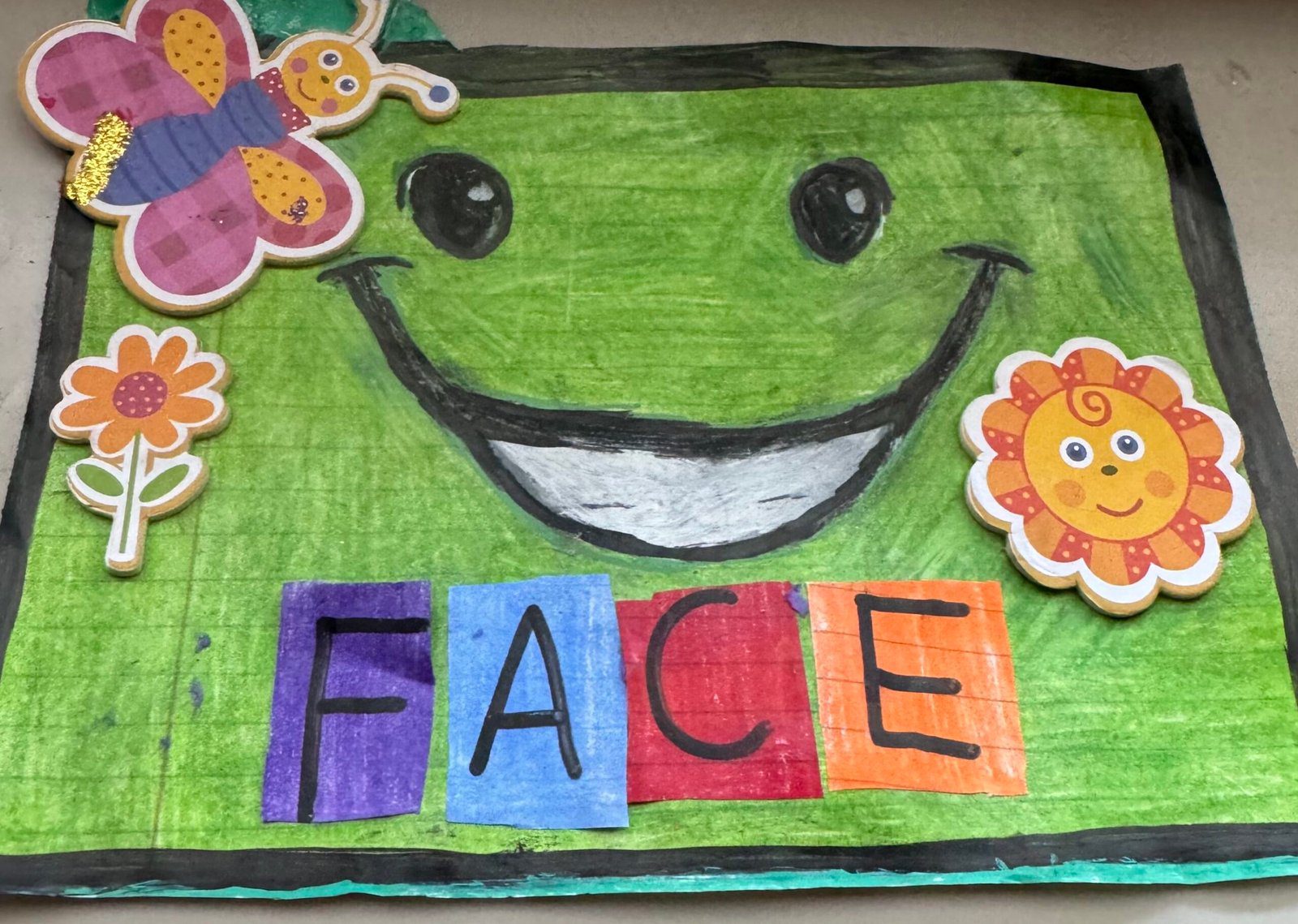
Face, Here

Be Unkind, Rewind

As the hot chocolate cooled down in our mugs, and the buttery popcorn was ready after the tape was rewound, he popped onto the TV screen. His animated purple skin, bright uncanny eyes, and devious smile materialized.

His dangerous, yet, spirited voice spoke the words, “Hi, there. Face, here!”  I began to scream, thinking of many scenarios where he could attack me. Tears began to flood down my face, like rain on a car window. Not again. Not again.

I just wanted to watch Little Bear! Why was Face here? 

His Role in My Life

Face haunted me on the daily; he haunted me whenever I watched a “Nick Jr.” VHS.

However, the most frightening thing was when I thought about Face before bed. I tossed and turned, while he took the form of objects in my dreams. One second, he was an airplane. The next, a flashlight, shining in the dark. 

I never knew what he would shapeshift into.  I was three — I didn’t understand that images cannot pop out of a TV screen and hurt you. I imagined him emerging from his pixelated prison, harming me with his non-existent body. 

It would have been easy for Face. 

A Continuation 

Once VHS tapes fell out of fashion, I was relieved to know that Face would remain a relic of the past, a horrifying memory trapped in childhood. 

By the time he was revived in 2022, I was 20 years old. Too old to watch “Nick Jr.,” too distracted with college to know about Face’s Music Party on Paramount+

As I am writing this, I don’t know why his animated voice still makes my hands shake with fear. 

My body attempts to regulate itself. He isn’t real, it’s just animation. I know he can’t cause me injury, but my inner child relives the emotions I experienced back then. 

His prison holds him, and has done so since 2004. He was let out three years ago, and his release was short-lived. Face’s freedom was tainted by his selfishness — his destiny carried out, much like that of a parasite to a host. 

Resurrecting Face

I stumbled across a Blue’s Clues VHS last month while searching for home videos. He was in a small shoebox that was labeled, “Kristen’s Things: Blue.” I didn’t see it at first, since the shoebox was trapped under a larger one that featured the motif of a VCR. 

Curiosity struck me, and a false sense of security covered my body like a heated blanket. His orange plastic casing kept me safe. 

I believed he had forgotten about my existence. Your mind tricks you, tells you that there is no harm. Occasionally, the fight-or-flight response fails to deploy. 

You are stuck in midair. There is no safety net. This might be your new home. 

Somehow, I found my way back down. I decided to open the Blue’s Clues tape. My laptop began to glitch, and the screen became a bilious shade of green. 

There was no possibility of this occurring, yet, it happened right in front of me. 

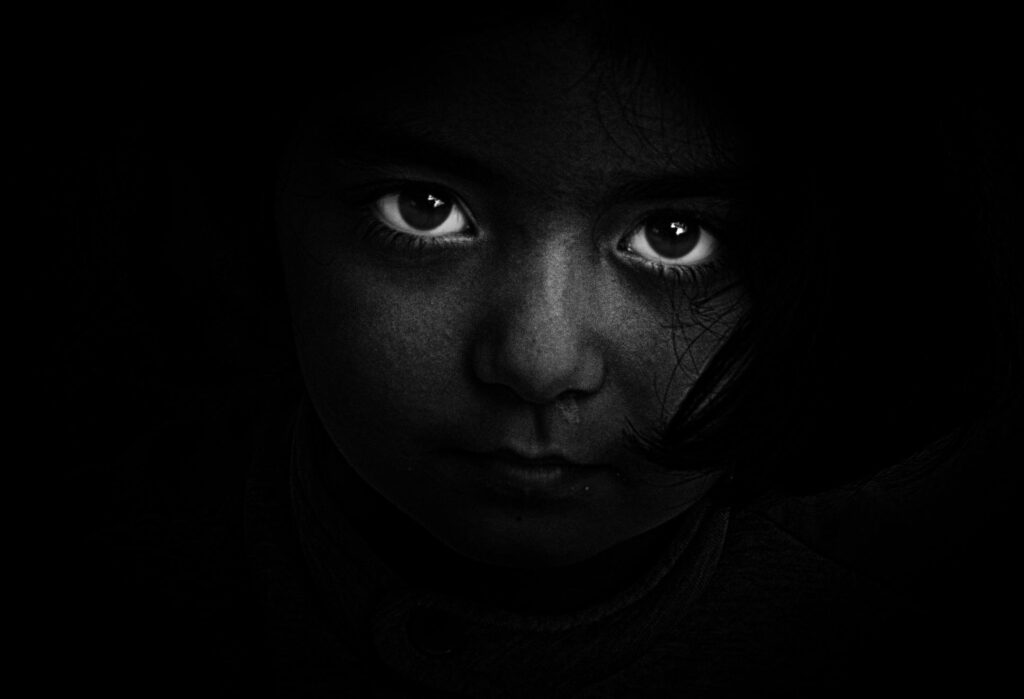
A face sits in blackness; all you can see are the whites of their eyes.
(Image courtesy of Omar Alnahi via Pexels)

Ctrl C, Ctrl V, Ctrl X

He spread his code and reproduced until his genealogy had been extended. He forced the commands: Ctrl C, Ctrl V to copy and paste his DNA.

Face spent his time doomscrolling through my files, and eventually, commanded my laptop to press Ctrl X. He lived on while my fragments of me were obliterated. 

The trumpet sound he produces plays on repeat. His eyes are enlarged, and his smile wide and wolfish. He redirects his gaze, focuses on me. 

He is worse than the ILOVEYOU virus. He is more than a bug — he is a trojan. Face seems innocent and cheerful, but he is insidious, a maddening malady. 

I don’t believe that I am his only victim; he will attack whoever seeks him out.

He is your worst enemy; one’s least favorite nightmare. His presence haunts you until you want to beg him for mercy. But, you do not want to let him win.

The Winner?

You destroy the tape when you return home, and practice deep breathing to cope. The terror is over. You were the last person in your family to experience his wrath. 

However, you forget to warn your neighbors who have children. The next day, you hear screaming from across the street, and that laughter that sounds like sick.

From a distance, the words: “Hi, there. Face, here,” are spoken. You know that odious sound too well. If you intervene, he will target you again.

It’s too risky. All you can do is hope your neighbor knows how to destroy him. 

Two days later, you find her TV, remote, and Amazon Fire TV Stick on the sidewalk. There are two large buckets of concrete in the grass. While she is at work, you drown Face in the cement mixture, vindicating your neighbor and her children, now tethered to you in trauma. 

He has finally been defeated. He cannot be resurrected again. His reign has ceased, and you do not ask to take credit for the end. 

A woman’s face is covered in sickly green text reading “disconnected.”
(Image courtesy of lil artsy via Pexels)

Rosehip Time

I grew up drinking rosehip tea with people I knew but couldn’t see. My grandparents, Giszela and Moric, laughed about the good times they had shared with cherished relatives and friends, beckoning them into our conversations, and so into my memories. 

I knew about their slo-mo holidays in the Tatra Mountains between Slovakia and Poland, and that ice skating on frozen lakes was pure joy. I could tell anyone about the time my great grandfather, a headmaster at a Jewish school, chose his daughter, my grandmother, to accompany him to the mayor’s ball, an event far out of his comfort zone. But most of all, I felt the lack of prescience of these “invisibles.” My grandparents once grasped that it was time to quit everything that was familiar to them, fast. But they always regretted failing to persuade significant others to share their flight response to what they saw unfolding around them, just before the family’s halcyon days sunsetted and crashed in the wreckage of The War.

Cherries rule!

We were in London, but actually, in the alternate universe of my grandparents’ home, we were always somewhere else. Speaking something else. Hungarian, Czech, Slovak, German, Yiddish, Russian, and French words whizzed past our watchful faces. We listened as we tickled the legs of hapless visitors under the dining room table. 

These lower limbs belonged to a thick-accented coterie of relatives and friends just passing the time together on slow afternoons. Most of them, my father too, sashayed between languages, the silver-lining skill of many a refugee. And these came from a region where borders had moved like chess pieces for centuries. 

The walls of the forever corridor in my grandparents’ home were decorated with antique maps of the Holy Land and plenty of framed embroidery. These sewn pastoral motifs must have stolen acres of time from their creators, people I could see and those I couldn’t, I thought.  My grandmother, for one, the educator’s daughter, who had dabbled in teaching movement, writing, and sewing to small children at her father’s school, but had let her brilliant mind lie fallow.  She was known affectionately as Anutzi, mother in Hungarian. 

(Image courtesy of Tycho Atsma via Unsplash)

But we felt at home breathing in the paprika-scented dishes, and nibbling on thinly-sliced radishes, always parked on the table. And, of course, we loved the cherries that were everyone’s favorite. We waited for the cherry liquor chocolates in shiny wrappers and the preserved sour cherries in painted jars often brought back by visitors to the Old Country, but especially for the fresh cherries, whose pairs made perfect earrings.

(Image courtesy of Nika Benedictova via Unsplash)

Once, when we bumped into each other on the avenue by his apartment building, my excited grandfather, his eyes twinkling, sang to me about his bounty of delicious purple cherries; the precious package dangling from his Zimmer frame walker. 

Drawing back the Iron Curtain 

Sometimes, visitors who had remained behind the mysterious Iron Curtain where these languages still bloomed, and who were only dipping their toes in “The Free World,” joined us for chamomile or rosehip tea. They talked about their bleak days under Soviet rule. More than once, these wishful defectors flirted with the idea of escaping to the West and abandoning their families, right in front of us.

But there were plenty of other émigrés who had resettled locally, decades earlier, or who had fled from communism more recently, like my relative Serena, whom we never saw without the plaster covering the number branded on her arm that she had kept hidden since The War. We could count on them to bring their own and very present invisibles along to tea. It didn’t matter that these lost loved ones were long dead, or if we were confused and a little frightened. 

On rare rain-free days, these guests and their shadows met up at Mitteleuropa-style coffee shops with names like Louis. They had sprung up between the usual London retail chains, to serve our “resident aliens” anchoring in the familiar setting. Their windows dazzled with creamy patisserie delicacies that I have only ever seen since in Budapest. 

We hurried out of the London cold and into their womb-like interiors for yet more tea at the tiny tables where our grandparents’ invisibles were ever-present. 

Sidestepping trauma?

Never was the missed presence of these yearned-for people more apparent than at the end of a sentence. A long sigh, eyes locked sideways, held by a memory, lips contorted into bittersweet smiles. We heard of the quintet of my grandmother’s siblings whose lives were snuffed out before they hit middle age. If we ever dared ask, we received the standard it-was-The-War response and knew better than to interrupt the trancing storyteller.

A counsellor once shared with me that to overcome trauma, you should revisit it like a butterfly. Land on it, but only momentarily, and then return for a little longer, before flying off to happier recollections. But instant tears, heaving chests after a bout of sobbing, and constant retellings, all signify work still to be done.

(Image courtesy of Leon S via Unsplash)

As Giszela and Moric aged, they just couldn’t fly away. Instead, they were sucked deeper into their unsettling memories, condemned to relive the rupture from loved ones on constant repeat. Why, my grandmother lamented over and over to us, did she not deceive her dentist brother and tell him that he was guaranteed work in London, offering a white lie that could have saved him, instead of just sending him banknotes hidden in books?

Ah Sándor, if only I had told you that I’d found you work here.

Towards the end of their lives, the past and present began fusing in strange new narratives, powered by the will to regain control over time and history. My grandfather, a natural-born businessman since his apprenticeship in pre-war Frankfurt, asked my mother what he should “do” about the Dalai Lama! 

My grandmother, delirious from illness, reassured me as I held her delicate hand, not to worry. Aputzi (my grandfather, father in Hungarian), would ensure that we were all buried very soon. This is a scary thing to hear when you’re a teenager, but not so strange when you remember that this rite of death was denied to many of our family’s extinguished personalities.

It was only in the 1980s, after my father died prematurely from a haunting sadness, my mother said, before we learned the truth. My grandparents followed soon after our father. That’s when we, his daughters, discovered what none of them had ever told us: Our grandparents were actually my father’s aunt and uncle.

They had left for Switzerland and then England in the dawn days of WWII, rushing my father away to safety, at the same time wrenching him from his younger parents, Eszter and Max, our real grandparents, whose lives would be brutally snuffed out in The War. But not before his beloved mother, knowing that they were doomed, wrote my father letters overflowing with love and pain.

(Image courtesy of Lena Tolmacheva via Unsplash)

Rougarou

The cypress boughs reached out above her, curlin’ tightly, like his fingers had around that damned bottle. The woods were darker than Nadine had ever seen them. She knew the forest had a way of sucking all the light of the world into it, like ether through a straw, and, yet, she still felt safer there, among the thickets, than with Pa when he had been drinkin’ and yellin’. Before Mama had died, they would walk through those woods together, catchin’ fireflies at the creek. For Nadine’s thirteenth birthday, she had received a small silver brooch from her mama, a gris-gris, inscribed with the glowing insects she loved so much, and she was told to never take it off, especially in them woods. Nadine recalled how her mama would laugh loud enough to drown out the distant shouts of Pa when he was in one of his huffs, and she remembered watching the sides of Mama’s eyes wrinkle like the peach trees in August when she howled.

For a long while after she had left them, Nadine had wondered how Mama could laugh so hard, even when Pa was so angry all the time. “Yer Pa is tryin’, but dere are some tings we just keep tryin’ widout tinkin’ if de tryin’s doin’ any good,” she would say before laughing again like the foxes did hunting rabbits. Nadine remembered that Mama had told her that laughing real hard brought the fireflies out, and “nuttin’ bad could happ’n” while they danced in the air. But somethin’ bad had happened; she lost Mama.

Nadine learned to avoid her father’s wrath simply by watching how his eyes looked when he’d come round from the docks. If they were puffy, like the great gray goujon he’d hook for market, bloated, staring in different directions but not seein’ anything, then it was time to skip out the back and take the path she knew soundly, even after the sun had set behind the tupelo trees.

Nadine knew every bog, bank, and branch of the bayou, and she had learned how to stay safe there, too. Boiling some black willow bark would ease Pa’s sore back and Mama’s headaches. With a good fire and some patience, she could stew nettles to make soup that would keep her going for days. If she was careless and got stung by the nettles or a bald-faced hornet, a little jewelweed sap could soothe the stings. Nadine’s mama had taught her everything she had ever known about them woods, and they protected her even now. 

“Chil’, WHERE Y’AT!?” Pa yelled from near the house. Nadine instinctively held her breath– he was awfully bad tonight. He had never been this bad when Mama was alive.

Nadine remembered how Mama’s headaches had progressively worsened, to the point where her own remedies from the woods worked about as well as a screen door would in Pa’s pirogue. Then, Mama’s nose started bleeding, and she fell on the front porch. She slumped next to the cardinal flowers poking through the railing, the same crimson color that ran down her face and onto Nadine’s hands as she tried rousing her. She shook her mama violently, desperately, as tears burned her face like the July sun. There was so much blood, then Mama lay still. 

Pa had found Nadine holding Mama, wrapping her arms around her like honeysuckle as she had every day of her life. Nadine stopped crying, but she still shuddered and squeezed her mama’s arms, hoping they would warm up again. Pa had not looked his daughter in her eyes again since that day, and they never did have a proper funeral for Mama.

***

“WHEN I FIND YUH!” her Pa roared. The panicked prick of reality buried those painful memories among the ferns surrounding her. Pa sounded real close, and she knew that that meant trouble. Nadine was careful to step only on the dry or mossy patches of the trail so as not to give her Pa any undue lagniappe. She traveled away from the furious voice, although she knew that, like lost light, sound also became garbled in those woods. A human voice could wander for what seemed like miles after its owner had stopped talkin’, with the tree hollows and tides echoing and taunting any listeners within earshot. 

Nadine grew quieter still, and sought cover in the dampened groove under a toppled cypress near Firefly Creek, briefly making sure there were no hornets’ nests in the exposed roots. She heard something moving, quick as a cocodrie, through the woods. It was large and heavy, but still moved swiftly– much faster than her pa could in his stupor. He was angry about somethin’, but, even pie-eyed drunk, the couyon wouldn’t rush into the bayou unprepared. No, whoever was closing distance on Nadine could not be Pa. Then she heard it, like the sharp crack when her mama had collapsed on the warped wooden steps of their porch. 

There were two gunshots, and wiry red flashes to her right, much closer than she had expected, where the gunpowder had ignited. Birds scattered from their roosts, and a boar squealed in surprise. Then, Pa screamed, a wet, dark scream that matched the inky blackness of the woods. Silence settled across the bayou, as brief as the fire flashes, before Nadine heard something else entirely.

A rasping breath followed, and she swore she could hear something inhaling deeply through its nose. Nadine thought she almost felt the searching stare of someone she could not see, and she gravely hoped they could not spy her ‘neath the clammy roots where she hid. Her own breath caught as a figure emerged from the grove. She grasped her brooch with one hand and covered her mouth with the other.

The figure was hulking and matted in dry muck. They stood tall on two sinewy legs that seemed nearly as thick as the tree trunk that concealed Nadine, and their face was far too long. Their aquiline snout and teeth shone sharp, even in the dark, and, yet, the figure’s yellow eyes reminded the girl of the fireflies she so deeply admired. She dug her palm into her mama’s brooch and lost herself to terror. Nadine’s other hand fell away as she gasped, and the creature turned, hearing her, and staring with open maw. Nadine noticed somethin’ slick painting the figure’s mouth, red as the blackbird’s wings, when they approached her hollow with ferocious speed. 

Without thinking, she laughed desperately, wildly as her mama had in life. She squeezed the brooch as hard as she could, until the silver was warm like her. As she laughed, the figure bounded towards her, filling her vision as they grew nearer still. All she saw were their two swollen, yellow eyes, staring unblinking into her own. This was the end, her end. She felt it, had felt it for a while, ever since Mama had died.

***

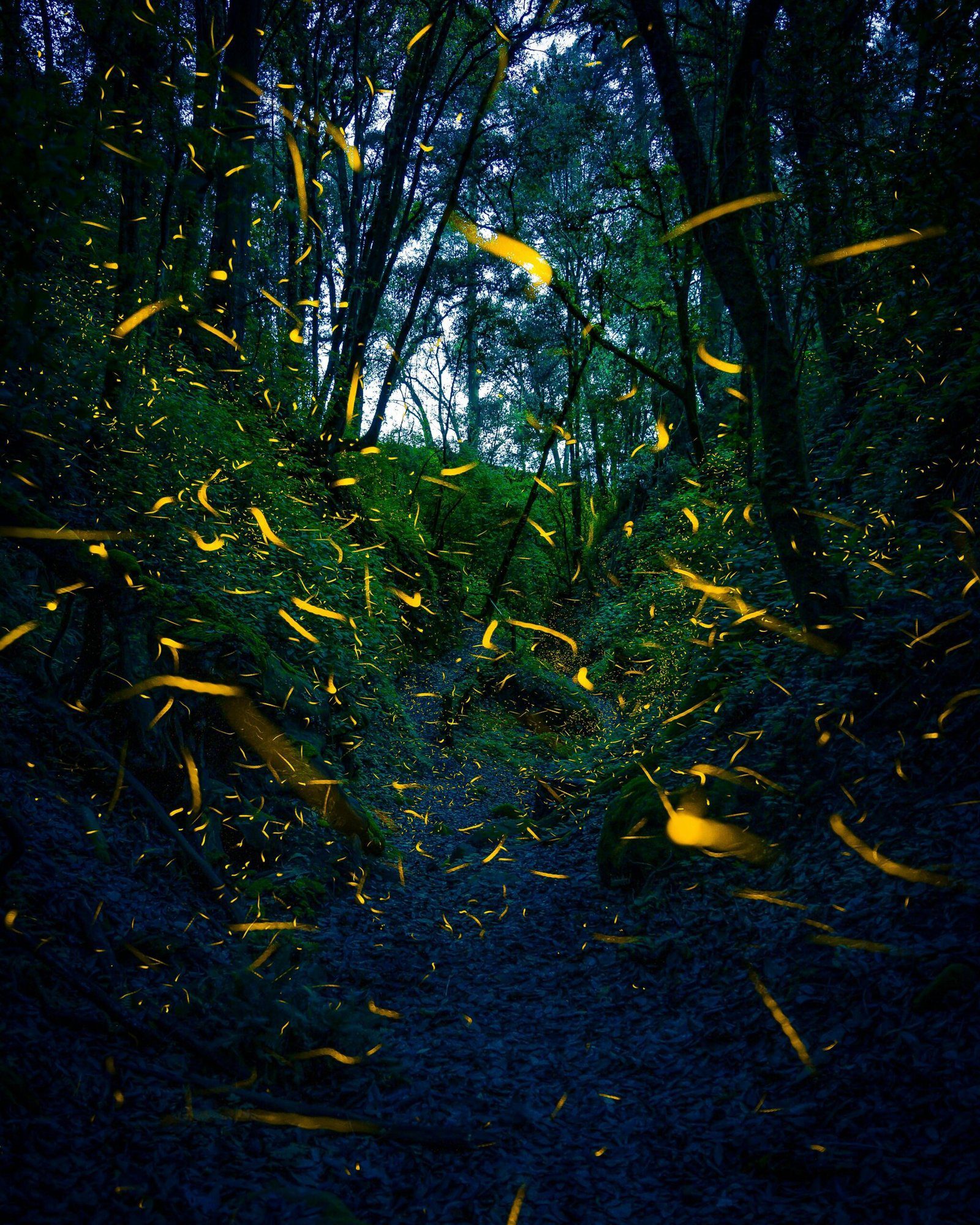
The rumble was soft, even, and gradual. It sounded as if the ground were shakin’, but her hands and stomach rested upon the damp, still earth. The echo filled her ears and the space behind her eyes, and she suddenly heard her mama’s laughter. The trees creaked, while the sky seemed to be brightening, awash with a luminous luster. With a glow as full and warm as her mama’s embrace, a cloud of fireflies flickered, turning the bayou into a crystalline scene. Wisps of yellow, green, and gold transformed the cypress trees into inverted chandeliers, while the water was wet peridot. 

The sky gleamed with swarms of fireflies, multitudes like she had never seen. Swaths of insects landed anywhere they could, including all over Nadine’s chilled body. The figure inhaled deeply again, but the laughter continued, stronger still, and the fireflies swarmed them, unrelenting. The figure reached out to bat at their luminescent assailants. The insects overwhelmed them, pulsing with their living light, until, yet again, all Nadine saw was the figure’s gaze, full as the moon would be in a fortnight. 

As the figure swayed, gilded in wings and the thunderous thrum they made, the laughter now came from Nadine’s own throat. And, as she stared back, the figure’s eyes were, all at once, a much more familiar color. “Mama?”