It is always difficult for me to explain what depression is and how it makes me feel. I’ve seen and read people describing it as a big black dog, or drowning. The two metaphors that stick out to me are shadows and Sisyphus.
In Greek Mythology, Sisyphus is punished by Zeus to push a boulder up a hill for all eternity due to cheating death twice. Whenever he gets close to the top, the boulder rolls back down to the bottom. Is the giant boulder my depression or my happiness? Or is the top of the hill my happiness?
As an African American woman, I’m viewed as strong and successful. I’m able to hold down two jobs, one of which gained me four promotions in seven years. I’m able to be caring to friends and assist with their troubles and plight. I have all my ducks in a row and push my feelings down deep enough to be able to be productive at work. But My Shadow peers around every corner, waiting to find its time to invade. Its cold grip on my heart scares away my sense of success and pride, forcing me to re-play every conversation I had to have, making me worry if I offended someone who laughed with me at a joke I made. My Shadow feeds on my self-doubt, and pushes my perfectionist tendencies into negative spaces, where I work myself to the limits of my health and stretch myself too thin.
It’s always there
It is always lurking and no matter how much I try to outrun it; it finds a way to appear. In fact, not feeling like myself gave me my first inkling I was depressed. I was working in a retail job after graduating college. My paid internship had also ended. In some ways I liked my job, with the bright, eye-catching decorations.
But then there were the managers.
I worked at that job for two to two and a half years, and in those years, I had four to five different managers. I was overworked and overlooked.
I was reliable, I was responsible, I was punctual, and I was a team player. I was taken advantage of.
I was named Safety Captain – a position I was supposed to have held for one month. I held the title for a year and a half. I worked markdowns Tuesday mornings with two to three people. Soon, it became just me. I’d be the first person to ask if someone needed a shift covered or if I could pick up an extra shift. I was told I was being looked at for a seasonal managerial position only to have a new hire work for two weeks and then become the new manager. I had to work during a Category 2 hurricane (which resulted in a fear of driving during storms as the car I was driving to go home after that shift almost tipped over twice).
Yet I had to beg someone to switch shifts with me or cover for me to attend a friend’s memorial service because my manager “forgot” my leave request.
Throughout all of this, I had a short temper. I would lose it over something as small as a stapler not put back in the right place. In turn, I would feel nothing while working at my library job which I loved and used to be excited to go to every day. I was angry all the time but had to pretend I was normal so no one would catch on. There was a swift change in my personality and mood which I thought I was doing a great job of hiding, until one of my retail managers left. I was excited for this manager to leave due to how horribly she was managing and running the store. I ran all the way from the parking lot to my apartment, burst through the door, and loudly declared, “She’s gone!”
My sister saw me and said, “Wow, I haven’t seen you this happy in a long time.”
Or is my depression My Shadow, making me feel like a lesser version of myself?
One day
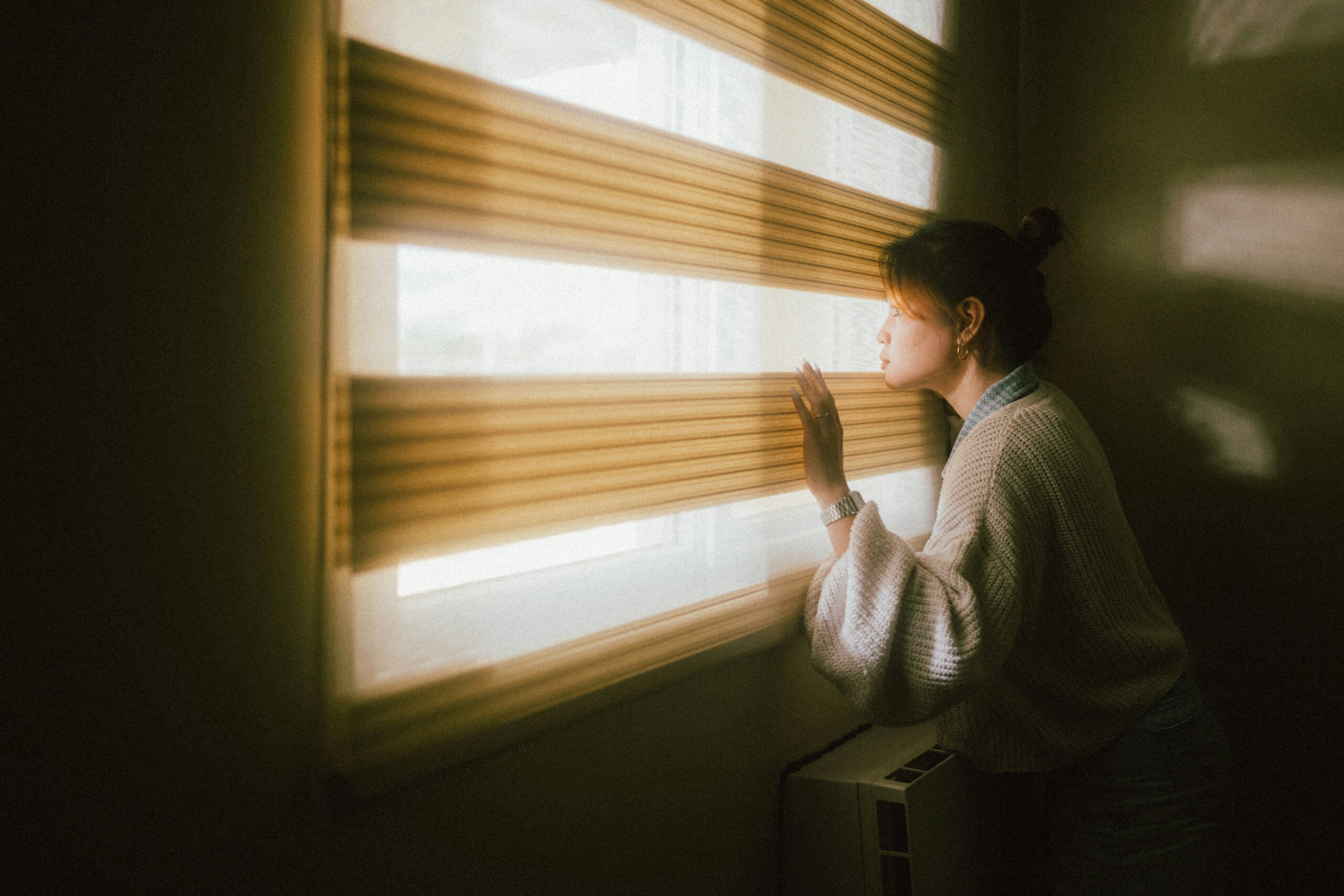
My sisters and I all have dark brown hair and dark brown eyes. We all like to write, read, play video games, eat good food, watch movies, watch anime, and read manga. We don’t all have depression and anxiety. With my depression, I feel as if I’m part of another world and it’s one I hope they don’t ever gain access to. A world where your shadow is its own body and lifeforce, instead of trailing behind, one step at a time out of sight and rarely making itself known unless you choose to see it.
One day I will conquer that boulder, and My Shadow will just be a figment of my imagination. Right now, he’s sitting on my shoulder, watching as I type, waiting for his moment to take over, which I shoo him away to stay in his rightful place behind me.
In the darkened room, where shadows silently creep, I sit alone, enveloped in solitude, as the night grows deep. Though voices resonate, laughter fills the air, Within the crowd, a piercing pain, a burden hard to bear.
A somber figure, draped in midnight’s cloak, With eyes like distant stars, reflecting my sorrows. It whispers in my ear, with chilling embrace, But everything I heard was silence. In this dim-lit chamber, it dances in the shadows, a solitary waltz.
Amidst the bustling crowd, where laughter’s waves crash, It wraps me tightly, like an unwanted sash. I yearn for someone, for a familiar touch, Yet the shadows persist, a feeling that’s hard to clutch.
It gazes upon me, with eyes that hold such depth, A reminder of the longing, within my soul’s breadth. Its hand reaches out, in a gesture of despair, Inviting me to share in its solemn, silent prayer.
But amidst the darkness, a flicker of light appears, A glimmer of hope, dispelling the gloom and fears. In its presence, I learn. I grow. I find strength.
As night turns into day, I rise from this darkness, slowly finding my way. For I’ll seek the light, where true solace finds. I emerge, unbroken and strong, And find my home, where I truly belong.
There are so many parenting guides out there, and it is challenging raising wonderful little humans. Here’s something about the parent-child bond. It’s pivotal as a child grows, and building a lasting bond is something that takes tons of effort. What makes the family so important is that it stands as the child’s first experience in building a relationship.
Here’s my story
As a child, I grew a strong fondness for my mum. And even though I have a forgetful mind, I still remember what life with her was like.
My mum worked at a nursery school not too far from our house back then. I was enrolled in the same school, so it was customary for us to wake up early, leave the house and return together. Breakfast was something I always looked forward to, because it was the best meal of the day. My mother would prepare cereals every morning with loads of milk and I would stand on a scale immediately after eating to check my weight and record how big I had grown overnight.
“You’ve eaten all of mummy’s food,” she would usually comment, which always made me smile. My mum would ask what I wanted for my lunch box and it was always pasta or noodles, my favorite at the time.
I also recall occasionally going to the local market with my mum on weekends for our groceries and produce. It was fun because I would get a lot of free stuff from some of my mum’s regular vendors who knew her well and liked to spoil me.
Togetherness interrupted
Life wasn’t always perfect, but my mum made things seem so easy. We would pray together before going to bed at night and it’s something I still have with me till this very day. While she helped me with my assignments, I would tell her all about my day at school.
I had no idea how scary life could be until my mum got diagnosed with cancer. All of a sudden, my life became nothing but school and hospital wards. I had to watch my own best friend slowly deteriorate and, after a few months, pass away.
After my mother’s passing I had to go live with my father and stepmother. A change that would change life as I knew it. Firstly, it was difficult for us to get along since they had little to no idea of what I was like, the things I loved to do and the things I disliked.
Most times when my stepmother prepared a meal, I barely ate. This was mostly because I didn’t like the dish or I had never tried it before, but my stepmom interpreted it as me just being arrogant or picky, so she would get especially upset whenever I behaved that way. I don’t blame her much because she didn’t know me well and naturally lacked the patience one’s mother would have shown in such cases.
Blended family life
It took a long time before we could get along. I was introverted, which did not help either as I naturally preferred being alone in my room and, just as you probably are thinking, my absence led to many misunderstandings. We could be home all day and not say a word to each other besides the usual greetings.
Most of the time, I just stayed in my room playing video games or watching movies on my laptop. When we did go out together, we didn’t say much to each other. For instance, we would go out for a family picnic, and all I would do is just sit, eat, have a drink and stare at the scenery around us.
Living this way with one’s family is never easy, so I want to express how important it is for both parents to bond closely with their kids when they are young and put the effort into getting to know them. Try to know things about them, even little things like their preferences, favorite food, drinks, the kind of company they keep and knowledge about the events going on in their lives.
Kids go through a lot growing up as almost every child is exposed to peer pressure, bullying, low self-esteem and depression, personally or second-handedly. However, having a strong bond with their parents will make their transition towards adulthood easier as they would have someone with more wisdom and experience to talk to. There’s a natural barrier between kids/teenagers and adults, and overcoming this barrier is very important.
Something like dad, my friend
In my own case, my father was able to get through to me. I loved to draw and he somehow found out. So, after closing at work, my dad would dedicate some time to draw with me.
It isn’t that big of a deal, is it?
But to me, it changed how I saw him.
With every drawing session we had, my dad felt less distant and more like someone I could relate to. I won’t forget the day I told him about a crush I had on a girl at school, it was a huge leap of faith, but then, he laughed and told me a story about how my mum was once his crush too and how they got married. I always disliked my dad for leaving my mom but him talking about the good time they had together made me like him more. And that was it for me, even though it was gradual, I later found a friend in him, one Icould talk to.
PS: it didn’t work out between my crush and I though, sadly 🙂
I’ve seen situations where the lack of parental bonds led children to become wayward and dysfunctional adults. Some did drugs or weed to relieve the stress they couldn’t handle, while others dropped out of school because of their inability to cope and a general lack of moral support. It reached a stage where their parents couldn’t handle or even speak to them. Things like these are quite manageable and could easily havebeen stopped at their earlier stages if only the parents paid more attention to their kids.
So what is the moral of the story?
I mentioned earlier that the family is a child’s first experience of what a relationship is like. It is therefore important as a parent to build strong bonds in the family. For example, a boy between the ages of seven to 14 will grow a mind of his own and will start to have his own hobbies. As a parent, try to discover what your child loves doing. Learn about his hobbies and what he enjoys and educate yourself about it. Say that your son is into sports, like football, so take some time out to play sports with him or watch games together. If your daughter likes to read, encourage her, and bring her to the local library.
On occasion, let your kids win on purpose, make it fun and you’d be surprised how much they talk during a single football game or while playing a card game. Don’t expect immediate results though, as it takes a lot of persistence to break a barrier and build a trusting bond. Be patient, parents, and pay attention. Furthermore, including your kids in decision making does wonders. It helps build their confidence and teaches them how to be more interactive and assertive in their choices.
Small decisions like which color paints to use in the home, the curtains they would prefer or which car you should get shows them that they’re an integral part of the family. There are also extremely strict parents who resort to using punishment, harsh words and physical abuse to correct the mistakes made by their child. There’s a saying that goes: “strict parents raise the best liars.” Discipline is invaluable in raising a child, but as a parent we should never resort to violent punishment. It seriously scars a child, as they start to live in constant fear of being around you.
It’s also important to have heart-to-heart discussions with your child to open their eyes to how they could make more effective choices. This gives them the confidence to say “no” to anything they consider morally wrong.
Nothing in life is guaranteed, but raising children in a better way is possible. A careful combination of investing in your child’s hobbies, having heart-to-heart discussions with your kid, talking about your own childhood, and instilling the right discipline in your child will ensure that you form a healthy, loving relationship through their life and home and beyond when they become independent adults.
So, Mum and Dad, your presence really is needed to make growing up easier possible!
I have OCD (obsessive-compulsive disorder), ED (eating disorder), depression, severe anxiety, and ADHD (attention deficit/hyperactivity disorder). I’ve always gone to therapy because my mother is a psychologist.
I can’t even remember my age when I started, but I had more than five psychologists. I established a rapport with none until my first visit to a psychiatrist, when my undeniable mental health was crumbling. My psychiatrist never gave me a proper answer, but she was, and still is, the only therapist who I felt did not give up on me. Many others diagnosed me with borderline personality disorder.
Since I was young, I was always labelled as the “bad,” “problematic,” “rebellious,” and “naughty” kid, from kindergarten to adulthood. People often didn’t even remember my name, but they recognised that out of 14 cousins, I was the troublesome one.
So I started to believe that, too, and my behaviour didn’t change; in fact, it worsened throughout my development stages.
The beginning pangs
And as a teen, I began to self-harm. Eventually, my body felt numb, with no sadness, no fears of being misunderstood or good, pretty, and skinny. After that, my high school suggested my parents take me to a psychiatrist.
Hello, psychiatric medication. I still take them, though I still haven’t been properly diagnosed.
I can’t remember what happened during my first depression episode; I only have blurry memories of the fourteen days I was sent to a psychiatric ward and how I didn’t leave my room the whole time I stayed there.
After that, my depression began to fade, though I was never the same again. Alcohol, drugs, kisses with older men, and so on were part of my adolescence. My grades were awful, and it took me almost nine years to finish high school.
Of course, I felt like no one cared. I was already the disappointment of my family and always had been, so they just didn’t even try to understand me, not when I was a toddler, when I was a teenager, or even now.
When I decided to apply to college, the OCD set in. Perfect became my goal in every aspect of my life. All my focus was on my studies. My first panic attack happened during class hours; I remember running out of the class and collapsing in the hallway,
In my second year, my goal was to maintain my perfect grades and lose some weight. I’ve always been chubby, and after a few months, anorexia nervosa knocked on my door. I received her like someone I had been waiting for my whole meaningless life. Binge eating eventually appeared, and that was when my whole controlled, perfect life crumbled.
This is where I am now, fighting eating disorders, a second depressive episode, and more.
(Image courtesy of Mike Erskine on Unsplash)
The change in the tides
But now, as a clinical psychologist, I know how to fight. We don’t have to give in to the social belief that we are a problem that needs to be fixed, changed, or eradicated. Rather, we believe that people with mental health issues must be treated with compassion and provided with equal rights. Rather than focusing on the disability or disordered aspect of mental health, we focus on our strengths and learn how to rely on them.
My biggest strength is helping others; doing so makes me feel worth it and empowered, despite and because of my experience, even as hurtful as they are, gave me tools to lift others from their own struggles and dark places. I see a little hope in those little steps of others on their path to wellness.
As we grow older, we start learning and differentiating one emotion from the other, and at the same time, our range of emotions gets bigger. Defiant behaviour sometimes is a sign of depression and/or frustration because you haven’t yet developed the emotional tools to make others understand what you are really feeling. My adolescence was marked by naughty, unruly behaviour that I had been carrying since childhood, which became dangerous and painful to me. I did not have the tools to understand what I was feeling. Past trauma had left its marks on me. Adulthood marked the desire to maintain control of my life, appetite, and surroundings instead of letting my emotions have control of me again. And yet, many times, I failed.
My work changes lives
My role as a psychologist focuses on getting mental health the proper awareness it deserves. We need to raise awareness for this marginalised, stigmatised, labelled and misunderstood community regarding mental health and the lack of opportunities that low socioeconomic status communities have in accessing education and healthcare.
Today, I work in a private organisation as a clinical psychologist, both with group therapy between employees and employers and individual follow-ups. This year, I received the incredible opportunity to start working with the jail population by making new programs that focus more on rehabilitation rather than punishment alone. DINALI is a subsection inside the Ministry of Defence in charge of the Uruguayan policies related to imprisoned people. My main area will be helping people close to finishing their sentences. The main goals are reinsertion into society. I want to give them tools on how and where they can get help on having their basic needs satisfied (food, clothes, a roof above their heads), getting a job and start working on their social life to build a close circle that helps them find purpose in life and feel loved and appreciated.
Sometimes, I’m still a mess. Sometimes you might be, too. But as I’ve learned throughout every painful twist in my life, if you can’t help yourself, help others.
My jeans are drenched as I look At the blurred images of you. It is hard to Remember your face, though, when I can Look in a mirror, I see you. Every night When I go to bed, I think About my life if you were. I might understand boys better. Every year, when it’s your birthday, I would Ask what your gift would be. You Shrugged,
Million dollars? A drawing, picture, or a pair of socks?
Every year I want You in front of me. Your grizzly arms surrounding Me. I turn to the earth And beg
Throughout my life, I have always been scared of being alone. I would avoid lone bus journeys. I couldn’t sit still, constantly needing the company of others to occupy my anxious mind. I got addicted to socializing. That’s not necessarily a bad thing, but it became a problem when I was doing it to escape myself.
I broke up with my boyfriend a few months into the start of the pandemic after almost two years of an extremely toxic relationship. It was one of the hardest things I have ever done. Not only did I have to adjust to being newly single, but I was single during a period of complete social isolation.
An extreme feeling of loneliness overcame me instantly and I craved company and constant reassurance from my friends and family.
The worst part about this was that it happened to be the final year of my undergraduate degree, so I was pretty much confined to being alone.
This is most likely how I landed myself in a toxic relationship in the first place. The honeymoon period of the relationship satiated my need for closeness and companionship. When it was all over, my long-forgotten fear began to materialize, and I could not run away — I had to face my loneliness head on.
My journey to self-reliance
In this sense, the breakup kick started my journey to self-reliance.
At first, the feeling of loneliness was just too overbearing and heartbreaking. I lived in a state of constant fear and anxiety. I compared myself to others who seemed happier, more confident and less alone.
Then, something changed.
I embraced being alone; I fell in love with it.
I had the opportunity to learn who I was as an individual. I had time to fall in love with writing again. I had time to pamper myself. It was basically a time of well-needed, much-deserved rest.
I learned that being alone is not scary or bad. I learned that being lonely and being alone are two very separate entities; being alone is being your own best friend, and that it does not mean that you are lonely.
The confidence to soar
I learned to step outside of my comfort zone. I applied to a master of arts in literature and culture in a new university and got accepted. I completed it by myself, making friends and connections with the new-found confidence I had acquired.
I let go of other toxic relationships and environments that I had been too afraid to quit. I said goodbye to friendships that did not serve my growth. I left my underpaid and underappreciated job. By overcoming my fear of loneliness and isolation, I was able to rid my life of the pain I had learned to endure and opened myself up to more positive opportunities and connections.
I learned to pour myself into my work and my passions rather than into my fear of loneliness. In turn, I was able to pour life and passion back into myself. I picked up my pen again. I not only wrote passionately in assignments, but I also wrote for my own creative pleasure. I did it for me, and I did it alone.
This time alone gave me a chance to think about what I wanted for my life, where I wanted to be, who I wanted to be, and what I wanted to do and achieve.
Of course, this did not mean that I spent all this time in complete social isolation. I did spend time with family and friends, and I am grateful for all the wonderful people in my life. However, I did not cling to them like before. A new sense of independence was born in me.
Two years later, I am planning to move away from home — something I used to fear. I don’t find myself waiting for others or relying on them to do something I want for myself. I get up and I do it for myself.
It may still be daunting sometimes, but the art of self-reliance is an ongoing process. Although it is more comforting to cling to others for safety and validation, it is far more exciting to experience life on your own terms. I urge every person to do it and watch your whole life change for the better. You’re not alone when you have yourself.
Takeaway points from me to you
Do not fear being alone. You are never really alone when with yourself.
Invest time in your hobbies and passions. Investing time in yourself is time not wasted. It is a necessary part of self-care and personal development. Only good can come from this.
Let go of what no longer serves you. Leave your toxic people and environments behind and watch space open up in your life for more positivity to enter.
Pamper yourself; you deserve it! Take care of yourself through small rewards such as buying yourself new clothes or getting your hair done. It is true that money can’t buy happiness, but treating yourself when you need it is important for showing yourself the respect you deserve.
Do something that scares you—it might be the best thing you ever did! Go for lunch by yourself in that cafe you always wanted to try, or book a solo trip to somewhere you have always wanted to go to or visit.
Note: This poem is based on the antiquated Indian customs related to widows; they were forcefully stripped of all jewelry upon their husband’s death, the vermilion rubbed off their foreheads, hardly given anything to eat, made to sleep on the floor, forbidden to wear anything colourful, not allowed to look at any male relatives, the veil always drawn low.
Let me remove your veil Whispers of women, barks of men; from fear do not turn away Tears I vow to wipe, may I never again hear your hopeless wail.
Palms wizened from bearing a heavy pail Your forehead may not be smeared with vermilion, but a price you needn’t pay Let me remove your veil.
Scorn, disdain follow your timid trail White flowers, a white shroud… Forced to forever sway Tears I vow to wipe, may I never again hear your hopeless wail.
A tin plate with hardly any fare, the kitchen your lair; amidst the towering utensils, a dirtied, ebony dale Not permitted to inhale the cool breeze outdoors in the season of May Let me remove your veil.
Dreamless, on the accursed cold floor, you try to scratch with your nail Touched not by noon’s rays Tears I vow to wipe, may I never again hear your hopeless wail.
You extend your hand to grab a feather, across the azure you hope to sail I am prepared to become your wings, I daresay Let me remove your veil Tears I vow to wipe, may I never again hear your hopeless wail.
This piece is inspired by and thus devoted to Helena Qi Hong.
* * *
Ming has fallen in love with Hua, his very first love, lost for nearly half a century. In their mythically entangled lives, he is more than sure of that; otherwise, he would not have written more than one hundred love poems within a year or so, finished drafting the second half of his long memoir in Chinese and his first novel in English respectively within three months, and begun to turn out short stories one after another for a year, each inspired by and devoted to Hua; nor would he have been video-chatting eagerly with her for nearly two hours every morning, nor would he have dreamed about her, about himself, and about them together every so often, day and night.
Of course, there are still many things he is not sure about. For example, what exactly is special about her? Why does he find her so irresistible? When did she begin to redevelop serious feelings for him? How much does she love him now? Does he love Hua and his wife at the same time, to the same extent, and in the same sense? Is his affection for Hua a “spiritual derailment,” a case of platonic love, or something really immoral? How should he control, if he could at all, his clandestine relationship with Hua? Perhaps he ought to make a confession about their intimacy to his wife? What if his wife discovers it herself? But among a dozen more such questions, he is wondering, first and foremost, why on earth he has cherished such a long and strong affection for Hua. “Why do I love her so madly?” Put differently, “What emotional spell has she cast over my poor soul?” Without getting a satisfactory answer to this question, he knows he will never “die with his eyes completely closed,” as the Chinese proverb goes.
After much thinking, he finds that the best answer he can come up with lies probably in a variety of things working together at the same time.
1/ The First Love Complex
He remembers having a close connection with several girls in his early teens. For example, while in grade seven, he somehow struck up an intimate relationship with a tall, slim, and pretty classmate named Zhou Yeqiong. Every time they met, they joined each other on the bank of the river running along their village. There they would sit, listening to the reeds whistling in the wind or watching the stars blinking in the sky.
About three years later, at an all-school meeting held in the town of Songzi on a midsummer afternoon, Hua happened to come and sit right before him on the bare floor made of hard mud, just as karma would have it. He was then 15 years old, while she, as he learned decades later, was only fourteen. “Our school does have a really pretty girl, after all,” he thought aloud on spotting her. He was not sure if he developed a crush on her on the spot, nor did he have the slightest idea that she would function as the model of love or attraction for him for the rest of his life. Some people say all Chinese men have a serious and persistent first love complex; is his lifelong emotional attachment to Hua an unavoidable result of this very first encounter?
2/ The Love-at-First-Sight Complex
It was that first sight of Hua, so deeply impressed on his heart and soul, that laid the foundation for all his dreams about love before he himself became aware of it. Every woman with whom he would develop a relationship, including his wife, would prove to be a version of Hua, though to varying extents and with individual differences. For him, the first sight sowed a mythical seed, planted in the depth of his innermost being, which was bound to bloom at a later time.
In fact, he has fallen in love with Hua at first sight three times in his lifetime. He began to believe they were karmaed for each other when they met again over a year later in Mayuhe, where they would stay together for two years.
The third encounter occurred on October 2, 2019, when he attended a reunification gathering of old schoolmates. The moment he saw Hua, he found her even more beautiful than over forty years before and fell in love with her again. For reasons unknown to him, each time he saw her after a short or long separation, he found her even more attractive than the previous time. Was I born to love her at first sight?, he often wonders. But why?
3/ The Native Place Complex
Since ancient times, all Chinese people are said to have cherished a particular feeling for the places where they were born and bred. No matter how far away or how long they are separated from their native villages or hometowns, they will mostly want to return to their “roots” like fallen leaves, especially when they are old, either for the peace of their emotional beings or for the perfect taste of the local foods. But for many important reasons, Ming was not really emotionally attached to his native place; rather, he loathed it and was not even sure where his native place was exactly. Lotus Flower Village was the place where he lived for five years as a foster child, but it had given him only bad memories. In contrast, Songzi, his birthplace, was no better; with its climatic conditions being hell-like year-round and its people mostly hypocritical, insincere, snobbish, or vulgar. When he grew up, he had another two reasons to detest his native place, be it Songzi or Lotus Flower Village: on the one hand, he could not pronounce a single English word there; on the other, he was unable to write a single line of poetry no matter how long he remained there, though English and poetry were the two most essential elements in his adult life.
However, simply because of Hua or, more exactly, because of his feelings for her, he recently found Songzi much more loveable than he had realized. “Love you, love your cat,” he often says to her. Since she likes the small town very much, he has become nostalgic about it too, and all the more so now because it is the only place where he could hope to see and spend time privately with her, where he and she could eat what they both like most, such as salted Diaozi fish, fried green chili, Xiangzi tofu, carp fish cakes and Ciba paste.
Or, perhaps vice versa: it is precisely because he is so deeply attached to his native place without realizing it that he finds Hua more attractive than any other women he has seen around the world.
(Image courtesy of cagla.jpeg via Pexels)
4/ The Mother Complex
Physically, Hua bears little resemblance to his mother. Still, they grew up in the same cultural-physical environment, followed the same local traditions, and shared the same customs and lifestyles. In particular, they speak the same Songzi dialect, his true mother tongue. So, whenever he hears Hua speaking, even if it’s only her breathing, he feels peaceful and comfortable enough, like a happy infant listening to the heartbeats of its mother, in her arms.
At the subconscious level, simply because he has been living in the absence of love of any kind for too long since childhood, especially love from his parents throughout his formative years in Lotus Flower Village, and love from his wife, who seems, alas, to have been born with frigidity and insensitivity, he desperately needs a personalized compensation of such tender feeling from a Songzi woman, who may or may not necessarily look or act like his mother.
5/ The Zhiqing (Educated Youth) Complex
As a unique socio-political movement in modern Chinese history, “Up to the Hills and Down to the Countryside” occurred between 1956 and 1978. Like millions of other educated youths of the time, Ming and Hua were forced to answer Chairman Mao and the Party’s call to receive “re-education from the poor and lower-middle peasants” as soon as they graduated from high school. While slaving away/laboring together in Mayuhe, the forest farm located right on the southern bank of the Yangtze River, they shared the same physical and psychological hardships between 1974 and 1977. For one thing, they felt hopeless and futureless because they were expected to make a living, get married, and spend the rest of their lives on the impoverished farm. If they had hoped to leave the countryside permanently, they would have had to battle against one another to obtain recommendations from the local Party branch, cadres and peasants alike. While such chances were very slim, the most effective way to win was to become a Party member by outperforming all others in terms of “proletarian political consciousness” and “actual working performance.” But without influential social connections, no one could get enough recommendations to “return to the city” by attending a university or getting a government job. This being so, every youth station where educated youngsters like Ming and Hua were collectively receiving their re-education from the locals became not only a labor camp but also a miniature of the Colosseum. With the local folks as the audience, every zhiqing had to fight like a gladiator whose gladius was forged of their own willpower, determination, and physical endurance.
It was true that Ming and Hua competed with each other as with every other zhiqing on an individual basis; it was also true that he never confessed his love for her, nor did she show her true feelings, if any, for him or anybody else, but they did try to implicitly help and protect each other. For example, as the leader of the youth station, he once disclosed the reasons why the local political authority would not easily grant her a Party membership. Fortunately, both of them survived the fights and made their way out of the countryside. While he was recommended to attend a nationally prestigious university in Shanghai, she got enough votes to go to a college in Wuhan.
As adolescents sharing the same deeply-felt hardships, Ming and Hua had undoubtedly developed a special bond between themselves as zhiqing in Mayuhe, which further deepened as they engaged in intimate communication. Now, with all past hardships fading into the white pages of time, they only remember what was sweet about the old days when they fought shoulder-to-shoulder for their futures like two comrades-in-arms having chemistry with each other in a real battlefield. And it is definitely this zhiqing complex that has intensified his affection for Hua to a significant degree. Indeed, back in Mayuhe, Ming had to hide his affection for her even from himself to avoid jeopardizing his future. He knew too well then that, if the Party branch and locals had found him indulging in a romantic relationship or “petty bourgeois sentiments,” rather than being fully devoted to “revolutionary production,” they would have thwarted all his efforts to leave the countryside. Before his reencounter with Hua in 2019, he did make some attempts to get information about her whereabouts, but somehow without any success. As a result, they remained totally lost to each other for forty-two years. After finally reconnecting, he could no longer restrain himself from releasing all the emotional intensity he had accumulated over the years.
Hua points out to him, “Your current feelings for me result from your zhiqing complex, I am afraid.”
6/ The Misconception-in-Love Complex
Unlike de Clérambault’s Syndrome, which is medically referred to as a kind of delusional disorder, what the Chinese language describes as “zi zuo duo qing” (“自作多情”) is quite a normal psychological tendency to overestimate one’s importance in a relationship. As such, it is not a morbid state of mind, but an emotional inclination, which seems to be much more common among the sensitive, the self-centered, the self-confident, or the narcissistic than among people with other characteristic features. As Ming himself has admitted many times, he is particularly sensitive in emotional matters. For example, when Hua gave him a tuner in Mayuhe in the summer of 1975 (just to help him learn to play the erhu, a two-stringed bowed musical instrument, as she explained decades later), he over-interpreted her gesture and treasured the device as a token of her affections. The reason for this, as he sees it now, must have been underlined by the close interrelationship between his own deep feelings for her and his strong (mis)belief that she loved him as well. When Hua asked him to return it sometime in the following year, he thought she had found a new sweetheart, who he suspected was Pan Lihao, his major rival at the youth station. Until the truth eventually surfaced with the help of a mutual friend during the Chinese Spring Festival in 2022, Ming had remained unaware that a part of him had been living with this delusion all the time.
Since then, he has been trying hard to find a cultural equivalent in English to describe such delusional indulgence, but surprisingly, no native speakers or writers of English or online sources could offer him a set phrase and the closest word he has dug up seems to be “erotomania,” which, like “de Clérambault’s Syndrome,” is far from an accurate description. After consulting several exceptionally talented translators in addition to some bilinguists of the highest caliber, he realized there is no such equivalent in English at all, and the best translations they could render are “delusional fancy as someone’s love interest,” “emotionally self-flattering” and “misconception in love,” depending upon the specific context. They say “benign erotomania” might convey the basic meaning more accurately, but it sounds quite strange to people with little knowledge of the psychiatric condition. This linguacultural difference keeps Ming wondering: how come such an emotional tendency is so common among Chinese but not English speakers?
Thinking along these lines, he wonders if his affection for Hua may well have been an unconscious projection of his own delusional fancy as her love interest.
(Image courtesy of Tatyana Doloman via Pexels)
7/ The Retirement Complex
Both in their mid-sixties now, Ming and Hua are living a very happy retired life on opposite sides of the world. Though they have been enjoying a good and stable relationship with their spouses, they are acutely aware of their other halves being their closest relatives rather than true soulmates. Of course, they are fully prepared and content to live as they have always done until their last breaths, and have no intention of ushering in dramatic changes to the final years of their lives, but Ming tells Hua aloud that “we old people are still as capable of and as entitled to love as the young!” He has repeatedly emphasized that love does not merely keep people young in their hearts but also enables them to wear their years better and live a healthier life. Hua agrees with almost everything he has to say about their secret relationship, but she just cannot forget the cruel fact that they are really too old to love each other like the young. As a well-respected grandma, she recoils from the risk of becoming a laughingstock of her family, friends and old acquaintances in any sense. For her, spiritual derailment is excusable; a web affair is okay; platonic love is worth experiencing; even a kiss or hug is acceptable. Nothing more.
However, as Hua holds herself back from developing their relationship further, he finds her all the more attractive. Besides having a sunny personality and a good sense of humor, she has been wearing her years so well that she still boasts all the physical features of a gracious 38-year-old lady. “You are such a living Xi Shi [a legendary beauty] in my eyes,” he often tells her. “A woman in a million, a real stunner!”
“I am really afraid,” Hua has repeated when discussing the possibility of meeting again. “How would people look at me? As a really bad woman?”
“But why should we care about what others may have to say? Why care about all the rest of the world?” He keeps asking her back. “How many more years or even months can we expect to live? Why not love while we still, fortunately, can?”
Hua sometimes agrees.
* * *
While biding their time to join each other in body as in spirit, Ming cannot stop searching for the truth about why he loves her, but the more he tries, the more confused he becomes. Perhaps he is either a unique victim fated to suffer from the Hua-Complex, or an ordinary guy who has simply been in desperate need of love since childhood? Or is it something larger?
He remains uncertain, and does anyone really care?
Those who don’t know Italy well should know that there is no country or village – however small – that doesn’t feature a church, monument, scenic landscape or other remarkable attraction that deserves to be visited.
I would like to tell you the story of how I discovered the extraordinary Ciampate del Diavolo, or “Devil’s Footprints,” palaeontological site, an area with fossils of great scientific value.
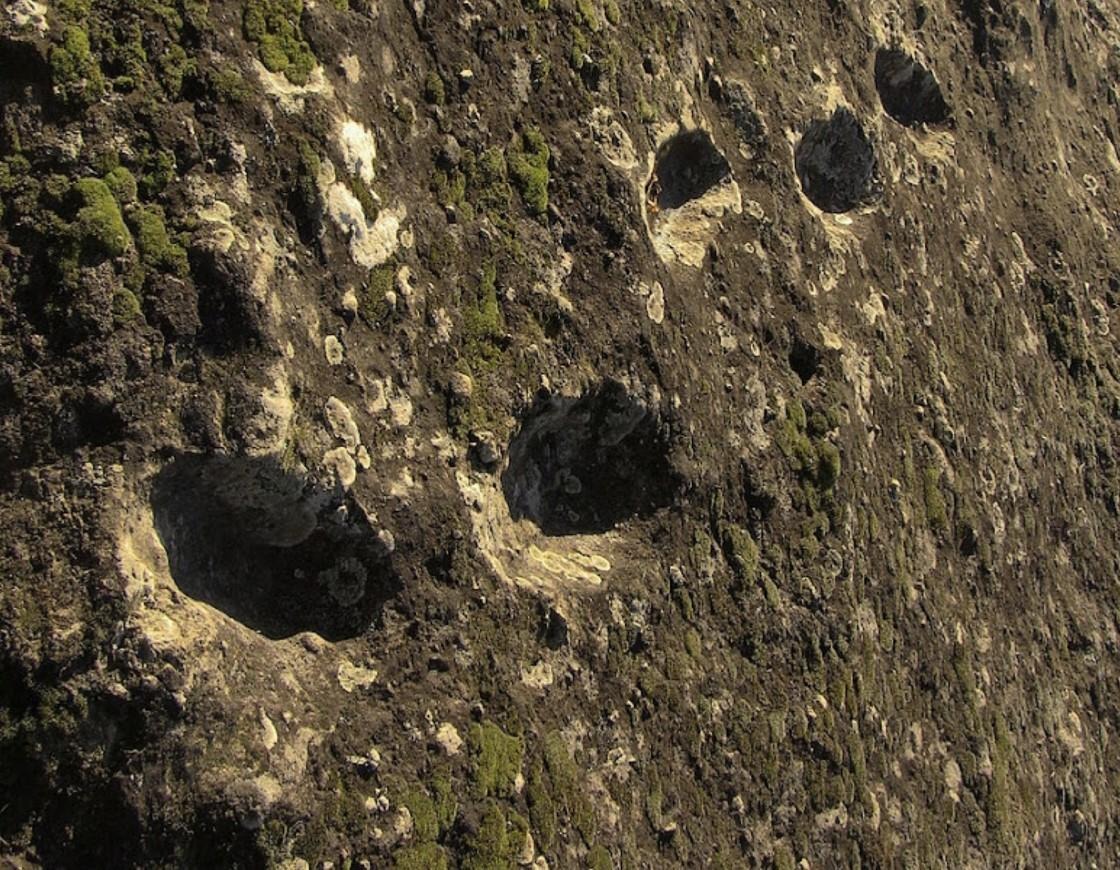
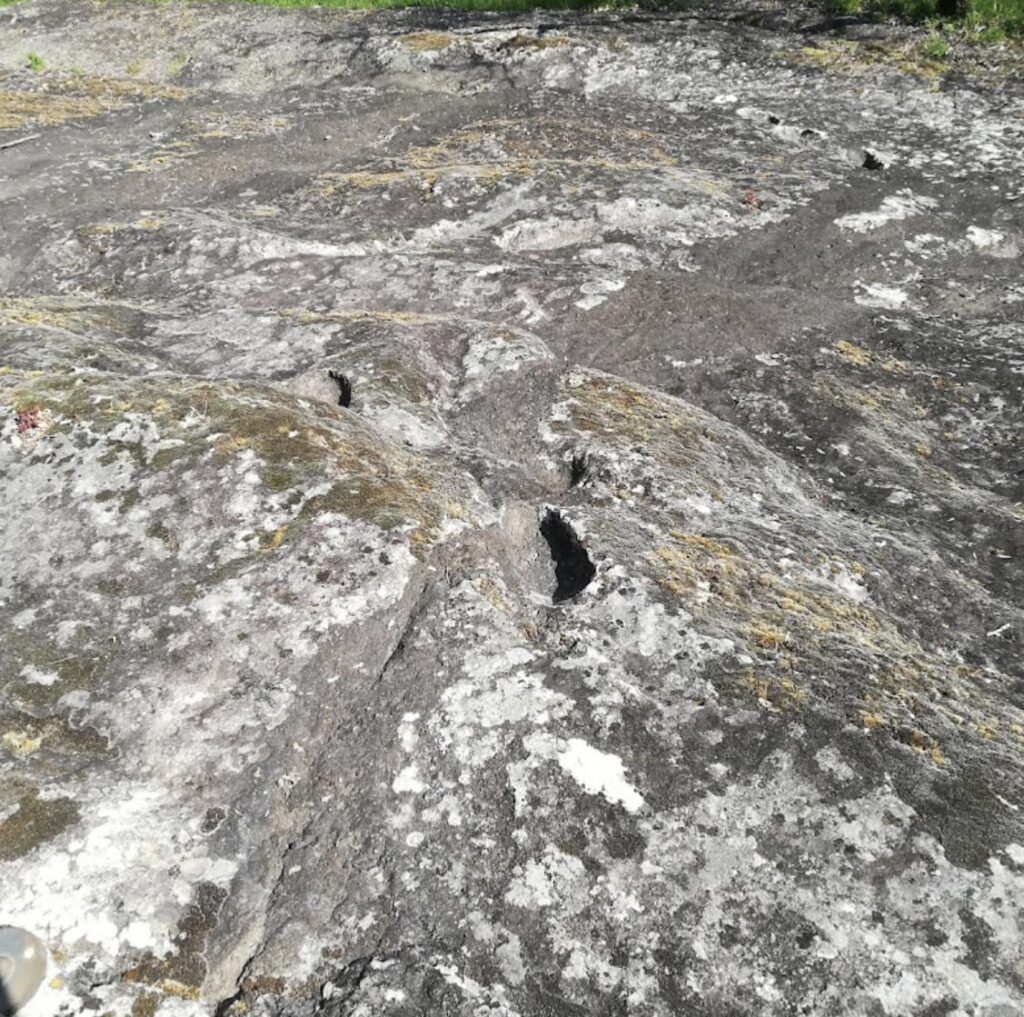
It is tucked away in a little village, Tora e Piccilli, in the southern Italian area of the Roccamonfina extinct volcano. It preserves the oldest known footprints of Homo Heidelbergensis, one of the earliest extinct species of human beings who lived around 350,000 years ago.
A real life fairytale
How do I get out of a postcard? The more one proceeds towards the intriguing destination, the more it seems to be tucked inside a postcard of hills surrounded by dense and verdant vegetation. The first time I went there, I thought, “It’s a real postcard!”
I found myself right inside a very ancient legend; everything around me was magical and fabulous. When I got there, I even exclaimed, “It’s a fairytale!”
That place, hidden in the wood, was a secluded corner from the world whose treasure chest was truly priceless – full of precious prehistoric footprints. The footprints, imprinted in the rock, took me back in time to my primordial memories – those that we all certainly have imprinted in our DNA.
The road taking me to the site was winding and wild. The trees in the dense forest all around me seemed like they were speaking to me, heralding the wonderful spectacle that was about to appear before my eyes. The nature that surrounded this magical place was a triumph of harmony; the potent aroma of the dense vegetation, the bright colors of the large and centuries-old oaks and chestnut trees, the sweet song of the nightingale sounding like music to my ears, and the whistling of the wind making me fly with my thoughts.
(Image courtesy of Cinzia Antonelli)
A step back into history
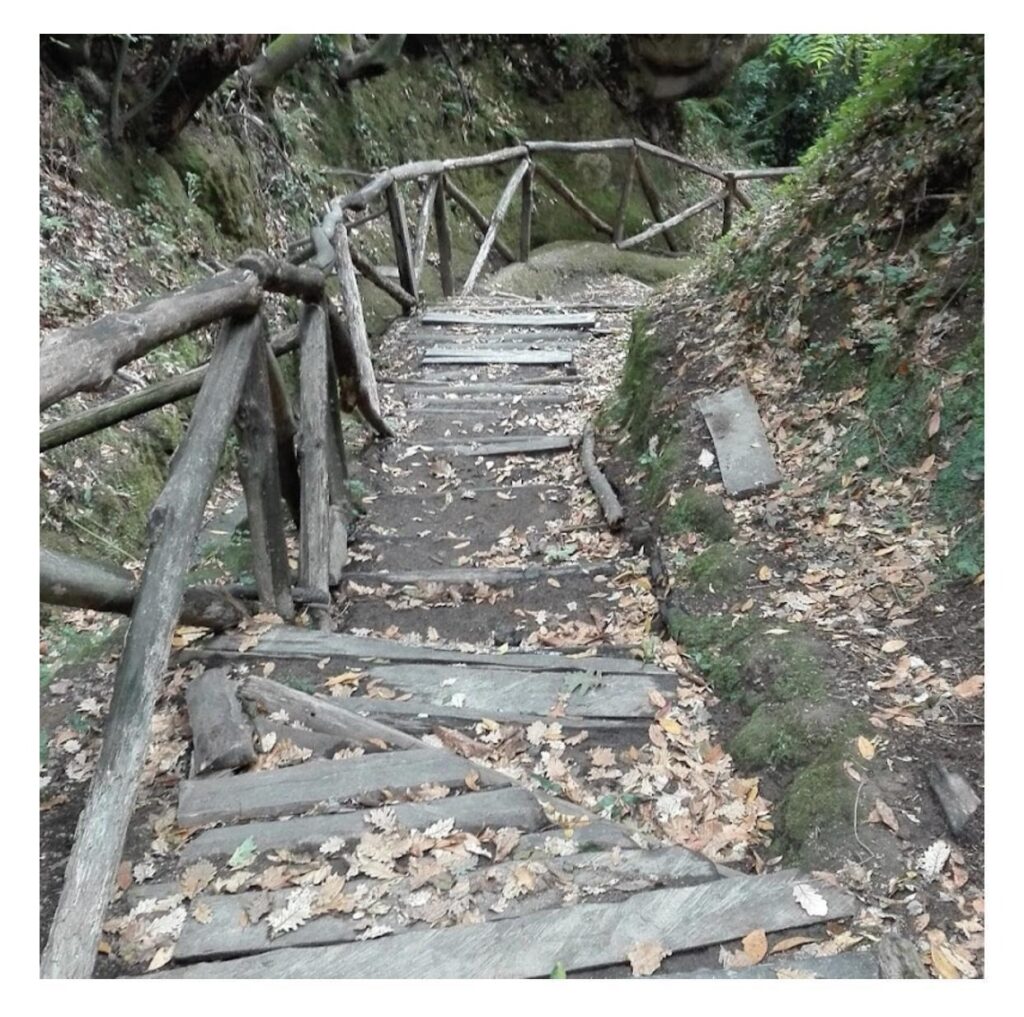
To get there, I travelled down a long path, an old mule track that was used by the locals in the past to reach a mill where they grinded their cereals. Suddenly, as if by magic, a huge boulder appeared before my eyes where I could admire the fossil footprints of my ancestors.
These treasured remnants of the past are preserved on the surface of the rock called “tuff,” a light porous rock formation made of volcanic ash. In the eruptive phase of the Roccamonfina volcano and certainly in that area, hominids and animals walked, leaving their tracks behind them.
(Image courtesy of Cinzia Antonelli)
As an old folk tale has it, a series of torrential rains caused landslides in the early nineteenth century. The local generations that came before me interpreted the uncovered marks as the Devil’s footprints. In their opinion, only the Devil was able to walk along incandescent volcanic materials without burning himself, so the legend of the “Ciampate del Diavolo” was born.
Visiting that evocative, atmospheric and stunning place was without a doubt a real time travel experience for me, so I would strongly recommend a visit. I think that the best way to find ourselves is through researching our origins.
A site with many stories
A bittersweet story, which touched me in particular, is the one I heard when I first visited the site. It starts in the middle of the German occupation, during World War II.
It was the year 1943. The locals put their lives at risk with the sole goal of saving Jewish people in the vicinity of the village and preventing them from being betrayed to the Germans. They steadfastly refused to trade the refugees’ safety for mere privileges.
During this time, Tora’s inhabitants, with its families and Jewish people all fighting to survive, made “Devil’s Footprints” their shelter. They transformed that harsh environment into their temporary home.
(Image courtesy of Cinzia Antonelli)
Today, 77 years later, us Italians honor those who bravely sacrificed themselves with no regrets in the name of humanity. It seems like the resemblance of Tora, the village’s name, to the Hebrew word “Torah,” the Sacred Law, was written in the stars. I consider it a very significant and touching coincidence.
See the footprints for yourself
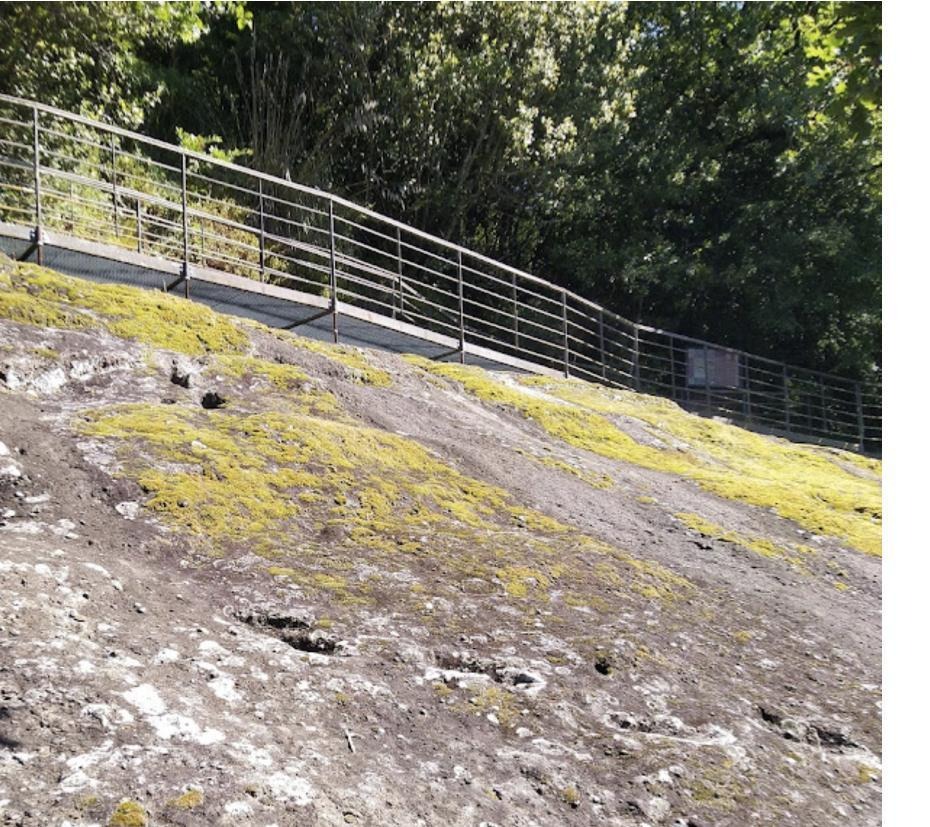
Visiting the “Ciampate del Diavolo” is easy. The locals, proud of their ancient footpath, have created an inviting nature park around it. It is kept locked, except to official tour guides from the Orme Cultural Association, who accompany visitors. They are the true guardian angels of the site. With their rare friendliness and compelling stories, they enable the beauty in the “Ciampate del Diavolo” to come out of the rocks. Entrance to this unique site is solely through the Orme Association, whose inspiring staff members will guide you during your visit. You’ll be able to enjoy the park, inhale the nature that surrounds you, and learn a little more about the locals and yourself.
My garden of wonders bloomed with an amalgamate of pink roses with overlapped thick velvety petals, and
herbs — chives, basil, fennel — common points for pollinators every morning when I bid her goodbye before school bus on leathery wheels
that did back and forth for gaining orientation direct towards the church on Fridays for prayers to Mary and her child who
had a relationship dearest rested upon tenderness and mercy. I traversed with her too under polka dot umbrella and with raincoat on
accidental open-day meets during wet north-west monsoons, when I circumvented my path instead of ascending the curled stairs.
Rama would roll in, a bundle of all cotton, silk, georgette clothes, with her brown hands decorated with red mirror bangles that broke
time after time due to thrash in a nasty steamroller wedlock that never made her a mutineer, but instead suppressed her vital force. Her
will saw dips on an electrocardiogram displayed on squared checks, not a notion gladly tackled, but remains in subconscious displayed via weedy actions which
transforms into a chap-fallen identity abnormal for novice who takes unsystematic treats on laxity and surmises nothing but judgments
coming as unbidden visitants in black gowns with purdah falling on features. Songbirds did not recognize and flew higher to break free at least.
Not me in need of solid earth to certify belonging of courage here only. As I look back on it, I could not step up there. My heart looked
for objects to insert and stop instantly the yelling, for numbness undo paralyzed body full of sweat blisters on my broad forehead lowered,
with weariness out of shouting in reply to her abhorrent weeping. I never could crawl on all four limbs, losing conviction in balance, this
unbridled anxiety lowering my posture pressing me to the ground. Thud. She closed her eyelashes the moment blood rushed out of her minor nose, then.
No therapy I need. I rebelled in light blue uniform open frizzy hair for the flawed emotional control would come again as ghost threatening.
Confronting my deformed motherhood was not capable to pull out her from the cemented graveyard held by a chiseled stone by the name of Miss Lily Grantham.