
Who are you? A Survivor

Who are you?

What do you do?

Those are the questions I am asked whenever I meet a new person. For decades, the answer was my name and “I’m a Counselor.”  Then I waited for them to get uncomfortable, as people sometimes do around the topic of mental health.  I’m also a writer who focuses on horror topics. These days I mostly try to figure out who I am and what I need to do so I can keep my depression at bay. I debate whether I should call it “My” depression because I really don’t want it, but “The” depression sounds odd because there isn’t only one depression. 

My experience of depression may feel different to me than how you may experience your depression, with different presenting symptoms. At work, I had to use DSM-5 codes to label depression. The DSM (Diagnostic and Statistical Manual, Edition 5) is used to clarify diagnoses so doctors and therapists and insurance companies can speak a common language about a set of symptoms. In another essay, I compared depression to a monster that I fight daily, and that characterization seems to make the most sense to me. So what do I do?  I fight a monster daily. 

Fighting the beast

I have been dealing with this beast since childhood. I don’t remember the exact age, but I was very young. I can recall crying for no discernable reason as a young child and a teenager, confused as to why I felt this way. I remember blowing out my birthday candles and wishing for happiness. Most kids probably wish for a new bike or a puppy. I remember saying my prayers at bedtime and praying to be happy the next day. I could have been asking for world peace, but I just wanted to be happy. When I saw a redbird, I made a wish, as my local folklore suggests one do. Would you venture a guess on what I wished for? To be happy, of course. 

I’m also an Appalachian. I am not speaking for everyone in the entire Appalachian region but just from my experiences. Mental health issues run in my paternal family just like eye color, height, and recipes. I knew from a young age that I could be next. It was almost expected, yet dreaded. There is still a stigma here. My sturdy German ancestors arrived in the US in the 1700s. They didn’t have time for such frivolous silliness as being depressed. In the mountains where generations of proud people were self-sufficient and pulled themselves up by their bootstraps, we just didn’t talk about mental health. If we did, it was in hushed whispers, suggesting a person was weak or defective. Bless their hearts. 

A healer in need of healing

As a student of Psychology, a person coping with depression, and a rural Appalachian, I was at odds with myself and my culture. I was struggling with depression but I was disappointed with myself for being depressed. I was always told that I was easy to talk to…that I was a good listener. So, I charted a course to be a mental health helper. We didn’t have truly accessible educational opportunities until my generation, Generation X. I saddled myself with a mountain of debt and stepped into a different world. In the world of mental health counseling, people with mental health issues are people first. They are not “mental” or “crazy” or “weak.” They have real medical concerns that aren’t just “in their heads,” but being experienced on a microscopic neurochemical level that I still struggle to fully understand. 

I eventually secured certifications and licenses and began to help others. I worked as a therapist for 16 years. I understood that feeling better was more complicated than “just stop it,” or “decide to be happy.” I knew it would take more than just yoga or coloring books to overcome. During that time, I had tides of depression that washed over me and then went back to sea. I began medication. One of the issues I am painfully aware of is how finding the correct medication or combination of medications can be like a blindfolded skeet shoot. I also learned about the patience needed to ride out side effects and see if a regimen is going to work. I didn’t want to wait 4 weeks….I wanted to feel better yesterday. 

My most recent downturn during Winter 2022 was my worst episode yet. After years of referring folks for hospitalization for psychiatric issues and suicidal ideation, I was certain I needed to be hospitalized. I’ll spare you the details but I am a fan of horror movies and an author of dark fiction and I scared myself. I was imagining ways to end my life and was feeling at peace with those thoughts. I confided how I was feeling to a coworker, who urged me to see a crisis counselor immediately.  In my rural area, if a person needs inpatient psychiatric care, it’s possible that the only bed available could be 7 hours away in another part of the state. I remember being so afraid that others would look down on me and that my former coworkers at the community mental health agency would be disappointed in me. 

Of course, they weren’t. I called my former supervisor at the agency and she made arrangements for me to be seen at the local crisis clinic. We are fortunate to have one near my home. I was able to meet with staff who had not been coworkers and who didn’t already know me socially, and they helped me immediately. Before I called my supervisor, I had been trying to make appointments with private psychiatrists and trying to get an emergency appointment with my therapist. They were booked solid. For weeks. I don’t begrudge them for not “working me in,” because they have to have boundaries. Without boundaries, they will burn out and end up feeling how I felt that day. 

The crisis clinic saw me that very afternoon. I talked with a nurse, a crisis counselor, and a nurse practitioner. I left a few hours later with an appointment for therapy, a plan for medication adjustment with prescriptions, and 24-7 support. A helping hand or voice was just a phone call away. I ended up not being hospitalized and could recover at home with my existing support system. I checked in with those crisis folks daily for several weeks. I ended up resigning from my job to work on myself. That was scary but I needed to do it. I was scared to tell my friends what was happening. After much hesitation, I wrote them letters to explain what happened and how I was feeling. They loved me anyway and were supportive. They knew something was wrong, but as teachers, artists, and attorneys, they didn’t know how to ask. 
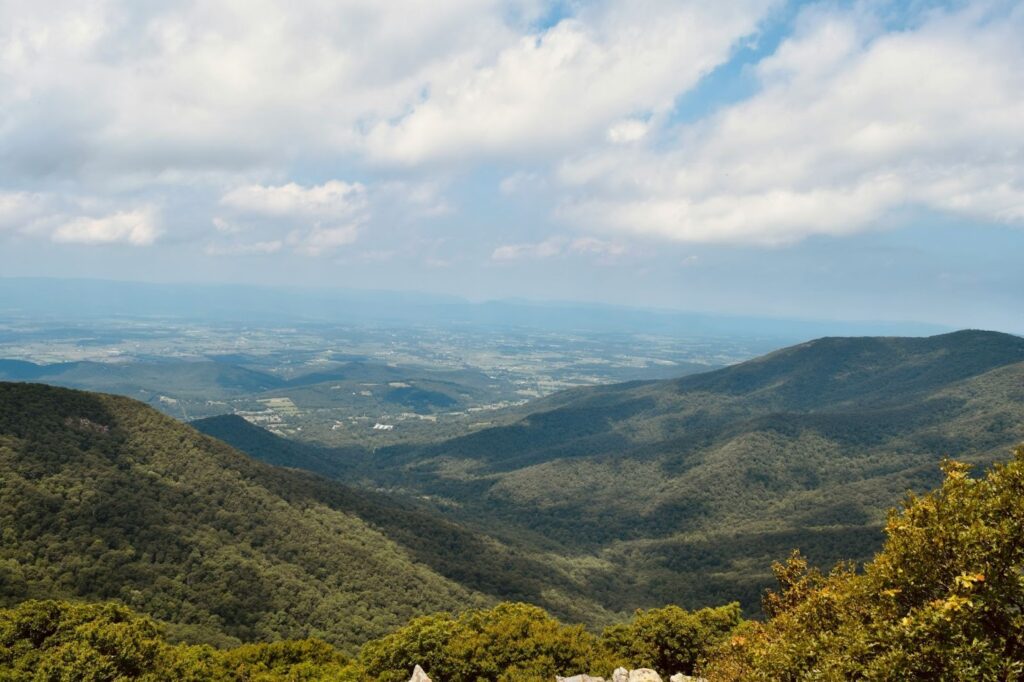
Image of the Shenandoah Valley in Virginia. Mountains loom under rolling clouds.
Image courtesy of Wes Hicks on Unsplash

A new page

Now, I am working as a freelance writer. I may eventually return to mental health work, but probably not. I am enjoying writing. I write scary stories to keep folks up at night as I understand the importance of rest myself. I am feeling so much better. I am having the happy days that I wished and prayed for as a child. I continue to try to be gentle with myself. If I don’t get my to-do list done on a given day, that’s ok. I had to be patient to allow the medications to work their magic. 

I also had to be patient with myself. I struggled with feeling internalized stigma and judgment for allowing myself to fall in this hole. I felt that I should have recognised the signs of decline and I should have known better. I’ve come to recognise that what’s important is that I did recognise how I was feeling and sought interventions before it was too late. I will continue to use my support to fight this monster every day. Most days are good, but I have to stay in the right mindspace to understand the temporary nature of the bad days. 

So who am I? 

What do I do? 

I’m Senah. I’m a writer with a background in mental health and I’m working on myself daily. Today is a good day. 

Image of a person writing with a pen on paper. They’re seated at a table, and in the background sits a mug and a notebook.
Image courtesy of Unseen Studio on Unsplash

Adventure Hostess: Making My Home a Global Community

Several people passed by my house this year. Many of them just passed by temporarily, but other people stopped by and stayed as long-term friends.

For me, being an adventure hostess meant that everyone who needed a place to stay for some days, weeks, or months could come to my house. Welcoming people at home for over a year was my “specialty.” 

I’m from Argentina, but I live in Italy, working as a research assistant for the national research center. I became an adventure hostess for fun. It was a way to recover human relationships after so many months alone with my boyfriend, Coni, during the lockdown.

Most of the people who came to my home here were friends. Others were friends of friends, or strangers with just a tentative link initially. The people who came to my house did so by word of mouth. I think that because I’ve been living in the city for a long time and my house can host up to six people.

The house has two bedrooms but there is also a comfortable sofa bed in the living room. The maximum number of people who stayed was six and that offered an interesting mix of outlooks and priorities.

Seeking a life change

I think these people were looking for a big change in their lives. When they got home, they told me that they had left everything in their country to start over and turn the page. 

I am sure that I was part of that first change that they were seeking, not because I am conceited, but because I was part of their lives at a fundamental time: the time when they launched into their new lives.

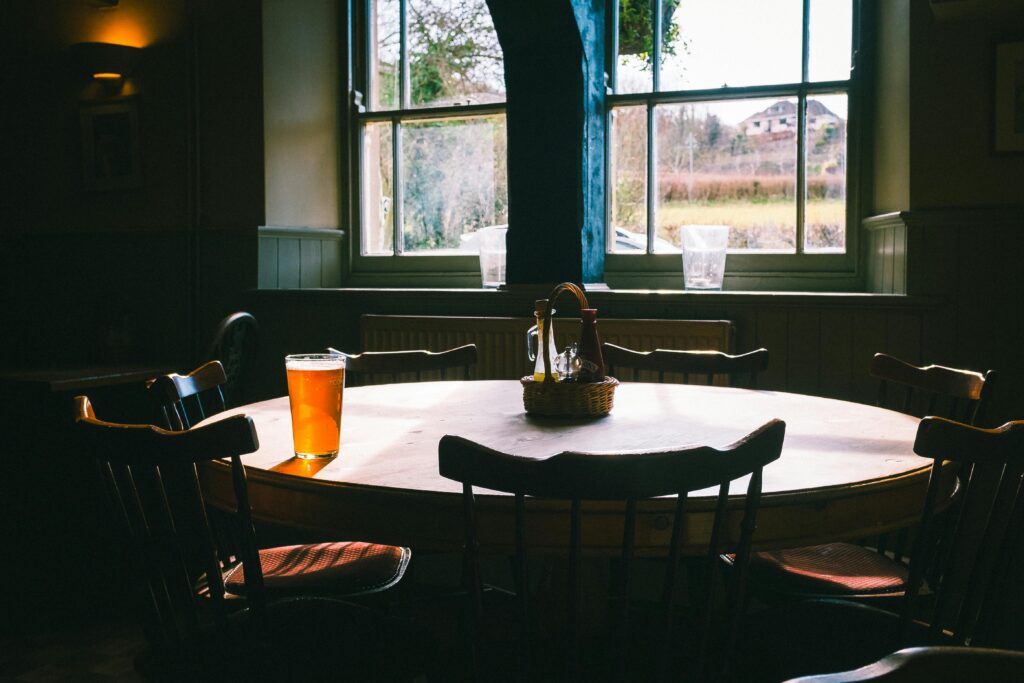
The dark interior of a building, chairs around a table that has one filled pint glass on it.
(Image courtesy of Chanita Sykes via Pexels)

One day, this last European summer, Claudia, a woman no more than thirty years old, came home while I was still on vacation. We connected because she’s related to one of my mother’s friends. While I was visiting family, she called me to tell me that she had lost her job after an unpleasant situation and that she had nowhere to sleep. 

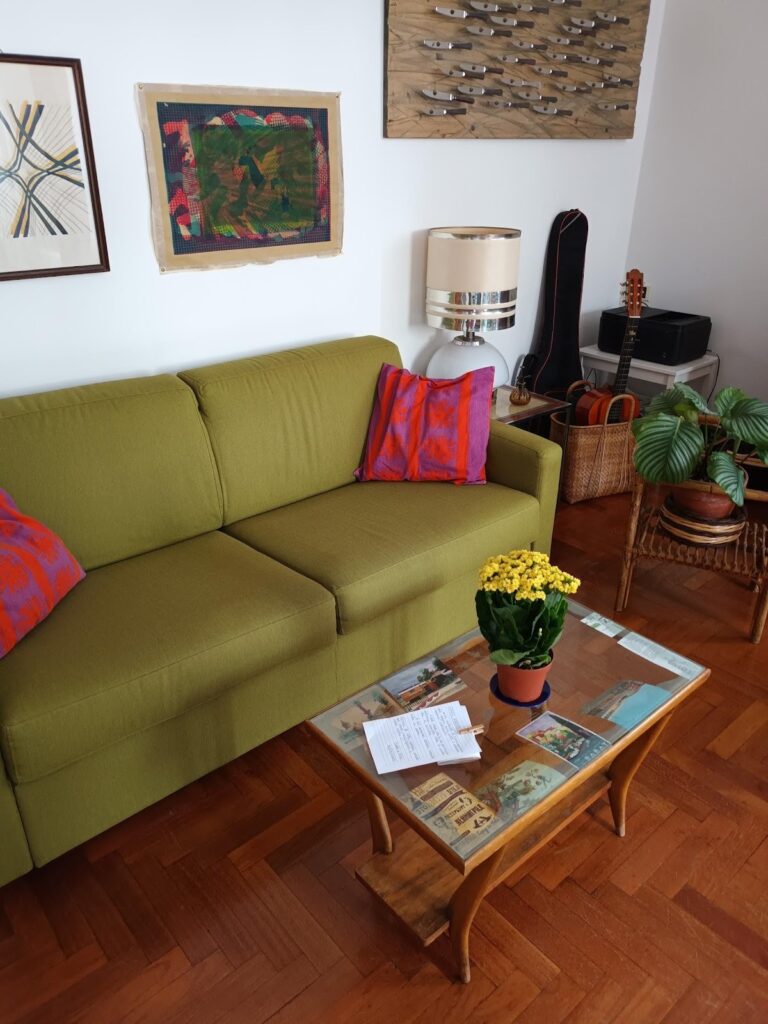
A living room, simply decorated, the focal  point being a green couch and colorful pillows.
(Image courtesy of Zaida Obeid)

She agreed to head to my house to sleep even though she had to take several trains to get there. Claudia vacuumed my house a lot and I liked that because, like her, I am allergic to dust. Claudia drank beer as we don’t like wine any more, and during her adventure, we drank more beer so that her story would take on the color that she wanted. 

A mix of friends

Other memorable interactions happened with Coni, Juan, and Ale. 

Because of all the people staying in my home, we were lucky we had those armchairs that can be bought in big furniture stores for your first home. These are great for sleeping in, or just for enjoying a coffee in the living room.

I remember Juan by the black glasses he wore and the fact that he also drank beer. He brought me a very tasty brew from Belgium.

Ale is a professional judoka. He is one of Coni’s friends and one of the most transparent people I’ve bever met. People tend to be more opaque or like the frosted glass used for bathroom showers.

Sometimes people don’t directly say what they feel and try to be politically correct when it comes to expressing their feelings. But Ale said everything he thought without analyzing how he said it. Since he is a genuinely kind person, he never offended anyone.

A young couple, Lem and Dan, spent even more time with us. They didn’t always come as just a couple, but sometimes as a trio with the cat, Raymond. Sometimes, Lem had to leave for her citizenship process and her partner didn’t like her going, but Dan was quite happy at home.

We cooked typical food from his country, Venezuela. Every time Lem came back, Lem would make us do short gymnastics routines. Ale would too, but he was more demanding about it. Because of Ale’s advice, we bought a TRX suspension trainer that I sometimes use to swing in the trees of the city square.

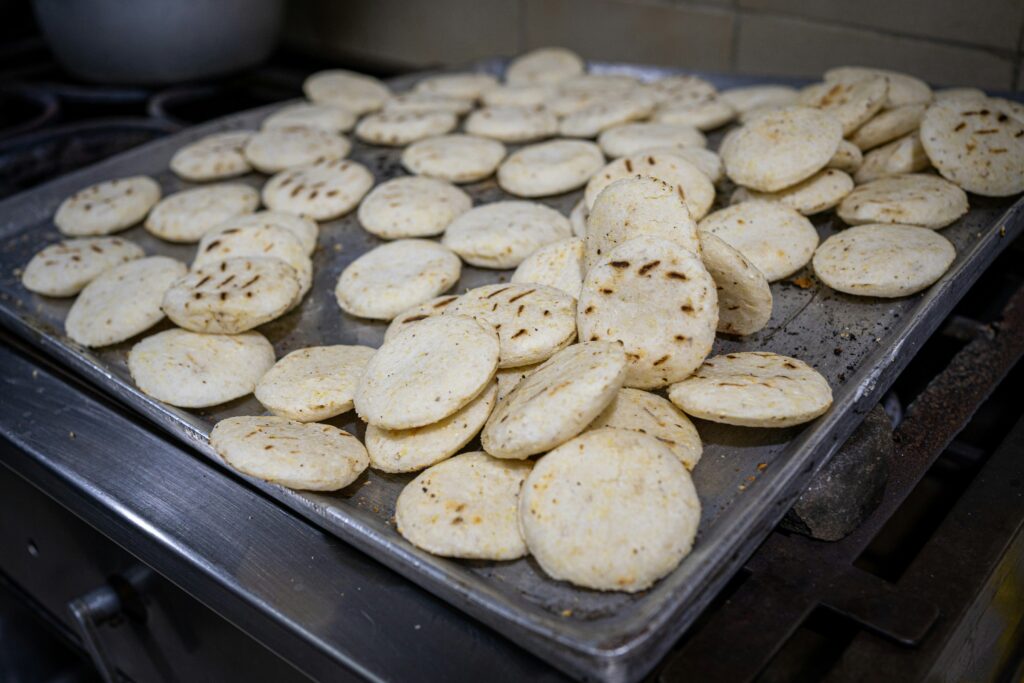
A tray full of arepas.
(Image courtesy of Alexandra Tran via Unsplash)

Little moments make the big picture

I could share thousands of anecdotes from everyday life with them, especially the “logistical or operational details,” as I like to call them. But those are precisely the details that could be boring to others. 

However, for those of us who live in the moment, those details were what transformed day-to-day life into an adventure. For example, when you walk into the bathroom you always find Raymond standing by the bathroom sink waiting for someone to turn on the faucet for him to drink water from. 

Ale did gymnastics after tying her elastic bands on the living room window, Dan cooked cornmeal cakes called “arepas” and tried to get all kinds of ingredients to make them taste just like the original ones.

Lem had online English classes very late; sometimes classes would be at midnight until three in the morning due to the time difference with her teacher in Buenos Aires. Some of us even walked behind her camera in our underwear when she was having her class.

Then, life makes everything go on. For now, I’ve stopped being an adventure hostess because I’m moving to England for a while. Now, I’m the one living in a house with lots of other lovely people.

I think becoming an adventure hostess helped me cast my worries aside. Or maybe what bothers me is not staying still with what I always do. And my life becomes an adventure because from time to time these stories interrupt my history. 

The experience of living with people and friends does not compare to interacting with people going for coffee or dinner. In coexistence, we can truly enjoy the minutiae of life.

Runaway Tobias

Like any other orphan, Tobias was curious about so many things. When he was younger, he wanted to know who his real parents were and why they had abandoned him. As he got older, he wanted to know what it was like to be outside the walls that surrounded the orphanage, or what it was like to attend a big school, or join a basketball team, or go to a mall, or own a mobile phone or fall in love.  

Growing up in the orphanage together with thirty other children was not easy. Being the eldest at 16, he was put in charge of doing the household chores and served as an errand boy to the cook, whom he described as a very mean old lady with a poisonous tongue. He swore he could have died a hundred times already because of the many demeaning and hurtful words she hurled at him.  

When he got the chance, he ran away, convinced he could survive the streets like his older roommates. “The unsheltered world is the real world,” they claimed. And so he followed suit. In his mind, he also wanted to prove to the nuns that he was old enough to look after himself. Besides, he was trying to find out the answers to the many questions in his head.  

Convinced that the nuns would be relieved to have one less mouth to feed, and thus save  the congregation a few hundred pesos, he took off when the guard was off duty. He went out the back door and climbed the barbed fence. Oh, how many cuts he suffered! He took two shirts, one pair of shorts, a bath soap, and a torn but clean blanket he found hanging on the clothesline near the backyard fence. He had less than a hundred pesos in coins, which he earned singing carols around the neighborhood the previous Christmas.

During his first day on the streets, he enjoyed his newfound freedom a lot — no curfews, no prayer time and, most of all, no house chores. How he hated running errands for the cook or cleaning the orphanage’s stained floors, which never looked clean no matter how hard he scrubbed.  

He looked up and saw the immense sky above him, like a new universe has  suddenly cracked open and welcomed him into its endless abode.  

Roaming the city park, he joined the countless mendicants pleading and tugging at any person’s soft spot for any left-over food or coins. Come sundown, he found a suitable place to spread his blanket, a spot hidden from the public eye, uninhabited and most of all free from the stench of urine. On his first night he cried, feeling more abandoned than ever before. He managed to control his whimpering, clutching a cross pendant hanging from a black string around his neck. 

The days that followed were characterized by hunger, heat, loneliness and destitution. His coins were gone. And people strolling in the park wanted to keep theirs. He suddenly longed to be sheltered. He wanted the feel of a clean shirt against his back. The stench of poverty appalled him, adding to the restless stabbing pain of a hungry stomach.  

As days passed, watching other vagabonds do their rounds, he learned to wash himself in public toilets when the caretaker went on a break. He also sourced food from 

families on picnics or couples on dates, and even ate leftovers from the trash. But the food — although clean — had a wasted quality, a hint of decay, unseen but grimly felt. Soon he grew weary; he wanted something freshly cooked. At night, he began dreaming of hot soups in a warm kitchen at the orphanage. He would wake up clawing the air, a growl of hunger echoing from his gut. 

After several more days in the park, he made friends with other street urchins who talked about how pickpocketing could bring in more moolah than begging. One single wallet could yield several hundred pesos—equivalent to a week’s supply of  decent food. A handbag could yield perhaps thousands of pesos since its contents could easily be sold to anyone for easy cash.  

He wasn’t too keen on robbing people after all, so he walked away from the group, clutching his abdomen as if to silence the perennial rumblings. He was so hungry he  wanted to sit down on the ground and maybe taste a few blades of grass when no one  was looking. Even the water in the park’s pond looked inviting. “Anything, just grab anything worth ingesting,” his innards seemed to be saying.  

It was high noon. The sun was shining overhead. He felt his head pulsating from the heat, making him feel hungrier than ever. A spell of dizziness made him rest under a tree. Its leaves made him think of boiled kamote tops the cook used to serve in soy sauce and lime. The brown trunk reminded him of grilled eggplants dipped in egg  and fried to a deep delicious brown. His stomach gave another growl. 

Looking around, he saw a middle-aged man sitting beside a young girl. The girl looked disheveled, her dress stained. Her face lit up when the man handed her a glass and told her to drink.

Tobias thought he could easily grab the glass from her to ease his hunger. But he stayed, watching her small frame almost quivering with delight. With  great envy, he wondered what the glass contained: Was it fruit juice? Was it cola? Iced tea perhaps? His stomach gave another growl. This time, it came with a painful jab like a dagger driven into his belly.  

Unconsciously, his hand reached to his cross pendant and clutched it. But his grip was without strength. He closed his eyes and began to rock himself to and fro, chanting a short prayer he learned from the nuns. Soon, he felt calm.  The pain momentarily subsided.  

Opening his eyes, he saw the man clutching the girl’s arm, bidding her to go with him.

“Let’s walk a little bit up to the street corner,” the man said.  

“I have to go home,” the young girl pleaded.  

“I’ll give you money later. Come on. It won’t take long,” he insisted.  

Tobias knew something was amiss. She was being forced to do something against her will.  

“Don’t be stubborn,” growled the man, as he tugged on the helpless girl. 

Tobias sprang to his feet but his knees wobbled. His stomach gave another growl. It wasn’t the best time to meddle in other people’s business. 

“Hey, don’t force her if she doesn’t want to go with you,” he finally managed. 

“Don’t meddle, boy, or you might get hurt,” the man replied.  

Tobias demanded the man release her. In a flash, two other men emerged out of nowhere. They took turns beating and clobbering him to a pulp. Tobias was not even able to return a punch. 

The girl screamed, “Please stop! Leave him alone!” but was quickly  silenced, her mouth tightly shut by the man’s hand.  

Tobias was badly bruised, his face bleeding, his arms covered in cuts.  

Suddenly, thinking of her own survival, the young girl bit her captor’s arm, making him loosen his grip. She ran off quickly, leaving her slippers behind. She ran and ran, away from the bad men, trying not to look back at the young boy who tried to help her.  

Her captor screamed at his two companions.  

The two men left Tobias and ran after the girl like bloodhounds.

Tobias lay on the ground, his eyes puffed and half-closed. His nose broken, his lip bleeding profusely, blood spilling into his mouth, staining his teeth red.  

Dusk had fallen and the horizon was now colored purple, fading into orange and  blue. Tobias was amused at the thought that even the sky was bleeding, sympathizing with his fate. He tried to sit but his whole body trembled with the effort. He winced at the  pain.  

“Help!” he gasped. 

No one seemed to be around. He struggled to stand up but fell right back down. 

He thought of the orphanage, the young children who ran around not caring about their future, the cook who always gave him errands and the soft-spoken nuns who taught him how to pray. 

He lay on his back, facing the sky. He felt sad, wishing he hadn’t left the orphanage. He murmured a prayer. He felt sorry for all the bad things he did. He also said a prayer for the young girl and hoped she was able to escape her attackers.  

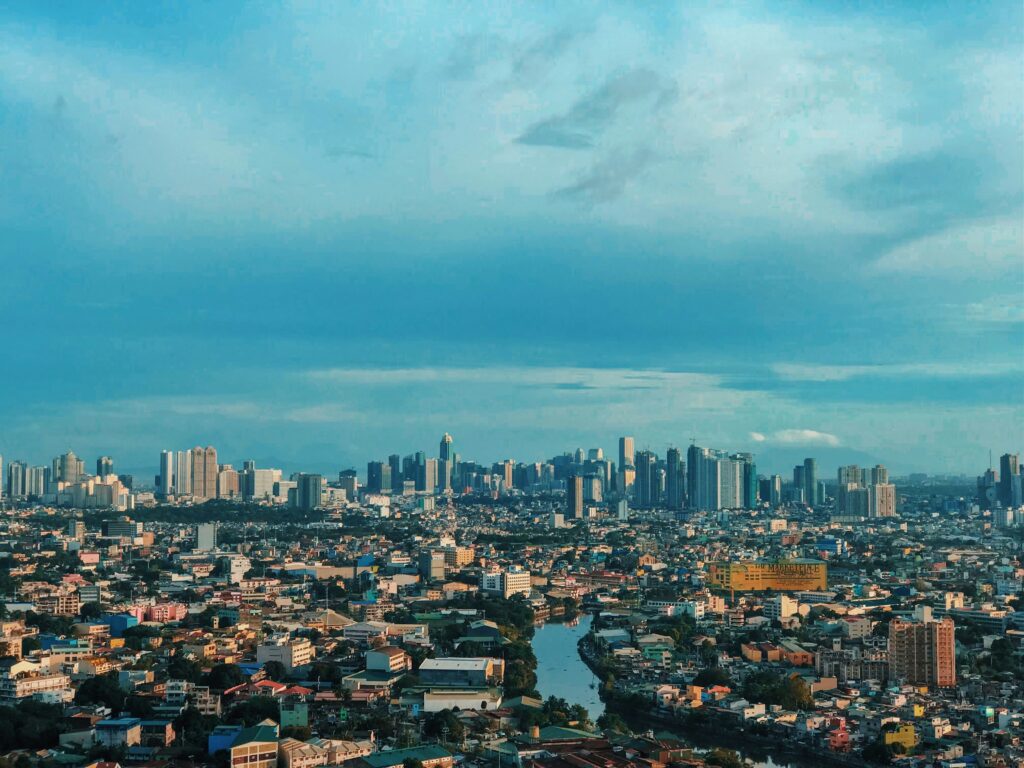
The skyline of Manila, Philippines.
(Image courtesy of Alexes Gerard via Unsplash)

Then he felt a strong grip on his shoulder, someone lifting him up. He heard a man’s whisper, “It’s going to be okay. I got you.”  

Tobias woke up in a hospital room. A kind nurse making the rounds smiled at him and asked how he was feeling. 

He tried to smile back, but gave a wince instead, realizing that the slightest movement caused a shot of pain. He was badly bruised all over. He fell asleep once more.  

The second time he woke up, he saw a nun beside his bed. It was sister Consolacion from the orphanage.  

“Tobias, we are so glad you are getting better. Get some more rest and soon we will be going home.”  

Tobias felt guilty for leaving the orphanage and getting into trouble. He later learned that the girl he had tried to save called for help and the park’s security guard heard her. After calling the police and the child welfare department, they were able to contact the orphanage and confirm Tobias’ identity.

A local news reporter got hold of the story from the police station and went to see Tobias for an interview. Shortly, he was on TV, the face of a hero who got mauled for standing up to defend a young girl.  

Soon, flowers and gifts began to arrive at the hospital — sent by people who saw the feature on TV and who wanted to express their thanks and admiration for him.  

Tobias was pleasantly surprised. For the first time in his life, he had received not just one gift — from the congregation on the day of his birthday—but hundreds, filling up the entire room. There were shoes, shirts, towels, blankets, candy, chocolates, balloons, toys and other wonderful treats from well-wishers. 

 “What would you like to convey to your fans, Tobias?” asked a reporter in a live interview.  

“I am thankful for everything they sent me, from the grandest gift to the simplest, hand-written card. I may be an orphan but I know I am loved. I am just a simple boy who tried to help another person. I guess God needed me to be there in that exact spot  when the trouble happened. I guess no matter how difficult our situation may be, God put us there because that’s where we need to be.”  

When Tobias got well enough to go back to the orphanage, he received a hero’s welcome. He hadn’t grasped how overjoyed he would be to be back among the other children, the nuns, and even the cook whom he used to loathe. The gifts he received at the hospital, he joyfully shared with others. There were shrieks of delight everywhere: smaller children enjoyed eating the chocolates and candies, and the older ones took turns playing video games. 

That night, as he lay in bed, looking at the stained ceiling of the dormitory that he shared with 30 others, he said a prayer of thanks. 

Dialectic

Your brain is a film
played at 5x speed –
the images barely intelligible,
leave no room for thought, only gut.
Meanwhile, the theater is collapsing
in slow motion.

So you step outside and
begin naming everything you see,
attempt to capture some of the air
you’ve been denied. A half-smile
can turn your day around, some ice
applies to the cheeks can freeze
a spiral.

Dear Man, act fast to improve
this moment. It’s all you have
to share. There never was
a straight road, but trust your
wise mind and I promise
you’ll make it to the third act.

When all else fails, radically
accept yourself. There, before
the climax of every outburst,
you can find a place to stop
and catch your breath.

Cell

I handed over my watch and shoes, and we approached the turnstile where I was to enter. He supported my hand, moving it towards the small glass panel where a red beam would have scanned my thumb. Instinctively, I struggled and kicked. I was instantly cuffed by the four men who accompanied me there. The cold metal of the handcuffs cut into the skin of my wrists. I stopped struggling so that I wouldn’t hurt myself. 

I was firmly pushed through the turnstile, then led by the shoulder down a passageway. We turned right into a room. The door made a dull and heavy sound as it closed behind me. An opaque slab immediately slid over a small rectangular opening in the upper half of the door. 

Once shut, the outline of the door vanished into the rest of the wall. 

The room was sealed. 

The walls were lined with stiff square vinyl cushions that were uniformly positioned and fixed, like bloated coasters on a surface. The ceiling and the floor were likewise treated. Once inside, it would seem as though one were in an endless box that looked the same from every angle. I did notice that the height of the room was longer than its length, which gave me a sense of being in a cupboard of sorts. It was a bit different from a cupboard, for it was dimly lit, or maybe brightly lit. I can’t quite remember now. In any case, white light from the ceiling illuminated the room. 

There was nothing in the room, not a bed nor a chair. There was no window, nor a place to relieve oneself if necessary. 

My body was tense. I could hear the absence of sound around me. Quite suddenly, I felt weak in my legs and flopped to the floor. I fell hard on the cushions and was surprised that I stayed down. I had half-expected that I would rise up and bounce, as one would on a trampoline. I closed my eyes, then, wondering if I was dreaming, opened them. The light had gone out and the room was in total darkness. I could have been in space, I could have been anywhere. I closed my eyes again. I didn’t think about standing up. I lay there motionless. I thought I was going to die, that I had been left there to die. What if I ran out of oxygen? 

I realised that I was gulping air. I began to tell myself to breathe regular breaths. In, out. In, out. I breathed deeply but slowed down. Life seemed to return, and I could hear my heart beating. It was pummelling so hard I thought it would jump out of my body. I couldn’t tell if time had slowed down, or if it had stopped completely. I concentrated on my breathing. I focused directly on the air streaming in through my nostrils and out through my mouth. I didn’t move. I didn’t bang on the walls hysterically, or cry or scream. My mind told me to conserve any last bit of energy that I might have, just in case I needed it. I needed to stay alive until the door opened again. 

After what seemed like a very long time, I would be released from the padded cell. I had somehow fallen asleep. I woke to the heavy sound of the door. The door opened wide. Light from the outside flooded the room. It was bright and glaring. The room took shape once more, with its square white vinyl cushioned walls. 

Two men came into the room and I was given a plastic cup of water. I swallowed its contents without hesitation. I was helped to stand up, and was again being led down the corridor. I noticed the corridor’s grey concrete floor and the dirt that had accumulated between the crease where the wall met the floor. I was placed into a normal cell. Instead of a wall enclosing the cell, the side facing the corridor was made of an installation of bars. It felt like being in a cage. The room smelt of stale piss, and I could hear the sound of a whirring fan. In one corner was a stainless steel urinal, and in the other was a mattress without a sheet.

I had no idea what would happen to me next. Sometimes, I still don’t.

Sifting Through the Ashes

I thought it was strange that my mom called me so early in the morning. It was 7:30am for me, so it must have been 4:30am for her. 

It was Wednesday, August 9th.

“I wanted to call you before you saw the news. There’s a fire in Lāhainā, Kīhei, and Kula. Everyone in our family is safe and accounted for. I might go pick up grandpa from Kīhei today. Your cousin was in Lāhainā, but escaped to Nāpili. Aunty has not heard from him since last night. I will keep in touch.”  My cousin called my aunty the next day to check in. He was safe and helping with the boats looking for people and bringing in supplies.

We exchanged “I love youʻs” and “take care’s” before hanging up. I went to my social media (because I knew I would get news more quickly from the people I follow who still live on Maui) and saw the footage of the fire. My tears pooled as I scrolled through all of the unaccounted for posts, friends and classmates who hadenʻt heard from their loved ones since the fire. 

Keiki (children) and kupuna (elders) unaccounted for. 

The week was a blur of grief as I consumed the ongoing fires in Maui. Stories began to pour about people being trapped on Front Street, people jumping into the ocean to escape the fire, the alarm systems never sounding, and the realization that the fires swallowed more people than I could comprehend. 

Lāhainā holds moments of my life that are now just memories. Memories that I can no longer physically visit because Lāhainā is gone, in ash. So many of my people have lost their home, the place that their ancestors are rooted. I don’t have the words to fully describe the immeasurable loss that is shared in our community. Those who were able to escape the flames made it out with just the clothes on their backs, while others were swallowed by the fire. And within these same moments of Lāhainā disappearing, Kula was on fire too, adding to the lives lost and people displaced.

115 lives lost and over 1,000 people still missing. Nearly three weeks later, victims are being identified.  

The grief I feel is a collective grief, one felt by my Lāhui, Maui community. 

We are grieving for the lives lost, for the friends and family, the keiki, and the kupuna who did not have time to escape. 

We are grieving for our island, our ʻāina (land), the first capital of the Kingdom of Hawaiʻi. 

We are grieving for those who came before us and for those who will live after us. 

But in this grief, we come together to kōkua (help/support) each other. From compiling GoFundMe and Venmo accounts, to cooking and giving out free food, the mass share of information and kāhea (call) to help, our Lāhui was able to get people the supplies they needed to survive. 

Unfortunately, structures of colonialism make it difficult for Kanaka (Native Hawaiians) and Locals to continue their grassroots efforts to help those in need. Investors and realtors have already begun contacting the survivors of the devastating fires. Maui residents are pleading for tourists to cancel their trips and fly home,while the governor has opened the parts of the island not in ash to the tourists. Maui Electric Company is facing lawsuits that blame the company for the fire, and the man who was in charge of the alert system that never sounded has resigned.

First responders from Hawai’i and the continent are currently searching for remains with their cadaver dogs, while tourists take videos and photos of the devastation for social media clout and snorkel in the same waters our people jumped into to escape fire

We can not just grieve, but we must also fight for our ʻāina and lāhui. And it is exhausting.   

“We are Lāhainā Strong. Yes, but please allow us to also be, Lāhainā Sad. Lāhainā Tender. Lāhainā Worried. Lāhainā Messy.” – Uʻilani Tevaga 

If you feel called to kōkua, please consider monetary donations to these organizations:

Direct Aid for ʻOhana displaced by fires 

Hawaiʻi Peopleʻs Fund

Maui Mutual Aid

Council of Native Hawaiian Advancement, Alakaʻina and Kakoʻo Haleākalā

ʻĀina Momona

Maui Food Bank 

Maui Humane Society 

I’m Becoming My Mother, But That’s Not a Bad Thing!

When I was a child, my mother told me I’d grow up to be just like her. She said it to me in a tone that let me know I’d dread what I experienced once the change happened.

Now, I’m “grown up,” and, as she predicted, I am exhibiting more and more characteristics that initially belonged to my mom alone. As I get older, not only do I look more and more like her, but I act like her, too.

One and the same

Four traits stand out to me when I think about how I’m becoming a carbon copy of her.

The first one is the most prominent one – the one that’s most visible to others: when we’re stressed, we put our head between our hands and rub our hair.

I first noticed my mom do this when she drove, such as when merging onto a rush hour freeway or when we were at a confusing roundabout. From the corner of my eye in the passenger seat, I’d see her subconsciously make that move. When I started driving at sixteen, that habit was also instilled in me. I’m reminded of my mom each time it happens.

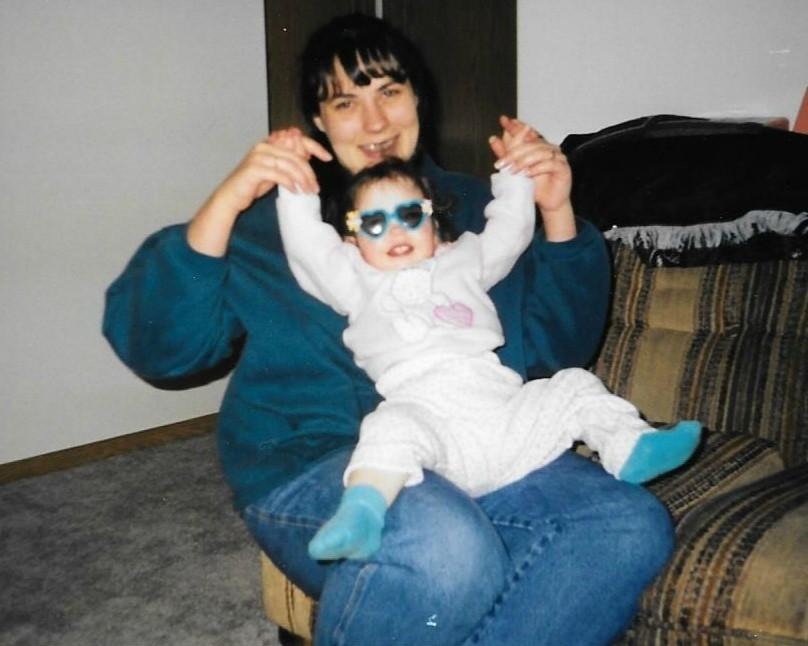
A young child sitting on their mother’s lap.
(Image courtesy of Brooklyn Riepma)

The second one is my favorite: her laugh. We have the same sense of humor and laugh at the same things. Not only do we laugh at the same time, but the sounds of our laughter are so indistinguishable that it’s impossible to tell our laughter apart. They’re identical. Anyone between us will be met with a surround sound of our giggles.

Next up is our interest in conspiracy theories. My mom has always loved telling me about the ideas that pop up in her head, no matter how outlandishly impossible they seem. She tells others her stories and they don’t believe her, nor do they want to listen. She tells me, though, and we delve even further into the topic and I believe it, too. Now, I come up with my own theories about life and the universe and I know I’m safe to tell her.

Lastly is how clumsy we both are. I’m calling my mom out here, but she’s incredibly clumsy. Whether it’s bumping into things, dropping things, making mistakes when driving, or tripping over her own feet, she’s always getting herself into trouble!

I am becoming clumsier as I get older. I am positive I get that from her.

What I have to look forward to

Sometimes when she messes up or does something silly when I’m around, she’ll comment on how I’ll be like that someday.

“See what you have to look forward to?” she’ll say.

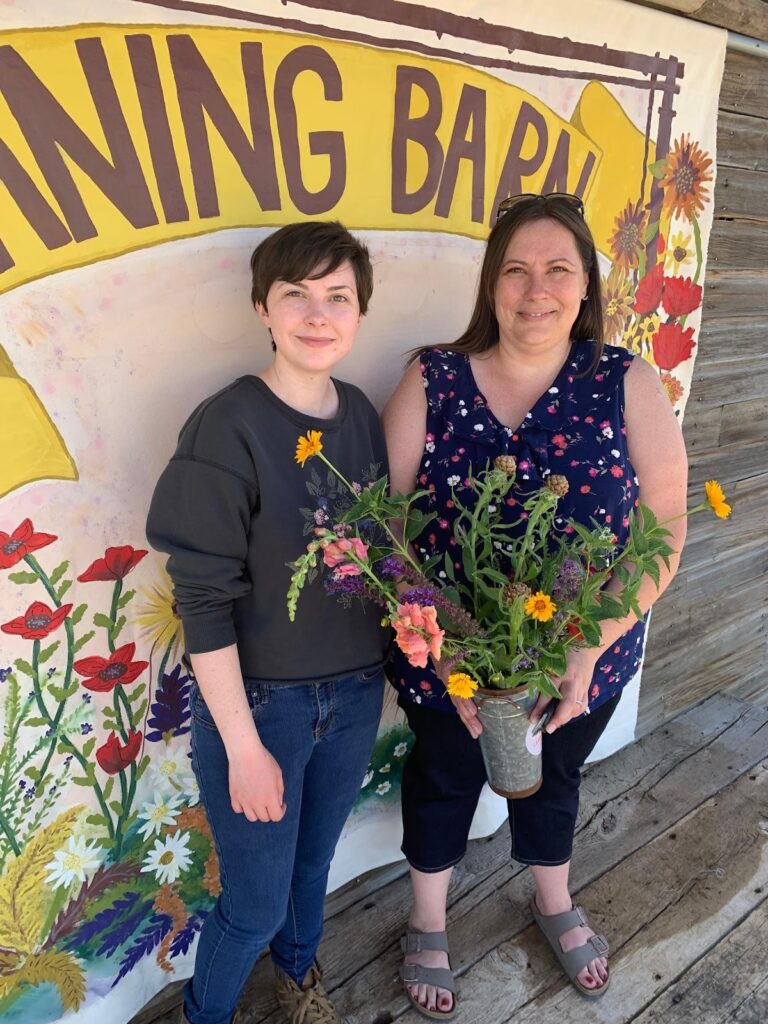
Two people standing next to one another, smiling. One woman is holding a vase of flowers.
(Image courtesy of Brooklyn Riepma)

It’s a sarcastic, self-deprecating remark, but I don’t think it’s necessary. I do look forward to being more like my mom.

I consider myself one hundred percent my mom and one hundred percent my dad. The math doesn’t make sense, but that’s what I believe my soul to be.

When she mockingly says that I am getting to be just like her or when someone else makes fun of her for something she does, she’s putting herself down. But since I’m fully her, she’s putting me down, too. She, and everyone else, need to understand that my mother’s qualities are nothing to be ashamed of.

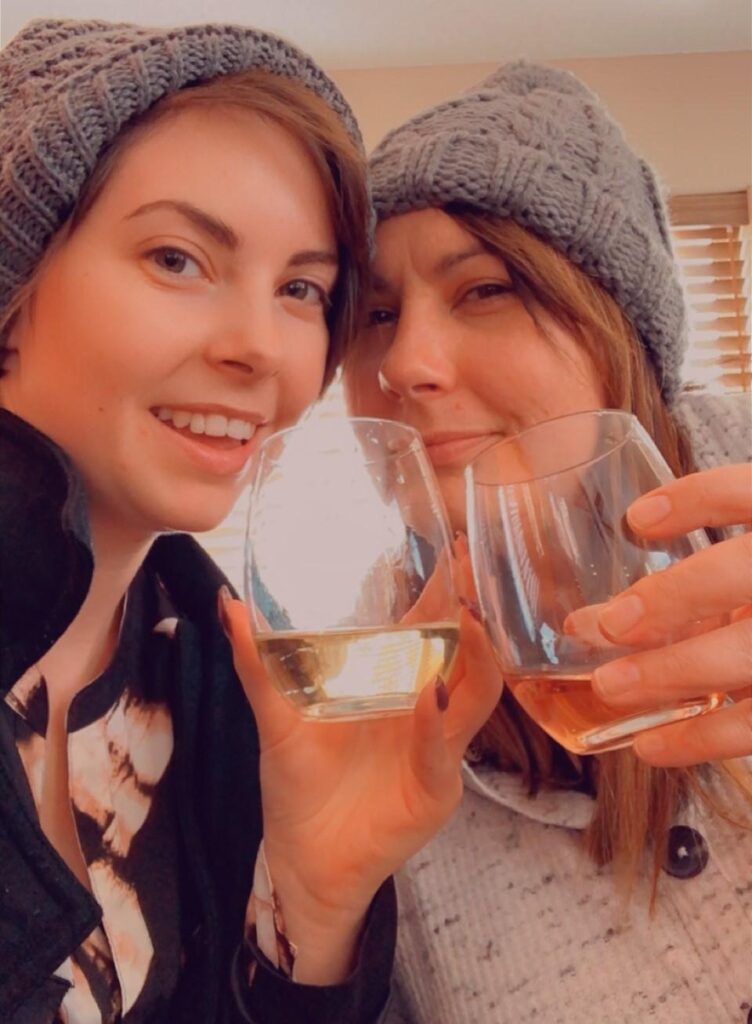
Two people cheersing two wine glasses together, wearing matching gray cable-knit beanies.
(Image courtesy of Brooklyn Riepma)

A glimpse in the mirror

When I put my head between my hands when I’m stressed, it’s like I’m wearing a locket with her picture in it. Whenever I notice it, my beautiful mother comes to mind.

When we laugh together, others may find it obnoxious, but we are just enjoying each other and creating joy, so why should it matter what they think?

When we spout our conspiracy theories, it just means we have active imaginations and are open-minded about all that exists and may exist around us.

When we’re clumsy, it just means we’re paying more attention to the world around us than ourselves, indulging in taking in the breaths of life. 

She’s my mother, but she’s also my twin. She’s my mother, but she’s also me and I am her. I can’t wait to be even more like her as time goes on.

My Partial Program Experience

I have been depressed before, and depressed since. Arguably I am always hovering at some degree of “depression,” but at this time in my life, in early 2019, it was a darker, uglier color than it had ever previously been. I was immobile, frozen in time; I had become nothing but a fixture on my couch that occasionally moved to lay down in bed instead. I had long shed any sense of personhood and was a shadow of myself. 

When my weekly check-ins with my therapist proved to not be enough, she referred me to a partial hospitalization program in Greenfield, Massachusetts. It would only be for two weeks, she assured me, and I wouldn’t have to stay overnight. I was hesitant, but I was also desperate. I knew I needed a lifeline out of the stagnant sea, no wind in my sails, that I was lost in. I agreed to try. 

A partial program is a safe option for those who are struggling, for those who are stuck or frightened or immobile, like I was. It allows for a sense of freedom since you only have to attend during the days and can return home at night. It is also great encouragement for self-reliance, that you are able to get yourself to and from the program each day. 

The partial program was straightforward: multiple group meetings in various rooms on the third floor of the hospital throughout the day led by clinicians who would focus on a specific topic or coping mechanism. There was a room with a fish tank, a room with almost a dozen windows, and one room that was very beige. We were encouraged to participate to our comfort level, which meant that I was completely silent the first three days. But after I finally allowed myself to listen to what was being said, I realized that I was the only one who could pull myself from the depths, and I decided to let myself be free and speak. I mentioned my feelings of loss, of hopelessness, of fear, of failure. And somehow, others related. It turned out I wasn’t alone in what I was experiencing. 

We learned about grounding and mindfulness. We discussed responding to situations instead of reacting. We practiced being kinder to ourselves. The two weeks were spent relearning how to listen to what was going on inside of me, instead of ignoring my own pain, and treating that pain gently instead of with disdain or hatred. 

During one of my one-on-one meetings with one of the clinicians, we went over my symptoms and what led me to the current moment. I hadn’t realized how much pain I had been carrying inside, how much I had tried to stifle it within me and ignore it. She prescribed me an antipsychotic, which I was nervous to try, but if it was part of the healing process, I was willing to give it a go. 

The partial program didn’t cure me, necessarily. There were many aspects that I found lacking – lots of platitudes and generic optimism. But I went. I made it out of the house every day. I was reminded of my own humanity. I was reminded that my suffering was not unique to me, that I was not alone in the expanse. 

Entering into the program was simple. I simply needed a referral from my therapist and met with an admitting clinician who determined my eligibility. The program itself was not strenuous, often very meditative and relaxing. I recall one session where we laid on yoga mats and listened to instrumental music. The mat was surprisingly soft beneath me and I had a small pillow. The music, coming from a radio across the room, played what could only be described as spa music while the clinician led a guided meditation. I felt my body relax and my mind wander through the meditation, and I was at peace, just for a little while.

It can feel daunting to admit that you may need to take a step for more serious therapeutic services. I know that I was hesitant and afraid of the stigma that may be attached to a partial program. But I also recognized that I was no longer able to function in a healthy way, that I no longer recognized myself. Attending was the first step on the road to recovery. 

Aerial image of a woman dancing in the ocean
(Image courtesy of Lance Asper on Unsplash)

Heartbreak Journal

I can’t even explain how much my heart ached from the pain I felt during those years. I was a teenager. I was naive. I was just too nice. Others mocked me. I should have known better. What did I do wrong? Nobody warned me he would break my heart. There were no signs of it. He played the part well and he had me playing his game. I never grieved so much in my life. The unbearable strain my heart felt was a load on my shoulder. Actually, a part of me was missing him. It made me wonder, “How could I fall for someone who gave his heart to me and another girl at the same time?” 

I went along with his plan. 

He asked me, “Should I break up with my girlfriend?”

I told him, “I don’t know.” 

I didn’t run away when I should have. My friends warned me I was too nice. I should have listened to them. I just wanted to be in love. I had been dreaming of the day when God would supply me with a man who loved me and him at the same time ever since I was a little girl. Was I being punished for my exaggerated dream about falling in love? Was God testing me to find someone who is compatible in the eyes of God? I never knew the answer. 

He explained he could never cheat on me because my heart was already broken by him. In his words, “I would never do that. I love you only.” 

How my chest would tighten even more, when the pain would only get worse in a matter of seconds. I wanted to let him know how much it hurt. I gave him everything and he just burned it all away. I didn’t care about her falling for a guy who didn’t care about me one bit in his life. He gave the world to someone else. I hope she knew she was in for a surprise. 

I was crashing. I was spiraling, trying to grasp and take it all in. Maybe one day my heart will mend from the pain I felt. 

From that point on, he would mope around the student college halls begging for me to take him back. I used my big girl voice, my lungs using more oxygen than ever before in my life, and shouted, “No” through the halls. I didn’t need him. I didn’t need to cry over him. He took a part of me away from myself. I wasn’t going to let that happen again. 

I didn’t even know who I was anymore. I got lost in myself and my identity because of the soul of a human being who didn’t even deserve my heart in the first place. I learned I wasn’t good enough to be loved. I wasn’t good enough to be cared for. I wasn’t good enough to give my heart to a human being who would make me feel happy. 

It changed me mentally. It changed me in ways that I’ll never forget. I didn’t have the motivation to keep pushing myself in school. I didn’t have the courage to even go to school because I knew he would be there. Seeing him in the halls made my stomach turn to the point I wanted to vomit every time I saw his face. 

The heartbreaker. The cheater. The life wrecker. 

All the names I would call him, but I didn’t have the strength to be myself anymore. He took advantage of me and I wasn’t gonna let him do that. 

From that experience I haven’t had the strength to pursue dating since. My heart was going to be broken again, so why would I even bother to put myself out there? I felt disconnected from the world. I wanted to get back up and put myself out there. 

It took me a while to grasp that I didn’t need another human being to lift me back up. From that point on, it made me realize I couldn’t be in my own little world anymore. I began to start writing after that. I have always wanted to become a writer since I was a little girl. I put my words down on paper expressing my desires and innermost thoughts because it was the only thing keeping me from breaking again.

The Choice

The end feels so inevitable when it comes. At least, mine does. I am in my final moments, of that there is no doubt. I stand in the biting cold of winter, my bones aching, my wounds bleeding. I know this is where my story ends. I should feel afraid. I should feel absolute terror. I’ve seen it in the faces of those I’ve bested, in the faces of men I held in their final breaths. Men that I respected, brave men, have lost their courage in the face of it time and time again. I always expected fear in the end, but now it has not seen fit to join me. Not only am I unafraid, I’m not even surprised to be meeting my end. After all, what choice did I have?

I’ll admit, I wish it wasn’t so damn cold. My own fault for being on the road so soon after Christmas. It is January of 1404, and the first fortnight of the year will prove to be my last. The trees around me are barren of greenery, the ground covered in a thick blanket of snow. What little dirt that shows is frozen harder than the armor currently sticking to my emerald-colored robes. The clothes I wear under my armor are drenched in sweat and blood that is freezing almost as fast as it emerges. 

The same wind that brought this snow has carried the clouds away, letting a glimpse of sunlight crack over the mountains to the east. The sight is beautiful, the wind chills my bones. I’m out in the open, stranded in the middle of the smooth glass surface of this frozen pond. I close my eyes for just a breath and let the sound of the wind ring through the eye slot of my helm. The sound feels more mournful that it should, a moaning in my ears that laments a sorrow I can’t identify. The dry air mixes in my nose with the smell of dirty water, making me open my eyes.

I look to my right, at the slope I fell down to find myself on the ice. At the bottom of the slope is the only hole in an otherwise unblemished surface. I trace the trails of my own blood up the hill, made not so long ago, and I am suddenly aware of how much I hurt. The fall down that slope was bad, the landing on the ice wasn’t pleasant either, but the fight that came before it was worse. If only for my pride.

I lost the fight that preceded my fall, not unprecedented for me but rare enough. Though in all my years wielding a blade, I’ve never lost in such spectacular fashion. The bastard who beat me was just too damn fast with that saber. Too deft at finding the gaps in my armor. I never even touched him. He left me bleeding from a dozen small cuts that sting like I can’t believe. 

When he left me, gasping for air and kneeling in my own blood, that’s when he made his mistake. He gave me a pause, speaking in a strange tongue from the east that I couldn’t understand. I’ve heard the language of the Cumans before. I’ve fought them on occasion when they send their raiding parties west into Bohemia. I still can’t speak a word of it. All I could gather was that he sounded quite pleased with himself. That made what came next easier.

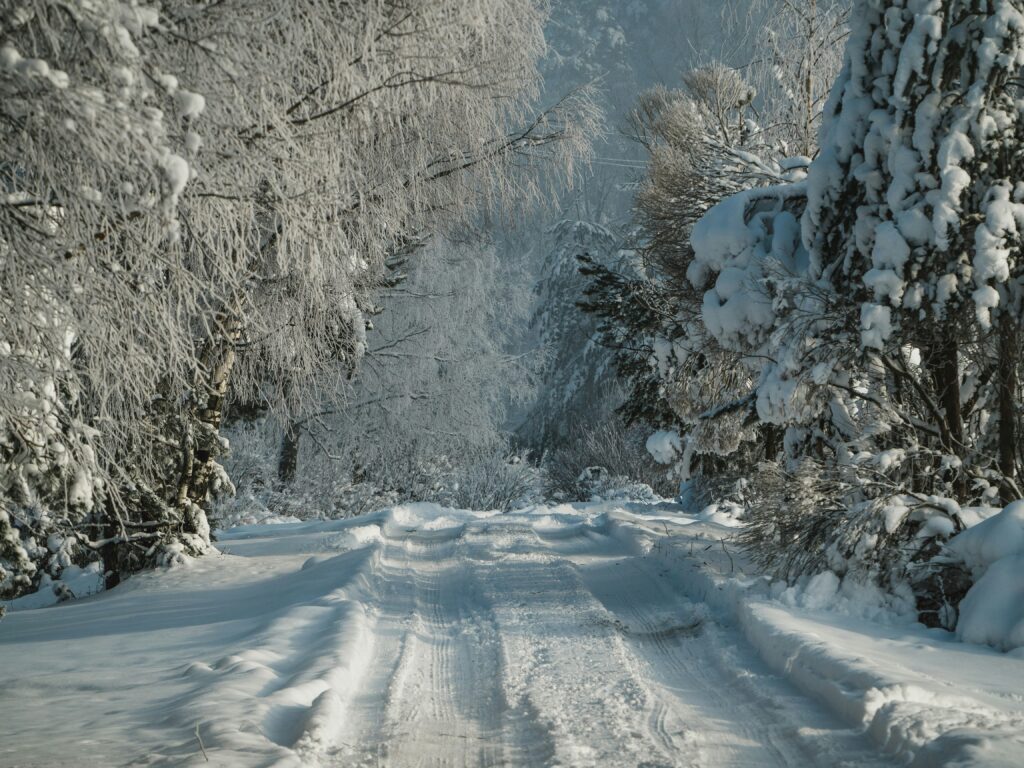
A barren country road, covered with snow and bracketed by trees.
(Image courtesy of a_sobotyak via Unsplash)

He took exactly long enough to gloat for me to gather my wits and track the over-dramatic arc of his swing. I blocked it just like countless other blows in my life, the strong lower section of my blade, just above the cross guard, halting his sword just long enough for me to slam the pommel into his gut. He howled as the air left him, but he recovered faster than I would’ve liked. 

His charge towards me was his next mistake. Sure, it sent me sprawling down the slope, seeming to hit every single rock on the way down. Yes, the last six feet were a straight drop to the ice that blasted my senses away from me. But it didn’t kill me. I don’t know how long I lay there. A few seconds? Minutes? The world swam in my eyes, the noise of the battle that had consumed the preceding day and night forgotten. It was the sound of cracking ice that snapped me out of it. My body was lurching for a new patch before my mind grasped how precarious my position was.

Here’s the part I still don’t understand. I’ve seen thirty-three winters, I’m ancient by the standards of a knight who has spent his life bouncing from one war to another. I was certain I had seen everything. I have no idea why that Cuman soldier came down that hill after me. I was beaten. He knew it, I certainly knew it. All he had to do was take his time and circle around. Yet, he dove down that hill after me. He must have seen me hit the ice and figured it was thick enough to hold. It did… for about a heartbeat before he went splashing into the water below.

The Cumans are a culture of horsemen, they prefer to move quickly. They wear lighter armor than knights like myself. They do still wear it, however, and armor is usually heavier than ice. That was more than enough to doom my opponent. He tried his utmost to pull himself out of the hole he fell through, even as chunks of broken ice jabbed at him, making it almost impossible to move his arms. The best he could manage was a handhold on the lip of his tomb.

I pulled myself to my feet with caution, watching the ice to see if the cracks were spreading. I looked down at the man who had triumphed over me mere moments ago. Our eyes met, mine through the slit in my visor, his through the eye holes of the ornate face mask of the strange and exotic helmet so common to his kind. He knew he was finished. I could see the fear in those eyes, tasted it just as I taste the blood in my mouth now. I took my sword in a reverse grip, the blade pointing to the ground, as I’ve done for countless men before in this position. I made the thrust fast and true. His death was clean and quick, as it should be for a warrior.

The sound of steps in the snow snaps my attention back to the present. I can see movement in the trees, shadows shifting against a white canvas. Before long I can make them out. There are maybe a dozen men, all of them in the odd, pointed helms of the Cumans. They move slowly, I’ve made them cautious. Good.

I can see some of them moving off to either side. They’re spreading out, though I don’t know why. They must know I’m the last of my men. Then I see why, and it’s a sight that clenches my gut and makes my heart stand still. A single man steps from the trees, taking easy, casual steps onto the ice in thick chainmail and segmented armor plates that only the highest-ranking Cumans display. This is their warlord. This is the man who slew my master.

The man who started all this has come. The bastard walks straight towards me, without a care. I’d hurl curses at him if I had breath left in me. As it stands, I barely have it in me to rise to my feet, to grasp my blade in my hands and hold it out in challenge. I will die, but not without making them work for it. I try to keep my focus, but it’s hard not to think of when I first saw this man. He started this slaughter just one day ago, and already I hate him more than I’ve ever hated anyone in my life. I hate that this bastard killed my liege lord. I hate that his ragged band of raiders slaughtered my brothers in arms. Mostly, I hate that I didn’t see them for the threat they were when I had the chance.

There were thirteen of us when this started. My lord, Baron Dychtwald, known to many as the bloody bastard of Bohemia, led us. He had ridden out of his home a fortnight past with two sword lines of his soldiers, my own and Sir Kuno’s. I had five warriors under my command, Peter, Frederick, Damian, Jaric, and young Stepan. Stepan had been more of a mascot until this year. I trained him myself. I suppose none of that matters now. There won’t be anyone to remember us. But they were my men, and I was very proud of them. I, Sir Tancred of Moravia, led them for seven years, and they never failed me. A pity the reverse cannot be said. 

I didn’t know Kuno or his troops well. He was…rough around the edges. His men were the same. Most had been in the stockade. Some had bounties out on them. Not the sort that you’d take to high tea, but they fought like devils. They died with courage. Damn that swaggering Cuman bastard!

 Calm. I need to stay calm. I can’t let him see me falter.

This started at a crossroads. That’s not a metaphor, it happened at a literal crossroads. We’d just left a village. There was nothing special about the place. Just an ordinary village where we had an ordinary lunch while the younger lads stared at some ordinary country girls. We were maybe three miles outside of town when we found ourselves staring at that smirking Cuman prick.

He began by speaking in the worst, most faltering Czech I had ever heard. He was not nearly as clever as he thought. I managed to make out that he expected us to dismount and lay our weapons at his feet. We reacted as you’d expect: laughter from my men, insults and rude gestures from Kuno’s. He didn’t like that. The arrows came next, whistling between branches as I shouted a warning to the others. We should have seen this attack coming. The Cumans are men much different from us, but they’re not fools. I should have seen it.

The horses died first. Their screeches still ring in my head and the weight of their crash may have broken a rib or two. We were still climbing out from under them when the first bunch hit us. That’s how the Baron died, crawling out from under his stallion when that insolent dog, the one now sauntering up to me, ran him through. I tried to get to him, clawing at my leg and the dirt beneath until I was free. I wasn’t fast enough. The baron was a peerless warrior in his day, but that day was long ago. He had spent the last decade at court, his campaigns long behind him. When his death came, he couldn’t even get his sword up to defend himself.

I didn’t have long to linger on the sight, the chattering howls of the enemy echoed through the woods as they descended on us. I’ll say this for Kuno, he got the men up faster than I would’ve thought possible. His and mine, they had lines formed to either side with time to spare before the enemy hit. We stood shoulder to shoulder, just like I taught them. Nobody breaks the line, nobody tries to be a hero. We stand together. Our discipline broke the first wave in moments. I don’t think they expected any resistance. But there was a second wave, then a third. We tried pressing into the trees, which helped funnel them to our stronger warriors. Still, we fell. First Jaric, then Stepan, Peter I held while he bled out between the fifth and sixth waves. Damian they dragged away screaming. I tried to reach him, I really did… bastards.

The irony of it all is that I know for a fact I could have escaped. There was a moment, after Kuno dragged me back from howling after Damian. We were isolated, a hundred yards from what remained of our men. They yelled for us to make it back as Kuno’s eyes locked with mine. I knew what he was thinking before he did. He made his break for it. I didn’t. I can’t say I blame him, but I just couldn’t leave my boys. I have chosen death. I could have run like Kuno did, could have forsaken the oaths I took. No. I could never. What am I without honor? What was all of this for without it? Even now, I know that in choosing between my life and my honor, the trust my men placed in me, there was never any choice at all. I look again at the Cuman warlord walking straight toward me.

Let them come.