This piece is inspired by and thus devoted to Helena Qi Hong.
* * *
Ming has fallen in love with Hua, his very first love, lost for nearly half a century. In their mythically entangled lives, he is more than sure of that; otherwise, he would not have written more than one hundred love poems within a year or so, finished drafting the second half of his long memoir in Chinese and his first novel in English respectively within three months, and begun to turn out short stories one after another for a year, each inspired by and devoted to Hua; nor would he have been video-chatting eagerly with her for nearly two hours every morning, nor would he have dreamed about her, about himself, and about them together every so often, day and night.
Of course, there are still many things he is not sure about. For example, what exactly is special about her? Why does he find her so irresistible? When did she begin to redevelop serious feelings for him? How much does she love him now? Does he love Hua and his wife at the same time, to the same extent, and in the same sense? Is his affection for Hua a “spiritual derailment,” a case of platonic love, or something really immoral? How should he control, if he could at all, his clandestine relationship with Hua? Perhaps he ought to make a confession about their intimacy to his wife? What if his wife discovers it herself? But among a dozen more such questions, he is wondering, first and foremost, why on earth he has cherished such a long and strong affection for Hua. “Why do I love her so madly?” Put differently, “What emotional spell has she cast over my poor soul?” Without getting a satisfactory answer to this question, he knows he will never “die with his eyes completely closed,” as the Chinese proverb goes.
Subscribe to The Superhero Brief!
Free access to the CEO's newsletter.
The views expressed in this newsletter are those of the CEO and do not necessarily reflect the views of the organization.
After much thinking, he finds that the best answer he can come up with lies probably in a variety of things working together at the same time.
1/ The First Love Complex
He remembers having a close connection with several girls in his early teens. For example, while in grade seven, he somehow struck up an intimate relationship with a tall, slim, and pretty classmate named Zhou Yeqiong. Every time they met, they joined each other on the bank of the river running along their village. There they would sit, listening to the reeds whistling in the wind or watching the stars blinking in the sky.
About three years later, at an all-school meeting held in the town of Songzi on a midsummer afternoon, Hua happened to come and sit right before him on the bare floor made of hard mud, just as karma would have it. He was then 15 years old, while she, as he learned decades later, was only fourteen. “Our school does have a really pretty girl, after all,” he thought aloud on spotting her. He was not sure if he developed a crush on her on the spot, nor did he have the slightest idea that she would function as the model of love or attraction for him for the rest of his life. Some people say all Chinese men have a serious and persistent first love complex; is his lifelong emotional attachment to Hua an unavoidable result of this very first encounter?
2/ The Love-at-First-Sight Complex
It was that first sight of Hua, so deeply impressed on his heart and soul, that laid the foundation for all his dreams about love before he himself became aware of it. Every woman with whom he would develop a relationship, including his wife, would prove to be a version of Hua, though to varying extents and with individual differences. For him, the first sight sowed a mythical seed, planted in the depth of his innermost being, which was bound to bloom at a later time.
In fact, he has fallen in love with Hua at first sight three times in his lifetime. He began to believe they were karmaed for each other when they met again over a year later in Mayuhe, where they would stay together for two years.
The third encounter occurred on October 2, 2019, when he attended a reunification gathering of old schoolmates. The moment he saw Hua, he found her even more beautiful than over forty years before and fell in love with her again. For reasons unknown to him, each time he saw her after a short or long separation, he found her even more attractive than the previous time. Was I born to love her at first sight?, he often wonders. But why?
3/ The Native Place Complex
Since ancient times, all Chinese people are said to have cherished a particular feeling for the places where they were born and bred. No matter how far away or how long they are separated from their native villages or hometowns, they will mostly want to return to their “roots” like fallen leaves, especially when they are old, either for the peace of their emotional beings or for the perfect taste of the local foods. But for many important reasons, Ming was not really emotionally attached to his native place; rather, he loathed it and was not even sure where his native place was exactly. Lotus Flower Village was the place where he lived for five years as a foster child, but it had given him only bad memories. In contrast, Songzi, his birthplace, was no better; with its climatic conditions being hell-like year-round and its people mostly hypocritical, insincere, snobbish, or vulgar. When he grew up, he had another two reasons to detest his native place, be it Songzi or Lotus Flower Village: on the one hand, he could not pronounce a single English word there; on the other, he was unable to write a single line of poetry no matter how long he remained there, though English and poetry were the two most essential elements in his adult life.
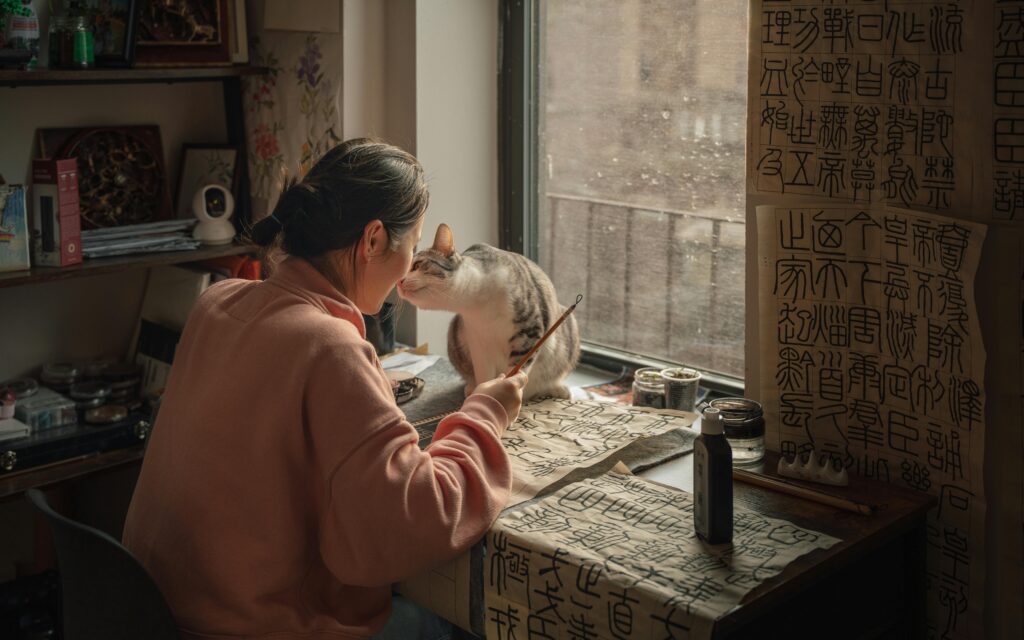
However, simply because of Hua or, more exactly, because of his feelings for her, he recently found Songzi much more loveable than he had realized. “Love you, love your cat,” he often says to her. Since she likes the small town very much, he has become nostalgic about it too, and all the more so now because it is the only place where he could hope to see and spend time privately with her, where he and she could eat what they both like most, such as salted Diaozi fish, fried green chili, Xiangzi tofu, carp fish cakes and Ciba paste.
Or, perhaps vice versa: it is precisely because he is so deeply attached to his native place without realizing it that he finds Hua more attractive than any other women he has seen around the world.
(Image courtesy of cagla.jpeg via Pexels)
4/ The Mother Complex
Physically, Hua bears little resemblance to his mother. Still, they grew up in the same cultural-physical environment, followed the same local traditions, and shared the same customs and lifestyles. In particular, they speak the same Songzi dialect, his true mother tongue. So, whenever he hears Hua speaking, even if it’s only her breathing, he feels peaceful and comfortable enough, like a happy infant listening to the heartbeats of its mother, in her arms.
At the subconscious level, simply because he has been living in the absence of love of any kind for too long since childhood, especially love from his parents throughout his formative years in Lotus Flower Village, and love from his wife, who seems, alas, to have been born with frigidity and insensitivity, he desperately needs a personalized compensation of such tender feeling from a Songzi woman, who may or may not necessarily look or act like his mother.
5/ The Zhiqing (Educated Youth) Complex
As a unique socio-political movement in modern Chinese history, “Up to the Hills and Down to the Countryside” occurred between 1956 and 1978. Like millions of other educated youths of the time, Ming and Hua were forced to answer Chairman Mao and the Party’s call to receive “re-education from the poor and lower-middle peasants” as soon as they graduated from high school. While slaving away/laboring together in Mayuhe, the forest farm located right on the southern bank of the Yangtze River, they shared the same physical and psychological hardships between 1974 and 1977. For one thing, they felt hopeless and futureless because they were expected to make a living, get married, and spend the rest of their lives on the impoverished farm. If they had hoped to leave the countryside permanently, they would have had to battle against one another to obtain recommendations from the local Party branch, cadres and peasants alike. While such chances were very slim, the most effective way to win was to become a Party member by outperforming all others in terms of “proletarian political consciousness” and “actual working performance.” But without influential social connections, no one could get enough recommendations to “return to the city” by attending a university or getting a government job. This being so, every youth station where educated youngsters like Ming and Hua were collectively receiving their re-education from the locals became not only a labor camp but also a miniature of the Colosseum. With the local folks as the audience, every zhiqing had to fight like a gladiator whose gladius was forged of their own willpower, determination, and physical endurance.
It was true that Ming and Hua competed with each other as with every other zhiqing on an individual basis; it was also true that he never confessed his love for her, nor did she show her true feelings, if any, for him or anybody else, but they did try to implicitly help and protect each other. For example, as the leader of the youth station, he once disclosed the reasons why the local political authority would not easily grant her a Party membership. Fortunately, both of them survived the fights and made their way out of the countryside. While he was recommended to attend a nationally prestigious university in Shanghai, she got enough votes to go to a college in Wuhan.
As adolescents sharing the same deeply-felt hardships, Ming and Hua had undoubtedly developed a special bond between themselves as zhiqing in Mayuhe, which further deepened as they engaged in intimate communication. Now, with all past hardships fading into the white pages of time, they only remember what was sweet about the old days when they fought shoulder-to-shoulder for their futures like two comrades-in-arms having chemistry with each other in a real battlefield. And it is definitely this zhiqing complex that has intensified his affection for Hua to a significant degree. Indeed, back in Mayuhe, Ming had to hide his affection for her even from himself to avoid jeopardizing his future. He knew too well then that, if the Party branch and locals had found him indulging in a romantic relationship or “petty bourgeois sentiments,” rather than being fully devoted to “revolutionary production,” they would have thwarted all his efforts to leave the countryside. Before his reencounter with Hua in 2019, he did make some attempts to get information about her whereabouts, but somehow without any success. As a result, they remained totally lost to each other for forty-two years. After finally reconnecting, he could no longer restrain himself from releasing all the emotional intensity he had accumulated over the years.
Hua points out to him, “Your current feelings for me result from your zhiqing complex, I am afraid.”
6/ The Misconception-in-Love Complex
Unlike de Clérambault’s Syndrome, which is medically referred to as a kind of delusional disorder, what the Chinese language describes as “zi zuo duo qing” (“自作多情”) is quite a normal psychological tendency to overestimate one’s importance in a relationship. As such, it is not a morbid state of mind, but an emotional inclination, which seems to be much more common among the sensitive, the self-centered, the self-confident, or the narcissistic than among people with other characteristic features. As Ming himself has admitted many times, he is particularly sensitive in emotional matters. For example, when Hua gave him a tuner in Mayuhe in the summer of 1975 (just to help him learn to play the erhu, a two-stringed bowed musical instrument, as she explained decades later), he over-interpreted her gesture and treasured the device as a token of her affections. The reason for this, as he sees it now, must have been underlined by the close interrelationship between his own deep feelings for her and his strong (mis)belief that she loved him as well. When Hua asked him to return it sometime in the following year, he thought she had found a new sweetheart, who he suspected was Pan Lihao, his major rival at the youth station. Until the truth eventually surfaced with the help of a mutual friend during the Chinese Spring Festival in 2022, Ming had remained unaware that a part of him had been living with this delusion all the time.
Since then, he has been trying hard to find a cultural equivalent in English to describe such delusional indulgence, but surprisingly, no native speakers or writers of English or online sources could offer him a set phrase and the closest word he has dug up seems to be “erotomania,” which, like “de Clérambault’s Syndrome,” is far from an accurate description. After consulting several exceptionally talented translators in addition to some bilinguists of the highest caliber, he realized there is no such equivalent in English at all, and the best translations they could render are “delusional fancy as someone’s love interest,” “emotionally self-flattering” and “misconception in love,” depending upon the specific context. They say “benign erotomania” might convey the basic meaning more accurately, but it sounds quite strange to people with little knowledge of the psychiatric condition. This linguacultural difference keeps Ming wondering: how come such an emotional tendency is so common among Chinese but not English speakers?
Thinking along these lines, he wonders if his affection for Hua may well have been an unconscious projection of his own delusional fancy as her love interest.
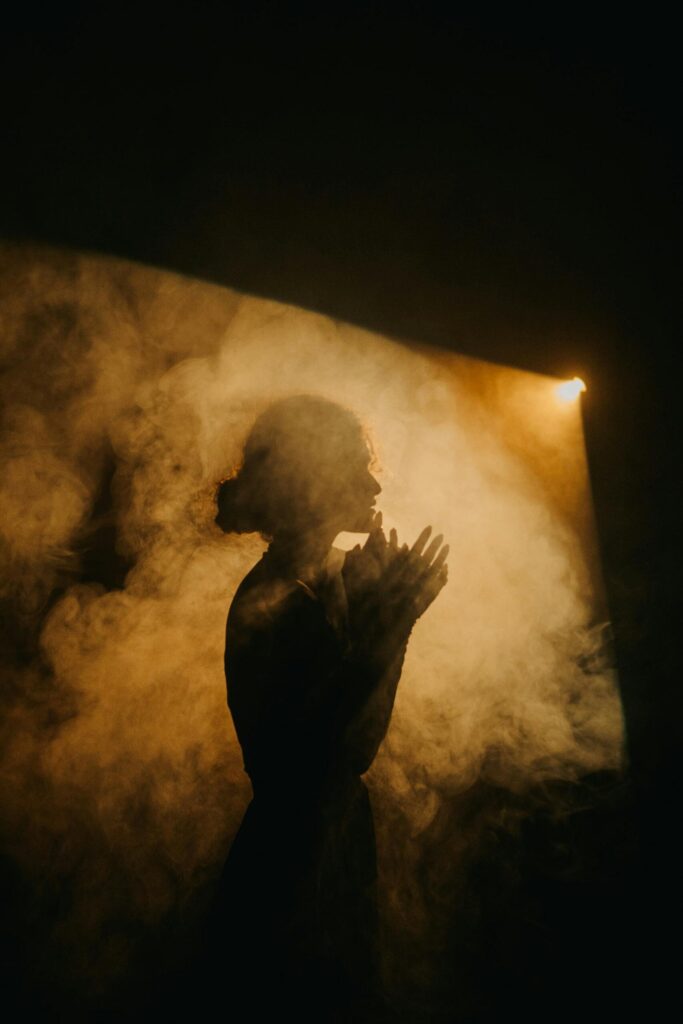
(Image courtesy of Tatyana Doloman via Pexels)
7/ The Retirement Complex
Both in their mid-sixties now, Ming and Hua are living a very happy retired life on opposite sides of the world. Though they have been enjoying a good and stable relationship with their spouses, they are acutely aware of their other halves being their closest relatives rather than true soulmates. Of course, they are fully prepared and content to live as they have always done until their last breaths, and have no intention of ushering in dramatic changes to the final years of their lives, but Ming tells Hua aloud that “we old people are still as capable of and as entitled to love as the young!” He has repeatedly emphasized that love does not merely keep people young in their hearts but also enables them to wear their years better and live a healthier life. Hua agrees with almost everything he has to say about their secret relationship, but she just cannot forget the cruel fact that they are really too old to love each other like the young. As a well-respected grandma, she recoils from the risk of becoming a laughingstock of her family, friends and old acquaintances in any sense. For her, spiritual derailment is excusable; a web affair is okay; platonic love is worth experiencing; even a kiss or hug is acceptable. Nothing more.
However, as Hua holds herself back from developing their relationship further, he finds her all the more attractive. Besides having a sunny personality and a good sense of humor, she has been wearing her years so well that she still boasts all the physical features of a gracious 38-year-old lady. “You are such a living Xi Shi [a legendary beauty] in my eyes,” he often tells her. “A woman in a million, a real stunner!”
“I am really afraid,” Hua has repeated when discussing the possibility of meeting again. “How would people look at me? As a really bad woman?”
“But why should we care about what others may have to say? Why care about all the rest of the world?” He keeps asking her back. “How many more years or even months can we expect to live? Why not love while we still, fortunately, can?”
Hua sometimes agrees.
* * *
While biding their time to join each other in body as in spirit, Ming cannot stop searching for the truth about why he loves her, but the more he tries, the more confused he becomes. Perhaps he is either a unique victim fated to suffer from the Hua-Complex, or an ordinary guy who has simply been in desperate need of love since childhood? Or is it something larger?
He remains uncertain, and does anyone really care?
Yuan Changming grew up in an isolated village, started to learn the English alphabet at age nineteen and published monographs on translation before leaving China. With a PhD in English, Yuan lives and edits Poetry Pacific with Allen Yuan in Vancouver. Credits include 12 Pushcart nominations and 14 poetry books, most recently Homelanding. Besides appearances in Best of the Best Canadian Poetry (2008-2017), BestNewPoemsOnline, and Poetry Daily, among 1,979 other sites across 48 countries. Yuan was nominated for and served on the jury for Canada’s National Magazine Awards (poetry category). Currently, Yuan is working on his first (hybrid) novel, Edening.
Thank you to Christina Lee, Jarrod Wetzel-Brown and Jessica Day for their inspired edits on the piece.




Comments
Be the first to share your thoughts!
We value diverse perspectives and respectful debate.