
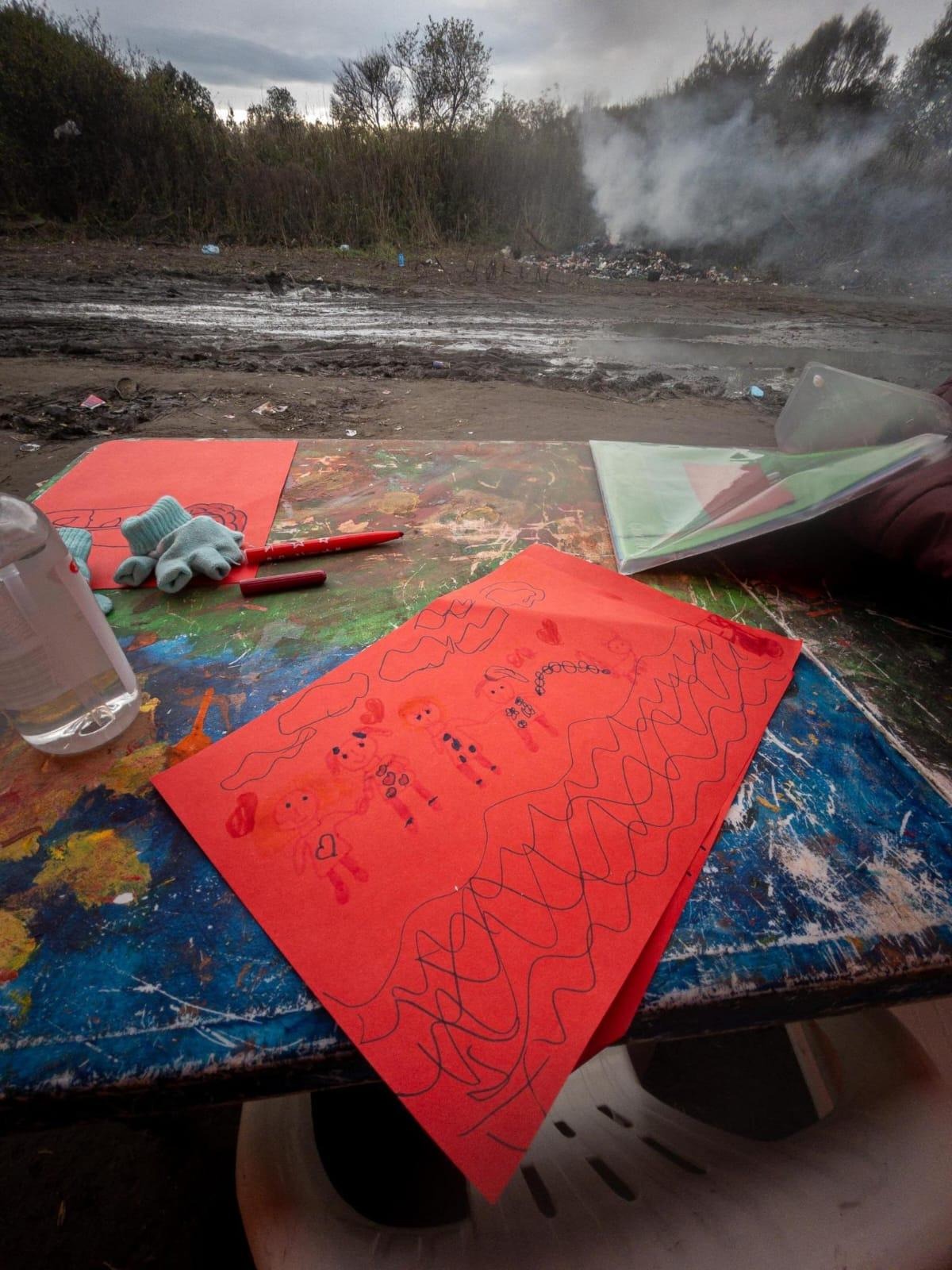
Playtime! Bringing Fun and Joy to Displaced Children at the French Border

When thinking about services for refugees and displaced people, we often consider food, clothing, shelter, and medical aid. Rarely do we think about play. Yet, “Play is essential for children’s development,” says Rachel Sykes, director of Project Play. Even children caught in the throes of migration need the opportunity to play — something that Project Play provides. 

A grassroots NGO based in northern France a short hop across the sea from Britain, Project Play offers displaced children the chance to participate in one of the most fundamental aspects of childhood: playing. As Sykes describes, “Many of the children we work with have not had access to formal education for some time, and they may also be experiencing toxic stress due to the conditions they live in. Our sessions hope to offer them a safe space in which they can relax, develop skills and feel a sense of autonomy.”

When founders Claire and Cole first came to the migrant camps at Dunkirk as students in 2018, they were helping with food distribution for the community near the French border. However, they noticed that the children, often disruptive, were simply bored, needing enrichment and engagement. In response, Cole shaved their own head to raise money, and they and Claire dropped out of university to found Project Play. 

Play is serious business

So, why play? When Project Play first began, it attempted to focus on both play and formal education, but quickly realized the difficulty of trying to provide education to children, many of whom had never had formal education, in the midst of a crisis. After consulting with psychologists, they decided to narrow their focus to play only as a means of developing important skills such as, “…fine and gross motor skills… exploring the world around them, health and self-care, listening and concentration, being creative, emotional awareness and regulation, participation and collaboration and self-confidence and self-esteem,” Sykes informs.
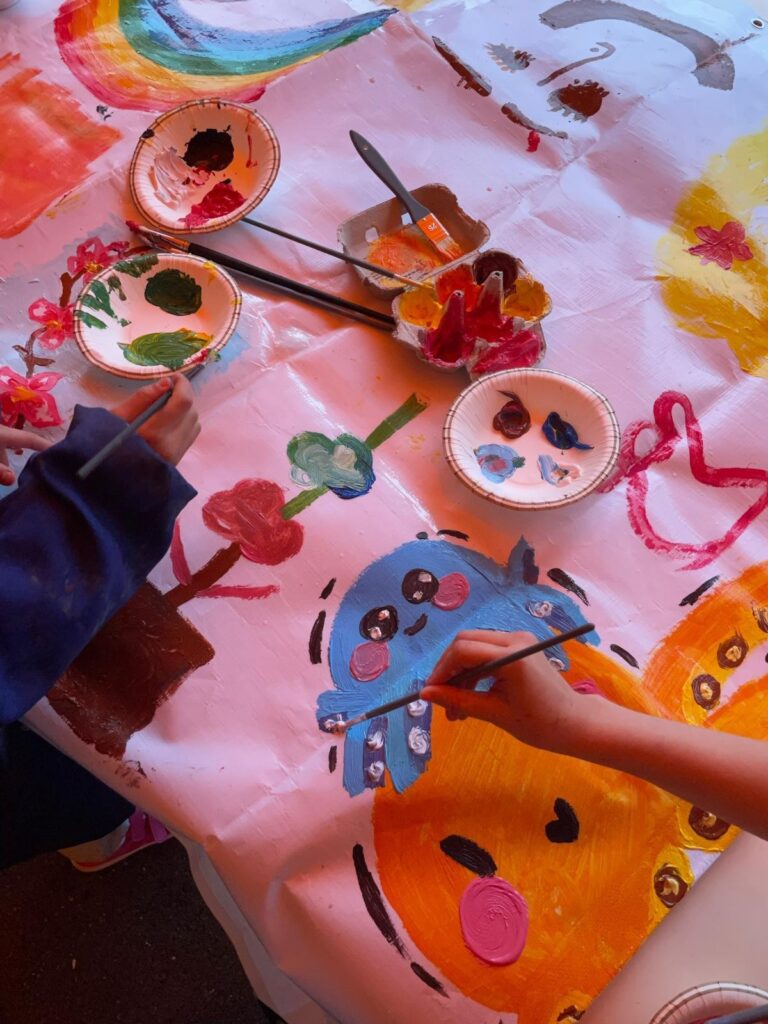
The hands of children paint colorful figures.
Photo courtesy of Project Play

Play can also provide a meaningful avenue for processing trauma, a common experience of children in the middle of being displaced from their homes. Furthermore, play lets kids develop social skills and make positive memories, especially important in the face of such hardship. 

Go, Team Go!

Five years on from its launch, Project Play continues to provide support to displaced children in Calais and Dunkirk through the power of play. They have collaborated with child psychologists and a network of professionals to bring meaningful sessions of play to migrant youth at the French border. Their team has grown to include a board of trustees and volunteers. 
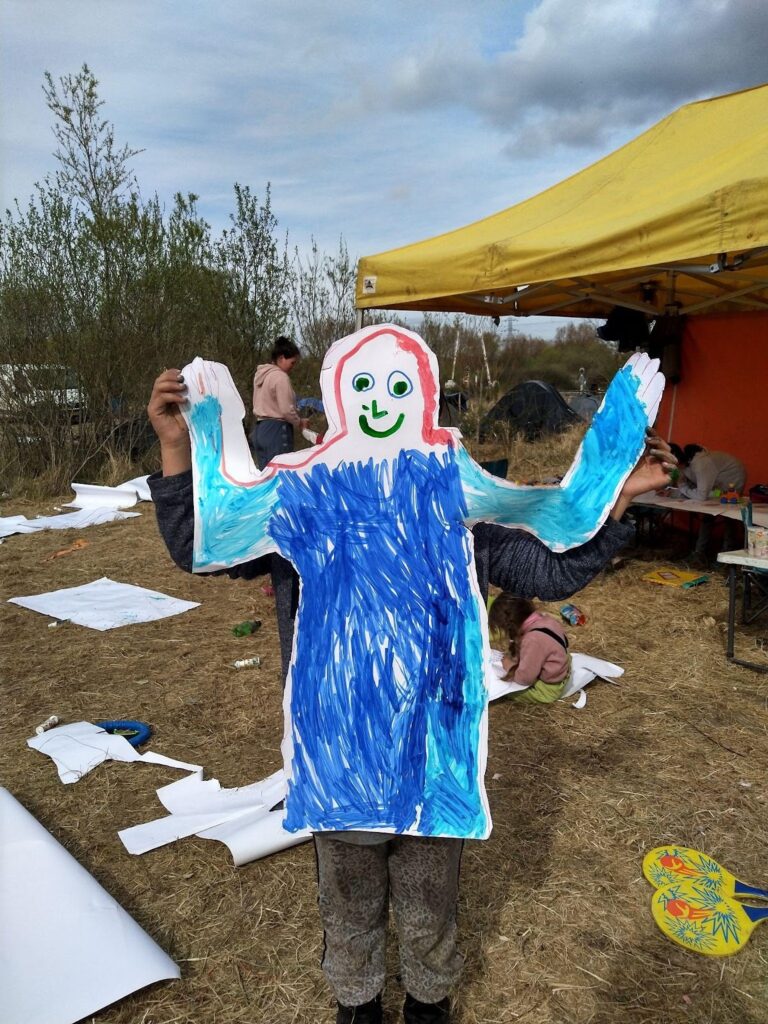
A colored cut out created thanks to Project Play.
Photo courtesy of Project Play

Volunteers contribute to sessions, bringing their interests and talents to the table. “We have the most amazing team of volunteers who have come up with some truly engaging ideas,” Sykes enthuses. “Puppet theaters, giant xylophones, treasure hunts and a dragon’s cave have all featured!”

Understanding how valuable volunteers are to this work, Project Play also prioritizes the care of its volunteers, offering accommodation, nutritious meals, and access to mental health services. “Some team members may have a check-in or a call with a mental health professional as we have different avenues for volunteers to look after their wellbeing,” Sykes states. 

Additionally, volunteers are offered opportunities for their own development. Project Play provides “really high-quality training carefully designed so that they can have a good understanding of the context, our work and the risks alongside skilling them up to be effective playworkers,” Sykes expresses. They are also encouraged to “follow their interest, think about how Project Play could develop their career or other areas of our work they would like to get involved in.” 

Days of play

A typical day begins with waking up in the volunteer house, where up to 10 volunteers live at a time. The team heads into Calais to the warehouse/office they share with other organizations. Here, Project Play prepares for a session with the children. After a good meal, volunteers load up the van and spend the afternoons in session with the kids. 

Gathering in a circle, a session begins with games and songs, often a favorite among the children. As Skyes shares, “It brings everyone together and is a great opportunity to be really silly!” This is a chance to build friendships and learn activities the children can do even when Project Play volunteers are not present. “Often we turn up to the session to hear the children leading their own circle time and singing the songs we sing together.”
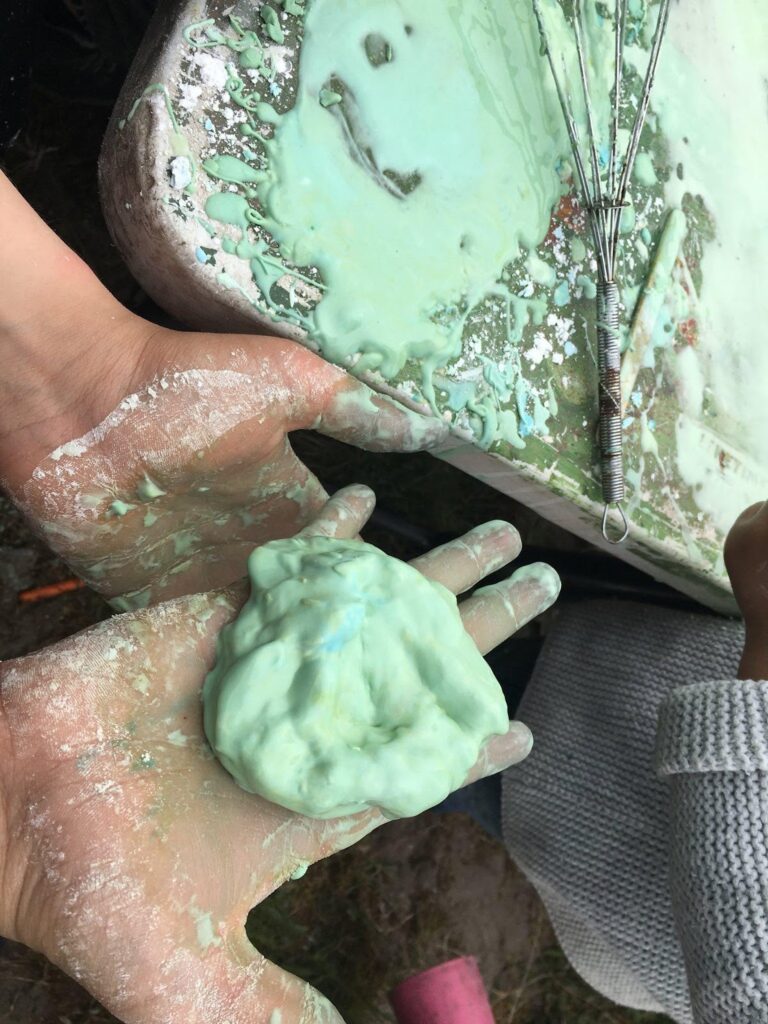
A hand holds some sort of green slime or putty.
Photo courtesy of Project Play

After circle time, the main activity begins. According to Sykes, “t​​his is planned according to the group considering their likes, ages and any additional needs — think sport, craft, drama and art.” A brief scroll on Project Play’s Instagram page reveals the different activities and themes it offers the children, including making edible “wands” for a magic week to playing ‘pin the nose on the clown’ during a circus-themed session. “We want sessions to be memorable and for the children to know how much we value them and their experience with us.”

Finally, the session concludes with free play, an important time for the children to practice autonomy and choice, which they often lack in their current circumstances. “We work closely with the children on this one and always try to incorporate their requests,” Sykes reports. Once the session is over, the volunteers hold a time of debrief and reflection before heading home to rest and recharge for another day of play. 

Bringing play to migrant children

Project Play takes its services to various locations, including “day centers, safe houses and out in the informal living sites,” which are often “collections of tents in a rural area.” Finding the right space for a session can be challenging. Sykes admits, “Recently, there have been increased police evictions alongside worsening hostility towards organizations; we are now denied a space to carry out sessions and risk being fined.” Nevertheless, the team persists and generally tries to set up an enclosed space for play just a small distance away from the migrant camps in order to minimize distractions and interruptions. 

Project Play is also highly committed to anti-racism in its work. “We acknowledge that we must examine our biases and explore our motivators and dynamics.” Since the beginning, Sykes informs, Project Play has discussed counteracting racial biases and systemic issues possible in humanitarian work and volunteering. 

As part of its anti-racist practice, Project Play critically considers the ethnic and racial background of its volunteers during recruitment. Sykes notes, “We actively seek to recruit varied volunteers who can help diversify our view and approach.” Recognizing anti-racism is an ongoing process, the team members engage in educating themselves and drawing on available resources to improve their work continually. 
The Project Play logo, with a child’s reproduction.
Photo courtesy of Project Play

Making an impact

Project Play is unique in its specialized focus on children. As Skyes describes, it is “the only service in the area targeting younger children.” Measuring the impact of Project Play through statistical reports and quantitative research is especially challenging considering the extreme vulnerability of migrant children. Still, the difference Project Play makes in the lives of displaced children in Calais and Dunkirk is tangible enough to touch. 

Every Project Play volunteer leaves with a success story. The impact is visible in the smiles and giggles of the young participants, finding joy amid difficult circumstances. Shy children who are initially hesitant find confidence as they play. They make noticeable progress in regulating their emotions, working with others, and learning about themselves. 
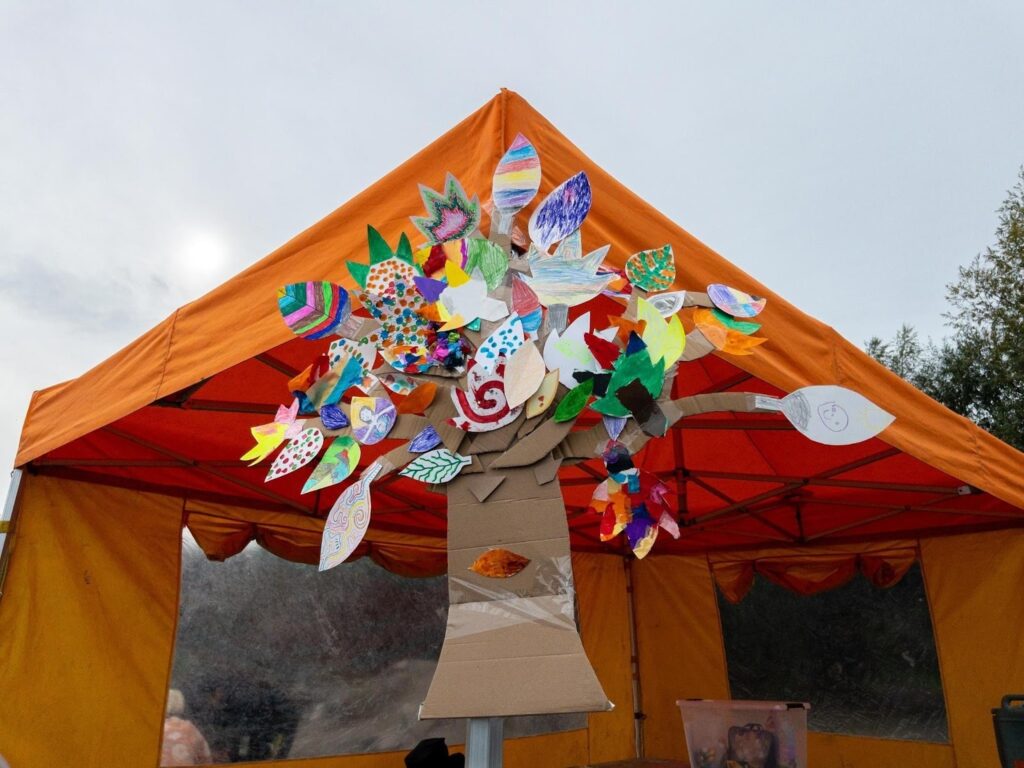
A tent covered with colorful and jeweled decorations.
Photo courtesy of Project Play

Countless children have enjoyed memorable experiences due to Project Play’s sessions, which Skyes credits as the most rewarding part of their work. Knowing that displaced youth can still make positive memories amid unfavorable conditions drives the passion behind Project Play. 

Notably, Sykes asserts that the work of Project Play does not fully meet the needs of displaced children. “Our service is not enough — all children should have access to formal education in a warm, dry building. But, as long as the state refuses to meet this right, we hope to continue to spread some joy.” 

The future of Project Play

The team remains committed to growing awareness of the situation at the UK/French border and providing even better services to migrant children and their families. “We want the British and French states to provide safe routes for asylum and ensure that all children are provided with a quality education. This is a right,” Sykes passionately resolves. Therefore, “we want to grow our advocacy capacity to better champion the amazing children we work with and push for change.” 

The dream for Project Play? “Project Play doesn’t want to have to exist,” Sykes declares. Until then, Project Play continues its mission to ensure displaced children can do what they are meant to do: play. 
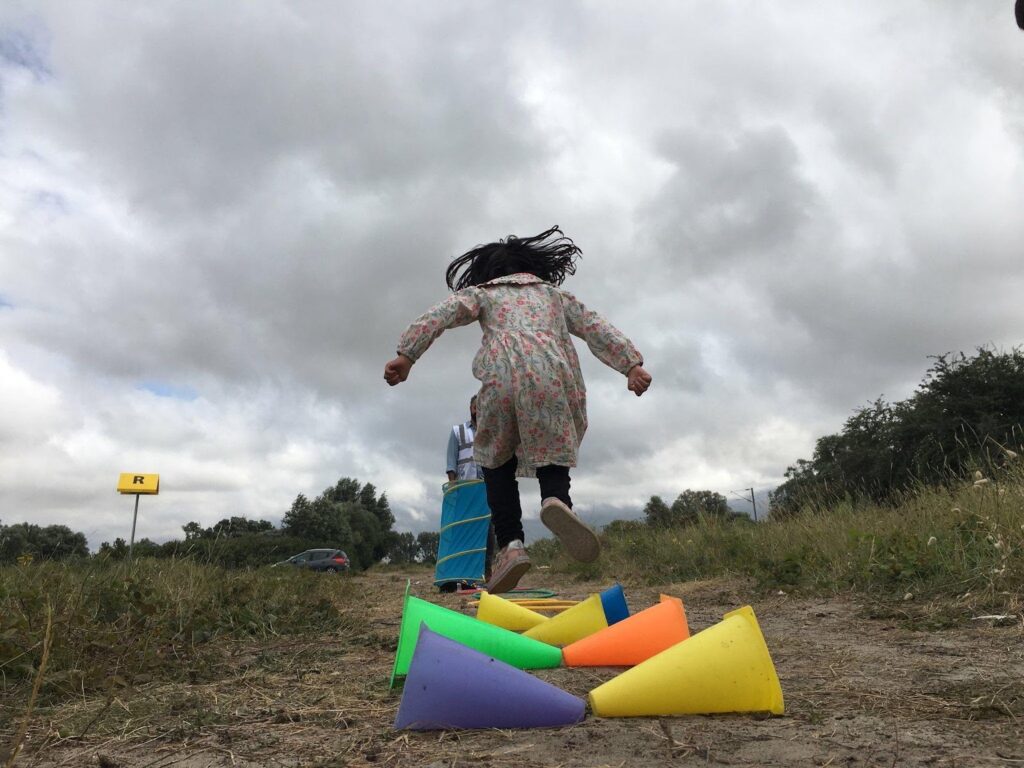
A girl jumps over colorful cones.
Photo courtesy of Project Play

Shadows of Misery

Sitting in the shadows of misery
Unraveling imprisoned dreams

Wishing I can set them free to the sky
Wishing I gave them my wings,
make them fly

Sitting in the palace of no dreaming
Wondering why there are no ceilings

Wishing my thoughts knew no limits
Wishing my tomorrow is so vivid.

Sitting in the gardens of no feelings
Bury by darkness, no seasons

Wishing the heat could caress my dark skin
Wishing the pages would light my world still

Sitting in the darkness with myself,
I realize the light is in my hands.

Hey Mum and Dad, We Need You There

There are so many parenting guides out there, and it is challenging raising wonderful little humans. Here’s something about the parent-child bond. It’s pivotal as a child grows, and building a lasting bond is something that takes tons of effort. What makes the family so important is that it stands as the child’s first experience in building a relationship.

Here’s my story

As a child, I grew a strong fondness for my mum. And even though I have a forgetful mind, I still remember what life with her was like.

My mum worked at a nursery school not too far from our house back then. I was enrolled in the same school, so it was customary for us to wake up early, leave the house and return together. Breakfast was something I always looked forward to, because it was the best meal of the day. My mother would prepare cereals every morning with loads of milk and I would stand on a scale immediately after eating to check my weight and record how big I had grown overnight.

“You’ve eaten all of mummy’s food,” she would usually comment, which always made me smile. My mum would ask what I wanted for my lunch box and it was always pasta or noodles, my favorite at the time.

I also recall occasionally going to the local market with my mum on weekends for our groceries and produce. It was fun because I would get a lot of free stuff from some of my mum’s regular vendors who knew her well and liked to spoil me.

Togetherness interrupted

Life wasn’t always perfect, but my mum made things seem so easy. We would pray together before going to bed at night and it’s something I still have with me till this very day. While she helped me with my assignments, I would tell her all about my day at school.

I had no idea how scary life could be until my mum got diagnosed with cancer. All of a sudden, my life became nothing but school and hospital wards. I had to watch my own best friend slowly deteriorate and, after a few months, pass away.

After my mother’s passing I had to go live with my father and stepmother. A change that would change life as I knew it. Firstly, it was difficult for us to get along since they had little to no idea of what I was like, the things I loved to do and the things I disliked.

Most times when my stepmother prepared a meal, I barely ate. This was mostly because I didn’t like the dish or I had never tried it before, but my stepmom interpreted it as me just being arrogant or picky, so she would get especially upset whenever I behaved that way. I don’t blame her much because she didn’t know me well and naturally lacked the patience one’s mother would have shown in such cases.

Blended family life

It took a long time before we could get along. I was introverted, which did not help either as I naturally preferred being alone in my room and, just as you probably are thinking, my absence led to many misunderstandings. We could be home all day and not say a word to each other besides the usual greetings.

Most of the time, I just stayed in my room playing video games or watching movies on my laptop. When we did go out together, we didn’t say much to each other. For instance, we would go out for a family picnic, and all I would do is just sit, eat, have a drink and stare at the scenery around us.

Living this way with one’s family is never easy, so I want to express how important it is for both parents to bond closely with their kids when they are young and put the effort into getting to know them. Try to know things about them, even little things like their preferences, favorite food, drinks, the kind of company they keep and knowledge about the events going on in their lives.

Kids go through a lot growing up as almost every child is exposed to peer pressure, bullying, low self-esteem and depression, personally or second-handedly. However, having a strong bond with their parents will make their transition towards adulthood easier as they would have someone with more wisdom and experience to talk to. There’s a natural barrier between kids/teenagers and adults, and overcoming this barrier is very important.

Something like dad, my friend

In my own case, my father was able to get through to me. I loved to draw and he somehow found out. So, after closing at work, my dad would dedicate some time to draw with me.

It isn’t that big of a deal, is it?

But to me, it changed how I saw him.

With every drawing session we had, my dad felt less distant and more like someone I could relate to. I won’t forget the day I told him about a crush I had on a girl at school, it was a huge leap of faith, but then, he laughed and told me a story about how my mum was once his crush too and how they got married. I always disliked my dad for leaving my mom but him talking about the good time they had together made me like him more. And that was it for me, even though it was gradual, I later found a friend in him, one Icould talk to.

PS: it didn’t work out between my crush and I though, sadly 🙂

I’ve seen situations where the lack of parental bonds led children to become wayward and dysfunctional adults. Some did drugs or weed to relieve the stress they couldn’t handle, while others dropped out of school because of their inability to cope and a general lack of moral support. It reached a stage where their parents couldn’t handle or even speak to them. Things like these are quite manageable and could easily havebeen stopped at their earlier stages if only the parents paid more attention to their kids.

So what is the moral of the story?

I mentioned earlier that the family is a child’s first experience of what a relationship is like. It is therefore important as a parent to build strong bonds in the family. For example, a boy between the ages of seven to 14 will grow a mind of his own and will start to have his own hobbies. As a parent, try to discover what your child loves doing. Learn about his hobbies and what he enjoys and educate yourself about it. Say that your son is into sports, like football, so take some time out to play sports with him or watch games together. If your daughter likes to read, encourage her, and bring her to the local library.

On occasion, let your kids win on purpose, make it fun and you’d be surprised how much they talk during a single football game or while playing a card game. Don’t expect immediate results though, as it takes a lot of persistence to break a barrier and build a trusting bond. Be patient, parents, and pay attention. Furthermore, including your kids in decision making does wonders. It helps build their confidence and teaches them how to be more interactive and assertive in their choices.

Small decisions like which color paints to use in the home, the curtains they would prefer or which car you should get shows them that they’re an integral part of the family. There are also extremely strict parents who resort to using punishment, harsh words and physical abuse to correct the mistakes made by their child. There’s a saying that goes: “strict parents raise the best liars.” Discipline is invaluable in raising a child, but as a parent we should never resort to violent punishment. It seriously scars a child, as they start to live in constant fear of being around you.

It’s also important to have heart-to-heart discussions with your child to open their eyes to how they could make more effective choices. This gives them the confidence to say “no” to anything they consider morally wrong.

Nothing in life is guaranteed, but raising children in a better way is possible. A careful combination of investing in your child’s hobbies, having heart-to-heart discussions with your kid, talking about your own childhood, and instilling the right discipline in your child will ensure that you form a healthy, loving relationship through their life and home and beyond when they become independent adults.

So, Mum and Dad, your presence really is needed to make growing up easier possible!