Ho brah, your breath is haunas, dawg. Ever heard of one tooth brush? Da ting smell so crip, garans gon make somebody make. Not even. Not as haunas as your body odor, k. Now das pilau. YOU ever heard of going bocha? – Eh, you brought your cd player and speakers so we can jam music on da ride home or wat? Yeah, brah. Lemme bust out my collection of burnt CDs. Which one you like jam? We go listen to some Zack Kekona. “Sitting In My Room”, dawg. You get dat song? Garans. Shoots we go jam em den. – You know da kine? Bernadette? She tink you cute, you know. Not even. How you know? Brah, she wen message me on AIM last night. Jordan’s cute, ya? She said. I shit you not, brah. Go sit by her, you. No be sked. No ways she like me. Brah, I fugly and den. Try ask her one more time if she tink I cute. K, watch em. Look. Now she stay smiling at you. Chance em! – Like challenge bloody knuckles? C’mon, brah. No be one panty. Just play. Fine den. Brah, my knuckles so manini compared to yours. I no more chance and den. No worries, beef curry. I not gon go all out on you. Brah, dat was frickin hard, wat you talking bout!? – Eh, Samantha, Nick get one crush on you! Eww, since when? Long time already. Look, he like sit by you. Let him. K, fine. I guess I small kine like him, too. Hold hands den! – Cut dat shit out back there. All you guys do is yell nonstop da minute you step on da bus. Unreal. We sorry auntie, but not our fault. Was – Ainokea whose fault was. All you guys do is just run your pilau mouth. Cannot even be quiet for wat, 5 seconds? Sheesh. You guys made auntie mad now. – Brah, shut up before da bus driver yell at us again. Why for, she only gon yell. Nawtin mayjah. Garans she not gon do nawtin. Bumbai she gon kick you off da bus, watch em. K, fine. Nevah mind already. I going shut up. – So wat, Kori and Valerie, you guys official yet? No. Who said dat? Da kine said dat. Ugh, she so irraz. Stop. You making her blush. Ho, how’s Val, her face so red. Like one giant tomato, look em. So cute you guys. You guys match. – So empty da school bus today. I wonder wat happened to everyone. Probably sick or got picked up from family. I don’t know. Eh, at least get some peace and quiet now yeah, auntie? Dat, and I almost pau work! – I love you guys, but you guys drive me crazy afta school. I no can remember da last time I had one peaceful bus ride while dropping you guys off. But das auright. You guys is da highlight of my day, and das 5 times a week. No matter how crazy you guys drive me, I wouldn’t have it any odda way.
Hauna: smelly, unpleasant odor Garans: guaranteed Make: dead Bocha: take a bath Panty: scaredy cat Manini: a small thing (a type of fish; common reef surgeonfish) No worries, beef curry: no cause for concern Ainokea: I don’t care Pilau: rotten stench Crip: stink Odda: other Shoots: alright, okay, yes, I’m down, etc. Chance em: go for it, take a chance Auright: alright Nawtin: nothing Mayjah: major Bumbai: later, otherwise, or else Da kine: A catch-all term to denote literally anything you can’t remember the name of. Irraz: irritating; to be annoyed Pau: finished
Definition of Hawaiian Pidgin English terms courtesy of https://wehewehe.org/ and https://oleloonline.com/
Men questioning women today is the norm. Why? Because less freedom means less opportunities to make the ‘wrong choice,’ I guess. The freedom we have today presses their buttons because they are losing power. There is no question there. In light of the Roe vs Wade verdict (when the Supreme Court of the United States overturned the right to abortion, upheld for decades), there is an obvious and cowardly attempt to wrest this power back.
How are they doing it?
By going backwards into the past.
Not only are old rules being brought back and new rules being written to restrict women, but the archaic argument of a “perfect summer body” is making its way to the forefront again. This ridiculous physical expectation is yet another way to control women.
Men put women under a microscope when they walk down the street. If it’s not a dress that is too short, it’s your cleavage that is too revealing. If you’re not too skinny, then you’re too fat. If you’re not an “easy woman”, then you’re a prude. So, there is no way to please them. Stop trying and meet your own expectations and your expectations only.
An example from the past
Take the 1920s, for instance, an era engulfed by the Great Depression. Jobs were scarce and the economy was failing, and yet men found time to implement body ideals for women. After the First World War, the population dropped significantly.
Imagine what it was like being a woman at that time.
Eating three meals a day would be the last thing on your mind. Let alone having the time to think what a healthy fulfilling diet was supposed to look like. So, being thin with no curves whatsoever was the norm.
But do we really have to imagine it?
The reality
Today, the National Eating Disorders Association in the United States attests to these harsh realities reporting an alarming surge of up to 80% in calls around anorexia and numerous binge-eating disorders, which they liken to another pandemic.
Young women today make themselves endure a strict routine to satisfy the standards seen in popular media or the “male gaze” — wake up early but get enough sleep, go to the gym, eat healthy, socialise, and so on. It’s easier said than done. Every time a woman walks by you, she’s probably wondering what you’re thinking. Do you think she’s too short? Has too much belly fat? Isn’t pretty enough?
Like all women today, I know what it’s like to walk down the street and hear random guys catcalling following me around. Even when they’re mere strangers, their expectations subconsciously influence my every decision. A constant fear when being alone is all-consuming. It’s no party for girls to be alone at night.
How did I teach myself to stay safe? I learned to dress in baggy clothing, walk fast, and talk to someone on the phone. It’s funny that guys don’t have a care in the world. They can fight back. They have no fear of what saying “No” could mean. And as much as we make ourselves believe that we can fight back, the greater likelihood of sexual harassment for women, compared to men, is appalling.
The NSVRC (a nonprofit offering information and tools to prevent and respond to sexual violence) turns these victims into a statistic on paper rather than just a another woman in the crowd: 81% of women and the drastically lower 43% of men face sexual harrassment in their lifetime.
Through the Ages
History paved the way for objectification of the female body, but let’s not forget the progressive steps taken during the 1940s. It was a decade of celebration and cultural rebirth after the Second World War accelerated freedom for women. The perception of the ideal female physique shifted from a slender, childlike figure to a fuller, more rounded shape, during a time when women were proud to show off their curves. This ideal meant you were comfortable, wealthy, and relaxed, or at least, seemed relaxed. Men still wanted their wives to wear a knee-length skirt and a top showing some but not too much cleavage. Women were taught to strive for an elegant and classy appearance, not to be called sluts “asking for it” if too much skin is showing.
Consider the play written by Tennessee Williams in 1947, “A Streetcar Named Desire.” Blanche was exiled from society simply for being too flirtatious and for “sleeping around” despite her unmarried status. Her exemplar sister — although praised for meeting social expectations — became miserable in a home that was the site of domestic abuse. The expectations stayed the same, restricting women to the household under their oh-so protective and loving husbands. The female body was merely a spectacle for the male viewer to approve of.
These male-made creations of the female identity make you wonder. One sister dimmed down her identity to a patriarchal norm that made her miserable; the other walked away from these restrictions; a free yet scapegoated woman.
Sounds familiar? It does to me. But which is the better option for women today? Either way we are bound to fall into a depressive spell from not being enough, not meeting the pattern and not ticking every box to become “the perfect woman”. As hard as it may be, find the courage to reject the pressure to fit into a mould. Be your own independent self.
From my own perspective
Walking into school every morning, I still remember female teachers sending girls back home, asking them to change if their skirt was too short, if they wore makeup, or if their uniform was too tight. When asked for an explanation, we all simply got the typical “it’s too distracting for boys” repetitive broken record excuse. We are letting men decide what we can or cannot wear, just as banning abortions was a male-dominated decision in the end. What right does a man have to tell me, or any other woman, what we can or cannot do with our body and health?
At the end of the day, everyone has to realise that criminalising abortion does not put a stop to it, but rather it forces desperate women to find unsafe, unregulated places to terminate an unwanted pregnancy instead. Men can and will run away from such responsibilities. It is hypocritical to not give women an escape route from unwanted pregnancies, still today.
Another glimpse of history
The 1950s and 1960s were a period of rebellion, where the Beatles took their rightful place with a new kind of music and reflected social liberation. Women embraced their sexuality as a form of newfound empowerment. The ‘60s also brought the Baby Boom generation and more attentiveness to the submissive housewife, but the Second Wave of Feminism was in full swing.
When it came to the female image, Western Culture represented it through polar opposites.
For one, there was Marilyn Monroe. Her body type would easily be considered “plus size” today yet she was, and still is, an icon. She took up space and kept it. Her hips were wide. She didn’t have a toned abdomen. She had larger boobs. She had the hourglass silhouette that women strive to achieve. Her modelling and acting career will forever paint Monroe as a blonde girl with bloodshot lipstick and a white dress on the red carpet.
At the other extreme, Twiggy. Her real name is Lesley Hornby, a British model, who was quickly reduced to a nickname to sum up her identity just based on the way she looked, or to be more exact, the way she was encouraged to look. Being thin came back into fashion, and men weren’t bothered that these expectations were unhealthy. The concept of “attractiveness” is quite funny when you think about it. People have different likes and dislikes, so you will inevitably be deemed attractive by some and ugly by others. The only opinion that matters is yours. So, screw them and their obsession with controlling the female body.
The pressure of social media
The 1990s and the 2000s are easier to recall. We live in a society influenced by the late ‘90s and its revered “‘thin body” image. It’s not as extreme as it used to be in the early 2000s, but social media has made it ten times harder for women to see themselves as beautiful when looking in the mirror. Having an Instagram page and feeling obligated to post bikini pictures or at least somewhat revealing photos online equals being watched and judged by girls who are just as insecure as you.
Promise!
At least before the internet, escaping a patriarchal reality was somewhat achievable: stay inside and don’t be tempted to watch models on TV or in magazines. Now, experiencing a pandemic — so basically locking yourself indoors — was a girl’s worst nightmare.
The motivation to do anything active whatsoever was crushed. To cope with the isolation, many found comfort in binge-eating and watching Netflix in their bedrooms before going crazy.
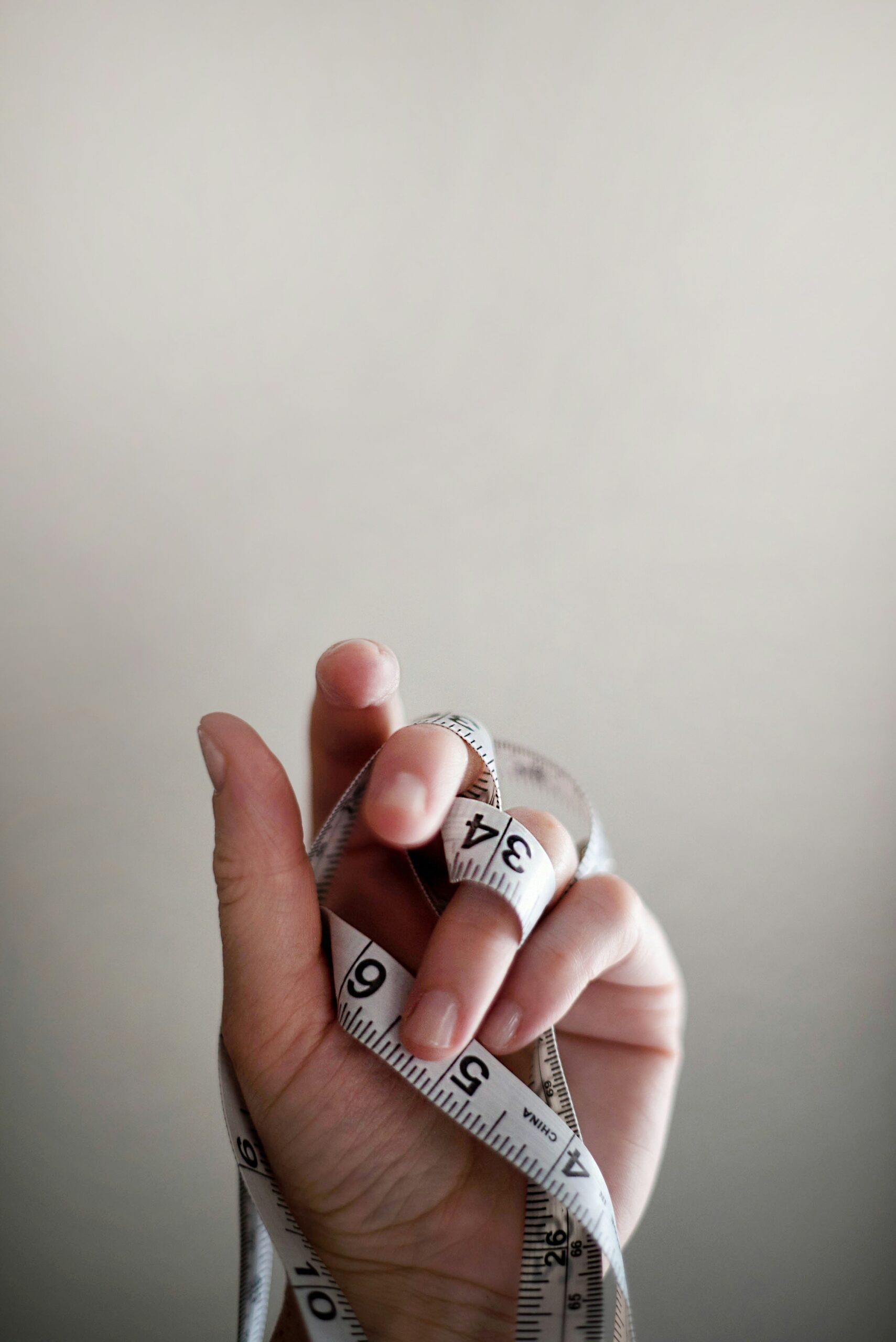
They also found new physical goals to obsess over, can’t forget those. Women become controlled by the idea that not having a thigh gap is shameful. The “hip dips” are another phenomenon. Something that has to do with a human’s bone structure and genes is turned into a flaw, so unacceptable to show in public. But the blame should not be placed on women. In reality, we are embracing female independence but still live under a mantle of male control.
(Image courtesy of Miguel Bruna via Unsplash)
Don’t let the past control you
Look at the time frame of past and present expectations. Women have been bombarded with ideas of what the perfect body should look like and, ironically enough, all those absurd standards stem from a man’s archaic view. Don’t be either too thin or too fat. Or too feminine or too masculine either. Be independent, though we won’t let you be too independent.
Screw all of it! Don’t give a damn!
Just as women protested and won their independence in the past, women will have to protest once again. It is ridiculous that women are forced to take a step back in time in a so-called free land after the Roe vs Wade verdict. The female body and how it should look is entirely up to the woman herself. Don’t be fooled. A lioness attacks its prey in packs, increasing the chances of killing it. A lion is too proud to ask for help and so often fails.
Like gaining the right to vote, being allowed to have an education and finding equality in pay, women will unite again to stop the Roe vs Wade ruling. Protests are happening every day, showcasing the drive women today have to fight back. As such, a fourth wave of feminism is necessary and undoubtedly happening.
Turning from the busy conundrum of a dream full of lies, A bittersweet goodbye; Passion so strong Somehow feels so wrong, A meaningless feat, Undeniable defeat; What used to be alluring colorful lights, Now flickering, almost dying, Buzzing sound of glorious harmony, Reduced to a humming melancholy, Hauntingly beautiful. Dreams of golden honey, Fading into distance so uncanny, Bittersweet memories creeping, As nightmares awaken my being. Lightning strike, As grandfather clock struck Witching hour of three, Sky started to cry freely, Downpour came in torrents, Realization abhorrent, Liquids seeping through the crack on the wall, Flowing steadily onto the floor, Blotted it out with crumpled papers to dry, As I stare afar, Paper now drenched, Torn apart into pieces, By the window I perched Pen held tight, No paper in sight, Wanting to write But cannot, So I just sat tight, As the paper on the floor dissolved into unrecognizable mess, Just like my thoughts, Wandering through time lost.
“It’s going to snow,” my temple tour guide, Seokun, told me. The grey clouds covered the sun, and the wind picked up, causing chimes to sound in the distance. Seokun looked back at me and asked, “Can you help the monks shovel snow tomorrow morning?”
Naturally, I accepted. I had been waiting for this moment, expecting it, for the past eleven years since South Korea became my home. It became my tradition to take time off to refresh in one of the many beautiful Buddhist temples across South Korea.
This time, it meant more. This was my final temple stay in a country I came to develop great affection for. It was the perfect start to my 2018 before starting my new life in Venice, Italy for a new career.
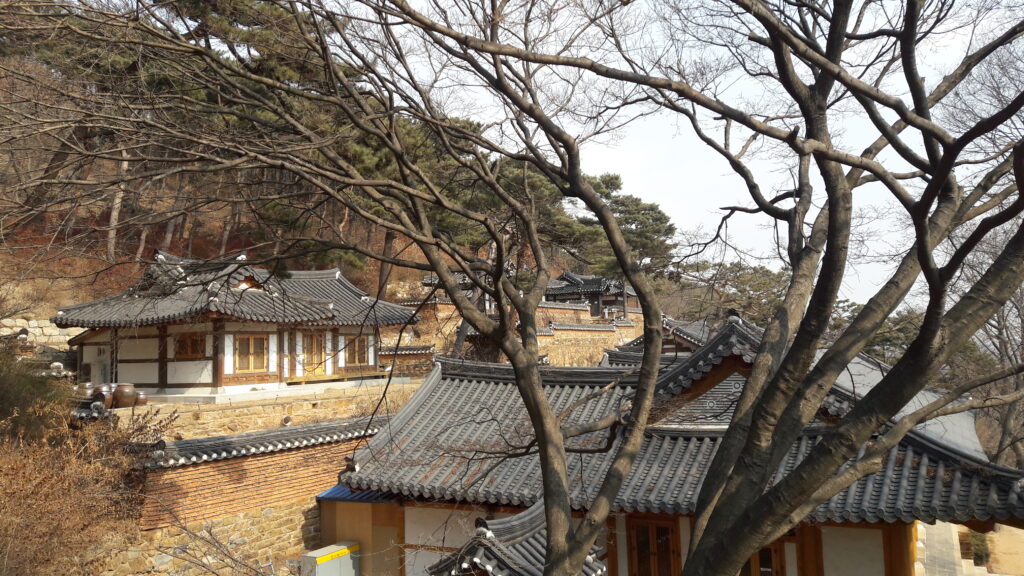
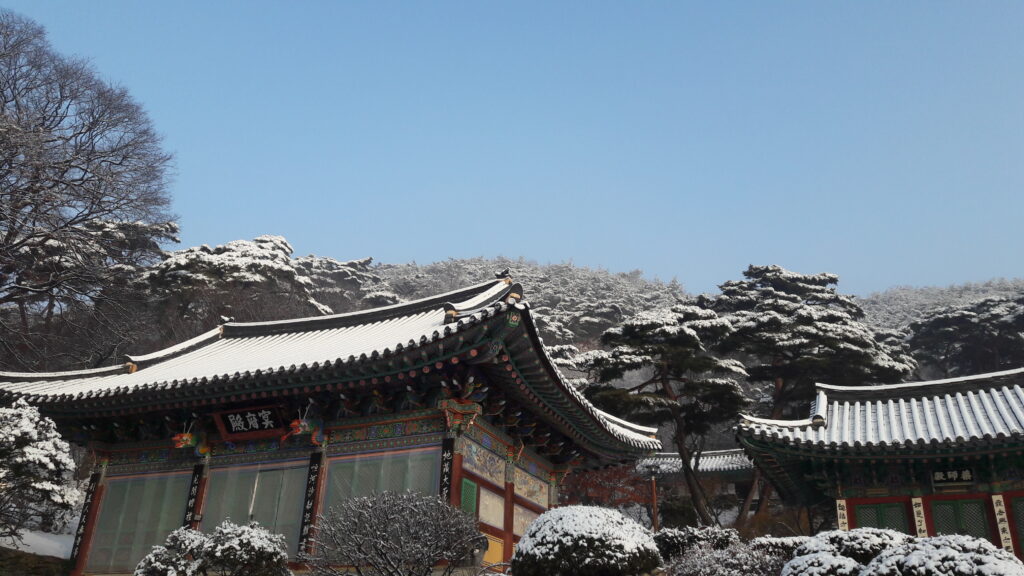
Jeondeungsa, hidden in South Korea’s beautiful Ganghwa Island, became the chosen temple to begin my farewell tour in. Nestled on a quiet hill overlooking the sleepy island, it’s hard to believe that two bustling cities, Seoul and Incheon, are neighbors only a few kilometers apart.
Learning from the temple guides
When I arrived, I walked up the steps inside the fortress that led to the temple. With each step, I was reminded afresh of the beauty I would live with for the next five days.
When I arrived, I was greeted by gracious temple guide experts. They explained the history, customs, and activities I needed to know. Regardless of how many times I have done this, each time felt like the first. Learning from the temple guides was always an enjoyable experience. It was a chance to ask questions that you might not find in the tour books.
(Image courtesy of JP Morselli)
The temple itself has a fascinating history, as described by Seokun during my temple introduction and in my readings about the temple during my stay. Seokun said that Jeongdong was built in the eleventh century. He told me that the fortress was at the center of vicious battles between Koreans and French and Japanese foreign invaders.
I learned from him that, during a battle against an invading French naval fleet, Korean soldiers rushed inside the original main temple to carve their names on the columns and the walls, asking Buddha for protection in battle. I also learned that the engraved names of these soldiers are still visible around the walls, that the monks constantly point out in solemn reflection the lives lost to protect this temple.
After my orientation, I spent my first four hours preparing for the days of reflection by dressing in the visitor attire provided by the temple. It was surprisingly comfortable. The clothes were traditional garb for Buddhist followers spending time in the temple. Wearing these clothes, given their simplicity, immediately stripped away all the daily vanity that people tend to get caught up in when wearing regular clothes.
Food for the soul
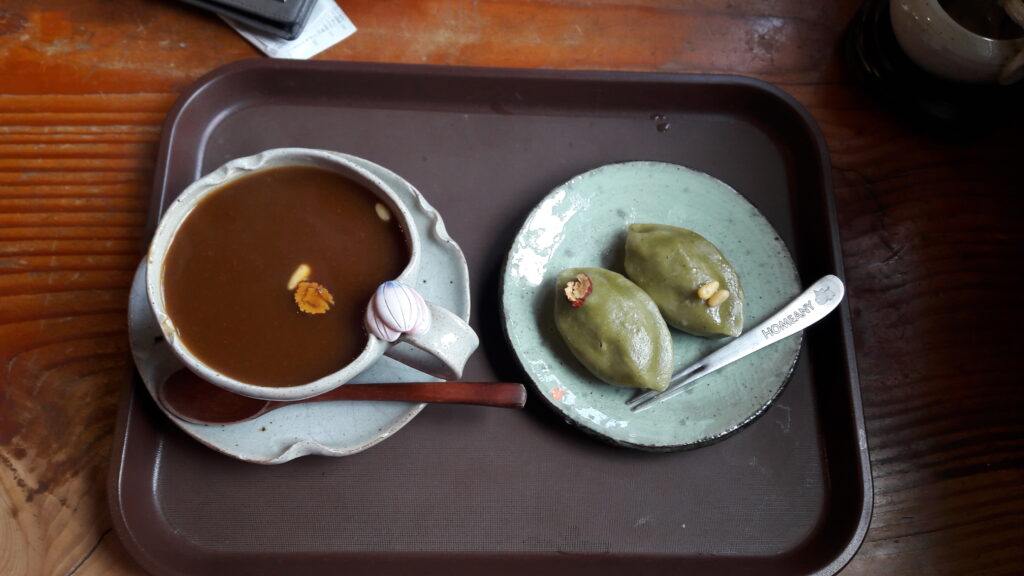
The cold led me inside the temple’s teahouse, where I sipped on the most enjoyable tea, “yuja-cha,” a Korean citron tea served in a handcrafted ceramic cup. When I was warm enough, I walked along the hills of the temple walls overlooking the farms below. After the walk, dinner was served. Along with meditation and relaxation, eating temple food brings me much joy.
(Image courtesy of JP Morselli)
The food was prepared each day with love, care, and sophistication. Replenishing your body with clean, healthy, and locally sourced food is just as important as refreshing your soul. The food at Jeondeungsa was exceptional. Eating here gave me an insight into the culinary soul of not just Korean Buddhism but Korean culinary culture as a whole.
I believe Korean Buddhist food is often passed over by barbecues and other meat-rich dishes. The ingredients used for temple cuisine taste fresh and organic, and the ingredients at Jeondeungsa were no exception. The techniques to create the dishes were very delicate and required quite a bit of skill. The cooks were masters who followed the ancient recipes of the Korean temple cuisine tradition.
Finding peace in Korea
After eating, there was time for reflection. Often, I spent time reading one of the many books on Buddhism from the temple’s library. Jeondeungsa had a large selection of English books on Buddhism, too. On this trip, Thich Nhat Hanh’s ”Anger” was recommended to me.
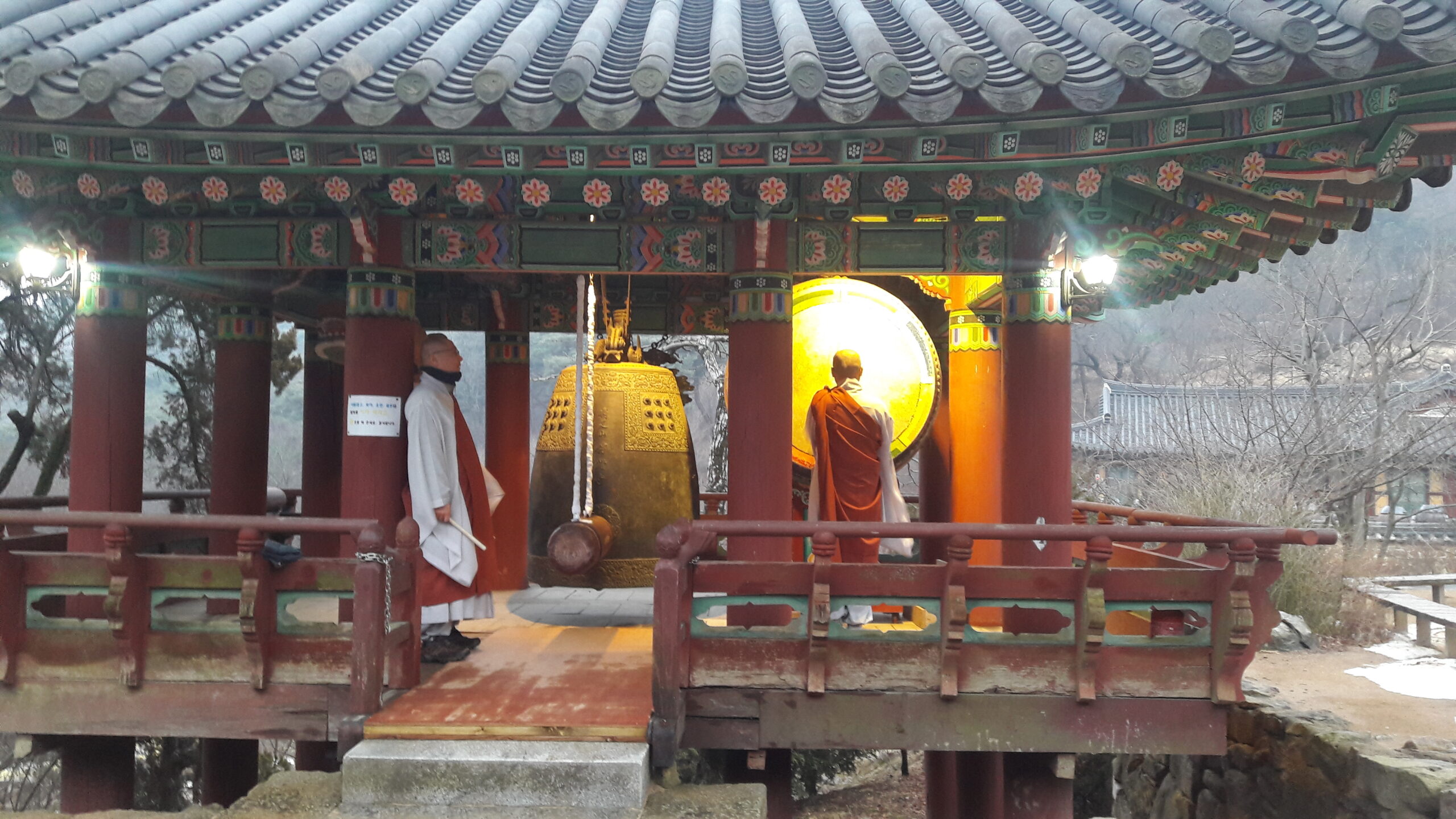
After an hour alone, the drums began, awakening all the spirits within the natural elements. The drum and bell signaled the monks and temple stay participants to make their way to the main temple for evening chanting.
While inside Jeondeongsa’s newest temple and awaiting the monks in silence, I was instantly brought to a peace that is often hard to find in my busy life. During these evening chants, I learned to be present with my breath and the words of the chant.
(Image courtesy of JP Morselli)
“Being present is the most important step to actualizing peace,” Seokhun told me.
I often get swept up in what I have to do next. However, bowing and chanting with the monks freed me from worrying about what was next.
After the evening prayers, I walked into my simple yet very comfortable room. I enjoyed the silence with no televisions, computers, or phones to distract me. Every night, I found a quote from a monk or the Buddha and reflected upon it. This helped me not only to stay present but also to see how I could apply meaningful lessons to my life.
I realized that when we are left with only our “self” and not with “things,” we can truly hear ourselves.
In the mornings, I woke to one monk chanting as he gently banged his “moktak,” a Korean Buddhist percussion instrument in the shape of a wooden fish. It was nice not needing an alarm clock.
When the doors to my room opened, I was greeted by what looked like thousands of stars, each more beautiful than the next.
4:30 morning prayers began, and I was again reminded to stay present. Temple stay participants could take part in bowing 108 times. The 108 bows were a time to reflect on things I had often neglected or lacked in my life.
Monks get angry, too!
As the days at Jeondeungsa marched forward, I was able to stay present. I was never bored or tired. In the afternoons, I would take hikes to explore the fortress while in quiet walking meditation.
Later in the day, it brought me great pleasure to enjoy drinking tea while reading the teachings of a monk. Before dinner, I sat in silence in the original main hall and took the time to practice my breathing.
At one point, Seokhun even gave me a chance to speak with a monk. I shared a delightful and lively discussion with one of the main monks, who had prepared invigorating green tea which he shared with us again in beautiful handcrafted ceramic cups. He was cheerful and answered every question with real insight.
I left our long discussion with a sense of happiness and a new perspective on “The Matrix.” He was a big fan of Morpheus.
On my final day, I was fortunate enough to have one more opportunity to speak with another insightful monk to discuss the topic of anger. It was a sincere conversation in which the monk admitted that many things frustrated him. He told me something that gave me a new perspective on my own issues with anger.
“I am here to figure out all of these heavy emotions humans have, to understand them, then share my answer with you. Let me do the work,” the monk said. “That is why I am here and you are here – to get answers. No need to struggle.”
(Image courtesy of JP Morselli)
Clearing snow after clearing mind
Each experience at Jeondeungsa felt new. Each encounter with the monks or temple stay staff was warm and hospitable. However, in all the years I have been staying in temples, I yearned to participate in shoveling snow with the monks. I am not sure why. Perhaps I had always wanted to feel like I could be a part of the temple life, not just a spectator.
Well, the snow did fall.
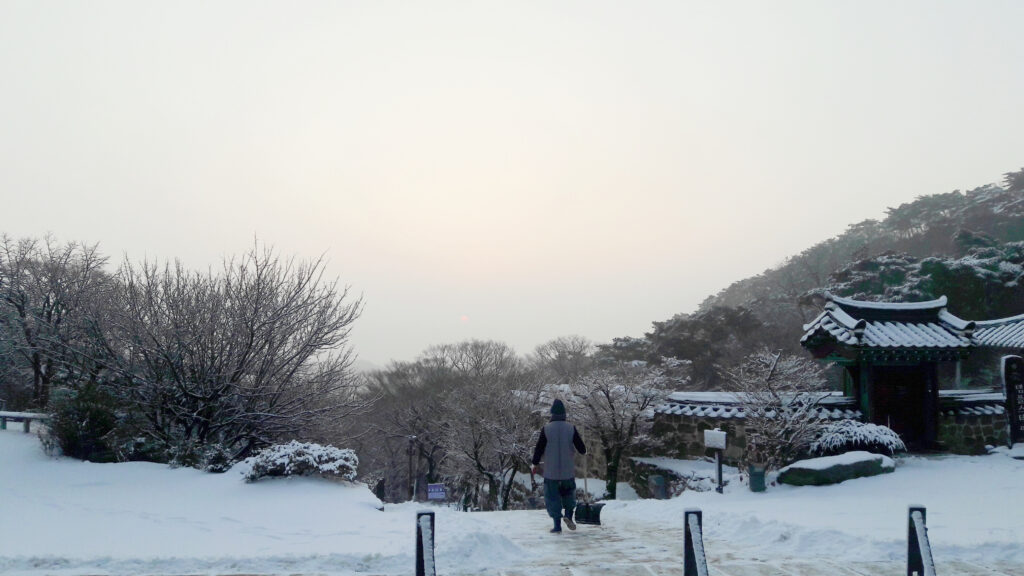
When it did, I was ready. It was a magical moment that illuminated this important temple’s full splendor and beauty. I felt like nature had rewarded me. As I shovelled with the monks, following their orders, we silently worked as a group. Each did their part to make sure that the paths were clear for temple guests.
What I have come to learn in this exercise of clearing snow is that life is full of paths that are blocked. But with the right mind and guidance, you can clear any path.
One of the biggest lies we are told is that it is possible to live fully in the moment, but the truth is we never can.
By the time we process any moment, it is already in the past, and that who we are is so wholly defined by our past experiences that any given moment is viewed through the lens of our entire lives. Our pasts can sneak up on us in ways that we never expected. Without taking the time to unpack what led us to certain bad habits or harmful thought patterns, it is too easy to fall right back into them without noticing.
That happened to me when I decided to become a high school teacher.
The role of teachers
If you know anyone who works in schools, you may have heard that teachers tend to act similarly to the students they teach. For example, K-5 teachers tend to be bubblier. They wear their personalities on their sleeves and know how to have fun.
High school teachers are also like their students. We think we’re right about everything, we believe instructions given by administrators are bullshit that we don’t have to listen to, and we ultimately spend way more time complaining about things than actively trying to change them.
Don’t get me wrong, every teacher I know works tirelessly to do what they think is best for their students, and we don’t get a lot of thanks for it. However, I have yet to work in a school that does not have this toxic underbelly of cynicism at the slightest suggestion of change or progress.
In my junior year of high school, I was hospitalized for depression. Shortly after that, I would learn that the extreme nausea and light-headedness that had become a staple of my daily school experience was actually an undiagnosed anxiety disorder. While some people might be relieved to be able to understand what they were experiencing and be excited about the prospect of working on skills to cope with their specific mental health issues, I was not some people.
I was embarrassed. I had been brought up in a home where I was constantly reminded how good I had it compared to my parents at my age. I was told to stop whining or not to “be a baby” at the slightest complaint or show of unhappiness. I knew a lot of people with ADHD who exhibited similar symptoms and behaviors to me, but I was never given an evaluation because my parents didn’t believe it was real.
My slipping grades were chalked up to my lack of effort or a perceived apathy on my part towards doing well in school. Having mental health issues, for me, was just another proof I was a disappointment, squandering my potential. I convinced myself that everyone around me must be feeling the same things I was, and I was just too weak to deal with it.
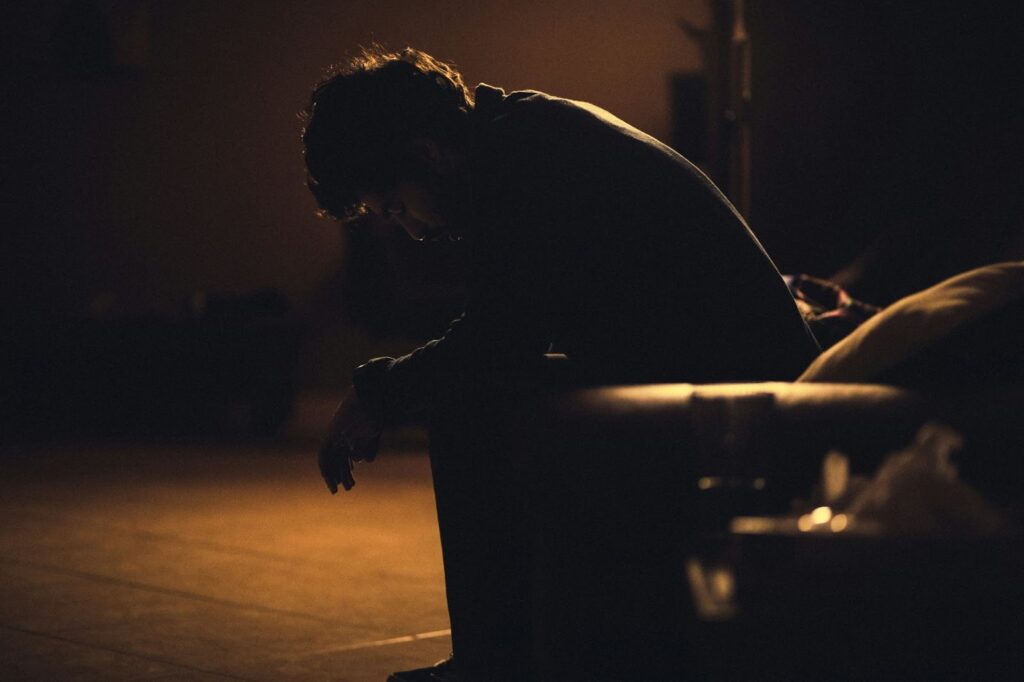
Too weak to deal with it, or just human?
(Image courtesy of Gadiel Lazcano on Unsplash)
This sense that my mental health issues were my fault led me to an inelegant and temporary solution: I ignored them. I simply acted like everything was fine without ever putting in the work to make it that way.
After my hospitalisation, I lied to my therapist about how much better things were for me. I lied to my parents so that I wouldn’t have to keep going to therapy. Worst of all, I perpetuated the lie to myself that I was to blame for everything, and all I needed to do was change my attitude, or at the very least, bury my true feelings so deep that they wouldn’t affect me. A mere seven months after being hospitalized for depression, I was off my anti-depressants because my friends had started drinking and I wanted to join in. Nobody around me questioned that I was somehow all better, and eventually, neither did I.
Except for a messy relationship that neither I nor my partner were emotionally mature enough to handle well, I managed my depression and anxiety very well throughout college and my first few years working professionally. I spoke in the past tense about my struggles with my mental health, as though they were something dead and buried as opposed to something lurking in the shadows. After working in freelance film and TV production, I wanted to find more consistent work, preferably something that felt more meaningful to me than carrying around a tripod or slowly sliding a camera to the right on occasion.
Then, one day, believing that I had conquered all my problems from my past, I decided to pivot to a career in education.
My goal was to help students like me who were struggling and felt they had nobody to help them, without realizing I had never actually learned to help myself through that time in a healthy and effective way.
My first few years subbing and teaching weren’t so bad. I was so concerned with learning all the skills necessary for a new teacher that I couldn’t focus on much else. However, due to never having fully confronted my own problems, I quickly realized I would not be able to help the way I would have liked to. I was able to be understanding and flexible when it came to offering extra help and time on assignments to students who struggled, but I hadn’t gotten into teaching to help improve students’ grades. I began to feel like I had failed since I couldn’t have the impact I had sought to have. Worse still, several of my students were hospitalized for mental health issues, and while a healthier me recognizes that I couldn’t have stopped that from happening, at the time, I blamed myself.
In February of 2022, just four years into my career in education, I found myself pretty much where I was in the fall of 2011: on medical leave from work due to my depression. This time I wasn’t hospitalized, though. This time I could seek help without waiting for my parents to understand how dire my symptoms were.
Putting in the work
I took a few months away from my job to participate in an intensive outpatient program five days a week. I was, and still am, lucky enough to be dating someone who has struggled with her own mental health issues. She has been entirely supportive of my needs and urged me to take my recovery seriously this time. No more shoving things down just to get the stamp of approval from my program to go back to work. By using the cognitive behavioral therapy (CBT) and dialectical behavioral therapy (DBT) skills from this program, I finally confronted the issues in my past and understood the types of cognitive distortions that led me to harmful thought and behavior patterns. I was also finally able to start internalizing that I am allowed to feel what I feel and try not to be ashamed or embarrassed about my personal struggles.
Now, I’m not saying that I’m all better, or that getting here was easy. I’ve learned my lesson about thinking I can “cure” my depression in a matter of months. I also recognize I have a long way to go from where I am. Even writing this article took a lot of time, because I kept wondering if it was even worth writing.
I still have that nagging voice in my head telling me that what I’ve been through doesn’t matter, and I should just stop whining about it. The only thing that got me to go through with it was the hope that you, the reader, might feel the same way.
You might need to be told, or reminded that you matter regardless of what anyone tells you, and that things will only get better once you begin to take them seriously, instead of ignoring them.
And if you, like me, have tried to stuff down unresolved issues in the past, I urge you to confront them in a healthy and direct manner, before they come back worse than before.
I wanted to go to college, but this mindset scared me.
I did end up getting a bachelor’s degree. In 2019, I graduated from Boise State University. I majored in media arts with a journalism emphasis, excited to be a journalist. After graduation, I applied to dozens of jobs in journalism. But I got slapped with rejections instead of landing a picture-perfect post-graduation position. Plus, journalism itself stressed me out. I realized I didn’t want to do it full-time. But journalism was a big part of my major and coursework, so I felt obliged to continue pursuing it.
I felt pressured to appease society and family by using my degree. Maybe one day, I’ll have a job in journalism. But I’m not actively pursuing one. Now I enjoy my job that doesn’t even require a degree. I’m no longer giving into the pressure.
The pressure to pursue
I believe a degree is absolutely worth it for those who want one. But at 18, we are told to either choose the right subject to study or be ready not to make much money. The journey from college to career is portrayed as a linear one. There’s a perception that one’s career path is determined solely by what their degree is in.
(Image courtesy via Javier Allegue Barros via Unsplash)
But from my experience, I’ve found that the value of a degree is a spectrum. Even though my job isn’t related to my degree, I still find plenty of worth in my studies. It may not be the worth people typically expect, but that’s nothing a change in perspective can’t solve.
Through introspection, I found happiness outside of the confines of my degree’s subject matter. Plus, it’s not the piece of paper that matters most. It’s what we learn while working toward it.
The hidden value of a degree
Attending classes, reading textbooks, and completing assignments are valuable. The diploma itself won’t display the years of our late nights and the best and worst memories. The degree is about more than what we studied.
Working toward that degree built lifelong skills. These include teamwork, critical thinking, communication, adaptability, problem-solving, and more—skills needed in the workforce. Using them means that the degree is being used, regardless of whether or not the name of the degree fits the job description.
So, even without a career related to the degree, those interdisciplinary skills are being implemented in that career or job search every day.
Finding joy in life is important, and a dreadful job won’t help that. I followed the path of passion, not the narrow one society expects everyone to go down. Getting a degree is an accomplishment in itself. It’s not a stepping stone to a potential accomplishment. As students, we learn life skills we can bring to every facet of our lives.
And more importantly, during the short lives we have here, we learn more about the world and ourselves.
How can we truly heal a patient’s physical state without addressing how they feel?
It is inevitable that all physicians, no matter the stage of their training, will unconsciously forget the emotional aspect of treating a patient.
Emotional understanding is a fundamental aspect when it comes to providing optimal healthcare. Yet, it is often forgotten, especially during busy times within a hospital. Emotional understanding not only allows for a patient to feel welcomed and at ease but also helps the physician genuinely grasp more than what words can simply express. More often than not, the art of sympathy and empathy, which was taught during medical school, is unfortunately lost within the busy hospital schedule.
It was during my first couple of clinical rotations that I had truly realized that the sacred art of emotional understanding is something that could easily be forgotten.
Such a phenomenon is bound to occur, especially as a physician starts to become caught up in the increasing workload of a hospital. I noticed that as the day grew older, the physicians I shadowed had slowly lost emotional touch with their patients.
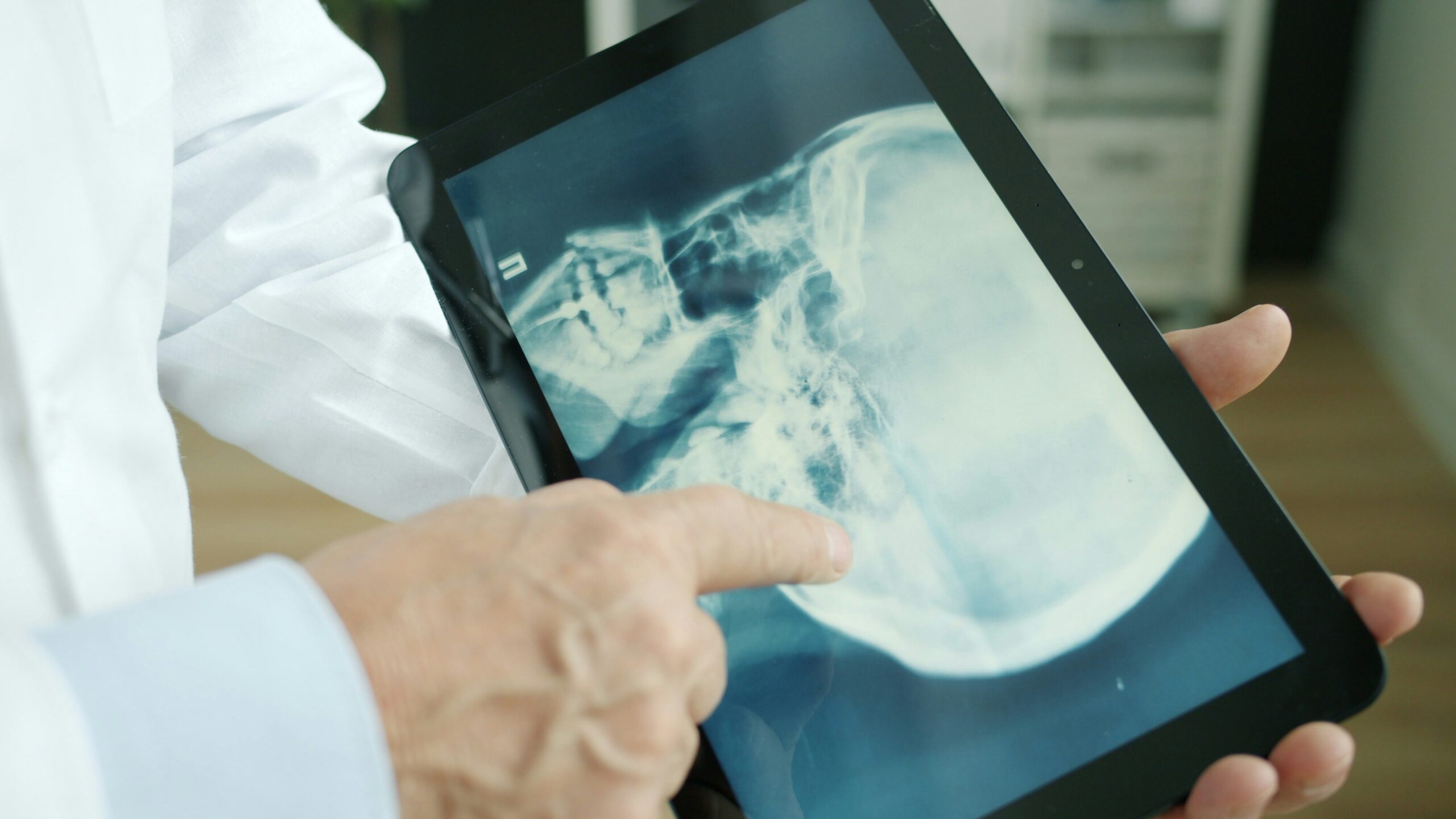
By the end of the day, consultations became limited to statements such as “you may have this condition,” “I need to order an X-ray,” and “take this medication.” While the course of treatment offered by the physician may not have changed much, it was evident that patients were left dissatisfied, as an emotional connection had not been established.
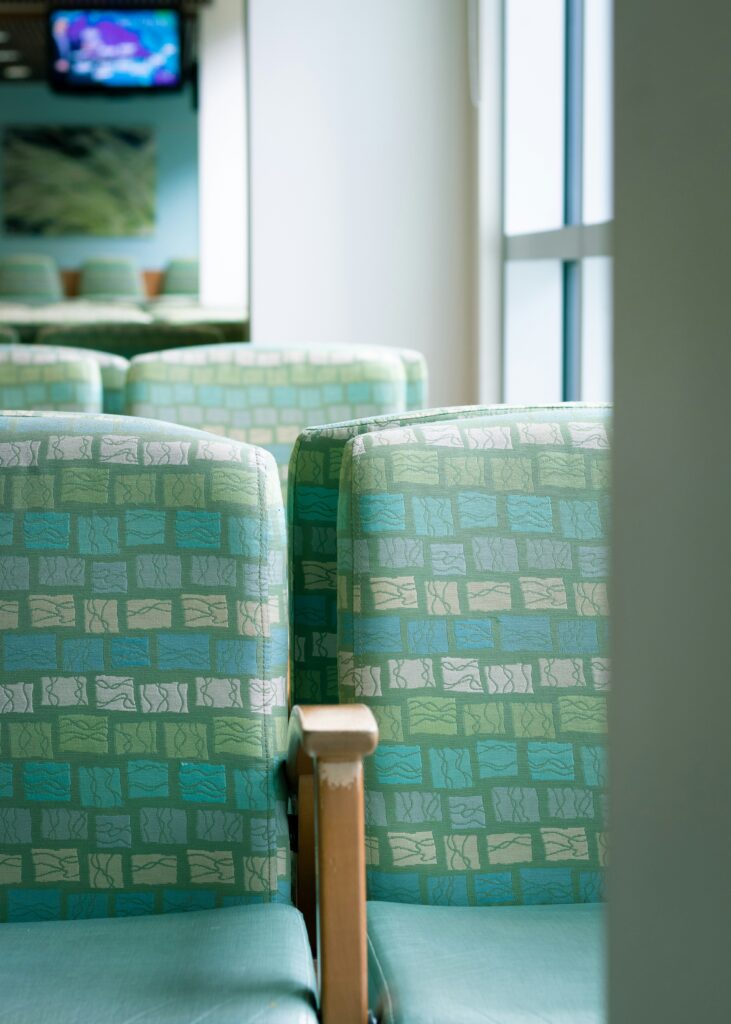
Sometimes, all a patient truly wants is to be felt. Unfortunately, many of us forget the importance of forming an emotional bridge. Such a bridge is truly what allows for the first step of treatment to commence. I found myself constantly asking patients in the waiting room, “how are you?” and “how are you feeling?” and instantly noticed the atmosphere become enlightened. Patients would proceed into the doctor’s room feeling that even their emotional state was being considered.
During a memorable instance, I sat down and conversed with an elderly patient which slowly nurtured into a conversation around hobbies and shared interests. Although brief, the elderly patient thanked me with a smile and followed with “I wish there were more like you.” I was lost, pondering my thoughts. I started to question, is this not the norm?
The philosophy of “treat others as you wish to be treated” extends beyond just being friendly and respectful.
It entails the ability to ask oneself, “How would others feel if I did/said this?”
(Image courtesy via Greg Rosenke via Unsplash)
I have witnessed patients being asked to rate their pain from 1-10, but is their emotional state simply limited to being a number on a scale?
It had been evident through the eyes of patients that they were hoping for more than just treatment for their physical condition.
They wanted to be heard.
And most of all, they wanted to be felt.
As I stood in the waiting room one last time before my summer vacation, I finally noticed that abyss of emotions. A room full of patients yearning to be felt and emotionally understood. It was only then that I realized the actual value of establishing an emotional bridge with a patient. While some bridges are harder to cross, one must be established regardless, especially if a physician hopes to ensure the best provided care possible.
I took it upon myself to become more proactive, actively engaging myself with all patients when appropriate. I began to learn about the hobbies and interests of many. Through doing so, I saw that there was always a story to every person that shaped them. Learning about my patients was the first step towards their treatment. I began to approach every patient with genuine care. As I invested myself, and approached things with an open and receptive heart, I began to intuitively understand the emotional needs of the different patients I sat with. I realized that every patient needed to be approached with such a mindset in order to truly establish patient rapport.
The following are a few of my recommendations for establishing the lost art of emotional understanding between patients and physicians:
Promote workshops for healthcare workers which focus upon empathic listening. This skill allows for the establishment of genuine emotional connections by feeling the same way patients feel.
Undergo constructive conversations training and coaching sessions that focus on polishing up skills revolving around social awareness and emotional intelligence
Implement fixed reminders that help promote asking about the patient’s emotional state. Such an implementation would ensure that an emotional bridge is built with every consultation regardless of how caught up a physician could be with the workflow that increases as the day goes on.
In the end, it is true that a great physician must be able to accurately diagnose and recommend appropriate treatments. However, can a physician genuinely impact their patients’ lives without actually understanding how they feel?
As a medical intern, what else can I think of other than the whirlwind of patients?
New challenges and lessons are what each day brings, but nothing could have prepared me for the encounter. An encounter that would leave a lasting imprint on my heart and impact my approach to patient care.
It was a typical morning at the hospital when I received his case. He was diagnosed with dengue fever. After a thorough examination, I was asked to put in a urinary catheter as he was having burning sensations during urination. I discovered that he had smegma collected at the urethra, likely due to poor genital hygiene. This condition, though not uncommon, required a delicate approach to counseling the parents about the importance of that hygiene.
As I walked into the consultation room to meet his parents, I felt a mix of emotions— empathy for the child’s discomfort and anxiety about how to broach the subject with his parents.
I took a deep breath, reminding myself of my duties as a doctor. My responsibility was not only to diagnose and treat but also educate and empower.
His parents’ love for him was evident, but as I probed further, I realized his parents were unaware of the essential steps of genital hygiene. They looked concerned and anxious as I gently explained the importance of cleanliness to prevent infections and discomfort. As I spoke, I tried to be sensitive and compassionate, ensuring I didn’t make them feel judged or inadequate as parents.
I drew parallels between routine hand hygiene and genital hygiene to make it relatable for them. Slowly, their apprehension began to fade. Their ignorance was now replaced by a genuine interest in learning how to take better care of him. I demonstrated the correct method and recommended age-appropriate techniques to teach him as he grew older.
As I continued the conversation with his parents, I realized that connecting with the community was crucial. Any discussions about genitals were considered taboo, a resultant of a generational cycle of ignorance, and breaking it required not just medical knowledge but also cultural sensitivity. I understood that I needed to tailor my approach to suit their beliefs while ensuring his parents grasped the significance of proper hygiene.
(Image courtesy via Brett Jordan via Unsplash)
His case instilled in me a sense of social responsibility. I immediately proposed a project for the tribal population, offering encouragement and support as they navigated this new chapter of a subject long considered taboo. Initially there was resistance but with time, they became more comfortable discussing their concerns and asking questions.
The success here encouraged me to host awareness programs addressing common health-related misconceptions and promote open conversations about hygiene and health. My aim was to empower parents and caregivers with knowledge to ensure a healthier future for him and children like him.
(Image courtesy of charlesdeluvio via Unsplash)
His incident taught me an invaluable lesson–that compassion, patience, and cultural awareness are as important as medical expertise. As a doctor, I learned the privilege of Healing Beyond Medicine was by building rapport and trust with patients and their families. Through these efforts, I hope to witness a transformation within the community. Parents should feel more confident seeking medical advice, and conversations around health must become normalized. Being a medical intern not only taught me medical skills but also the profound significance of doctor-patient counseling. Empathy, warmth, and understanding can bridge gaps and lead to lasting changes in patient lives.
My journey with him and his parents taught me that true healing goes beyond prescriptions. It involves a genuine connection with the community we serve and a reminder that no issue is small and, if tackled properly, it can lead to a huge impact in the community.
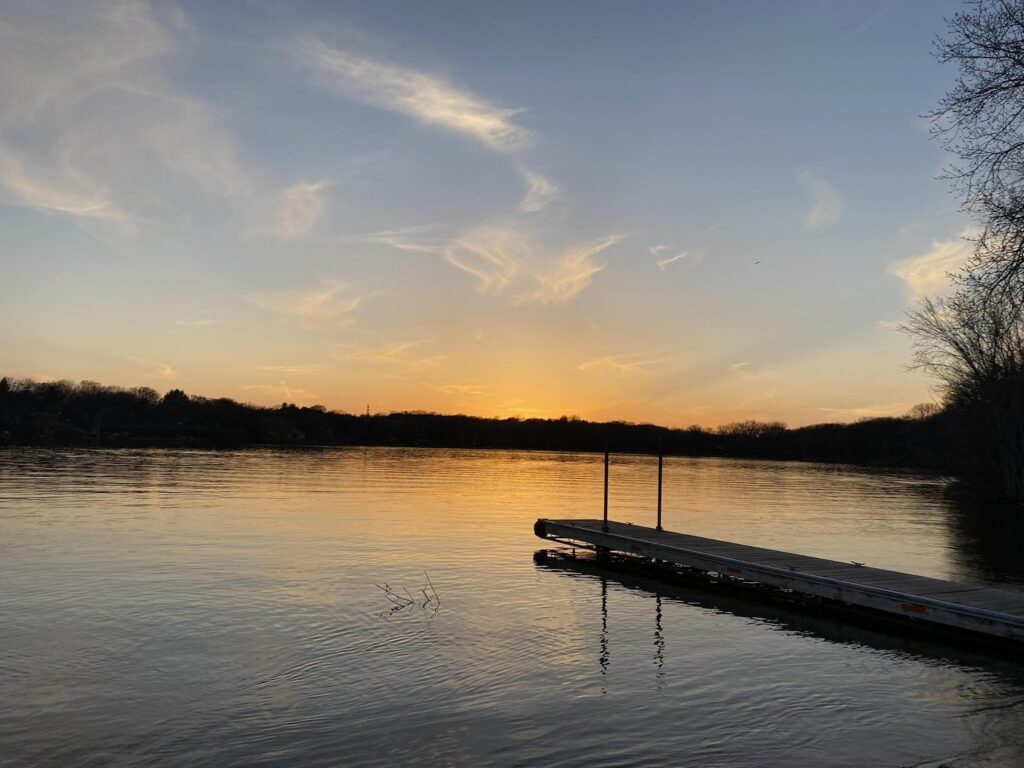
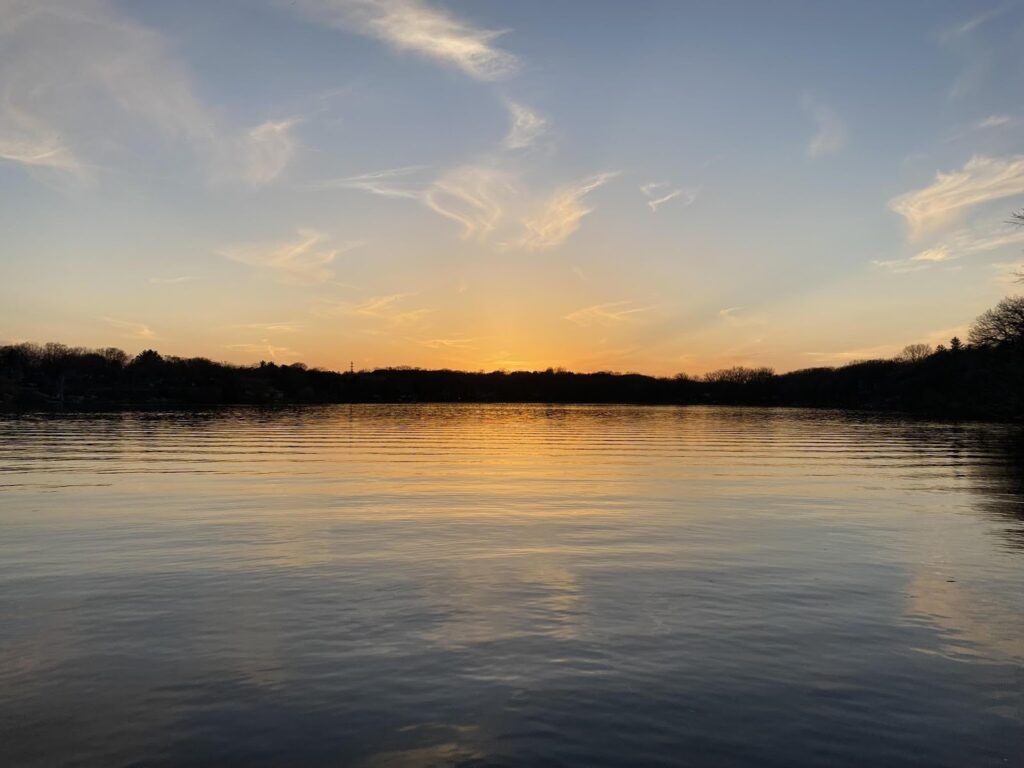
When I first discovered Lake McCarrons in my home state of Minnesota, I was around 17 or 18 years old. It was a holiday, and my mom, sisters, and brother were gathered around the barbecue tables, waiting for the food to be done. Lake McCarrons was right up the street from where I lived at the time. I liked the atmosphere and how the sun always sets where you can see it.
(Image courtesy of Alexis King)
The morning is the best time to go. In the winter, the cold air rushes to your nostrils, making it hard for you to breathe but easy to have the best “I’m okay and everything will be fine” conversations with yourself.
The houses around the lake make you wish you had one, especially since they are almost done building the new ones. Lake homes are beautiful, by the way.
A park and a picnic area for family and gatherings, alone time with the kids, or by yourself makes it ten times better than it being just a lake. When I go to this lake, I enjoy the walking path that leads you to the other side to the end of the lake.
There, my imagination gets wider from all the things I wish I had. But quickly, I am brought back to being thankful for what I already have. I wish that I could afford a home for my mom to be comfortable in or a boat for holidays where all my family can gather and share happy memories while on the water.
The air surrounding the water leads me to feelings of gratitude or what I have, because although it’s not a lake home, my mom does have a home; she gets around perfectly with my sister’s car or mine for the time being.
The lake is in the city with a street full of people driving by. City lights, restaurants, the liquor store, and the Dairy Queen fast food joint are right across the street from each other.
The lake isn’t huge, but it feels big; it is 74 acres in size and 57 feet deep. It is mainly a single-family home area with mostly residential housing, while the rest is a public recreation area with picnic facilities and a large playground.
(Image courtesy of Alexis King)
The sand of McCarrons is dark gray. Are the beautiful sounds of differently colored birds and overall quietness the best part of visiting it? These are inspiring, but they’re not my main reason for loving it. Hardly anyone seems to go to this lake and that’s what I like the most about it: the solitude.
The park at the lake brings me joy and hope. As I kick one foot off the ground and the other one follows into the air, I am making myself go faster and faster as I enjoy any kind of weather. There’s even wind blowing in my face while I look at the lake water as I’m doing so.
I would go in the mornings because for me, iit was the best time to go. In the summer, the wind did the same thing but this time it wasn’t always windy. The heat of the humidity felt like a hand being put over your mouth telling you to hush.
I don’t know which one is more difficult to breathe in, the winter or the summer, but the hot summer days brought more flavor and more excitement; everything blossomed the right way, and even if things were dead elsewhere, they were alive there. That is the beauty in the summertime at McCarrons Lake. I always travel by car when I go, not just to walk around, but also to catch the sunset or sunrise. It is breathtaking.
I have learned to love the lake through my difficulties of feeling down and stressed about where I am, where I’m supposed to be, and where I should be. It has been the best experience.
Today, I hear there are 10,000 lakes here. I hope to experience them all.