As a teacher, a member of a large family, and a feminist, I have always had crystal-clear notions about nurturing kids. For most of my teaching career, I’ve taught children ages 10 and under. I also have nephews and nieces that I’m very fond of. So far, children are the only humans who speak not only honestly but also kindly.
Everywhere I go, I play with every kid I see. But I don’t want to have my own kids. Not now, maybe not ever.
As a firm believer in freedom of speech and the right to express one’s ideas, I have always been open about my desire to get married or stay single without having children. I’d have pets, of course, but not kids.
I don’t keep count, but I’m sure that tons of people are ready with a stock reply about God’s wrath and how women like me risk missing the boat to motherhood.
“You say you’re not ready, or you don’t want children, but you’ll change your mind one day. However, it will be too late because God will punish you by taking them away from you.”
Gasp! I’ve heard this statement over and over for several years, but it’s still shocking.
The facts don’t lie
The number of divorces has increased rapidly over the years. The biggest divorce victims are the kids. The Department of Statistics in Jordan tracked this in 2018. According to the study, out of 70,734 marriages, 4,690 ended in divorce. Four of the married women that got divorced were less than 18 years old, divorce lawsuits in the same year hit 4,445, and 2018 divorces were over 50 percent more than those in 2017.
Numbers and statistics might not be everything, but to me, these numbers offer evidence that is just too strong to argue against. Besides, personal stories of nurturing families and my actual encounters with such families make me want to believe otherwise.
Facts like how many poor families with kids are living through struggles, how many parents are unemployed, or how many kids live through emotional distress resulting from divorce or separation aren’t widely publicized, but these are all part of the picture.
Stories of children I know
During my teaching career, I have witnessed the impact of such broken relationships and how negatively they have affected the children involved, which is why I don’t dare to have kids.
For example, I had a student who had to wait hours with the doorman until his father picked him up only to drop him off at his mother’s in the evening. The kid, 10 years old at the time, was so disconcerted and confused that it was hard to watch.
Another student had to watch his father beat up his mother and throw her out with a newborn in the street in the middle of the night. The boy, who had just turned 11, found comfort in pornography and was a victim of familial sexual abuse.
Another student broke my heart as she narrated her cousins’ exploits with her body.
One last example among scores of kids that I taught was a mother who disappeared in the middle of the night with three of her kids, leaving the other three with their father, never to be heard from again.
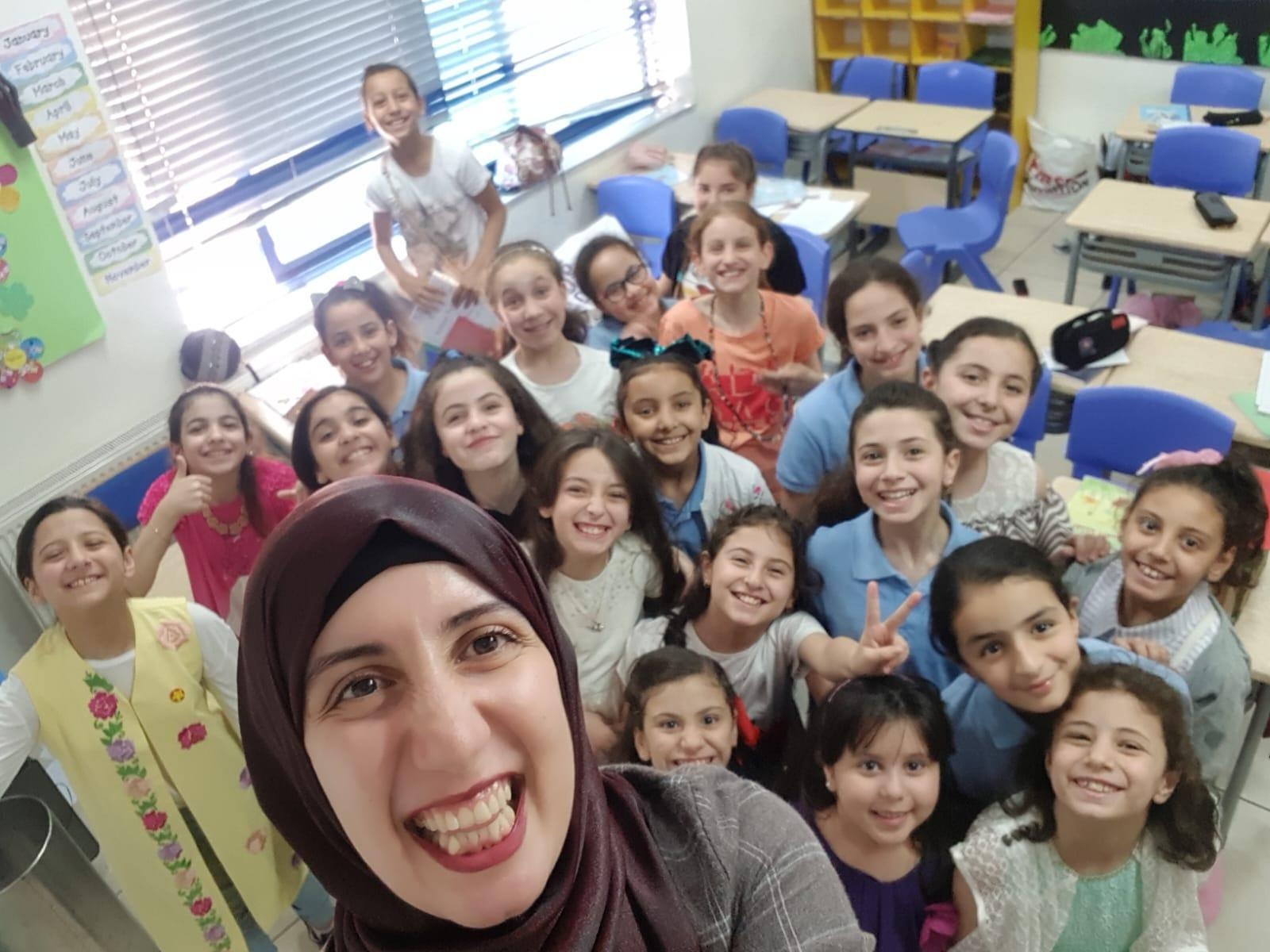
(Image courtesy of Wiam Najjar)
Never giving in
When I met my husband, the first and most persistent topic of discussion between us was not wanting children. It was scary to speak about. It was unfathomable to him.
The only reasons I should have kids were to please my in-laws, to make society shut up, to prove I was “woman enough,” and to fit in.
My husband is not a citizen of my country and, therefore, has no rights. Any child we bring into this world will accordingly have no rights. I can’t list my husband or child on the family register. I’m referred to as the foreigner’s wife. In my country, women are way behind men in terms of human rights, while men are under so much pressure to achieve it all. Having a boy or a girl does not look hopeful.
Arguing with facts and statistics, expressing one’s fear of bringing a child into an unstable world, or simply stating that not wanting kids is never enough for society.
God won’t punish me for considering the many possible scenarios and dreary stats. God won’t take anything away from me because I’ve made a choice. Kids are a huge responsibility that cannot be easily handled. It’s not simply instinct or custom. It’s bringing a human into this world and taking care of every aspect of their life until they grow up.
Yeah, I’m scared of that responsibility. And I must admit that it isn’t an easy decision to make.
So whenever someone decides to ask me when I’ll have kids, I will let them read this piece, even before they ask!
When I first started college, I always believed I would make something of myself. I would get a degree, see the world, and become a successful journalist. I had it all planned out, and after the toll my harrowing years of high school took on me, I felt adulthood had something better to offer mentally.
I soon had reality hit me like a freight train.
People always ask: “What would your younger self think of your current self?” It’s a question I can never answer easily. You might as well be asking me to find the circumference of the moon. Even then, I feel like I’d have an easier time finding an answer.
Truthfully, I don’t think my younger self would be proud of who I am today. Mentally, we’re still on the same wavelength, and I don’t believe I’ve made much neurological progress since then. I still think about suicide just as much as I did when I was fifteen but without all the additional teenage angst. I thought going to college would’ve exorcized at least a few demons inhabiting my brain, but it only opened up rent for more.
Along came COVID
The year I started my last semester of college was the same year the COVID-19 pandemic started. Instead of spending my spring venturing into the city and taking on new internships, I was at home with nothing to keep me busy besides a new 5SOS album and a few episodes of The Golden Girls.
It’s hard to believe that it’s been three years since the pandemic started. I mean, seriously? You’re telling me it’s already been that long since I’ve had a couple of my adult years snatched from me and that long since I’ve felt my mental health reboot towards its downward spiral? It can’t be. It’s terrifying to think about now and how that time in isolation catapulted me to where I am today. Whatever progress I had made post-high school was ripped from me in the blink of an eye. I was back to square one, trying to navigate through the darkness while the sun was still shining on the outside.
I don’t think the world has truly grasped just how detrimental that isolating time was for everyone. Jokes are made about it now, but it’s clear that it’s only an attempt to put a bandage over what has already left a scar for many. Within the last two years, people have faced loss in more ways than one. I simply find it impossible to gloss over.
As a young adult, seeing how the pandemic affected others within my age group wasn’t difficult. Many took to social media as an outlet to share their private thoughts, devastated that they were losing some of their most formative years to a public health emergency all while expressing trepidation about the future. It crushed my heart to witness so many promising young voices feel that the road ahead was bleak. But I understood it. When you’re encompassed with nothing but loneliness and hollowness, everything becomes foggy. Life feels like it doesn’t have a purpose anymore, and neither do you.
Image courtesy of Edwin Hooper on Unsplash
There’s still something missing
Fast forward to a year later, and I had finally graduated college with my bachelor’s.
I should’ve been happy, but why wasn’t I? I was about to start my career; shouldn’t I have been grateful? It was only then that I had to humble myself and remember that the ‘career’ in question didn’t even exist yet. The pandemic cut into a time when I was supposed to create a durable landing pad post-grad, anything to make sure I wouldn’t fall into an interminable vacuum of uncertainty. That was my biggest fear, and now, a year later and without a job, it looks like those demons residing in my head won after all.
I think the pandemic and everything that came after it took a piece of my soul that I don’t think I’ll ever be able to get back.
I spend each day scrambling for missing pieces of a puzzle that once came close to being completed. I’ve shed so many tears that I could’ve drowned myself in them. I’ve thought of death in so many ways because I don’t feel like I’m meant to be here anymore. It feels like my world has already come crashing down, and it’s too late to fix any of this. Feeling like I was destined for greater things and having nothing to show for it isn’t just a blow to the ego but to the heart as well.
I’ve come past the point of despair. The helplessness that I’ve felt for the last two years has mutated into a flat-out numbing sensation, the same kind you feel when dipping your hands into ice water for too long.
But instead of attempting to fish my hands out of the cold, I’ve accepted it. I can’t turn back time nor tape over what’s already been shattered.
All I can do is hope for a miracle and continue to pray to the moon each night that I’ll finally be able to put myself together again.
When a foreigner sets foot in the land of Myanmar, one of the questions I’ve heard is “What is the yellow paste on the cheeks of young women?”
Well, it is “thanaka,” which can only be found in Myanmar.
To kindergarten with thanaka on my face
The first time I wore thanaka on my cheeks was when I went to kindergarten. It was actually one of my earliest memories. Back then, I didn’t care if I looked good or bad. I just let my mother do whatever she wanted with my appearance on my first day of school.
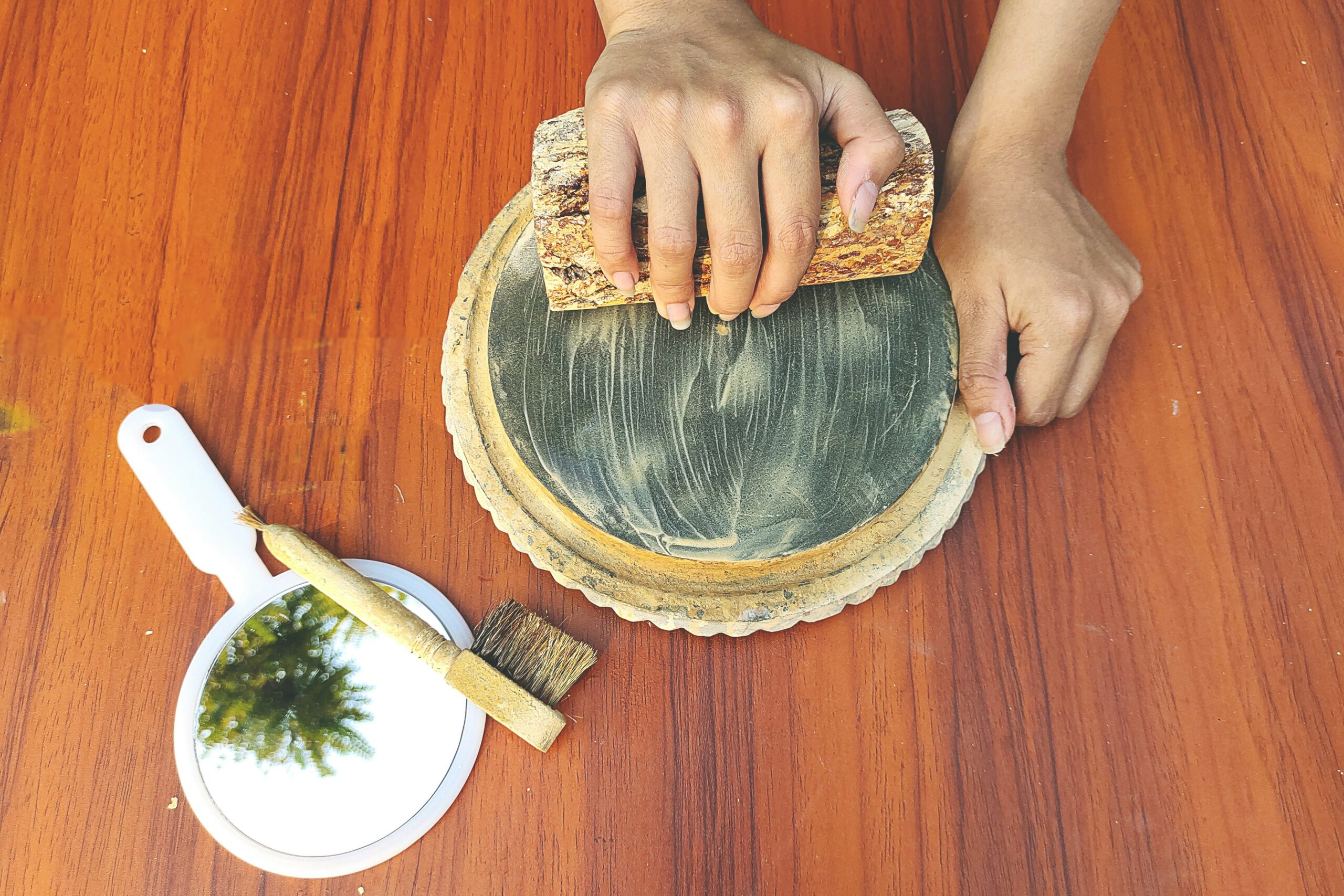
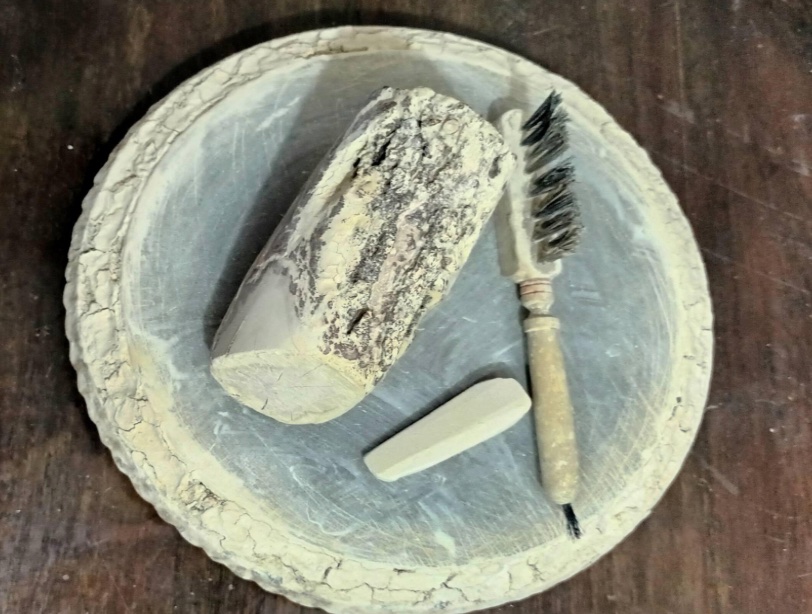
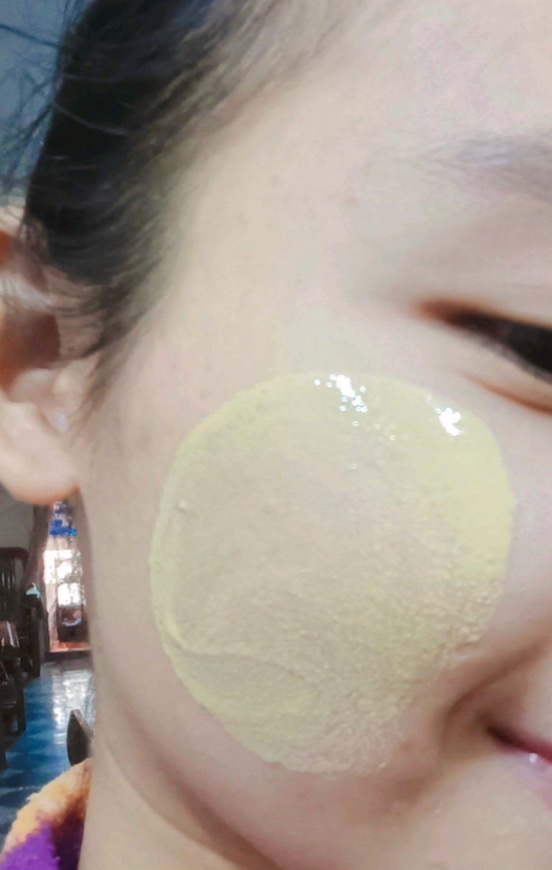
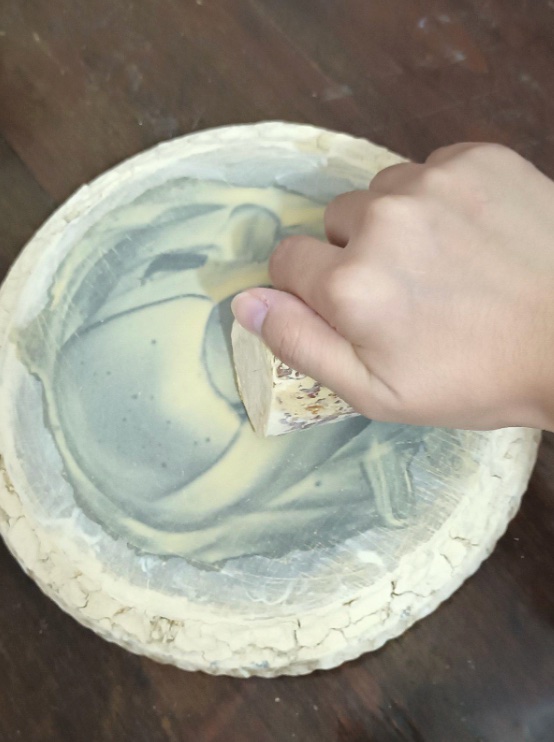
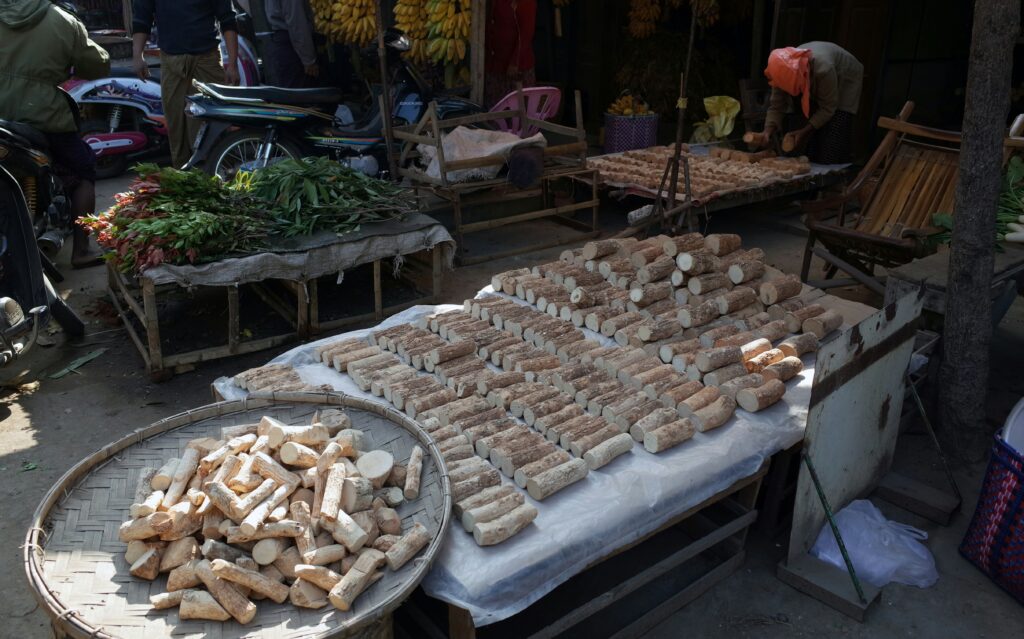
I can vaguely recall some facts, though. I remember how I sat still in front of a large mirror as my mom grinded a piece of tree bark that was bigger than the size of my small arm against a flat, heavy stone that had been wet with water. The magic took place after grinding for about two minutes; pure water was used, but after grinding, there was the yellow paste. Mom rubbed the yellow paste on the flat stone with her hand and put it on my cheeks, drawing oval forms to achieve an egg shape. That was it. There were no complaints from me, and I just happily went to school.
(Image courtesy of Johana Htwe)
Peer pressure raised its ugly head
As I reached puberty, I started caring about how I looked. This means that I applied thanaka by myself and never let my mom help me because I realized how silly I looked when my mom put the yellow paste on my face. It was as if she was using her five fingers to paint an ugly sketch, with my face as a sketch paper. The result was like those markings on a tiger’s face.
During high school, I wore thanaka every day, and so did my peers. I wore a simple shape made using thanaka by putting the yellow paste all over my face and using a brush to draw lines carefully. My friends wore particular shapes such as a rectangle or leaf. The reason I wore thanaka 365 days a year, even when I was sick, was simply because my mom would convince me I needed to.
A Burmese lady must not start her day with a bare face,” she would say. “Thanaka will keep your skin cool and brighten your face. Thanaka is good for your skin health.”
I do believe in these mantras. However, there was a period when I assumed thanaka was so cheap that it was used only by people who were considered poor. Personally, I consider the word “cheap” to mean not being able to blend in with classmates and teachers in this context.
(Image courtesy of Johana Htwe)
On my university campus, a bunch of gorgeous ladies were part of my surroundings. Their beauty was reinforced by international beauty brands. As for me, who grew up with little knowledge of cosmetics from other countries, I felt like I was the least beautiful girl in the university. I can still remember some comments from my friends.
“There is thanaka on your eyebrows,” they’d say in between their laughs.
“Your thanaka looks funny on you,” they’d sometimes say, assuming a serious tone. Still, it was as if they were suppressing their laughter.
“Your thanaka is soaked with sweat.”
“There are only some spots of thanaka on your face and it doesn’t look good.”
“Thanaka is so cheap.”
“I’m too lazy to do the grinding part.”
I didn’t defend myself back then. I thought maybe they were right.
So I changed my style. I began to use foundation, blushes, and lipsticks that were recommended by my friends. I couldn’t pronounce the brand names, but they were probably made in Korea and Thailand. I spent my monthly pocket money on them instead of enjoying my favorite pork stick in Tutt-pi restaurant.
I thought my appearance changed for the better with the help of these cosmetics. I told myself that even if I didn’t attract the attention of boys, if I looked good in the eyes of female classmates, I would at least not be judged. That was until one moment when I looked at myself in the mirror one afternoon.
Using international beauty products, though expensive and made of rare ingredients, didn’t turn out well for me in the long run. I looked good with makeup in the morning but not in the afternoon and evening; I usually got soaked with too much sweat. Myanmar has very hot weather and the heat is especially unbearable in the afternoons. As a result, my face would get oily at noon and my skin wouldn’t react well to chemical ingredients.
At the end of the day, pimples and acne appeared on my forehead, cheeks, and even around my neck. I covered them by wearing an even thicker foundation and more makeup. No matter how hard I tried, the result was that the more I wore, the more pimples and acne appeared on my face. In the end, I had no option but to stop using makeup.
Welcoming thanaka back into my life
Although I stopped using foundation and other makeup, I began to use thanaka again since I was not comfortable with a bare face. That was also due to my mom’s nagging about how thanaka could heal those pimples. She had no proof, of course. It was just the power of a mother that convinced me. If I were to become the president of a thanaka company, I would give the lead position of marketing department director to my mom! She was that good.
In this case, my mom was right. After using thanaka, the result was quite impressive.
(Image courtesy of Johana Htwe)
Thanaka kept my skin cool when the weather was too hot, so I didn’t feel the burning heat under my skin like I did with makeup. That might be because thanaka is made using water and the bark of a thanaka tree, which has to be nurtured for more than 30 years. The naturalness must have protected my skin from the extreme heat.
Also, whenever I sweat a lot, I would rinse thanaka off using water only. There was no need for a cleansing chemical liquid. This means there was no chemical reaction and thus, no more new acne. It took some time for the acne to disappear. As far as I remember, my remedy for acne is to forget about it, stay happy and healthy, never ever let myself be sleep deprived, and last but not least, to sleep wearing thanaka. It’s like wearing a Korean face mask.
Of course, even without acne, my face still has some oily pimples. I think it is just a hormonal matter and totally natural. To me, it is better to live naturally than to choose products containing synthetic chemicals to conceal whatever people think is ugly. After all, there are always side effects and most of the time, it is not worth spending heavily on chemical products.
Thanaka is a Myanmar tradition
Myanmar is a country with a hot and arid climate. That’s the reason why thanaka is still popular here. Thanaka protects the skin from the burning sunlight. To be frank, whenever I see a girl wearing thick makeup in very hot local weather, I just want to say, “Stop using makeup all the time. International brands are produced according to the standards of the host country. In the worst-case scenario, you could face an outbreak of acne because of chemical ingredients when you use those products in Myanmar. Besides, they might not protect you from sunlight, causing your skin to turn a sunburned shade due to damaging UV rays.”
In Western countries, sunburned, tanned skin is often considered beautiful. But in Myanmar, most young people, both girls and boys, want to have a fair and pale complexion. That is why most Burmese girls, many of my friends among them, are turning their attention to whitening creams when they reach adulthood. They think that the thanaka that they used to wear will no longer help them stand out.
(Image courtesy of Kentaro Komada via Unsplash)
There is also another reason why some Burmese women, especially young girls, are not interested in thanaka as much as before. It is the attitude that “only peasants wear thanaka.”
Even in my family, my sister always complains that only street vendors and working class people wear thanaka. The way she and my friends say that as if they are better than people from working society has always angered me. In fact, thanaka is Myanmar’s unique, traditional product that has existed for a long time, no matter who wears it or how much it costs. It is a shame that my sister and my friends, who were born and raised in Myanmar, somehow use thanaka to discriminate against people rather than seeing it as something to be proud of.
According to my mom, the makeup trend had already invaded Myanmar in her youth. These days, not only women, but also men and children wear thanaka.
On the streets of Myanmar, it is quite common to see children, regardless of their gender, wearing thanaka in various shapes, mostly with the yellow paste on the forehead, nose, and both cheeks whenever they go to school. Young men seldom wear thanaka, but I must say I always smile since I find a man cute and friendly when I see thanaka on his face. It is as if a man with thanaka is honest, kind, and generous, which I bet are the qualities of an ideal man for the majority of girls.
As for young women, they are quite careful when drawing shapes with thanaka on their faces, so as not to look funny. Being able to create beautiful thanaka shapes equally on both cheeks is a talent, and that talent can even make a village girl elegant, and full of pride and charm.
If one visits Burmese villages, it is even easier to see thanaka. For village people, thanaka is their sole daily beauty product. Besides, makeup is not the best choice for those who work under the sun from morning until night, looking after their crops, animals, and farms. Thanaka is the only natural product that can protect them from burning sunlight.
In my opinion, it is quite unacceptable to price what others consider precious according to their personal preference. My opinion is always diametrically opposed to that of girls who only think that a set of cosmetics can make them elegant and fit into the crowd, thus looking down on others who don’t do so.
I know that the beauty of a woman can be highlighted by using some makeup tools, but I also want to say that the sight of a village girl wearing thanaka while farming can be equally as eye-catching and convey the sense of true beauty.
In a nutshell, thanaka is for everyone and can be found anywhere in Myanmar. I want to say that I feel happy seeing a person wearing thanaka proudly without a care. I can sense innocence, a humble mind, and a particular connection with them.
As long as I live in Myanmar, I don’t think I will ever lose my love for thanaka. In the morning, I start my day after applying thanaka on my face, arms, and legs. Before I go to bed, I do the same.
Although I don’t want to admit it, I don’t have a talent for creating amazingly symmetrical thanaka shapes most of the time. Nevertheless, the shapes are not important. To me, the feeling of its cool texture and the many skin benefits that I get from thanaka are qualities that are too precious to convince me to replace it with international brands.
For introverts, you’d think that the pandemic would be fun. Or at least something they’d be used to. It all sounds pretty normal: staying inside, watching something on a streaming service, and spending too much money on a food delivery app. You’d be mostly right if you were talking to this introvert. But this introvert also struggled. And this introvert even missed talking to people.
My name is Anna Bechtel. I am originally from Hamden, Connecticut, in the United States. However, at the beginning of 2020, I was at Drew University in Madison, New Jersey.
The pandemic hit during my senior year of college. I know, it sucks, the world hates me. At first, I thought this was like the previous crazy illnesses, like swine flu or ebola. I realized that wasn’t the case when I returned from spring break.
My college responded immediately, first by suspending in-person classes for a few weeks. A few days after that announcement, in-person classes were suspended for the rest of the semester, and everyone eventually had to head home. I went back to Hamden a few days after this was announced.
(Photo by Anna Bechtel)
Being at home was nice at first. I got to catch up on all the TV I missed. I ordered food from my favorite local places. I watched a bunch of livestreams and online events. And I was able to get all my schoolwork done.
After I graduated in early May 2021, staying at home was less fun. I feel like that’s when the fun part of the pandemic ended for everyone. However, I struggled with more than just boredom and cabin fever. I felt stuck, I felt like a failure.
Two years later, I’m still struggling with those feelings.
As someone in their 20s, society has told us that we have to go out, start our careers, find our lifelong group of friends, and date up a storm. Unfortunately, those things weren’t happening for me.
Fast forward to the present day and I’m a full-time contract writer for a website. However, I still don’t really know my coworkers all that well. I still feel uncomfortable messaging them on Slack, and I’ve worked there for over a year. Honestly, it’s hard to forge close bonds with people virtually. This also makes finding friends and romantic partners difficult. When you’re messaging someone, you have no idea how they actually feel about you. And unlike coworkers, these people can just stop talking to you if they aren’t feeling it–but I know I have to conquer that fear and put myself out there.
(Photo by Sven Brandsma on Unsplash)
Now, staying at home is just a choice since we’ve developed ways to be in public and not have to worry about getting the virus. Ever since then, I’ve been trying to increase my social circle. I’ve been going out more, and am trying new things. Since 2020, I feel like I’ve gotten better at social interactions. I wouldn’t say I’m amazing, but I’ve come a long way. I’ve made some new friends–and they seem to tolerate me (which means I’m doing something right!)
We’ve all struggled in our own respective ways these past three years. Now, I want to take advantage of the insights that this challenging period gave me to keep growing. There’s nothing in my way anymore, so I’m going to go for it.
and when she told her mother of the “incident” she was told never to speak of it again. Silence served as protection. It served as a convenient denial and an acceptability of these dirty men are everywhere.
Hers was a sack of body odour she never bothered to turn around and see, even as he pressed himself against the back of her thigh, even as she felt him grow against her, even as she tried to make space in a crowded local bus filled with people; I was too scared to say something she said.
Hers, lived with them, cared for them, cooked and cleaned for them, and some nights he took to servicing himself instead. I don’t like it when my parents go out at night, the eight-year-old would say, still feeling his hands in places they should never have been.
Hers happened at markets, in shops, out walking ignoring a whistle or two, a snide remark till courage would find his feet, and he would encroach upon the space she called her own. I wish I didn’t have boobs; she cried to her friends.
Hers was a doctor, an uncle, the neighbour’s son home for the holidays with nothing much to do. The delivery man, her math tutor, the building lift man, the driver, the electrician her family had used for over fifteen years, the family priest and that first boy she liked in school.
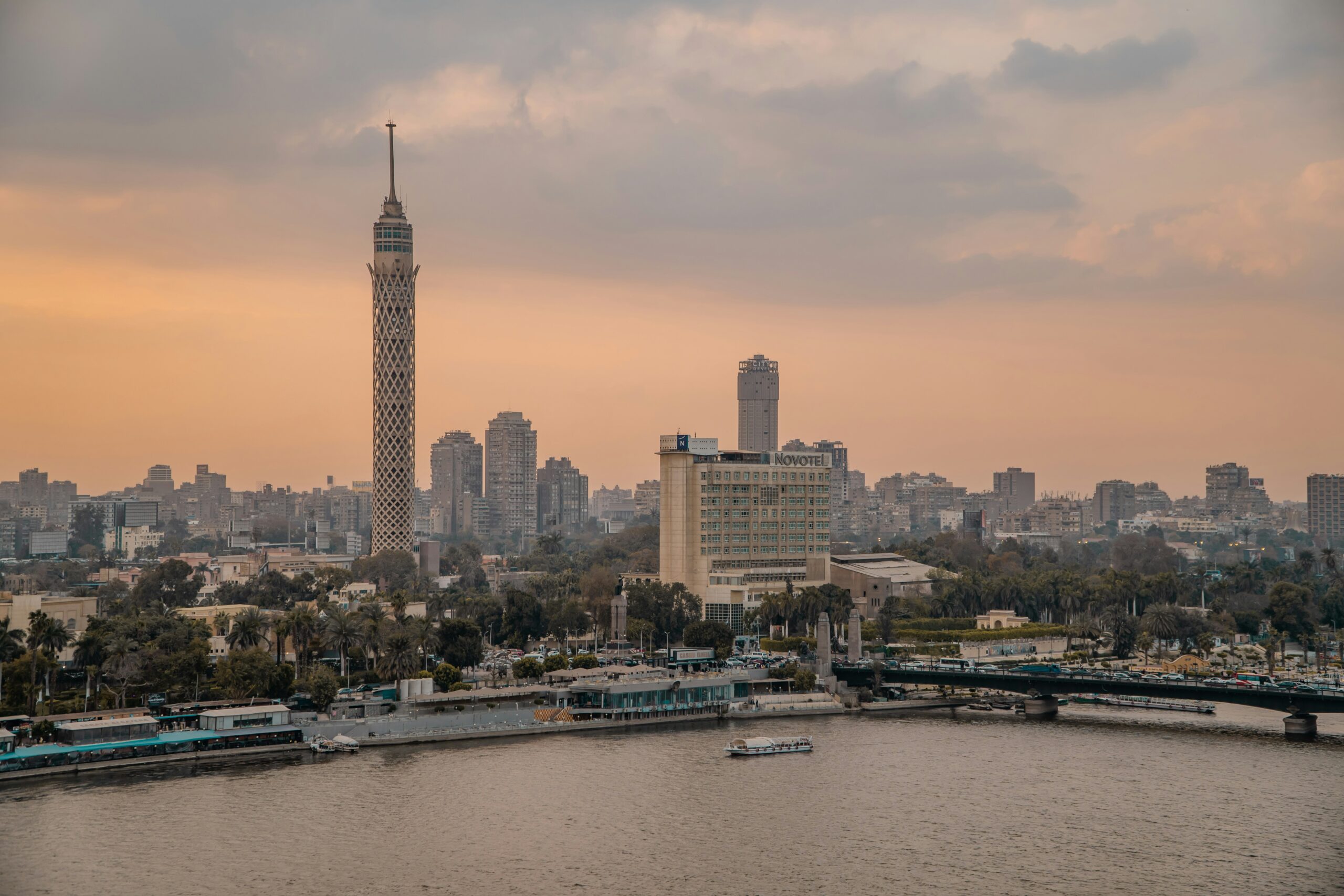
I am an Egyptian woman I mean, I am an exhausted woman I spend my night in enjoyment till the morning watching fantasy movies that I do not afford living and my day passes through many ordinary tasks that no one counts.
For instance, today, was too short to give it a name I cooked Green soup and rice for the hungry kids who come home from the mangler I waited for their little mouths to finish chewing, I prepared to go out, not for pleasure of course! however, I wore some red lipstick, to distract myself from the burdensome doctor’s visit.
I swallow cars’ smoke every bit of the way, thinking: Do my kids breathe all that genuine Egyptian momentum? Do they taste that air saturated with sweat, rage and poverty? Do they swallow that? Does my old childhood album hold anything more than Hours spent in public buses and microbuses, breathing boredom, tiredness and smoke? Couldn’t it be the smoke of something burnt, someone burnt?
My kids play in the hospital. In the physician’s clinic, they jump on the sick bed and grant it life. In the pharmacy too, they smile while circling their pink balloon and I, like any genuine Egyptian mother swallow people’s looks at them and throw out orders for my kids to stop living so that others be happy whereas my kids are defeated.
Problems lie in knowledge. A friend once told me that and I did not understand him. Sometimes man’s knowledge hurts him more than his ignorance, I know that they have a right and that I have a right and that birds should keep flying most of their lives but when mosquitoes’ bites hurt me, I banish the birds, inadvertently.
My two birds have slept by now. They took their medications, in their specific dozes, those that I recorded at certain times. they drank milk just like two playful kittens now, they want to play a little or maybe a lot but it is time for the sleeping train, my dear.
Ended their day quickly and started my nighty day, everyday. I prepared sandwiches, two fruit slices and some vegetables that they will not eat anyways. I filled their bottles with love and water I put some prayers in their bags and I hid some apologies for my many orders in the kitchen sink. I ironed their clothes that will never stay the same everyday, my son lies down on the ground after wearing his clothes my daughter sits to play and draw. That does not infuriate me anymore my heart smiles for them only while they are asleep, like every Egyptian mother! My heart tries to smile at myself too some kindness tries to touch my angry soul and closes her eyes she says, Hold your thread and create a life, exchange your angry heart for a young child’s heart, rock it softly to sleep now open your eyes again you are just an exhausted woman.