Sole Searching

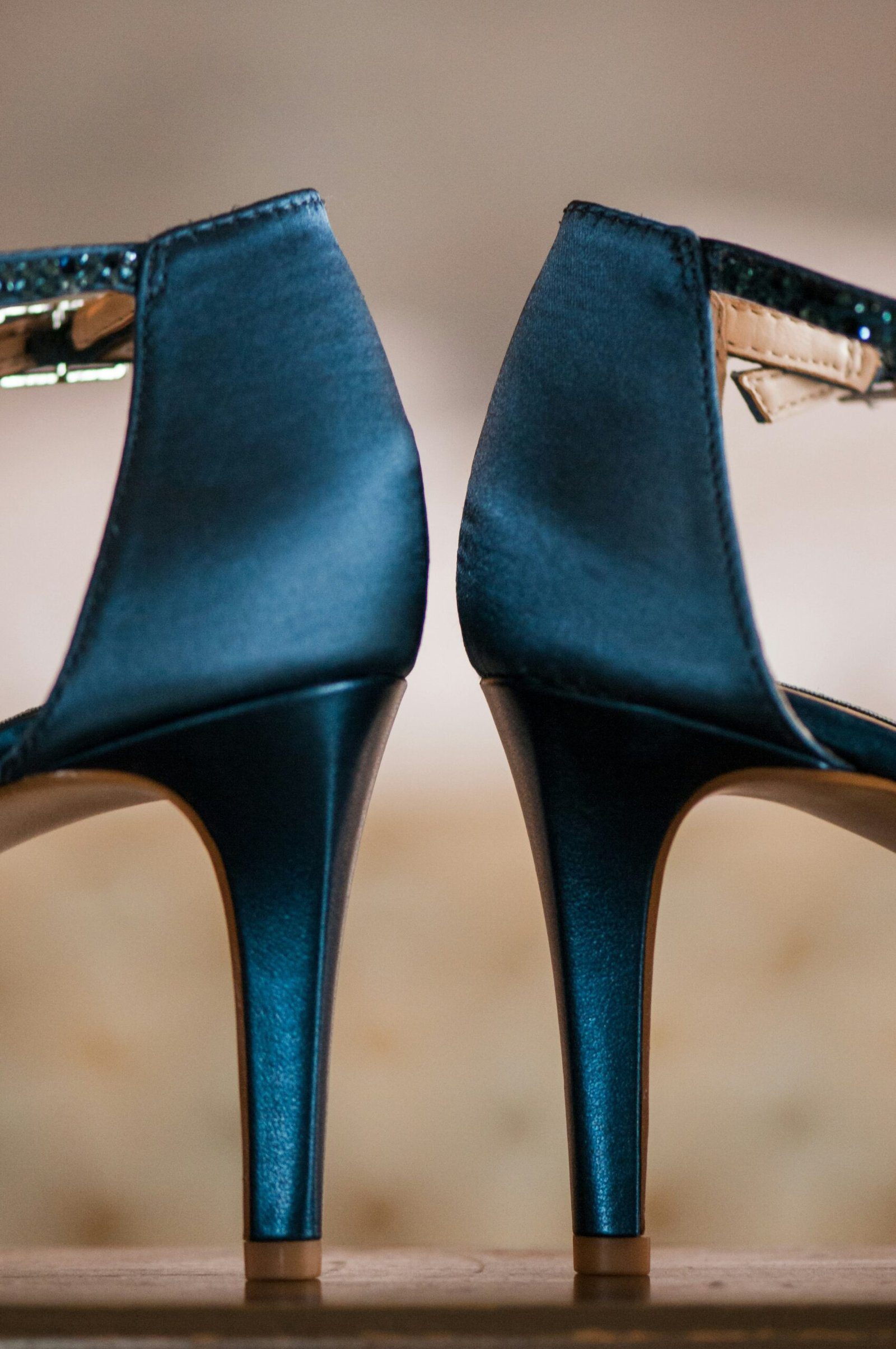
I took a deep breath and gave away my dance shoes. It was a bittersweet moment. It felt like admitting defeat and releasing pressure on myself at the same time. They were these super chic black leather heels, complete with a suede patch (for easy turns) and padded insoles; Gorgeous, really. A birthday gift from two years ago, I kept them for this long but only occasionally put them on. I always clung to the hope that my feet would magically adjust to them, but that never happened. I could barely stand in those shoes, let alone dance. They were excruciatingly painful. 

I once heard someone say, “The prettier the shoe, the more it hurts”. The problem wasn’t about this specific pair of heels; it was all of them. Wedges, pumps, kitten heels — you name it, I tried them all. My feet just never cooperated. 

The high cost of heels

I’ve been suffering from full-body chronic pain since childhood. I didn’t know that term back then; I thought that I was just out of shape. However, while in college, my desire to be a stylish “cool girl” was so strong that I was willing to do whatever I could. Besides, I wanted to fit in with the other girls and, being a girly girl, heels absolutely fit my aesthetic. 

“Short girls look great in heels,” they said. “Heels will fix your posture, boost your confidence, and complete your outfit.” My 150cm (4”11) self readily agreed with them. 

They insisted that all I needed to do was practice and I did just that. I bought a few pairs, walked around in my room, and went out dancing in them. I bought extra suede strips to secure the shoes to my ankles. However, my feet always threw a full-on rebellion. I was always getting injuries from twisted ankles, I experienced frequent spikes of pain in my knees and legs, on top of the chronic pain. To make matters worse, my sensitive skin was also prone to sores and blisters. 

Over the years, I faced numerous comments from well-meaning women on the virtues of heels. Like me, they were sold the idea of “il faut souffrir pour être belle” or “beauty is pain.” Despite agreeing with them, I couldn’t deny the discomfort and instability heels brought me. 

At 22, I remember cat-walking the runway at a fashion show. My biggest anxiety wasn’t stage fright but walking in five-inch wedges instead. It was twisting my ankle, falling on my face, injuring myself, and ruining my fabulous clothes in the process. Luckily, I didn’t fall. I walked the runway fairly well, but I still remember that fear too well. No wonder my modeling career was short-lived. 

Eventually, I gave up on heels, opting for flat shoes with ankle support. Sure, I faced some teasing, but I refused to endure such pain for the sake of appearances.

Fast forward to two years ago, I discovered Latin dance. I watched in awe as beautiful women danced salsa and bachata in stilettos gracefully and effortlessly. They seemed to glide on their tippy toes as if defying gravity itself. I felt completely out of place in my flat-soled shoes, and the other women looked at me with a mix of mild pity and sympathy. I joked with them that I’m just a potato in sneakers. Talk about self-deprecating!

The women gave me well-meaning advice: go for a chunky heel, invest in custom-made pairs, do these specific exercises, train yourself to balance on the balls of your feet, etc. It felt like déjà vu from my young adult years — feeling left out, inadequate, and like I was not trying hard enough. I wondered… Am I still giving in to peer pressure? At this age? It was a bit embarrassing, to be honest. 

Finding my footing

And then, a massive shift happened. A few months ago, I discovered the term “hypermobility.” For years I had been chasing a diagnosis, hopping from one specialist to another. Even countless physical therapy, acupuncture, and chiropractic sessions could not give me the answers and pain relief I needed. A woman on Instagram reels, however, described the condition with such profound accuracy, I was blown away. Yes, I’m gonna say it. The reel had me reeling. 

Suddenly, everything made sense! Not just for my feet but my entire body. Putting a name to the pain was cathartic. The word felt like a key unlocking a door to a room full of answers. It explained why my body behaved the way it did, why I was in so much pain, and even why I breathed the way I did.

Hypermobility is this peculiar trait where your joints move beyond the normal range. This discovery explained the aches and other peculiarities of my body that had long been dismissed as quirks or weaknesses. It was strange, yet somewhat comforting, to finally have a name for why I kept getting injuries, and why my body sometimes feels like it’s rebelling against me. 

I am now working on my posture and strength in a way that honors my body’s reality instead of fighting it. I accept my feet, ankles, and the whole package. I released myself from self-torture. I accept that I’m short and no longer feel the need to appear tall. So what if I’m three owls in a salsa dress? Peer pressure? I don’t know her. 

So, I’m happy my dance shoes found a new home. Their super chic black leather elegance is now adorning someone else’s feet, a young woman on the cusp of adulthood. Before relinquishing the shoes, I made sure to ask her, “Do they hurt?” She assured me they didn’t with a wide, giddy grin. I sighed, relieved that I didn’t have to worry about peer-pressuring her into wearing something that hurt her. 

I admire and support other women who enjoy heels. I acknowledge the confidence-boosting power of heels and the way they complete an outfit. However, my choice is clear — I prioritize being pain-free over fitting in with the crowd. Today, I dance in pink flat-soled shoes, complete with a suede patch for easy spinning. 

In the end, it’s not about the shoes; it’s about accepting and honoring my body. Feet first. 

I like

As I find myself in a very difficult time in Israel, where I live, this is a deliberately slow-paced ode to my journey to Ithaka.

I like

how light dances through fluted glass
drowsy streets at dawn
my tall son’s sudden smiles
the doves dozing on our balcony
older folks in redeemed finery
my daughter’s excited curls
the pond toads, sometimes frozen still, sometimes flying over swimming water irises
untranslatable words
drizzle on a hot day
movies in the afternoon
fresh mint
22 years of their father’s playful intuition
unlike another’s vision, once suspending this array beyond reach in our Mediterranean maelstrom.

I like that flying away eastwards, across the waves and years to now, they have all bloomed mine.

Playtime! Bringing Fun and Joy to Displaced Children at the French Border

When thinking about services for refugees and displaced people, we often consider food, clothing, shelter, and medical aid. Rarely do we think about play. Yet, “Play is essential for children’s development,” says Rachel Sykes, director of Project Play. Even children caught in the throes of migration need the opportunity to play — something that Project Play provides. 

A grassroots NGO based in northern France a short hop across the sea from Britain, Project Play offers displaced children the chance to participate in one of the most fundamental aspects of childhood: playing. As Sykes describes, “Many of the children we work with have not had access to formal education for some time, and they may also be experiencing toxic stress due to the conditions they live in. Our sessions hope to offer them a safe space in which they can relax, develop skills and feel a sense of autonomy.”

When founders Claire and Cole first came to the migrant camps at Dunkirk as students in 2018, they were helping with food distribution for the community near the French border. However, they noticed that the children, often disruptive, were simply bored, needing enrichment and engagement. In response, Cole shaved their own head to raise money, and they and Claire dropped out of university to found Project Play. 

Play is serious business

So, why play? When Project Play first began, it attempted to focus on both play and formal education, but quickly realized the difficulty of trying to provide education to children, many of whom had never had formal education, in the midst of a crisis. After consulting with psychologists, they decided to narrow their focus to play only as a means of developing important skills such as, “…fine and gross motor skills… exploring the world around them, health and self-care, listening and concentration, being creative, emotional awareness and regulation, participation and collaboration and self-confidence and self-esteem,” Sykes informs.

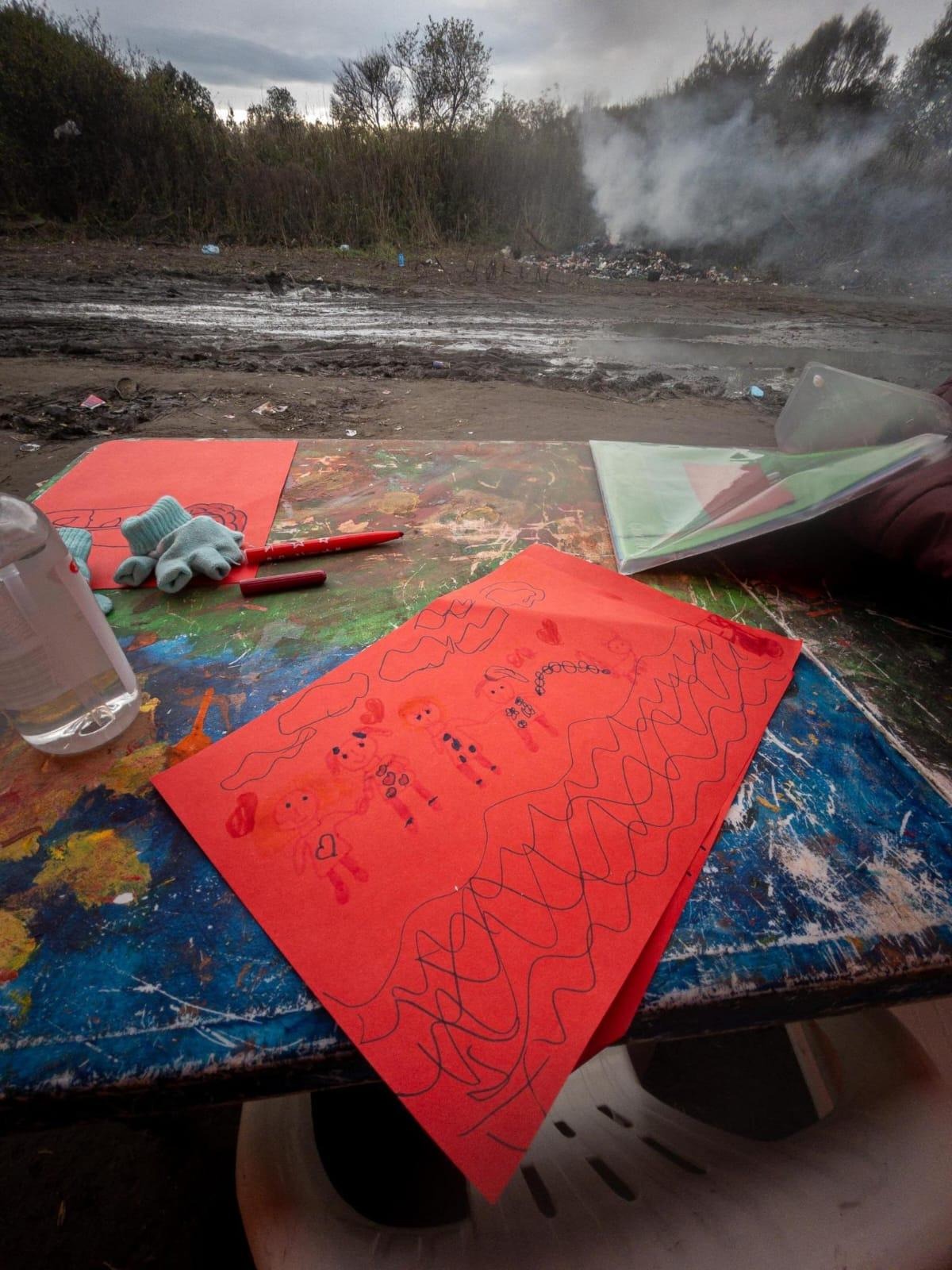
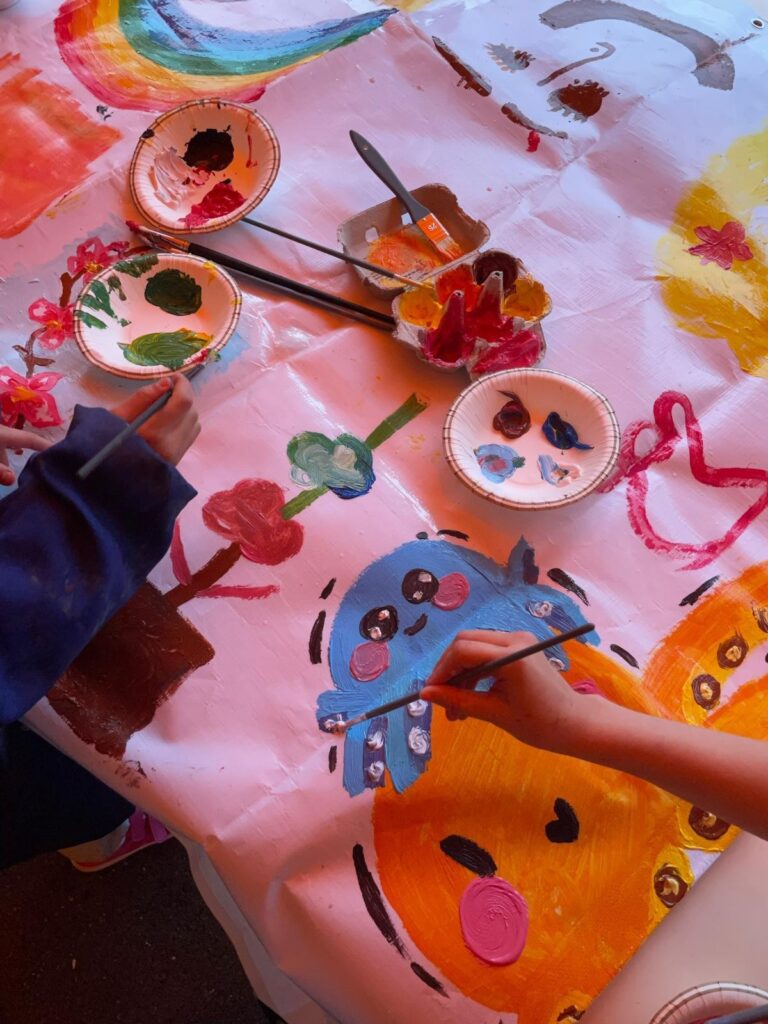
The hands of children paint colorful figures.
Photo courtesy of Project Play

Play can also provide a meaningful avenue for processing trauma, a common experience of children in the middle of being displaced from their homes. Furthermore, play lets kids develop social skills and make positive memories, especially important in the face of such hardship. 

Go, Team Go!

Five years on from its launch, Project Play continues to provide support to displaced children in Calais and Dunkirk through the power of play. They have collaborated with child psychologists and a network of professionals to bring meaningful sessions of play to migrant youth at the French border. Their team has grown to include a board of trustees and volunteers. 

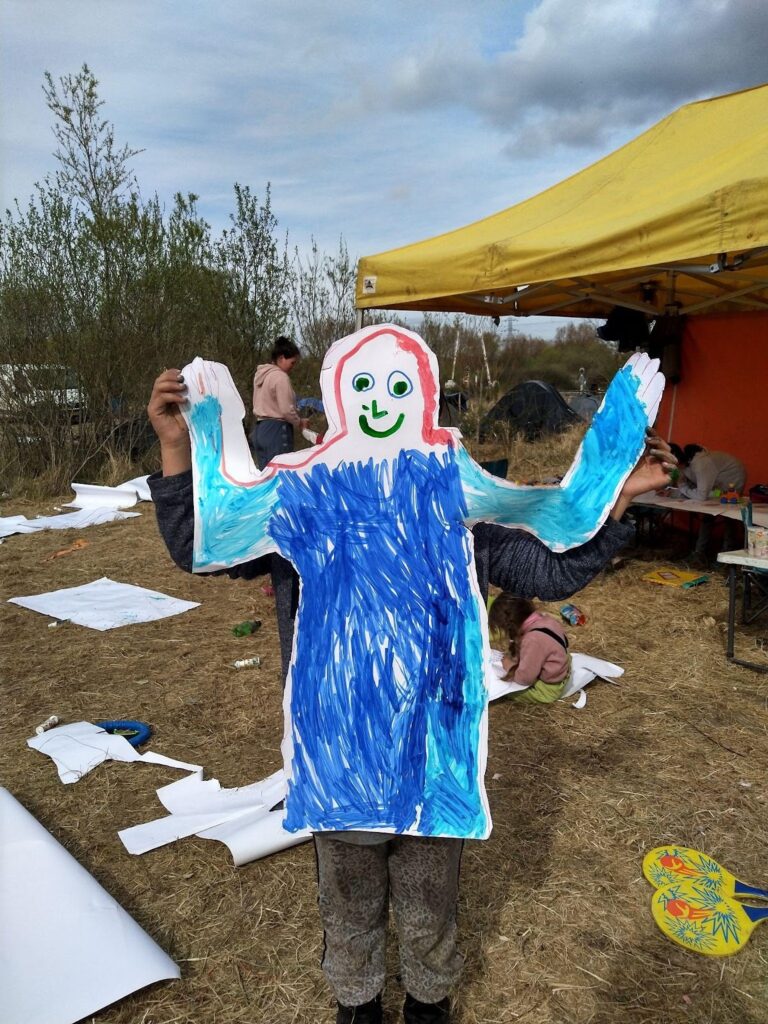
A colored cut out created thanks to Project Play.
Photo courtesy of Project Play

Volunteers contribute to sessions, bringing their interests and talents to the table. “We have the most amazing team of volunteers who have come up with some truly engaging ideas,” Sykes enthuses. “Puppet theaters, giant xylophones, treasure hunts and a dragon’s cave have all featured!”

Understanding how valuable volunteers are to this work, Project Play also prioritizes the care of its volunteers, offering accommodation, nutritious meals, and access to mental health services. “Some team members may have a check-in or a call with a mental health professional as we have different avenues for volunteers to look after their wellbeing,” Sykes states. 

Additionally, volunteers are offered opportunities for their own development. Project Play provides “really high-quality training carefully designed so that they can have a good understanding of the context, our work and the risks alongside skilling them up to be effective playworkers,” Sykes expresses. They are also encouraged to “follow their interest, think about how Project Play could develop their career or other areas of our work they would like to get involved in.” 

Days of play

A typical day begins with waking up in the volunteer house, where up to 10 volunteers live at a time. The team heads into Calais to the warehouse/office they share with other organizations. Here, Project Play prepares for a session with the children. After a good meal, volunteers load up the van and spend the afternoons in session with the kids. 

Gathering in a circle, a session begins with games and songs, often a favorite among the children. As Skyes shares, “It brings everyone together and is a great opportunity to be really silly!” This is a chance to build friendships and learn activities the children can do even when Project Play volunteers are not present. “Often we turn up to the session to hear the children leading their own circle time and singing the songs we sing together.”

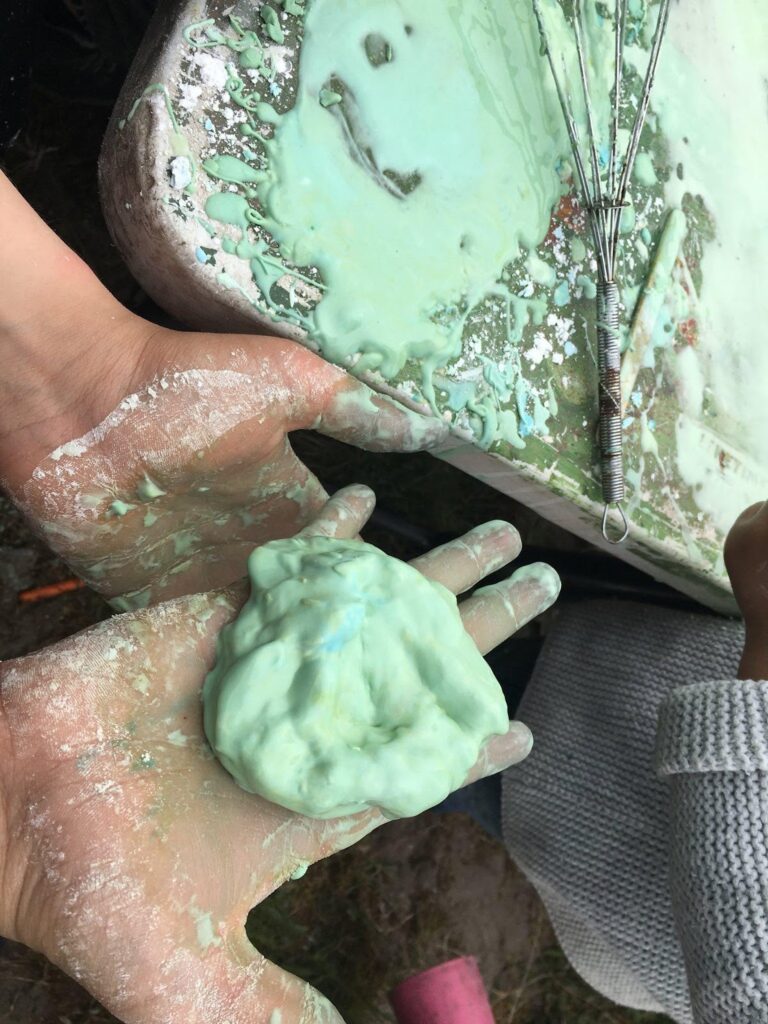
A hand holds some sort of green slime or putty.
Photo courtesy of Project Play

After circle time, the main activity begins. According to Sykes, “t​​his is planned according to the group considering their likes, ages and any additional needs — think sport, craft, drama and art.” A brief scroll on Project Play’s Instagram page reveals the different activities and themes it offers the children, including making edible “wands” for a magic week to playing ‘pin the nose on the clown’ during a circus-themed session. “We want sessions to be memorable and for the children to know how much we value them and their experience with us.”

Finally, the session concludes with free play, an important time for the children to practice autonomy and choice, which they often lack in their current circumstances. “We work closely with the children on this one and always try to incorporate their requests,” Sykes reports. Once the session is over, the volunteers hold a time of debrief and reflection before heading home to rest and recharge for another day of play. 

Bringing play to migrant children

Project Play takes its services to various locations, including “day centers, safe houses and out in the informal living sites,” which are often “collections of tents in a rural area.” Finding the right space for a session can be challenging. Sykes admits, “Recently, there have been increased police evictions alongside worsening hostility towards organizations; we are now denied a space to carry out sessions and risk being fined.” Nevertheless, the team persists and generally tries to set up an enclosed space for play just a small distance away from the migrant camps in order to minimize distractions and interruptions. 

Project Play is also highly committed to anti-racism in its work. “We acknowledge that we must examine our biases and explore our motivators and dynamics.” Since the beginning, Sykes informs, Project Play has discussed counteracting racial biases and systemic issues possible in humanitarian work and volunteering. 

As part of its anti-racist practice, Project Play critically considers the ethnic and racial background of its volunteers during recruitment. Sykes notes, “We actively seek to recruit varied volunteers who can help diversify our view and approach.” Recognizing anti-racism is an ongoing process, the team members engage in educating themselves and drawing on available resources to improve their work continually. 

The Project Play logo, with a child’s reproduction.
Photo courtesy of Project Play

Making an impact

Project Play is unique in its specialized focus on children. As Skyes describes, it is “the only service in the area targeting younger children.” Measuring the impact of Project Play through statistical reports and quantitative research is especially challenging considering the extreme vulnerability of migrant children. Still, the difference Project Play makes in the lives of displaced children in Calais and Dunkirk is tangible enough to touch. 

Every Project Play volunteer leaves with a success story. The impact is visible in the smiles and giggles of the young participants, finding joy amid difficult circumstances. Shy children who are initially hesitant find confidence as they play. They make noticeable progress in regulating their emotions, working with others, and learning about themselves. 

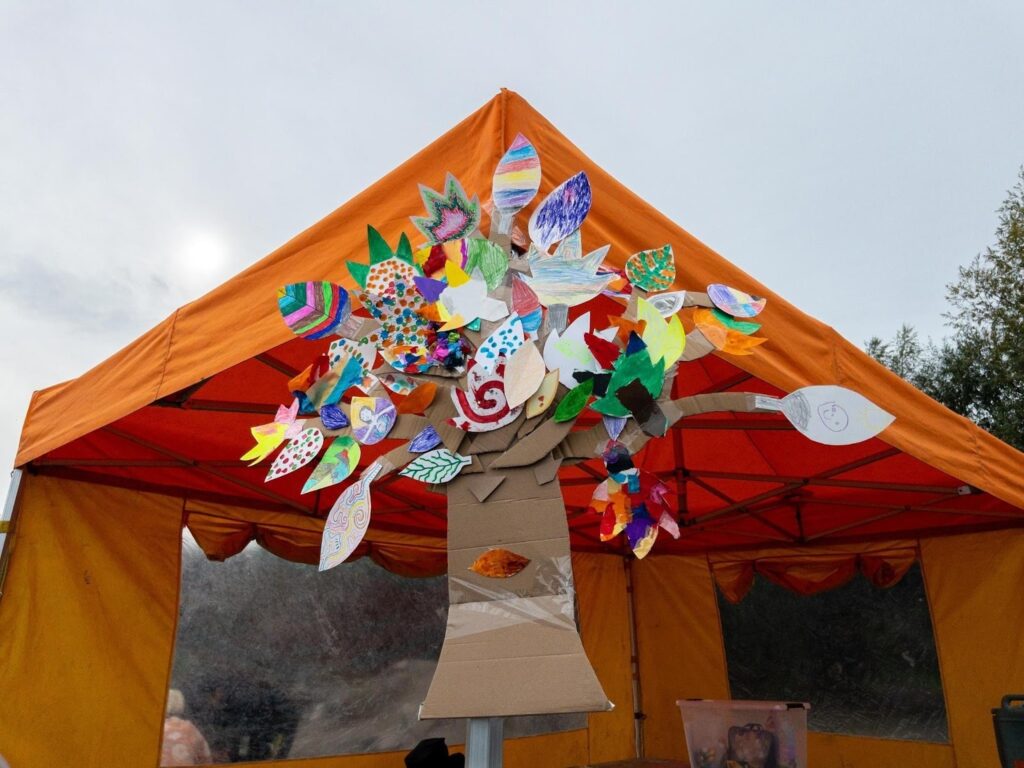
A tent covered with colorful and jeweled decorations.
Photo courtesy of Project Play

Countless children have enjoyed memorable experiences due to Project Play’s sessions, which Skyes credits as the most rewarding part of their work. Knowing that displaced youth can still make positive memories amid unfavorable conditions drives the passion behind Project Play. 

Notably, Sykes asserts that the work of Project Play does not fully meet the needs of displaced children. “Our service is not enough — all children should have access to formal education in a warm, dry building. But, as long as the state refuses to meet this right, we hope to continue to spread some joy.” 

The future of Project Play

The team remains committed to growing awareness of the situation at the UK/French border and providing even better services to migrant children and their families. “We want the British and French states to provide safe routes for asylum and ensure that all children are provided with a quality education. This is a right,” Sykes passionately resolves. Therefore, “we want to grow our advocacy capacity to better champion the amazing children we work with and push for change.” 

The dream for Project Play? “Project Play doesn’t want to have to exist,” Sykes declares. Until then, Project Play continues its mission to ensure displaced children can do what they are meant to do: play. 

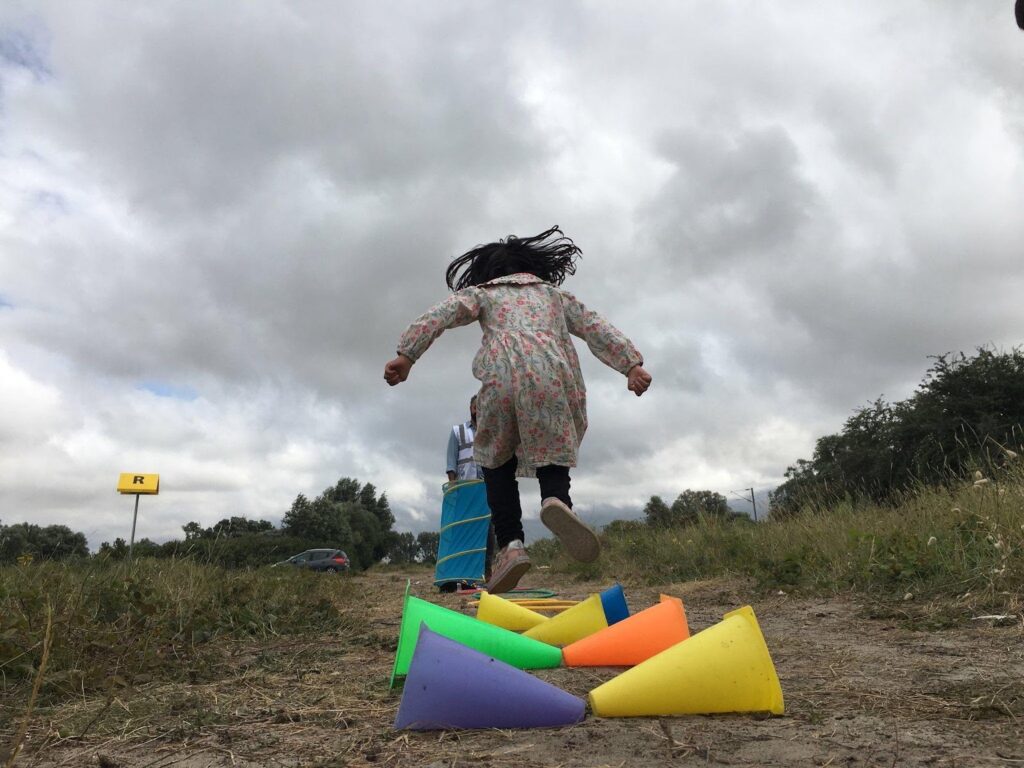
A girl jumps over colorful cones.
Photo courtesy of Project Play

Shifting Paths: Finding Balance After Burnout in a Global Pandemic

The Fluttering palms, warm sunsets, and rustic charm of Ouled Teima – that’s where my story begins. My name is Abdelwahed Ladham, a proud son of this Moroccan city. My academic pursuit had its moonshot in obtaining a Master Degree in Environmental Science, a crowning jewel from my educational saga. However, with 2020 blindsiding us with the Covid-19 pandemic, what should have been my golden ticket into an environmental career eerily morphed into an uncertain labyrinth of unemployed dreams.

I could sense the early harbingers of burnout: emptiness, apathy, a heightened sense of fatigue, punctuating a professional life that hadn’t even fully set sail. The slide was insidious, born from the gap between my academic efforts and the tumultuous career landscape suddenly deprived of stable platforms to practice my craft. Days of job hunting yielded nothing but monotonous echoes of redundancies and cutbacks. 

This constant friction between expectations and reality waged a quiet war within me. I saw my sharp acuity gradually erode into a savage fatigue pilfering chunks from my life, one day at a time. This wasn’t just burnout, it was a thunderous crisis foisted into my lap by a nonchalant turn of events with its epicenter a world away.

Yet, inside me stirred a resolve. An unflinching beacon that reared its head and graced me with an epiphany tucked within these lines of Albert Einstein, “In the middle of difficulty, lies opportunity”. Emerging from the wreckage of my dreams, I realized, was a realm that remained vastly uncharted – e-commerce.

E-commerce provided a realm where restraints felt vacuous. The digital sphere knew no walls and oddly held an uncanny lure in a world caged by a lethal rampage. It promised not just a path forward but one that was forgiving to the restrictions birthed by facing an invisible harbinger of doom lingering ominously out there.

Diving headfirst into the world of e-commerce was like dipping into a salad of varied emotions. There were new skills to learn, codes to decipher, trends to understand, and apps to master. What initially resembled an astronomical cavalcade of chaos was starting to piece itself out into an exciting game of chess. Every calculated move fueled by the intuition born of a global crisis that was breeding an adaptability I was only beginning to recognize within me.

Navigating this universe offered a peculiarly therapeutic counterbalance to my burnout. It carved out a new rhythm into my life that gradually brought along its melodies balance and harmony mirrored in my stabilizing state of mind. With each passing day, the symptoms that once defined my burnout began shedding themselves off. Sprouting its place were a steady resolve and a drive, greased by the experience that a global crisis had inculcated within me.

In the winding landscape that was my life’s narrative, these experiences have birthed a lesson, platinum-lined by its timeless relevance. When faced with adversity or even a root-level life change, it’s crucial not to overlook the potential lying dormant within us. A capacity that enables us to redraw the blueprint of our life map when necessary. Indeed, resilience isn’t just about bouncing back; it also encompasses a flexibility to bend with the storm, and when times demand, pivot and chart a new path. As I continue this perennial learning process, I am reflecting on my journey – glaring with trials, successes, and an adaptability that has become my most trustworthy weapon, one sharpened and weathered in the forge of my story of resilience.

My identity was never shackled to burnout, nor was it anchored irrevocably into my academic field. It now withstands as a tribute to human resilience echoing through my story, assuring others that while adversity hurts, it also teaches — and its lessons are etched in granite. As long as you are open to correction, flexible enough to bend, adamant enough to learn, and tenacious enough to evolve, the scenarios that the world throws may sway but not uproot you.

Therefore, to every person who might stumble upon this piece, I say this — be brave to redraw your life’s maps. Embrace change like a tavern friend, and guard your resilience like a precious bounty, for they alone can steer you through even the harshest of life’s thrilling yet potentially rewarding narrative pivot points.

Phantom Bonfires

Approaching the coast of the North Carolina Outer Banks, Ray slowed the sailboat to a stop, reeled in the sails with the main halyard, and tossed the anchor overboard. The wind rushed around the hull of the Corsair, causing the sails to waver madly. It raced past him as well, picking at his clothes and hair, blowing in his ears, and making goosebumps rise on his skin. His hair was already a windswept nest from the trip over and liable to tempt the coastline birds or evil seagulls.

Arching his neck, Ray scanned the swiftly darkening sky. The sun was already halfway hidden in the never-ending ocean line, so the sky was lit with an array of pinks, purples, and oranges. Cirrus clouds slowly drifted in the sky, their shapes whisked out as if something had blown them apart and dragged them along the sky. The sun highlighted their edges, contrasting against the shadows above so that the beams of light clearly showed against the sky’s background. The wispy clouds meant he should have good weather, perfect for his overnight exertion. The temperature slowly cooled as the sun set, so Ray put on his jacket, zipping it up with hardly a thought. 

Glancing back at where he had come from, searching for the familiar stretch of Ocracoke Island, Ray couldn’t even spot the beacon from the white lighthouse. He was surrounded by water, and the only thing keeping him from getting lost was the compass on his boat and the orange buoy in the water. Much like his boat, the bright orange device bobbed in the small waves rocking along the sides. It was a gentle push, something so comfortable and familiar that Ray wanted to just lay down and pull a blanket over himself.

While some people enjoy camping, Ray loved sleeping as the waves rocked his craft. He’d been a surfer in his earlier years, from when he was just a kid until he had an accident when he was 27. Another surfer had gotten too close, and when he dodged out of the way, his board slipped from under him and he hit a rock just under the surface of the water.

“It was lucky you didn’t pass out and drown. Even losing that much blood could kill if not treated in time,” his doctor told him. This statement had been seconded by the numerous other physicians he’d visited. Over and over, whenever he brought up his chances of surfing again, he heard the same thing until he’d finally accepted that his time was over. His knee had been in terrible condition, and he lost a lot of blood because the rock tore up his joint so severely. The surgery helped restore mobility, but surfing was too much of a risk when his knee could give out, and his motor control was shot.

He missed watching the rise of waves and the thrill of anticipation more than anything. Sleeping in the boat always brought back dreams of surfing, even if it was just memories nostalgically replaying. Nothing could compare to being in control and gliding perfectly through a big wave. Yet, the sound of the crashing waves gave him a feeling of belonging and peace.

***

The sun’s light quickly started to fade as it dipped behind the horizon, but the full moon rose higher and provided enough light to keep Ray from sitting in absolute darkness. Ray leaned back against the cushioned seat, combing through his wind-crazed blond hair with his hand, watching the sun vanish with a sense of peace he could never get in a crowded city.

Above him, stars twinkled into existence, blooming by the dozens in the sky. Even from his boat, who knows how many light years away, Ray could swear he saw each star’s light shifting. The stars would dim and then grow, making a sea of stars as active in movement as the ocean was with its waves. This – this was what Ray loved. Ray let himself bask in the beauty of the world, just focusing on the salty tinge in the air, the brush of wind, and the open world in front of him. 

For the past few centuries, since the colonies, if he remembered correctly, his family had never even left Ocracoke. His parents and grandparents were the same, visiting the sea in their free time or taking on a profession involving extended time on the water. Even his sister, Leah, who loved working as a genealogist, couldn’t stay away from the sea for too long.

Ray’s inherent love for the sea was apparent from the first time they brought him to the beach. The memory of salty air, the sand between his tiny toes, and water slipping through his equally tiny four-year-old hands. Losing the ability to surf was a personal loss, a knife to his chest and something he experienced as depression-like shackles that attempted to tie him to the land. He found respite working as a marine engineer and naval architect when he’d learned that working on boat designs or checking the performance of various vessels lifted the weight a little. Spending time on the beach was nice too, although he didn’t appreciate crowds of people, and the beach was more of a small strip of sand, anyway. So, he worked and invested in his Corsair Sprint 750, rather than a house or other luxuries.

***

Tonight happened to be a full moon. Ray could squint and make out some of the craters on the surface. It reminded him of his mother, who always used to  tell him and Leah the same bedtime story every full moon when they were kids. It had been a long time since he’d thought about it, but he remembered it as clear as day. He had it memorized, and in his mother’s voice no less. 

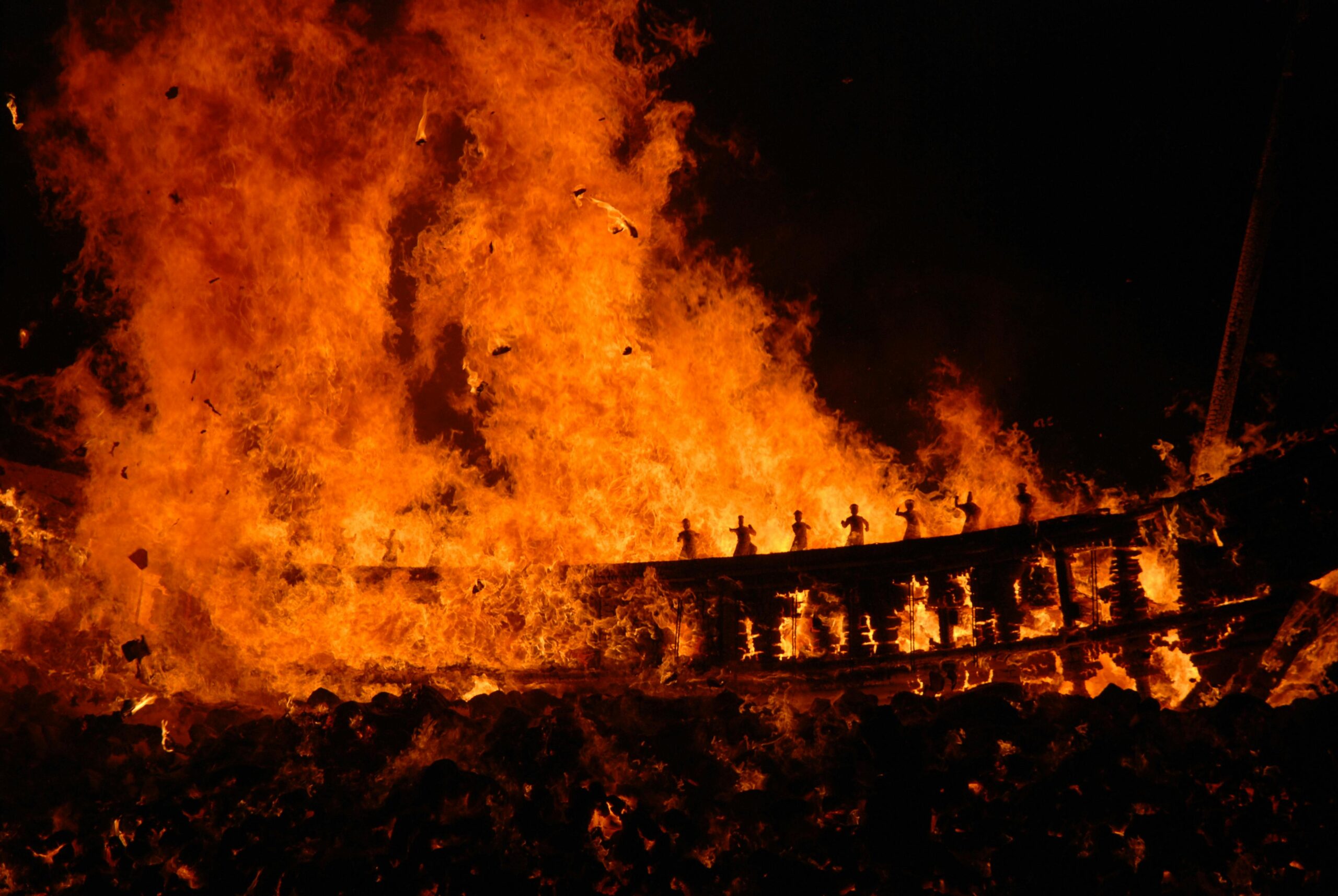
“‘The Flaming Ship of Ocracoke,’ many called it. Its legend was centered around the ship’s captain and his crew who killed the German protestants aboard, who were fleeing the religious wars in England. Traders, craftsmen, poor and rich alike. The crew found their riches and later slaughtered them all. They took the lifeboats and set the ship on fire to destroy any evidence of their crime. Distracted by their victory and loot, they were late to see the burning ship chasing them. They heard the screams and moans of pain of the ghosts of those they had killed before they were hit and swallowed beneath the waves. They say that on every new moon, every year during September, the ship can be seen far out still traveling northeast, trying to find a destination for those aboard.”

Ray remembered the legend whispered at his family bonfires and cookouts. 

Pulling on his jacket, Ray grabbed the blankets to prepare his makeshift bed on the seat cushions rather than down in the snug cabin in the bow.

Ray also switched on the lights required for boats at night. They caused the stars to dim a little, but it was worth it so that he wouldn’t alert any unwanted attention from the harbor patrol. Ray wouldn’t give up one of his joys in life with such a simple mistake.

***

The sky was completely dark now, all blues and grays to emphasize the moon and stars. The clouds were almost invisible, and the temperature had steadily dropped to a cool 65 degrees – according to his boat’s readings. As Ray pondered whether to pull out his phone, read a book, or take a nap, a bright light burst to life in the corner of his eye.

Ray’s head snapped up, half-expecting to see patrols. Instead, he was confronted with a burning, old-style boat. It was a giant, three-master ship with sails larger than Ray’s Corsair Sprint. It was entirely wooden, nothing like the boats today, and it felt like Ray was looking at a piece of living history. He sprang to his feet, walking over to lean against the side of his boat, half on top of the fold-out platform floats, watching the ship with wide eyes.

The phantom ship engulfed in flames glided silently toward him. Despite the enormous fire on the deck and the mast of the ship, there was no sound. Not even the telltale crackle of flames consuming the wood.

Ray’s heartbeat was insanely loud as it filled up the silence, thrumming inside his body like it would burst. Frozen in place, he was too afraid to move his boat because… maybe they would chase him like they did the greedy man who killed them.

What could Ray possibly do? His boat might be faster since it was engine-powered, but wouldn’t that just piss off the ghosts or something? The legend was said to have happened around  the 1700s. How strong could the lingering hatred of the spirits be?

The giant ship approached, slightly angled so that they might just brush past each other. Even as it got closer, there was no temperature increase from the flames, no flying ash, no nothing. Nothing until a small, quiet whisper. It was too quiet to understand at first, but it repeated, and Ray could only guess that it was German. It was a throaty sound, but soft, like a child speaking. Ray threw his arms up in surrender, stumbling back a few steps to show he had no weapons or bad intentions. His arms were shakier than a newborn foal’s legs.

Although there was no ash, the scent of burning wood filled the air. Along with it, a weird smell of beef or pork and a charcoal-like scent Ray couldn’t identify filled his nostrils. He didn’t know what it was, but he could guess, and he didn’t want to think about it. He stood there, helpless under the star-blanketed sky, vulnerable on the gently rocking waves. Helpless, but mystified. 

From all the legends, the stories, and the gossip, he’d never heard of the ship approaching so close to someone’s boat. It was only ever seen from a distance. Maybe it recognized Ray since he’d spent a good four years just sitting and enjoying the ocean, oblivious to it until now.

The ship slipped past harmlessly, missing Ray’s boat by mere inches. It was sailing slowly as though the person steering had all the time in the world—Ray supposed they did. The ship should have caused a wake to appear, but not even a ripple upset the calm rocking of his boat.

For a second, Ray believed he could see four distinct figures in the fire. Two were short and tiny, wavering in the heat given off by the flames. The heat he couldn’t feel, he amended. Two taller figures stood by them, and from the position of their bodies, they were looking in his direction. Ray gulped as he could feel the weight of those unseen gazes. Amazingly, the tinier forms waved at him, flickering like smoke forced into human shapes.

The shadows flickered again, and suddenly Ray could see the figures clearly. He could even distinguish the simple, old-style dress and silver necklace that the mother wore, the smoking cigar in the father’s hand, and the smiles on the two children’s faces. They were a painfully familiar sight. Their family portrait came to mind, the image saved for hundreds of years and recently scanned into the files of their family history in the cloud drive somewhere.

He whispered their names without thinking. His ancestors. No one but his family knew their names, nor would they know. No one except Ray himself and them — the present staring into the past.

He may have remembered the legend, but he had completely forgotten that several of his ancestors had been on that ship. Ray automatically lifted his hand and waved back to the tiny figures. It was awkward, out of habit, and he felt guilty for forgetting, but otherwise, his mind was filled with little more than static. The smiles of the two grew, their figures coming together and fading back into the fire. As much as he searched through the bright flames, nothing more appeared. As the ship continued to sail past, Ray noticed something floating in the water near his boat.

Peering over the side, Ray saw several pieces of silver jewelry floating in the water around him. Silver should not float, yet the necklace easily remained close to the surface, tantalizingly within reach. Looking back to the ship slowly fading away, the edges of sails and wood becoming hazy like it was all just an illusion, Ray ignored the shining treasures, seeing them as little more than traps intended for the greedy. He turned around just in time to watch the boat shimmer like a mirage in the desert before it vanished.

Ray sat there, stunned, in shock, and remembered something else his mother had said before. “Don’t forget them, Ray. We may have never met them, but they’re still family. If our ancestors weren’t separated into different ships when they were leaving England, we wouldn’t exist. History exists for us to remember.”

He had forgotten. It almost felt like a betrayal to his mother’s memory to forget. No wonder Leah was so obsessed with genealogy; she never wanted to forget, and she wanted to learn more. All forgot their ancestors’ names but his family because no records of the ship existed, like many others since it wasn’t uncommon in the 1700s for ships to not be logged, or for the sinking of a ship to not be recorded because of pirates or mainland scavengers. If one of the crewmates had escaped the ship and somehow survived, maybe they were the ones who destroyed the records to hide that they had killed the refugees.

Ray sat, staring into the distance where the ship vanished for a long while. He wouldn’t forget again, not this part of his history nor any other.

 Growing up Wasian in Australia

Sentinel Duet: Check out Eric Mabry’s story here for a complementary perspective and a different experience of being biracial from another corner of our world!

After my first Chinese lesson as an adult, I called my Grandma to tell her what I had learned. I speak my mother’s language — the language of the country I was born in and the language of the country I live in now — but I have never been able to properly learn Chinese, despite being half Chinese myself.

My inability to speak Chinese has made me feel like I’m bad at being Asian. My dad didn’t raise me with Chinese traditions or send me to Saturday language school — though this is not his fault. Not only did he face the pressure of bringing up a child in a country that he himself was not raised in, but he also faced the influence of my mum’s Polish culture. I couldn’t go to Chinese school because that was when I had Polish school and I couldn’t study it in high school because we could only choose one language and I chose German. It was the easier choice since I was born there and it was my first language until I moved to Australia, so it made the most logical sense at the time.

In many ways it feels like I’m not just trying to balance being Asian and European, but Asian and European and Australian. Although I hate to admit it, the Australian side almost always wins. I’ve had family members ask me if I feel more Asian or Caucasian multiple times, which just makes me feel like they don’t fully accept me as part of their culture. 

When I was younger, I thought Caucasian meant mixed race because the word ‘Asian’ was part of the word. I’ve always seen it as a scale where every decision or ability adds weight to one culture. It shocks me that people who don’t see themselves this way exist. As I grow older, I try harder to equalise the sides.

My Chinese side, I noticed, seems to relate a lot to food. I’m learning how to cook basic Chinese dishes like fried rice with Chinese sausage or wonton noodle soup. When I was a teenager, my grandma taught me how to make spring rolls and curry puffs, which I tell myself I’ll make but never seem to get around to doing. An easy way out for me is adding bok choy and choy sum to a lot of my meals and we always have snacks from the Asian grocer at home. In a way, this is how I compensate for not knowing how to say these dishes in Chinese. 

I’ve only been to China and Hong Kong once, with my family, and although it was a lovely trip, it didn’t feel like a trip “home.” I didn’t learn about my family history or my roots, and the only Chinese I picked up was the symbol for exit 出 which my dad taught me to look out for.

I learned Polish until my final year of high school and it ended up being my best subject. I don’t know how to cook the food, but I speak the language with my mum every day and am fluent enough to be able to talk to my grandparents and family members without embarrassing myself. I’ve learned about the traditions and history, and I have also worn traditional Polish clothing and visited many times, especially while we still lived in Europe. While my knowledge of the language and traditions helps me feel more like I am actually a part of this culture, it’s still quite obvious that I don’t look the same as my family members and I still have an accent when I speak. 

This is why I decided to attend a beginner’s Mandarin lesson at university. It was comforting to meet other Chinese-Australians who didn’t speak the language, even if I was the only half-white one and even if I didn’t retain much. It doesn’t help that Mandarin and pretty much all Chinese dialects are notoriously difficult for native English speakers. When we were learning how to say which hobbies we enjoyed, I found the word for reading too difficult and only remembered the word that my partner used, ‘pēng rèn’. So, when someone asks me what I like to do, I don’t know how to answer honestly but I can say “Wǒ xǐhuān pēng rèn.” 

Other incredibly useful phrases I’ve learned over some lessons in primary school are “Qǐng gěi wǒ yī bēi kā fēi” and “Wǒ bù zhīdào” (‘please give me a cup of coffee’ and ‘I don’t know’) and I can count up to 100. I guess no one that I speak Chinese to has to know that I feel pretty ambivalent towards cooking and that I don’t even drink coffee, but I find it strange how parts of yourself change or get lost in translation when you speak a different language. 

I notice this when I speak Polish and German, too. Although I’m becoming more fluent in both these languages and currently studying German at university, I feel like part of me will still never be as articulate, witty, or fast as I am in English. Different versions of myself appear depending on the language that I speak, each version varying in complexity depending on how competent my language skills are. 

I eventually want to move back to Germany, but the idea that I will never be able to accurately express my thoughts, emotions, and nuanced opinions to people the same way I can in English scares me. I know being bilingual or trilingual is common and that many people who live in Australia speak English as their second language, but I feel like not enough people are talking about the power that language holds and how it impacts you daily. It’s a privilege to speak English as my first language and I’m grateful that my parents moved here and grateful for my upbringing here, but it does mean my identity has always been, and always will be, split between different places.

I feel as though I’ve read many essays about being Asian-Australian. I belong in the club, but once everyone sees that I look white — even if my last name is indisputably Chinese — they will kick me out. What scares me is that I can try my hardest to be Chinese, I can learn Mandarin and Cantonese and listen to Lan Ge and watch Wong Kar-Wai films and eat as much siu mai and har gao (two different kinds of Chinese steamed dumplings) as I can want, but they will still hear my Western accent and see my face and not view me as one of them. The experience of being othered is so ingrained in my existence that I find it so strange that not everyone like me feels split in half.

Falling into Your Orbit

I’ve thought about
The way the wind would whip my hair
Away from my face just seconds before
I find my end there
On the rocks below
Before your very presence brought
A kind of happiness I wasn’t aware existed
The kind I thought was mythical, you know?

There were days nothing could pierce
The dark and heavy clouds
With agony fierce in my chest
And over my head
I’d wish I was dead.
I’d wish I never existed.

But then you came, the proverbial ray
Of sunshine that could
Make my day bright in a way
It had never been before
You didn’t cure my depression but
You made me care in a way I wasn’t even sure
I was capable of.

And with a reason to give a shit
A reason anyone could benefit from
My existence on this planet
In this galaxy
In the middle of nothing surrounded by more
And vaster nothing in it.

I will never forgive you.
It was easier before I knew
Before when my crises were existential
Not born out of the pull
Of your gravity, your sparkle
But born of a life so lacking in light
It felt as if I was born in darkness
And would remain hidden in fright
And rage at a world so destroyed
So bustling and annoyed
That I couldn’t find my breath

But then there was you
You with your face and voice and
It was then I knew you’d ruin me
I knew the score, waiting for the other shoe
To drop as I learned I would never be your choice
But still. Still, I pined and whirred around you
Suddenly manic, a micro planet
Stuck in the pull of your gravity’s force
I know you didn’t mean for it to be this way
It’s just how you are. It’s just what you do.

And so here I am a satellite, or perhaps space debris
I’m certainly not a rocket
I’m only me
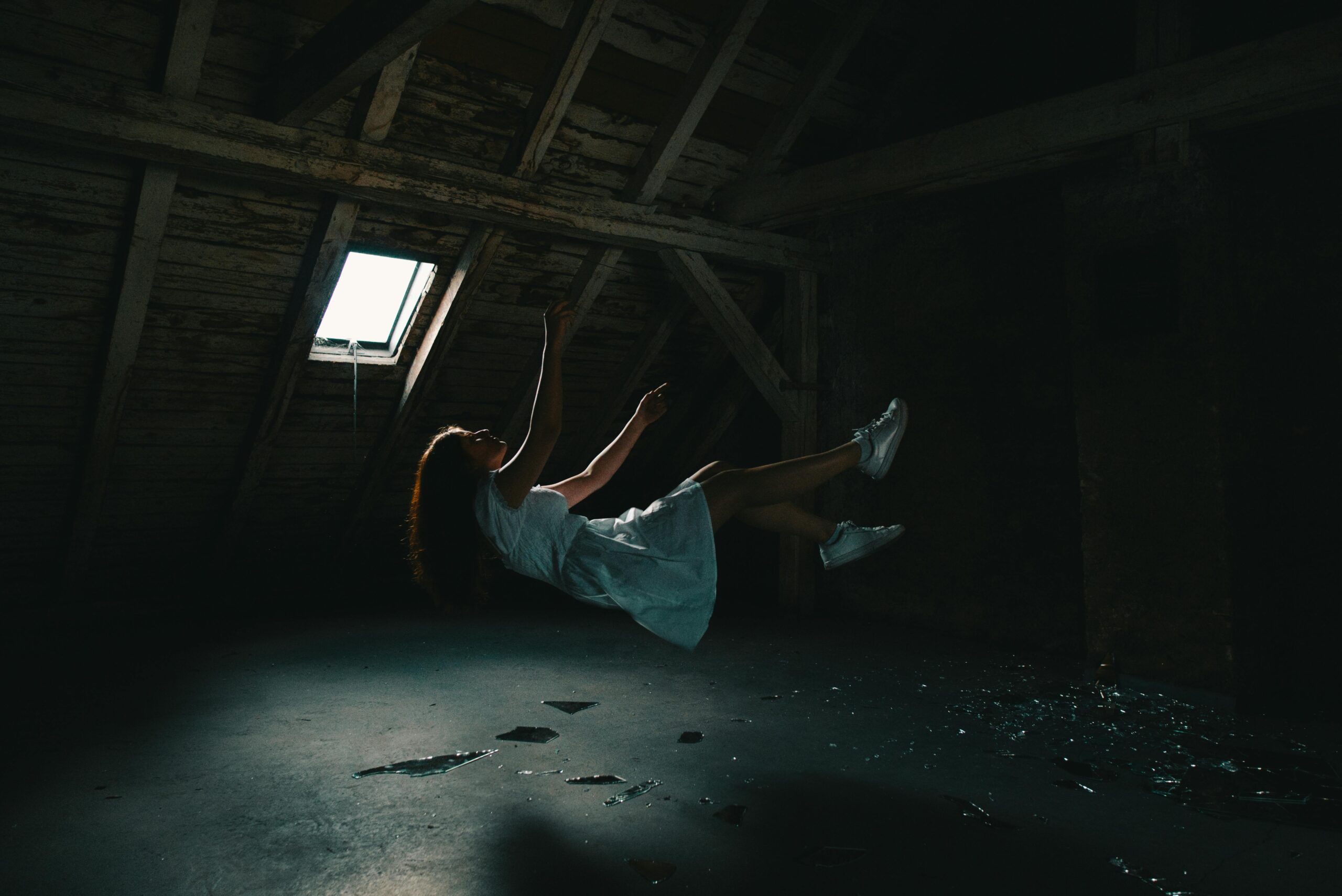
Falling, falling, falling.
Into your orbit.

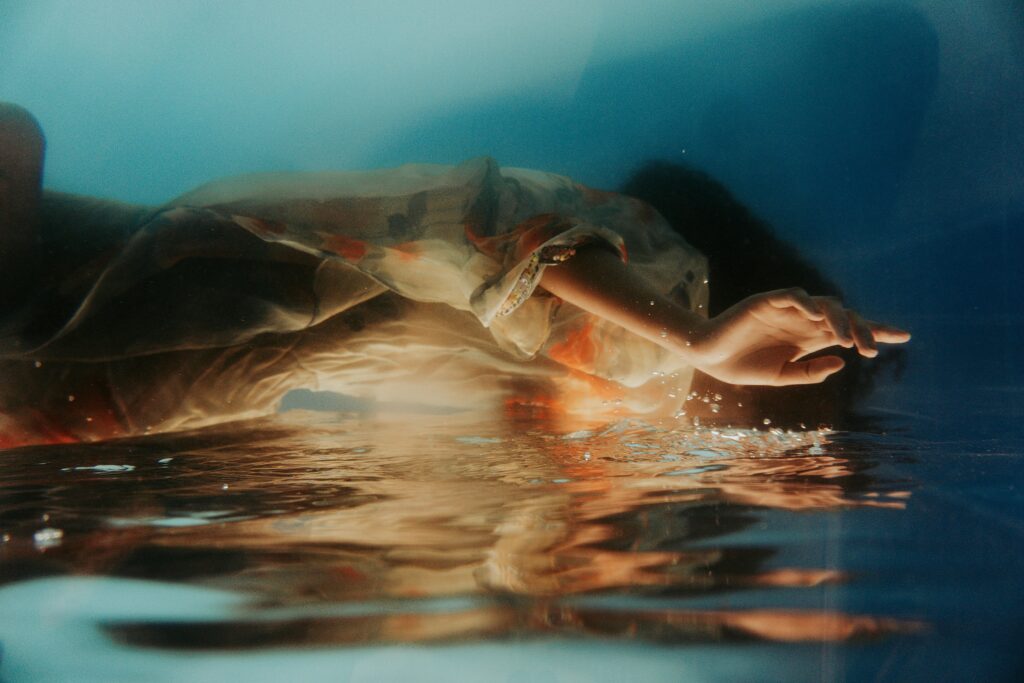
Image of a woman falling into water. She’s wearing a floral dress.
Image courtesy of Kenneth Surillo on Pexels

Being a Depressed Mom

It’s hard feeling depressed. And it’s really hard to be a depressed mother. 

It takes a lot of effort to get up in the morning and much more effort to take care of others.

Depression is thought to be one of the fiercest mental illnesses, one that nearly paralyzes its patients. Nothing is ever easy. Waking up, eating, going to work or school, even going out with friends is difficult.  

When my older kids reached the age when they could grab a sandwich or a cookie on their own meaning they had a bit of independence and were past the breastfeeding stage and I was hit by one of those overwhelming attacks, I’d often keep them in front of the TV all the time. For how many hours? I could never tell. However, I could only blame myself for the careless mother I was, while sleeping and suffering from nightmares. 

Feeling guilt is, at least for me, the core of depression. Most of the time, I feel guilty about everything for no reason at all. It might be about something I forgot, whenever my kids fall ill, if they’re not eating well, or even when they’re simply annoyed with each other. It was always my fault. 

I am always there to be blamed.

My mind often bombards me with questions like, “Shouldn’t you have put out some veggies for the kids?” or “Couldn’t you at least have spent some time telling them a story first instead of simply just tucking them into bed?” or “How often do you play with your little ones? Do you really believe that once in a while is enough?”

The questions never end.

And the answers are always backed up deep in my mind, with the voice of a very perfect mother, chastising me with remarks like, “You’re always fucked up,” “You’re a loser,” and the ever so sarcastic, “What a perfect mom!” 

And this internal struggle goes on daily, from the moment I wake up. “Have I woken them up nicely today?” or “Why the hell did I yell at them when they drove me crazy?!” And it continues throughout the day with lunch, homework, time to bathe or sleep, screen time, and so on. 

Of course, sometimes, when everything seems to flow smoothly, I dare to think “Perhaps I’m not a bad mommy after all.” But those feelings never stick around for more than a few hours.

I know all mothers have a hard time taking care of their kids, with raising them and the challenges that come with that. But if you add depression to the complicated equation of motherhood, it’s hard to see anything but misery out there. 

There were a lot of nights that I spent wishing I had never been gifted my beautiful little ones. There were days when I thought I ruined their mental or psychological lives, perhaps just due to a word. A lot of my time is spent thinking about the harm I have caused them by living in the same house as a psycho mom who sometimes flees to her room just to cry out or yell or sleep. 

Depressed mothers suffer the most because they are part of the vicious circle that holds them responsible for everything related to their children. However, sometimes, I feel like I’ve learned and taught them something of benefit. I give them most of the time freedom to feel bad, to appreciate the tiny everyday good things and to empathize with me and themselves. Sometimes when I would sink into a depressive episode, my eldest kid would come and hug me saying, “It’s ok, mom.” 

A couple of hours ago, I was really feeling stressed. I was yelling at all of them to get dressed quickly and prepare themselves. I even yelled at my 4-year-old girl as she continued playing. After she surrendered and let me dress her, she kept saying, “I don’t want you to be sad. I didn’t mean that.” 

Although, as a matter of fact, I feel guilty after such words, I also realize that maybe there is a positive side to all this. 

When I was a little girl, I never learned that someone could be mentally ill. I only thought of pain in terms of bleeding or broken bones. If there are no physical symptoms, they are completely fine; they’ve no reason to miss school or postpone an errand. 

I remember crying silently under my blanket at night for so many reasons. I remember trying to make myself sick to skip school. 

Years later, when I was old enough to work, I was still fragile on the inside. I was harassed at work. I still couldn’t speak up at home and say that I was stressed or that I was psychologically down. I came up with a different mature idea to skip both home and work. I said I was going to work as usual but headed for a big park and spent that day there.

I cannot say that I was always depressed. There were times when I was happy. 

Maybe my childhood was hard. I was a quiet kid. I was always clever at school and I was always the model child; the example my parents encouraged my siblings to imitate, but that same pride they showed was always a heavy load to me. Somehow I was prohibited from being who I really am.

Now that I’ve learned the meaning of depression, I can say that maybe I did have early episodes that I wasn’t aware of. When I first went to a psychiatrist and started taking medications, I couldn’t tell my mother and my family what was going on with me. I couldn’t face them with the idea of psychological illness, which we never recognized as being real. I couldn’t cope with their feelings of pity for me and their trials to get me cured. 

After a couple of years, they saw me struggling during one of my episodes. And again, I was always the reason for what’s going on with me. Sometimes the reason I suffered was that I wasn’t close enough to God. At other times, I was accused of not appreciating the blessings I have. And at a different time, my family believed that Satan had control over me. 

My suffering had a different route, a fiercer one, when I became pregnant with my first baby. I started pitying myself and my kid. I started having nightmares about the future of my kid. I couldn’t continue my regular medication being pregnant. I had to endure the whole thing while suffering from the normal hormonal disturbances that all mothers experience. 

And since then, the little seedling of guilt started to grow in me. I started getting anxious about the future of my kids and how my mood would affect them. I started to believe that I was the only reason for everything bad that would happen to them. 

I’m still struggling with these ideas today. My oldest kid is now twelve, a lovely, sensitive, and kind girl. Sometimes I still think that it was wrong to bring my kids into this life. And because I know that I do have depression, I try saying that life is not as cruel as I think it is.

But most of the time I don’t believe it.

Today, I try to mention three good things every day. I’ve done it for three years. For a person with depression, mentioning three good things every day is really hard. 

 Of course, there were many days when I dropped the whole thing. There were weeks that passed me by as I lay in bed thinking about the blessing of death and hoping that the so-called God would just stop my suffering; days when I thought it’s useless, that existence has no meaning and that life itself is such a curse.

However, there were times when my husband took my hands and hugged me while I just cried. There were times when I could overcome my dark ideas bravely and start over again, even though not all the time. There were times when I went to the cinema, watched a movie with my partner and died laughing. 

And so, I’m sharing my struggle publicly. I wanted others to support me, to see that I am struggling and to encourage me to continue. I want to help other mothers grappling with depression just like me. Maybe they’ll find something to help them stand up and keep facing life. I also wanted to create a backup memory that I can check anytime to acknowledge my strengths: to see that I’m a good person, a good mother, a good lover. 

To see that I am a warrior. 

Rings of Magic

It was a hot day in the Colorado oil fields. The hottest day of the year. Robert stood on the platform of the new oil drill his company had just finished contracting and removed his construction helmet to wipe the sweat off his brow. He looked over at the young man with sandy blonde hair standing next to a large valve and computer station.

“All right Bert. Let her rip.”

A young man nodded and gave Robert an OK sign. “You got it, Sully.”

Robert rolled his eyes. “Would you stop calling me that already?” Years ago, his coworkers had started teasing him about his “sullen” face, and before he knew it everyone was calling him Sully.

“Sure thing, Sully,” said Bert with a laugh.

Robert seethed. “Bert, I swear. One of these days I’m gonna deck you for calling me that.” Bert simply laughed and Robert let out a sigh before turning back to his work. Now that the pipeline had been installed it was Robert’s job to monitor the first batch of oil that was pumped out for any air or abnormalities.

The booming sound of hydraulics and pumps filled the air as the pipe in front of Robert began to move up and down in the shaft. Soon, oil started to emerge and overflow from the shaft. The outside world vanished as Robert’s full concentration was on the oil, inspecting it for anything out of the ordinary as he quickly took notes. As the oil continued to pump, he suddenly noticed a small white speck floating in the tar.

“Stop the pump!” he yelled over the sound of the hydraulics.

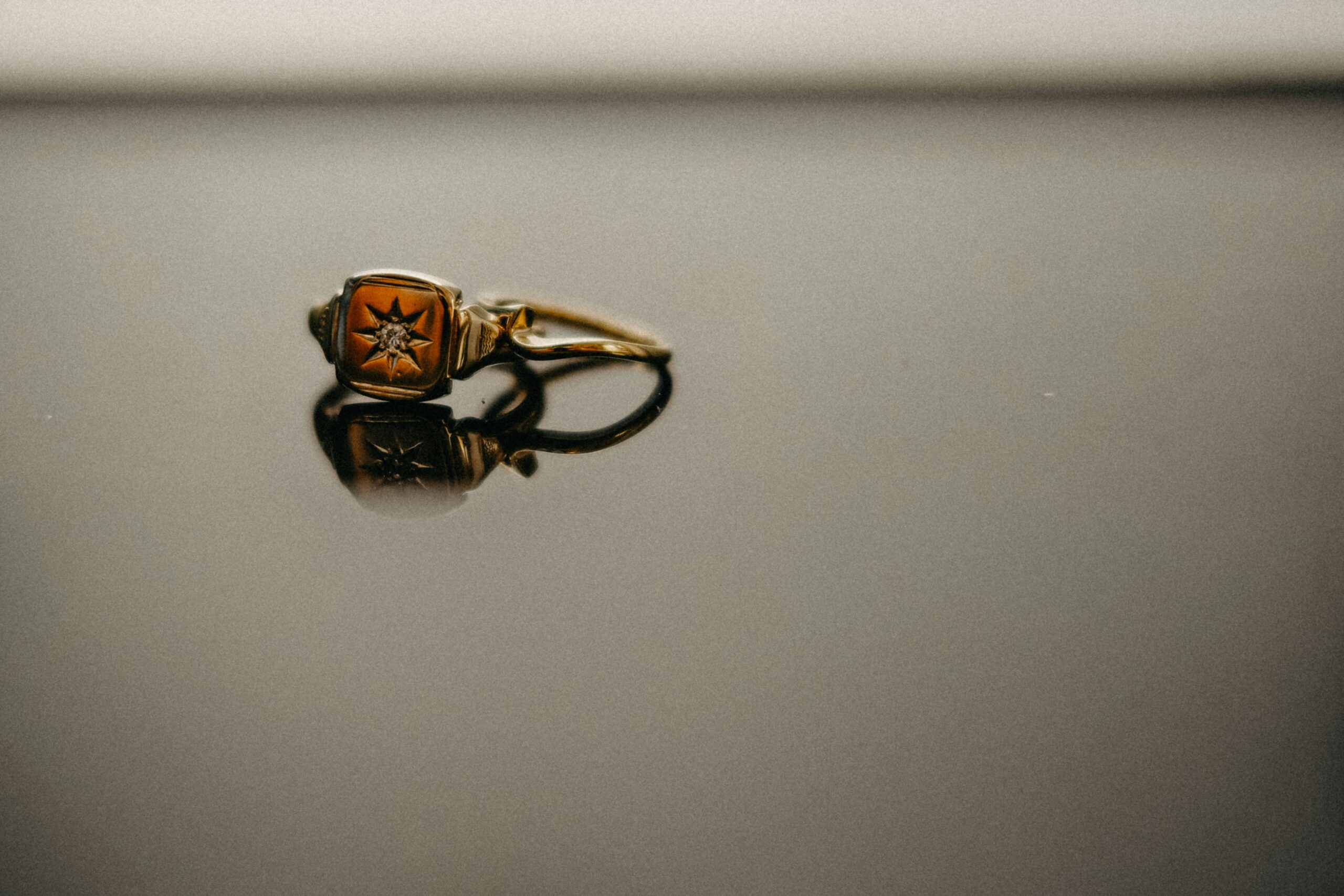
The drill stopped and with a gloved hand Robert fished out the strange object from the black. Wiping it with a cloth he was surprised to find it was a ring. A beautiful gold ring with strange markings and a large pearl white stone in its center. The ring was unlike anything Robert had ever seen. The pearl white stone glowed with an almost otherworldly light. 

“Something wrong!?” came a shout from Bert.

Robert was shaken from his thoughts as he looked up at Bert. “Wait here, Bert. I found something I need to report to Zack.”

Bert nodded and Robert walked down the ramp to inform his superior of the ring he had found and the possible problem with the drill site it meant. Robert raised his hand to knock on the foreman’s trailer but stopped and looked at the ring once more, still glistening in the bright light. Its shine had an almost hypnotic look to it. Biting his lip, Robert looked around. Finding no one in sight, he quickly pocketed the ring and walked away to return to work. 

***

After a long day, Robert drove up to the small house he had just purchased. The house wasn’t much to look at, but it was perfect for a couple that was just starting out. He parked in the street and walked up the cracked stairs to the aged oak door.

“Andrea, I’m home,” he shouted as he stepped inside. 

“In the kitchen,” came a light voice that brought a smile to Robert’s face.

Walking into the kitchen, Robert saw the love of his life, Andrea, busy chopping some tomatoes on the kitchen counter. He and Andrea had been high school sweethearts and ever since graduation have been slowly trying to build a life together. He approached Andrea from the side, gave her a peck on the cheek and rubbed her swollen belly. 

“I got something for you.”

Robert reached into his pocket and pulled out the ring. Andrea’s eyes went wide as she gazed at the white ring. “Oh my god, Robert. It’s beautiful. Where did you ever get it?”

“I found it at work today.” 

Andrea raised her eyebrow. It was unusual for Robert to bring something home from work. She placed the ring on her finger and gazed at it, transfixed. The white glossy finish seemed to have an almost hypnotic shine to it.

“Andrea!”

Andrea shook her head and blinked. “Hmm?”

Robert looked at her with concern. “Are you OK? You seemed gone for a moment.”

Andrea blushed. “Oh sorry. The ring is so beautiful that I just got lost in it. I should get back to making dinner.” As she cooked, she kept looking at the ring, unable to keep her eyes off the glossy stone. As her gaze shifted back and forth from the tomatoes she was slicing to the ring on her finger, her hand slipped, slicing into her finger.

“Agh!” she screamed as she held her finger, blood dripping out of the open wound and onto the counter and floor. 

Robert turned around. “Andrea!” He rushed over to her as she tried to hold her finger and stop the bleeding. He rushed to the bathroom and grabbed the first aid kit.  

As he set the kit on the counter and opened it, the ring on Andrea’s finger began to glow with a bright otherworldly light. Bandage in Robert’s hand, they both watched as Andrea’s finger miraculously healed on its own. Within only a few seconds, the wound was completely healed. With not even a scratch to suggest it was ever there.

Neither one of them said anything about it at first. Too shocked to utter a word.

“Did that just really happen?” Andrea questioned.

Robert simply stared at Andrea’s finger before shaking his head. “No, that’s…that’s impossible. I think we’re just stressed out over the baby,” he said.

While Robert chose to ignore the incident, Andrea couldn’t let it go and stared down at her new ring.

***

For the next few days, Andrea stared obsessively at her ring. Admiring its beauty for what seemed like hours. 

A few weeks later at one of their routine clinic appointments, the couple received the heartbreaking news that the baby was not developing right. The doctor informed them that if Andrea carried the child to full term there was a high chance that not only would their unborn son die, but that so would Andrea. 

Andrea broke down in tears and Robert did his best to comfort her. Somewhere between leaving the building and entering the car, Andrea became quiet. Quieter than Robert had ever seen her. The entire ride back to their apartment she simply stared straight down at her ring. Even when they arrived home, Andrea simply sat on the couch and stared at her ring.

Unsure what to say, Robert sat down on the couch next to his wife. “Andrea, honey, are you OK?”

Andrea looked at Robert and gave him a wide, unnerving smile. “Of course, I’m OK honey. Everything is going to be fine,” she said in an even tone. Not at all what Robert would expect from someone who had just received the news she had.

“But the baby?”

“The baby is fine,” injected Andrea. “Everything is fine.” 

“Andrea I…” Robert swallowed. He knew what he had to say but the thought of it killed him as much as he knew it would kill her. “I know you don’t want to hear this, but we have to terminate him. I can’t lose you too.”

Andrea began to turn the ring on her finger and turned to Robert with a slightly creepy smile. “Oh, Robert. Everything will be fine. This ring you gave me is a gift from God. And it will protect our baby.”

Robert looked at Andrea in confusion. “A gift from…Andrea, what are you talking about?”

Andrea lifted her hand and showed Robert the ring on her finger. “I told you how my grandfather used to tell me about old legends, right?” 

Robert nodded and raised an eyebrow. Unsure why she would bring up her grandfather’s old tales. She had been acting odd the last few days. Ever since he gave her the ring it seemed like she paid more attention to it than to anything else. “Honey, you don’t really think that ring is magic, do you? I told you, the blood from that cut was probably mostly just tomato juice that came off when we wiped your finger.”

Andrea frowned. Upset that Robert still refused to acknowledge what had happened a few days ago, she got up from the couch and walked to the kitchen where she grabbed a large kitchen knife from the counter and stabbed her hand. She screamed in pain as blood poured out of the open wound and all over the kitchen floor.

“What the hell are you doing?!” Robert shouted in panic and grabbed Andrea’s wrist. “We need to get you to the hospital!”

“Wait, don’t!” Andrea hissed. Still in pain as she held out her shaking and bloody hand to him. “Just…just watch.”

Robert was about to scream at her and drag her to the car when the ring on her finger began to glow, just as it had done before. Just like before, the wound on Andrea’s hand began to slowly heal. The muscles fused back together as new skin seemed to sew the wound shut so well it was impossible to tell the wound had been there at all. 

Robert was at a loss for words. There was no rationalizing away what had happened this time. The large puddle of blood still on the floor made it impossible to argue.

Andrea smiled and held out her hand as she gazed at her ring. “See, good as new?” she said, seemingly speaking more to the ring than to Robert. “These rings are a gift from God. A gift to help us save our child.” 

Robert simply nodded. Too dumbfounded to know what to say. “Honey I…we don’t know anything about how these rings work. What if something goes wrong? I just don’t want to lose you too.”

Andrea smiled, her eyes still focused solely on the ring on her outstretched hand. A faint glow continued to emanate from it. “Don’t worry, my love. All will be well.”

***

For the next few months, things continued as normal, though Robert noticed Andrea was still transfixed by her ring. Finally, the day came for Andrea to give birth. Robert rushed her to the hospital, as fast as possible, breaking every speed limit in the county. Robert stayed with her the whole time as she screamed in agony. Robert was pale the entire time, terrified for his wife’s safety. The only thing that calmed him down was the steady glow of the ring on her finger. A sign that her body was healing itself just as fast as it was being torn apart. 

After three hours of screaming and pushing, Andrea finally stopped and fell back against the bed, panting from exhaustion. The sudden silence and lack of a baby crying unnerved Robert as he looked at the doctor with hopeful eyes.

The doctor looked up from between Andrea’s legs, gave the couple a solemn look, and shook his head. “I’m sorry.”

Andrea broke down in tears as Robert hugged her.

As the doctors prepared to leave, Andrea asked to see their stillborn child. The doctors hesitated, but ultimately allowed it. As Andrea held the unmoving child, she placed the ring on his cold forehead. “It will be alright little one. This will make it all better.”

The ring, however, did not glow. It simply remained the same dull white as it always was. Andrea continued to whisper to her dead child. Moving the ring around his body and trying to force it to heal him, but to no avail. Finally, the doctors took the child from Andrea, forced to pry it from her arms as she wept. 


***

A month passed and Andrea did not leave their bedroom. She barely ate or spoke to her husband. When she did speak, she simply mumbled while staring at her ring, turning it over and over on her finger. 

Robert returned home one evening to an eerily silent apartment. Not even the sound of Andrea’s weeping greeted his ears. He walked towards the bedroom to change and once again attempt to get her out of her depression. When he opened the bedroom door, his blood ran cold and the color drained from his face.  

There, in the middle of the room, just in front of the bed, was his wife’s body hanging from a noose tied to the rafters. A note taped on her chest in her handwriting. 

“My fault. So sorry. I failed.” 

In a panic, Robert tried to pull Andrea down but the noose was too tight. He rushed to the kitchen, grabbed the biggest knife he could find, and began to frantically cut the rope. In his haste, he ended up slicing his hand, but ignored it. The rope snapped and Andrea tumbled to the floor. Robert rushed to his wife’s side. Finding her body cold to the touch, he began to shake her. “Come on Andrea. Don’t you do this to me. Don’t leave me!” he cried.

 “Why? Why would you do this?” 

The question was redundant. Robert knew why his wife had taken her own life. She blamed herself for their child’s death. For not being able to save him. For not being able to heal him.

“Heal!”

Robert’s eyes darted to his wife’s finger and realized that the ring was no longer on it. Frantically, he looked around the room and spotted the white gem at the foot of the bed. Desperately hoping for a miracle, he slid the ring onto Andrea’s cold finger.

The moment he slipped it on, the ring fell right off. Frustrated, Robert put the ring on again and held it in place. Yet there was no glow. Just a plain white ring sitting on his wife’s cold finger. In one last desperate attempt, Robert put the ring on his finger. He felt a sharp pain shoot through his body, but he ignored it. He laid his hand with the ring on Andrea’s chest.

“Please come back to me, Andrea. Please come back. Don’t leave me all alone.”

The ring’s white gemstone began to glow once more, and Robert smiled. He felt a surge of energy wash through his body. His hopeful smile turned to horror when he felt the cut on his palm beginning to heal.

 “No! No!! Not me! Her!! Heal her!!!” It was no use. The ring refused to obey. Robert could do nothing but hold his wife’s lifeless body as he felt his hand slowly stitch itself together. When the healing was finished, the ring stopped glowing. Nothing Robert tried could make the ring heal Andrea’s body. 

***

Time had no meaning as Robert spent days and nights either on his computer or at the local library. Every ounce of time that he wasn’t passed out from exhaustion, he spent trying to research the cursed ring that refused to come off.

He found various articles and stories on magical jewelry from different cultures and religions, but Robert’s focus was just rings. He read about rings with magic powers ranging from giving the user tremendous luck to being able to raise the dead. He even found tales of rings that had healing powers, but nothing he read or saw looked like the ring he had on his finger. It was unique, the gem was shining white, and the metal band had strange symbols engraved on it. He wasn’t sure if it was a dead language, runic symbols or tribal marking, but the unknown was taking him to his breaking point.

Days turned into weeks as Robert researched. After a while, he wasn’t even sure what information he was looking for. A way to get the ring off, information where it came from, what its purpose was. The only thing he found that gave him some strand of hope was a myth on a ring that gave the user the ability to fly. The pictures used to depict the ring looked similar to his, the gemstone a light blue color with similar symbols on the metal band.

“Knock, knock, knock.”

“Robert are you in?” came the sound of Bert’s familiar voice.

Robert’s eyes opened in a blurry mess. He rubbed his temples as he sat up. A book fell from his chest as he realized he passed out while reading again. 

“Robert, man, open up.”

Groaning, Robert stumbled to his feet and walked to the door to unlock it. He tried to focus his barely working eyes on Bert.

Bert’s eyes went wide in horror as he took in Robert’s appearance. “Jesus man look at you. You look like you rolled out of a grave.”

Robert groaned. He had no idea what he looked like. He hadn’t bothered to keep it together since Andrea’s death. 

“What do you want, Bert?” he barked out in a gruff tone. His voice choked and hoarse from disuse.

Bert frowned but said nothing. “I want to help you man. Lenny says if you don’t come back to work tomorrow you’re fired.’’

Robert blew smoke through his nose as a ghost of a smile appeared on his face. The first since Andrea’s death. “Lenny can go shove a drill up his ass for all I care,” he said and plopped down onto the couch. “I don’t give a shit about that stupid job anyway.’’

Burt walked over and put his hand on Robert’s shoulder. “Come on man, you gotta snap out of it. Look I know you’re going through a lot after losing Andrea. But you can’t just let your life collapse like this.”

Robert looked up and glared at Bert. “Andrea was my life.”

“Come on, Bert. I’m your friend. I want to help you.”

It was then that Robert noticed something on Bert’s finger. A ring. One that looked exactly like Andrea’s, only with an orange stone instead of a white one.

“Bert. That ring. Where did you get it?”

“Oh, this. Found it at work when we were digging another pipeline. Figured no one would mind if I kept it. Dangest thing, though. For some reason, I can’t get it off. I think my dang finger has swollen around it or something.”

Robert stood up. His large six-foot frame easily dwarfed his coworkers. “I need that ring Bert, now.”

Bert looked up at his coworker. The taller man’s face was obscured by the shadows of the dark room. He began to feel a chill run down his spine from the dark glint in Robert’s eyes. “Hey man, I’d love to give it to you. If I could just get it off.” He demonstrated his inability to remove the ring as he tried to pull it off.

Robert’s hand shot forward, he grabbed Bert’s ring in a tight grip and started pulling.

“AGH!”

Bert screamed in pain as it felt like his finger was about to snap. He tried using all his strength to pull his wrist from Robert’s vice-like grip, but he couldn’t. Then, suddenly, the orange gemstone on Bert’s ring began to glow and he felt a sudden surge of strength within. Robert noticed this too and, just before he could do anything, he was suddenly thrown ten feet away and hit a wall. Bert was shocked, unsure where that sudden strength came from and why he was able to throw Robert so easily. “Shit. Robert, are you okay? I’m sorry I’m not sure how that happened.’’

Robert picked himself up from the floor. There were some cuts from the glass frames he crashed into. Robert’s wounds began to heal and he simply looked at Bert, no longer seeing his friend. His eyes solely fixated on the ring. “I need that ring, buddy,” he said menacingly.

In a flash Robert rushed to the kitchen. Unsure if his friend was okay, Bert followed and watched as Robert rooted through the silverware. “Robert man. What’s going on? Are you okay? I just threw you across the room and I’m not sure if you’re even okay. You’re freaking me out a little here.”

Robert turned around as he held a large cleaver in his right hand, his eyes wide and wild. “I need that ring Bert. And you are going to give it to me.”

Bert’s eyes went wide and skin pale. He tried to back up and his back hit against the kitchen’s island counter. ““Th…that’s it man. I’m calling the cops!” said Bert. He pulled his phone out and began to dial. As the dial tone filled the air, Robert’s hand darted out and smacked the phone from Bert’s palm.

Robert slammed Bert’s hand down on the counter. Bert tried to pull away but, before he could, Robert punched him in the face. Bert dropped to one knee. His head rattled from the hit. His hand on the kitchen counter, he soon felt Robert grab his wrist and hold it like a steel trap. Bert looked up at Robert who was towering over him.  “Please don’t do this,” Bert whimpered. “Please Rob. It’s me. It’s Bert. Your friend. P-please.” 

It was no use. There was a crazed look in Robert’s eyes as his vision centered on the ring. He looked the man in the eyes. “I’m sorry, but I have to have that ring on your finger,” he said. His tone was calm. Almost kind.

Bert choked on his tears. “P-please. If I could take this ring off, I’d give it to you! I swear!”

Robert sighed and nodded. “Oh, I know you would.”

Without an ounce of hesitation Robert raised the chef knife high. Time slowed down. Adrenaline rushed through Robert’s veins. In a state of panic, Bert desperately tried to free his arm as his heart pounded in his chest. His ring’s orange gemstone began to glow, but before anything could happen, in a single motion, Robert quickly brought the knife down.

SLAM.

“AGHHHHHHHHHHH!”

Bert screamed as in an instant his hand was severed from his wrist. Blood flowed and pooled from the new stump onto the countertop. Bert instantly collapsed onto the floor as crimson red blood gushed over the dirty white tile. 

Robert didn’t even look at his friend, his eyes simply falling to the bloody ring still attached to a hand on the counter. He pulled the orange ring off the still warm middle finger and slid it onto his left hand. He winced in pain as the ring tightened onto his left middle finger. He felt the same flash of power as before surge through his body. With the ring on his finger, he finally looked at his bleeding friend. A small spark of regret filled his heart as he looked at the result of the cruel but necessary deed before him; but he pushed it away.

Bert looked up at Robert in a mixture of pain and fear, as he held his bleeding hand to his shirt to try and stop the loss of blood. Without another word, Robert marched to the front door. 

“Rob. Where…where are you going!? Don’t just leave me like this!” came Bert’s pain filled cry. Robert paused for a brief second and then, without turning around, walked to the door. He looked at the new ring on his left hand. Images of Andrea played in his head like a silent film. “I will find a ring that’ll bring you back to me my love. Even if I have to kill every last person with these “blessings” of God’s power.”

Encounter with a Hongkonger at a Hostel in Taiwan

On the rooftop terrace, we talked about traveling; things like finding stylish and affordable accommodation through online searches, riding bicycles around small towns usually missed by annoying crowds of tourists, and avoiding expensive metropolises with barren cultural lives.

We gossiped about other people but revealed nothing about ourselves. Each trip is an escape from one’s identity.

We complained about real estate speculation in our cities despite the economic recession, which is actually a long and sophisticated process of cross-border money laundering by people fleeing their homelands. We discussed immigration and shifts of citizenship during regime handovers, pandemic outbreaks, and wars far away or impending.

Having witnessed the same cruelty of history respectively, are we sharing the same fate after all?

“Did you hear about the big movement in Hong Kong in 2019?”

“Yes, I did.”

Two hundred meters away, a train clanked by, drowning out our words. The hostel’s fish flags fluttered in the whispering wind. A bird leaped from a broken beam of an abandoned house, flying away from the commotion. In forty minutes, the sun would set where the train had gone. Tomorrow, we would depart with the same train to where the sun was setting.

It was the moment closest to a taboo topic, an unnamed incident from several years ago, in our conversation during each of our journeys from the silenced past to an uncertain destiny.