Coping with Lost Time

When I first started college, I always believed I would make something of myself. I would get a degree, see the world, and become a successful journalist. I had it all planned out, and after the toll my harrowing years of high school took on me, I felt adulthood had something better to offer mentally. 

I soon had reality hit me like a freight train.

People always ask: “What would your younger self think of your current self?” It’s a question I can never answer easily. You might as well be asking me to find the circumference of the moon. Even then, I feel like I’d have an easier time finding an answer.

Truthfully, I don’t think my younger self would be proud of who I am today. Mentally, we’re still on the same wavelength, and I don’t believe I’ve made much neurological progress since then. I still think about suicide just as much as I did when I was fifteen but without all the additional teenage angst. I thought going to college would’ve exorcized at least a few demons inhabiting my brain, but it only opened up rent for more.

Along came COVID

The year I started my last semester of college was the same year the COVID-19 pandemic started. Instead of spending my spring venturing into the city and taking on new internships, I was at home with nothing to keep me busy besides a new 5SOS album and a few episodes of The Golden Girls.

It’s hard to believe that it’s been three years since the pandemic started. I mean, seriously? You’re telling me it’s already been that long since I’ve had a couple of my adult years snatched from me and that long since I’ve felt my mental health reboot towards its downward spiral? It can’t be. It’s terrifying to think about now and how that time in isolation catapulted me to where I am today. Whatever progress I had made post-high school was ripped from me in the blink of an eye. I was back to square one, trying to navigate through the darkness while the sun was still shining on the outside.

I don’t think the world has truly grasped just how detrimental that isolating time was for everyone. Jokes are made about it now, but it’s clear that it’s only an attempt to put a bandage over what has already left a scar for many. Within the last two years, people have faced loss in more ways than one. I simply find it impossible to gloss over.

As a young adult, seeing how the pandemic affected others within my age group wasn’t difficult. Many took to social media as an outlet to share their private thoughts, devastated that they were losing some of their most formative years to a public health emergency all while expressing trepidation about the future. It crushed my heart to witness so many promising young voices feel that the road ahead was bleak. But I understood it. When you’re encompassed with nothing but loneliness and hollowness, everything becomes foggy. Life feels like it doesn’t have a purpose anymore, and neither do you.
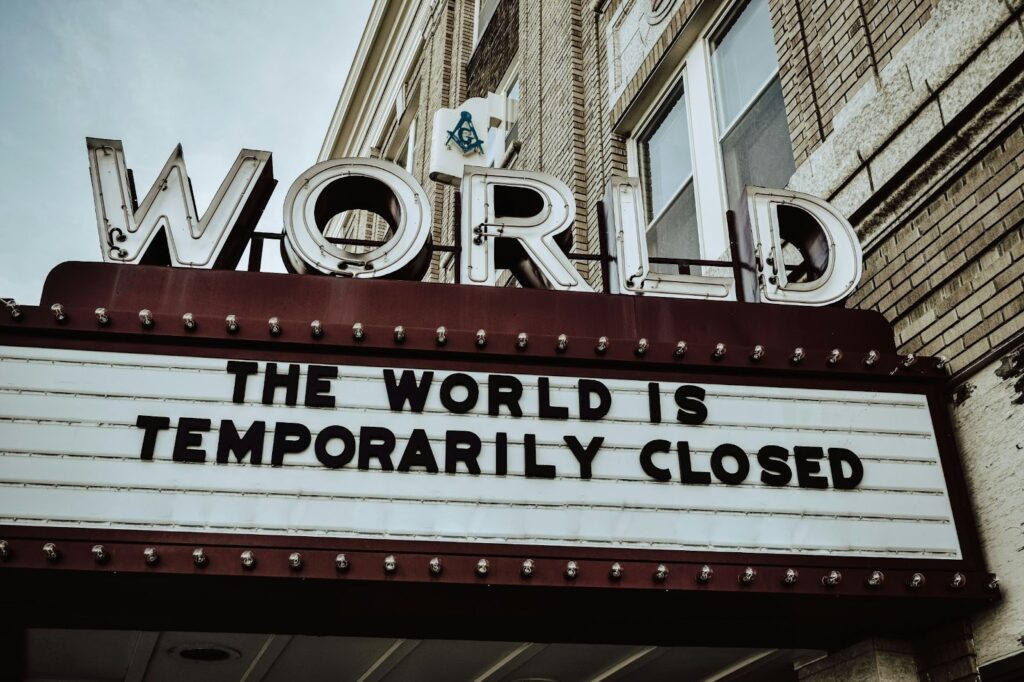
 Image of a theatre sign. The theatre is called World, and the sign underneath says in all caps, “The world is temporarily closed.”
Image courtesy of Edwin Hooper on Unsplash

There’s still something missing

Fast forward to a year later, and I had finally graduated college with my bachelor’s.

I should’ve been happy, but why wasn’t I? I was about to start my career; shouldn’t I have been grateful? It was only then that I had to humble myself and remember that the ‘career’ in question didn’t even exist yet. The pandemic cut into a time when I was supposed to create a durable landing pad post-grad, anything to make sure I wouldn’t fall into an interminable vacuum of uncertainty. That was my biggest fear, and now, a year later and without a job, it looks like those demons residing in my head won after all.

I think the pandemic and everything that came after it took a piece of my soul that I don’t think I’ll ever be able to get back. 

I spend each day scrambling for missing pieces of a puzzle that once came close to being completed. I’ve shed so many tears that I could’ve drowned myself in them. I’ve thought of death in so many ways because I don’t feel like I’m meant to be here anymore. It feels like my world has already come crashing down, and it’s too late to fix any of this. Feeling like I was destined for greater things and having nothing to show for it isn’t just a blow to the ego but to the heart as well.

I’ve come past the point of despair. The helplessness that I’ve felt for the last two years has mutated into a flat-out numbing sensation, the same kind you feel when dipping your hands into ice water for too long. 

But instead of attempting to fish my hands out of the cold, I’ve accepted it. I can’t turn back time nor tape over what’s already been shattered. 

All I can do is hope for a miracle and continue to pray to the moon each night that I’ll finally be able to put myself together again.
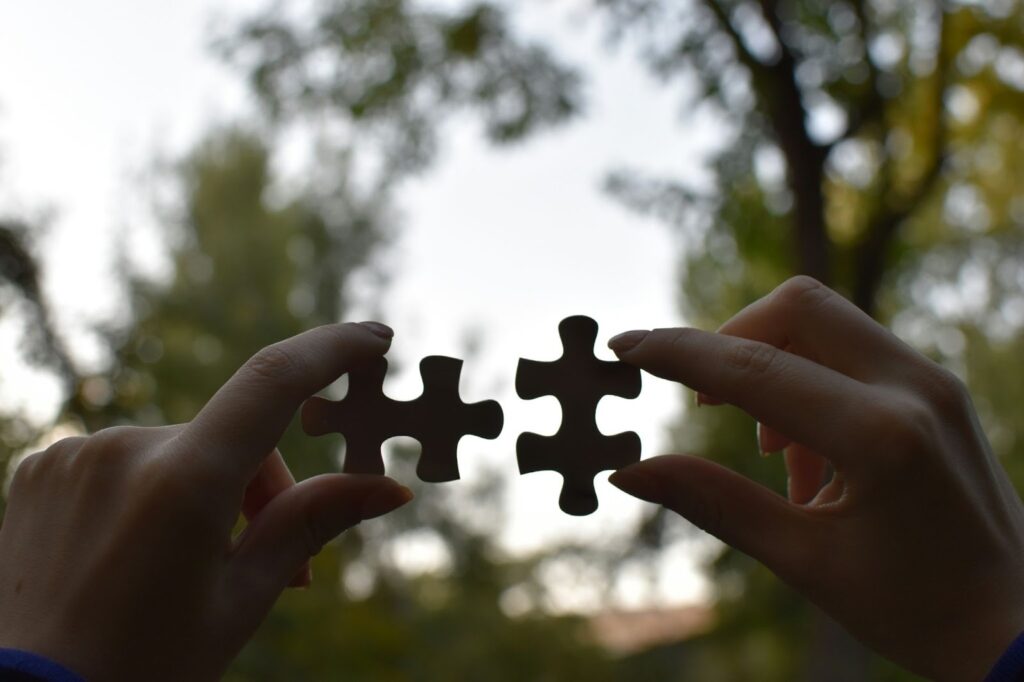
Image of a person holding two puzzle pieces in their hands. One piece is in their left, and the other is in their right. They’re holding the two pieces up to the sky, close together as though they’ll interlock the two pieces. In the background, trees loom in front of a grey sky.
Image courtesy of Vardan Papikyan on Unsplash

My Partial Program Experience

I have been depressed before, and depressed since. Arguably I am always hovering at some degree of “depression,” but at this time in my life, in early 2019, it was a darker, uglier color than it had ever previously been. I was immobile, frozen in time; I had become nothing but a fixture on my couch that occasionally moved to lay down in bed instead. I had long shed any sense of personhood and was a shadow of myself. 

When my weekly check-ins with my therapist proved to not be enough, she referred me to a partial hospitalization program in Greenfield, Massachusetts. It would only be for two weeks, she assured me, and I wouldn’t have to stay overnight. I was hesitant, but I was also desperate. I knew I needed a lifeline out of the stagnant sea, no wind in my sails, that I was lost in. I agreed to try. 

A partial program is a safe option for those who are struggling, for those who are stuck or frightened or immobile, like I was. It allows for a sense of freedom since you only have to attend during the days and can return home at night. It is also great encouragement for self-reliance, that you are able to get yourself to and from the program each day. 

The partial program was straightforward: multiple group meetings in various rooms on the third floor of the hospital throughout the day led by clinicians who would focus on a specific topic or coping mechanism. There was a room with a fish tank, a room with almost a dozen windows, and one room that was very beige. We were encouraged to participate to our comfort level, which meant that I was completely silent the first three days. But after I finally allowed myself to listen to what was being said, I realized that I was the only one who could pull myself from the depths, and I decided to let myself be free and speak. I mentioned my feelings of loss, of hopelessness, of fear, of failure. And somehow, others related. It turned out I wasn’t alone in what I was experiencing. 

We learned about grounding and mindfulness. We discussed responding to situations instead of reacting. We practiced being kinder to ourselves. The two weeks were spent relearning how to listen to what was going on inside of me, instead of ignoring my own pain, and treating that pain gently instead of with disdain or hatred. 

During one of my one-on-one meetings with one of the clinicians, we went over my symptoms and what led me to the current moment. I hadn’t realized how much pain I had been carrying inside, how much I had tried to stifle it within me and ignore it. She prescribed me an antipsychotic, which I was nervous to try, but if it was part of the healing process, I was willing to give it a go. 

The partial program didn’t cure me, necessarily. There were many aspects that I found lacking – lots of platitudes and generic optimism. But I went. I made it out of the house every day. I was reminded of my own humanity. I was reminded that my suffering was not unique to me, that I was not alone in the expanse. 

Entering into the program was simple. I simply needed a referral from my therapist and met with an admitting clinician who determined my eligibility. The program itself was not strenuous, often very meditative and relaxing. I recall one session where we laid on yoga mats and listened to instrumental music. The mat was surprisingly soft beneath me and I had a small pillow. The music, coming from a radio across the room, played what could only be described as spa music while the clinician led a guided meditation. I felt my body relax and my mind wander through the meditation, and I was at peace, just for a little while.

It can feel daunting to admit that you may need to take a step for more serious therapeutic services. I know that I was hesitant and afraid of the stigma that may be attached to a partial program. But I also recognized that I was no longer able to function in a healthy way, that I no longer recognized myself. Attending was the first step on the road to recovery. 

Aerial image of a woman dancing in the ocean
(Image courtesy of Lance Asper on Unsplash)

Wear Yourself to a Shadow

It is always difficult for me to explain what depression is and how it makes me feel. I’ve seen and read people describing it as a big black dog, or drowning. The two metaphors that stick out to me are shadows and Sisyphus.

In Greek Mythology, Sisyphus is punished by Zeus to push a boulder up a hill for all eternity due to cheating death twice. Whenever he gets close to the top, the boulder rolls back down to the bottom. Is the giant boulder my depression or my happiness? Or is the top of the hill my happiness?

As an African American woman, I’m viewed as strong and successful. I’m able to hold down two jobs, one of which gained me four promotions in seven years. I’m able to be caring to friends and assist with their troubles and plight. I have all my ducks in a row and push my feelings down deep enough to be able to be productive at work. But My Shadow peers around every corner, waiting to find its time to invade. Its cold grip on my heart scares away my sense of success and pride, forcing me to re-play every conversation I had to have, making me worry if I offended someone who laughed with me at a joke I made. My Shadow feeds on my self-doubt, and pushes my perfectionist tendencies into negative spaces, where I work myself to the limits of my health and stretch myself too thin.

It’s always there

It is always lurking and no matter how much I try to outrun it; it finds a way to appear. In fact, not feeling like myself gave me my first inkling I was depressed. I was working in a retail job after graduating college. My paid internship had also ended. In some ways I liked my job, with the bright, eye-catching decorations. 

But then there were the managers. 

I worked at that job for two to two and a half years, and in those years, I had four to five different managers. I was overworked and overlooked. 

I was reliable, I was responsible, I was punctual, and I was a team player. I was taken advantage of. 

I was named Safety Captain – a position I was supposed to have held for one month. I held the title for a year and a half. I worked markdowns Tuesday mornings with two to three people. Soon, it became just me. I’d be the first person to ask if someone needed a shift covered or if I could pick up an extra shift. I was told I was being looked at for a seasonal managerial position only to have a new hire work for two weeks and then become the new manager. I had to work during a Category 2 hurricane (which resulted in a fear of driving during storms as the car I was driving to go home after that shift almost tipped over twice). 

Yet I had to beg someone to switch shifts with me or cover for me to attend a friend’s memorial service because my manager “forgot” my leave request. 

Throughout all of this, I had a short temper. I would lose it over something as small as a stapler not put back in the right place. In turn, I would feel nothing while working at my library job which I loved and used to be excited to go to every day. I was angry all the time but had to pretend I was normal so no one would catch on. There was a swift change in my personality and mood which I thought I was doing a great job of hiding, until one of my retail managers left. I was excited for this manager to leave due to how horribly she was managing and running the store. I ran all the way from the parking lot to my apartment, burst through the door, and loudly declared, “She’s gone!”

 My sister saw me and said, “Wow, I haven’t seen you this happy in a long time.”

Or is my depression My Shadow, making me feel like a lesser version of myself?

One day

My sisters and I all have dark brown hair and dark brown eyes. We all like to write, read, play video games, eat good food, watch movies, watch anime, and read manga. We don’t all have depression and anxiety. With my depression, I feel as if I’m part of another world and it’s one I hope they don’t ever gain access to. A world where your shadow is its own body and lifeforce, instead of trailing behind, one step at a time out of sight and rarely making itself known unless you choose to see it.

One day I will conquer that boulder, and My Shadow will just be a figment of my imagination. Right now, he’s sitting on my shoulder, watching as I type, waiting for his moment to take over, which I shoo him away to stay in his rightful place behind me.

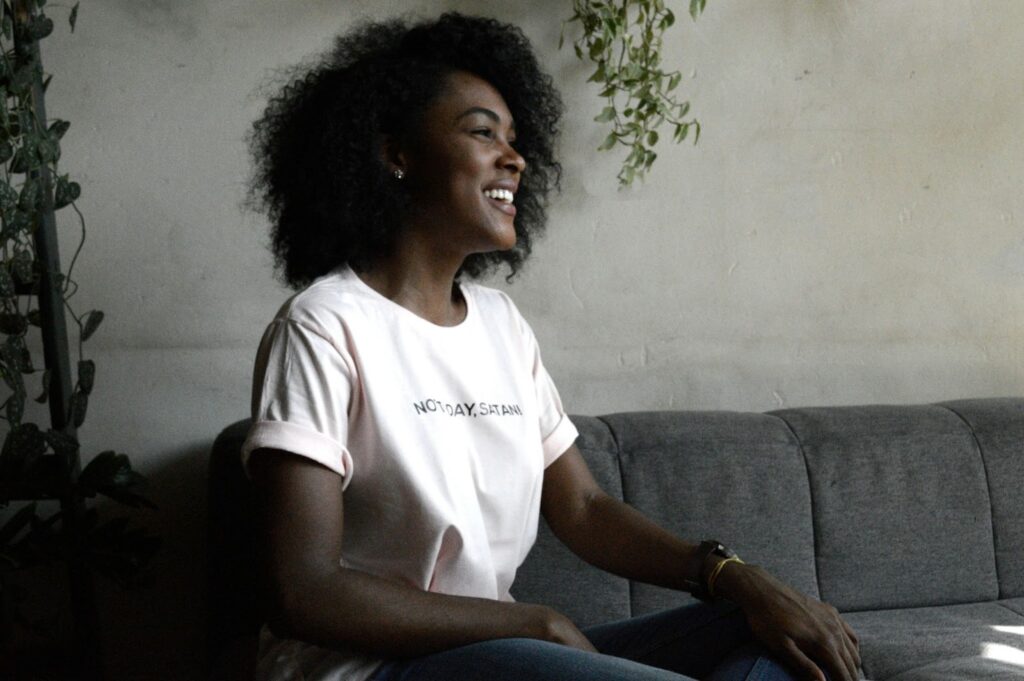
Image of a woman sitting on a couch, smiling at something or someone off camera.
(Image courtesy of DISRUPTIVO on Unsplash)

The Messy History of A Licensed Psychologist

I have OCD (obsessive-compulsive disorder), ED (eating disorder), depression, severe anxiety, and ADHD (attention deficit/hyperactivity disorder). I’ve always gone to therapy because my mother is a psychologist. 

I can’t even remember my age when I started, but I had more than five psychologists. I established a rapport with none until my first visit to a psychiatrist, when my undeniable mental health was crumbling. My psychiatrist never gave me a proper answer, but she was, and still is, the only therapist who I felt did not give up on me. Many others diagnosed me with borderline personality disorder.

Since I was young, I was always labelled as the “bad,” “problematic,” “rebellious,” and “naughty” kid, from kindergarten to adulthood. People often didn’t even remember my name, but they recognised that out of 14 cousins, I was the troublesome one.

So I started to believe that, too, and my behaviour didn’t change; in fact, it worsened throughout my development stages.

The beginning pangs

And as a teen, I began to self-harm. Eventually, my body felt numb, with no sadness, no fears of being misunderstood or good, pretty, and skinny. After that, my high school suggested my parents take me to a psychiatrist.

Hello, psychiatric medication. I still take them, though I still haven’t been properly diagnosed.

I can’t remember what happened during my first depression episode; I only have blurry memories of the fourteen days I was sent to a psychiatric ward and how I didn’t leave my room the whole time I stayed there. 

After that, my depression began to fade, though I was never the same again. Alcohol, drugs, kisses with older men, and so on were part of my adolescence. My grades were awful, and it took me almost nine years to finish high school.

Of course, I felt like no one cared. I was already the disappointment of my family and always had been, so they just didn’t even try to understand me, not when I was a toddler, when I was a teenager, or even now.

When I decided to apply to college, the OCD set in. Perfect became my goal in every aspect of my life. All my focus was on my studies. My first panic attack happened during class hours; I remember running out of the class and collapsing in the hallway,

In my second year, my goal was to maintain my perfect grades and lose some weight. I’ve always been chubby, and after a few months, anorexia nervosa knocked on my door. I received her like someone I had been waiting for my whole meaningless life. Binge eating eventually appeared, and that was when my whole controlled, perfect life crumbled. 

This is where I am now, fighting eating disorders, a second depressive episode, and more.

Image of ocean waves.
(Image courtesy of Mike Erskine on Unsplash)

The change in the tides

But now, as a clinical psychologist, I know how to fight. We don’t have to give in to the social belief that we are a problem that needs to be fixed, changed, or eradicated. Rather, we believe that people with mental health issues must be treated with compassion and provided with equal rights. Rather than focusing on the disability or disordered aspect of mental health, we focus on our strengths and learn how to rely on them.  

My biggest strength is helping others; doing so makes me feel worth it and empowered, despite and because of my experience, even as hurtful as they are, gave me tools to lift others from their own struggles and dark places. I see a little hope in those little steps of others on their path to wellness.

As we grow older, we start learning and differentiating one emotion from the other, and at the same time, our range of emotions gets bigger. Defiant behaviour sometimes is a sign of depression and/or frustration because you haven’t yet developed the emotional tools to make others understand what you are really feeling. My adolescence was marked by naughty, unruly behaviour that I had been carrying since childhood, which became dangerous and painful to me. I did not have the tools to understand what I was feeling. Past trauma had left its marks on me. Adulthood marked the desire to maintain control of my life, appetite, and surroundings instead of letting my emotions have control of me again. And yet, many times, I failed.

My work changes lives

My role as a psychologist focuses on getting mental health the proper awareness it deserves. We need to raise awareness for this marginalised, stigmatised, labelled and misunderstood community regarding mental health and the lack of opportunities that low socioeconomic status communities have in accessing education and healthcare.

Today, I work in a private organisation as a clinical psychologist, both with group therapy between employees and employers and individual follow-ups. This year, I received the incredible opportunity to start working with the jail population by making new programs that focus more on rehabilitation rather than punishment alone. DINALI is a subsection inside the Ministry of Defence in charge of the Uruguayan policies related to imprisoned people. My main area will be helping people close to finishing their sentences. The main goals are reinsertion into society. I want to give them tools on how and where they can get help on having their basic needs satisfied (food, clothes, a roof above their heads), getting a job and start working on their social life to build a close circle that helps them find purpose in life and feel loved and appreciated. 

Sometimes, I’m still a mess. Sometimes you might be, too. But as I’ve learned throughout every painful twist in my life, if you can’t help yourself, help others. 

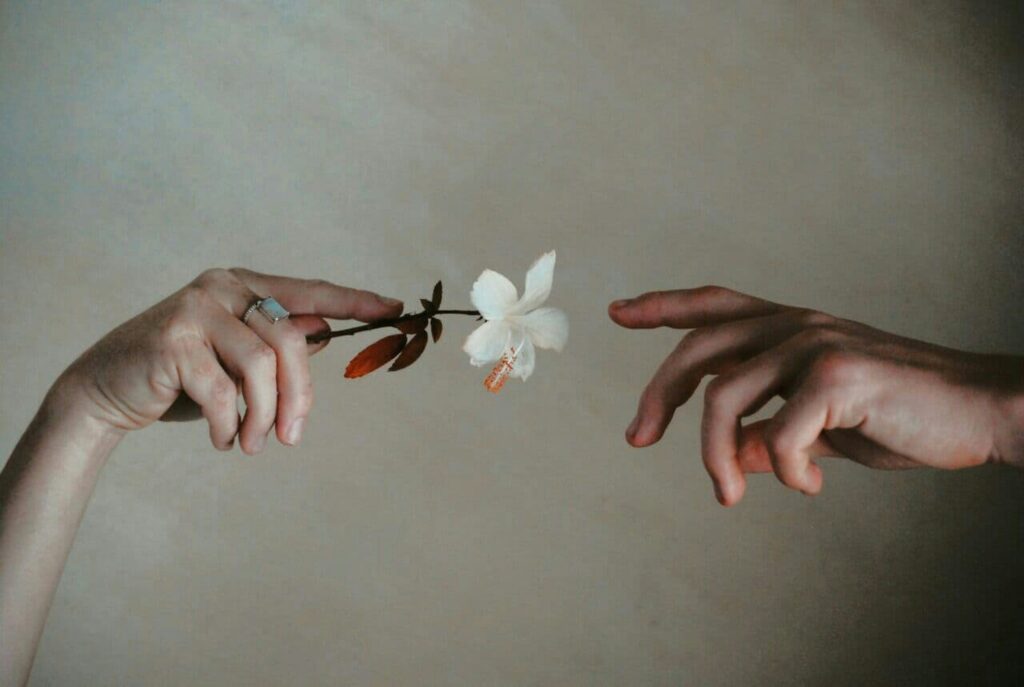
Image of two hands reaching toward each other. The hand on the left holds a white flower as if to give it to the hand on the right.
(Image courtesy of Adalia Botha on Unsplash)

Dolor

My jeans are drenched as I look
At the blurred images of you. It is hard to
Remember your face, though, when I can
Look in a mirror, I see you. Every night
When I go to bed, I think
About my life if you were.
I might understand boys better.
Every year, when it’s your birthday, I would
Ask what your gift would be. You
Shrugged,

Million dollars?
A drawing, picture, or a pair of socks?

Every year I want
You in front of me.
Your grizzly arms surrounding
Me. I turn to the earth
And beg

It to swallow me.