
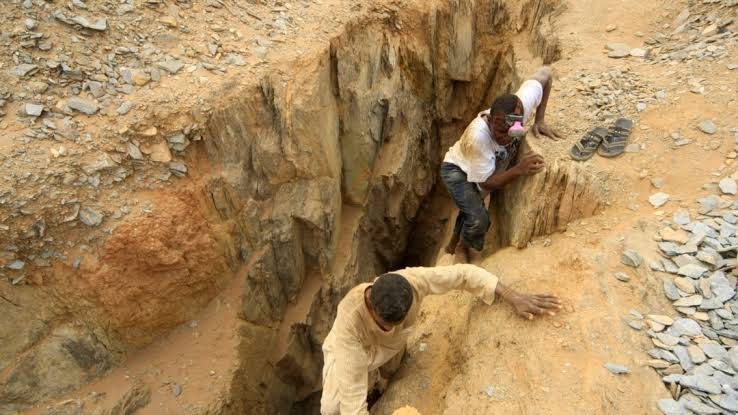
Eleven artisanal miners have died and seven more injured after the Kirsh al-Fil gold mine collapsed in eastern Sudan’s Red Sea State. The site had been previously shut by authorities due to safety concerns but was reopened unofficially as desperate miners sought gold in a region gripped by conflict and poverty.
The tragedy highlights Sudan’s growing war economy. Since civil war broke out in April 2023 between the Sudanese Armed Forces (SAF) and the Rapid Support Forces (RSF), gold has become both a lifeline and a weapon. In 2024, Sudan produced 73.8 tonnes of gold—85% from unregulated artisanal sites. Much of it flows into Chad, Egypt and South Sudan before reaching the United Arab Emirates (UAE), Sudan’s main trade partner.
Sudan has accused the UAE of aiding genocide, a case now before the International Court of Justice. While the UAE denies arming the RSF, gold shipments continue.
“Mineral supply without governance can create a shadow economy that finances conflict,” said Dr. Saleem H. Ali, a professor at the University of Delaware. “But with proper governance, these minerals can become tools for poverty alleviation and peace.”
In South Africa, Clement Moeletsi, also an illegal miner, says he knows this ordeal all too well. On July 24, 2024, he and fellow miners from Zimbabwe, Botswana, Lesotho, Mozambique, and South Africa entered abandoned shafts in search of gold. “The reality was brutal: chest ailments, starvation, and constant exposure to life-threatening hazards were the norm for us,” he said.

Comments
Be the first to share your thoughts!
We value diverse perspectives and respectful debate.