If someone asks “Who are you,” how would you answer? Could you even answer honestly? Would you even answer in the first place?
“Who are you?” A simple question I’ve been very familiar with growing up.
Different, though?
I still remember an incident as a child when my family and I visited a distant relative. My mother prompted me to go and greet our hostess, and the first thing that came out of her mouth was, “Who are you?” To which my mother replied, “She’s my youngest daughter.”
Our hostess looked taken aback. “Is she? Why does she look so different from your other kids, though?” My mother explained that I inherited my father’s genetics, which stopped further questions.
Another incident was when my mother’s brother and sister-in-law once visited us from the US. I greeted them as they entered the house. I was already in high school at that time. My aunt asked, “Who are you?”
My mother would once again explain that I am her youngest daughter. My aunt quickly responded, “You gave birth to another child? I thought you only had four children! Why didn’t I hear anything about her till now?” she asked, surprised by the revelation.
Another shock came when I was already in my thirties. A friend of mine arranged a job interview for me at her office. I asked her if the boss knew about the supposed interview, but she assured me that everything was good. However her boss was unaware of it, and to my utter embarrassment he asked me in front of everyone present, “Who are you?’ Justify yourself.
It’s funny how I still remember these incidents after so many years. There were still a few more incidents when I was questioned “Who are you!” I slowly became accustomed to the demand.
As a child, hearing this question over and over felt odd in some way, but I thought nothing about it. In my young mind, I thought it was just a usual way of life. But, as I matured, it made me question my very existence more and more.
“Who am I?”
I would have answered it directly and honestly if not for the rumors flying around that I could no longer ignore.
Some circumstantial shreds of evidence also led me to another question, “Where did I come from?” I tried finding answers on my own with no success. As the holy scripture has its Genesis, so should I.
“How did I come to be?” a question I needed an answer to
When I was about eight or nine years old, my eldest sister had a little disagreement with our father about me, then she referred to me as their “ward” in a burst of anger. This incident made me realize that something wasn’t quite right with my situation because, even in anger, she should have referred to me as her sister, right?
Nosy neighbors, friends, and relatives often asked my parents where I was born; surprisingly, they always had different answers. My father would say that I was born in Manila, while my mother insisted that I was born in the province, leaving me with more questions and doubts. I mean, which parents would provide opposing answers to a question they should have known the answer to, right?
Am I really “the daughter” or a “long-lost daughter of someone else?”
Why does my very existence drive people to ask “Who are you?”It’s a question not even I can answer.
Not even family members are willing to answer. To the grave and beyond, I will carry these doubts. How I wish…. that I could proudly say that I know myself like the back of my hand, but I simply cannot, and that’s just how it will perhaps be for a long time.
Who am I? I feel like a simple person, still trying to find her niche in this world, trying to thrive and find happiness along the way, but if someone asks who I am in a literal sense, my response would be, “I don’t know.”
So many questions left unanswered, one after another.
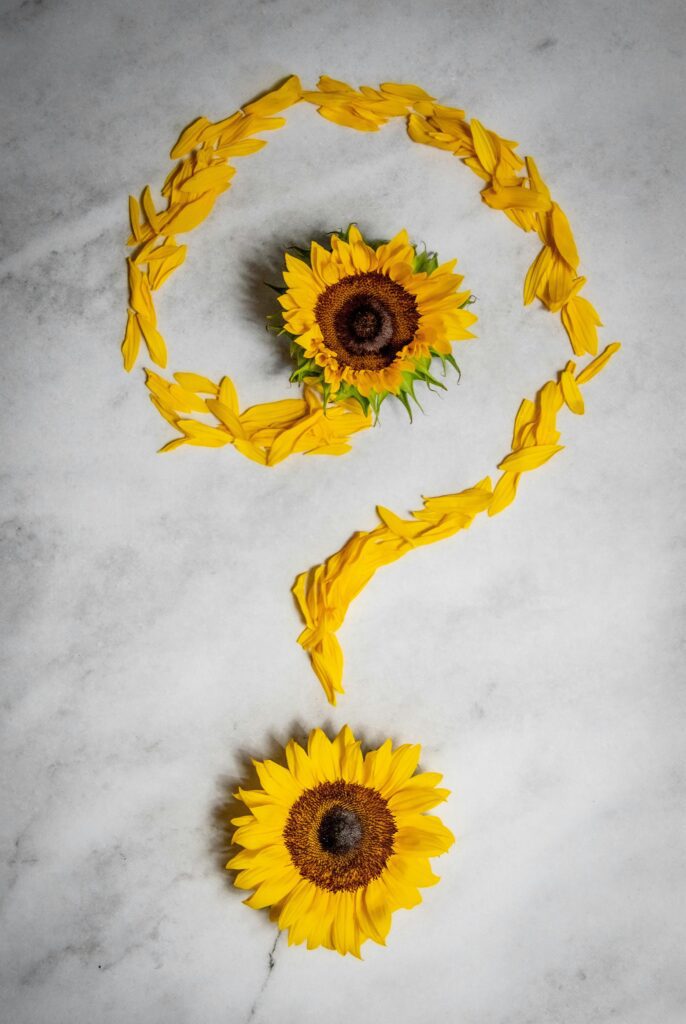
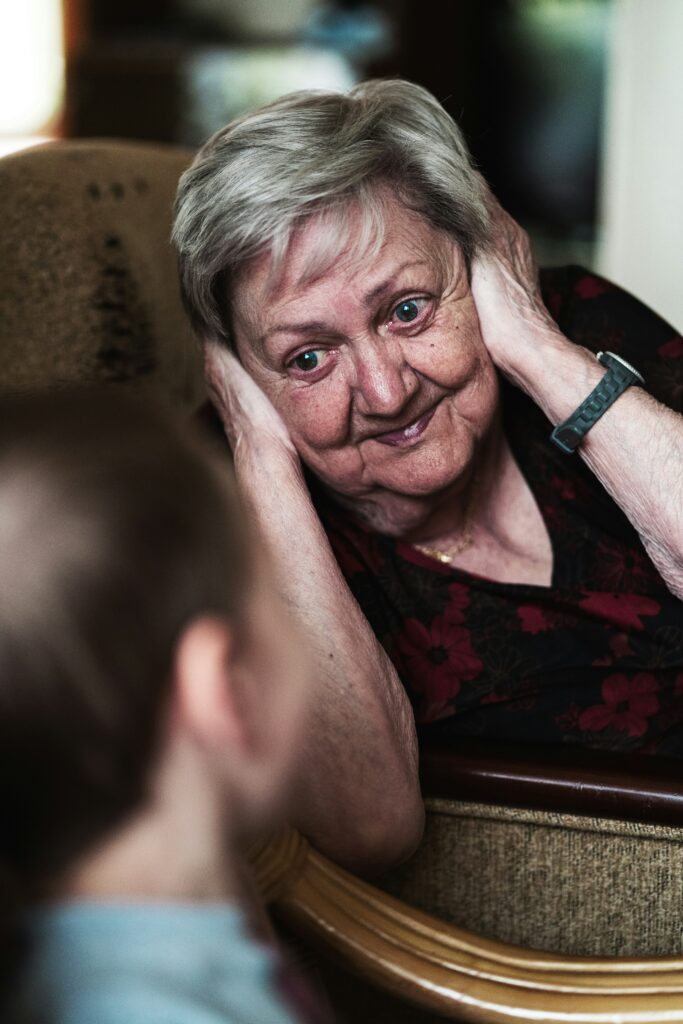
(Image courtesy of Magda Ehlers via Pexels)
Who? What? When? Where? How? All running through my mind nonstop. And every time I try to unravel the mystery, I am met by a wall so high blocking my view of the truth.
I am already weary of looking for some clarity. Yes, the truth might hurt, but also set me free? Only time will tell if I will ever discover the truth. With the way things are at the moment, who knows if I’ll ever find the perfect answer to the nagging question:
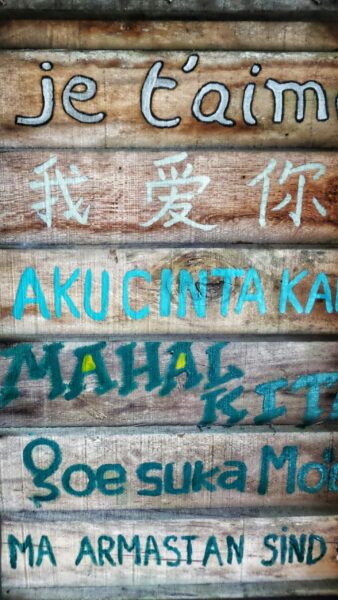
Every language has thousands of words, and the ones we choose, I believe, almost always reflect who we are, what we feel, and what we want to communicate. I say “almost always” because I have never been fond of certainties, and I consider doubt an essential element of life, as to not judge people based solely on what they say.
Sometimes, I too have said something rude in a moment of anger, but soon after came regret and most of all, the realization that I had made a mistake. No one is perfect, but when the words that are now called “toxic” are repeated and become a deliberate and ongoing way to hurt, then it becomes a conscious intent to denigrate and offend.
Who has not heard the old saying “actions speak louder than words?”
It is a concept that seems extremely valid to me, but sometimes we forget that words have weight. With thousands of words at our disposal, it is reasonable to assume that most of our linguistic expressions in life and social communication are the result of a choice. Unless fate (or whatever else governs human life) intervenes in our lives, when we speak to another person, we should be careful not to offend the sensitivity of our interlocutor.
Recently, while reading a website of aphorisms, I was struck by a quote by author Rhonda Byrne. In 2006, she wrote the essay “The Secret,” which I plan to read soon, discussing topics related to personal growth and inner development:
“It only takes a minute to cause hurt but sometimes a lifetime to repair.”
The author puts “words” first and then “actions”. This does not seem to me a coincidence. Words are a way to convey positive feelings, but also to express violence and aggression toward, for example, fragile people.
Human beings cannot live in isolation. We all often need affirmation, support and help from those around us. I believe that the freedom to express one’s opinion does not preclude the ability to do so with kindness and tact.
My best friend had been the victim of a truly toxic relationship. When she introduced me to her new boyfriend, he seemed to me like a serious and polite young man. He was elegant, handsome, and behaved like a gentleman from another era.
But from the very first night, I could tell that something was wrong in their relationship. There were four of us at the restaurant table where we had made reservations: myself, my then-boyfriend, and the two of them. As the waiter served the first course, my friend’s boyfriend began to share anecdotes about their fledgling relationship.
“You know your best friend can’t cook? And if you saw the mess she makes in the washing machine! She ruined two of my shirts. She can’t even read the washing instructions.”
Throughout the evening, he criticized every one of her actions. As he spoke, I wondered: “How can a man in love only point out the faults of the person he is with?”
Maybe my friend was not perfect. Maybe it was true that she could not cook or use the washing machine. But where is the line between truth and contempt? The point was not to be hypocritical or to hide my friend’s flaws, but to choose words that wouldn’t make her interpret it wrongly and feel inferior because of her minor shortcomings.
I tried to resist the temptation to confront him in front of everyone in the restaurant, and at the end of the evening I took my friend aside.
“Do you realize that all he did was criticize you? How can you live with someone who doesn’t appreciate you?”
“He has never laid a hand on me, if that is what you mean. He is not violent.”
But I knew that violence does not always manifest itself in actions. There is also a subtle and invisible form that is transmitted through words.
When I told her to leave him, she shrugged. She had always had a difficult home life and a troubled relationship with her father. But she had chosen a man who was even worse.
Every word he spoke was meant to show contempt, to belittle and manipulate her. He wanted to make her feel bad about the smallest things, as if he wanted to prove his superiority.
There was nothing I could do at that moment. The choice was not mine. I could only offer her my support and tell her that I would help her at any time. A few months later, I got a call from my friend. She had left their home. She had reached a point where tolerating it was no longer an option.
This is why I believe we must choose our words carefully when interacting with those close to us. Sensitivity is a value that should not be sacrificed to selfishness.
This is why Rhonda Byrne emphasized the importance of words. How we use them surely reveals the kind of person we want to be.
I’ve spent my whole life feeling like I didn’t truly fit in with anyone around me. I’ve always felt there was something “off” about me. It was as though everyone except me received a user manual for how to be human.
It took me 25 years to realize that the reason I felt different from most people is that I’m autistic. But due to my lack of education on the subject, I went that long without even knowing.
Unraveling the signs
Most of my behaviors and a large part of my personality are a result of my autism. But only late in my life did I realize there were names for how I navigated and experienced the world.
Sensory issues
Growing up, many of the clothes I had bothered me so intensely to the point where the seams or even the type of fabric were all I could focus on all day. Sounds that were too loud to me but not to others led me to cover my ears and want to leave the room. These are only two examples of the many sensory processing issues that I’ve experienced my whole life.
(Unsplash/Majestic Lukas)
Special interests
Whenever I find something I enjoy, whether a hobby, show, book, or topic, I go all in. I want to know everything about that thing, so I spend many of my waking moments thinking about it. For months or years now, much of my life has revolved around my current special interest or hyperfixation. The intensity of my interest in a particular topic goes beyond what most people enjoy.
Shutdowns and meltdowns
I can also get overwhelmed by emotions or sensory input. As a kid, this presented as wanting to withdraw from the world, and usually speaking became difficult and energy-consuming. I still get periods like this, and they can last as long as a few hours to some days. Now I know these are called autistic shutdowns. I also experience autistic meltdowns, where I get so overstimulated or upset that I sob uncontrollably and find it difficult to calm myself down.
Social communication problems
I’ve always found it difficult to express and read people’s emotions, facial expressions, and intentions. For a long time, I called myself “socially awkward.” I often take others’ words out of context and struggle with social cues. While I’ve gotten considerably better at socializing with others, it’s still like speaking a foreign language, and the native speakers can tell it’s not my first language.
My hardships with social skills have led to many misunderstandings and miscommunications. Since I was a toddler, keeping up with conversations and coping with social situations has been difficult.
Structure and routine needs
I thought I’d eventually grow out of my “weirdness” as I called it. But that didn’t happen. As I grew into adulthood, my problems only seemed to exacerbate. At 18 years old, I got my first job in retail. After that, I held positions in journalism and teaching. These jobs required a lot of spontaneity and lacked routine. Because of this, I struggled. I found myself hopping from one job to another to avoid what I now know are shutdowns, meltdowns, and burnout.
(Unsplash/Christ Montgomery)
A sense of belonging
In my mid-twenties, I came across autistic people’s stories and videos on my social media feeds. I related to most of what they said about their experiences with autism. After months of listening to this community and doing my research, I began to identify as autistic. It felt like I had finally found other people like me and I wasn’t alone in the world.
In late 2022, I pursued an official diagnosis. I found a local psychologist who offered autism diagnostic services. For several hours, he interviewed my mom and me about my entire life—from birth till now. Afterward, I received a six-page report that confirmed that I was, indeed, autistic.
Knowing I’m autistic has helped me realize I’m not the only one who feels this way. I now know I’m not “weird” or alone. I’m just autistic.
Since my diagnosis, I have found a community of people who understand me. I feel like I’ve discovered “my people.” I have made friends with other autistic individuals online who share similar special interests, communication styles, and ways of existing in the world. My allistic, or non-autistic, friends and family are lovely. Nonetheless, it’s been a breath of fresh air to forge relationships with people who process the world like me.
Finding community
This newfound sense of belonging has inspired me to share some tips for anyone who might be feeling different–autistic or otherwise.
Don’t do it alone
Find online groups, forums, hashtags, or even in-person meetings related to a particular interest, feeling, or experience. Hearing about other peoples’ experiences and, even better, interacting in these communities can help build connections with like-minded people. This can foster relationships with dozens, hundreds, and even thousands of others with similar experiences.
Keep an open mind
Be open, honest, and vulnerable. This can be challenging, especially when feeling like an outcast for certain traits, behaviors, or hobbies. But by sharing stories, you will find others with similar experiences. Speaking from experience, authenticity leads to a more profound sense of belonging.
Embrace support
Get support from people who have had those experiences. Getting advice from those who have already walked that path is helpful in getting a headstart in understanding. Other people can offer valuable insight and new perspectives to help with growth and adaptation.
Give yourself time
Don’t rush the journey. It can take a while to find the kinds of people with similar traits and interests. But even if it takes time, those people are still out there. Building relationships with new people can be difficult and time-consuming, but it’s worth it.
Embracing my difference
Since finding a community of like-minded people, I’ve grown a lot. I’ve forgiven myself for many of my social shortcomings and emotional outbursts that have stemmed from my autism.
I didn’t need to hold myself to such high standards anyway, but knowing that I have a disability that hinders me from navigating this world in the same ways as others has helped to understand why I feel the way I’ve felt my whole life. I no longer feel the need to meet the expectations of a society that is not optimized for autistic people.
(Pexels/Min An)
I’ve also been accommodating myself more. I bought noise-canceling headphones to help with sensory overload. I set boundaries with others when I’m not feeling like socializing. I avoid situations where I know I’ll get overstimulated. I’ve started “unmasking” my autistic traits, which means I’m not hiding them as much as I used to.
I have also found beauty in what I have realized are autistic traits. A few of these include my strong sense of social justice, intense passion for my special interests, and great attention to detail. I cherish these aspects (and more) of who I am now more than ever.
There’s nothing wrong with being different. But it’s great to know that my difference has a name and a community. I hope everyone can find their community filled with people that understand them because it’s a beautiful discovery. For me, it has brought me a sense of belonging and self-acceptance that I didn’t know was possible.
the wind did not howl but the door frame is loose vibrated and swayed like the unhinged rusting tin roof and her anxious heart like the approach of the wind the visitors seemed to arrive to test the breach in the weakness what was giving way in her situation their shadows eerily long threadbare the last of her hopes their steps determined and firm calling her out, voices loud out in light to accost treasure ships of riffraff ghosts any other day not when she is down with decay her nerves are far from calm the visitors as the wind each raindrop ceaseless till it stops want to prevail leave her unveiled that her pillar was gone that she knew not how strong uprooted he was cut down in the sweetest hour then she heard am yet to be gone not until you let me fall yes I reverberate in each step from here now you take
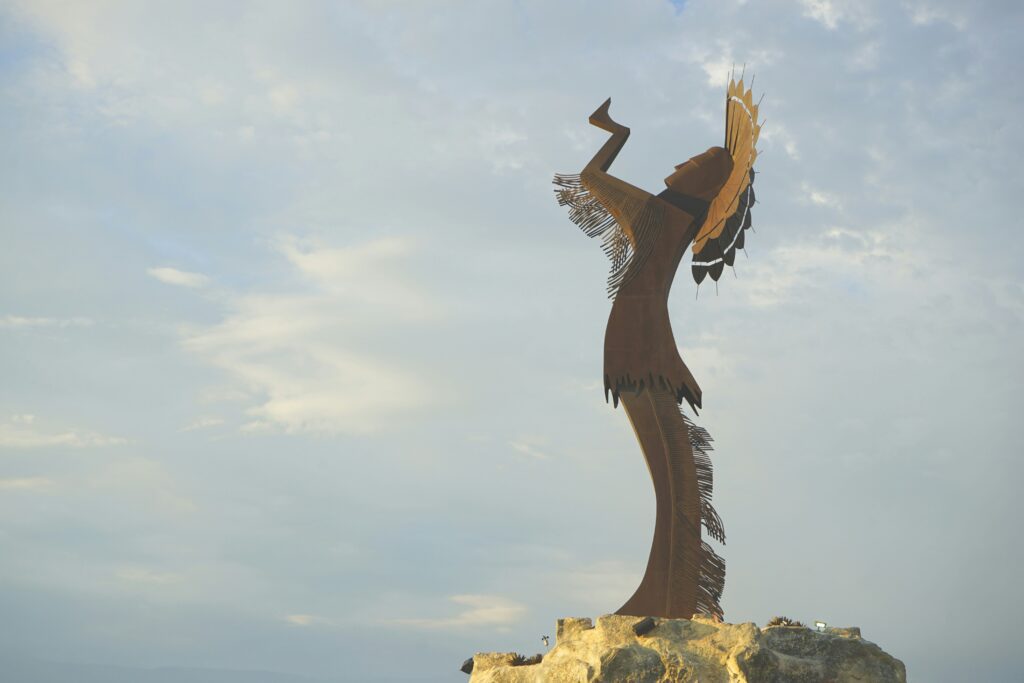
It all started in Wichita, the largest city in Kansas, bustling with the aircraft of Cessna, Learjet, and Boeing. Founded in 1861 as a free state, Wichita was Native American land named after the Wichita and Kanza tribes. This land had a rich, deep cultural heritage predating colonization. Filled with dewy, mystic plains and sunflowers that dance in the wind, Wichita is my birthplace.
(Photo courtesy of Andrew Cruz via Unsplash)
A few Wiccan friends
Such a safe and liberal place to grow up, nestled in a place in America called the Bible Belt and Tornado Alley, Wichita had some challenges, too. For those who grew up there and were different in the 1990s and 2000s—life was lived in the tradition of “The nail that sticks out gets hammered down.” It was a very heavily Christian town, and most other belief systems were suspect and not embraced. But I would notice a new kid sitting alone during lunch and instantly befriended them, so they weren’t alone. Renegade.
I had a few Wiccan friends who were social pariahs. Excommunicated from the popular crowd, they still were my friends. We would walk home from school together and meet their cats. The agnostics, the atheists, the grunge and emo people, the cosplayers; all my friends. Couple them with the Roman Catholics and devout Christians, and you have a full index book of my school associations. No one was left out. I was a friend to the friendless and a bully to the bullies. I still have friends who remind me of times I stuck up for them. Renegade.
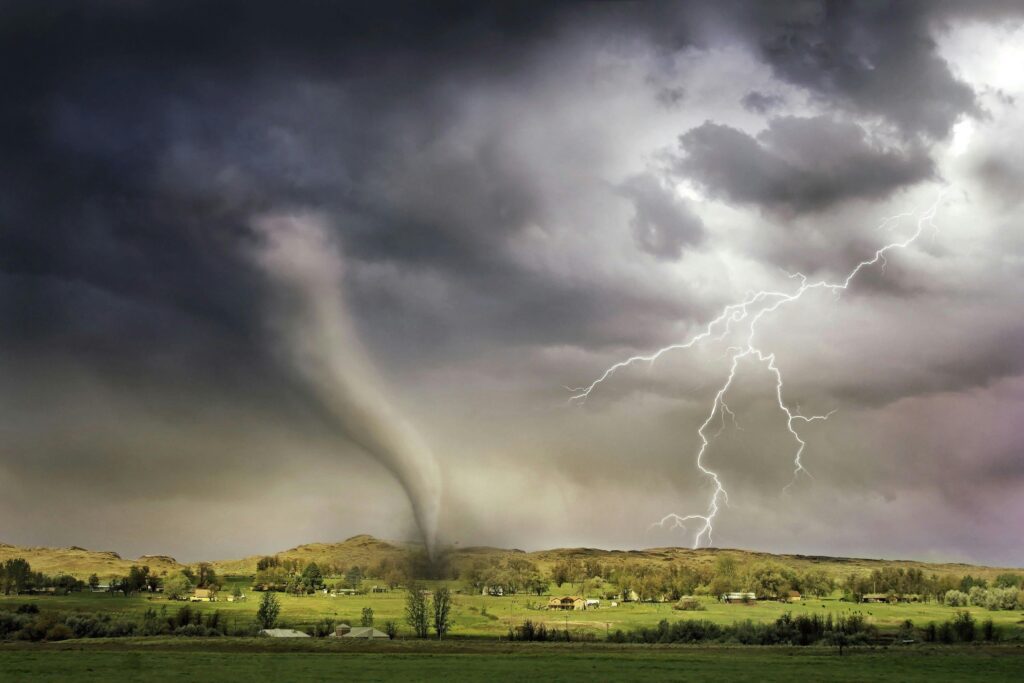
In the spring and early summer, our memories are imprinted with drills. We had to go to the school basement, a musty and dank gym locker room with rusted shower heads and cement walls. We could hear the blaring sirens for miles. Sometimes, we would just line ourselves along the classroom hallways with our heads bent towards the lockers and our hands clasped over the back of our heads. The screaming sound of the sirens would put chills down my spine and create an immediate visceral reaction. Friends’ homes were often destroyed on the outskirts of Wichita due to the tornadoes. But this was home, and we were all used to it.
(Photo courtesy of Ralph W. lambrecht via Pexels)
Emerging from innocence and charm
My friends and I, and many others in Wichita, were part of a desegregation bussing system. Buses went near and far to take us to Park City in grades K-12. Later to be known as the home of the BTK Killer, it still had its innocence and charm then. I sometimes saw horses, cows, chickens, even llamas on the way to my elementary school, Chisholm Trail—after Jesse Chisholm, a Cherokee merchant. Black Beaver, a Lenape trail guide and cattle rancher, and his friend Chisholm used this trail for cattle driving and trading.
(Photo courtesy of Phill Brown via Unsplash)
Chisholm Trail was a school breaking barriers. We had a female African-American Principal, Mrs. Saundra Kaye Lyons, and other people of color as our guidance counselors and instructors. We were on the cutting edge of school programs for Wichita and quite diverse.
But in middle school, there was a “magnet school” near my house. The magnet program is another system to attract a diverse student body, a continuation of the desegregation bussing from elementary school. This is where I started to come into myself and learn who I really was.
The facts of Iife crew!
I had a core friend group with three other girls, the “Facts of Life” crew. I was Tootie, Stephanie was Joe, Leticia was Natalie, and Julia was Blair. When we were together, no one could mess with us. Stephanie was Filipino, sporty, and played soccer. Lucita was black and Panamanian, my best friend from violin class. Julia was a ginger girl who loved animals, spunky, and the first to fight if someone insulted us. When I met Lucita, I was impressed by her basketweave pattern of tightly cornrowed braids. They were immaculate like a work of art. My sister was a hair braider so I found a way to inch into a conversation. Before our conversation, when I complimented her, I had never seen her speak a word to anyone. We became inseparable. I remember one of our teachers comedically telling us to “cut the umbilical cord!” as we laughed feverishly about a picture in our textbook.
I started to have complex feelings I didn’t understand for our other friend, Jennifer. I kept them in my diary and didn’t tell a soul until a couple of years later. I confessed my true feelings for Jennifer to my bestie, Lucita. She suggested that I write her a letter. I wrote it and put it in her locker, not sure what to expect. Maybe I thought she would be a renegade like me, we’d walk down the hallways holding hands, daring anyone to say anything. Maybe I thought we would stay the same with our flirty yet platonic relationship, but just with an understanding. I did not expect to break up our friends group.
(Photo courtesy of Marcos Paulo Prado via Unsplash)
And that’s exactly what I was doing, far too much to ask really in small-minded, bible-belted Kansas in the 8th grade. Jennifer was Roman Catholic. She couldn’t publicly associate with me anymore, and I accepted the death of our friendship.
My secret-laden diary goes AWOL
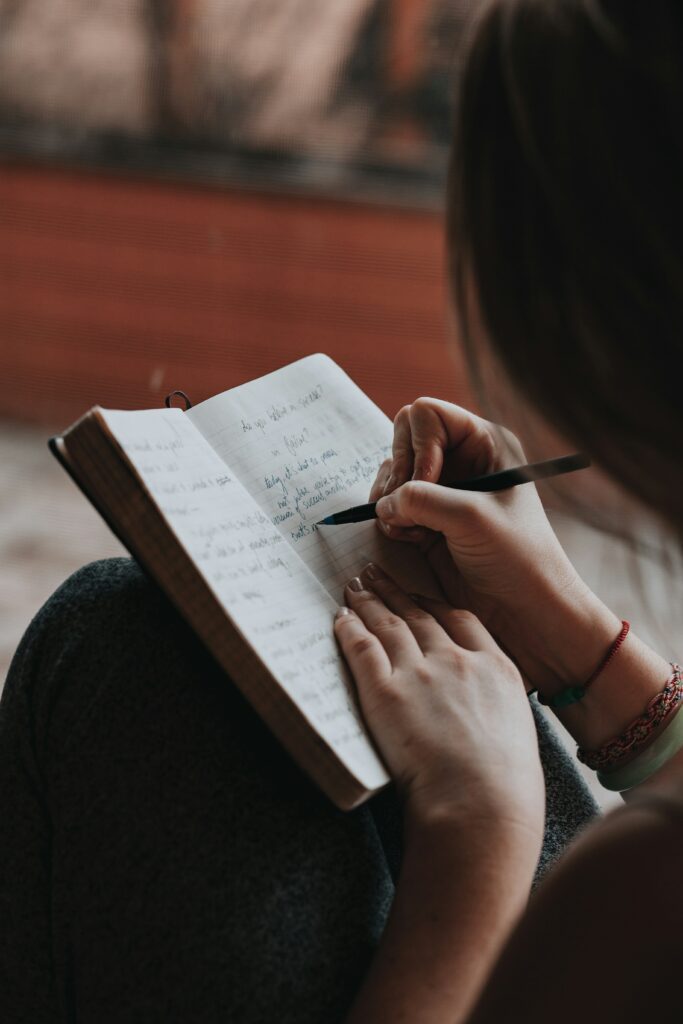
But fast forward a few months. I left my purse in a class — absent-minded teenager — where I kept my diary. The school jock decided to retrieve my diary and pass it to everyone. A fluffy, zebra-printed, fur-covered little time capsule. I somehow missed it that Friday. On Monday, a girl walked up to me with her jaw open and demanded, “Are you gay?!” I said no……? “Well, your diary is all over school now,” and she walked away as if I was the one who insulted her. I turned the corner, heart beating fast, and wondering about my next move. Then there was a group of people. “Are you gay?!” There wasn’t much I could do to fight it. “Yes, I’m gay.”
But I wasn’t free. People did not leave me alone after my confession. Mobs of people approached me at recess, lunch, and every class. Prodding at me like a science experiment gone wrong. Even some teachers were looking at me like I had the plague. Ultimately, when I retrieved the diary, it was on a teacher’s desk, as if it had been brought in for Show and Tell. Without a word, I grabbed my journal and walked back out. I accepted my new fate as an outsider, like those I had befriended. Thankfully, they were a non-judgmental group of friends. Plenty of the religious ones could no longer associate with me, however.
My grannie challenge
Being adopted by my grandmother, I had a wisdom most kids my age didn’t yet have. I knew I needed to tell her before anyone else could. I was a little woman in my own right. We were born and raised in the Baptist church so talking was going to be a huge undertaking. Grannie was the superintendent of Sunday School and an Evangelist. I was the junior secretary there. Her husband had the keys to the church, and we were the first to arrive every Sunday to unlock it. Not going to be easy.
(Photo courtesy of William Krause via Unsplash)
I was nervous about this confession, but it was too late. I couldn’t put the milk back into the carton, and I didn’t have time to cry over the spill. I eventually confessed to my sisters and Grannie before the gossip. They told me they loved me no matter what. My middle sister told me she was just glad I wasn’t pregnant. My oldest sister said that she already knew. With Grannie, I became emotional. I didn’t want to be a failure in her eyes. She assured me being a lesbian didn’t preclude me from success. She told me to get myself together, and we would talk about it later. One day, I think she just couldn’t hold it anymore and exploded “I’d rather you had been pregnant than gay!” But she eventually came around and even introduced me to an older married lesbian mentor from her workplace. I am to this day grateful for my family’s acceptance, which many LGBT people never received.
Graduation howling
The last week of school, academic awards were presented in the auditorium before the entire student body. I had joined the cross-country team as a favor to one teacher. I competed in one race and didn’t even finish, but received an award. The entire student body burst into laughter at my name.
Maybe mild, it felt like outlandish howling. Hey, how would you expect Kansas teenagers to react in 2002?
It stained me. It also built character. Officially out, still working on being proud.
Manifesting what I really wanted
The next semester was high school. There were other lesbians in my school, but I still never quite fitted in anywhere. I graduated a year early and wanted to put school as far behind me as possible.
I went on to attend college to pursue a degree in Psychology. I married my wife, whom I met online in 2002, and we have been married for ten years. She is an Iraqi war Veteran turned teacher and quite amazing. We live in beautiful and accepting Oahu, Hawaii, and happy with our three chihuahua-yorkies. We are currently trying to conceive. Renegade.
(Photo courtesy of Taylor Hunt via Pexels)
I’m sure Kansas has grown by leaps and bounds since I left years ago, but this was an important snapshot of a time when things were not so easy for the LGBTQIA+ community. It may seem long ago that we were so openly discriminated against, but it was actually very recent and still sometimes happens today. I have also seen many improvements in schools regarding anti-bullying and support for the fostering of strong personalities within very different individuals. Live and let live, and always be yourself. There is a huge payout in the end, and you will manifest yourself exactly where you would have wanted to be in your teenage dreams.