
To Sleep — Perchance to Get Some Rest

“When you lie down, you will not be afraid; yes, you will lie down, and your sleep will be sweet,” Proverbs 3:24. 

This Bible verse never rang true in my mind, nor did I ever understand it that well until I started noticing a change in my sleep resulting in insomnia. You see, these are such verses that must arrive at the moment you don’t know what is happening around you in your life. Maybe they are verses sent from God after all. 

College days and freelancing nights

Well, I have been a very busy person, placing value on my external wellness at the expense of my internal health. It all started back when I arrived at the campus of the University of Nairobi, Kenya. Those were the days when survival on campus was an essential matter. It was as if this was the place where the theory of natural selection, or the survival of the fittest, intensified.

In my freshman year, I eventually got used  to the new environment. You know how difficult it is to adapt. This is a point where people are most easily swayed into attempting activities they have never done before. I was not left out in all this. I found myself occupied with activities that were supposed to help me survive on campus. Around this time, there were quite a good number of online jobs, and so I got myself into the freelancing industry.

Luckily most of these jobs were mainly done at night. During the day, I would focus on my academics, and then at night I would turn to my freelancing job. Survival is one phenomenon of life that, to me, is still a mystery. The pressure that comes with surviving is just overwhelming. This is the point where phrases like “Let the sleeping dog lie” or “The rich never sleep” hit hard. The dilemma where you do not know whether to do something or not may lead to the fear of the unknown . For me, this was what could happen if I prioritized sleep over my survival, where survival translated into making money.

If you were in my shoes, you would eventually prioritize survival first and then everything else much later. I could wake up, attend my lectures, run a few errands around school, hang out with my friends around town, and at dusk, I would take my supper, which always came early, before getting ready for nighttime activities. I would work almost the whole night from 8:00 pm past 3:30 am, then I would do some of my coursework, and a short rest between the hours of 4:30 and 6:00. 

Basically I slept for an hour and a half. Yes, and on a daily basis. 

A young child with a white hat sleeps while cradled on their parent.
(Image courtesy of Jack van Belzen via Unsplash)

No complaints, at first

My body surprisingly never complained of fatigue or anything of that sort. Little did I know that my body’s engine was running out of oil and depending on the small reserves meant for emergencies. I never felt any alarm or an indicator that my body was soon leading me down the road to a breakdown. Sure, even a machine needs adequate time to rest its components to perform better. But was I a machine or a human being who needed to survive on campus? I continued this habit for the next three years, and everything was moving along well enough.

Then came the fourth and final year in my studies at the university to complete my degree. Suddenly, the online tasks began to diminish. I could find only one job to work on, unlike previously when I could find several tasks to take on. This meant that I would now be working shorter hours during the night, for instance, from 8 pm to 10:30 pm, and then I was done. That’s when I realized I was doing a great injustice to my own health.

Indeed, choices have consequences. It dawned on me that all this while I have been trying to turn a deaf ear to all the signs my body was sending me with the frequent loss of appetite and the frequent feeling of boredom. It turns out even the intense feeling of fearing the unknown was my body trying to show me the signs that I was depriving it of a very essential activity, sleep. 

I could get to bed at 11:00 pm, but instead of sleeping, I would turn over and over in my bed in an attempt to get to sleep without success. The tossing and turning could take the better part of the night, accompanied by overthinking and a buildup of stress until around 4:00 am, when sleep would finally find me. 
A striped tabby cat sleeps soundly on their bed.
(Image courtesy of Maryam Rad via Unsplash)

Is sleep a priority?

I suffered the results of my activities. Sleep had never crossed my mind as something of great importance to my general well-being. It was more or less the least of my priorities. 

I was now forced to bring my day and night back to those of a normal person. It was difficult, for sure, to reset my sleeping routine, but I had no other option. I started reading about the importance of sleep and how it can affect someone’s mental health, and I was shocked by what I read. Each time I read an article, it resonated with me, and I felt guilty for having been so mean to myself by not prioritizing sleep.

I even came across another verse in the Bible that says, “It is in vain that you rise early and go late to rest, eating the bread of anxious toil; for he gives to his beloved sleep,” Psalm 127:2. 

A good night’s sleep is a godsend

From this point on, I realized that sleep was not just a mere occurrence in the body of animals, but rather a divine thing, one of the best that God gave us. All this while I was harming my body by overworking it rather than giving it a little time to recuperate

An infant in swaddle sleeps while held in their loved one’s arms.
(Image courtesy of Aakash Gupta via Unsplash)

While God grants us sleep freely to help our bodies and give our mind rest, this is the time I felt of drawing us close and revealing most plans towards us through our dreams. Doubtless, when you wake up in the morning, you feel more energetic and rejuvenated after a long, tiresome day.

According to the National Institute of Neurological Disorders and Stroke (Brain basics: Understanding sleep), a normal sleep stretch should be between 7 – 9 hours, at specific times when the brain releases hormones responsible for sleep. God or nature created the night so that we might set aside our duties and take that time to sleep and trust that we can release the burden of control of our lives all night.

Finally, I appreciated the fact that quality sleep is not directly in my power. Beyond the refreshment that comes from sleep is the great power of a restart that manifests during the time we are asleep. This is the time frame when healing arrives, and afterwards comes the feeling of renewed health on waking up. 

What by day and what by night

What is our way? What is our purpose? 

How different is each day upon waking? I shall always remember that I can perform much more by day when I sleep well night by night. 

I make it a priority. 
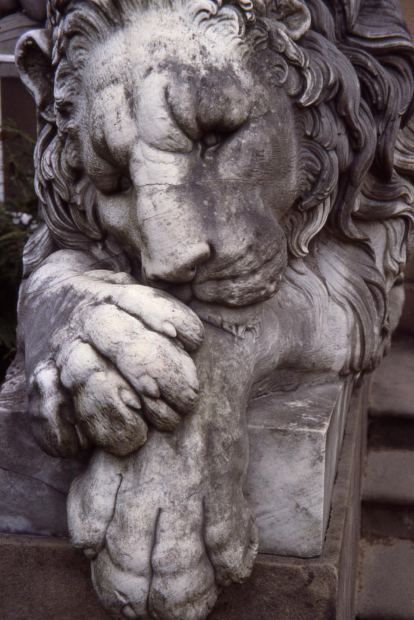
A stone statue of a lion dozing.
(Image courtesy of Beglib via Morguefile)

Millennial Gardener

“Hello, and welcome to Gardeners’ World.” 

               Six weekly words from Monty Don that fill me with excitement. 

                      My weekend starts right here. 

It’s Friday night. The housework is done and the fridge is full. I have no weddings to attend, no airport pick-ups to complete, and no job applications to submit. I don’t know where my phone is and I don’t care. Tomorrow I will go to The Garden Centre: my only appearance beyond my property’s perimeter. I won’t buy anything, plants-wise. I will be there ‘for inspiration’. The only permitted extravagance will be a couple of cappuccinos and a couple of croissants in the café, where my couple’s conversation will be of clematis, crocosmia, camellia, and chrysanthemum. Pot to pot, bed to bed, border to border. 

I am a Millennial Gardener and I married one too… 

Dirty at thirty    

I’ve never been hit by a bus, but last week my wife and I completely overhauled our garden, and I feel like I might as well have been. I’m in agony. It took fifty hours over four days, involving three conversations with adjoining neighbors over adjoining fences, two car journeys to collect supplies, and baking one homemade fruit loaf to enjoy during our self-allotted tea breaks.

 From which, as the days went by, our knees increasingly struggled to rise up again — 

  • You’re dealing with someone who’s run half-marathons in his time here. 
  • I’m an ex-personal trainer and amateur boxer. 
  • I’ve played two-hour Rock & Roll sets to audiences up and down the UK, night after night, with a band that recorded an album over eight days, surviving on little other than two hours’ sleep and the fumes from an empty bottle of tequila. 
  • I accidentally converted a seven-mile ramble into a 30-mile expedition in the Lake District when I missed the turn-off back to the … pub. 
  • And I once worked for 36 corporate days in a row preparing for a trial in the High Court of England & Wales. 

But I did all that in my twenties, a time full of exciting and youthful debauchery. The decade in which I’m now horrified to find myself in is one of aches and pains, indigestion tablets, weather forecasts, early nights, and compost-covered knees. I should’ve watched for the warning signs. 

A passion project

Yet, looking down from my window at that garden as I write these words, I am proud. We’ve taken a sad patch of overgrown turf — in the middle of a newly-built estate inhabited by our generational comrades — to a flourishing hideaway from what we’re conditioned to believe is reality.  

Unlike my legal career where the absence of a physical work product left a hole where satisfaction should’ve grown, the garden rewards us with fruits of our labor. Quite literally – our apple tree is about to burst and I’ve spied some baby strawberries hiding from the local birds. 

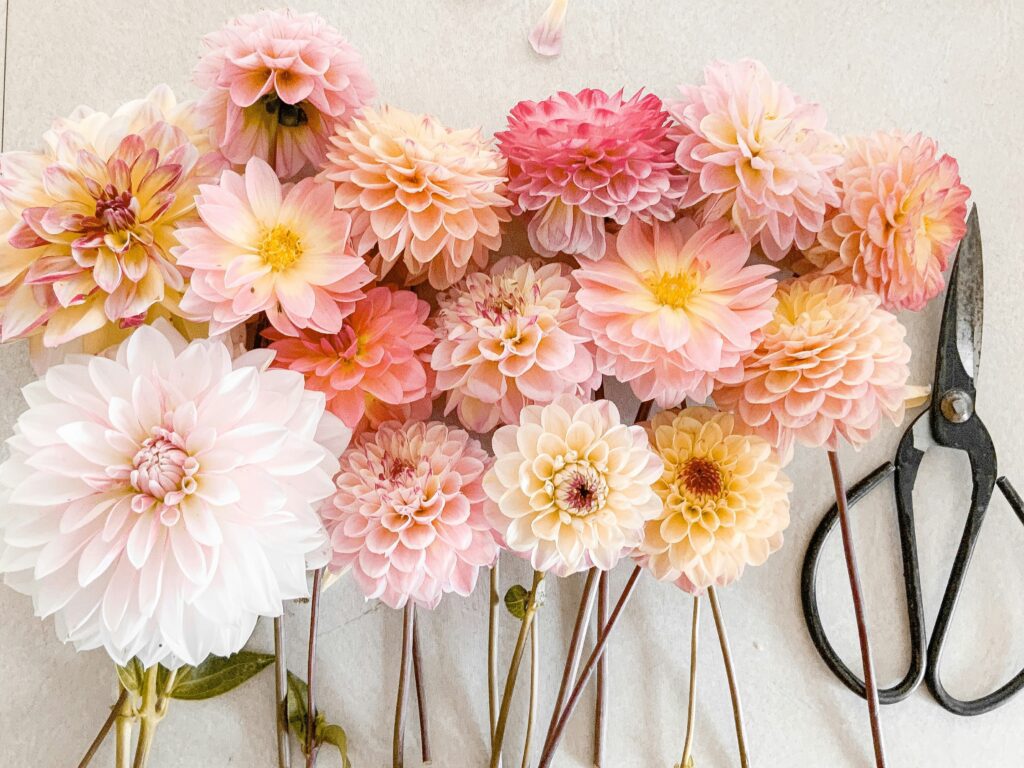
Our border plots are packed with hidden references to personal memories shared with lost relatives and absent friends. Our sweet peas climb in tribute to my granddad. Our fresh mint multiplies with a nod to childhood Sundays, foraging with my dad for lunch condiments. A peace Buddha keeps watch from the corner, grounded at the base of a crimson tree with love-shaped leaves. This year’s display of dahlias will be a psychedelic wonderland, and our self-built vegetable bed is our own slice of hippie self-sufficiency. The magnolia tree we wrestled from the jaws of demise is a reminder: if there is passion, even the most clueless and misguided forms can lead to greatness. 

(Image courtesy of Lynnelle Cleveland via Unsplash)

Don’t fence me in …

I don’t understand why gardening has such a geriatric reputation. That’s like saying cooking is boring. Sure, cooking is boring – if you’re one of those people whose craziest culinary flirtation is heating up a frozen lasagne. But, like any pursuit, artistic or otherwise, gardening is a blank canvas buzzing with endless creative potential. 

Yes, it’s a place for solitude and wholesome reflection. But it’s so much more than that. It’s a source of constant connection to sit, unbothered by the pressures of a fast, frightening world. 

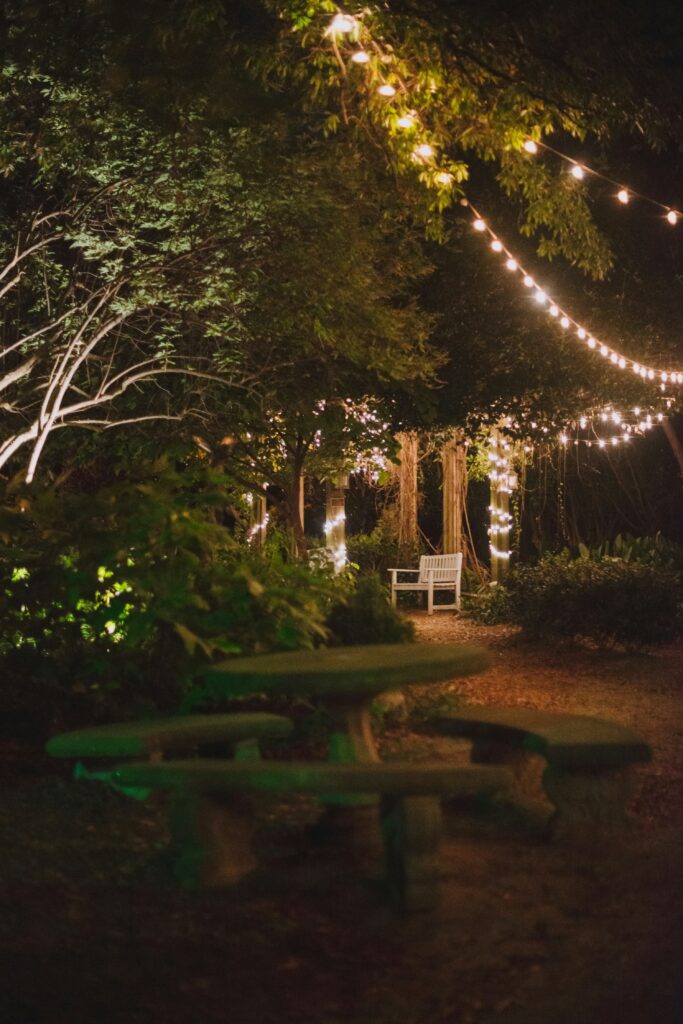
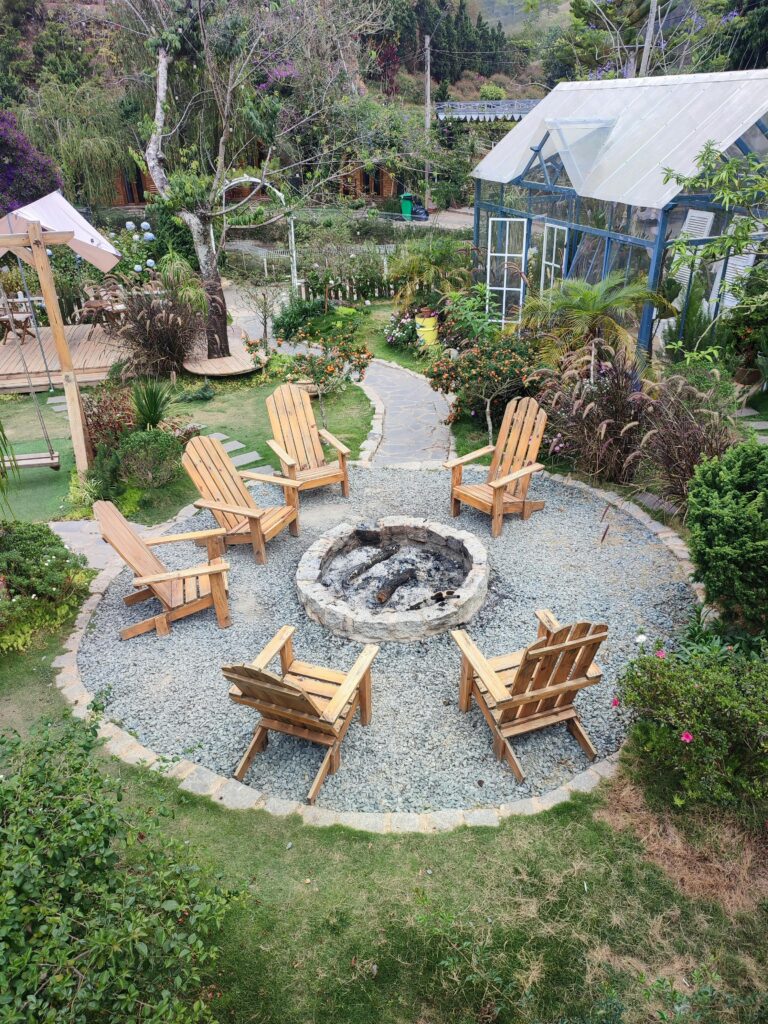
It’s a place for entertaining, strung, as it is, with festoon lights, like a small stage at Glastonbury, over a fire pit which was, last weekend, surrounded by my wife, my best friend of twenty years, his wonderful girlfriend, and me. Draining bottles of champagne and sharing cigars, playing mad games and acoustic guitars. Remembering times of old as a Two, and now as a Four, making plans for times new. Toasting marshmallows and friendship.

I never thought I’d find myself replacing the vodka-swilling nightclub promise of a Friday night with the dulcet tones of Monty Don. Just like I never believed I’d swap the supple collagen of twenty-five for the damaged cartilage of thirty-one. But with the slow wilting of the body seems to have bloomed an ameliorating of the mind. As we sat and drank and smoked and played and reminisced and conspired, I think our little share of nature, in some way, saved us all. 

(Image courtesy of Ella de Kross via Unsplash)

An Ode to Parkrun

New Year’s resolutions. Weight loss journeys. Fitness kicks. Meditation. Everyone has a reason for wanting to exercise, whether they’re driven by motives of result or satisfaction, but those just starting out may need a tactic to maintain motivation from week to week.

I was at one time one of those people, unable to muster the willpower to commit to any exercise routine. Many attempts were short-lived.

Then one day, after years of trying and failing to make any exercise stick, I was introduced to what would eventually become one of my greatest obsessions — parkrun.

Welcome to parkrun

Saturday no longer exists outside of parkrun. Saturday is parkrun day.

Parkrun is a collective network of five kilometer runs, taking place every Saturday at 9am in hundreds of locations across the UK and other countries around the world. Each event is free to attend, run by community-based volunteers, and the results for each attending runner are calculated and released via parkrun’s website and their app.

As of April 2025, 23 countries are actively hosting parkrun events, with over 2,000 individual parkrun locations and over nine million registered users. It’s a whopping community – one, and that played a massive part in immediately catching my interest.

A social outing that includes movement instead of a solitary jaunt at the gym? Sign me up.

Humble beginnings

It began with a social media post. Rather, it began with an onslaught of posts from a friend of mine and my dad’s — Caroline.

Caroline was a volunteer at her local course in Northampton, welcoming first timers and showing them the ropes. She also had a penchant for bombarding social media with constant encouragementcalls for new runners.

On a whim, my dad and I finally decided to  try our first parkrun at ourthe local park to see what all the fuss was about. Maybe Caroline was onto something.

It was New Year’s Eve in 2022, and winter that year was a cold one.

To give you a better understanding of my utter lack of experience with running, I stupidly decided to rock up wearing a pair of’ll share with you my outfit of choice for that day — jeans and a button-down shirt. I was, to say the least, ill-equipped to run. 

My dad, meanwhile, had tried on several occasions to get into the unrelated “Couch to 5K” program in his own time. Try as he might, the process never seemed to stick. 

I’m not sure what madness compelled ushim to finally answer Caroline’s frequent bids for running, but he did. 

Despite the frigid temperatures and our minimallack of running experience, we resolved to have fun at the very leastthat day. As it turned out, that’s exactly what parkrun catered to.

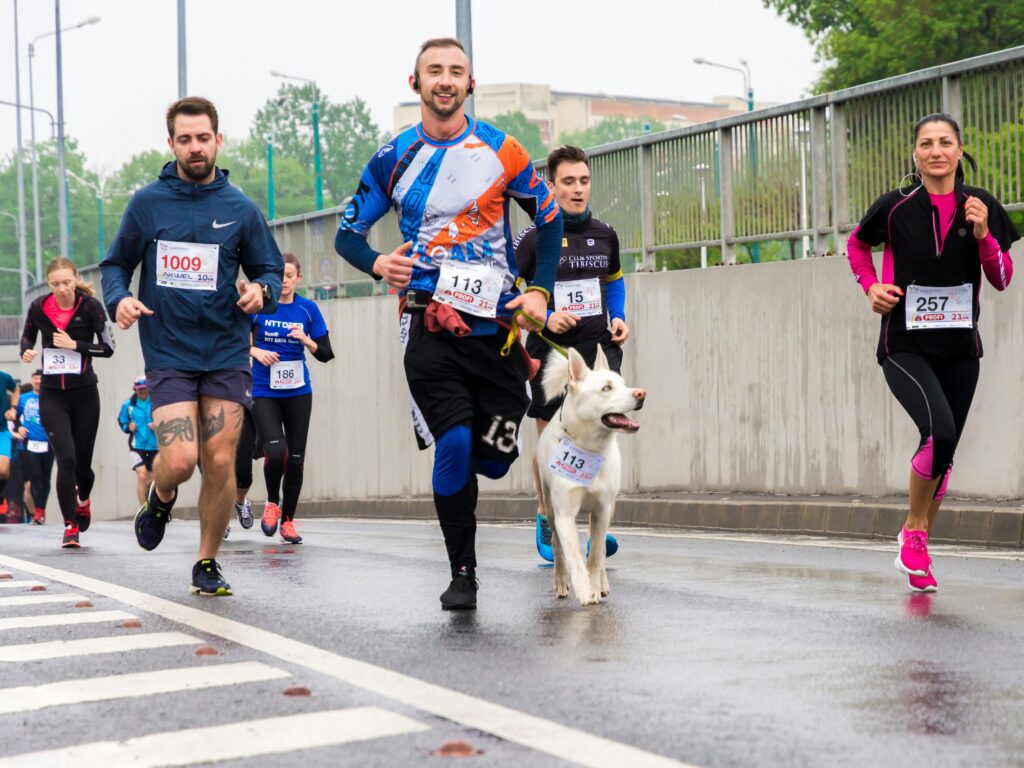
We were immediately struck by a sense of camaraderie — more than 200 people had dragged themselves out of bed on this festive day, each of them linked by the same, slightly insane purpose of running a 5k before 10am. Everyone was friendly and open to chatting about their parkrun journeys; some runners had even travelled from overseas just to be a part of a different parkrun group. 

Imagine travelling the world just to do a 5k with a group of people you’ve never met before…… That’s super inspiring.

The volunteers leadingrunning the event were supportive, assuring us that runners of all levels would be treated equally. We discovered later that one of the mandatory volunteer roles includes  “tail walkers,” whose job is to walk along with the back of the crowd to ensure no one finishes in last position. That was reassuring. Equally, runners were encouraged to bring dogs and young kids along, provided they stayed within reach of their respective adults. There was no concern from my dad or me on falling behind or looking out of place. The sentiment was very much, “We’ve all been beginners at some point.”

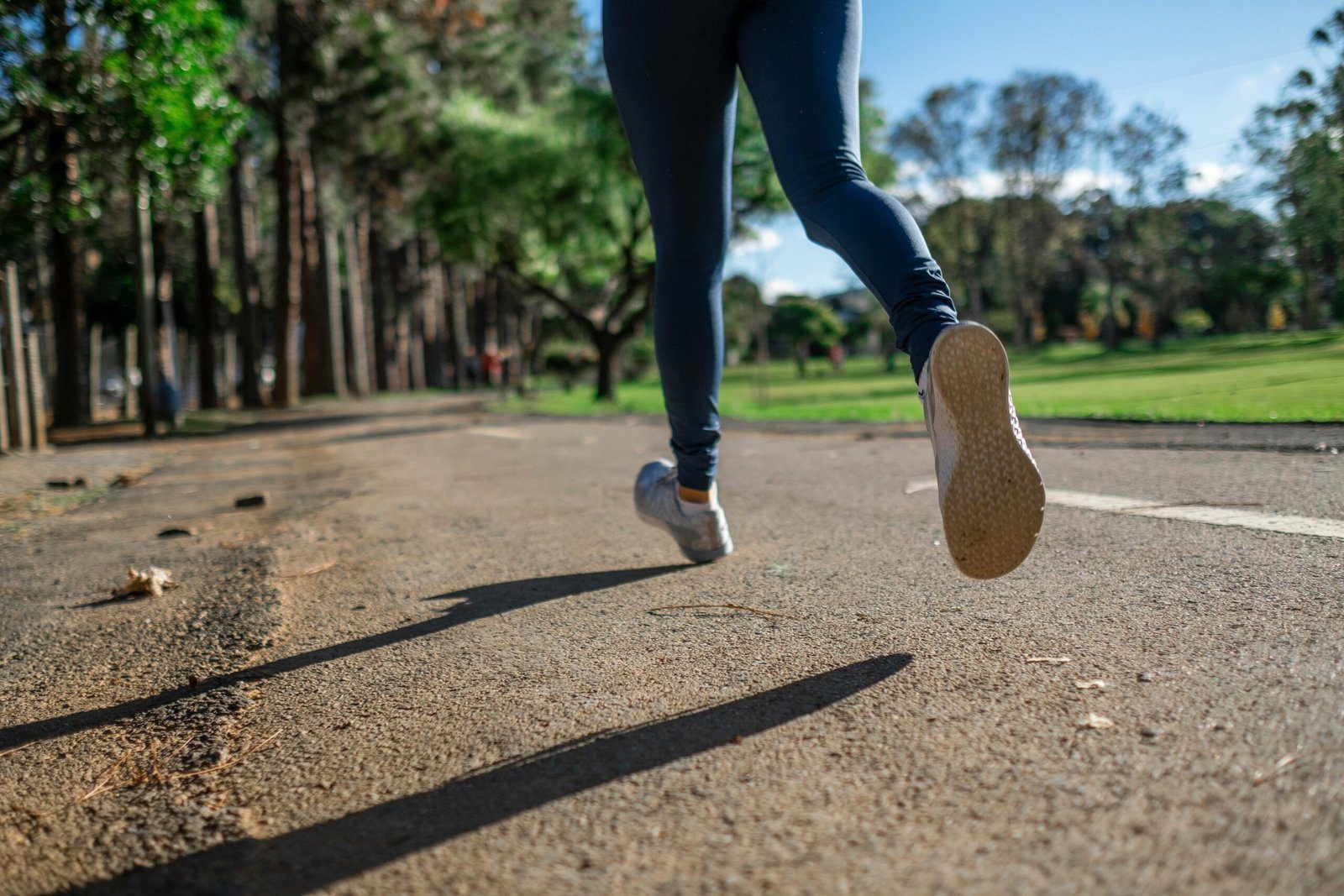
Image courtesy of Tara Glaser on Unsplash

Accountability buddies

Our first parkrun certainly wasn’t our fastest, with both of us clocking in around the 40-minute mark. We noted how gratifying it was to run alongside like-minded people — the rush of racing from a starting gate in a stampede. Everyone held each other accountable to achieve only the best that could be managed on that day.; 

Tthere was no competition with each other, or even past personal records. 

If we slowed to a walk, those overtaking would spur us along to keep us moving. The marshals around the course would cheer as we arrived at every checkpoint. Truly, witnessing the support network was incomparable.

Fitness tourism

Once I returned to university in 2023, I started clocking regular parkruns with my good friend John (who was something of a parkrun buff already). Through our frequent outings, I learned even more about the parkrun lifestyle. 

Courses are run on a variety of terrains — parks, forests, trails, promenades, beaches, hills, and wherever else permissions can be granted. The range of difficulties and experiences has given rise to a phenomenon called “parkrun tourism.”

Many runners set personal challenges — for example, completing a parkrun starting with every available letter of the alphabet, necessitating trips to countries such as Poland or the Netherlands to knock off tricky letters such as “Z.” UK-based parkrunners might try to complete at least one course in each of the major regions of the United Kingdom. John is one parkrun away from completing all the current 65 courses in the Greater London area, an achievement aptly named “LonDone”. 

I’m only at a measly 22.

(Image courtesy of Sherise Van Dyk on Unsplash)

Transformation

I’d always been interested in running throughout school and university, but something kept holding me back. Perhaps I felt too shy to demonstrate such a level of exertion in public, or maybe I had a stigma that I was more of a sprinter and could never build up my endurance.

Parkrun changed all of that. The community spirit is transformative — and one of the highlights of my week. Almost three years later, I’m 80 parkruns down and achieving sub-23-minute times regularly. I’ve started completing runs twice more in the week on Tuesdays and Thursdays. My fitness and happiness levels have improved tenfold; as a writer, it’s easy to sink into ideas without coming up for air, and running has become my tactic for modulating that burnout. I hope to continue exploring new parkruns and achieving milestones far into the future.

In searching for a new fitness regimeway to commit to consistent exercise, I initially saw parkrun as a starting point. 

Looking back now, starting was the easiest part for me.

Stopping is so much harder.

My Invitation to the Wellness Table

Well, isn’t that perfection?

My own experience with body dysmorphia began young. I was big as a child and, after a significant loss in my life, began quite the crash diet at 16, accompanied by near nightly hour-long runs. Yup. At 16, no dietician or for that matter remotely wise. I did very much lose the desired weight, but the cost on my body and self-image would last long after this driven attempt at taking control of it.

Disordered eating and its traits are prevalent. I’d go as far as to say in an increasingly visual, screen-drenched society, it may be more implicitly encouraged than ever. Johnathan Haidt’s The Anxious Generation gives a comprehensive overview of the unmitigated harm social media has dealt young people. The most pronounced strand is entirely wound around image, and inevitably, with society’s construct of beauty standards; body image. 

With young women definitely the most vulnerable on the front line of this danger, young men on a much smaller scale are incrementally falling to unhealthy self-image standards, too.

Yes, men, too

I’m using the term disordered eating because I contend its traits are easily found. One may or may not be ‘diagnosable’, but a rundown of the diagnoses may sound uncannily familiar. Orthorexia would be defined as ‘clean eating to an obsessional level’. Bigorexia would be defined as a ‘monomaniacal pursuit of desirable body definition with clean eating’, particularly prevalent among men. Contemporary gym culture seems to be a hotbed for both of these with an online environment fueling a culturally accepted fire.

Night Eating Syndrome is a consumption of 80% of a day’s calories at night. Well, I’ll openly admit after a night out with enough beers in me I must have done that more than once. Binge Eating Disorder can be characterized as always on and off diets, always going on a diet tomorrow, finding it extremely difficult to control eating outside of three meals per day. 

Let me be clear, a diagnosable condition is an urgent matter in need of professional intervention. Yet, I wholeheartedly believe the traits of many of these patterns are easily found among many millions.

I’ve always believed mental illness to a dangerous extent is projected in the greater public psyche to some ill-fitting cartoon. It’s the ‘outsider’: they’re male, they are muttering to themselves, their eyes are wild, they’re either wiry or huge so an explosion of violence is imminent. Yet statistical reality points in the opposite direction. The highest mortality rate of any psychiatric disorder belongs to anorexia nervosa. It’s not a guy who’s an overt danger to those around him, it’s a woman who’s a danger to herself. A young woman, barely noticeable, who wants to avoid confrontation, who doesn’t want to take up space, who wants to be small, who wants to get smaller and smaller till she disappears altogether. This young woman is desperate to take control and her means of doing so become her lethal enemy.

My contact with ‘The Underworld’

Working for an eating disorder program was a juxtaposed experience. Half was pure inspiration — witnessing vulnerable young women support one another as they hauled themselves out of hell one day at a time. The other half was a nigh-on Orwellian affair — abetting strict, unnatural conditions to bring acutely unwell individuals back to health in profoundly punishing ways. We would accompany them for three meals and two snacks across a day at the ‘Wellness Table’. People who desperately psychologically did not want food in their bodies. They say bringing an addict out of an addiction is like caging a tiger. The table was more like bringing a tiger out of a cage and taking it for a walk several times a day.

Returning home having worked with the eating-disorder patients was a singular experience. I have no problem admitting I usually came home either feeling somewhat shaken or stressed. In the same facility, I was regularly working with alcohol and drug misuse treatment, but that was rare to leave a mark the way this work did. There was a haunting quality to this work, to be engaged with people whose mortality was in question. Who at times would present as if they were just young girls ‘playing up’. Who could be genuine allies to each other’s progress, or need separating for being a danger to another’s wellness. It was truly difficult work to not take home and feel full of fear or frustration. 

Any resistance in their work could be a win for an illness on board that wanted them dead.

The most accessible psychology I found at the time was Carl Jung’s. In very broad terms, his psychoanalytic school of thought is half medical framework and half literature of mythology and folk tales. His psychological contention of archetypes and symbols in psychology has been greatly expanded and explored by many, most notably by Donald Kalsched. His work Trauma and the Soul holds incredible accounts of mythic symbology and archetypes found in depth psychology work. Angels, demons, gatekeepers, child gods continually recur in the dreams and imagination of people who dig such depths. What I never expected was to get a genuine sense of such hallmarks right in front of me, in reality.

The Wellness Table brought the most staggering encounter of transference I’ll ever have. Coming to the end of any of the three meals a day would leave me either exhausted, furious, or wired. This was not my energy, this was not my emotional state or thinking, it belonged to the brave young women on the program. But just 45 minutes of sharing that terrain with them left me in an entirely different and uncomfortable space. Some glimpses, sometimes, at their most resistant and unwell, when what was killing them was winning the fight, they would be archetypes walking the earth.

After having spent enough weeks witnessing these people take on their greatest challenge, the whole experience changed. How they appeared and felt to me was now different. The depths of just how unwell these young people were was staring me in the face. Bodies hardly sustaining their own running. 

On a slow track towards death and barely able to take that which would keep them alive. These people were liminal. Neither quite alive nor exactly on their deathbed. I was face to face with the Undead. 

Did the overwhelming majority of clients I worked with leave the facility in better health of body and mind than when they arrived? Yes. Many had made friendships during their stay that I’m confident lasted beyond. I would also be remiss to imply that every last patient was suffering from anorexia, as it wasn’t so. 

Yet in all cases, they had that flicker of something mythical, much of it stirring to witness. Embers of Promethean fire and a courage worthy of Athena herself. All warmed with hope. 

(Image courtesy of Aedrian Salazar via Unsplash)

Inmate or Guard?

I got the rarest of opportunities. Something of a fly on the wall in the most delicate of environments. As a kind of underling of a therapy team, an intern in a rehab is a unique kind of nothing; a cipher of experience, neither staff nor patient. Witness to anything with hardly any agency at all. “Inmate or Guard?”I was once asked by someone easing into their long-term stay. In truth, I wasn’t either. I’d find myself continually second-guessing the sense of service in my role. 

One of the organic joys was watching communities form. Total strangers with their poison taken from them, being asked to come together. There is absolutely nothing more harmful to a recovery than isolation. The two pillars upholding any active addiction are isolation and shame. One tends to feed the other in a vicious cycle. Getting to witness people historically riddled with these but now seen and heard, finding a sense of togetherness. was a genuine privilege. Being a trusted presence, fostering a sense of safety where this could happen, was hugely validating.

Yet there was always push and pull. Wanting the best for people and to see their growth could be a difficult thing to regulate. Being the guardrails and not anything more could be a difficult post. So much could be on the line for those giving their stay at the rehab the most long-lasting value. People, who over time and conversations, would come to reveal all that was glowing and admirable in them. Witnessing exactly how communities would form and bond could also be uneasy. What was camaraderie and what was corrosive? What was the place of gallows humor and a visible sense of mischief in an environment designed to bring people to reality?

Nevertheless, reality would arrive to puncture any floating above it all or skirting round the edges. 

Between process groups, therapy sessions and psycho-educational workshops, reality was coming after them day after day. In most cases I would witness, seldom would anybody leave without a sense that they had a problem of greater scale than they’d previously wanted to believe. Those staying had very real circumstances, phone calls could be worth the world, residents had families hanging in the balance.

Bruised and wounded

One of the several psychological interventions offered in the program was a “collateral letter”. The letter was to be read to a person staying at the rehab during a process group and it was to be written by their closest ones back home. Designed to be a confrontation with reality, not a lambasting or shaming. More a form of inventory of how much harm has been caused to those who mean the most.

One Monday, to a vibrant community of incredible lived stories and contagious characters, a collateral letter opened their week. It was thunderously powerful. The words written and read were searingly heartfelt. They were words laden with love, but a bruised and wounded one. The message was clear as day. The person the letter was written for was dearly loved, with children, a wife, a family to hold on to. This individual meant everything, but if they couldn’t leave alcohol behind, the mother of their children would have no choice but to protect the family and leave them behind.

The therapist sitting next to me was clearly moved. Breaths so deep I could’ve credited them to Tony Soprano. I was far from immune, sitting on a bubbling well of emotion that I needed to keep buttoned down for propriety. The person reading the letter was moved to tears and rightly so, she would lead the feedback as well. What she was reading mirrored her own circumstances, she’d spent the last couple of weeks clinging to phone calls on the present danger she could lose her own family. She would be seconded in the feedback. Another individual in the exact same present danger; grasp recovery or risk losing your closest. Soulful and robust, they underscored the gravity of matters to him: get a hold of yourself, get on with your recovery, words aren’t words alone, this is reality.

It was as if just for that 20-minute spell, somebody stopped the clocks. Time paused, reality was here and nothing else mattered. An individual was being handed truth in a form they’d never have again. A phosphorous, molten truth of priceless value. Where else could something with such honesty be handled with such care? 

On that Monday, I felt an immense sense of service. To be sure, I was just a small cog in a much greater machine, but that Monday I walked out feeling a part of something profoundly valuable.

Monday and Friday

The main thing that the therapy team hammered into interns and Healthcare Assistants was boundaries and just how important they are. Maybe I didn’t get that down, maybe I had a degree of personal investment in outcomes I could have handled better. There is always a danger in emotional resonance with matters one can’t control. When I came back that Friday, there was a different feeling around the place. The air was thick and stilted, something was off. Just four days on, from one of their several random drug tests, someone in the community tested positive for cocaine.

The message from the therapy team was clear: when there’s using, there’s no growing. The healing back to square one, the value lost, the formidable message of Monday nowhere to be found. “The Community is Unwell”.  I was gut-punched. The intervention couldn’t have been any more potent, the stakes any higher, yet mere days later we were staring down the barrel of families left in tatters. Addiction blindly bulldozing reality. 

It would be the longest day I’d spend interning at that rehab. It didn’t belong to me. It really wasn’t my hurt but I couldn’t deny the sting of it. I was left with a painful doubt — what use did this work have to these people? What was my service? 

(Image courtesy of Jakob Owens via Unsplash)

Monk-y Business: A Lost Lawyer In The Himalayas

Hippie birthday to you!  

I celebrated my 30th birthday at a meditation retreat in Rishikesh, India – in the foothills of the Himalayas. As I finished my last evening meal at the ashram, an iridescent birthday cake arrived for me on a motorcycle. In one of life’s more surreal moments, a disparate group of travellers, yogis and mystics sang ‘Happy Birthday’ while I blew out the candles.

For creative types, turning 30 seems to be some sort of ‘watershed moment’. Almost everyone I admire creatively has produced what history records as their ‘best’ work in their Twenties. As I approached my watershed, I was prepared to be ostracised from my own artistic circles because of it. Even though, in 2025, house prices, living costs and life expectancies mean that the Millennials are living in a decade-deficit to the milestones of our elders, turning 30 is still where it all ends. 

…but I’d only seemed to hit my groove at around 25 and to be allowed just 5 years to nurture it felt like being short-changed. 

My colleagues treated the Big-Three-Oh as a watershed too: to have a mortgage, a fiancée, another rung on the promotional ladder (and salary injection to prove it). Well, I had the mortgage and I had the fiancée but the ladder had revealed itself as a greased pole and the move from paper money to plastic meant that my bonus packet wouldn’t dry it off, no matter how much I threw at the problem. 

Telling people at the office that I was going away for my 30th birthday was invariably met with the half-century-ingrained disdain for ‘the Hippie’. The idea that meditation was the answer to anything – this airy-fairy, cult-like pretence – was seen as a pointless pursuit in the face of “The Real World”. If I wanted to be the successful person I was firmly en-route to becoming, then I needed to avoid the poisoned temptation of the Hippie Trail. I might as well have been telling them they needed to Turn-On, Tune-In and Drop-Out – the classic Summer Of Love soundbite now used to ridicule the tie-dye, pie-in-the-sky delusions of the ‘Flower Power Generation’

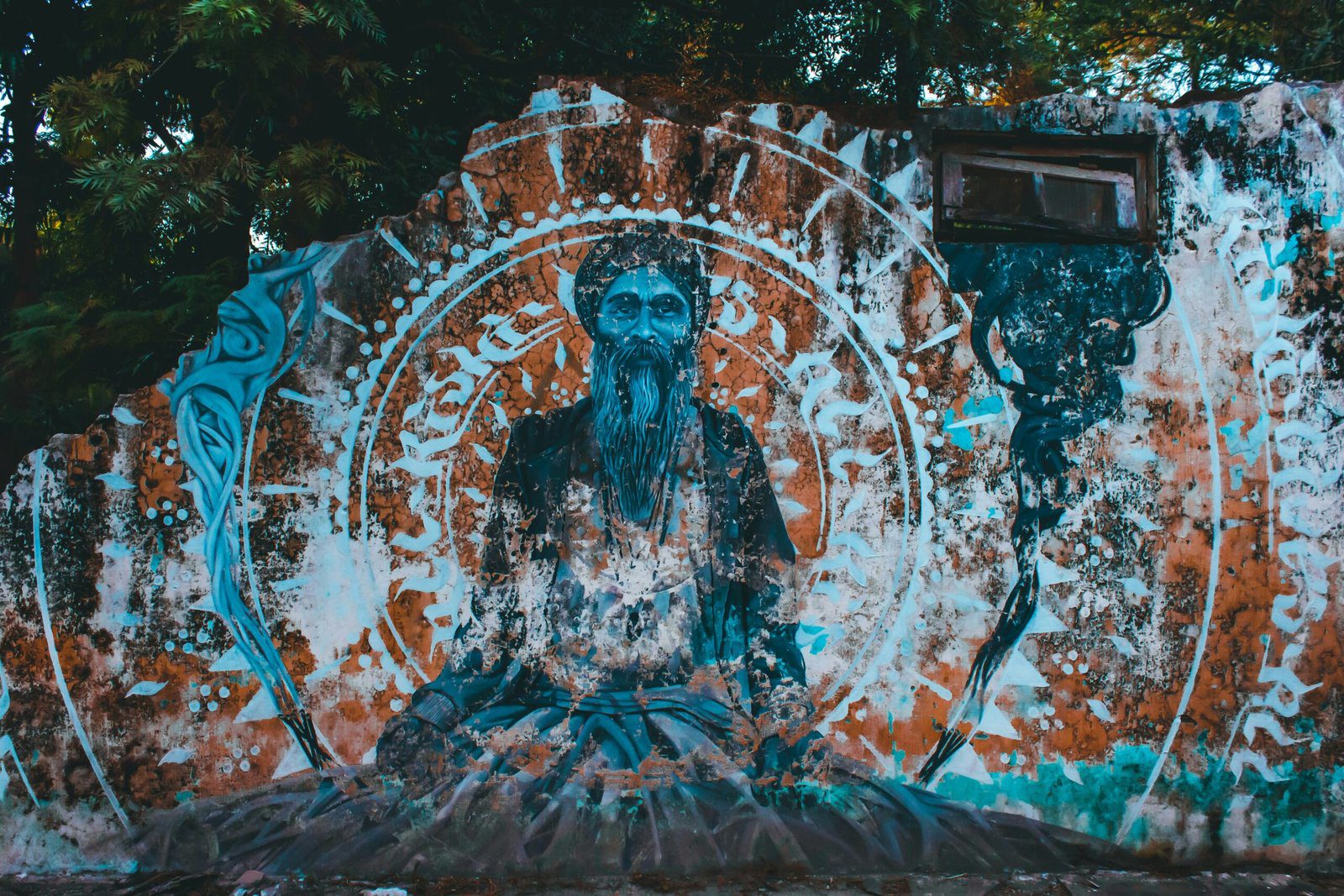
(Image courtesy RG Visuals of via Unsplash)

I know it would be naïve to proclaim the solution to world peace is free music, daisy chains and communal love, but I’ve always found it bizarre that the psychedelic movement’s core ideas of tolerance, acceptance and understanding are treated as hopeless rose-tinted relics rather than an aspirational blueprint for the future of humanity. As if carrying on with hating, stealing and killing is a more natural status quo. It seems incongruous with the values we’re taught as children – the values we’re supposed to embody as adults if we’re to be good world citizens. 

What turns us against humankind’s capacity for kindness to humans? And why are those of us who want to preserve it treated as unrealistic dreamers unfit to participate in adult life? A crusade against these perils of growing-up was as good a reason as any to embark upon a quest for ‘Eastern Answers’. The extreme stress and anxiety I was experiencing at work every day was just a bonus.

I hoped that my entry into the Fourth Decade would open the doors to the Fifth Dimension…

What I did on my holiday 

By the way, this isn’t one of those CULTURE-SHOCK pieces where the white, middle-class tourist reports on poverty’s romanticism from the laundered-linens of his 5-star suite. It’s not even an attempt to convey the mystical experiences I witnessed in India – to do so would be futile. If someone had told me that hallucination can be achieved through breathing alone and would cast-off years of hang-ups and self-doubt, without seeing it for myself, I wouldn’t believe it either… 

I arrived at the ashram after a morning flight from Delhi. The drive from the airport through increasingly-clean air was a welcome relief that I’d left the madness of Delhi, Agra and Jaipur behind; their city smog replaced with mountain mist. I was about to go completely off-grid. 

I was shown into a colourfully-painted office where my expectation to receive a marigold garland and a secret mantra was swiftly shot down when I was asked if I’d paid my balance via bank transfer and was given the Wi-Fi password. How about that for a culture shock? I suppose, for a walking, talking, juxtaposition like me – a corporate lawyer clinging to hippie ideals – it was fitting that these clashing opposites should extend to my search for spirituality. 

Of the 19 students at the ashram (from 10 countries and 4 continents), all 19 were Millennials and all 19 worked in corporate settings: a group of generational misfits reaching their watershed moments together. 

Were we all looking to ‘drop-out’? 

I’d flirted with meditation for years with little success. I thought transcendence was about preventing thought and stopping the brain. My time in Rishikesh – and its daily schedule of yoga, meditation, spiritual teaching and reflection – taught me that it’s actually about tolerating thought and letting it wash over me. By giving myself something simple to return to when a thought enters my mind, I can allow it to leave just as quickly. It’s about accepting that negative influences are a part of modern life and understanding that while we can’t control the negativity of others,we can control how we process it. As my favourite teacher there explained: “we are the ocean, not the waves. Though the waves are part of the ocean, the ocean can never be part of the waves”. 

I’ve learned to treat meditation not as some ‘higher consciousness’ but as a practical application which brings clarity of mind. Meditation done right doesn’t stop the brain: it slows it so I can live in the spaces between the thoughts. Like a ceiling fan spinning at full-tilt: you can’t distinguish the individual blades. The human mind is the same. 

Any souvenirs? 

Looking back, telling my colleagues my reasons for going to India and what I was hoping to bring home with me was probably my way of raising concerns for my wellbeing at work. 

The funny thing is that my workplace required anyone going on holiday to check their emails three times a day and so I had to obtain special permission to leave my work phone at home. To me, this was an opportunity for my managers to engage with the concerns of its people and the destructive effects of its working practices on their mental health. Instead, approval was granted because taking my phone to India “posed a national security risk”. An opportunity missed, which I let wash over me like waves in the ocean…  

…but India was my decider to quit the corporate sphere: it convinced me to ‘drop-out’. Maybe that means I’ve failed to incorporate meditation as a coping technique for the negativity of modern life. Or, maybe my newfound clarity will enable me to change things for those left behind, even if I’m now on the outside looking in. For anyone in a similar position, I’ll say this: you don’t need to drop-out to turn-on and tune-in, but it might help. 

Family of Origin

I was a twentysomething, twentysomething. Lost and wayward, yet somehow granted the occasional tentpoles of good people to guide me along the way. I was nudged by one of those people at the time to go work for a rehabilitation center. I was raised in an alcoholic home and, like many who come from such beginnings, memory is a blur to me. A roof beam here, an adult’s face there, maybe a friend’s house. But the older I’ve gotten, the more I can see how things were.

The adults aren’t my parents, the roof beam doesn’t belong to a place I recognize, and the friend’s house isn’t really a friend’s. I was shifted around a lot. I was the youngest of my family and because of this, I was kept away from the disaster zone. Like many, I’m sure, I was left with a lot of questions.

I knew the “how” and I knew the “why,” but not the “what” exactly. What is the profile of a person? What is in the architecture of a person who loses their motherhood for the bottle? It’s a fall from grace that many don’t want to know exists. Women, I know, have described motherhood as something “sacred.” What exactly is the making of a supposed transgression?

While it originally brought some amusement to tell people that I was interning at a rehab, it would turn out to be an incredibly rich, spiritually nourishing experience. Moreover, this voluntary engagement would soon turn into employment. At the start, my placement was once a week and each day was illuminating. Shadowing the therapy team, I was sitting in on group therapy sessions, handovers, and supporting clients during their stay.

There’s a prevalent cultural misconception about what a rehab is and what exactly it does. These places don’t and can’t fix people, neither do they heal or get rid of addiction. In clinical terms, twenty-eight days is hardly a pocket of time at all. What a rehab can do and what I’ve witnessed it do, is bust denial. It can give appropriate interventions in the correct environment to assure that there are no illusions about the scale of the problem. A rehab can give a person abstinence and the tools to uphold it. It can show the way for a lasting sobriety. It is entirely up to the individual if they want to take it beyond their stay; the choice can only be made by them.

Across the months, there would be clients passing through for twenty-eight-day stays, or longer. Treated as a collective, they would be known as the “community” by the therapy team. Within a month it became clear I was in the right place. Each community passing through included at least one woman in her forties who had become alcoholic. More curiously, father, brother, lover, son… they all had a significant “Oliver” in their lives. So who were they?

They were clearly people giving their all. Perhaps too much, they were all remarkably hard on themselves. They were all either the only girl in the family, or the youngest, having a profound sense of being the runt of the litter. They were all from homes where doing one’s best was required and yet having one’s feelings acknowledged was seldom. They were all from formative environments where anxiety could be felt in the air. They were all able to speak of a mother or father, sometimes both, that they just couldn’t reach.

(Image courtesy of Bùi Hoàng Long via Pexels)

From school rebellion, to university freedom, to home life and domesticity, each was profoundly affected by their actions letting down others. Each understood their drinking habits but hadn’t realized the extent of this pervasive spiritual anesthetic. Each one of these women felt unseen or unheard as perennial perfectionists with sewer-bound self-worth. Something had to give.

Yet I look at these themes and can’t help but figure… it’s no cosmic curse. It’s not a smiting from the Almighty. To be sure: some had a genetic predisposition, a family disease, but some didn’t. The women in question were remarkably warm, provincial, and familiar figures. You can picture them loading up their shopping in a supermarket car park. Or waiting and chatting with fellow parents at the school gates. Maybe catching a coffee with friends, prams and/or little monsters in tow. Perhaps finding an oh-so-rare moment to themselves at a nearby salon. These women aren’t anomalies; they’re all around us everyday.

Transgression or falling? I’m not so sure. Addiction has an eerie ability to breed denial and minimization. From what I’ve seen, it’s a playing-out of matters we can’t control, a hard turn of misfortune, a flicker of fate away. 

Burnout Isn’t Just for the Boardroom

Overwhelmed

Ever reached that point in life exhausted with whatever you are doing and wishing you could just let it be and leave? It may be yardwork, caregiving, or working in an office with job overload. But the first time I felt the weight of the word burnout wasn’t in a boardroom, but in school. Let me tell you a bit about my own burnout story.

It all started when I enrolled at a university in Kenya for my undergraduate course in biological science. Everything went well at first: getting used to the new environment, meeting new friends, and trying out new things. The first and second years passed; then, I reached my third year. At first, I did not notice what was happening inside me. I could feel a sudden increase of pressure, anger building up, the need to make money to survive on campus, and the stress of doing ‘fun’ activities like hanging out with my friends. Of course, the hangouts were not so­­­­­­­­­­­­­­­­­­­­­­­­­­­­­­­­­­­­­­ proper­.

Things at the university were very much contrary to my expectations. In my first year, I knew I was doing additional courses provided by the university because, as my seniors told me, it was laying the foundation. For instance, why were microbiologists learning about angiosperm and gymnosperm taxonomy in detail? They told me that by the third year, I would then start taking fewer units, and they’d only be related to my program. This turned out to be a lie; the number of units never decreased. Instead, many more units that I felt were unnecessary were added. In addition to these, there was the hands-on part of the program — called practicums. Most of the time these practicums were scheduled on weekends. Imagine having to attend boring lectures throughout the week, and then on the weekend when you are expecting to rest, you are required to do a practicum on a mouse’s anatomy or “the park grass experiment” to measure the biomass of grass.

When it came to class, I started feeling overwhelmed by the lectures and the assignments that were given. I could just miss classes intentionally, do assignments shallowly, and never bother to follow up on my academics. My friends were experiencing the same stress, so I felt comforted by their misery at the very least.

However, I had no option but to follow the university’s curriculum. To be sure, I was not the only one who was passing through this hectic system of learning. With resilience, I managed to clear my undergraduate stretch with first-class honors. I was also among the graduates who were able to win a scholarship grant from the university to further my studies at the university of my choice abroad. My hard work and dedication had at least and at last paid off.

A new dawn this was. I was happy that I could focus on my academics, and since it was a new environment, it would be an added advantage for me to socialize with new cultures and people. I managed to enroll in one of the best universities in Israel that offered a master’s degree in biological sciences — Tel Aviv University! Little did I know that this was the point where I would awaken all the pressure giants I had faced and thought I had shrugged off my shoulders back in Nairobi.

I started feeling weak. I lost my appetite, insomnia kicked in, and I began to procrastinate. I could postpone my research, write papers, and even attend lectures. Yet every time I tried to write a paper, I would wonder if I had done the correct thing as required. Would it be listed in the presentation panel? I felt lonely most of the time since most of my friends were not with me. At the same time, I had to look for extra money for my upkeep; the money provided by the scholarship could not cover all my needs. 

Let’s not even talk about the practicum that sent us researching  under the scorching sun of the Arava desert. 

Funnily, those who were around me at that time could not see this and instead applauded me for how I looked focused and serious. But deep down, I was going through a lot. Overwhelmed. The environment there was so much different from what I was used to in Kenya — the food, the climate, the language, and the fact that I was in one of the best universities in Israel. I was doing a work-study at the same time I had to submit my thesis for review, all while I had to attend conferences to maintain my scholarship. It was hectic, and not in a good way.

Weight a minute

Slowly, I gained weight. I was surprised when suddenly my clothes could not fit me anymore. The stress took its toll in other ways, too; I began to miss out on the activities that I enjoyed doing. Most of the time, I found myself outdated with what was trending around the world. I lost my enthusiasm for watching the news as I felt the information didn’t add any value to my life — and instead increased my burdens.

Whenever I turned on my TV or used social media, I felt disgusted. I did not know what to watch. I felt like everything was working against me. From my research, my social life, my private life, and even work-study — which was my primary source of livelihood. It hit hard when my procrastination intensified. I kept postponing everything, and most of the time, I felt trapped in the last-minute rush. 

I seemed to have a lot of problems that I needed solved immediately. The weight was beginning to exceed my limits, so I decided to share my experiences with a local friend. He had also been experiencing similar stress, but for him, he managed to cope with it and overcome it. It was at this moment that I realized what I was going through was burnout, and it was this mental, physical, and emotional exhaustion that made me feel like things were not aligning as they should. My friend recommended I start listening to and reading about matters of mental health. 

Calling out the burnout turned out to help

During this time, I came across a quote that stuck with me. According to a study from  the psychologist Demerouti (2024), ‘’While research trends offer valuable insights into burnout causes and effects, it is crucial to move beyond mere statistics and engage in open discussions about this issue.’’ I embraced Demerouti’s perspective of finding a solution to stress and burnout because it helped me in the end.

With time, I began to embrace my struggles and follow what the resources were suggesting. Through this lens, I developed a greater appreciation for my surroundings. Who knew that I would fall in love with the Israeli moshav (cooperative farming community,) and desert settlements, or that I would complete my research right in this region? Even Covid happening during my thesis presentation felt bearable. 

(Image courtesy of Anthony Cantin via Unsplash)

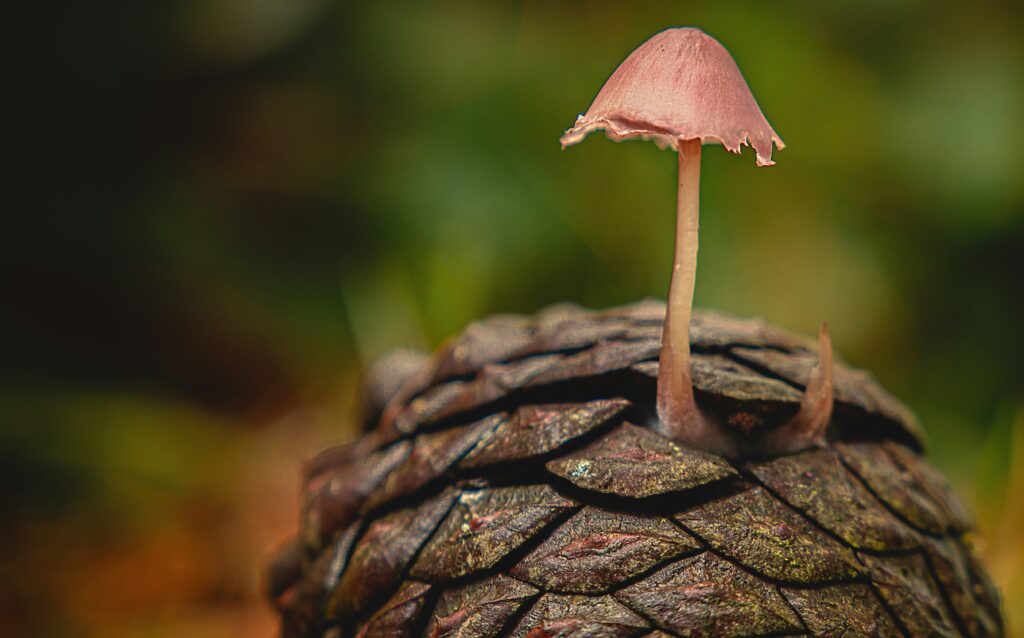
A brown mushroom growing out of a tree log.

The angiosperm and gymnosperm I despised in my undergraduate class finally made sense. I began exercising, fasting, reconnecting with nature, taking deep breaths, and walking on the beautiful Tel Aviv beaches, even the Arava. I began to appreciate myself for how far I had come and everything I had accomplished. The whole time I had been harsh on myself, and I was not even aware. I managed to complete my Master’s program and return to Kenya. 

Ever since, I decided to always appreciate myself and everything around me; I would let worrying be the least of my problems, and this new perspective was all thanks to my friend in Israel. So, thank you to that individual. 

You helped me overcome my own burnout by seeing and saying it.

Do People Like Me?

Do People Like Me?

I’ll admit it.
I’m an awkward person.

I have no idea what to say.
I can’t maintain eye contact.
Others probably get annoyed.

I say something.
It’s definitely wrong.
They try to comment.
I shouldn’t have said that.
They’re annoyed.

I see a familiar face.
They come over.
Probably to be nice.

I say something.
I screwed it up.
They hate me.

They don’t leave.
They say something else.
Just to be nice.

Less Manic, More Connected

This world is too complicated!

I have lived a life valuing the strength of the human connection in this complicated world. In my journey, I discovered the strong interconnection between language and human emotions.

The journey begins — honeymoon in France

This journey commenced when I started learning French. I never thought it would have such a dramatic impact on my life. I completed four years of learning French, and in those four years, I earned college credit that I was able to transfer to a Jesuit University in the Midwest, to major in French. In those four years, I immersed myself in grammar and literature. In my junior year, I went to study in Strasbourg, France. I studied there for around five months where I lived with a French family during the first month.  Being all by myself in a foreign land troubled me. Everything was entirely new — culture, people, and food. I ate the best food of my life with my host family while I moved  around the French city. Our weekends included enjoying lengthy meals while having endless conversations. In my first month, I went through the honeymoon phase — living overseas in a different culture so distinct from my own. 

 The first undertone

(Image Courtesy of Milada Vigerova via Unsplash)

In the first few months I studied there, I immersed myself in French. Along the way, I often stopped by a bakery or pastry shop sitting on almost every corner of the city. I had the opportunity to meet other French students from the university, and we quickly became friends. After months passed, I became more adapted to the culture and saw the world from a different viewpoint. By the summer after the classes ended, I was missing my family again and made plans to return home. Upon reaching home I shared my photos of France and all the details of the exciting experience I had enjoyed during my stay. Unfortunately, when I returned to my university with so much time passed, the friends I had made seemed uninterested in my stories from my overseas trip back home. Their lives had changed — never knew life would change so fast.  I thought everything would be the same — friends would be the same old friends.

For them, I was no longer important. I felt isolated and became depressed, and so I threw myself into my studies in the last semester. This was the first time I became depressed. I had no knowledge then of my family background with mood disorders. 

Career advancement

(Image courtesy of Armand Khoury via Unsplash)

In 1994, I began my career as an administrative assistant for the  Center of International Relations in my hometown . My hometown had many sister cities, and when I started at this company, the city was setting up a sister city relationship with a city in Senegal. The signing of the sister city treaty between the two was marked with celebrations and special events showcasing and welcoming the Senegalese local government officials. I remember the event so clearly with officials from Senegal — speaking with them in French. It was a great honor for me to communicate with important delegates in their own language, and I knew that it would take me far in terms of preparing me for my next career position. 

In 1997, two years after my previous job, I was employed by a global mobility company as a relocation consultant with varied responsibilities. While I did learn a lot in the relocation field while working here, I didn’t advance in my position. After three years of unhappiness with my job  I decided to move with the hope I might find better career opportunities there.

Since my move, I have had great success in the global mobility and language education market, working for many companies and local language schools. 

The breakdown — slide into mania

(Image courtesy of Nik via Unsplash)

Unfortunately, in 2002, I suffered a mental health crisis with mania and depression, and it hurt me greatly at work. Yet I was not willing to believe that my actions were the reason for my poor job performance.

When I got engaged in December of 2002, I only focused on planning our wedding.

I became obsessed with wedding details, spending two to three hours on the computer daily. I lost sleep and began my slide into mania and showed up late at work. I became agitated and anxious at times. I ignored it. 

Several months later, I went to the emergency room at a nearby university hospital to seek care. Eventually, I met a doctor who recognized my symptoms and asked me to make an appointment with the Mood Disorders Clinic at a local university hospital.  I was taken off all my previous medications and went into bad withdrawal. My mind was racing and I could not quiet my thoughts…

The human touch

(Photo Courtesy of Aditya Romansa via Unsplash)

My mother visited some months later, after a visit from my sister (paid for by my brother, as she herself suffered from bipolar disorder), and my brother and my husband felt it would be of help. My mother lay in the bed alongside me.  I was so agitated with her beside me that she could not sleep either. I was unable to remain still in bed, so without sleep, I had my head on my table with exhaustion. My mind was racing and I could not quiet my thoughts. In the mornings, she helped me eat breakfast and tried to get me to walk a little bit, as it was so difficult for me at that time to even walk down the street.

I cried after my mother left. My husband could not attend to me while he was at work and would arrange a schedule of activities for me. I continued to fall deep into my depression. The medications only stabilized my mood and anxiety and allowed me to sleep for a few hours at a time. 

It was only after a whole year that I started a new medication shown to treat bipolar depression better. It was like a ray of sunshine piercing a cloudy world. After several weeks, I made a major recovery and could proceed with a subsequent trip to Southeast Asia.

Stability

(Image courtesy of Dareius Bashar via Unsplash)

My fiancé and I traveled to Southeast Asia in  December 2004 to get married,  and then traveled to more places for our honeymoon. I learned from experience that when you travel or live in another country you must do as the Romans do — adapt to the different cultural manners, especially with how to dress and how to eat. I also had to dress more ‘modestly as a woman’ in that I couldn’t show my bare legs, and had to learn how to eat with my hands. I have faced more and more challenges along the way in every country I visited. 

After my trip overseas. I returned with more stability and more confidence. I was able to take a class in Teaching Writing Online in a TESOL certificate program while I pursued returning to my career as an ESL instructor. My face-to-face classes, unfortunately, ended when the COVID-19 pandemic impacted the whole world. I had to transition to online lessons. 

Only humanly possible 

Since the COVID-19 pandemic hit in 2020, isolation has disturbed me. I needed human contact. I knew that in the years ahead, it would be very problematic for me without that connection. It changed my mode of communication with my family, as at the beginning of the pandemic we chose to connect over Zoom since we were all indoors with no direct contact with each other. It did bring us closer together and we have become a very close-knit family. 

I have faced multiple challenges in my life and have overcome them. Through these challenges, I have understood the value of self-expression and human connection through emotions and language.