Sole Searching

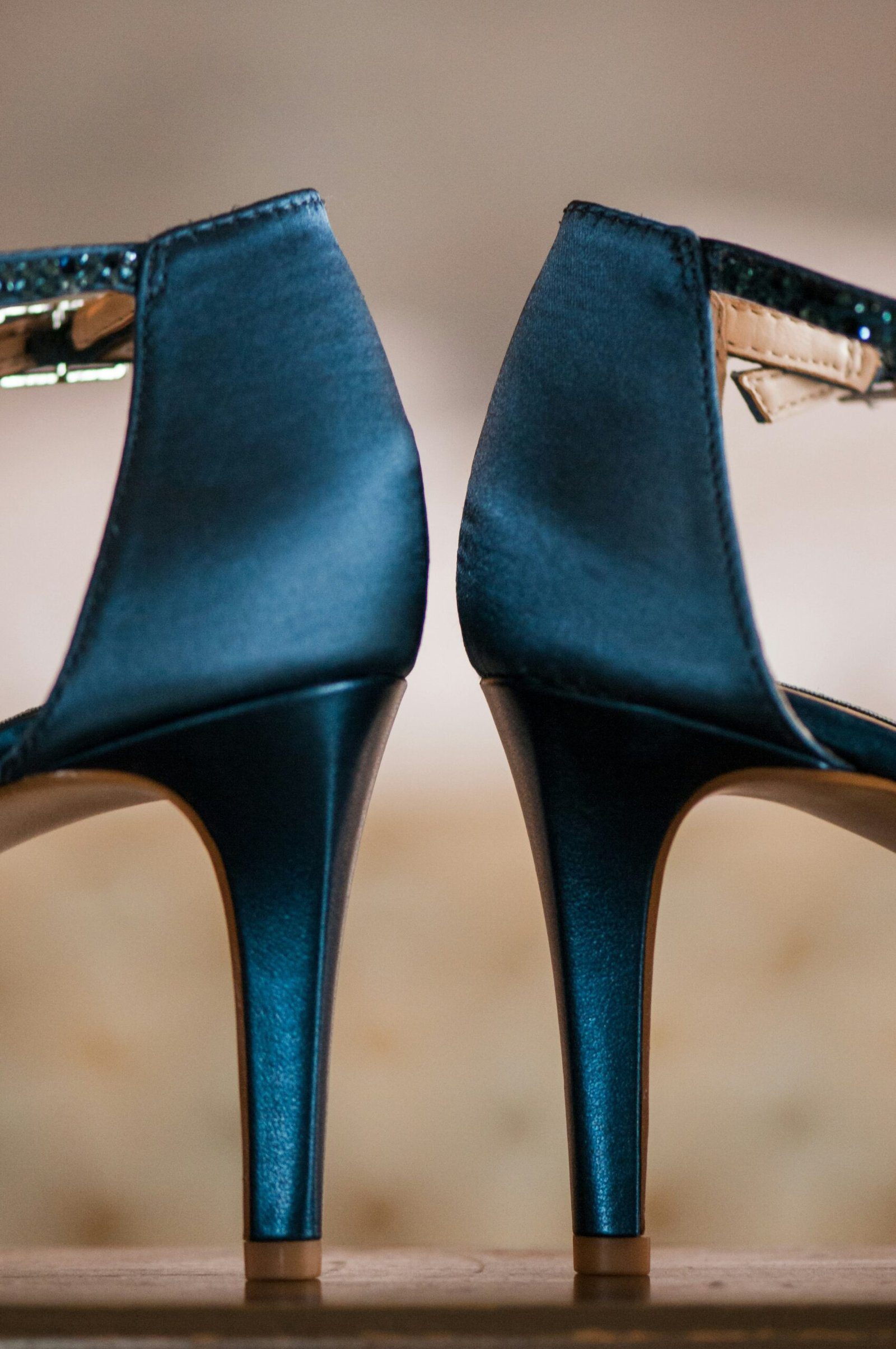
I took a deep breath and gave away my dance shoes. It was a bittersweet moment. It felt like admitting defeat and releasing pressure on myself at the same time. They were these super chic black leather heels, complete with a suede patch (for easy turns) and padded insoles; Gorgeous, really. A birthday gift from two years ago, I kept them for this long but only occasionally put them on. I always clung to the hope that my feet would magically adjust to them, but that never happened. I could barely stand in those shoes, let alone dance. They were excruciatingly painful. 

I once heard someone say, “The prettier the shoe, the more it hurts”. The problem wasn’t about this specific pair of heels; it was all of them. Wedges, pumps, kitten heels — you name it, I tried them all. My feet just never cooperated. 

The high cost of heels

I’ve been suffering from full-body chronic pain since childhood. I didn’t know that term back then; I thought that I was just out of shape. However, while in college, my desire to be a stylish “cool girl” was so strong that I was willing to do whatever I could. Besides, I wanted to fit in with the other girls and, being a girly girl, heels absolutely fit my aesthetic. 

“Short girls look great in heels,” they said. “Heels will fix your posture, boost your confidence, and complete your outfit.” My 150cm (4”11) self readily agreed with them. 

They insisted that all I needed to do was practice and I did just that. I bought a few pairs, walked around in my room, and went out dancing in them. I bought extra suede strips to secure the shoes to my ankles. However, my feet always threw a full-on rebellion. I was always getting injuries from twisted ankles, I experienced frequent spikes of pain in my knees and legs, on top of the chronic pain. To make matters worse, my sensitive skin was also prone to sores and blisters. 

Over the years, I faced numerous comments from well-meaning women on the virtues of heels. Like me, they were sold the idea of “il faut souffrir pour être belle” or “beauty is pain.” Despite agreeing with them, I couldn’t deny the discomfort and instability heels brought me. 

At 22, I remember cat-walking the runway at a fashion show. My biggest anxiety wasn’t stage fright but walking in five-inch wedges instead. It was twisting my ankle, falling on my face, injuring myself, and ruining my fabulous clothes in the process. Luckily, I didn’t fall. I walked the runway fairly well, but I still remember that fear too well. No wonder my modeling career was short-lived. 

Eventually, I gave up on heels, opting for flat shoes with ankle support. Sure, I faced some teasing, but I refused to endure such pain for the sake of appearances.

Fast forward to two years ago, I discovered Latin dance. I watched in awe as beautiful women danced salsa and bachata in stilettos gracefully and effortlessly. They seemed to glide on their tippy toes as if defying gravity itself. I felt completely out of place in my flat-soled shoes, and the other women looked at me with a mix of mild pity and sympathy. I joked with them that I’m just a potato in sneakers. Talk about self-deprecating!

The women gave me well-meaning advice: go for a chunky heel, invest in custom-made pairs, do these specific exercises, train yourself to balance on the balls of your feet, etc. It felt like déjà vu from my young adult years — feeling left out, inadequate, and like I was not trying hard enough. I wondered… Am I still giving in to peer pressure? At this age? It was a bit embarrassing, to be honest. 

Finding my footing

And then, a massive shift happened. A few months ago, I discovered the term “hypermobility.” For years I had been chasing a diagnosis, hopping from one specialist to another. Even countless physical therapy, acupuncture, and chiropractic sessions could not give me the answers and pain relief I needed. A woman on Instagram reels, however, described the condition with such profound accuracy, I was blown away. Yes, I’m gonna say it. The reel had me reeling. 

Suddenly, everything made sense! Not just for my feet but my entire body. Putting a name to the pain was cathartic. The word felt like a key unlocking a door to a room full of answers. It explained why my body behaved the way it did, why I was in so much pain, and even why I breathed the way I did.

Hypermobility is this peculiar trait where your joints move beyond the normal range. This discovery explained the aches and other peculiarities of my body that had long been dismissed as quirks or weaknesses. It was strange, yet somewhat comforting, to finally have a name for why I kept getting injuries, and why my body sometimes feels like it’s rebelling against me. 

I am now working on my posture and strength in a way that honors my body’s reality instead of fighting it. I accept my feet, ankles, and the whole package. I released myself from self-torture. I accept that I’m short and no longer feel the need to appear tall. So what if I’m three owls in a salsa dress? Peer pressure? I don’t know her. 

So, I’m happy my dance shoes found a new home. Their super chic black leather elegance is now adorning someone else’s feet, a young woman on the cusp of adulthood. Before relinquishing the shoes, I made sure to ask her, “Do they hurt?” She assured me they didn’t with a wide, giddy grin. I sighed, relieved that I didn’t have to worry about peer-pressuring her into wearing something that hurt her. 

I admire and support other women who enjoy heels. I acknowledge the confidence-boosting power of heels and the way they complete an outfit. However, my choice is clear — I prioritize being pain-free over fitting in with the crowd. Today, I dance in pink flat-soled shoes, complete with a suede patch for easy spinning. 

In the end, it’s not about the shoes; it’s about accepting and honoring my body. Feet first. 
 Growing up Wasian in Australia

Sentinel Duet: Check out Eric Mabry’s story here for a complementary perspective and a different experience of being biracial from another corner of our world!

After my first Chinese lesson as an adult, I called my Grandma to tell her what I had learned. I speak my mother’s language — the language of the country I was born in and the language of the country I live in now — but I have never been able to properly learn Chinese, despite being half Chinese myself.

My inability to speak Chinese has made me feel like I’m bad at being Asian. My dad didn’t raise me with Chinese traditions or send me to Saturday language school — though this is not his fault. Not only did he face the pressure of bringing up a child in a country that he himself was not raised in, but he also faced the influence of my mum’s Polish culture. I couldn’t go to Chinese school because that was when I had Polish school and I couldn’t study it in high school because we could only choose one language and I chose German. It was the easier choice since I was born there and it was my first language until I moved to Australia, so it made the most logical sense at the time.

In many ways it feels like I’m not just trying to balance being Asian and European, but Asian and European and Australian. Although I hate to admit it, the Australian side almost always wins. I’ve had family members ask me if I feel more Asian or Caucasian multiple times, which just makes me feel like they don’t fully accept me as part of their culture. 

When I was younger, I thought Caucasian meant mixed race because the word ‘Asian’ was part of the word. I’ve always seen it as a scale where every decision or ability adds weight to one culture. It shocks me that people who don’t see themselves this way exist. As I grow older, I try harder to equalise the sides.

My Chinese side, I noticed, seems to relate a lot to food. I’m learning how to cook basic Chinese dishes like fried rice with Chinese sausage or wonton noodle soup. When I was a teenager, my grandma taught me how to make spring rolls and curry puffs, which I tell myself I’ll make but never seem to get around to doing. An easy way out for me is adding bok choy and choy sum to a lot of my meals and we always have snacks from the Asian grocer at home. In a way, this is how I compensate for not knowing how to say these dishes in Chinese. 

I’ve only been to China and Hong Kong once, with my family, and although it was a lovely trip, it didn’t feel like a trip “home.” I didn’t learn about my family history or my roots, and the only Chinese I picked up was the symbol for exit 出 which my dad taught me to look out for.

I learned Polish until my final year of high school and it ended up being my best subject. I don’t know how to cook the food, but I speak the language with my mum every day and am fluent enough to be able to talk to my grandparents and family members without embarrassing myself. I’ve learned about the traditions and history, and I have also worn traditional Polish clothing and visited many times, especially while we still lived in Europe. While my knowledge of the language and traditions helps me feel more like I am actually a part of this culture, it’s still quite obvious that I don’t look the same as my family members and I still have an accent when I speak. 

This is why I decided to attend a beginner’s Mandarin lesson at university. It was comforting to meet other Chinese-Australians who didn’t speak the language, even if I was the only half-white one and even if I didn’t retain much. It doesn’t help that Mandarin and pretty much all Chinese dialects are notoriously difficult for native English speakers. When we were learning how to say which hobbies we enjoyed, I found the word for reading too difficult and only remembered the word that my partner used, ‘pēng rèn’. So, when someone asks me what I like to do, I don’t know how to answer honestly but I can say “Wǒ xǐhuān pēng rèn.” 

Other incredibly useful phrases I’ve learned over some lessons in primary school are “Qǐng gěi wǒ yī bēi kā fēi” and “Wǒ bù zhīdào” (‘please give me a cup of coffee’ and ‘I don’t know’) and I can count up to 100. I guess no one that I speak Chinese to has to know that I feel pretty ambivalent towards cooking and that I don’t even drink coffee, but I find it strange how parts of yourself change or get lost in translation when you speak a different language. 

I notice this when I speak Polish and German, too. Although I’m becoming more fluent in both these languages and currently studying German at university, I feel like part of me will still never be as articulate, witty, or fast as I am in English. Different versions of myself appear depending on the language that I speak, each version varying in complexity depending on how competent my language skills are. 

I eventually want to move back to Germany, but the idea that I will never be able to accurately express my thoughts, emotions, and nuanced opinions to people the same way I can in English scares me. I know being bilingual or trilingual is common and that many people who live in Australia speak English as their second language, but I feel like not enough people are talking about the power that language holds and how it impacts you daily. It’s a privilege to speak English as my first language and I’m grateful that my parents moved here and grateful for my upbringing here, but it does mean my identity has always been, and always will be, split between different places.

I feel as though I’ve read many essays about being Asian-Australian. I belong in the club, but once everyone sees that I look white — even if my last name is indisputably Chinese — they will kick me out. What scares me is that I can try my hardest to be Chinese, I can learn Mandarin and Cantonese and listen to Lan Ge and watch Wong Kar-Wai films and eat as much siu mai and har gao (two different kinds of Chinese steamed dumplings) as I can want, but they will still hear my Western accent and see my face and not view me as one of them. The experience of being othered is so ingrained in my existence that I find it so strange that not everyone like me feels split in half.

Being a Depressed Mom

It’s hard feeling depressed. And it’s really hard to be a depressed mother. 

It takes a lot of effort to get up in the morning and much more effort to take care of others.

Depression is thought to be one of the fiercest mental illnesses, one that nearly paralyzes its patients. Nothing is ever easy. Waking up, eating, going to work or school, even going out with friends is difficult.  

When my older kids reached the age when they could grab a sandwich or a cookie on their own meaning they had a bit of independence and were past the breastfeeding stage and I was hit by one of those overwhelming attacks, I’d often keep them in front of the TV all the time. For how many hours? I could never tell. However, I could only blame myself for the careless mother I was, while sleeping and suffering from nightmares. 

Feeling guilt is, at least for me, the core of depression. Most of the time, I feel guilty about everything for no reason at all. It might be about something I forgot, whenever my kids fall ill, if they’re not eating well, or even when they’re simply annoyed with each other. It was always my fault. 

I am always there to be blamed.

My mind often bombards me with questions like, “Shouldn’t you have put out some veggies for the kids?” or “Couldn’t you at least have spent some time telling them a story first instead of simply just tucking them into bed?” or “How often do you play with your little ones? Do you really believe that once in a while is enough?”

The questions never end.

And the answers are always backed up deep in my mind, with the voice of a very perfect mother, chastising me with remarks like, “You’re always fucked up,” “You’re a loser,” and the ever so sarcastic, “What a perfect mom!” 

And this internal struggle goes on daily, from the moment I wake up. “Have I woken them up nicely today?” or “Why the hell did I yell at them when they drove me crazy?!” And it continues throughout the day with lunch, homework, time to bathe or sleep, screen time, and so on. 

Of course, sometimes, when everything seems to flow smoothly, I dare to think “Perhaps I’m not a bad mommy after all.” But those feelings never stick around for more than a few hours.

I know all mothers have a hard time taking care of their kids, with raising them and the challenges that come with that. But if you add depression to the complicated equation of motherhood, it’s hard to see anything but misery out there. 

There were a lot of nights that I spent wishing I had never been gifted my beautiful little ones. There were days when I thought I ruined their mental or psychological lives, perhaps just due to a word. A lot of my time is spent thinking about the harm I have caused them by living in the same house as a psycho mom who sometimes flees to her room just to cry out or yell or sleep. 

Depressed mothers suffer the most because they are part of the vicious circle that holds them responsible for everything related to their children. However, sometimes, I feel like I’ve learned and taught them something of benefit. I give them most of the time freedom to feel bad, to appreciate the tiny everyday good things and to empathize with me and themselves. Sometimes when I would sink into a depressive episode, my eldest kid would come and hug me saying, “It’s ok, mom.” 

A couple of hours ago, I was really feeling stressed. I was yelling at all of them to get dressed quickly and prepare themselves. I even yelled at my 4-year-old girl as she continued playing. After she surrendered and let me dress her, she kept saying, “I don’t want you to be sad. I didn’t mean that.” 

Although, as a matter of fact, I feel guilty after such words, I also realize that maybe there is a positive side to all this. 

When I was a little girl, I never learned that someone could be mentally ill. I only thought of pain in terms of bleeding or broken bones. If there are no physical symptoms, they are completely fine; they’ve no reason to miss school or postpone an errand. 

I remember crying silently under my blanket at night for so many reasons. I remember trying to make myself sick to skip school. 

Years later, when I was old enough to work, I was still fragile on the inside. I was harassed at work. I still couldn’t speak up at home and say that I was stressed or that I was psychologically down. I came up with a different mature idea to skip both home and work. I said I was going to work as usual but headed for a big park and spent that day there.

I cannot say that I was always depressed. There were times when I was happy. 

Maybe my childhood was hard. I was a quiet kid. I was always clever at school and I was always the model child; the example my parents encouraged my siblings to imitate, but that same pride they showed was always a heavy load to me. Somehow I was prohibited from being who I really am.

Now that I’ve learned the meaning of depression, I can say that maybe I did have early episodes that I wasn’t aware of. When I first went to a psychiatrist and started taking medications, I couldn’t tell my mother and my family what was going on with me. I couldn’t face them with the idea of psychological illness, which we never recognized as being real. I couldn’t cope with their feelings of pity for me and their trials to get me cured. 

After a couple of years, they saw me struggling during one of my episodes. And again, I was always the reason for what’s going on with me. Sometimes the reason I suffered was that I wasn’t close enough to God. At other times, I was accused of not appreciating the blessings I have. And at a different time, my family believed that Satan had control over me. 

My suffering had a different route, a fiercer one, when I became pregnant with my first baby. I started pitying myself and my kid. I started having nightmares about the future of my kid. I couldn’t continue my regular medication being pregnant. I had to endure the whole thing while suffering from the normal hormonal disturbances that all mothers experience. 

And since then, the little seedling of guilt started to grow in me. I started getting anxious about the future of my kids and how my mood would affect them. I started to believe that I was the only reason for everything bad that would happen to them. 

I’m still struggling with these ideas today. My oldest kid is now twelve, a lovely, sensitive, and kind girl. Sometimes I still think that it was wrong to bring my kids into this life. And because I know that I do have depression, I try saying that life is not as cruel as I think it is.

But most of the time I don’t believe it.

Today, I try to mention three good things every day. I’ve done it for three years. For a person with depression, mentioning three good things every day is really hard. 

 Of course, there were many days when I dropped the whole thing. There were weeks that passed me by as I lay in bed thinking about the blessing of death and hoping that the so-called God would just stop my suffering; days when I thought it’s useless, that existence has no meaning and that life itself is such a curse.

However, there were times when my husband took my hands and hugged me while I just cried. There were times when I could overcome my dark ideas bravely and start over again, even though not all the time. There were times when I went to the cinema, watched a movie with my partner and died laughing. 

And so, I’m sharing my struggle publicly. I wanted others to support me, to see that I am struggling and to encourage me to continue. I want to help other mothers grappling with depression just like me. Maybe they’ll find something to help them stand up and keep facing life. I also wanted to create a backup memory that I can check anytime to acknowledge my strengths: to see that I’m a good person, a good mother, a good lover. 

To see that I am a warrior. 

Ingredients for Love: The Unspoken Language of My Grandma’s Kitchen

As years go by, I spend more and more time making memories in my grandma’s kitchen. It took me a long time to realize that food is how she shows her love. I’ve come to understand that the food we make together isn’t just something to eat; it’s also my grandma’s way of connecting with me and sharing her life story.

I went to Gramma’s old house a lot as a kid. I usually spent most of my time in the kitchen. Located in the heart of the home, there was always something interesting happening there. It didn’t matter where I was in the house; at least one of my senses always pointed toward the kitchen. It was a rarity for it not to seep the delectable scent of freshly baked brownies. Those were my favorite desserts growing up, so we made them almost every time I visited her house. I would help pour and mix the ingredients, then wait for the timer. Once I heard the oven beep, I knew it meant it was finally time to indulge in our treat.

From childhood to adulthood, my grandma instilled her cooking and baking skills in me. She’s had several kitchens throughout my life, but they’ve all served the same purpose. We’ve started using more recipes. Most of them come from the cookbook she’s had since she was a teenager. The pages are so delicate that I’m always afraid I’ll ruin them, though they’re already stained and yellow and ripped in multiple places. Those flaws just mean the book has been used extensively through the decades. When I come over, we look through it to determine which desserts to bring to life, such as her famous apple pie or butterscotch pudding. 

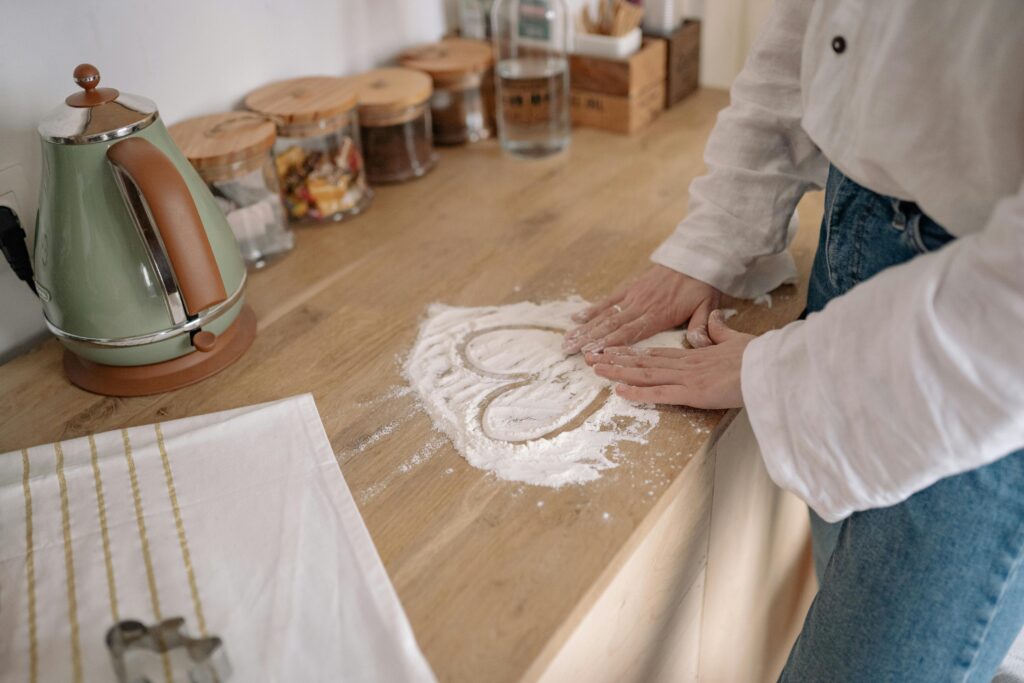
A person spreads flour on a countertop, tracing a heart in the center.
(Image courtesy of Yan Krukau via Pexels)

My grandma and I get to make whatever foods we want now, but her journey started rough. She grew up in a large family that didn’t have a lot of money. To keep her and her siblings fed, she found creative ways to work with limited ingredients. She often tells me stories of her childhood, like when she used her cooking superpowers to transform simple ingredients like bologna and flour into flavorful meals for her family that satisfied their stomachs and heated their hearts.

The more we cook and bake, the more I see examples of how her expression of love goes beyond simply preparing and eating the food. I get served the food and a portion of her legacy when I eat these dishes. Making recipes together is a way for her to pass down the helpings of her wisdom, pieces of her traditions, and slices of her family history.

In my grandma’s kitchen, I get to experience food’s real purpose. Each bite strengthens our bond even more. Gramma’s lessons, laughter, and love given to me in her kitchen are gifts I’ll always be thankful for.

I will keep cooking and baking, knowing that each recipe holds a piece of my grandma’s heart and that with them, her love will always be present. Our time together in the kitchen has taught me that food exists to be more than just eaten; it’s there to give us a taste of our past, nourish our present, and feed our future.

My Virtual Interview in a Pakistani Ice Cream Parlor

I’ve been in the telecoms field for the last 20 years and writing for the last five. During my professional life, I have sat through multiple job interviews, all held in quiet office meeting rooms. Dressed professionally, having already researched the company, I maintained a good and attentive posture and was aware of my body language. I stayed focused on the interviewer and paid full attention to their questions and responses, striving to impress with my personality, tone, manners, and knowledge.

But this time, I had a very different experience. 

I live in Pakistan, and I had to give an interview for a remote content writing job in the USA. Due to the 11-hour time difference, the interview time was about 9.00 p.m. Pakistan Standard Time.

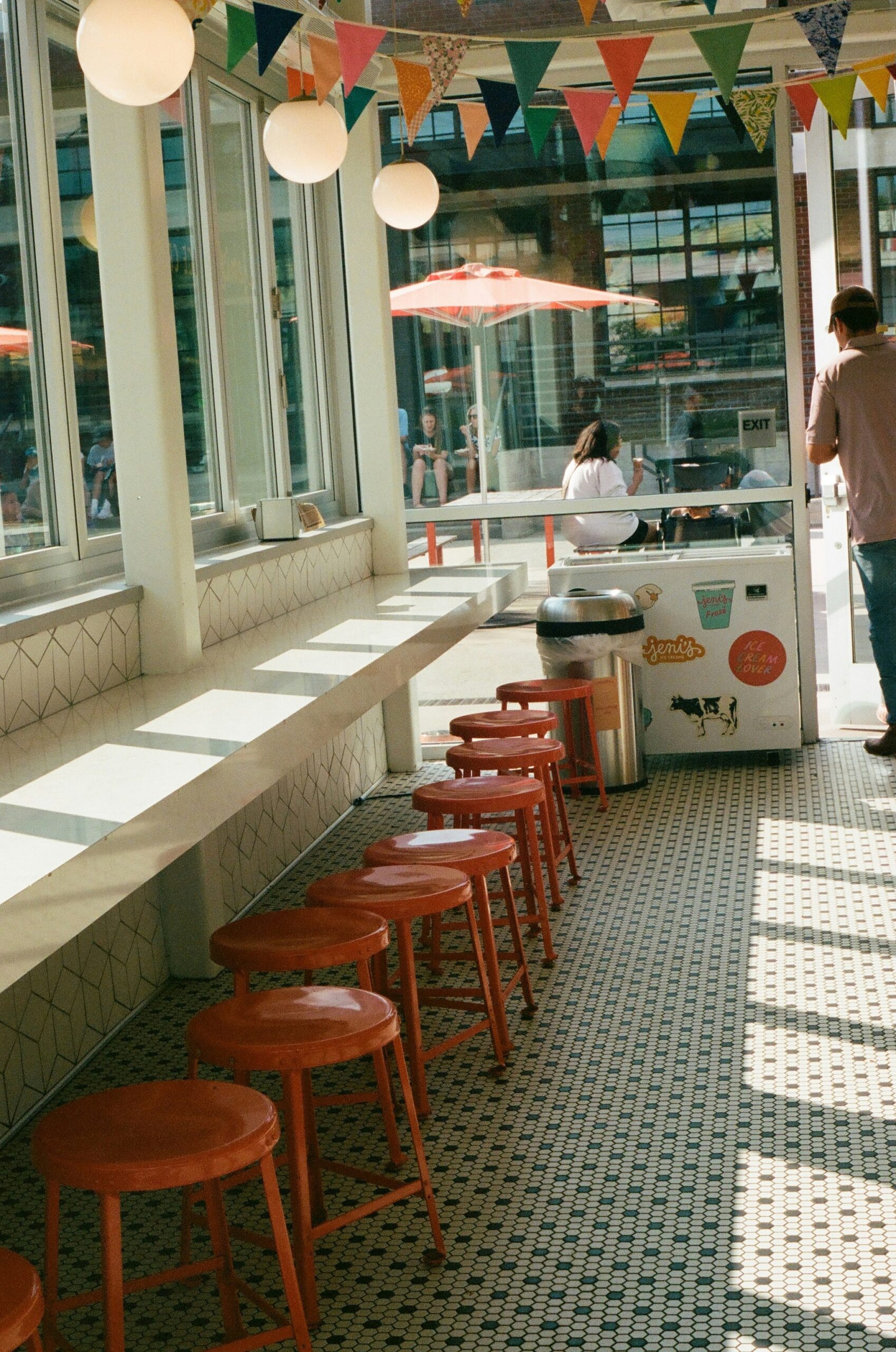
I was on my way to a mobile repair shop because that day my phone had suddenly stopped working. Luckily, I switched my Mobile SIM card to another mobile beforehand. I entered an ice cream parlor to grab a chair and a table for my interview and ordered a cup of pineapple-flavored ice cream while waiting for the call from the US interviewer. 

I observed that the parlor had a lot of people in it. I was surrounded by tables packed with people talking to each other, enjoying their favorite ice creams, fruit juice, and milkshake treats.

My interviewer was a lady. As she was on a video call, I noticed that she was a white woman, about 43 years of age, working as an editor in the organization. She was punctual and called me at exactly 9:00 p.m.

Luckily, I had headphones with me. I immediately attached them to my phone and then started my interview. We were still introducing ourselves to each other when a waiter arrived with my ice cream and put it down in front of me. In Pakistan, most people can’t speak and understand English except those who specifically study it, so the waiter looked at me with a puzzled expression and went away. 

Although I was trying my best to impress this woman with my writing expertise, I had to speak aloud and occasionally repeat my sentences due to a slow internet connection. As I continued to speak, I noticed that the people sitting around my table were staring at me. Some of them looked surprised, some were impressed, and some had mischievous smiles on their faces when they realized that I was talking to an attractive foreign woman.

The interviewer was detail-oriented and wanted me to explain my writing niche in depth. So I tried my best to make her believe that I was the best writer she could find on the planet, but it was not so easy. Meanwhile, my ice cream was melting before my eyes, and people around me were paying more attention to me than to their own ice cream. 

To be honest, at that moment, I decided to impress them even more by using complex and difficult English words, so I started using these words frequently to show off my command of English to those around me. In doing so, no doubt, I let my usual attention to tenses and other grammatical rules go out the window, something my interviewer would have definitely noticed.

My interview lasted around half an hour and was punctuated by some interesting and amusing moments. For instance, I was explaining the difference between Pakistani and US cultures when I told the interviewer that it’s really awkward in Pakistani society if a young man comes to a family home and tells a father directly that he’s the boyfriend of his daughter. 

Right then, when I looked around, the people in the vicinity were laughing at me. When I suggested that I could write an article on how to train children to protect themselves from sexual harassment, the folks around me stared.

I tried to convince the interviewer that I could write on multiple topics but that my niche is love and relationships. In doing so, I used romantic words like love, affair, and relationship numerous times. 

When I finished my interview, the person sitting next to my table came up to me and asked me with a smile, “Brother, were you speaking to your girlfriend?” 

I corrected him, explaining that she was my interviewer. 

But I don’t think he believed me. 

A Hāfu in Japan

Two passports. Two last names. Two identities. From a very early age, my life has been characterized by how I am half-American and half-Japanese. In elementary school, my mom tried to teach me Japanese by putting me in a “Japanese as a Second Language School (JASL)” on Sundays. Being a child, of course, I was very averse to going to more school on the weekend.

In middle school, we moved to Tokyo, Japan, for two years for my mom’s work. I ended up going to the ‘American School in Japan (ASIJ)’ to take 6th and 7th grade. 

Blame it on anime!

However, I only decided I wanted to actively interact with and learn the language years later, in the middle of high school, all spurred on by watching just a few minutes of anime, something I ironically had never done before, despite all my exposure to Japanese culture up to that point. 

Suddenly, all my past experiences became missed opportunities. Suddenly, I wished I had been more open to the JASL lessons taught to me at Princeton University. Suddenly, I wished I had soaked up more of the Japanese that was all around me in Tokyo and ASIJ, which had both American and Japanese students alike. 

From sophomore year onward, I finally began to expose myself to Japan and Japanese-oriented programs. I put myself in a Japanese summer camp, a JASL summer school at Harvard, and as I went on to college, I got into a joint-degree program that would offer me two years in both an American university and a Japanese (Ritsumeikan University) college. Unlike my earlier experience of living in Japan for a couple of years, this time, I actually had a thirst for learning Japanese, and that experience and desire was what made all the difference in feeling that I was truly experiencing Japan.

Being in different phases of my life (11-13 years old vs. 20-22 years old) and the context that defined them was the main difference of living in Japan as a half (ハーフ Hāfu) individual. In middle school I was indifferent to both Japanese itself and learning the language, whereas in college, I actively wanted to learn Japanese and ended up going to a school that would better immerse me in its culture and people. 

While before I was made to go there because of my mom’s work, this time, I went of my own volition, meaning that I was more open to absorbing what Japan had to offer me. While I previously attended an American school that was filled with a majority of international students, Ritsumeikan was a Japanese university first and foremost, meaning that most of the school had students who didn’t even know English (I was in the international department, which had the only classes that were taught in English and were full of foreign students). 

The places in Japan I went to differed too. Tokyo is a modern city with many international influences and people, and was where I went to ASIJ. Kyoto, where I went to Ritsumeikan University, is far more traditional. Living in Kyoto gave me a whole new perspective on what it meant to live in Japan. Although I had technically lived in Japan before as a “half person”, this experience was like night and day. I don’t even remember it too well; it gave me a much more valuable experience of what it was like living in a different country. 

Tokyo versus Kyoto

To start with, the city of Kyoto was so different from Tokyo, where I had lived before. It is not as big as the Capital and is far more spread out, which feels a lot less like an actual city since there are an abundance of rural areas (the dorm I lived in was in one such area). To get to the most popular part of the actual city meant taking an almost hour-long bus ride. Even the buildings were not “allowed”to be too tall due to the designation of Scenic Areas dating back to 1930. However, this was not to Kyoto’s detriment. In fact, it actually made Kyoto feel more quaint and intimate, along with showing that even in a place filled with suburbia, you could still get pretty much anywhere easily with a very punctual and connected bus system. When I was living in America, in rural New Jersey, it was and did not feel nearly this connected. 

There are many other differences though that made living there challenging. Tokyo can be likened to New York in many ways, with its tall buildings and seemingly never-ending expanse thanks to its many prefectures and wards. As the country’s capital, it makes sense that it is the city that comes to mind when thinking of Japan and it’s hardly surprising that  many international visitors end up making it their home. Kyoto, on the other hand, has far fewer foreigners, which does have its downsides. 

While this homogeneity allows you to experience a more traditional Japanese way of life, it also means that many people are not as exposed to foreigners, and living in Kyoto as one was not always easy. Some Japanese people are not as familiar with international ideas and diverse lifestyles, being more traditional and conservative.  This outlook meant that living as a half-person in Kyoto was challenging for me, as it isn’t always the best setting for nurturing your sense of identity as a Japanese person.

Our pet peeves

Many of my experiences as a foreign student in Japan resonate with the experiences of others in similar situations. We’re irritated by some mostly small microaggressions and situations that may last for only a few seconds, but as they add up, it becomes obvious that they are indicative of a much bigger problem. 

For example, a woman once stared at me the entire time she was on the bus I was traveling on, even after she got off it! Another time, I was told to quiet down by the bus driver, even though there was a large group of Japanese students sitting right across from me, being far noisier. People occasionally asked to take a picture with me.

Although I am sure none of these people harbored ill will, I still think it shows how foreigners are seen by some as more of a sideshow, far outside the Japanese in-group, and not to be treated as equals.

Seeing as how I don’t remember any of this stuff happening my first time around living in Japan in Tokyo, I think it was mainly a Kyoto experience, a setting where I never saw more than a few pairs of foreigners on any modes of transport at any given time. 

My language and looks cramp my acceptance 

But there are other reasons why I don’t seamlessly blend in. Because I only decided to start learning Japanese in high school instead of when I was much younger, it means that I am still not fully fluent in the language. 

I don’t look fully Japanese either, and have been told by some that they didn’t even realize I was anything but Caucasian. Seeing as how I lived in America for all my life, I told myself that Americans couldn’t tell I was part-Japanese because they hadn’t been exposed to what Japanese people look like. However, many people in Japan couldn’t see past the foreign side of me either. 

When I order food or anything really from a restaurant or shop, the person behind the counter immediately starts talking to me in English, even if I initiate or respond in Japanese. A lot of people who have only known me for a few seconds are surprised that I know more than a few Japanese words like mountain (yama) or river (kawa), and even more shocked that I know how to write such words in kanji.

However, I am not fluent in Japanese, and I admit to an occasional feeling of dread when others are proven right, and I am no longer able to understand everything they say. Sometimes, I just want to tell them that simply because I don’t understand everything in Japanese doesn’t mean I don’t understand the word for ‘here’ (ここ koko) or even the word for ‘Japan’ itself (日本 nihon). 

Many Japanese people assume that I don’t know any Japanese because of how I look, and when I show that I do, it’s mind-blowing. Even worse, when I say I don’t, it’s to be expected. 

Even after I returned from Japan, I still maintain my identity as a Japanese person, but my time in Kyoto was eye-opening for me. It really taught me a lot about what it was like to live in a more traditional part of Japan. I was surprised at how different the two cities of Tokyo and Kyoto are. If I had to choose between the two, I think I would ultimately opt for Tokyo. Kyoto is somewhere I recommend as a place to visit for a few days, but I think that Tokyo is a city that is better to live in, at least for foreigners. If I were to settle  in Kyoto, I don’t think I would feel completely comfortable with my Japanese identity as a hāfu, and would continue to feel like a foreigner in what is technically my own country. 

The Magic of Writing Christmas Greeting Cards

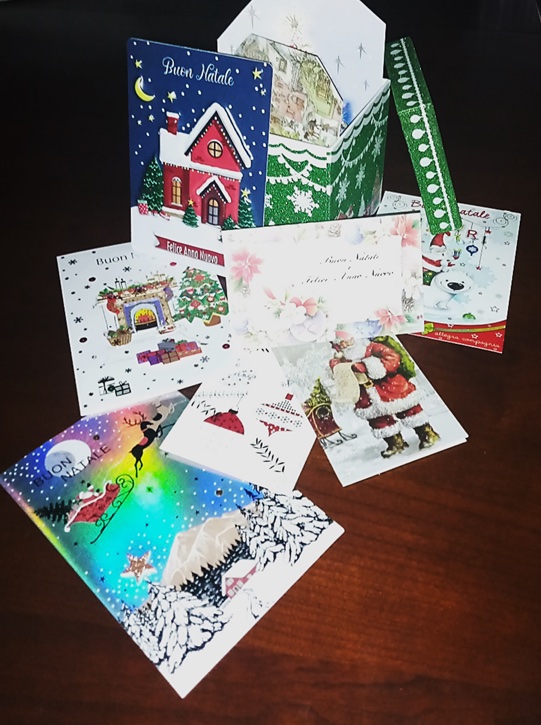
The world moves on, times change, and technology continues to invade our lives. Yet every year, as Christmas approaches, I open the “box of memories” where I keep not only the letters I exchanged with my teenage friends when social media didn’t exist but also the old postcards and greeting cards that were used to exchange holiday wishes into the 90s (and some into the early years of the new millennium).

As I look at them with nostalgia, I wonder if technology has made us lose our taste for anticipation and surprise. There was something magical about opening an envelope sent by relatives and distant friends, each sharing a bit of themselves and their lives. Those with little imagination limited themselves to a brief update on the health, work, or studies of their children and cousins. Others, like my mother and grandmother, devoted themselves to writing long messages expressing the joy of reconnecting with those they couldn’t see all year because of distance or family obligations.

The practice of Christmas cards dates back to the Victorian era, and the first illustrated postcard was commissioned in 1843 by Henry Cole, the director of The Victoria and Albert Museum in London. In the years that followed, there was a real boom, and postcards were printed by the thousands.

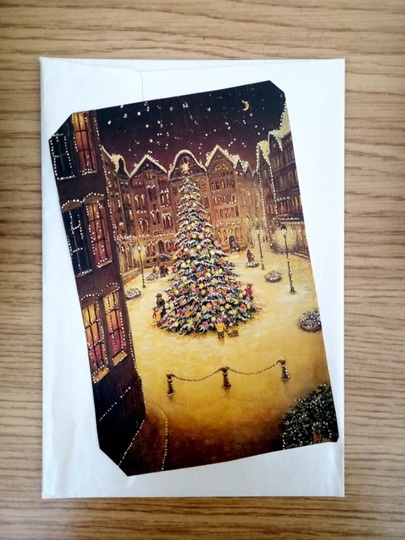
In the 1920s, Christmas stamps became popular both in Italy and English-speaking countries for sealing letters. The money from their purchase was donated to the Red Cross and other charities. When I was a child, my mother used to buy postcards from the Only Painters Artists Mutilated Charity Association of the City of Verona, the charity supporting disabled artists in the city of Verona, which still exists today. They sold paintings and artwork created by artists who used their mouths and feet to create their works. Many illustrations were incredibly beautiful and evocative, such as those by painter Jolanta Borek Unikowska (1990s).

 A Christmas card featuring a Christmas tree ornately decorated in a town square.
(Image courtesy of Viviana De Cecco)

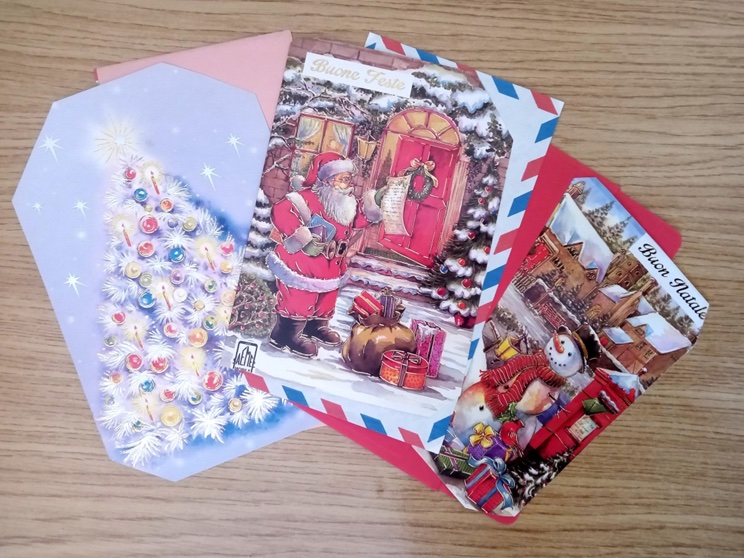
Old postcards have always held an extraordinary power for me. They transport me to a time that no longer exists. My favorites were those depicting snowy landscapes with tall trees illuminated in remote villages, and reindeer pulling sleighs through the snow. I especially treasure the postcards from the SAEMEC publishing house that specializes in this type of card, which have now become rare and collectible items and thus often sold on the internet.

A series of Christmas cards in various traditional styles.
(Image courtesy of Viviana De Cecco)

Here, on the island of Sardinia, snow is a rarity. In the past hundred years, in the town where I was born, we may have seen it four times at most. When I was a child, it wasn’t common to go on a skiing vacation, though few could afford a vacation in the mountains. So those postcards opened the doors of my imagination and, like in a fairy tale, I felt drawn to unknown worlds where fantastic beings like elves and snowmen with human features smiled at me from the paper. Sometimes the subjects were religious, while at other times they were limited to Santa Claus traveling on his sleigh with sacks bursting with gifts.

Each postcard was personalized, and since my mother had taught me to draw, I often added small pencil illustrations colored in with crayons or markers. I loved to spend hours hunched over the pages, letting my creativity run wild, thinking about what to write, and carefully choosing the most appropriate words for the recipient.

Christmas festivities began when the cards were mailed in early December, with the fear that the mail might be late. They were usually folded in half with the standard phrases for everyone inside but the rest of the page was left blank so that the sender could add his or her own special message.

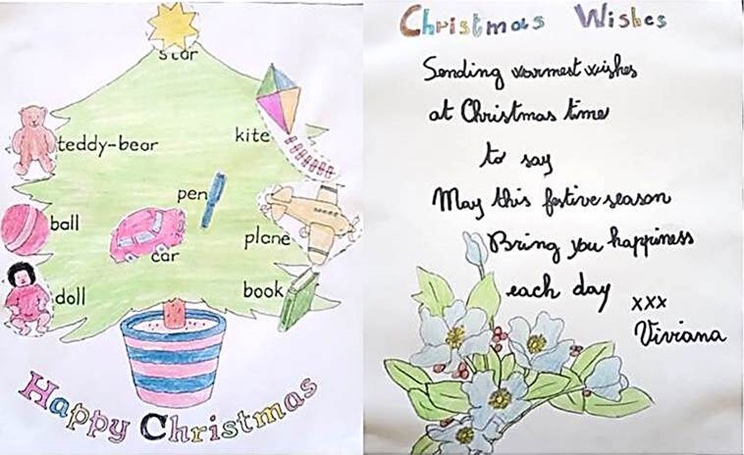
Also, at school, just before the holidays, teachers encouraged children to make rhymes, collages, or drawings to decorate the little cards they would give to their parents on Christmas Eve. I still have the card my English teacher had us make, which combined teaching and fun to stimulate each student’s creativity.

Two Christmas cards side by side, featuring adolescent decoration. 
(Image courtesy of Viviana De Cecco)

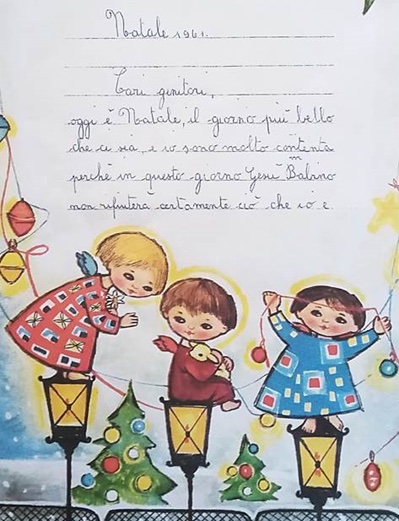
In 1961, my mother, six years old at the time, also wrote Christmas cards to her parents. Her old postcards show that, at that time, it was customary to include prayers for the health of the whole family. Gifts did not matter much compared to the health and happiness of loved ones.

A Christmas card, featuring children with writing in Italian. 
(Image courtesy of Viviana De Cecco)

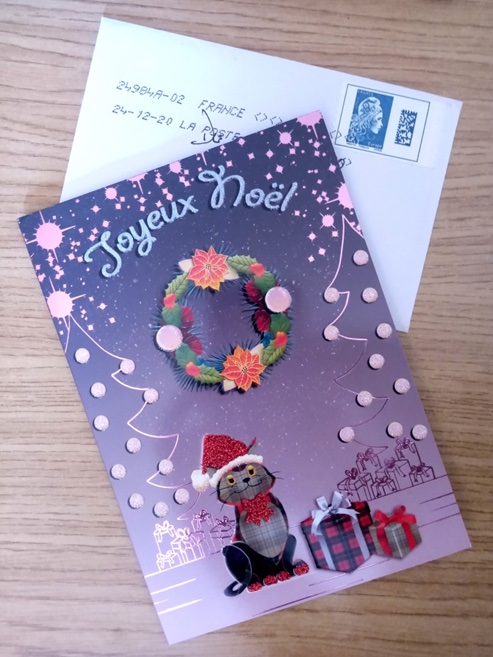
In the 1970s, my paternal uncles emigrated to France, and since we could only see them in the summer, my father began sending them Christmas cards. It became a tradition that repeated itself every year on time, and today that tradition continues with my cousin, now an adult like me. The message on the cards that he buys is, of course, in French, but he likes to try his hand at Italian sometimes, though he isn’t fluent. It’s his way of celebrating his father’s and uncle’s heritage.

A French Christmas card, featuring a wreath and a black cat. 
(Image courtesy of Viviana De Cecco)

In today’s world, perhaps the immediacy of instant messaging has broken that spell of anticipation that had us waiting at the windows for the postman. Or, on the contrary, perhaps it has brought us closer to those who, for various reasons, cannot be with us for the holidays. Perhaps the answer is somewhere in between.

With the advent of the internet, we have grown used to being bombarded with thousands of images scrolling across our phone screens. Sometimes, I confess, I look at them too quickly to admire them one by one. Often, I’m in such a hurry that I don’t even take the time to quietly observe the details. A part of me feels guilty because I know how much care, passion, and love an artist puts into creating their work.

When I hold my old postcards in my hand, it’s instinctive for me to stop and take in what’s in front of me, to enjoy a moment just for me, where I can let go of memories and feelings.

Maybe technology has made us neglect that a little bit. We are so distracted by animated digital visuals, that we don’t have the time to focus on the sensations that the words evoke in us. It seems like a kind of consumerism where we move from one thing to another without fully enjoying it.

I can say that technology has its positive sides, such as enabling us to share anything almost anywhere. I recently joined two Facebook groups, one in Italian and one in English, where some nostalgic people post photos of old hand-illustrated Christmas postcards. It’s getting harder and harder to find them in stores, and few people still use the postal service to send greetings, but it’s nice to know that there are other people in the world who share my interests.

Memories are a valuable resource for all of us because, after all, we know that even history is made up of a thousand life stories of unknown people. And just as the letters and postcards of those who have gone before us are preserved in the Postal Museum in London, I, too, keep the memory of the words of those who have loved me alive in my little box of memories. 

To My Only Friend Who is Gone on a Voyage of Death

Many, at times, think we see a ray of hope to comfort our emotions and whittle down the volcanic cloud of our sadness. But unfortunately, our sense of love and compassion ends up overwhelming the strength to prevent tears. 

For to cry is not to mourn, but to weep is to truly mourn, as it is written that even our Lord wept. 

The beauty of death is that the life the deceased lived will become an amusing experience and sensation for us, to remind us that someday, we will end up as someone else’s amusing experience and sensation.

Do you know where the best cinema is? Found in the euphoria of memories of any event in the mind of a person who is nursing an ambition of good or bad memories of an event. The vividness of such memories is worth more than a setup of an Opera House or performance at a Pit-theater (just like the AwoVarsity Theatre).

Tonight, I am seated outside, on the veranda, hearing the stillest sounds of air, looking at the clouds being separated and fussed over.

Suddenly, the thoughts of my late friend, Hajj Ibn Abubakar struck me. The air around me grew a little cold, colder I should say even. My body let go of the goosebumps for a while as the air became a little wind that whispered a few words to me. They reminded me that no matter what, the goodwill of my late friend still connects with my inner bond whenever I remember him.

I searched my inner man to ask Hajj Ibn Abubakar some questions; then I remembered it was just the memories and his goodwill that spoke. Hajj is long gone to queue up again as one of the silent children from the constellation of stars.

Hajj, my very good friend, was quite older. Yet, he bonded with me; you’d never think he wasn’t my blood. But he became my blood through the nights and plights of the ‘streets’ so much he earned the name, ‘Emperor, the Cross leader of the Streets even to the Moon and Stars.”I called him ‘captain streets’ towards the end of our real life relationship.

It was at Ipetumodu that we met. I wore black all through, as you might say, from head to toe, with my black shirt having several fire symbols. He strolled into my “base” with three guys. Everyone greeted him with a little bowing while hailing him while I turned my back a little, pretending I was typing a message on my Nokia 6600. 

One of his boys, named Tunde, who later became a follower of one of the ideological groups on Awo Varsity campus but later became a member of a fascist reactionary fraternity, shouted, “Eh oh boy, Paale dey call you.”

I was shocked when I heard a thunderous slap on Tunde. Hajj said, “You sabi who this oga bi? You see people wey young like this amidst these big chests, yet na only am wear full regalia, oh boi I don’t want war here.” 

I still didn’t flinch. I turned to him and sang one of my father’s favorite songs, which says, “Kosi agbara to da bi ti Jesu” that is, no power like that of Jesus. 

They all laughed, and Hajj said, “I am Hajj, son of Abubakar. I’m a trained intelligence officer, and I speak Hausa/Fulani, Igbo, Yoruba, Classical Arabic, French, English, and a little Spanish.”

At that point, I smiled, and I said to him, “My name is Aanuoluwapo; I’m from Ibadan.” I said nothing else to him. 

I beckoned him to come over, and he followed me to my room, which I shared with Ransome, Damilola, Lateef, Gaffar, and Sola. He saw my church’s calendar. He saw my father’s picture on it and asked me why I didn’t say that I was this Baba’s son. I replied that he didn’t ask me initially. 

But Hajj said, “Deny a thousand times, but your eyes and face have given you away. More so, you speak like him.” At that point, I was confused. Hajj further said, “See I know this true man of God, it was when my favorite sister got to his church in the 90s that her womb was opened. And I have never missed his church programs on tv and radio since. And anytime I get the chance to watch him in Lagos or Ibadan.”

I was silent, too quiet. Shock or surprise? 

Hajj then said, one thing I believe is this that today is a remarkable day, “Aanu, I believe you will be kind to me just as your father’s God was kind to my sister through your father. It was such a heavy statement and trust. I tried to mumble some words, only for me to say, ‘may God bless abundantly.” Then he said amen. 

I explained to him not to reveal anything about my true identity; in his words, he said, “Not even on my deathbed except you give me the order.” I laughed, and he saluted me. 

And that was how the beginning of this bond of friendship was struck on the blade of fraternal love and brotherhood. An inside joke between Hajj and myself sometimes was, “Inseparable son of a Christian Minister and son of an Islamic Cleric.”

I remember how he used to call me a creature of the night. I was never scared of walking at night. In fact, he used to be angry that I preferred taking the cemetery road as a shortcut to get to his side. I used to tell him that someday, ours too will scare others. You’re the only friend I ever had, Hajj Abubakar. Indeed Abiku is true. I remember how you felt when I discussed reincarnation and powerful people with strong spirits. Now, you’re the one whom we discussed over 15 years ago. I know you are here, and you never left; but for this space suit called flesh, let it continue to rest.

Hajj, you came visiting through the telepathic lens of dreams a few days ago. I forgot to tell you how I’ve written a Yoruba drama that is dedicated to you, and I titled it OJU-DUDU. I hope and know that many generations will read your name in this forthcoming book (Oju-Dudu).

I remember you said I’ll be alive while you leave for the world beyond. All your words about how I’ll battle “peculiar” issues have happened. You reminded me to be so strong, even over my emotions. I hope I will face any circumstances. You said, “Aanu, your father is favored by God, but as your name implies, you’ve received God’s mercy.” 

Hajj, it is true. I’ve survived many instances that should have stopped my mortal suit of flesh. I wish you called me that day; it is because of you I still pick unknown numbers till date. You’re from the far end side. I’m from the long downside. You’re a core Muslim, and I? A Christian! Yet you encouraged me never to miss my fellowship days and time. You would call me Sheriff, and I, in turn, used to call you Brother Paul. It didn’t matter to us. We were just happy as brothers. None of my family knew you; none of your family knew me. We were too concerned with life and spirituality.

My friend. My only bosom friend. I miss all we used to do; you would have spoken to me about my plans for the year now. You used to tell me I’m not like every other person. You’d tell me just to wait till God gives me whatever I deserve in life. Hajj, rest well so we can play on the circumference of the air again someday. 

The Beauty of Daydreaming

Have you ever traveled in your mind? 

Because I did, and it was life-changing. 

It was 2 a.m., a typical Friday night in my hometown, Buenos Aires. It was winter, and I was practically freezing, laying down in my bed, scrolling through my LinkedIn profile, wondering what else I could do to make my CV more appealing.

In the blink of an eye, my mind shut down. I somehow managed to open my eyes to find myself lying on the floor, but it was the floor of my beach house. That was incredibly weird. I didn’t recall having bought a ticket to Uruguay, but I wasn’t going to complain. It was my favorite place on earth, my safe place. But what just happened? Did I teleport? Was any of what was happening real? 

I decided not to think about it too much and tried to enjoy the present, or whatever that was. So I stood up, opened the front door, and stepped out into the wide, starry night. I took a deep breath and filled my lungs with the fresh, salty air. I lifted my head up to the sky, and my eyes met the moon and smiled. 

A beach at sunset, slightly out of focus.
(Image courtesy of Belén de Dios)

That was the moment I realized that none of this was happening on planet earth because she smiled back. The moon had just delivered a smile to me. I decided to play along with it and whispered, “Thank you.”

She answered, naturally, and said, “You’re welcome; now you should go to meet her.” 

That confused me a little because I honestly didn’t know who she was talking about. Who was waiting for me, and where? 

So, I resumed my walk, guided by all the big green trees and the lovely hummingbirds. I walked past my friends’ houses and saw the light of a fireplace inside one of them. I got close to it and peeped in, looking for a clue or somebody. That’s when I saw her silhouette, dancing to the rhythm of something that only she could hear. 

When she saw me, she didn’t look surprised at all. She took my hand and intertwined our fingers while the other gave me a folded piece of paper. In big, blue capital letters, it read: 

DO YOU EVER FEEL LIKE YOU NEED A BREAK FROM REALITY? 

I glanced at her and answered honestly. I said that every time I find myself stressed, my mind immediately travels to this exact place, the place where I’m the happiest version of myself. Uruguay. The season is summer, and everything is fine; there’s nothing to worry about. It’s that nostalgic feeling that keeps me going. It reassures me to know that everything here will continue to be as it always is, with my friends, my family, the beach, and nature surrounding me. 

When I stopped talking, she smiled and said, “So that’s what you’re doing now, right? Don’t worry, let me hold your hand and guide you through this dance until your mind is at ease again. That’s what I was doing too. I journey to this place whenever I feel anxious.” 

That was when I understood, and I could hear what she was listening to earlier. I grabbed her hand and we hugged until I felt like myself again.

From Azerbaijan to Poland: How I Created A Home Away From Home

I am Nargiz Mammadzada, a young woman who moved from Azerbaijan to Poland at the age of 23 during the COVID pandemic’s most frightening period. 

I left my family, friends and loved ones behind. In short, my whole life.

Almost two years ago, in April, I started my life from scratch. As difficult as it was, I am just as happy and proud that I did it, mainly because I did it alone. 

But why did I do this? What is my story? For this, I will have to take you to the 2000s.

When I was a young child, even before I was in school, I watched TV shows for kids. In one of these shows, two people showed different cities, countries and continents to children by traveling to them. I watched with such admiration that I vividly remember sitting closer to the TV each time and watching with a big smile on my face. And then, when I was just four or five years old, I made a huge decision: I would travel the world, choose all the countries I want to see, and live in each of them for a while.

As I grew older, I did not forget this resolution. I always reminded myself and told my family about my dream. I admired the Eiffel Tower so much that my friends and family always bought me Eiffel Tower accessories. I still admire the Eiffel Tower, but unfortunately, I have not yet had the opportunity to travel to Paris.

Then I started school, and of course, one of my favorite subjects was geography. I have read and researched so much that I have already visited numerous destinations in my dreams, where I have seen different countries and met new people. I scoured encyclopedias about different cultures to prepare myself for my great journey one day.

However, the turning point in my life took place when I was just 13 years old, when I decided to study in another country.

Naturally, the thought of living in another country has always excited me. In my opinion, being born in one country does not mean we have to live in that country for the rest of our lives. Our world, as a whole, is our big home—every inch of it, not just one country. But many other factors led me to make this decision. I was not comfortable with the society in which I lived in and its standards, and I did not feel relevant or that I fit in. One of the driving factors in my decision was that the standard of living was not as high as I wanted it to be.

From early adolescence onwards, I started working harder to build my future the way I wanted it. At first, no one, including my family, believed me because they thought the decision I made in childhood would change. But little did they know that I had remained on that path since that day.

I graduated as an “Honorary Graduate” and pursued a bachelor’s degree. From the very beginning, I planned to study for a master’s degree in another country because I wanted to get my degree, gain some experience by working a little, and take this big step after I had become more confident.

Fortifying my dream while at uni

By the time I was an undergraduate, I had already started to develop my English skills. Learning this language to perfection was one of my biggest goals. I read many articles about different countries and universities. I never stopped researching, I never stopped dreaming, and most importantly, I never lost my passion and desire.

Seeing this determination, my family did their best to support me and help me grow as a more educated young woman. They were the ones who encouraged me to do more research and learn more languages. My peers and colleagues often criticized me and tried to dissuade me from my chosen path because not only was I the only daughter of my family, I was also the only child.

Whenever this happened, whenever people did not understand me and judged me, I always had the same response ready: “No matter what, we are given only one chance to live our lives, and when I will look back in the future, I do not want to start my words with ‘I wish I had done things differently.’ I do not want to regret the life I could not live or blame anyone for that.”

And I would also proudly add: “I am not the only one who thinks so; my mother always tells me that, too. She is my biggest supporter.” 

My mom always says, “If you want this so badly, I cannot stop you. It is your right to go and live your life the way you want. In the future, I do not want to be the reason you regret that you did not do it, and I do not want to be the one who got in your way.”

For me, these were the words of a parent who treated their child as an individual, not as a dependent person. Nothing could stop me from following my thoughts and dreams, but of course, the support of my family meant a lot to me.

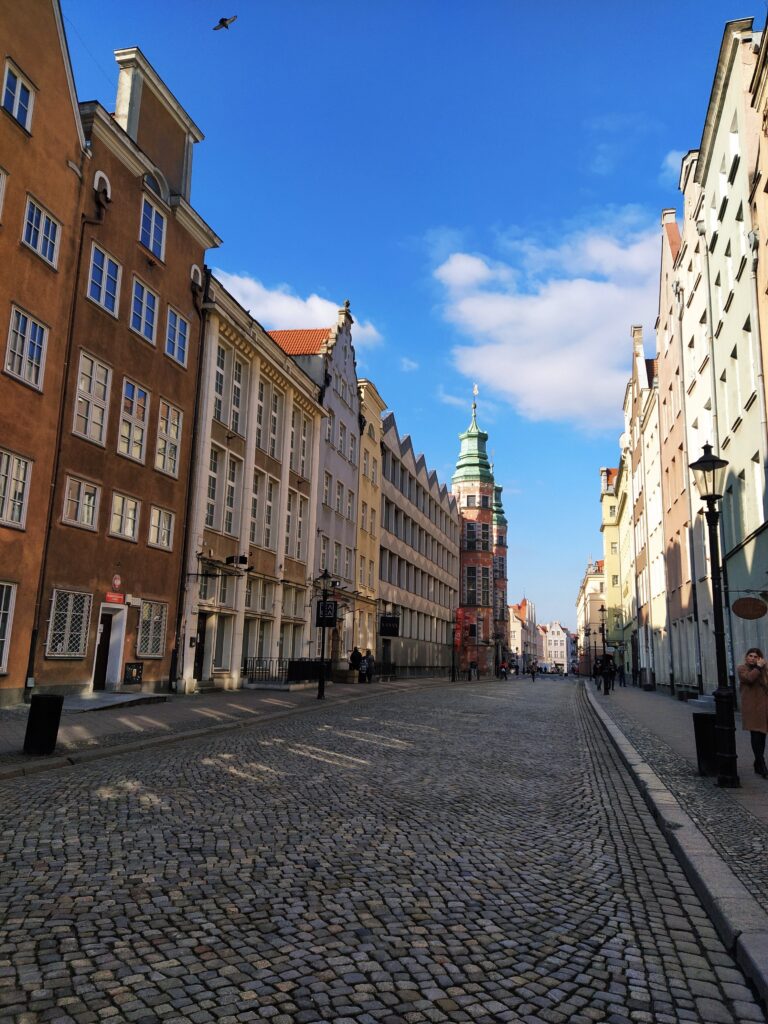
A Polish street during a sunny day.
(Image courtesy of Nargiz Mammadzada)

I didn’t let rejection clip my wings

This hasn’t been easy. First, I applied to universities to study in Italy, which was my dream, and I got accepted to five of the world’s top-ranked universities. However, the joy of admission was overshadowed by the rejection of my visa application. Suddenly, my dream of studying in Italy ended before it began. 

But this cloud had a silver lining. 

In 2021, I moved to one of the most beautiful cities in Poland, Gdansk, where I started my master’s degree. Shortly after moving, I began working alongside my studies. It was very important for me to be a strong and independent young woman, so standing on my own two feet without needing anyone’s financial support was my main goal. 

I overcame culture shock and loneliness to love my adopted city

Of course, the difficulties I experienced in the process of adapting, the culture shock, and the struggle I waged within myself due to being far away from all my loved ones were difficult at first.

At the start, I felt so alone. It was the very first time in my life that I had come so far away from the place where I had lived my whole life. In this country, where I did not even know the language, even doing grocery shopping was a very difficult task for me.

There have been many moments when I have asked myself, “What am I doing here? I want to go back to my country, to my family!” However, despite my initial reservations, I always managed to pick myself up and continue from where I left off.

I didn’t even know how to maintain a healthy relationship with my family and friends on my own, but I am grateful to them that, during these two years, they never once made me feel that I was far away. Hours of phone and video calls with family and friends were sometimes the only things I looked forward to during the day. When I had a problem or when I was looking for someone to share my experiences with, or just to talk to, they were there for me. My phone is full of photos and videos my friends have sent me in the last two years. There was nothing they would not do just to put a smile on my face. And I am so grateful for them and will always be. The first time I had to spend my birthday far away and without anyone, they were once again there for me.

I have to say that since I moved during the height of the COVID pandemic, it was not easy to socialize and make new friends. This, of course, made the situation even more difficult. It was only after the restrictions were lifted did I have the opportunity to meet new people.

But over time, Gdansk started to become my second hometown. Now I can say with all my heart that, in the future, even when I will live in another city or another country, I will remember this city as my second home. It’s where I spent the best years of my youth, a city where I built my independent life with more confidence, and it will always be difficult to do justice to its importance to me with mere words.