Lifestyle provides an inside peek into the varied ways we shape our own lives and experiences. How we choose to live, breathe, and navigate our everyday lives is exhilarating to explore.
This subtle jewel of a story, a confession almost, was dictated rather than written. Liba Chorny, 95 years old, shared this moving spiritual short piece.
Listen to the audio for the full experience.
__
When she was working on an art degree (studying in New York City), Liba brought up her interest in spirituality with her mother (born in Ukraine). At least she tried.
I told her about an experience I had, of mystical ideas. She said to me in Yiddish “Ken nisht herren” (Can’t hear it.) She didn’t want to hear about it, and I thought, “Wait a minute, I can’t talk to her about this.” She was not ready to listen.
And that’s when I stopped talking about Gurdjieff, the first person I spoke to her about. Then, I just learned to shut up and keep these things to myself.
It didn’t stop me from my interest in these subjects.
There were lots of side things that went on, oh, but my interest in mystical ideas — continued for the rest of my life.
But what can I tell you? You either have or that interest or that leaning or you don’t. I mean that’s been my attitude towards these ideas.
“Are you sure you want to visit Grandma T? It might be difficult for you to see her this way,” my grandma, whom I call “Oma” asked me.
“Why?” I asked in return. I knew my great-grandma had recently moved from her home to a memory care facility, but I wasn’t aware to what extent her mind had been affected. I hadn’t seen her in a few months.
“She gets really upset sometimes,” she replied. “And she probably won’t remember who you are.”
Oma told me this with utmost apprehension in her voice. It wasn’t that she was trying to convince me not to come with her to visit her mother. Rather, she wanted to protect me from the potential pain of witnessing the inevitable change that our family had been dreading for years.
“No, I want to go see her,” I insisted. “This could be the last time. We don’t know.”
I felt like I should’ve visited her more before this, and I was worried that our time together on this earth would be cut too short, too soon.
A memory not so picture-perfect
As soon as we walked into Grandma T’s room, I noticed the photos hanging on the walls. Decorating the space were frames filled with pictures of her kids, grandkids, great-grandkids, and everyone in between from various periods.
The room was quite small and unable to accommodate the elaborate decor of trinkets Grandma T is known for. However, the dozens of photos helped make it feel more homely. Grandma T also loves taking family photos at every moment, from the most important to the utterly mundane.
(Image courtesy of Brooklyn Riepma)
I heard a laugh—a laugh that sounds like mine but with a bit more resonance and wisdom.
“It’s good to see you girls,” Grandma T said. She sat in her brown leather recliner, looking up at us with happy eyes.
“Who do you have with you, Michelle?” Grandma T asked Oma.
“I’m not Michelle,” Oma replied. “Guess again.”
“Oh,” Grandma T said simply. “Adell.”
“No, that’s another daughter,” Oma corrected. “I’m Delila.”
“And you have your daughter with you. Good,” Grandma T said about me.
“I’m Brooklyn, your great-grandchild,” I told her. I didn’t mind the mistake or that she didn’t seem to recall my name. “Your oldest great-grandchild.”
“Oh, perfect,” Grandma T smiled. “It’s so good to see you. I always love it when you come to see me.”
I could tell she didn’t know exactly who I was anymore, but it was clear she knew I was someone she loved. That’s the most important thing to me.
This visit was short, and there wasn’t much talking. I told her some things about my life, like where I worked and that I had recently graduated from school, but it wasn’t as elaborate as our conversations in the past.
This made me feel sad because I knew our visits wouldn’t be the same anymore, but at least most of them were captured on film and SD cards. I’d always seen Grandma T carrying a camera in her purse for my entire life. Trying to figure out how many photos she took of her family would be like trying to count the stars in the sky.
For our next visit, I hoped to return to normalcy by bringing in some photos of my own–ones that she gave me.
(Image courtesy of Brooklyn Riepma)
A picture is worth a thousand words
The next time Oma and I visited Grandma T, I brought some photos of us. Throughout my lifetime, Grandma T gifted me hundreds of printed photos that she took of my family and me. It didn’t take long to sift through them and find some fun ones to take with me.
“This was when you and I dyed Easter eggs,” I said as I held up a photo of her and me when I was little. “We did this every year for a long time.”
Grandma T muttered one of her famous catchphrases, “Oh, my stars,” as she stared at the photo with a smile.
“And here’s a more recent one from last year where we were celebrating your birthday,” I said as I showed her the next photo.
We spent the visit reminiscing. During a game of Scrabble, we laughed and made jokes about what was happening in the pictures. Before she had to move out of her home, she showed me the pictures. She used to tell me the stories, and now I tell them to her.
Nearly every time we visited each other as I grew up, she would bring me more pictures to add to the endless stack of ones she had already given me. A major focus point of each Grandma T visit was looking through each photo and discussing them.
The recent visits with her made me see that our relationship doesn’t have to change; just the role of the storyteller does.
Throughout my life, Grandma T gave me more photos than most people ever take in a lifetime. The photos themselves make wonderful memories and mean even more to me because she gave them to me. Not only do the pictures carry the energy of the moments captured within them, but they carry the energy she brings with her wherever she goes.
(Image courtesy of Brooklyn Riepma)
Take a picture so it’ll last longer
I used to fear getting older and losing my memory. I hated the thought of forgetting about my life and the people I love. I thought that once I lost that, I’d lose myself.
At a young age, that fear led me to follow in my great-grandma’s footsteps. I started taking pictures of all the beautiful moments I shared with my family and friends. I did this because I want a visual connection to my past if I ever forget it.
I’m not sure why Grandma T took so many pictures, but maybe she had the same idea.
When I see her, she never seems quite certain who I am. She may not always know my name, my relation to her, my age, or where I work, but I see her face light up every time I bring the scrapbook for us to scope through.
The beauty of it is that she remembers how I make her feel. The details of who she believes me to be or not be don’t make a difference. The only part that matters is that we still get to experience life together and share some good laughs.
She showed me that love doesn’t require a physical memory to be alive; love is about connecting souls.
On the Italian island of Sardinia, where I was born and still live, there has always been a deep-rooted belief that, on the night of November 1 and 2, the fragile yet unsurpassable boundary between the living and the dead becomes more permeable. In the hope that loved ones who have died will find a way to return to this earthly realm for a few hours, and to nourish them from the dark journey they must take, many families set the table as if it were one of the happiest days of celebration.
This is what we have always called the Dinner of the Dead. The tradition of preparing a rich banquet for the deceased has been handed down for centuries.
In my family, the only one who prepared food for the dead was my great-aunt Alda, an older relative of my mother’s. The first time I attended the Dinner of the Dead, everything seemed shrouded in an air of fascinating yet eerie mystery. I was six years old and could not fully comprehend what it meant to lose a loved one. My grandparents were still alive then, and I was too little to remember my late great-grandparents.
Great-aunt Alda had always told me about her only son, who had died in the 1950s at five years old from a mysterious fever, for which no doctor had ever been able to find a cause, much less a cure. She had also lost her husband a few years earlier, and, as a widow, her life revolved around memories of happy times.
Her desire to feel them again was so strong that she looked forward to the Night of the Dead to remember them, secretly hoping to receive some sign of their presence. She would start cooking two days in advance.
I remember that on November 2, I would get up early and go to the cemetery with my parents and grandparents to place flowers on the graves of my great-grandparents. Then, after lighting candles and saying silent prayers for the departed, we would all go to my great-aunt Alda’s house for dinner. It was a ritual that none of us ever missed. Around seven o’clock, she would diligently pull out the best dishes she had, and set the table for the living and the dead. As soon as she let us into the house, she would show us the table. For this strange feast, she cooked fava beans, legumes, almonds, hazelnuts, dried figs, apples, pasta with cheese, and above all, the typical Sardinian sweets (pabassinas or papassini, pirichittus, cheese cakes and pardulas).
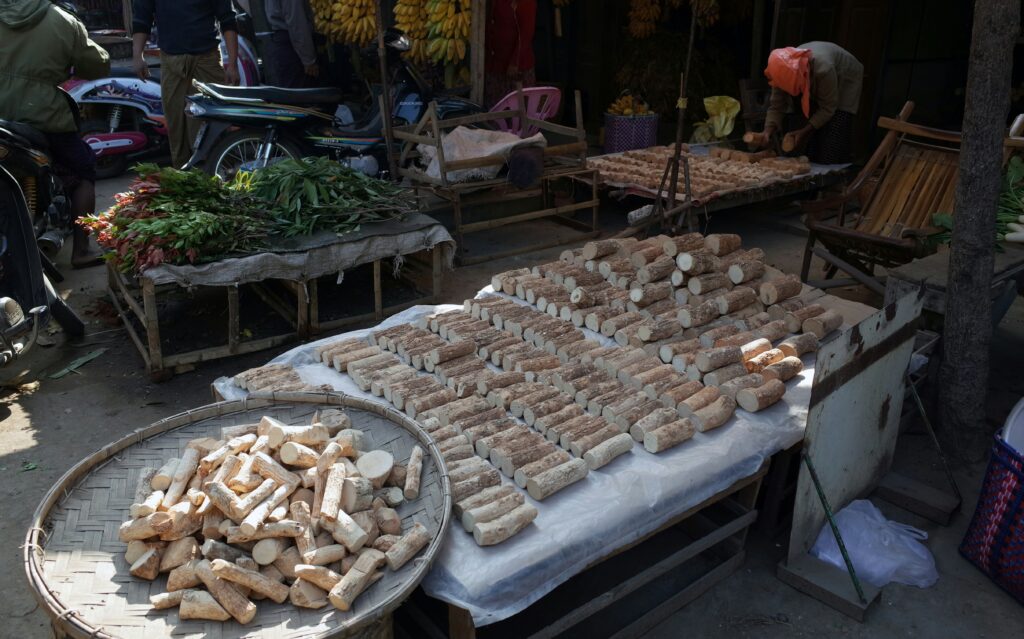
My favorite, however, was the “bones of the dead,” the most popular rustic, oven-baked biscuits. These are made with almonds, eggs, sugar, cinnamon, and lemon zest, then glazed with silver sprinkles. In Cagliari, the island’s capital, they are black because of a special ingredient called “sapa,” made from grape must and associated with mourning precisely because it makes the dough darker than usual. Curiously, the biscuits are not really shaped like bones but like a fish, because they symbolize the faith of the early Christians, who used it as a traditional sign to recognize each other during times of persecution by the Romans.
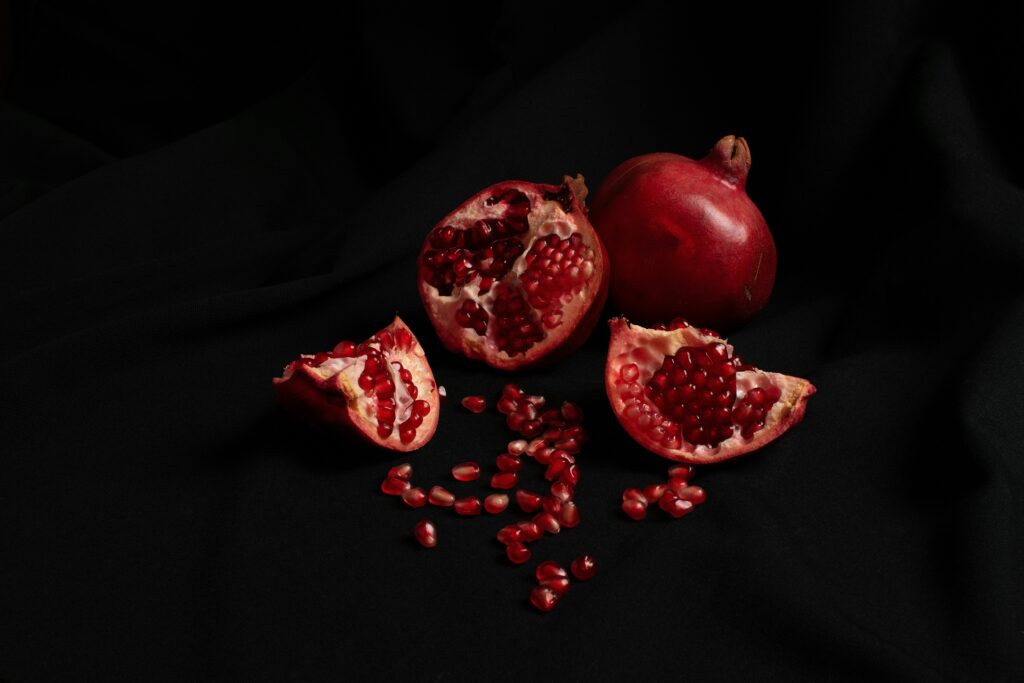
The pomegranate, a typical autumn fruit that grows in the Sardinian countryside, is also often associated with the dead, while its seeds are considered to bring new life.
(Image courtesy of Margarita Zueva via Unsplash)
In short, everyone is free to choose a little bit of what they want, even taking into account the tastes of the dearly departed, who may have had a special fondness for certain foods in life.
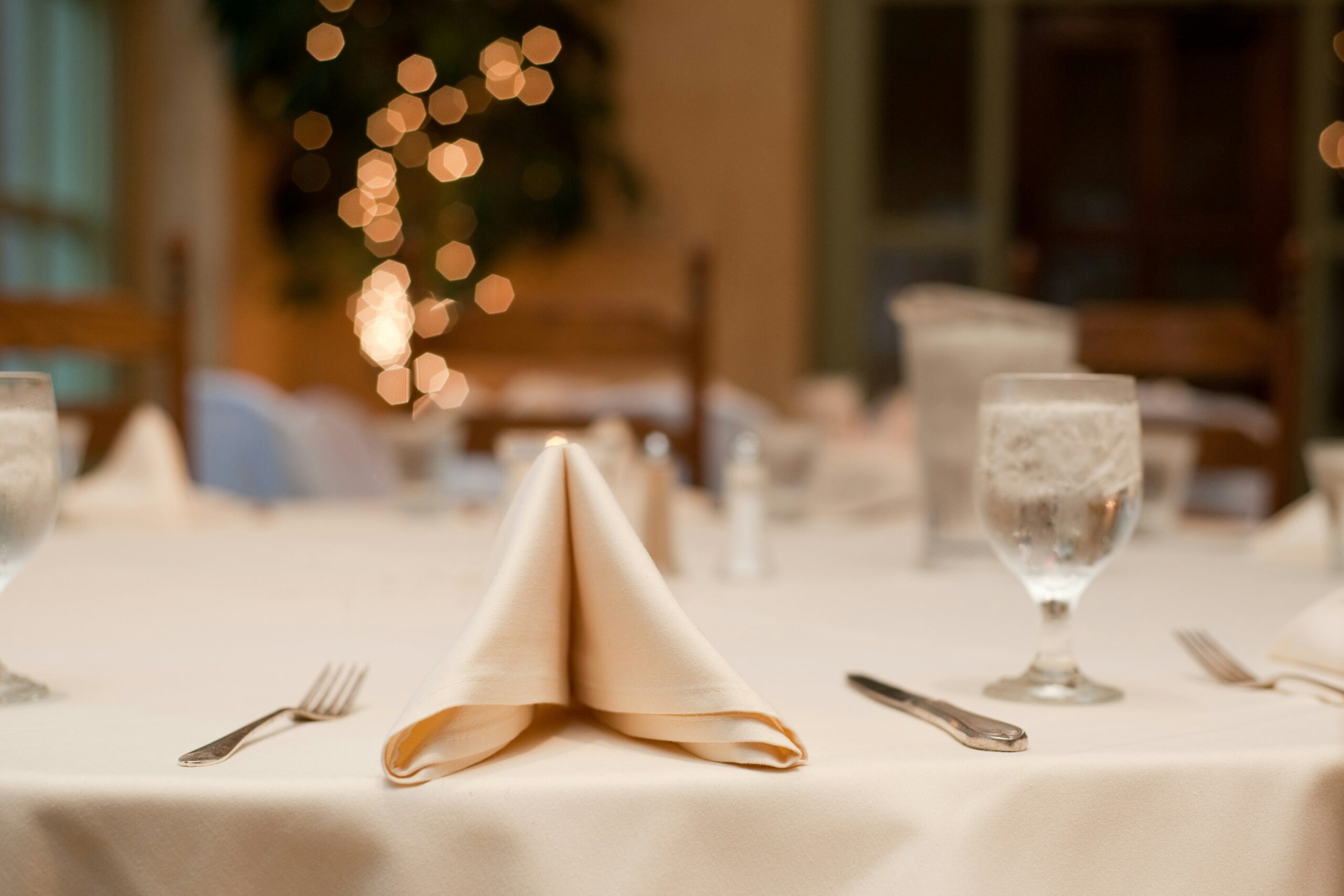
My great-aunt explained to me that the plates should always be white, the napkins perfectly folded, the glasses filled with red wine or water, and the chairs of the dead pushed away from the table to prevent the dead from making noise when they arrive. Great-aunt Alda, like other women from the inland villages of the island, used a white tablecloth, which could be made of filet (a traditional lace or crocheted lace with geometric patterns, like those on church altars), linen, or simple cotton, and with embroidery in the shape of roses and ears of corn.
It is customary to light a small candle at the center of the table to guide the lost souls in finding their way back to the house where they lived, and where they can finally embrace mothers, fathers, children, sisters or brothers one last time, or say a quick goodbye before crossing back over to the other side.
In the past, people like my great-aunt used a candle made of a cloth wick soaked in oil and embedded in a piece of cork that was left to float and burn in a bowl or pot of water. Each deceased person had their own flame that burned until midnight. Today, we are content to light ordinary white wax candles.
When everything was ready, my great aunt would make us sit around the table and, before we ate, she would recite a prayer in memory of the deceased. I remember my grandparents praying for their parents, my mother for her grandparents, and my grandfather for his brother who died in World War II.
As the Dinner of the Dead continued, we were surrounded by a strange and fascinating atmosphere. The candles shining in the darkness, the words whispered in memory of the dead, their names spoken aloud like a loud and clear call, gave this ritual the flavor of ancient magic. But this ritual has a dark side too…
After the meal, as no one dares to clear the table, this remains set until the next day, in case the dead come to satisfy their hunger. My great-aunt also told us no cutlery—or anything that could be used as a weapon—should remain on the table of the dead.
On the one hand, the deceased could hurt themselves; on the other hand, sometimes, a soul may have a score to settle with a mortal, so it is best not to leave possible instruments of revenge at hand. So, one must defend oneself against the attacks of those who might cross the dark threshold for a reason that has nothing to do with love.
Bedtime is no different. When the family goes to bed, the front door is left open, or at least ajar; this way the dead can enter without knocking. And to prevent tempting the dead to linger on in this life instead of returning to their dimension, sometimes dishes are placed on the windowsill to prevent the deceased from crossing the house’s threshold.
In times of famine or abject poverty, taking the keys off the doors or leaving the windows wide open also allowed those in need to sneak into homes and take food without being seen and without the humiliation of begging for a piece of bread.
In modern times, of course, no one has ever found an empty plate on the table or on the windowsill the next morning, and the living consume the rest of the food during lunch on November 2, the day on which the dead are officially commemorated.
Now that my grandparents and my great-aunt Alda have passed away, I know what it means to miss the presence of loved ones. Sometimes, as we sit at the table for a Sunday lunch or a birthday dinner, we turn to look at the sadly empty chairs, or the chairs pulled up to the table, where loved ones now reside in a place closed to us. Nothing is more painful than a meal eaten in solitude, or with nostalgia for the laughter that no longer fills the festive air.
Men questioning women today is the norm. Why? Because less freedom means less opportunities to make the ‘wrong choice,’ I guess. The freedom we have today presses their buttons because they are losing power. There is no question there. In light of the Roe vs Wade verdict (when the Supreme Court of the United States overturned the right to abortion, upheld for decades), there is an obvious and cowardly attempt to wrest this power back.
How are they doing it?
By going backwards into the past.
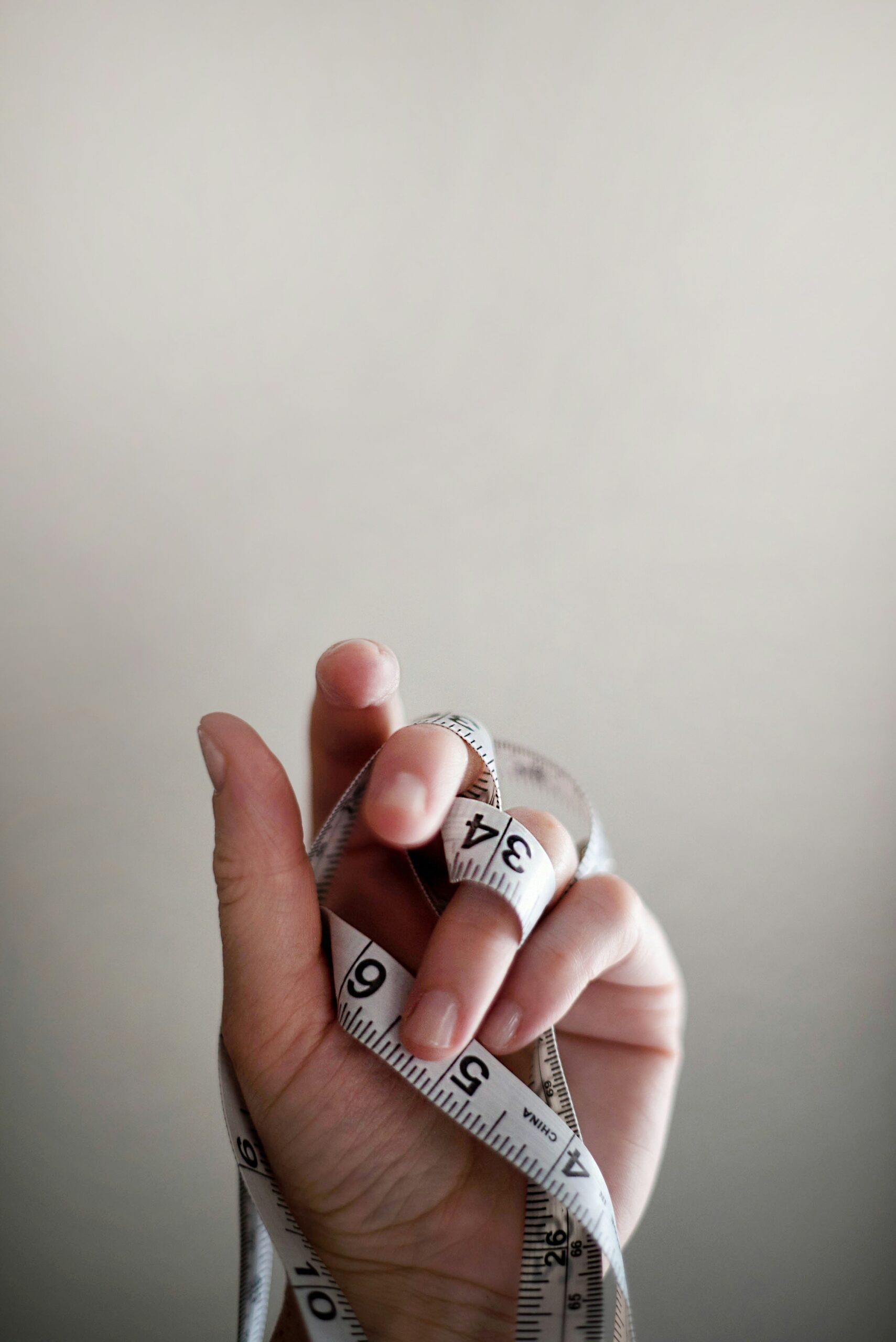
Not only are old rules being brought back and new rules being written to restrict women, but the archaic argument of a “perfect summer body” is making its way to the forefront again. This ridiculous physical expectation is yet another way to control women.
Men put women under a microscope when they walk down the street. If it’s not a dress that is too short, it’s your cleavage that is too revealing. If you’re not too skinny, then you’re too fat. If you’re not an “easy woman”, then you’re a prude. So, there is no way to please them. Stop trying and meet your own expectations and your expectations only.
An example from the past
Take the 1920s, for instance, an era engulfed by the Great Depression. Jobs were scarce and the economy was failing, and yet men found time to implement body ideals for women. After the First World War, the population dropped significantly.
Imagine what it was like being a woman at that time.
Eating three meals a day would be the last thing on your mind. Let alone having the time to think what a healthy fulfilling diet was supposed to look like. So, being thin with no curves whatsoever was the norm.
But do we really have to imagine it?
The reality
Today, the National Eating Disorders Association in the United States attests to these harsh realities reporting an alarming surge of up to 80% in calls around anorexia and numerous binge-eating disorders, which they liken to another pandemic.
Young women today make themselves endure a strict routine to satisfy the standards seen in popular media or the “male gaze” — wake up early but get enough sleep, go to the gym, eat healthy, socialise, and so on. It’s easier said than done. Every time a woman walks by you, she’s probably wondering what you’re thinking. Do you think she’s too short? Has too much belly fat? Isn’t pretty enough?
Like all women today, I know what it’s like to walk down the street and hear random guys catcalling following me around. Even when they’re mere strangers, their expectations subconsciously influence my every decision. A constant fear when being alone is all-consuming. It’s no party for girls to be alone at night.
How did I teach myself to stay safe? I learned to dress in baggy clothing, walk fast, and talk to someone on the phone. It’s funny that guys don’t have a care in the world. They can fight back. They have no fear of what saying “No” could mean. And as much as we make ourselves believe that we can fight back, the greater likelihood of sexual harassment for women, compared to men, is appalling.
The NSVRC (a nonprofit offering information and tools to prevent and respond to sexual violence) turns these victims into a statistic on paper rather than just a another woman in the crowd: 81% of women and the drastically lower 43% of men face sexual harrassment in their lifetime.
Through the Ages
History paved the way for objectification of the female body, but let’s not forget the progressive steps taken during the 1940s. It was a decade of celebration and cultural rebirth after the Second World War accelerated freedom for women. The perception of the ideal female physique shifted from a slender, childlike figure to a fuller, more rounded shape, during a time when women were proud to show off their curves. This ideal meant you were comfortable, wealthy, and relaxed, or at least, seemed relaxed. Men still wanted their wives to wear a knee-length skirt and a top showing some but not too much cleavage. Women were taught to strive for an elegant and classy appearance, not to be called sluts “asking for it” if too much skin is showing.
Consider the play written by Tennessee Williams in 1947, “A Streetcar Named Desire.” Blanche was exiled from society simply for being too flirtatious and for “sleeping around” despite her unmarried status. Her exemplar sister — although praised for meeting social expectations — became miserable in a home that was the site of domestic abuse. The expectations stayed the same, restricting women to the household under their oh-so protective and loving husbands. The female body was merely a spectacle for the male viewer to approve of.
These male-made creations of the female identity make you wonder. One sister dimmed down her identity to a patriarchal norm that made her miserable; the other walked away from these restrictions; a free yet scapegoated woman.
Sounds familiar? It does to me. But which is the better option for women today? Either way we are bound to fall into a depressive spell from not being enough, not meeting the pattern and not ticking every box to become “the perfect woman”. As hard as it may be, find the courage to reject the pressure to fit into a mould. Be your own independent self.
From my own perspective
Walking into school every morning, I still remember female teachers sending girls back home, asking them to change if their skirt was too short, if they wore makeup, or if their uniform was too tight. When asked for an explanation, we all simply got the typical “it’s too distracting for boys” repetitive broken record excuse. We are letting men decide what we can or cannot wear, just as banning abortions was a male-dominated decision in the end. What right does a man have to tell me, or any other woman, what we can or cannot do with our body and health?
At the end of the day, everyone has to realise that criminalising abortion does not put a stop to it, but rather it forces desperate women to find unsafe, unregulated places to terminate an unwanted pregnancy instead. Men can and will run away from such responsibilities. It is hypocritical to not give women an escape route from unwanted pregnancies, still today.
Another glimpse of history
The 1950s and 1960s were a period of rebellion, where the Beatles took their rightful place with a new kind of music and reflected social liberation. Women embraced their sexuality as a form of newfound empowerment. The ‘60s also brought the Baby Boom generation and more attentiveness to the submissive housewife, but the Second Wave of Feminism was in full swing.
When it came to the female image, Western Culture represented it through polar opposites.
For one, there was Marilyn Monroe. Her body type would easily be considered “plus size” today yet she was, and still is, an icon. She took up space and kept it. Her hips were wide. She didn’t have a toned abdomen. She had larger boobs. She had the hourglass silhouette that women strive to achieve. Her modelling and acting career will forever paint Monroe as a blonde girl with bloodshot lipstick and a white dress on the red carpet.
At the other extreme, Twiggy. Her real name is Lesley Hornby, a British model, who was quickly reduced to a nickname to sum up her identity just based on the way she looked, or to be more exact, the way she was encouraged to look. Being thin came back into fashion, and men weren’t bothered that these expectations were unhealthy. The concept of “attractiveness” is quite funny when you think about it. People have different likes and dislikes, so you will inevitably be deemed attractive by some and ugly by others. The only opinion that matters is yours. So, screw them and their obsession with controlling the female body.
The pressure of social media
The 1990s and the 2000s are easier to recall. We live in a society influenced by the late ‘90s and its revered “‘thin body” image. It’s not as extreme as it used to be in the early 2000s, but social media has made it ten times harder for women to see themselves as beautiful when looking in the mirror. Having an Instagram page and feeling obligated to post bikini pictures or at least somewhat revealing photos online equals being watched and judged by girls who are just as insecure as you.
Promise!
At least before the internet, escaping a patriarchal reality was somewhat achievable: stay inside and don’t be tempted to watch models on TV or in magazines. Now, experiencing a pandemic — so basically locking yourself indoors — was a girl’s worst nightmare.
The motivation to do anything active whatsoever was crushed. To cope with the isolation, many found comfort in binge-eating and watching Netflix in their bedrooms before going crazy.
They also found new physical goals to obsess over, can’t forget those. Women become controlled by the idea that not having a thigh gap is shameful. The “hip dips” are another phenomenon. Something that has to do with a human’s bone structure and genes is turned into a flaw, so unacceptable to show in public. But the blame should not be placed on women. In reality, we are embracing female independence but still live under a mantle of male control.
(Image courtesy of Miguel Bruna via Unsplash)
Don’t let the past control you
Look at the time frame of past and present expectations. Women have been bombarded with ideas of what the perfect body should look like and, ironically enough, all those absurd standards stem from a man’s archaic view. Don’t be either too thin or too fat. Or too feminine or too masculine either. Be independent, though we won’t let you be too independent.
Screw all of it! Don’t give a damn!
Just as women protested and won their independence in the past, women will have to protest once again. It is ridiculous that women are forced to take a step back in time in a so-called free land after the Roe vs Wade verdict. The female body and how it should look is entirely up to the woman herself. Don’t be fooled. A lioness attacks its prey in packs, increasing the chances of killing it. A lion is too proud to ask for help and so often fails.
Like gaining the right to vote, being allowed to have an education and finding equality in pay, women will unite again to stop the Roe vs Wade ruling. Protests are happening every day, showcasing the drive women today have to fight back. As such, a fourth wave of feminism is necessary and undoubtedly happening.
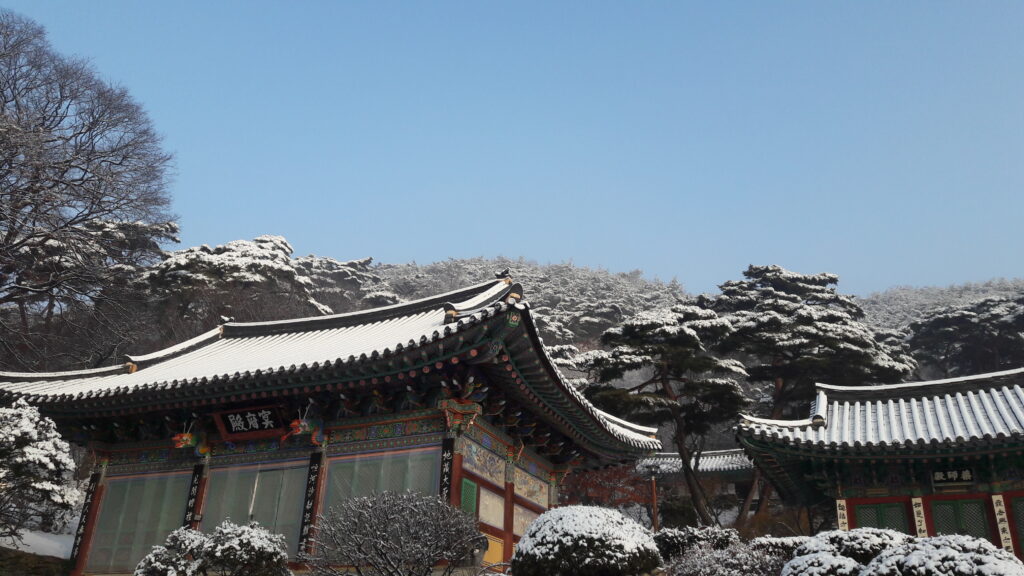
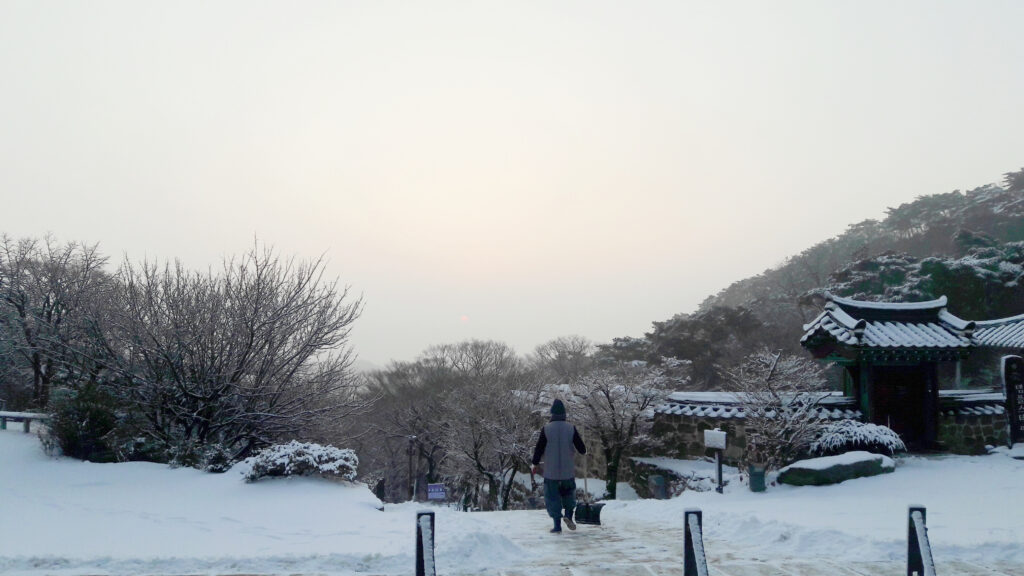
“It’s going to snow,” my temple tour guide, Seokun, told me. The grey clouds covered the sun, and the wind picked up, causing chimes to sound in the distance. Seokun looked back at me and asked, “Can you help the monks shovel snow tomorrow morning?”
Naturally, I accepted. I had been waiting for this moment, expecting it, for the past eleven years since South Korea became my home. It became my tradition to take time off to refresh in one of the many beautiful Buddhist temples across South Korea.
This time, it meant more. This was my final temple stay in a country I came to develop great affection for. It was the perfect start to my 2018 before starting my new life in Venice, Italy for a new career.
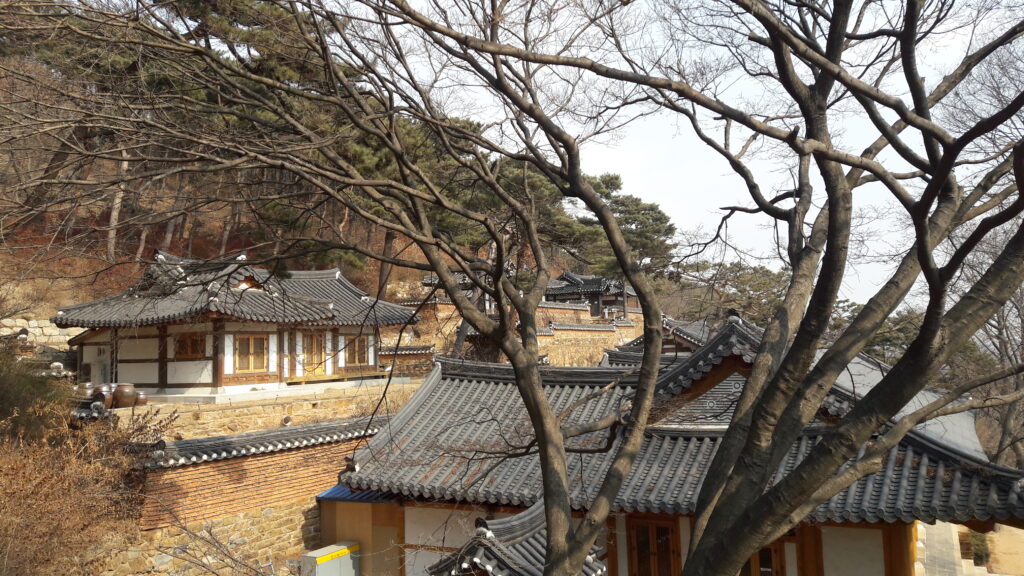
Jeondeungsa, hidden in South Korea’s beautiful Ganghwa Island, became the chosen temple to begin my farewell tour in. Nestled on a quiet hill overlooking the sleepy island, it’s hard to believe that two bustling cities, Seoul and Incheon, are neighbors only a few kilometers apart.
Learning from the temple guides
When I arrived, I walked up the steps inside the fortress that led to the temple. With each step, I was reminded afresh of the beauty I would live with for the next five days.
When I arrived, I was greeted by gracious temple guide experts. They explained the history, customs, and activities I needed to know. Regardless of how many times I have done this, each time felt like the first. Learning from the temple guides was always an enjoyable experience. It was a chance to ask questions that you might not find in the tour books.
(Image courtesy of JP Morselli)
The temple itself has a fascinating history, as described by Seokun during my temple introduction and in my readings about the temple during my stay. Seokun said that Jeongdong was built in the eleventh century. He told me that the fortress was at the center of vicious battles between Koreans and French and Japanese foreign invaders.
I learned from him that, during a battle against an invading French naval fleet, Korean soldiers rushed inside the original main temple to carve their names on the columns and the walls, asking Buddha for protection in battle. I also learned that the engraved names of these soldiers are still visible around the walls, that the monks constantly point out in solemn reflection the lives lost to protect this temple.
After my orientation, I spent my first four hours preparing for the days of reflection by dressing in the visitor attire provided by the temple. It was surprisingly comfortable. The clothes were traditional garb for Buddhist followers spending time in the temple. Wearing these clothes, given their simplicity, immediately stripped away all the daily vanity that people tend to get caught up in when wearing regular clothes.
Food for the soul
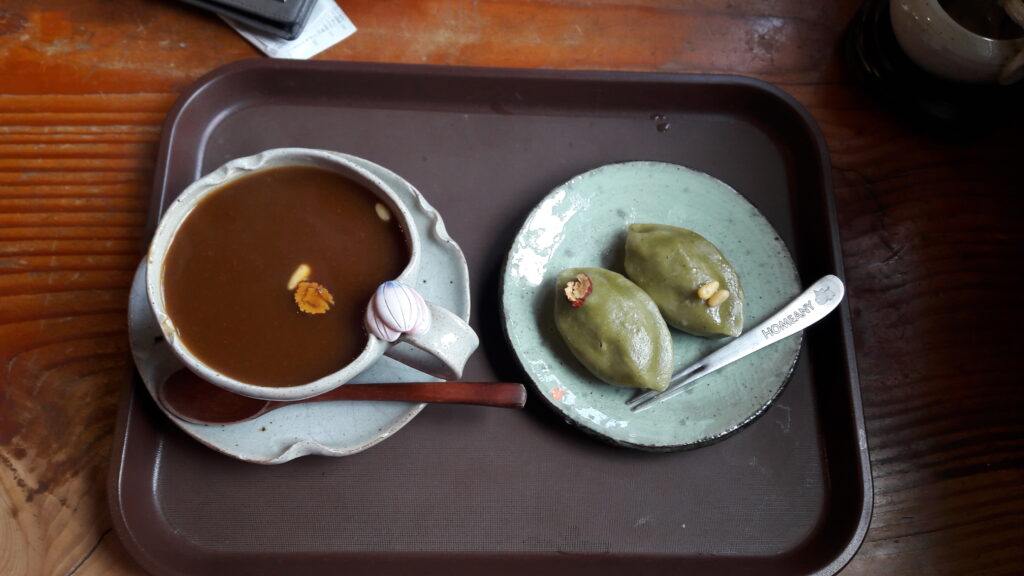
The cold led me inside the temple’s teahouse, where I sipped on the most enjoyable tea, “yuja-cha,” a Korean citron tea served in a handcrafted ceramic cup. When I was warm enough, I walked along the hills of the temple walls overlooking the farms below. After the walk, dinner was served. Along with meditation and relaxation, eating temple food brings me much joy.
(Image courtesy of JP Morselli)
The food was prepared each day with love, care, and sophistication. Replenishing your body with clean, healthy, and locally sourced food is just as important as refreshing your soul. The food at Jeondeungsa was exceptional. Eating here gave me an insight into the culinary soul of not just Korean Buddhism but Korean culinary culture as a whole.
I believe Korean Buddhist food is often passed over by barbecues and other meat-rich dishes. The ingredients used for temple cuisine taste fresh and organic, and the ingredients at Jeondeungsa were no exception. The techniques to create the dishes were very delicate and required quite a bit of skill. The cooks were masters who followed the ancient recipes of the Korean temple cuisine tradition.
Finding peace in Korea
After eating, there was time for reflection. Often, I spent time reading one of the many books on Buddhism from the temple’s library. Jeondeungsa had a large selection of English books on Buddhism, too. On this trip, Thich Nhat Hanh’s ”Anger” was recommended to me.
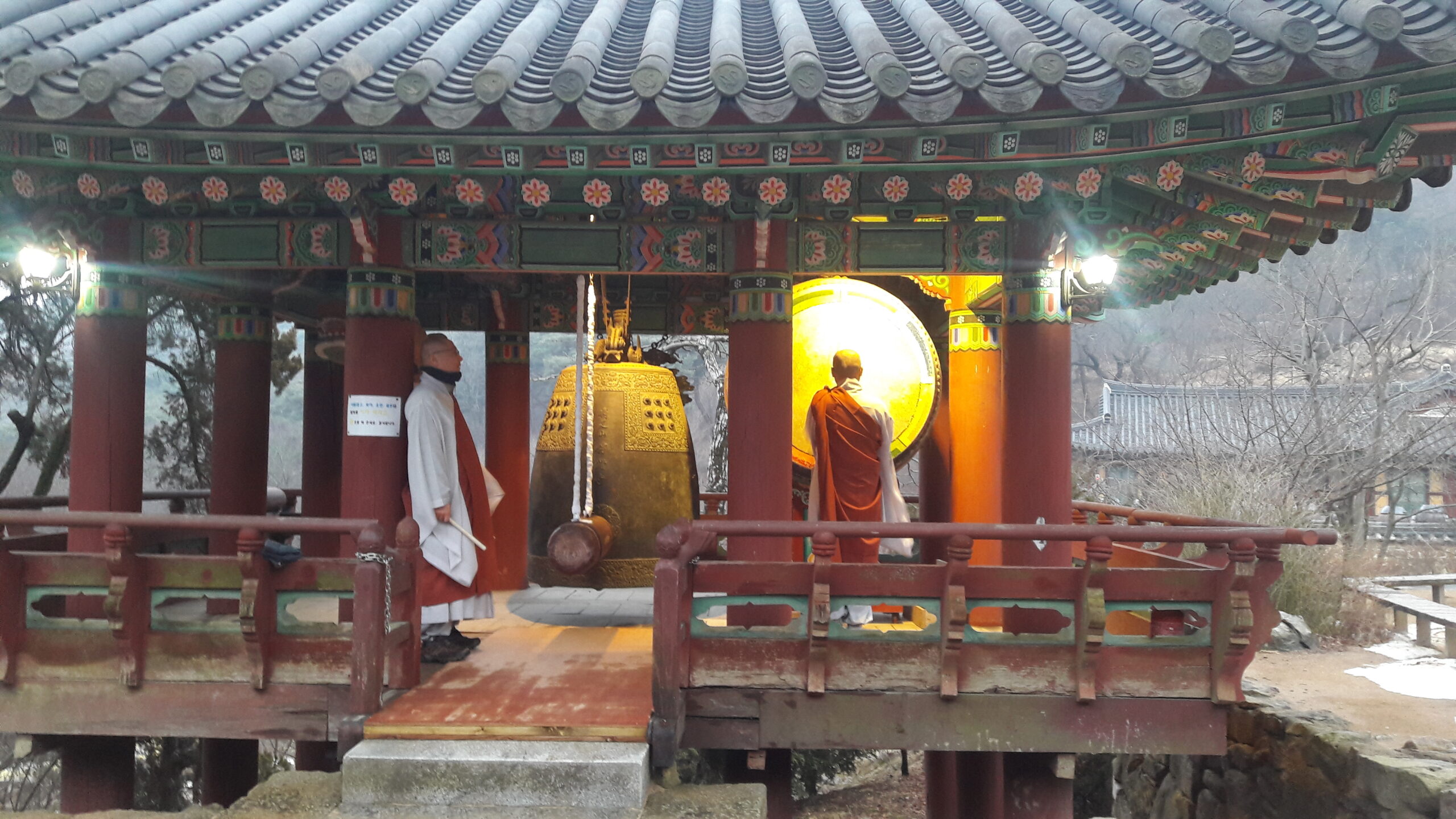
After an hour alone, the drums began, awakening all the spirits within the natural elements. The drum and bell signaled the monks and temple stay participants to make their way to the main temple for evening chanting.
While inside Jeondeongsa’s newest temple and awaiting the monks in silence, I was instantly brought to a peace that is often hard to find in my busy life. During these evening chants, I learned to be present with my breath and the words of the chant.
(Image courtesy of JP Morselli)
“Being present is the most important step to actualizing peace,” Seokhun told me.
I often get swept up in what I have to do next. However, bowing and chanting with the monks freed me from worrying about what was next.
After the evening prayers, I walked into my simple yet very comfortable room. I enjoyed the silence with no televisions, computers, or phones to distract me. Every night, I found a quote from a monk or the Buddha and reflected upon it. This helped me not only to stay present but also to see how I could apply meaningful lessons to my life.
I realized that when we are left with only our “self” and not with “things,” we can truly hear ourselves.
In the mornings, I woke to one monk chanting as he gently banged his “moktak,” a Korean Buddhist percussion instrument in the shape of a wooden fish. It was nice not needing an alarm clock.
When the doors to my room opened, I was greeted by what looked like thousands of stars, each more beautiful than the next.
4:30 morning prayers began, and I was again reminded to stay present. Temple stay participants could take part in bowing 108 times. The 108 bows were a time to reflect on things I had often neglected or lacked in my life.
Monks get angry, too!
As the days at Jeondeungsa marched forward, I was able to stay present. I was never bored or tired. In the afternoons, I would take hikes to explore the fortress while in quiet walking meditation.
Later in the day, it brought me great pleasure to enjoy drinking tea while reading the teachings of a monk. Before dinner, I sat in silence in the original main hall and took the time to practice my breathing.
At one point, Seokhun even gave me a chance to speak with a monk. I shared a delightful and lively discussion with one of the main monks, who had prepared invigorating green tea which he shared with us again in beautiful handcrafted ceramic cups. He was cheerful and answered every question with real insight.
I left our long discussion with a sense of happiness and a new perspective on “The Matrix.” He was a big fan of Morpheus.
On my final day, I was fortunate enough to have one more opportunity to speak with another insightful monk to discuss the topic of anger. It was a sincere conversation in which the monk admitted that many things frustrated him. He told me something that gave me a new perspective on my own issues with anger.
“I am here to figure out all of these heavy emotions humans have, to understand them, then share my answer with you. Let me do the work,” the monk said. “That is why I am here and you are here – to get answers. No need to struggle.”
(Image courtesy of JP Morselli)
Clearing snow after clearing mind
Each experience at Jeondeungsa felt new. Each encounter with the monks or temple stay staff was warm and hospitable. However, in all the years I have been staying in temples, I yearned to participate in shoveling snow with the monks. I am not sure why. Perhaps I had always wanted to feel like I could be a part of the temple life, not just a spectator.
Well, the snow did fall.
When it did, I was ready. It was a magical moment that illuminated this important temple’s full splendor and beauty. I felt like nature had rewarded me. As I shovelled with the monks, following their orders, we silently worked as a group. Each did their part to make sure that the paths were clear for temple guests.
What I have come to learn in this exercise of clearing snow is that life is full of paths that are blocked. But with the right mind and guidance, you can clear any path.
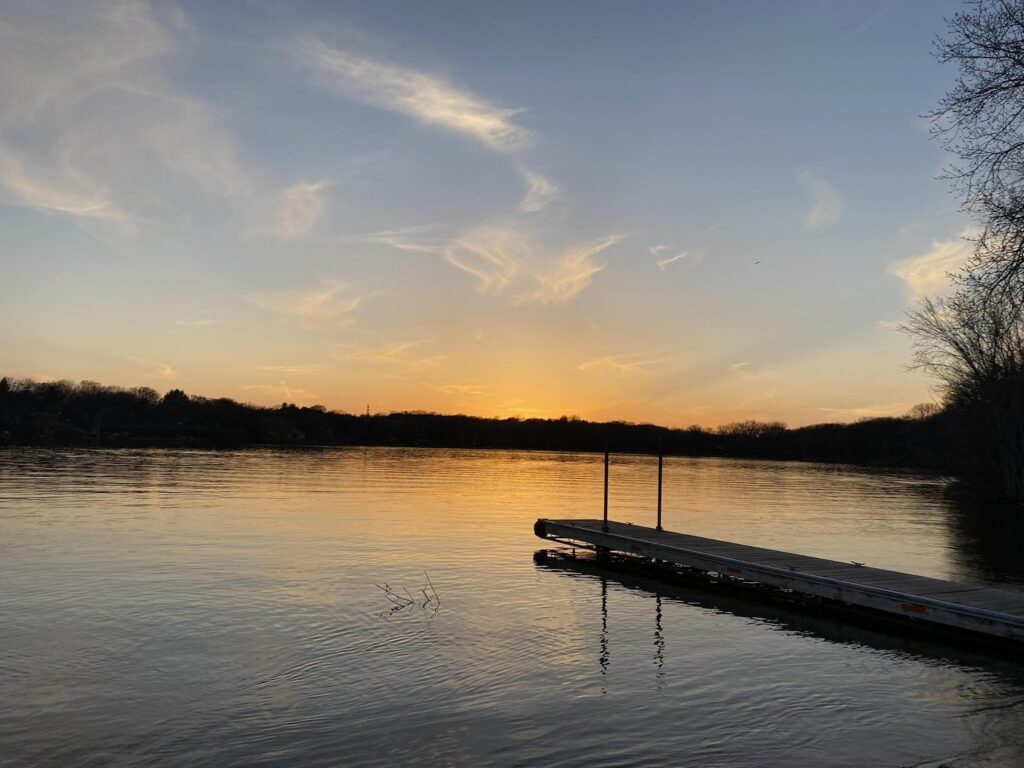
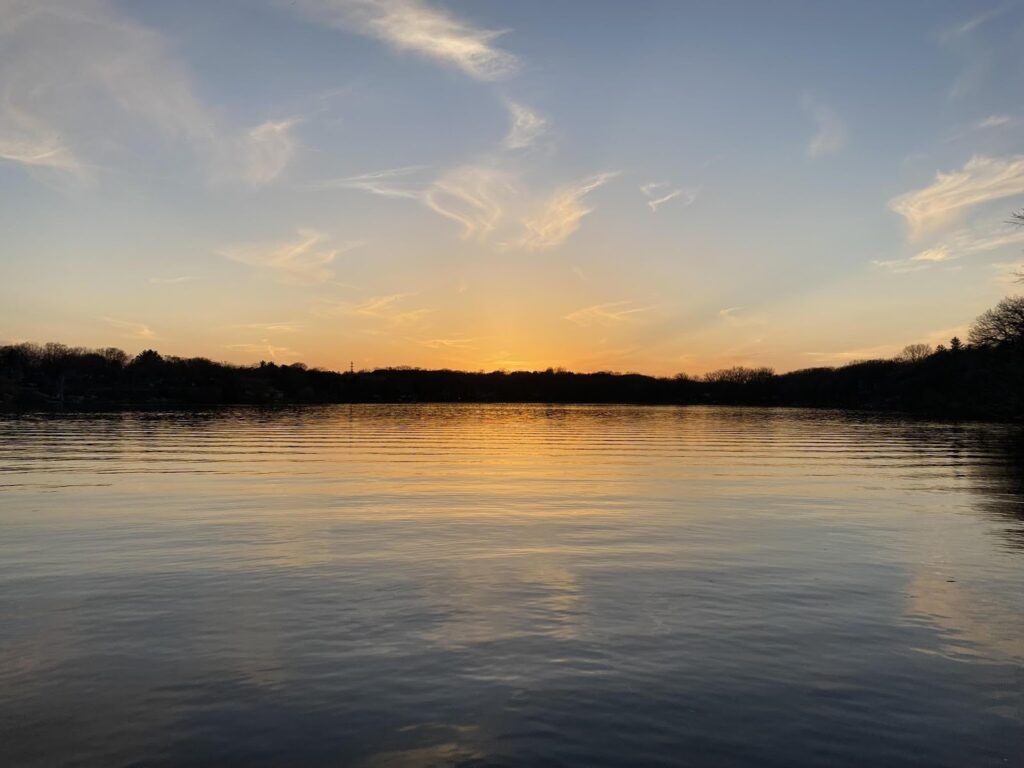
When I first discovered Lake McCarrons in my home state of Minnesota, I was around 17 or 18 years old. It was a holiday, and my mom, sisters, and brother were gathered around the barbecue tables, waiting for the food to be done. Lake McCarrons was right up the street from where I lived at the time. I liked the atmosphere and how the sun always sets where you can see it.
(Image courtesy of Alexis King)
The morning is the best time to go. In the winter, the cold air rushes to your nostrils, making it hard for you to breathe but easy to have the best “I’m okay and everything will be fine” conversations with yourself.
The houses around the lake make you wish you had one, especially since they are almost done building the new ones. Lake homes are beautiful, by the way.
A park and a picnic area for family and gatherings, alone time with the kids, or by yourself makes it ten times better than it being just a lake. When I go to this lake, I enjoy the walking path that leads you to the other side to the end of the lake.
There, my imagination gets wider from all the things I wish I had. But quickly, I am brought back to being thankful for what I already have. I wish that I could afford a home for my mom to be comfortable in or a boat for holidays where all my family can gather and share happy memories while on the water.
The air surrounding the water leads me to feelings of gratitude or what I have, because although it’s not a lake home, my mom does have a home; she gets around perfectly with my sister’s car or mine for the time being.
The lake is in the city with a street full of people driving by. City lights, restaurants, the liquor store, and the Dairy Queen fast food joint are right across the street from each other.
The lake isn’t huge, but it feels big; it is 74 acres in size and 57 feet deep. It is mainly a single-family home area with mostly residential housing, while the rest is a public recreation area with picnic facilities and a large playground.
(Image courtesy of Alexis King)
The sand of McCarrons is dark gray. Are the beautiful sounds of differently colored birds and overall quietness the best part of visiting it? These are inspiring, but they’re not my main reason for loving it. Hardly anyone seems to go to this lake and that’s what I like the most about it: the solitude.
The park at the lake brings me joy and hope. As I kick one foot off the ground and the other one follows into the air, I am making myself go faster and faster as I enjoy any kind of weather. There’s even wind blowing in my face while I look at the lake water as I’m doing so.
I would go in the mornings because for me, iit was the best time to go. In the summer, the wind did the same thing but this time it wasn’t always windy. The heat of the humidity felt like a hand being put over your mouth telling you to hush.
I don’t know which one is more difficult to breathe in, the winter or the summer, but the hot summer days brought more flavor and more excitement; everything blossomed the right way, and even if things were dead elsewhere, they were alive there. That is the beauty in the summertime at McCarrons Lake. I always travel by car when I go, not just to walk around, but also to catch the sunset or sunrise. It is breathtaking.
I have learned to love the lake through my difficulties of feeling down and stressed about where I am, where I’m supposed to be, and where I should be. It has been the best experience.
Today, I hear there are 10,000 lakes here. I hope to experience them all.
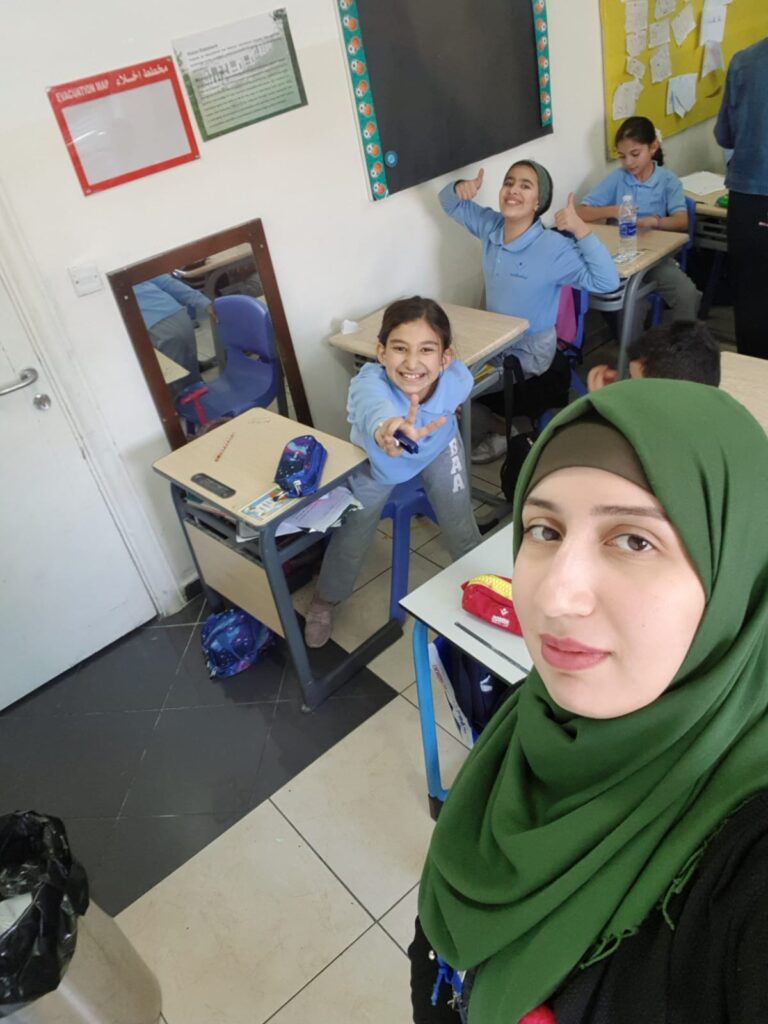
As a teacher, a member of a large family, and a feminist, I have always had crystal-clear notions about nurturing kids. For most of my teaching career, I’ve taught children ages 10 and under. I also have nephews and nieces that I’m very fond of. So far, children are the only humans who speak not only honestly but also kindly.
Everywhere I go, I play with every kid I see. But I don’t want to have my own kids. Not now, maybe not ever.
As a firm believer in freedom of speech and the right to express one’s ideas, I have always been open about my desire to get married or stay single without having children. I’d have pets, of course, but not kids.
I don’t keep count, but I’m sure that tons of people are ready with a stock reply about God’s wrath and how women like me risk missing the boat to motherhood.
“You say you’re not ready, or you don’t want children, but you’ll change your mind one day. However, it will be too late because God will punish you by taking them away from you.”
Gasp! I’ve heard this statement over and over for several years, but it’s still shocking.
The facts don’t lie
The number of divorces has increased rapidly over the years. The biggest divorce victims are the kids. The Department of Statistics in Jordan tracked this in 2018. According to the study, out of 70,734 marriages, 4,690 ended in divorce. Four of the married women that got divorced were less than 18 years old, divorce lawsuits in the same year hit 4,445, and 2018 divorces were over 50 percent more than those in 2017.
Numbers and statistics might not be everything, but to me, these numbers offer evidence that is just too strong to argue against. Besides, personal stories of nurturing families and my actual encounters with such families make me want to believe otherwise.
Facts like how many poor families with kids are living through struggles, how many parents are unemployed, or how many kids live through emotional distress resulting from divorce or separation aren’t widely publicized, but these are all part of the picture.
Stories of children I know
During my teaching career, I have witnessed the impact of such broken relationships and how negatively they have affected the children involved, which is why I don’t dare to have kids.
For example, I had a student who had to wait hours with the doorman until his father picked him up only to drop him off at his mother’s in the evening. The kid, 10 years old at the time, was so disconcerted and confused that it was hard to watch.
Another student had to watch his father beat up his mother and throw her out with a newborn in the street in the middle of the night. The boy, who had just turned 11, found comfort in pornography and was a victim of familial sexual abuse.
Another student broke my heart as she narrated her cousins’ exploits with her body.
One last example among scores of kids that I taught was a mother who disappeared in the middle of the night with three of her kids, leaving the other three with their father, never to be heard from again.
(Image courtesy of Wiam Najjar)
Never giving in
When I met my husband, the first and most persistent topic of discussion between us was not wanting children. It was scary to speak about. It was unfathomable to him.
The only reasons I should have kids were to please my in-laws, to make society shut up, to prove I was “woman enough,” and to fit in.
My husband is not a citizen of my country and, therefore, has no rights. Any child we bring into this world will accordingly have no rights. I can’t list my husband or child on the family register. I’m referred to as the foreigner’s wife. In my country, women are way behind men in terms of human rights, while men are under so much pressure to achieve it all. Having a boy or a girl does not look hopeful.
Arguing with facts and statistics, expressing one’s fear of bringing a child into an unstable world, or simply stating that not wanting kids is never enough for society.
God won’t punish me for considering the many possible scenarios and dreary stats. God won’t take anything away from me because I’ve made a choice. Kids are a huge responsibility that cannot be easily handled. It’s not simply instinct or custom. It’s bringing a human into this world and taking care of every aspect of their life until they grow up.
Yeah, I’m scared of that responsibility. And I must admit that it isn’t an easy decision to make.
So whenever someone decides to ask me when I’ll have kids, I will let them read this piece, even before they ask!
When a foreigner sets foot in the land of Myanmar, one of the questions I’ve heard is “What is the yellow paste on the cheeks of young women?”
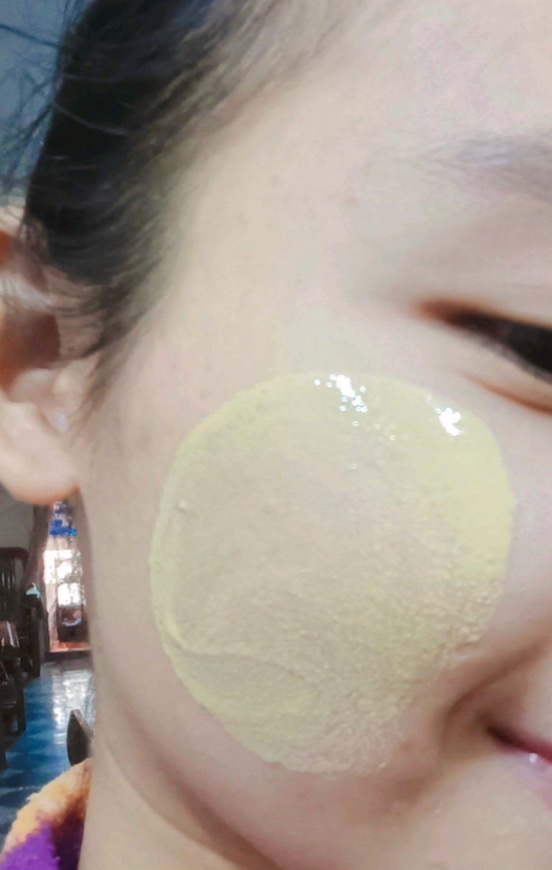
Well, it is “thanaka,” which can only be found in Myanmar.
To kindergarten with thanaka on my face
The first time I wore thanaka on my cheeks was when I went to kindergarten. It was actually one of my earliest memories. Back then, I didn’t care if I looked good or bad. I just let my mother do whatever she wanted with my appearance on my first day of school.
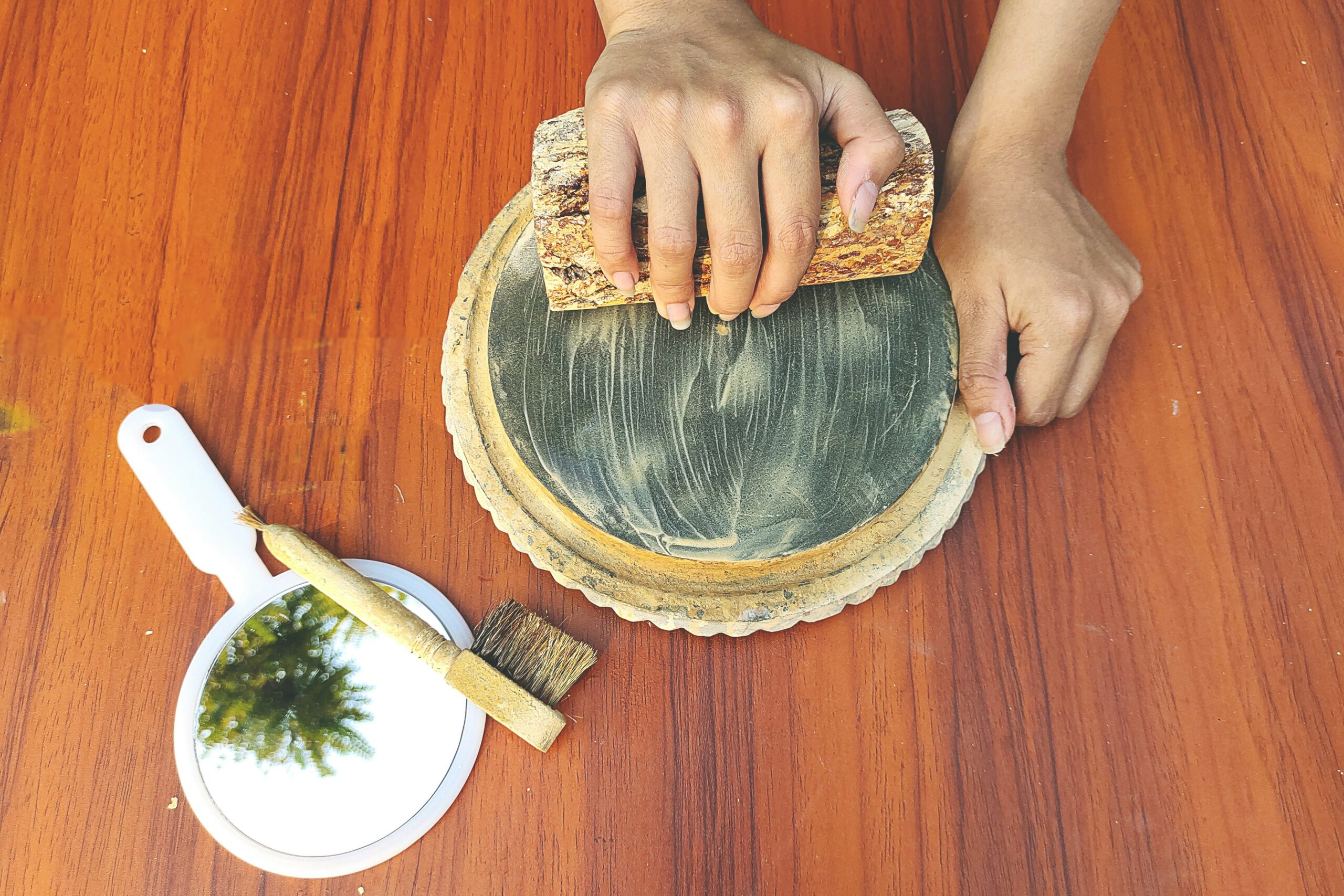
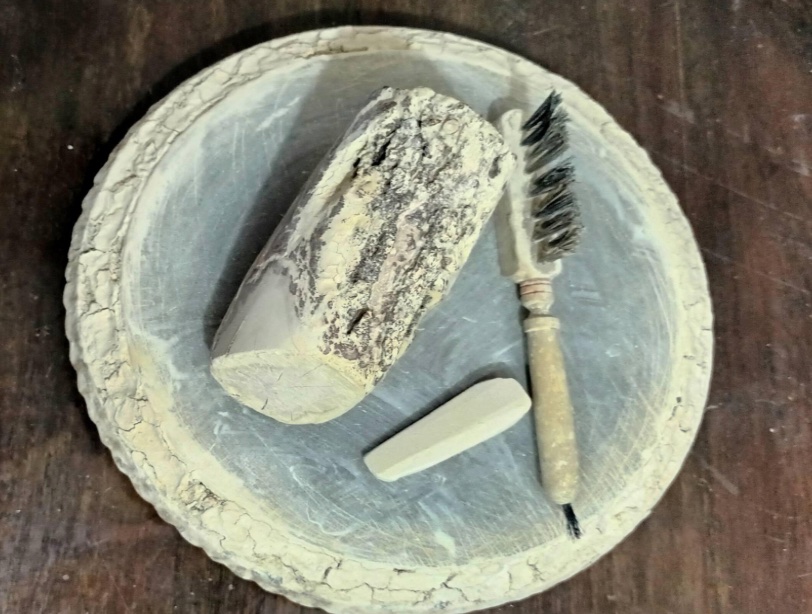
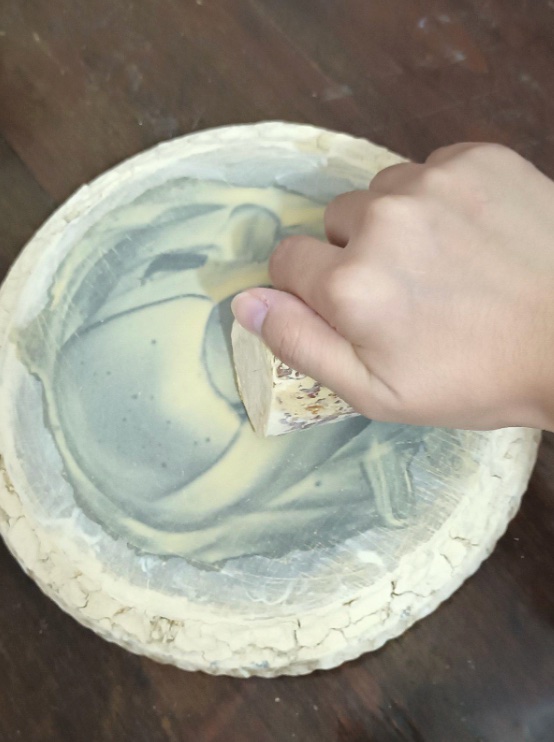
I can vaguely recall some facts, though. I remember how I sat still in front of a large mirror as my mom grinded a piece of tree bark that was bigger than the size of my small arm against a flat, heavy stone that had been wet with water. The magic took place after grinding for about two minutes; pure water was used, but after grinding, there was the yellow paste. Mom rubbed the yellow paste on the flat stone with her hand and put it on my cheeks, drawing oval forms to achieve an egg shape. That was it. There were no complaints from me, and I just happily went to school.
(Image courtesy of Johana Htwe)
Peer pressure raised its ugly head
As I reached puberty, I started caring about how I looked. This means that I applied thanaka by myself and never let my mom help me because I realized how silly I looked when my mom put the yellow paste on my face. It was as if she was using her five fingers to paint an ugly sketch, with my face as a sketch paper. The result was like those markings on a tiger’s face.
During high school, I wore thanaka every day, and so did my peers. I wore a simple shape made using thanaka by putting the yellow paste all over my face and using a brush to draw lines carefully. My friends wore particular shapes such as a rectangle or leaf. The reason I wore thanaka 365 days a year, even when I was sick, was simply because my mom would convince me I needed to.
A Burmese lady must not start her day with a bare face,” she would say. “Thanaka will keep your skin cool and brighten your face. Thanaka is good for your skin health.”
I do believe in these mantras. However, there was a period when I assumed thanaka was so cheap that it was used only by people who were considered poor. Personally, I consider the word “cheap” to mean not being able to blend in with classmates and teachers in this context.
(Image courtesy of Johana Htwe)
On my university campus, a bunch of gorgeous ladies were part of my surroundings. Their beauty was reinforced by international beauty brands. As for me, who grew up with little knowledge of cosmetics from other countries, I felt like I was the least beautiful girl in the university. I can still remember some comments from my friends.
“There is thanaka on your eyebrows,” they’d say in between their laughs.
“Your thanaka looks funny on you,” they’d sometimes say, assuming a serious tone. Still, it was as if they were suppressing their laughter.
“Your thanaka is soaked with sweat.”
“There are only some spots of thanaka on your face and it doesn’t look good.”
“Thanaka is so cheap.”
“I’m too lazy to do the grinding part.”
I didn’t defend myself back then. I thought maybe they were right.
So I changed my style. I began to use foundation, blushes, and lipsticks that were recommended by my friends. I couldn’t pronounce the brand names, but they were probably made in Korea and Thailand. I spent my monthly pocket money on them instead of enjoying my favorite pork stick in Tutt-pi restaurant.
I thought my appearance changed for the better with the help of these cosmetics. I told myself that even if I didn’t attract the attention of boys, if I looked good in the eyes of female classmates, I would at least not be judged. That was until one moment when I looked at myself in the mirror one afternoon.
Using international beauty products, though expensive and made of rare ingredients, didn’t turn out well for me in the long run. I looked good with makeup in the morning but not in the afternoon and evening; I usually got soaked with too much sweat. Myanmar has very hot weather and the heat is especially unbearable in the afternoons. As a result, my face would get oily at noon and my skin wouldn’t react well to chemical ingredients.
At the end of the day, pimples and acne appeared on my forehead, cheeks, and even around my neck. I covered them by wearing an even thicker foundation and more makeup. No matter how hard I tried, the result was that the more I wore, the more pimples and acne appeared on my face. In the end, I had no option but to stop using makeup.
Welcoming thanaka back into my life
Although I stopped using foundation and other makeup, I began to use thanaka again since I was not comfortable with a bare face. That was also due to my mom’s nagging about how thanaka could heal those pimples. She had no proof, of course. It was just the power of a mother that convinced me. If I were to become the president of a thanaka company, I would give the lead position of marketing department director to my mom! She was that good.
In this case, my mom was right. After using thanaka, the result was quite impressive.
(Image courtesy of Johana Htwe)
Thanaka kept my skin cool when the weather was too hot, so I didn’t feel the burning heat under my skin like I did with makeup. That might be because thanaka is made using water and the bark of a thanaka tree, which has to be nurtured for more than 30 years. The naturalness must have protected my skin from the extreme heat.
Also, whenever I sweat a lot, I would rinse thanaka off using water only. There was no need for a cleansing chemical liquid. This means there was no chemical reaction and thus, no more new acne. It took some time for the acne to disappear. As far as I remember, my remedy for acne is to forget about it, stay happy and healthy, never ever let myself be sleep deprived, and last but not least, to sleep wearing thanaka. It’s like wearing a Korean face mask.
Of course, even without acne, my face still has some oily pimples. I think it is just a hormonal matter and totally natural. To me, it is better to live naturally than to choose products containing synthetic chemicals to conceal whatever people think is ugly. After all, there are always side effects and most of the time, it is not worth spending heavily on chemical products.
Thanaka is a Myanmar tradition
Myanmar is a country with a hot and arid climate. That’s the reason why thanaka is still popular here. Thanaka protects the skin from the burning sunlight. To be frank, whenever I see a girl wearing thick makeup in very hot local weather, I just want to say, “Stop using makeup all the time. International brands are produced according to the standards of the host country. In the worst-case scenario, you could face an outbreak of acne because of chemical ingredients when you use those products in Myanmar. Besides, they might not protect you from sunlight, causing your skin to turn a sunburned shade due to damaging UV rays.”
In Western countries, sunburned, tanned skin is often considered beautiful. But in Myanmar, most young people, both girls and boys, want to have a fair and pale complexion. That is why most Burmese girls, many of my friends among them, are turning their attention to whitening creams when they reach adulthood. They think that the thanaka that they used to wear will no longer help them stand out.
(Image courtesy of Kentaro Komada via Unsplash)
There is also another reason why some Burmese women, especially young girls, are not interested in thanaka as much as before. It is the attitude that “only peasants wear thanaka.”
Even in my family, my sister always complains that only street vendors and working class people wear thanaka. The way she and my friends say that as if they are better than people from working society has always angered me. In fact, thanaka is Myanmar’s unique, traditional product that has existed for a long time, no matter who wears it or how much it costs. It is a shame that my sister and my friends, who were born and raised in Myanmar, somehow use thanaka to discriminate against people rather than seeing it as something to be proud of.
According to my mom, the makeup trend had already invaded Myanmar in her youth. These days, not only women, but also men and children wear thanaka.
On the streets of Myanmar, it is quite common to see children, regardless of their gender, wearing thanaka in various shapes, mostly with the yellow paste on the forehead, nose, and both cheeks whenever they go to school. Young men seldom wear thanaka, but I must say I always smile since I find a man cute and friendly when I see thanaka on his face. It is as if a man with thanaka is honest, kind, and generous, which I bet are the qualities of an ideal man for the majority of girls.
As for young women, they are quite careful when drawing shapes with thanaka on their faces, so as not to look funny. Being able to create beautiful thanaka shapes equally on both cheeks is a talent, and that talent can even make a village girl elegant, and full of pride and charm.
If one visits Burmese villages, it is even easier to see thanaka. For village people, thanaka is their sole daily beauty product. Besides, makeup is not the best choice for those who work under the sun from morning until night, looking after their crops, animals, and farms. Thanaka is the only natural product that can protect them from burning sunlight.
In my opinion, it is quite unacceptable to price what others consider precious according to their personal preference. My opinion is always diametrically opposed to that of girls who only think that a set of cosmetics can make them elegant and fit into the crowd, thus looking down on others who don’t do so.
I know that the beauty of a woman can be highlighted by using some makeup tools, but I also want to say that the sight of a village girl wearing thanaka while farming can be equally as eye-catching and convey the sense of true beauty.
In a nutshell, thanaka is for everyone and can be found anywhere in Myanmar. I want to say that I feel happy seeing a person wearing thanaka proudly without a care. I can sense innocence, a humble mind, and a particular connection with them.
As long as I live in Myanmar, I don’t think I will ever lose my love for thanaka. In the morning, I start my day after applying thanaka on my face, arms, and legs. Before I go to bed, I do the same.
Although I don’t want to admit it, I don’t have a talent for creating amazingly symmetrical thanaka shapes most of the time. Nevertheless, the shapes are not important. To me, the feeling of its cool texture and the many skin benefits that I get from thanaka are qualities that are too precious to convince me to replace it with international brands.
For introverts, you’d think that the pandemic would be fun. Or at least something they’d be used to. It all sounds pretty normal: staying inside, watching something on a streaming service, and spending too much money on a food delivery app. You’d be mostly right if you were talking to this introvert. But this introvert also struggled. And this introvert even missed talking to people.
My name is Anna Bechtel. I am originally from Hamden, Connecticut, in the United States. However, at the beginning of 2020, I was at Drew University in Madison, New Jersey.
The pandemic hit during my senior year of college. I know, it sucks, the world hates me. At first, I thought this was like the previous crazy illnesses, like swine flu or ebola. I realized that wasn’t the case when I returned from spring break.
My college responded immediately, first by suspending in-person classes for a few weeks. A few days after that announcement, in-person classes were suspended for the rest of the semester, and everyone eventually had to head home. I went back to Hamden a few days after this was announced.
(Photo by Anna Bechtel)
Being at home was nice at first. I got to catch up on all the TV I missed. I ordered food from my favorite local places. I watched a bunch of livestreams and online events. And I was able to get all my schoolwork done.
After I graduated in early May 2021, staying at home was less fun. I feel like that’s when the fun part of the pandemic ended for everyone. However, I struggled with more than just boredom and cabin fever. I felt stuck, I felt like a failure.
Two years later, I’m still struggling with those feelings.
As someone in their 20s, society has told us that we have to go out, start our careers, find our lifelong group of friends, and date up a storm. Unfortunately, those things weren’t happening for me.
Fast forward to the present day and I’m a full-time contract writer for a website. However, I still don’t really know my coworkers all that well. I still feel uncomfortable messaging them on Slack, and I’ve worked there for over a year. Honestly, it’s hard to forge close bonds with people virtually. This also makes finding friends and romantic partners difficult. When you’re messaging someone, you have no idea how they actually feel about you. And unlike coworkers, these people can just stop talking to you if they aren’t feeling it–but I know I have to conquer that fear and put myself out there.
(Photo by Sven Brandsma on Unsplash)
Now, staying at home is just a choice since we’ve developed ways to be in public and not have to worry about getting the virus. Ever since then, I’ve been trying to increase my social circle. I’ve been going out more, and am trying new things. Since 2020, I feel like I’ve gotten better at social interactions. I wouldn’t say I’m amazing, but I’ve come a long way. I’ve made some new friends–and they seem to tolerate me (which means I’m doing something right!)
We’ve all struggled in our own respective ways these past three years. Now, I want to take advantage of the insights that this challenging period gave me to keep growing. There’s nothing in my way anymore, so I’m going to go for it.
Several people passed by my house this year. Many of them just passed by temporarily, but other people stopped by and stayed as long-term friends.
For me, being an adventure hostess meant that everyone who needed a place to stay for some days, weeks, or months could come to my house. Welcoming people at home for over a year was my “specialty.”
I’m from Argentina, but I live in Italy, working as a research assistant for the national research center. I became an adventure hostess for fun. It was a way to recover human relationships after so many months alone with my boyfriend, Coni, during the lockdown.
Most of the people who came to my home here were friends. Others were friends of friends, or strangers with just a tentative link initially. The people who came to my house did so by word of mouth. I think that because I’ve been living in the city for a long time and my house can host up to six people.
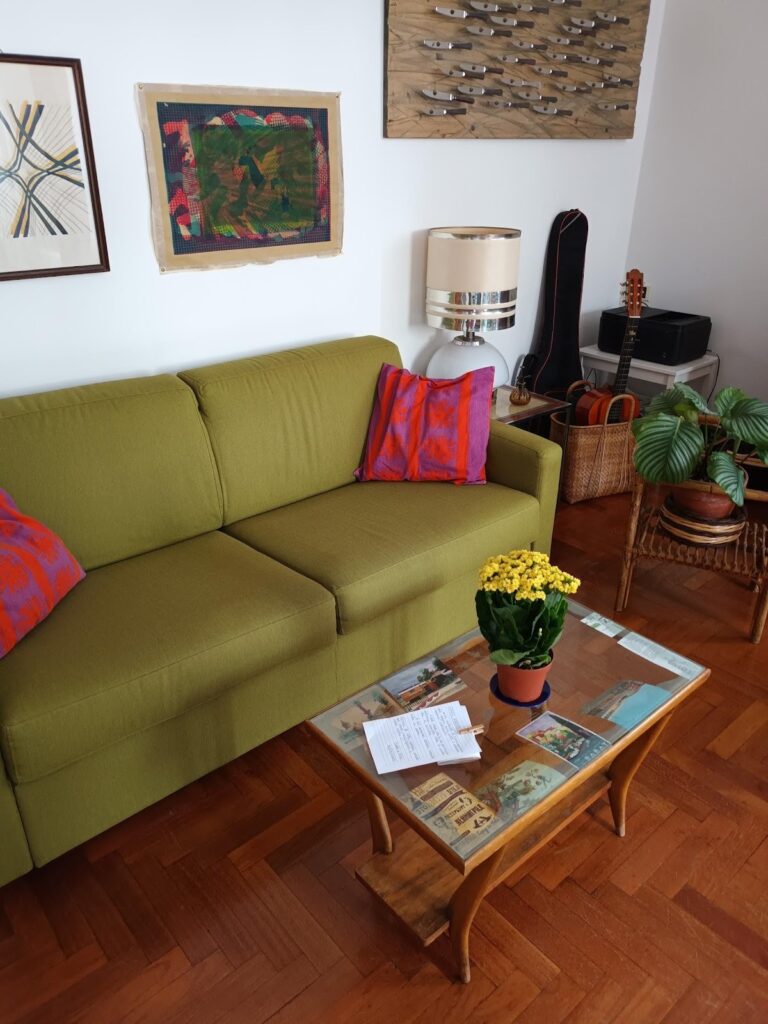
The house has two bedrooms but there is also a comfortable sofa bed in the living room. The maximum number of people who stayed was six and that offered an interesting mix of outlooks and priorities.
Seeking a life change
I think these people were looking for a big change in their lives. When they got home, they told me that they had left everything in their country to start over and turn the page.
I am sure that I was part of that first change that they were seeking, not because I am conceited, but because I was part of their lives at a fundamental time: the time when they launched into their new lives.
(Image courtesy of Chanita Sykes via Pexels)
One day, this last European summer, Claudia, a woman no more than thirty years old, came home while I was still on vacation. We connected because she’s related to one of my mother’s friends. While I was visiting family, she called me to tell me that she had lost her job after an unpleasant situation and that she had nowhere to sleep.
(Image courtesy of Zaida Obeid)
She agreed to head to my house to sleep even though she had to take several trains to get there. Claudia vacuumed my house a lot and I liked that because, like her, I am allergic to dust. Claudia drank beer as we don’t like wine any more, and during her adventure, we drank more beer so that her story would take on the color that she wanted.
A mix of friends
Other memorable interactions happened with Coni, Juan, and Ale.
Because of all the people staying in my home, we were lucky we had those armchairs that can be bought in big furniture stores for your first home. These are great for sleeping in, or just for enjoying a coffee in the living room.
I remember Juan by the black glasses he wore and the fact that he also drank beer. He brought me a very tasty brew from Belgium.
Ale is a professional judoka. He is one of Coni’s friends and one of the most transparent people I’ve bever met. People tend to be more opaque or like the frosted glass used for bathroom showers.
Sometimes people don’t directly say what they feel and try to be politically correct when it comes to expressing their feelings. But Ale said everything he thought without analyzing how he said it. Since he is a genuinely kind person, he never offended anyone.
A young couple, Lem and Dan, spent even more time with us. They didn’t always come as just a couple, but sometimes as a trio with the cat, Raymond. Sometimes, Lem had to leave for her citizenship process and her partner didn’t like her going, but Dan was quite happy at home.
We cooked typical food from his country, Venezuela. Every time Lem came back, Lem would make us do short gymnastics routines. Ale would too, but he was more demanding about it. Because of Ale’s advice, we bought a TRX suspension trainer that I sometimes use to swing in the trees of the city square.
(Image courtesy of Alexandra Tran via Unsplash)
Little moments make the big picture
I could share thousands of anecdotes from everyday life with them, especially the “logistical or operational details,” as I like to call them. But those are precisely the details that could be boring to others.
However, for those of us who live in the moment, those details were what transformed day-to-day life into an adventure. For example, when you walk into the bathroom you always find Raymond standing by the bathroom sink waiting for someone to turn on the faucet for him to drink water from.
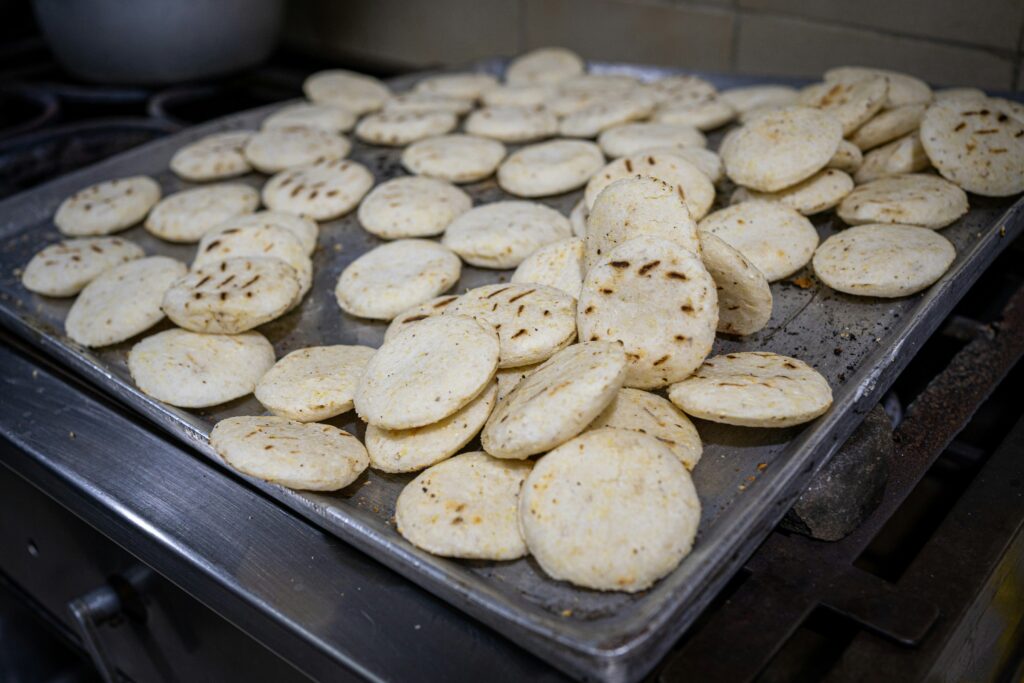
Ale did gymnastics after tying her elastic bands on the living room window, Dan cooked cornmeal cakes called “arepas” and tried to get all kinds of ingredients to make them taste just like the original ones.
Lem had online English classes very late; sometimes classes would be at midnight until three in the morning due to the time difference with her teacher in Buenos Aires. Some of us even walked behind her camera in our underwear when she was having her class.
Then, life makes everything go on. For now, I’ve stopped being an adventure hostess because I’m moving to England for a while. Now, I’m the one living in a house with lots of other lovely people.
I think becoming an adventure hostess helped me cast my worries aside. Or maybe what bothers me is not staying still with what I always do. And my life becomes an adventure because from time to time these stories interrupt my history.
The experience of living with people and friends does not compare to interacting with people going for coffee or dinner. In coexistence, we can truly enjoy the minutiae of life.