Can a National Dialogue Revive a Faltering Democracy in South Africa?

Over three decades into democracy, South Africa finds itself in a moment of deep uncertainty. While the right to vote, speak freely, and live in a constitutionally protected society has been achieved, the social and economic promises of 1994 remain painfully out of reach for millions.

Against this backdrop, the government has launched a new National Dialogue framed as a platform to reset the country’s course. But with youth unemployment at 62.4% and public trust in institutions steadily declining, many are asking: is this a meaningful effort to heal a fractured society, or just another elite driven exercise in political theatre?

South Africa’s socio-economic indicators paint a sobering picture. Unemployment remains stubbornly high at 32.9%, and when including discouraged work seekers, the expanded unemployment rate climbs to 43.1%. 

Poverty, too, is pervasive. According to the World Bank, nearly 63% of South Africans live below the upper-middle-income poverty line of  $6.85 per day. Meanwhile, inequality remains among the worst globally, with a Gini coefficient of approximately 0.63 in 2023 thus reflecting extreme disparities in wealth and access. Load shedding, crime, gender-based violence, and dysfunctional service delivery continue to plague communities.

Announced by President Cyril Ramaphosa on 10 June 2025, the National Dialogue aims to bring South Africans together across race, class, and geography to discuss the country’s future and rebuild a sense of shared purpose. It draws inspiration from the Truth and Reconciliation Commission (TRC) in the mid 1990s and is being led by an Eminent Persons Group, including figures like former judge Edwin Cameron, peace activist Ela Gandhi, and Rugby captain Siya Kolisi. The dialogue is expected to unfold in phases, beginning with a national convention in August and continuing into 2026. Its stated focus areas include poverty reduction, youth development, crime prevention, and restoring institutional trust.

But critics warn the effort risks being another “talk shop” disconnected from the realities of ordinary South Africans. Columnists like Malaika Mahlatsi and Ivo Vegter have labelled the dialogue a “costly distraction” with a projected R700 million (40 million USD)  budget though the Presidency insists this is not yet final. It is worth questioning the value of large scale consultations in a country already beset by service delivery failures.

South Africans are not suffering from a lack of ideas. We are suffering from a lack of political will and accountability,” Mahlatsi wrote. “Dialogues have become tranquilizers to pacify the rage of the governed.”

While the Eminent Persons Group features high-profile leaders, it lacks direct representation from unemployed youth, informal workers, or residents of rural and township communities. 

South Africa’s young people are not apathetic, they’re disillusioned. Years of corruption scandals, broken promises, and economic exclusion have eroded confidence in democratic institutions. But many are still hungry for change if they are given real space to lead. That means shifting the dialogue from polished stages in Pretoria to community halls in Khayelitsha, Giyani, Umlazi, and Mahikeng. It means integrating student unions, youth NGOs, and civic movements into the agenda-setting process, not just inviting them as spectators.

Importantly, the outcomes of the dialogue must be linked to tangible action: job creation schemes, basic income support, land and housing reform, and improved access to services. Without clear commitments and timelines, this process risks deepening cynicism.

South Africa’s democracy is 31 years old. But for many, especially the youth, its institutions feel distant and its benefits unequally distributed. The National Dialogue could be an opportunity to reset, reconnect, and reignite participation. But that will only happen if it centres real people, acknowledges hard truths, and delivers more than just words.

What’s needed now is not another blueprint or committee, but bold political will, grassroots inclusion, and honest reckoning with the failures of the past three decades. Because if democracy is to survive the next 30 years, it cannot simply be inherited. It must be rebuilt by the many, not the few.

Idaho Falls celebrates Juneteenth holiday through Musical Festivities

Idaho Falls celebrated the national holiday Juneteenth with a host of commemorative events designed to recognize one of the most important milestones in American history. June 19th remains a significant date, marking the day in 1865 when slavery was officially abolished in Galveston, Texas. Across the country, enslaved people were granted their freedom and claimed their right to emancipation. That legacy is honored today by many Americans, including Idahoans who seek to share history and narrative through one of the most meaningful channels of communication: music.

On June 14th, Idaho Falls held its second annual Juneteenth CommUNITY Heritage Music Festival, followed by Juneteenth: Night at The Colonial on June 19th. Both events celebrated rich cultural history and the ongoing fight for equality through a wide variety of music genres.

The music festival, a free public event at the Riverwalk Bandstand, featured live music by the Eastern Idaho Jazz Society. Families and individuals browsed community booths in partnership with the Idaho Falls Farmers Market. Opening remarks were delivered by Idaho Falls Mayor Rebecca Casper, who read the city’s official Juneteenth Proclamation. The event ran from 9:00 AM to 1:00 PM MDT and saw strong turnout from local residents. 

Chloe Doucette, a member of the organizing committee, reflected on the success of the event, “It was wonderful. We had lots of presence from booths representing different organizations within the East Idaho community that help share stories of our culture and showcase diverse perspectives.”

On June 19th, the Colonial House in downtown Idaho Falls hosted a memorable evening of musical performances and historical storytelling in honor of Juneteenth. The event began at 7:00 PM with opening remarks from one of the main performers and coordinators, Mosy Moran, who told the audience, “Tonight is an expression of freedom. It’s an expression of everything that America is meant to be—an expression of where we have been and where we can go.”

Performer and Coordinator Mosy Moran giving a statement at the Colonial House Juneteenth event.

The audience was then taken on an aural journey through decades of music, spanning symphonic, ragtime, jazz, blues, Motown soul, and modern hip hop. Musical performances included renditions of “What a Wonderful World” by Louis Armstrong, “Mustang Sally” by Wilson Pickett, and “I Feel Good” by James Brown, all performed by the Eastern Idaho Jazz Society. The Idaho Falls Symphony offered a violin and piano duet featuring ragtime classics such as “Graceful Ghost Rag,” “Saint James Infirmary,” and “Summertime.” Each piece was introduced with a short explanation of its historical significance and cultural impact.

The Eastern Idaho Jazz society playing at the Colonial House.

Midway through the event, a local group of young students known as the Freedom Readers presented a brief history of Juneteenth. They read firsthand accounts from African American citizens who had lived through enslavement, along with passages about the Emancipation Proclamation, the American Civil War, and the landmark day of June 19th, 1865. The students also highlighted the activism of Opal Lee, the “Grandmother of Juneteenth,” who campaigned tirelessly to make the holiday a national observance.

Young students known as the, “Freedom Readers” speak of the history of Juneteenth.

The evening concluded with a performance by the local band Mosy and The Heartthrobs, who played classics like “I Believe to My Soul” by Ray Charles and a stirring mashup of “A Change is Gonna Come” by Sam Cooke and “Alright”by Kendrick Lamar. Lead singer Mosy Moran spoke between sets about his passion for music and its unifying power: “Music unites everybody. It’s an expression. People relate to that expression. The more music you have in your life, the more you can understand somebody.” As Juneteenth continues to be celebrated nationwide, events like those in Idaho Falls at the Heritage Music Festival and the Colonial House demonstrate the power of retelling history and sharing rich music. 

Gay Brazilian Father Fired After Requesting Parental Leave Gets International Attention

A Brazilian gay father’s fight against workplace discrimination is making history in Argentina, with a groundbreaking case now before the Superior Court of Justice of the City of Buenos Aires.

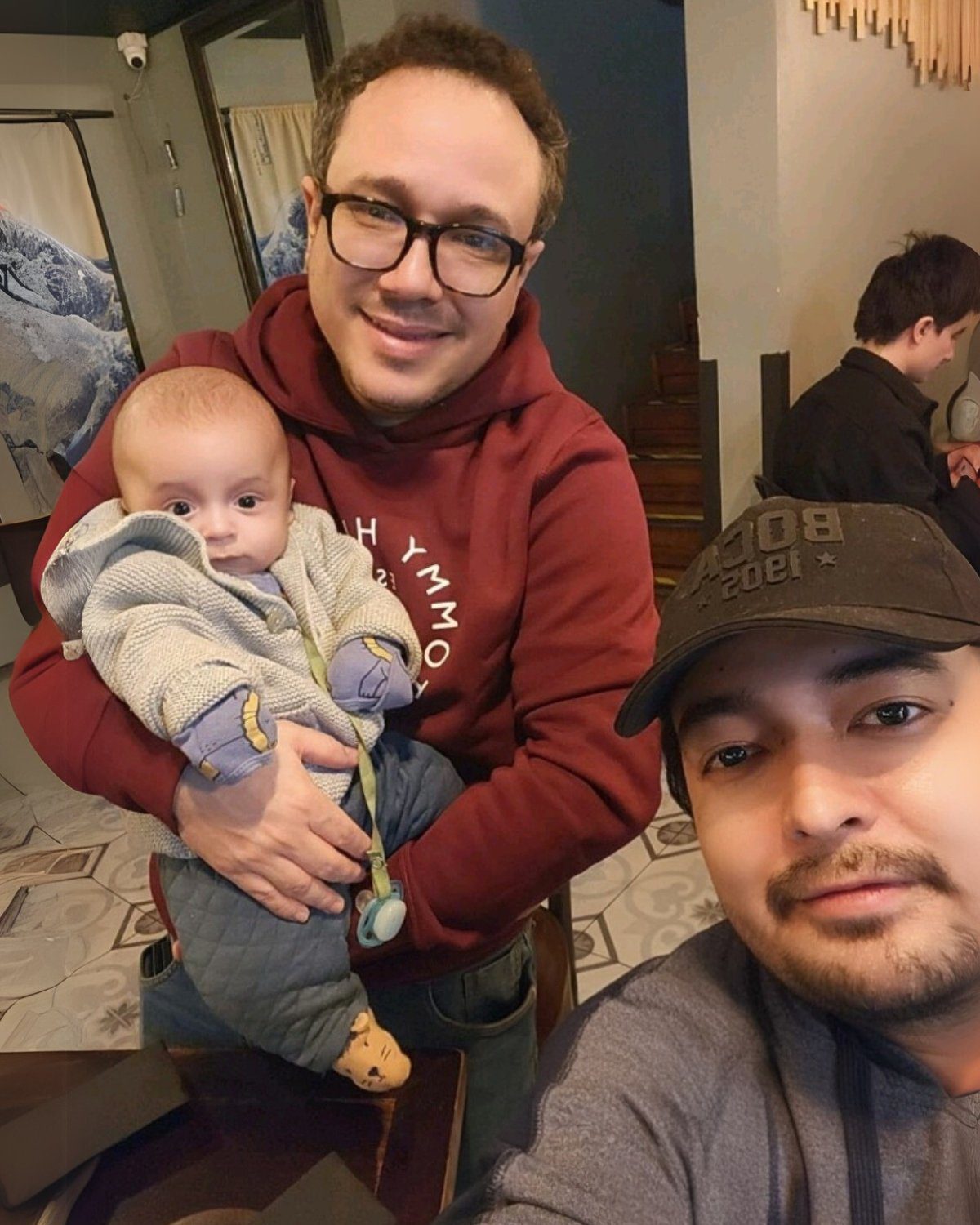
Leonardo Hatanaka, who worked for Genzyme Argentina SA, a subsidiary of the Sanofi Group, was fired just 12 days after informing their employer in April 2023 that they would be a father via surrogate. Their son, Matteo, was born in Buenos Aires on May 5, 2023. Later that same month, on May 31, Hatanaka was fired again — this time after formally requesting 180 days of parental leave, a benefit supposedly available under the company’s diversity and inclusion policy.

Leonardo Hatanaka with their son, Matteo

According to Hatanaka, the dismissal directly contradicted the company’s public commitments to inclusive policies and equal rights for LGBTQIA+ families. 

“I am speaking with my heart to my son — to be visible for him in the future, that we fought for him existing,” says Hatanaka

The case has since been recognized as a clear instance of workplace discrimination by two separate Argentine state agencies. In November 2023, the National Institute Against Discrimination, Xenophobia and Racism (INADI) ruled that the dismissal was based on sexual orientation and gender identity. A second ruling in 2024 by the General Directorate of Coexistence in Diversity under the Buenos Aires city government confirmed the act as institutional discrimination.

Despite these rulings, Sanofi Group has not acknowledged responsibility or offered compensation for the family. Legal efforts to have Hatanaka reinstated initially succeeded through a lower court injunction, but this was overturned by the National Labor Appeals Chamber. Their legal team has since appealed to the Superior Court of Justice of the City of Buenos Aires, which accepted the case on May 14, 2025, signaling that it will proceed to a substantive review.

This marks the first time a discriminatory dismissal involving an LGBTQIA+ parent has reached the city’s highest judicial body.

The case has drawn widespread attention and support from civil society groups including FALGBT+ (Argentina’s Federation of LGBTQIA+ Associations), SOS Homophobie (France), and Mães da Resistência (Brazil). It has also been officially cited in the latest United Nations report on discrimination based on sexual orientation and gender identity.

Matteo, whose parent was dismissed from their job shortly after he was born.

Hatanaka added, “Put it simply, pride is no longer just about visibility; it’s about never having to hide again out of fear of existing.

As Pride Month continues, Hatanaka’s message to their son is gaining global resonance: that every child deserves parents who are protected, recognised, and treated equally — regardless of who they are.

Death Toll from South Africa’s Eastern Cape Floods Rises to 88 Amid Rescue Struggles

In the early hours of Tuesday morning, June 10th, the town of Mthatha and its surrounding villages in South Africa’s impoverished Eastern Cape province were plunged into chaos. Torrential rains triggered flash floods that tore through homes, collapsed roads, and swept away vehicles, claiming nearly a hundred lives, that number expected to rise.

For residents, the destruction was swift and merciless. Families awoke to the sound of rushing water and crumbling structures as the Mthatha River burst its banks. Makeshift homes and formal houses alike were no match for the sheer force of nature.

“We were not ready,” said one local councillor, his voice heavy with emotion. “We had no early warning, no time to evacuate. Many of the people who died were still sleeping.”

A Rescue Operation “Paralysed” by Resource Shortages

Authorities have acknowledged that rescue efforts in the crucial first hours were severely hampered by a lack of resources and coordination. “We were paralyzed,” said a senior provincial official who requested anonymity. “We didn’t have the air support, the boats, the manpower. It took hours—too many hours—before we could even begin to reach those in need.”

Over the following days, teams composed of the South African Police Service (SAPS), Department of Health, Gift of the Givers, and the South African National Defence Force (SANDF) were deployed. Efforts intensified over the weekend, with aerial searches locating bodies in and around Mthatha Dam and along submerged rivers.

Gift of the Givers’ search and rescue head, Ahmed Bham, said their collaboration with SAPS air support proved pivotal. “On Saturday, while hovering over the Mthatha Dam, we spotted anomalies in the water. Our diver confirmed that we had found three more bodies. We are now combing both riverbanks with boats and K9 units.”

The Toll on Families and Infrastructure

Entire families are among the dead. On Friday, President Cyril Ramaphosa visited the region to offer condolences and view the destruction firsthand. At the collapsed Efata Bridge, a taxi carrying schoolchildren was washed away. At least six learners, a driver, and a conductor died in the incident. Several passengers remain unaccounted for.

“I saw mothers crying in silence,” said President Ramaphosa. “This is not just a natural disaster. It is a humanitarian crisis that exposes the vulnerabilities of the most marginalized in our society.”

Beyond the loss of life, the human toll continues. More than 456 people have reported losing identification documents. Others are displaced entirely, their homes reduced to rubble. Many are sheltering in schools, churches, or with relatives in less-affected areas.

Mobilising Support Amid Widespread Grief

The provincial government, in partnership with relief agencies, is coordinating a multi-pronged humanitarian response. This includes:

  • Burial support in collaboration with funeral service provider AVBOB, covering body storage, funeral arrangements, and transport.
  • Grocery hampers from Interlink Express for affected families.
  • R5,000 in assistance from the Department of Education for families of deceased learners.
  • Mobile Home Affairs units deployed to Butterworth and Mthatha to issue temporary IDs and birth certificates.

So far, assistance has been provided for 26 burials, with many more expected in the coming days.

“This is not just about bodies,” said Athlenda Mathe, SAPS national spokesperson. “We are dealing with trauma, dislocation, and a deep sense of loss. The disaster teams are working around the clock, not just to retrieve the missing, but to comfort the living.”

A Climate Warning in Plain Sight

This disaster is a stark reminder of South Africa’s increasing vulnerability to climate-induced extreme weather events. The Eastern Cape, one of the poorest provinces, is already battling fragile infrastructure, chronic underdevelopment, and service delivery failures. Climate scientists have warned that the region—already grappling with alternating droughts and floods—will see more erratic rainfall and flash flooding in the coming years.

“This isn’t just an environmental event,” said a climate researcher at the University of Fort Hare. “It’s a justice issue. Poorer communities are bearing the brunt of climate change without the resources to adapt.”

A Region in Mourning, A Country on Alert

As floodwaters recede, the Eastern Cape is left to count the cost—emotional, physical, and economic. Roads, water systems, schools, and hospitals have all suffered damage. Local municipalities have declared disaster zones, unlocking emergency funds and support.

Still, for many residents, recovery feels a long way off.

Standing amid the debris of what was once her home, a grieving mother who lost two children to the flood said, “They say help is coming. But nothing will bring back what I lost.”

FIFA Club World Cup: The Land of Opportunity

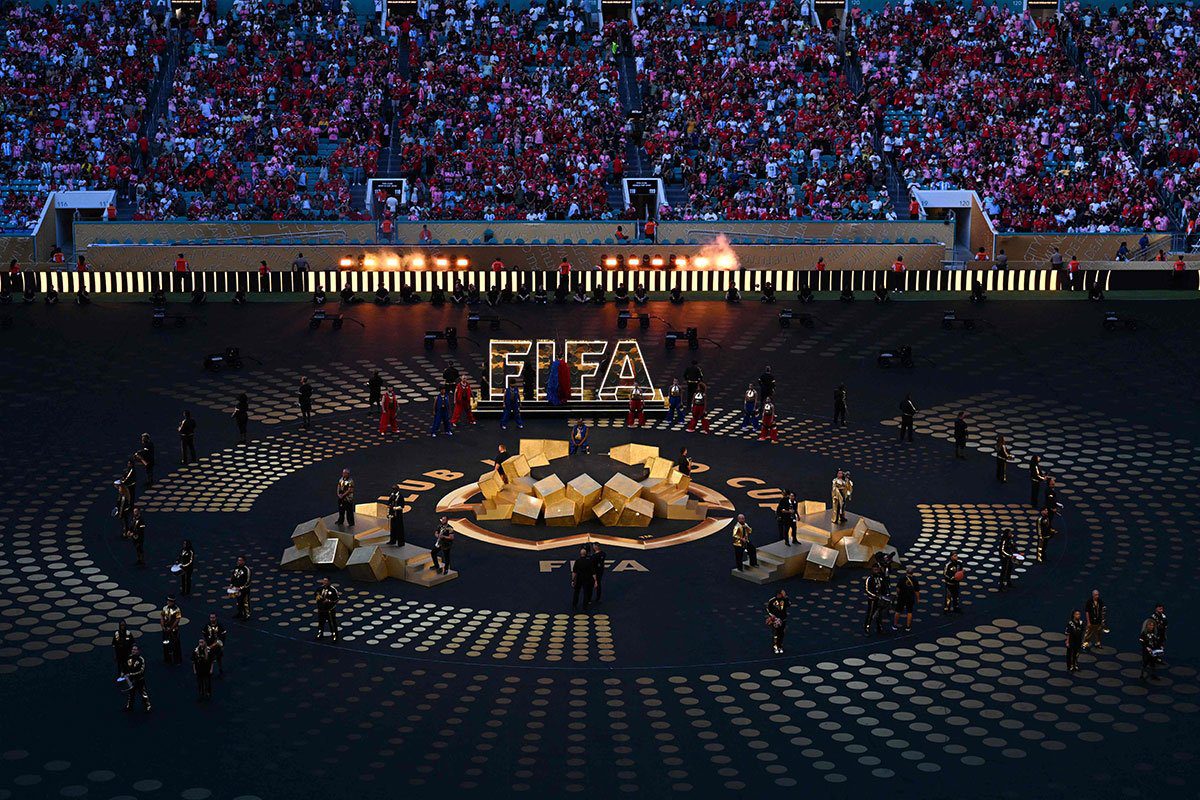
Despite early doubts, the FIFA Club World Cup has gone ahead as planned and quickly gained traction across the football world in its opening week.

Hosted in 11 cities in the United States as a preview for next year’s main event, the 2026 World Cup, the tournament offers a huge opportunity for clubs to make history by claiming the title of the first ever world champion under this new format.

The reformed structure brings together 32 of the best teams from every corner of the globe, including reigning champions and top performers from continental competitions over the past four years.

In the past, the Club World Cup was a single match between the Champions League and Copa Libertadores winners, the #1 side from Europe and South America, traditionally the two strongest confederations. It later evolved into a mini tournament with seven teams. Now the spotlight expands to 32 teams, the same number as the World Cup itself.

¡Let The Ball Roll!

From June 14 to July 13, the eyes of the football world are on American soil. It was none other than Inter Miami that kicked off the tournament. The Herons, led by the one and only Lionel Messi, hosted the multi-time champions Al-Ahly from Egypt.

Despite the goalless draw, the match proved highly entertaining, with each side dominating a half and both goalkeepers shining to keep clean sheets. The Argentine GOAT had his chances — striking the post once and forcing a late long-range effort that rattled the crossbar.

Lionel Messi battles for possession with Marwan Attia during the tournament’s opening match. (Getty Images Sport via GOAL.com)

Round 1: A Strong Start

Bayern and Juventus made their intentions clear with emphatic 10-0 and 5-0 victories over Auckland City and Al-Ain respectively. The difference in quality between the sides was obvious on the pitch. 

Current Champions League holders Paris Saint-Germain also impressed, thrashing the always competitive Atlético Madrid 4-0. The French giants continue to show why they are the best team in the world, having dominated Inter 5-0 in the final to claim their first-ever European trophy less than a month ago.

Inter, meanwhile, struggled in their opening match as Monterrey held them to a 1-1 draw. The goal for the Mexican side came from the timeless Spanish defender Sergio Ramos, with his classic bullet header.

“Happy with the point but maybe we lacked personality, calmness on the ball, and build-up from the start. Now we have to recover well and think about the next match,” Ramos said after the game.

Al-Hilal surprised many by holding the mighty Real Madrid to a 1-1 draw, with Moroccan goalkeeper Yassine Bounou coming up clutch by saving a last-minute penalty from Federico Valverde. Mamelodi Sundowns caught everyone off guard with a strong and delightful performance, edging Ulsan 1-0.

Chelsea defeated Los Angeles FC 2-0 with a goal in each half, while fellow Premier League side Manchester City secured an identical result against Wydad. In an eventful match — halted by adverse weather conditions — RB Salzburg beat Pachuca 2-1.

South American Sides Make Their Presence Felt

The first three matches mentioned above were the only ones with a clear gap in the final score. The rest were tight, entertaining battles — even the goalless draw between FC Porto and Palmeiras.

Fittingly, O Verdão were the first South American team to appear in the tournament. They went head-to-head with Portuguese giants Porto and were unlucky not to win, thanks to a brilliant display by goalkeeper Cláudio Ramos, who deservedly earned the Superior Player of the Match award.

Fluminense managed to dominate Borussia Dortmund, with their Colombian winger Jhon Arias creating havoc in several sequences of the game. They may feel the goalless draw fell short of what they deserved, with Swiss goalkeeper Gregor Kobel producing a heroic double save.

Botafogo edged Seattle Sounders 2-1, while Flamengo comfortably dispatched Esperance 2-0. Two wins for the Brazilian sides, who remain unbeaten across four matches — strong performances that underline the quality of the Brasileirão.

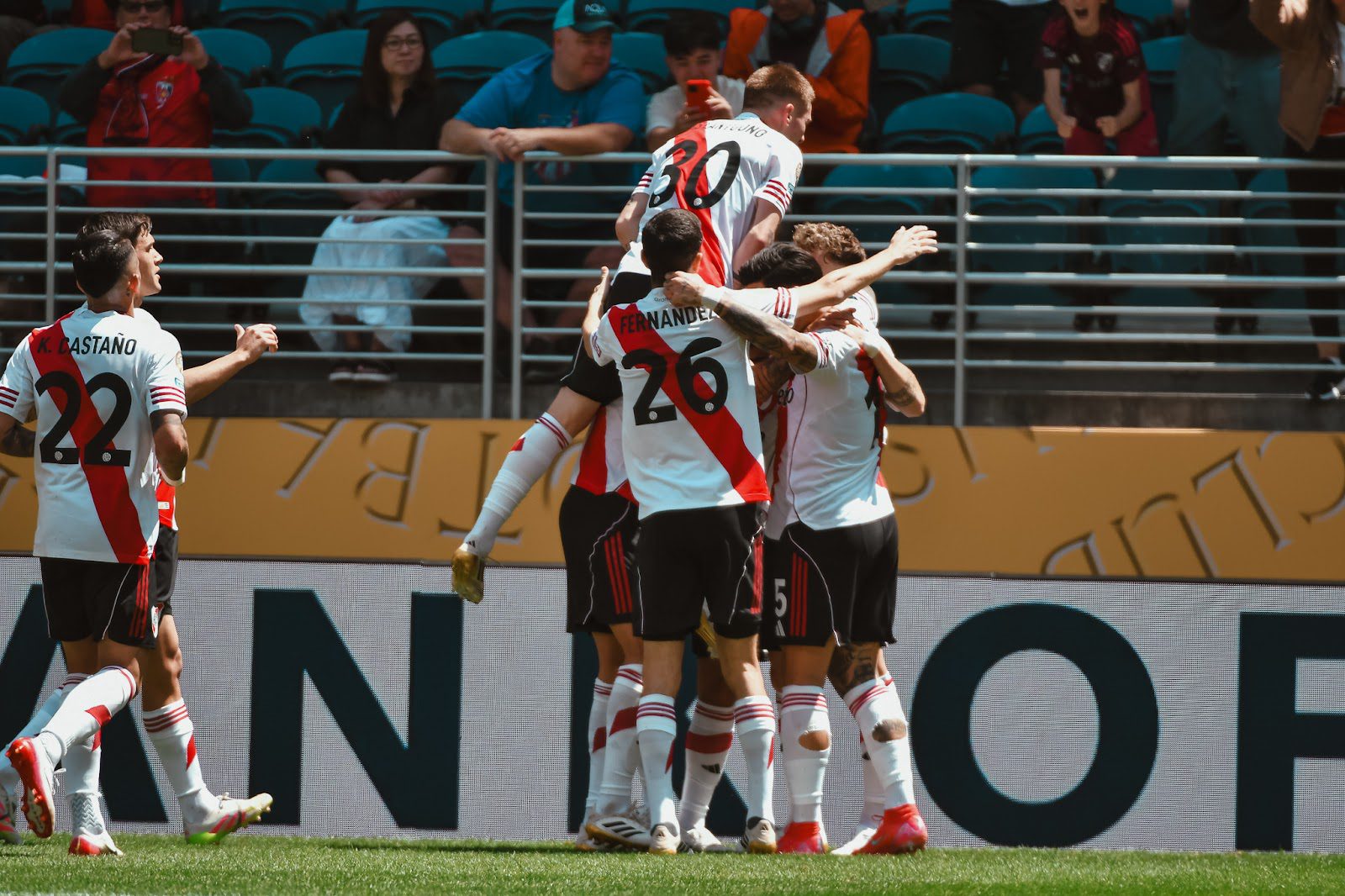
Their Argentine counterparts also delivered. As expected, giants River Plate and Boca Juniors did not disappoint. Los Millonarios showed control and composure to defeat Japan’s Urawa Reds 3-1, while Los Xeneizes were left frustrated after a 2-2 draw with Benfica. Boca had gone 2-0 up, but goals from Di María and Otamendi — both Argentines, coincidentally — sealed the final result.

River Plate players celebrate the 1-0  goal courtesy of Facundo Colidio. (River Plater X account)

These results show that CONMEBOL sides are stronger than ever. Despite external challenges, the region’s endless production of talent ensures South American football remains fiercely competitive.

Not to Miss Out

Round 2 is approaching fast and will decide the fate of many teams. The standout clash sees Paris Saint-Germain facing Botafogo — champions of the two strongest confederations — in a matchup that recalls the spirit of the former Intercontinental Cup. Chelsea vs Flamengo and Bayern Munich vs Boca Juniors offer similarly historic appeal.

Giants Inter and Real Madrid will also look to return to winning ways against Urawa Reds and Pachuca, respectively. 

If you haven’t tuned in to the Club World Cup yet, now is the time — these matches promise plenty of drama and excitement.

Franco Nuñez

Franco Nuñez is a communicator and sports journalist with a passion for running and swimming.

No Kings Rally Draws 1,400 in Idaho: A Protest Movement in Red America

On June 14th, a large crowd of Idaho residents held their No Kings Rally in Bonneville County, Idaho Falls. The event took place on Broadway Avenue near the Japanese Friendship Gardens. Protesters began to gather around 4 PM MDT with signs and flags, chanting the phrase “No More Kings” as they stood on both sides of the bridge overlooking the Snake River.

Cities across the United States participated in No Kings Day, a movement that has now become one of the largest protests against a president in U.S. history. No Kings Day was a nationwide act of demurral, organized by the 50501 movement to oppose the actions of the Trump administration, which many Americans have observed to be autocratic or resembling the rule of a king. It was expected that many of these protests would be held in cities in more Democratic-leaning states—like Philadelphia, Atlanta, and New York—but what do rallies look like in predominantly red or Republican states?

Idaho Residents protesting at No Kings Rally by Gracie Leavitt

Idaho Residents protesting at No Kings Rally by Gracie Leavitt

This rally had more than 1,400 individuals present to share their voices. The event was planned a month in advance, set to occur on both Trump’s 79th birthday and the U.S. Army’s 250th Anniversary Parade. 

One of the main coordinators of the event and Idaho resident, Miranda Armenta, spoke about her personal motivation to help facilitate the event and her experience with activism:“What prompted me was the blatant misinformation the Trump administration is spreading. Convincing Americans we aren’t a democracy. Convincing Americans and those here [that they] aren’t allowed due process. Convincing America rallies and protests are just riots that are well funded. All these conclusions are wrong about us, and I want to battle the misinformation with education.”

Armenta said she began advocating during the 2016 Trump administration—a common sentiment shared by some of the Idahoans present. 

One of the participants, Kris Burnham, expressed that her frustration began early on: “I’ve been frustrated with Trump since his first presidency. I feel like the things that are happening in the United States are so egregious that we have to take any time and chance we can to come out and let our voices be heard. We need people to know this isn’t right; this isn’t normal. There’s this continual stream of lies that are going out to a lot of people, and I feel like events like this have to happen to let people know that it’s not the truth. That’s why I’m here.”

Idaho resident Kris Burnham advocating at the No Kings Rally by Gracie Leavitt

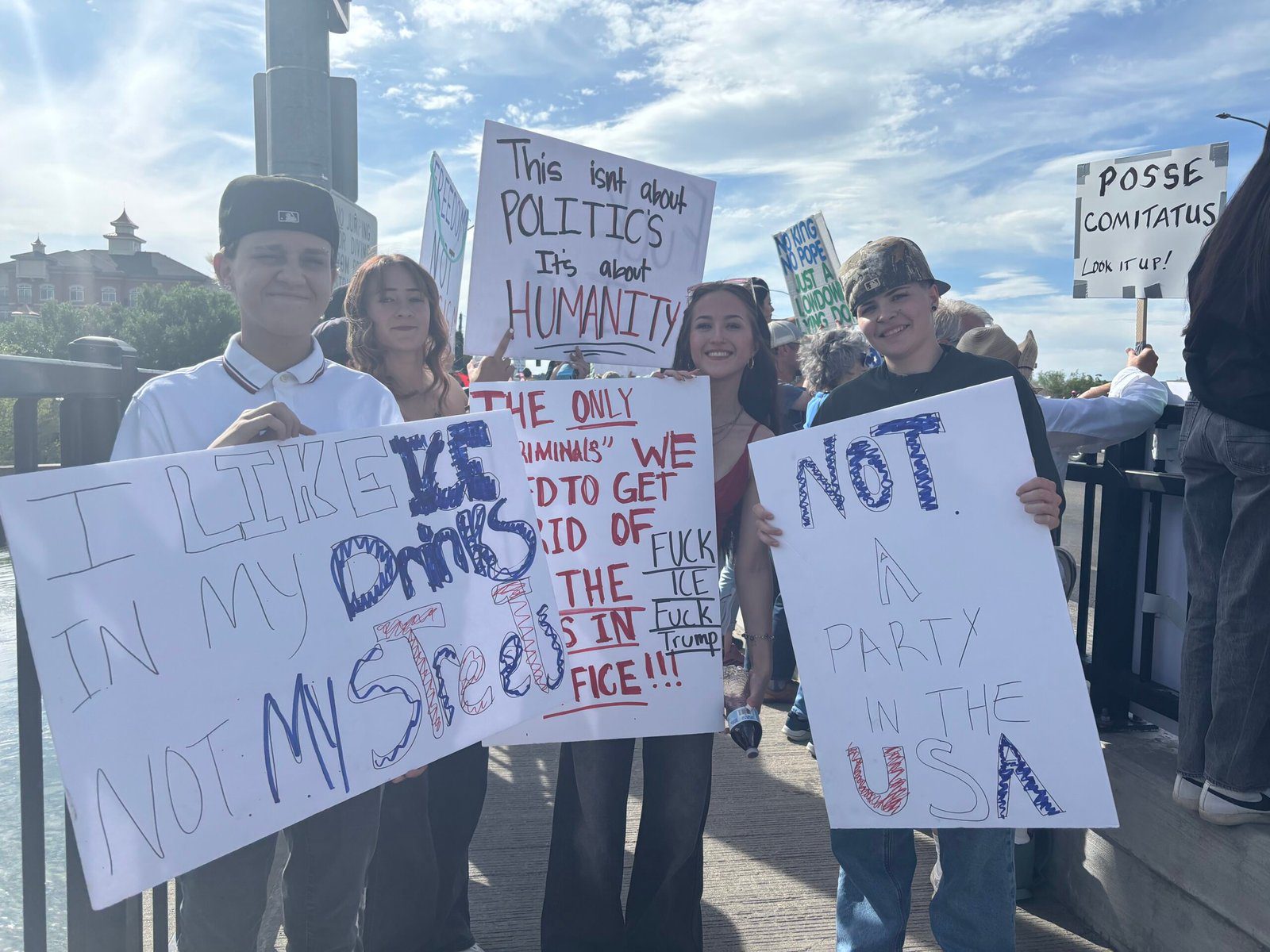
Though all the protesters present were advocating for the same cause, many had specific issues they highlighted through their decorated signs and banners. Some of these included information about reproductive rights, LGBTQIA+ rights, and environmental awareness. One of the younger protesters, Gavin McClain, said he was there specifically advocating for trans rights. Annette Harker, a resident of Idaho, was trying to spread awareness of local opportunities by offering documents for nonpartisan voter registration, ballot initiatives, volunteer opportunities, and more.

Idaho residents displaying their signs at No Kings Rally by Gracie Leavitt

Idaho residents displaying their signs at No Kings Rally by Gracie Leavitt

The protest lasted for two hours, ending around 6 PM MDT. It was, overall, a peaceful event that encountered little resistance from counter-protesters—an event that reflected many others across the nation in both Republican and Democratic states, united for a common cause.

Enugu Native Doctor Arrested for Suspected Ritual Killings

The recent abduction of a teenager has led to the uncovering of several gruesome crimes committed or aided by a popular traditional doctor in Enugu State, South-East Nigeria. Graphic videos from the home of the accused and testimonies of eyewitnesses confirm years of suspicion among locals.

The native doctor, popularly known as Ezeani or “E dey play, e dey show”,  has been identified as  Levi Onyeka Obieze, and these disturbing incidents  took place in Umuojor, a village in Ezeagu Local Government Area of Enugu State.

On Monday, 26th May, 2025, a 13-year old girl identified as Ukamaka Okonkwo was allegedly  abducted by two men on her way to the farm with her father. The suspects were driving by on a motorcycle when they pretended that their vehicle had developed a fault and asked her father for assistance. Amid the distraction, she was taken away on the motorcycle.

In her video testimony, Ukamaka recounts: ‘We went to bring some firewood for making garri, and then they came up, asking my dad for a machete to repair their machine [motorcycle]. My dad then gave them his machete. They shifted their machine and then grabbed me…’

Upon realizing that his teenage daughter had been abducted, the young girl’s father alerted local vigilante groups, who began a search for her. Several villagers that evening reportedly heard loud cries coming from a nearby bush. Further investigation by the vigilante group led to the compound of a well known traditionalist.

High Chief Levi Onyeka Obieze allegedly tried to restrict the vigilantes from gaining access onto his property, to no avail, and then fled the premises shortly after. The cries of the abducted girl were traced to a pit in this compound around 3:15am on Tuesday, 27th May, as the rest of her testimony confirms:

‘They gagged me and tied my legs up… They kept me in a corner, dug the ground… They covered the hole, I started shouting, and the security officers came and brought me out.’

Other decomposing bodies were found in soakaway pits underneath the building upon further investigation, including that of a man and another of a pregnant woman. This follows reports of missing community members, including a young student of CSS Umana.

Photo by Ozor Ndi Ozor, on X

According to the police spokesman, the victims’ remains were found in a concrete-sealed pit beneath an unfinished building used by the suspect as a shrine. They were recently murdered and buried, or buried alive, as part of rituals. The suspect is known for his lavish lifestyle and has “worked” for many clients.

In the wake of this terrifying and disturbing news, enraged youths of Umuojor community stormed the building, captured photo and video evidence of several decomposing bodies found in soakaway pits and burned down the suspect’s shrine, fleet of cars and parts of his house.

That same day, on the orders of Enugu State Governor Dr. Peter Mbah and in congruence with Enugu State laws, the building was also demolished. A number of native doctors from Ezeagu LGA took to streets the next day in a protest, denouncing Ezeani as one of them.

The Public Relations Officer of the Enugu State Police Command, SP Daniel Ndukwe, later identified three suspects in the teenager’s abduction as Ejike Odinwankpa, 38, Onyedikachi Nweze Ilo, 36, and Uche Kingsley Agumba, 33. 

On Thursday, 29th May, the wanted native doctor was apprehended at the Nigerian Immigration Service in Lagos on his way out of the country. He was caught during a stop and search operation at the border between Nigeria and Benin Republic while attempting to flee.

The suspect’s identity was confirmed at the Seme border, where he denied the allegations and dismissed them as a political issue. He allegedly tried to bribe an NIS official, Ugochukwu Orji, but the prudent man turned him in. This arrest has been confirmed by NIS Public Relations Officer ACI Akinsola Alabi.

Ugochukwu has been praised and rewarded for his uprightness and unwillingness to be swayed by a gift of ten million naira and an iPhone with lives on the line. He has been reportedly gifted the sum of one million naira by politician Ugwumba Uche Nwosu to this effect.

In a statement on Sunday, 1st June, Enugu State’s Commissioner fir Children, Gender Affairs and Social Development, Ngozi Enih, revealed that the state governor has offered a scholarship to the rescued 13-year-old which would see her from her present class up until she concludes her university education.

This comes in addition to moving her to a rehabilitation facility to assist her in overcoming the trauma she faced at the hands of the ritualist. Levi O. Obieze, who is currently in the custody of the Lagos State Police Command, is set to be transferred to Enugu to face trial.

From Pahalgam to the LoC:How a Nation Reacted to a Deadly Attack

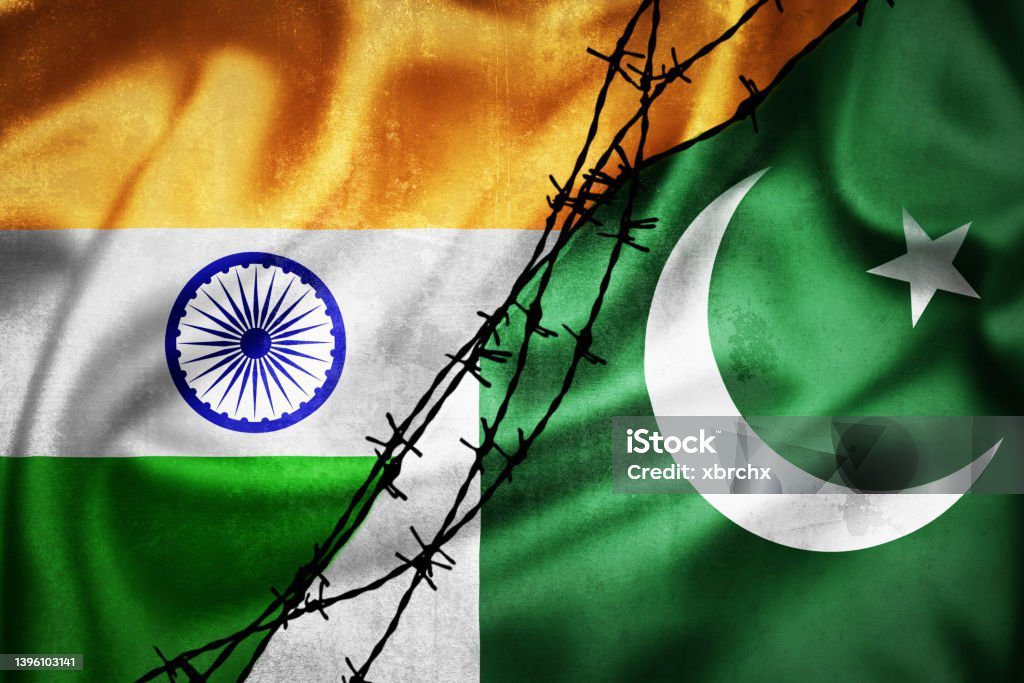
On April 22, 2025, a terrorist attack in Pahalgam, Jammu and Kashmir, killed 26 civilians, including a Nepali national. Indian authorities attributed the attack to Pakistan-based groups Lashkar-e-Taiba and Jaish-e-Mohammed. The incident triggered diplomatic fallout — including visa suspensions and expulsions of Pakistani officials — and raised tensions along the Line of Control. In the weeks that followed, India launched a targeted military strike, Operation Sindoor, while intermittent ceasefire violations and public anxiety shaped the national mood.

April 22: The Attack in Pahalgam

A devastating terror attack in the pilgrimage town of Pahalgam, Kashmir, left 26 civilians dead, including a Nepali national. Indian authorities swiftly blamed Pakistan-based militant outfits Lashkar-e-Taiba and Jaish-e-Mohammed, triggering a nationwide outcry.

That same evening, hashtags like #NoMoreTalks and #JusticeForPahalgam surged across social media. The online outrage quickly turned into policy, as India expelled Pakistani officials and suspended visas, heightening tensions at the Line of Control (LoC).

April 24 – May 6: Between Diplomacy and Drum Beats

Over the following two weeks, India toggled between backchannel diplomacy and visible military preparations. The uncertainty rippled through everyday life, especially in Punjab, Rajasthan, and Jammu & Kashmir.

In an interview with HT City, a Delhi University student said,

“Everyone’s tense. My roommate’s brother is posted at the LoC. She barely sleeps.”

A Reddit user from Rajasthan noted,

“My flight from Jodhpur to Indore (college) was cancelled. Other than that, I haven’t noticed much.”

Meanwhile, media speculation mounted. By May 6, several outlets reported signs of imminent retaliation.

May 7: Operation Sindoor

At dawn on May 7, India launched Operation Sindoor — a brief, precise strike targeting nine suspected terrorist bases in Pakistan-occupied Kashmir (PoK) and nearby regions. The 22-minute operation, carried out using drones and airstrikes, was designed to demonstrate capability without appearing escalatory.

Internationally, the strike drew mixed reactions. While countries like France and Israel backed India’s right to self-defence, others — including China and the United Nations — urged restraint and called for immediate dialogue between the two nuclear neighbours.

Prime Minister Narendra Modi, in a statement reported by the Times of India, declared,

“In response to the attacks… our forces destroyed nine of the biggest terrorist bases within just 22 minutes.”

Later that day, Defence Minister Rajnath Singh emphasized that any future engagement with Pakistan would focus solely on PoK:

“If we talk to Pakistan, it will only be on PoK. Nothing else,” he said, as quoted by Times of India.

May 10: Ceasefire or Brief Pause?

Three days later, global diplomatic pressure appeared to yield results — a ceasefire was announced. But within hours, reports emerged of fresh shelling along the LoC, leading to civilian casualties. Among the victims was Mariyam, a young girl from Poonch.

Her father, Javid Iqbal, told The Times of India:

“She died in my arms.”

India accused Pakistan of violating the agreement. A Defence Ministry statement confirmed retaliatory strikes, framed as limited to counter-fire zones.

Public Reactions: Stress, Silence, and Screens

While the official tone remained measured, the public mood was volatile. Students — particularly those from military families or border areas — demanded exam delays. Delhi University’s student union set up a helpline for those struggling with stress.

A student leader told Times Now,

“The administration must account for the stress and uncertainty students are facing.”

Online sentiment ranged from frustration to resignation. A viral comment summed up the ambivalence:

“Wanted you to capture Pakistan. But we will take the ceasefire if it means our jawans are safe.”

May 13 and Beyond: Calm, With Questions

By May 13, hostilities had largely quieted. Yet the fragility of the peace remained apparent. Analysts warned that without structural dialogue or credible deterrence, future provocations could again ignite a larger conflict.

As The Atlantic Council observed,

“Without credible deterrence and sustained diplomacy, any peace remains fragile.”

Final Thoughts

This crisis was not just about foreign policy or military retaliation. For students in Delhi, families in Kashmir, and travelers grounded in Rajasthan, it was a lived experience — shaped by fear, grief, and constant refreshes of the news.

What comes next is uncertain. But for now, calm — however uneasy — holds.

Crystal Palace wins the FA Cup: The third time’s the charm

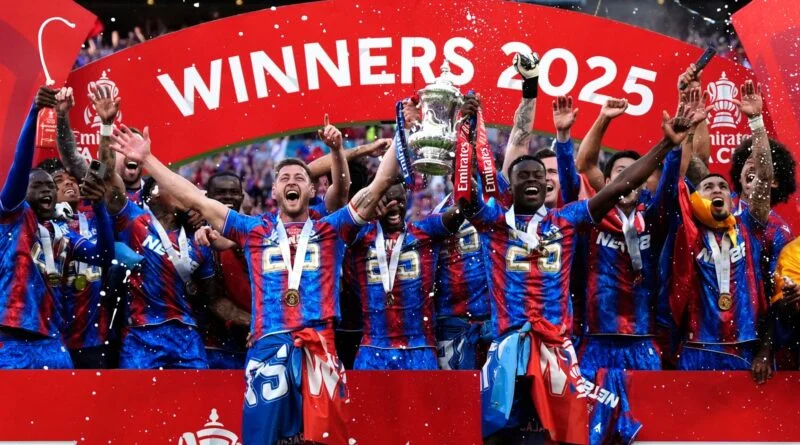
Crystal Palace pulled off a miracle by winning their first-ever major title. To say the odds were against them would be an understatement. But that’s the magic of football, the unthinkable can always happen. On their third attempt, they finally had the last laugh.

As expected in the preview, Manchester City dominated the opening 15 minutes of the match, controlling possession and showing their usual sharpness of the multiple Premier League champions. But Crystal Palace never panicked, they stayed patient and stuck to their original plan.

And it paid off in the 16th minute, when Eberechi Eze met a low cross from Daniel Muñoz with a first-time finish. Jean-Philippe Mateta’s brilliance in holding up a long ball and playing a one-two with Kamada, who released the speedy Colombian fullback into space. A remarkable counter-attack move on display, one to be studied in academies.

The Crystal Palace supporters exploded with joy. Austrian coach Oliver Glasner had boldly declared in a press conference after their previous encounter, a 5–2 loss: “If we meet again, you can’t play in this system because we will solve it.” He proved to be a man of his word.

The stars delivered

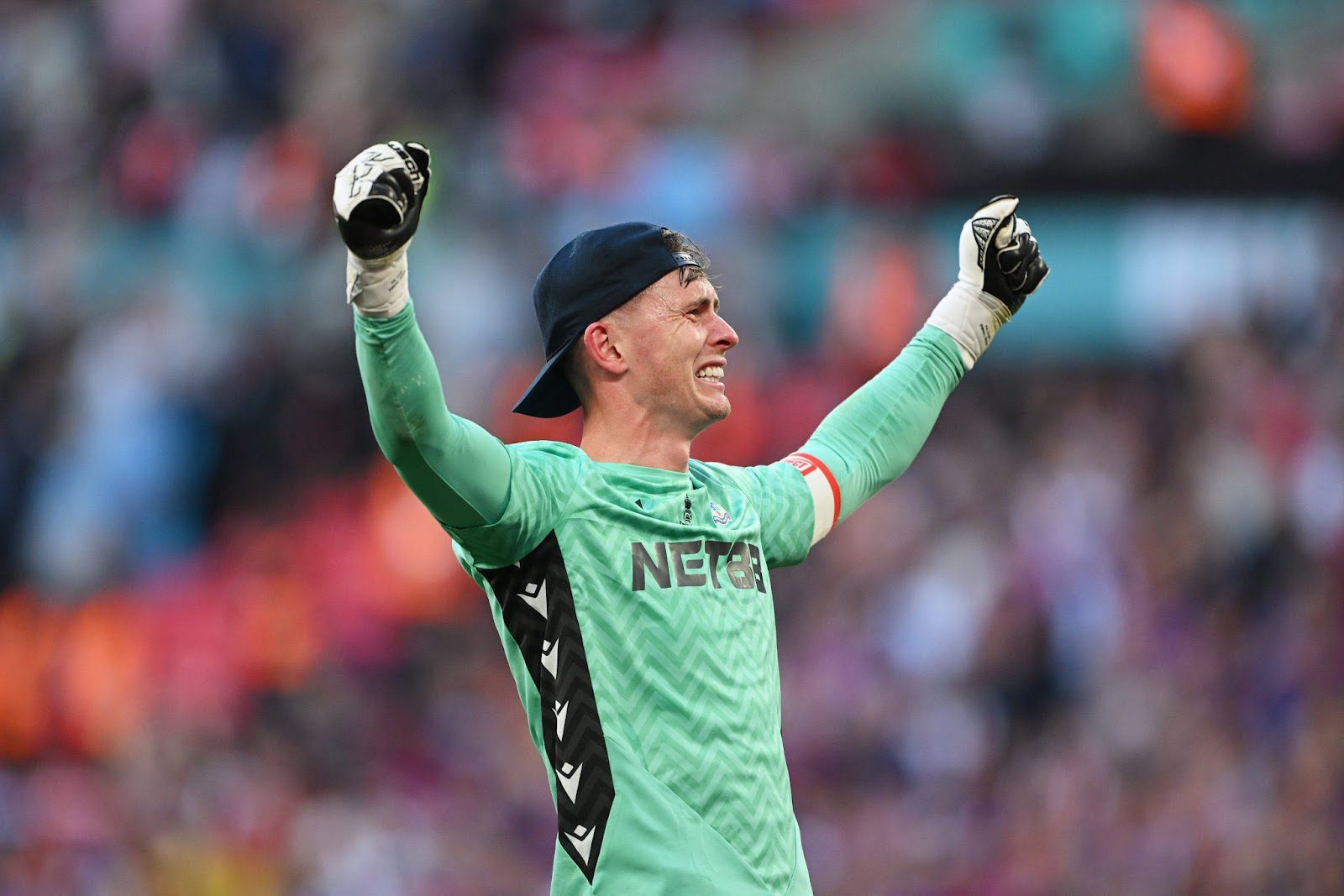
From that moment, the Eagles grew into the match and even had a second-half goal disallowed for a marginal offside. In the meantime, Dean Henderson turned into a giant between the sticks, producing several crucial saves to preserve the lead — including a penalty stop against Egyptian forward Omar Marmoush.

Dean Henderson’s interventions proved to be key. (Photo via Fabrizio Romano Twitter).

The Palace backline showed remarkable resilience and bravery, especially Daniel Muñoz and Chris Richards. Muñoz, rewarded with a new contract until 2028 last month, locked down his flank with flair and consistently posed a threat going forward. Richards, the American centre-back, was a rock in defense, completing 12 clearances and winning 5 out of 7 duels.

The late introduction of Claudio Echeverri brought some threat to the Sky Blues, however, Henderson’s presence proved too much, as he kept his clean sheet with more crucial stops.

A date with history

Crystal Palace showed their credentials with a convincing 3-0 win against Aston Villa in the semifinals, making a strong statement against a team that competed fiercely against Champions League finalist Paris Saint-Germain.

They were ready; missing out today was not an option — and they did not. It was their third shot at glory, having fallen short in both previous finals against Manchester United (1990 and 2016).

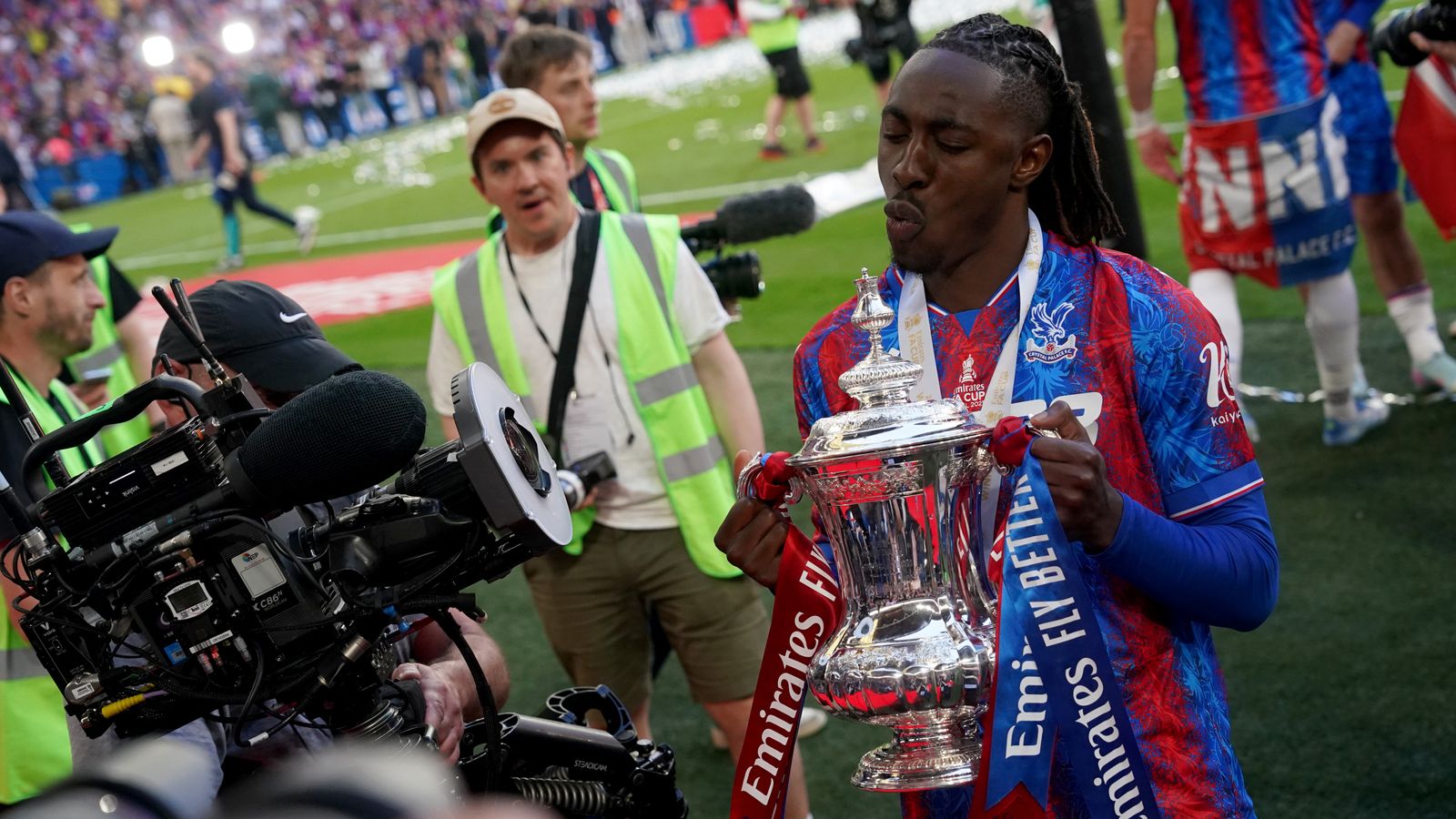
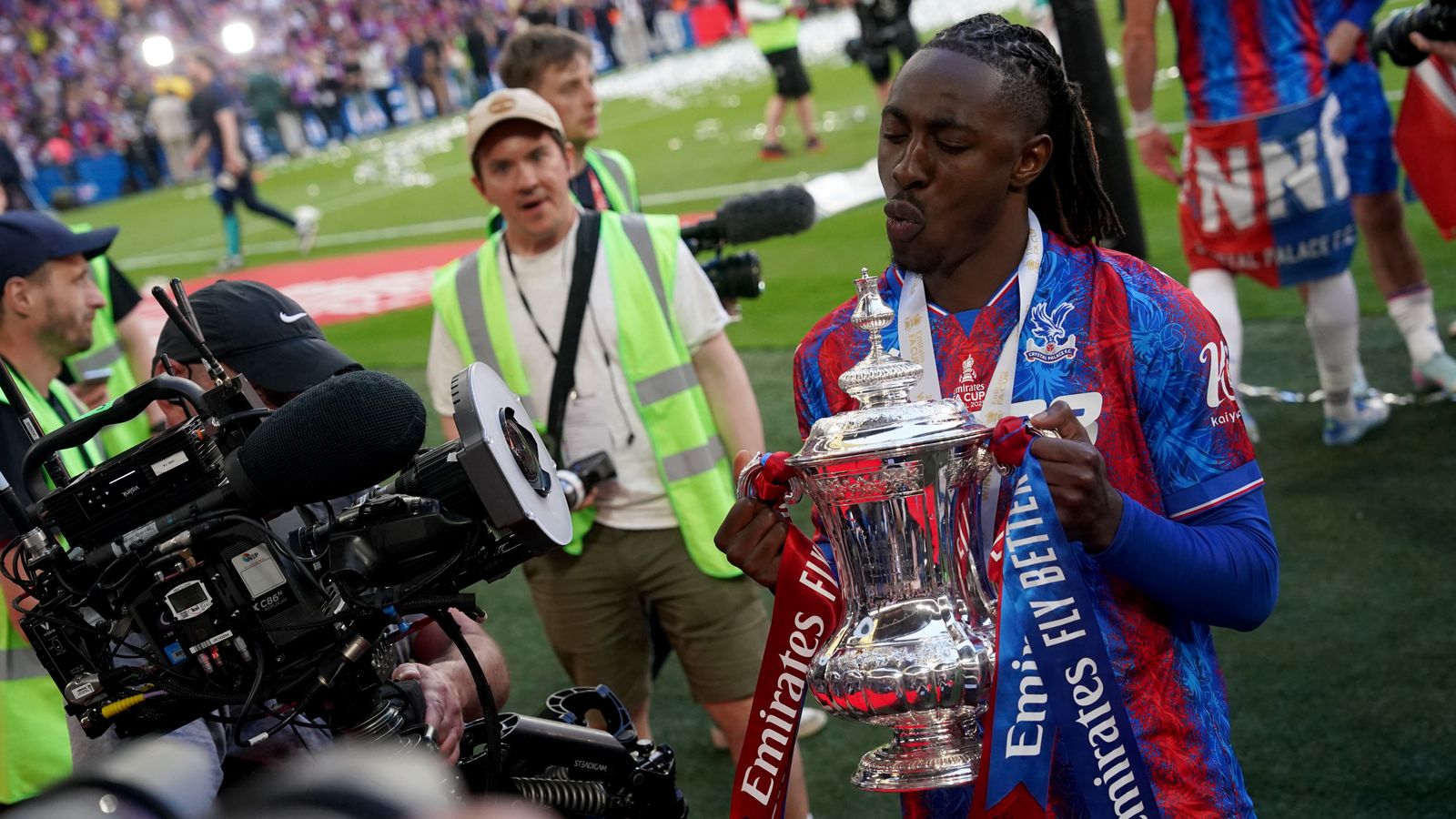
This time, they were led by Eberechi Eze. The 26-year-old attacking midfielder took charge, scoring the only goal of the afternoon. He continued his impressive streak of goals in the tournament, having scored in both the quarterfinals and semifinals. Undoubtedly, the star of the competition. “This is special, this is what dreams are made of. Who would have thought we could do it?” he told ITV.

Eberechi Eze scored the decisive FA Cup goal. (Photo via AP)

In doing so, he carried on the legacy of past icons like Wilfried Zaha. Back in 2016, he was just 10 minutes away from success before Lingard’s late goal shattered their hopes. The Ivorian had been fundamental for the South London club over the years, and helped the club maintain Premier League status when the squad was not as strong as it is today.

The mastermind behind

Oliver Glasner is the key figure behind the success. The Austrian coach arrived in February last year and instantly improved the team and players. Despite losing a vital player in Michael Olise, who joined Bayern Munich for around €60 million last July, Glasner fought back with the addition of the talented Ismaila Sarr.

He proved crucial in transforming Jean-Philippe Mateta into a complete centre forward. The striker’s numbers speak for themselves: 14 league goals, several decisive moments and a call-up to the France national team for the Olympics last summer.

This title added another glorious chapter to his managerial career. He became the first Austrian coach to ever win the FA Cup, earning a place in history. Three years ago, he led Eintracht Frankfurt to Europa League glory, beating Rangers 5-4 on penalties after a 1-1 draw in regular time. In the previous stages, he beat teams like Real Betis, West Ham and giants FC Barcelona — a winner in every sense.

The reactions

At times during the coach’s tenure, there were moments of tension and doubt after a short streak of poor results. However, the decision to keep the manager proved to be the right one. “We stuck by the manager because he’s an elite manager,” said Steve Parish, co-owner and chairman of Crystal Palace, in an interview with Sky Sports after the match.

Jean-Philippe Mateta was one of the key players in this success. He went from being a solid striker to one of the finest attackers in the league. “You know, we played against one of the best teams in the world and scored early in the game. To defend our goal for nearly 100 minutes, this is fantastic. I don’t have words to describe,” he revealed to Optus Sport.

Luke Weaser-Seychell, a content creator who goes by the name Luke Talks Palace on his YouTube channel, described the historic triumph as the greatest moment in the club’s history. “We are witnessing the peak of Crystal Palace at this current time, European football at Selhurst Park and away, amazing to see.” He emphasized just how special this moment is, something Palace fans never thought they’d witness in their lifetimes.

A worldwide passion

Mike, a die-hard CPFC fan from Alabama in the United States, reflected on the club’s success: “Winning that trophy was a real full circle moment for our supporters.”

He described it as a “very different feeling (for Palace fans), because we’ve devoted so much of our lives toward supporting this club despite knowing we might never see us lift a trophy”. 

Mike recalls his first connection to the club back in the mid-2010s, when he first started watching the Premier League. “What really got me hooked on Palace was the atmosphere at Selhurst Park and the passionate fanbase. Then, I started watching more and more games and was attracted to the style of football the club played at the time, led by Wilfried Zaha and Yannick Bolasie”.

A perfect balance between two mavericks and other players, perhaps less talented, but real hard workers. “It felt like the club represented South London really well,” he explained.

The long-awaited trip to Selhurst became a reality two years ago. “I finally made it to Selhurst in May 2023, and have been back twice since. I can honestly say a few people I’ve met through Palace are genuine friends of mine, and I cherish those relationships.”

The passion extends online too, as he has formed a real bond with fellow CPFC fans through Twitter. “The community I began forming here (X) made Palace even more worth my time,” he explained.

What’s next for the Eagles

Now the responsibility falls on those in charge to build on this success. Key players like Eze, Mateta, and Muñoz will definitely attract interest from bigger clubs this summer. If Palace hope to continue their rise, they must keep them and add fresh talent.

Securing their first-ever major trophy and a spot in next season’s Europa League, the smiles at Wembley belonged to Crystal Palace. They fully deserve to celebrate this historic moment.

2025 Copa Libertadores Final Returns to Lima

Lima will host the 2025 Copa Libertadores final, as the President of the country Dina Boluarte announced. The decisive match is set to be played on November 29th, becoming the second time the capital of Peru hosts the continent’s most important club match.

Botafogo, the current holders, are looking to retain their crown. The Brazilian side defeated Atlético Mineiro 3–1 last November to win their first Copa Libertadores title in a dramatic all-Brazilian final. They are third in Group A with one game remaining, and qualification still in sight.

The match venue is yet to be confirmed. At first it was believed to be the Estadio Monumental U Marathon; however, the Estadio Nacional -home of the Peruvian football national team- is another big candidate that cannot be ruled out.

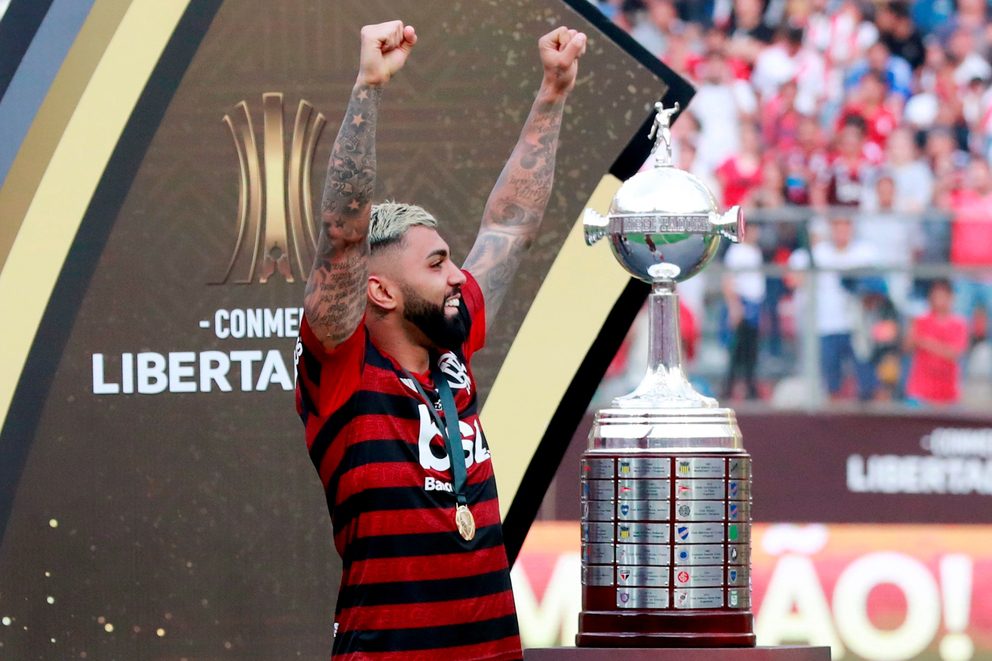
Estadio Monumental U Marathon remains the frontrunner. In 2019, a year before the pandemic, the same stadium hosted a memorable final in which Flamengo defeated River Plate, thanks to a late brace by striker Gabigol.

Gabigol was also named ‘Man Of The Match’. (Photo: REUTERS, via Infobae)

That was the second continental title for O Mengão, conquering the biggest prize after 38 years. Lima became a football festival during those days, with passionate fans from both sides filling the city with colour. It is believed that the match was attended by more than 78 thousand fans.

“This event will take place on November 29th, confirming our country as one of the most attractive sporting destinations on the continent,” announced the President from Government Palace.

She added that “the government is committed to providing the necessary guarantees for the success of this continental event, just as we will do for the 2025 Bolivarian Games”.

“This upcoming final will be broadcasted simultaneously in 195 countries, with a potential audience of 5 billion people,” added Alejandro Dominguez, President of the Conmebol.

The two authorities, joined by Peruvian FA president Agustín Lozano, met at the Government Palace to make official what will be the continent’s biggest club event.

Tickets are not yet on sale but are expected to be distributed through Teleticket once the venue is officially confirmed.

Peruvian clubs want to surprise

In this year’s edition, Peru is represented by three teams: Universitario, Alianza Lima and Sporting Cristal; all from the capital city.

Peruvian teams have historically struggled in the competition though. Several factors such as the lack of competitiveness in the local league, the small budgets compared to other sides in the opponents’ countries and mostly the lack of planning from the people in charge, come together to prevent any kind of success. 

The last team to progress from group stages was Real Garcilaso (from Cusco) back in 2013, more than ten years ago. This year Alianza Lima surprised after getting a draw 2-2 against the powerhouse São Paulo in Brazil and Universitario getting a big narrow 1-0 win in Ecuador against Barcelona SC. 

While the dream is to play in a final taking place in the country, all three teams will at least hope to reach third place to enter the Copa Sudamericana, the second competition.