Land Dispute Leaves Six Dead, Including Pregnant Woman

A renewed outbreak of violence in a decades-old land dispute between two communities in Ebonyi State, South-East Nigeria, has resulted in the death of at least six individuals, including a pregnant woman and her unborn child, as confirmed by local authorities.

The involved communities are the Ndukwe Amasiri Community in Afikpo Local Government Area and Idima Autonomous Community in Edda LGA, specifically the people of Okporojo Idima. Over the years, related disputes have led to the destruction of lives and properties worth millions of naira.

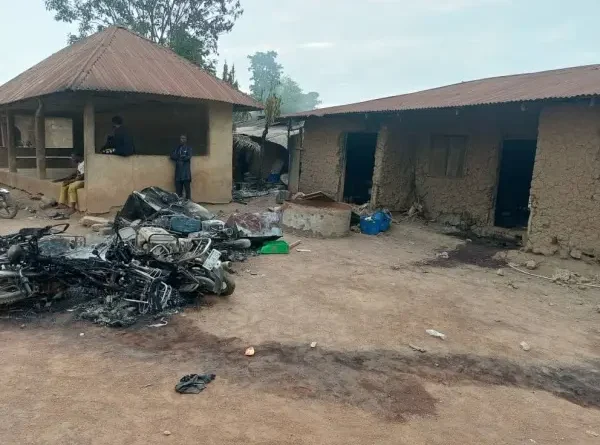
On Saturday, 5th April, 2025, Okporojo community was attacked by assailants allegedly from the neighbouring Amasiri community. Among the deceased are a pregnant woman and her unborn child and one Abagha Chukwu, a native of Afikpo who resided in Okporojo until his ill-fated death.

Several pleas have been raised by members of both communities to the state governor Francis Nwifuru, urging him to step in and mediate an amicable resolution of the long-standing land dispute. Although the previous administration of Ebonyi State set up a committee to look into the feud, peace continues to elude the opposing communities.

Chima Ekumankama, who is the current Chairman of Edda Local Government Area, has confirmed the killing of four persons at Okporojo Idima, saying he visited the bereaved community and witnessed the harm done to it. He also praised the efforts of the Ebonyi State Government to ensure peace and normality by deploying security personnel into the disputed area.

The President General of Idima Edda Community also issued remarks to journalists confirming the attack. Comrade Nkama Okoro Agha expressed strong disapproval of the onslaught, recalling a previous incident on 6th February 2023 resulting in the death of innocents and the kidnap of three farmers whose whereabouts are unknown to date.

This 2023 attack was also exacted on Okorojo by suspected Amasiri natives. The President General added his voice to other appeals to the state governor for a more lasting resolution of the land dispute.

Another community leader weighed in on the unfortunate events. Hon. Imo Samuel Oduko, who sits as Chair of the Okporojo Development Union, maintained that the land in conflict belonged to the Okporojo people of Idima Edda, who hired Amasiri farm hands that settled in the area and began fighting their lessors over their rightful estate.

The Chairman of Afikpo LGA, Timothy Nwachi, stressed the unpleasantness of the resumption of hostilities between the two communities and confirmed the presence of security officials to quell the unrest in the area. He also urged the Amasiri people to remain calm while awaiting the government’s decision regarding the conflict.

Another voice spoke out on behalf of the Amasiri people. Maduabuchi Idam, a civil rights lawyer and Amasiri local, petitioned the heads of several security agencies within Ebonyi State over brutality and aggression against his community.

His petition is titled “Re-Emergence of Military Invasion, Brutality, and Aggression Reign Freely Against My Community, Amasiri” and contains complaints regarding the military intervention that followed the renewed clash between the neighbouring communities.

Idam asserted that Amasiri was a peaceful party which had since sought to quash the quarrels in spite of irritation from the Oso Edda community. According to him, on Friday, 11th April, 2025, the Ebonyi State Commissioner of Police set up a peace committee to that effect in Abakaliki, which several Amasiri stakeholders attended.

However, their neighbours refused to take part in the meeting and alternatively attacked some Amasiri natives. He also made mention of the insecurity currently faced by the people of Amasiri on the Okigwe-Afikpo highway, along which Oso Edda natives allegedly waylay and identify commuters identified with Amasiri.

All this goes on without the intervention of the Ebonyi State Government, whom he calls on to take action. He protested military action in his community, which he said involved the destruction of properties, arrests and sporadic shooting in Amasiri while ignoring the neighbouring Edda people.

He petitioned the Commandant of Nkwegu Military Cantonment in Abakaliki, which the military personnel were reportedly deployed from, and the Chief of Defence Staff, naming the Edda people as aggressors who intended to illegitimately lay claim to Amasiri ancestral land.

Calling on fellow Nigerians to join him in denouncing the actions of these security agencies, he insisted that the people of Amasiri have remained peaceful and attended meetings in hopes of resolving the decades-long conflict. He described the military activity in Amasiri as “unlawful, … unwarranted, illegal [and] unprovoked.”
India Set for Nationwide Mock Drills on May 7 Amid Heightened Security

New Delhi, May 6, 2025 – India is preparing for a major civil defence mock drill across the country on May 7, with over 250 locations—including Delhi, Mumbai, Bengaluru, and Lucknow—gearing up for coordinated emergency response exercises.

According to Business Today, the drill is part of a national effort to strengthen disaster and emergency preparedness at a time when regional tensions are running high. Officials say the exercises are designed to ensure readiness across public spaces and key infrastructure points.

The Ministry of Home Affairs, in its official communication, explained that the drills will cover various emergency scenarios, from natural disasters to possible security threats, aiming to tighten coordination between local and national response teams.

In an interview with Times of India, a senior official from the Ministry emphasized, Preparedness saves lives,This exercise is as much about deterrence as it is about readiness”

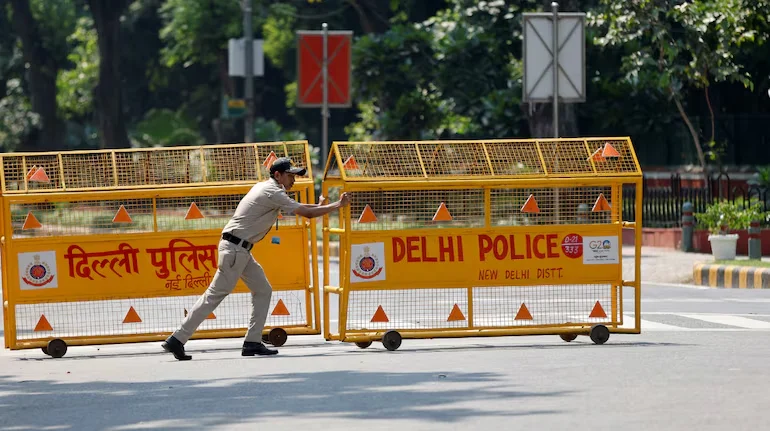
For residents, the security buildup is already visible. Delisha Kumar, a journalist at Yuvoice from Delhi, noted, “I’ve definitely seen a higher police presence around my neighborhood in the last couple of days. They’ve put up more barriers than usual too.” Pritica Kohli, a resident of West Delhi shared, “Nothing major yet, but tomorrow they’re saying barricades will be at seven places around me—just saw it on ABP News.”The New Indian Express reported that around 244 drill sites have been confirmed, with activities expected to include full-scale response simulations in busy areas. Authorities have assured citizens that there is no cause for alarm, encouraging everyone to cooperate fully during the drills.

Canada’s Election Results and Global Implications

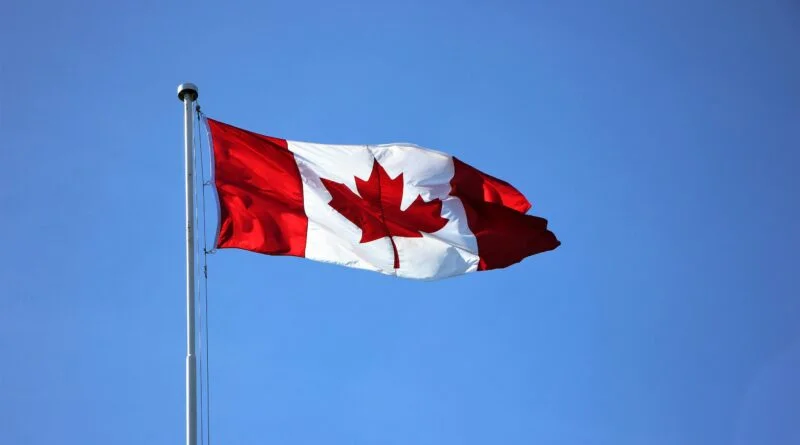
OTTAWA, April 30, 2025 — In a dramatic political shift, Mark Carney’s Liberal Party secured a fourth consecutive term in Canada’s federal election on April 28, winning 169 seats in the 343-seat House of Commons. Although falling just short of a majority, this outcome marks a significant comeback for the Liberals, who had been trailing in polls earlier this year. Carney’s victory is attributed to his firm stance against U.S. President Donald Trump’s aggressive trade policies and rhetoric, which resonated with Canadian voters concerned about national sovereignty. ​

The election was heavily influenced by escalating tensions with the United States, particularly President Trump’s imposition of sweeping tariffs on Canadian goods and provocative suggestions about annexing Canada. These actions sparked a surge in Canadian nationalism, leading to widespread boycotts of American products and a rallying cry for sovereignty. ​

Carney, a former central banker with no prior elected experience, positioned himself as a steady alternative to the populist rhetoric of Conservative leader Pierre Poilievre, who closely aligned with Trump’s policies. Poilievre’s failure to distance himself from Trump’s aggressive stance contributed to his party’s defeat and his own loss of a long-held parliamentary seat. ​

In his victory speech, Carney declared, “The old relationship with the U.S. is over,” signaling a shift toward a more assertive Canadian foreign policy. He emphasized the need to reduce economic reliance on the U.S. and explore deeper trade ties with Europe and Asia. ​

The election results have significant implications for global relations and trade. Canada’s move to diversify its trade partnerships may impact North American supply chains and economic dynamics. While U.S. Trade Representative Jamieson Greer expressed willingness to work with Carney’s government, the path forward remains uncertain amid ongoing trade disputes. ​

Carney’s leadership marks a new chapter in Canada’s approach to international relations, with a focus on asserting national sovereignty and redefining its role on the global stage. As Canada navigates this transition, the world will be watching to see how these changes influence the broader geopolitical landscape.​

Trump’s First 100 Days: Aggressive Overhauls and Mounting Controversy

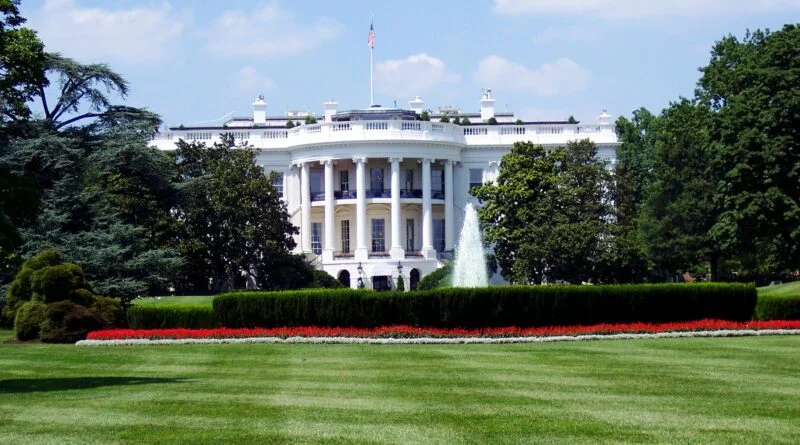
WASHINGTON; April 30, 2025 — President Donald Trump’s return to the White House has been marked by sweeping policy shifts, economic turbulence, and intensified immigration enforcement, drawing both fervent support and sharp criticism during his first 100 days in office.​

Economic Policies and Tariffs

On April 2, Trump announced significant tariffs on imports, leading to a 0.3% contraction in the U.S. economy for the first quarter of 2025—the first such decline in three years. The Commerce Department attributed this downturn to a surge in imports ahead of the tariffs and reduced government spending.

Despite the economic contraction, Trump defended his tariff strategy, stating that while American consumers might face higher prices, the long-term benefits would outweigh the short-term costs . Critics, however, likened the approach to the Smoot-Hawley Tariff Act of 1930, warning of potential long-term economic harm.

Immigration Enforcement Intensified

Trump’s administration has aggressively expanded immigration enforcement. Executive Order 14159, signed on January 20, intensified measures against undocumented immigrants, including expedited removals and penalties for non-compliance.

The administration also broadened the 287(g) program, enabling local law enforcement to act as immigration agents. Over 370 agreements have been signed, tripling the program’s size and raising concerns about potential civil rights violations.

In a controversial move, Trump invoked the Alien Enemies Act to deport Venezuelan nationals suspected of gang affiliations to El Salvador. Legal challenges ensued, with courts scrutinizing the constitutionality of such actions.

Institutional Restructuring and Governance

The administration has undertaken significant restructuring of federal agencies. Notably, Elon Musk was appointed to lead a new “Department of Government Efficiency,” tasked with streamlining federal operations. This initiative has led to mass firings and overhauls, drawing criticism for its rapid implementation and lack of transparency.

Additionally, the administration has targeted higher education institutions, threatening funding cuts and imposing new regulations, actions that have sparked widespread protests and legal challenges.

Public Response and Approval Ratings

Public reaction to Trump’s policies has been polarized. While supporters praise his decisive actions, opponents have organized nationwide protests, notably the “Hands Off” demonstrations opposing immigration policies and institutional changes. Trump’s approval ratings have declined amid these controversies.

As President Trump concludes his first 100 days, the nation remains deeply divided over the direction of his administration, with significant implications for the future political landscape.​

Mount Spurr Volcano Exhibits Elevated Unrest; Eruption Possible in Coming Weeks

ANCHORAGE, Alaska  April 30, 2025 — Mount Spurr, an 11,070-foot stratovolcano situated approximately 80 miles west of Anchorage, is currently exhibiting signs of heightened volcanic activity. The Alaska Volcano Observatory (AVO) has maintained the volcano’s status at Advisory (Yellow) since October 2024, indicating elevated unrest above normal background levels.

Increased Seismic Activity and Gas Emissions

Since April 2024, AVO has recorded over 3,400 earthquakes beneath Mount Spurr, with weekly counts exceeding 100 events. Most of these earthquakes are shallow, occurring less than 2.5 miles below sea level, and have magnitudes up to 2.7.  Additionally, ground deformation measurements indicate outward movement of approximately 2.6 inches at the closest GPS station, suggesting magma intrusion beneath the volcano.​

Gas emission studies conducted in March 2025 revealed significantly elevated levels of sulfur dioxide and carbon dioxide, particularly at the summit vent. Sulfur dioxide emissions were measured at approximately 450 metric tons per day, a substantial increase from less than 50 metric tons recorded in December 2024. 

Potential Hazards and Preparedness Measures

An eruption of Mount Spurr could have significant impacts on air travel and local communities. The volcano’s previous eruptions in 1953 and 1992 produced ash clouds that disrupted aviation and deposited ash on Anchorage. If a similar eruption occurs, ash plumes could reach altitudes of over 50,000 feet, posing risks to aircraft engines and systems. ​

Local authorities are advising residents to prepare for potential ashfall by acquiring N95 masks and goggles to protect against respiratory and eye irritation. Pet owners are also taking precautions; for instance, Anchorage pet supply stores have reported increased sales of protective gear for animals.

Monitoring and Future Outlook

The AVO continues to monitor Mount Spurr closely, utilizing seismic networks, satellite imagery, and gas emission measurements. While the current level of unrest does not guarantee an eruption, scientists emphasize that any significant changes—such as increased seismic activity, gas emissions, or ground deformation—could indicate that an eruption is imminent. 

Residents are encouraged to stay informed through official channels and to have emergency plans in place. Updates and detailed monitoring data are available on the AVO’s website.​

Devastating Explosion at Iran’s Shahid Rajaee Port Claims Dozens of Lives

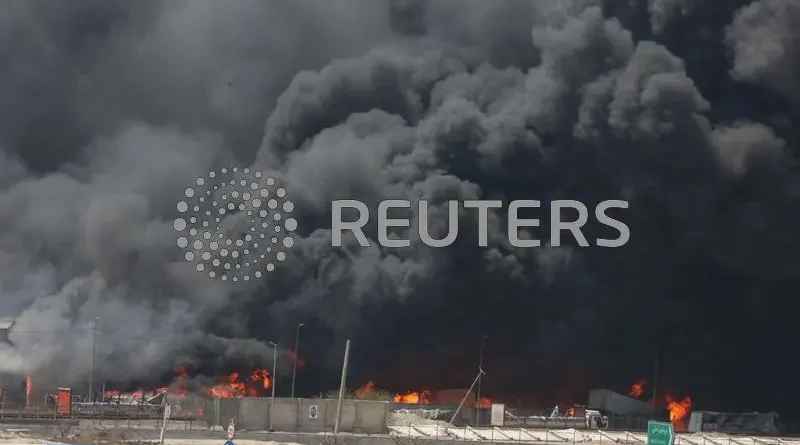
Bandar Abbas, Iran: A catastrophic explosion struck the Shahid Rajaee Port in Bandar Abbas, southern Iran, on Saturday, April 26, 2025, resulting in at least 46 fatalities and over 1,000 injuries..

The explosion, which occurred around midday, ignited a massive fire that continued to burn for nearly 24 hours, significantly impacting air quality and prompting the closure of schools and offices in nearby Bandar Abbas.

Initial investigations suggest the blast may have been caused by the improper storage of chemicals, possibly ammonium perchlorate—a chemical used in missile propellants . However, Iranian authorities have not confirmed the exact cause.

The explosion has raised concerns about safety protocols at the port, which handles a significant portion of Iran’s trade. The incident has also drawn international attention, with Russia dispatching emergency aid to assist in the aftermath.

As rescue operations continue, Iranian President Masoud Pezeshkian visited the injured and urged a thorough investigation into the cause of the explosion. The Iranian government has taken legal action against media outlets for speculation about the nature of the explosion, underscoring concerns about public perception and misinformation.

The Shahid Rajaee Port is a critical hub for Iran’s maritime trade, and the explosion has disrupted operations, affecting both domestic and international shipping routes. Authorities are working to assess the full extent of the damage and restore normal operations.

This incident coincides with renewed U.S.-Iran nuclear talks, which have been described as constructive and are set to continue. The explosion has added a layer of complexity to the already tense geopolitical landscape in the region.

As investigations continue, the international community is closely monitoring the situation, offering support and awaiting further developments.

Pope Francis Dies at 88: A Papacy Marked by Humility, Inclusion, and Quiet Revolution

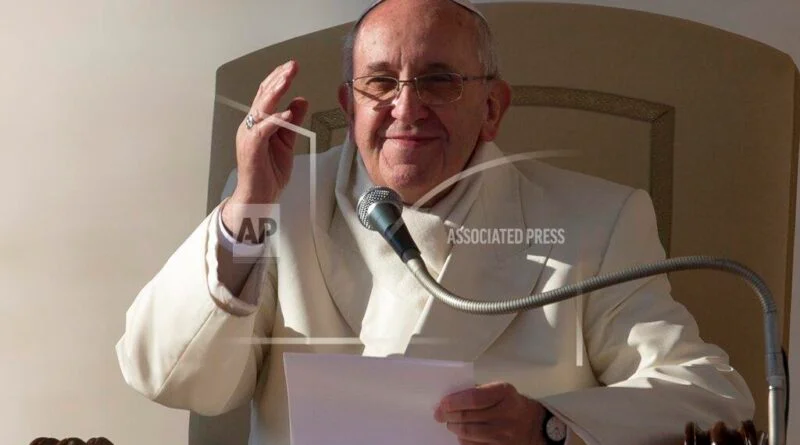
Vatican City — Pope Francis, the first Latin American pope and a moral voice for the world’s marginalized, has died at the age of 88. His passing was confirmed by Vatican officials on Easter Monday, marking the end of a papacy that redefined the modern Catholic Church and its relationship with the world.

Francis passed away at 07:35 CEST at his residence in the Domus Sanctae Marthae within Vatican City, following complications from double pneumonia. His health had been in decline in recent months, with multiple hospitalizations earlier this year.

Born Jorge Mario Bergoglio in Buenos Aires, Argentina, Francis made history when he was elected in 2013 — becoming the first Jesuit pope, the first from the Global South, and the first to choose the name “Francis,” a reference to Saint Francis of Assisi, known for his devotion to peace and the poor.

Over his 12-year papacy, Francis became known for breaking tradition in quiet but powerful ways. He lived in modest quarters, shunned the pomp of the papal palace, and emphasized a church “for the poor, not the powerful.” Under his leadership, the Vatican opened new conversations around LGBTQ+ rights, climate change, economic inequality, and the Church’s own failings — including historical abuses.

His death leaves behind a Catholic Church that is still wrestling with deep internal divisions but also one that has been pushed closer to the concerns of everyday people. For millions — both inside and outside the Church — Francis represented a shift from authority to empathy, from doctrine to dialogue.

Pope Francis’s tenure was not without controversy; he faced criticism from conservative factions for his progressive stances and from progressives who felt his reforms did not go far enough. Nonetheless, his impact on the Church and the world was profound, as he sought to make the Church more inclusive and responsive to contemporary issues.

The Vatican has confirmed that Pope Francis will be buried in the Basilica of Santa Maria Maggiore, a site of special personal significance to him. The papal conclave to elect his successor is expected to begin in between May 06 and 11, 2025  in the Sistine Chapel.

As tributes pour in from around the globe — from religious leaders to heads of state to citizens — Pope Francis is being remembered not just as a pope, but as a human being who tried to bring the Church closer to humanity.

Not Just an Export Shock: How US Tariffs Could Reshape India’s Trade Landscape

India, 18 April 2025: A sweeping 26% US import tariff is sending shockwaves through global trade—and India could be one of the biggest collateral casualties. But is this crisis also an opening for opportunity? 

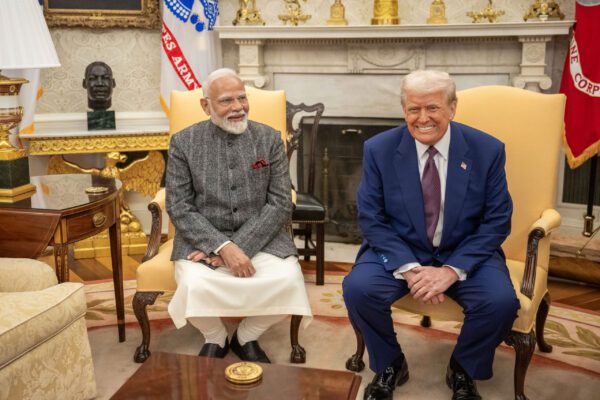
Despite the Modi government’s swift and strategic move to cut tariffs on over 50% of US imports in a fresh trade deal worth $23 billion, the real test lies ahead: navigating both the perils and possibilities of this tariff tsunami.

The Immediate Jolt: Exports Under Pressure

At the most direct level, the steep US tariffs will dent India’s export competitiveness, especially for sectors where products are easily replaceable. As Anirban Sanyal, an RBI employee, put it:

“The proposed 26 per cent tariffs, therefore, are going to hurt India’s export intensity to the US. But to what extent? That depends upon the tariff elasticity. As per IMF estimate, the tariff elasticity of India’s exports is around 0.9.”

In plain terms, that means if tariffs go up by 10%, India’s exports to the US could drop by about 9%—a near one-to-one hit.

Sectors like processed foods, textiles, and low-end consumer durables are particularly vulnerable. “These products… can be easily substituted with products from other countries,” Sanyal noted. So the hit won’t just be theoretical; it’s likely to affect thousands of small and medium-sized exporters across the country.

A Silver Lining? Trade Diversion Opportunities

But the story doesn’t end in gloom. There’s also a window of opportunity—and India may be uniquely positioned to seize it.

“With several other Asian exporters facing the same levies, India may emerge as a viable alternative for US buyers—particularly in pharmaceuticals and light manufacturing,” Sanyal emphasized.

The last US-China trade war offered a preview: Indian exporters saw modest gains in sectors like chemicals, machinery parts, and electronics. This time, the gains could be broader and deeper. Countries like China, Vietnam, and Bangladesh—also targeted by US tariffs—are losing their price edge, making India a more attractive alternative for US firms scrambling to diversify sourcing.

Economic reforms must also be part of the equation, say experts.

“Middle-class Indians are struggling. Residential building sales, passenger vehicles and two-wheelers (sales) have declined… It is important domestic policies focus on the root cause,” said Kunal Kundu, India economist at Societe Generale, in an interview with Business Standard.

He emphasized the urgent need for a structural economic shift:
“India needs a 1991 moment,” Kundu said, referencing the landmark liberalization reforms introduced by then finance minister Manmohan Singh.

“We believe the tariff war offers a perfect opportunity for India to embark on this much-needed journey. Otherwise, despite being the fastest-growing large economy in the current low global growth environment, India is likely to fall significantly short of its long-term objective of becoming a developed nation.”

The Hidden Threat: Import Dumping on Indian Shores

Yet even as India eyes potential trade diversion gains, there’s a lurking threat from the east.

“India may face the burden of cheap import dumping from its neighbors,” Sanyal warned. Displaced by the US market, exporters from countries like Vietnam, Cambodia, and China may offload their goods in India, flooding domestic markets with low-cost products.

This surge in cheap imports could be devastating for India’s micro, small and medium enterprises (MSMEs), many of which are still recovering from the aftershocks of COVID-19 and global inflation. Industries such as electronics, footwear, and garments are particularly at risk.

A Bigger Picture: Macroeconomic Ripples

Beyond trade, the impact of US tariffs is set to reverberate through broader economic channels.

“The global growth slowdown will accelerate as trade policy uncertainty elevates,” Sanyal wrote. The WTO expects global trade to decline by at least 1%, and that’s just the beginning. Commodity prices, from crude oil to metals, are already showing signs of softening amid weaker demand forecasts.

“There’s also an early sign of US dollar weakening,” Sanyal added, pointing to a potential appreciation in the Indian rupee—which, while helping tame inflation, could further hurt export competitiveness.

India at a Crossroads: Strategic Response Needed

As the world reconfigures its supply chains, India has a rare opportunity to reposition itself. The government’s recent tariff cut on US imports is a step in the right direction—aimed at securing better access for Indian goods in a friendlier trade environment.

But more must follow. To withstand import dumping, India needs tighter safeguards and more agile trade enforcement. And to truly capitalize on trade diversion, it must ease regulatory barriers, enhance infrastructure, and push ahead with long-delayed export incentives.

In Sanyal’s words:

“The impact of the tariffs may have a larger impact through global growth slowdown and subsequent reactions in commodity prices. The trade impacts will be felt… but the impact will be of lesser magnitude.”

Tariffs may rewrite trade maps—but it’s India’s response that will define its future.

Court Finds Probable Cause for Criminal Contempt in March Deportation Flights Case

WASHINGTON D.C. (Yuvoice) April 16, 2025  — A federal judge has found probable cause to believe the U.S. government willfully violated a court order by deporting dozens of Venezuelan migrants after a temporary restraining order barred their removal, setting the stage for potential criminal contempt proceedings against officials involved in the operation.

U.S. District Court Judge James E. Boasberg issued a 90-page opinion late Tuesday, detailing how two plane loads of detainees were flown to El Salvador on March 15, 2025—hours after his court had enjoined the Trump administration from carrying out deportations under a presidential proclamation invoking the Alien Enemies Act of 1798, the first time it has been invoked since World War II.

The judge said the government’s actions demonstrated a “willful disregard” for the court’s authority, noting that officials continued with the operation even after receiving explicit instructions to halt all removals and return any planes already in transit.

“The Constitution does not tolerate willful disobedience of judicial orders — especially by officials of a coordinate branch who have sworn an oath to uphold it,” Boasberg wrote. “There is probable cause to conclude that the government acted in criminal contempt.”

While no individuals have yet been named, the court’s findings pave the way for further proceedings that could result in criminal charges against federal officials. Because the Department of Justice represented the government in the underlying litigation, the judge is expected to appoint a special prosecutor under Federal Rule of Criminal Procedure 42 due to an apparent conflict of interest.

Legal experts say the court’s authority to appoint an outside prosecutor—often a former U.S. Attorney or independent legal expert—ensures that enforcement of court orders remains insulated from political influence.

The deportations were carried out under a March 2025 presidential proclamation signed by Donald Trump during his second term, invoking the 18th-century Alien Enemies Act to target members of Tren de Aragua, a violent Venezuelan gang labeled a terrorist organization. Plaintiffs in the case—five Venezuelan nationals—claimed they were wrongfully identified as gang members and were denied due process.

After a series of emergency hearings on March 15, the court issued a temporary restraining order halting removals and clarifying that any detainees already in the air were to be returned to U.S. custody. Instead, two flights landed in El Salvador and transferred detainees to a high-security prison. Government officials later retweeted social media posts appearing to mock the court’s order, including a message from Salvadoran President Nayib Bukele that read, “Oopsie… Too late.”

The Supreme Court has since vacated the restraining order on narrow procedural grounds, ruling that the case should have been filed as a habeas corpus petition in Texas rather than under the Administrative Procedure Act in Washington. However, Boasberg emphasized that the government was still obligated to comply with the order until it was reversed through proper legal channels.

“Even a legally unsound order must be obeyed at the risk of contempt,” the judge wrote, citing long-standing precedent.

The court has not yet announced whether it will appoint a special prosecutor or refer the case to an external authority. However, the findings mark a rare and significant moment in which the judiciary has accused the executive branch of openly defying its orders—raising serious constitutional questions and setting the stage for a possible confrontation over the rule of law.

Rubio Shutters Disinformation Office, Alleges Censorship of Americans

WASHINGTON (The Sentinel by Yuvoice) April 16, 2025 — Secretary of State Marco Rubio announced Wednesday the closure of the State Department’s office for countering foreign disinformation, alleging it had crossed a constitutional line by censoring Americans.

The office, known as the Global Engagement Center (GEC) and more recently rebranded as the Bureau of Counter Foreign Information Manipulation and Interference (R/FIMI), was created to identify and counter foreign propaganda campaigns by adversaries such as Russia, China and Iran.

Rubio, who took office as Secretary of State in January, said the bureau had “spent millions of dollars to actively silence and censor the voices of Americans they were supposed to be serving.” He called the effort “inconceivable” in a free society.

The closure follows growing criticism from conservative lawmakers and figures who claim the bureau targeted domestic media and social media accounts, particularly those critical of U.S. foreign policy. Elon Musk, in 2023, called the center “the worst offender” of government censorship.

Rubio did not provide specific evidence that the bureau directly censored Americans. Former officials defended the office’s work, saying its mission was to expose and counter foreign influence operations—not to monitor or suppress U.S. citizens.

Democratic and some Republican lawmakers warned the closure could weaken U.S. efforts to combat digital influence operations by foreign adversaries. “This is the exact wrong time to abandon the field,” Sen. Chris Murphy, D-Conn., said in a statement.

The decision underscores a broader political divide over how to confront foreign disinformation without infringing on civil liberties. While critics see the bureau as overreaching, supporters argue that dismantling it leaves the U.S. more vulnerable to coordinated manipulation campaigns.

The State Department said remaining disinformation monitoring functions will be reassigned, but did not provide details.

Ricky Vazquez