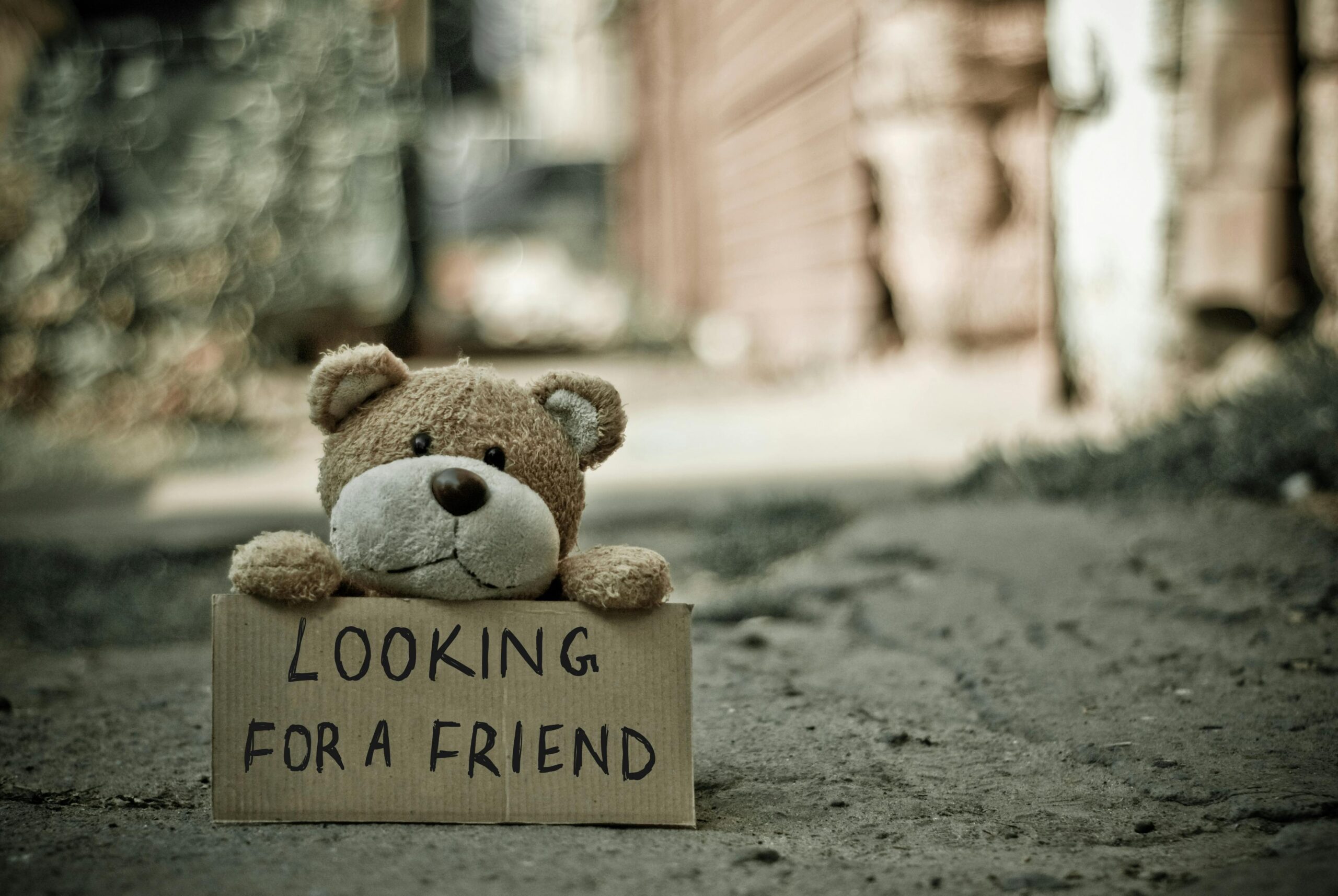

Hey… It’s me again.
Man, it’s dark up here… Do you mind if I keep this hatch open?
Might scare away the mites and shadows that gather here in hordes.
And look at you… Just as I remember.
Okay, a bit dustier.
I know, I know, I’ve been terribly busy doing this and that.
Growing up.
Don’t fret, I always love to see you.
The way you’re always gazing with that same longing expression.
Those eyes that once saw adoration.
Adventures and imagination.
Oh, did you know I got that job we always dreamed about?
I’ll be sailing for real now, a specialist in the Royal Navy.
Bit larger than the ships we used to pilot, made of pillows and duvets.
Though I imagine it might be lonely.
At least for a little while.
Hey, do you know where that treasure box is?
A bit like yours but a tad smaller.
You know, the one with all those coursebooks I filled out in school.
All the novels we read when we were younger.
Certificates and tidbits, pieces of the past.
Viciously protected and easily forgotten.
I could have sworn it was under the TV but I can’t find it anywhere…
Maybe I’m blind.
I wonder if you move around up here.
Dance when nobody’s watching.
Do you go and visit all those lands we used to dream up?
Mighty spaceships and colorful jungles.
Play was endless.
Life seemed so much wider…
The other toys were taken — I’d started to look like a hoarder.
They’re in good hands — the neighbor’s kid.
Oh? Why did I keep you?
I don’t really know.
It could be that I’m sentimental.
Or maybe I’m just scared.
Ah, there’s the box I needed.
Well… That’s everything.
Till next time, Teddy.
The basics
LARP is defined by The Merriam-Webster Dictionary as “a live-action role-playing game in which a group of people enact a fictional scenario (such as fantasy adventure) in real time typically under the guidance of a facilitator or organizer.” While LARPing may slip under the radar for most, it is a growing community in more ways than one. I am a LARPer, but probably not the kind you are thinking of. The live-action role-playing that I have been participating in since I was a child is airsoft.
Airsoft is an activity in which players use military replica weapons that fire plastic pellets. Compared to what is used today, the equipment used initially was rather crude. They were simple, limited to basic handguns and only a few kinds of rifles. None had the automatic or battery-powered features that are now the standard of today. Having been made from clear plastic with bright orange tips, the overt harmlessness of the design also made playing in our neighborhood much easier. Another major difference between iterations was the significant increase in power. Back then, getting hit by an old spring-powered gun would likely leave you with a red mark for the day or even a welt if you were hit close enough. Nowadays however, modern versions are powered by both a spring and a motor, giving them far more force than before. I have the literal scars to prove how powerful they have become. Their realistic appearance also presents new challenges. They look so much like actual firearms that they require a rifle bag for transport – something you can buy at most airsoft retailers. This authenticity also makes it difficult to find acceptable places to LARP without drawing unwanted attention.
Questionable decision making
I remember the last time my friends and I went airsofting in public like it was yesterday. We found what seemed like a perfect spot in the creek bed – deep and hidden from the road – but our crucial mistake was that it backed up against a parking lot. This resulted in someone spotting us and calling the police, and the afternoon ended with a detainment in handcuffs and a good long talking-to by the responding officers.
Thankfully, being kids undoubtedly helped our case, as we were let off with only a warning. We eventually solved the problem by moving our games to official airsoft parks like Hollywood Sports and SC Village. With a safe and affordable place ($37 for the entire day,) our weekends were suddenly booked solid. In the end, the experience was incredible; we could join huge “fights” with over 100 players per team, all within a structured environment with a defined set of rules.
A regulated environment
The first stop after getting your wrist band is the chronograph station, usually just referred to as the chrono test. In order to ensure the safety of the participants, the purpose of the test is to measure the muzzle velocity of the arsenal you plan to use that day. If an airsoft rifle shoots too fast and hard, it can cause injury to the other players. The standard tool is a digital reader that is placed over the end of the barrel. The referee will instruct you to fire a few BBs (round plastic pellets) to accurately measure the speed and force your rifle produces.
I remember I failed my first chrono test. I had just gotten a new rifle; it was fresh out of the box and never even been fired. I plugged in the battery and excitedly waltzed over to the testing booth. When I took a shot, it registered at 500 feet per second, 100 over the limit. I felt horrible that I had failed the test and would not be allowed to use the rifle. We later discovered there was a manufacturing error, and my rifle had accidentally been given a higher gauged spring. This was ultimately a simple fix, and I still own it to this day, over ten years later.
The next major rule is the ten foot rule. If you come within ten feet of another player you must call out “bang bang” instead of shooting them in order to avoid serious injury. There was a time where it was common to yell out “surrender,” a term I continued to use even after it became antiquated. It often got a laugh out of people. In reality, when out on the field, it is easy to get startled rounding a corner and fire off ammunition point blank at each other. This is something I have been on the giving and receiving end of before. People are cool about it and everyone apologizes but there is always that one guy or group being asses about everything.
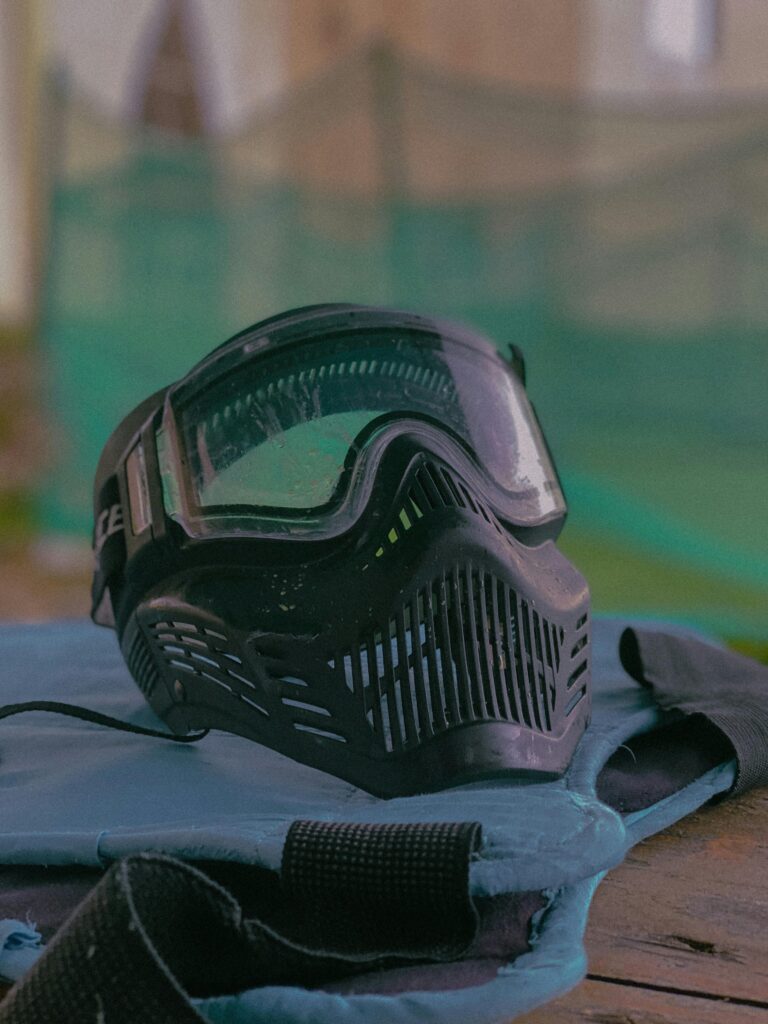
The other strictly enforced rule is the prohibited use of pyrotechnics. No smoke bombs and certainly no fireworks. Another banned item that loosely falls into this category is what is called Thunder Bs. If you’re familiar with a flash-bang, a Thunder B is the bang with no flash. These were banned at one of our local fields after someone lost hearing in an ear, or so the story goes. None of us ever witnessed anything so dramatic in all our years of playing. The last but most important safety rule is to wear a full face covering rated for airsoft and or paintball that includes ear protection. Nobody wants to lose an eye, burst an ear drum, or swallow a pellet.
MILSIM
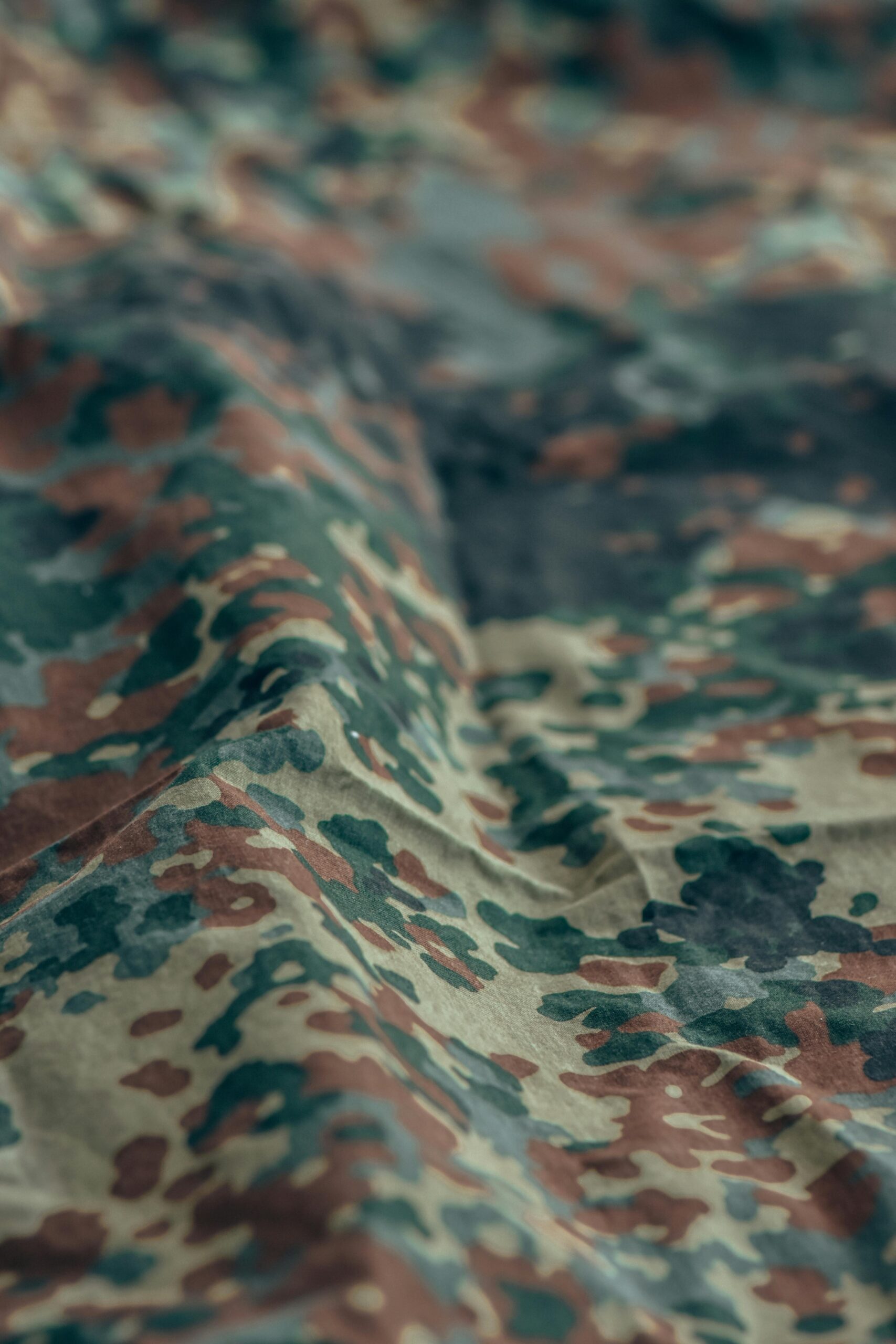
There is another level to the world of airsoft which are military simulation games, MILSIM for short. These games can last for days, have more detailed objectives, chain of command, and come with uniform requirements to play. This can mean that each team requires a certain type of camo to differentiate from each other. They also do not always require the same safety gear as public games at sports parks. People only wearing safety glasses is a common sight. I have not had the pleasure of participating in such games, only watching through YouTube. In my area of Southern California, they are not that common and can be expensive. I also do not own specific camo gear. I normally wear a black T-shirt and cargo shorts for comfort. If the opportunity were to arise and I was able to get away for a few days I absolutely would.
A Simple Matter of Aesthetics
So why can airsoft be considered LARP, but paintball cannot? It’s all in the look. In classic LARPing people don suits of armor, swords, shields, and bows to portray soldiers of a different era. The airsoft community cosplays as modern warfighters (sometimes specific eras such as Vietnam), and at the very least, the weaponry resembles actual firearms. Paintball does not share this quality as the equipment is unique to the activity. Paintballers never wear anything resembling the military. My personal airsoft attire is not military either, however, I do go for a general insurgent-type look. That is simply because I feel weird dressing as military personnel having never served.
While airsoft is not the first thing people associate with LARPing, it fits the bill. It simulates fighting your way to victory through strategy and teamwork (with a welcome lunch break). More importantly, it is a way for you and your friends to get out and have some fun.
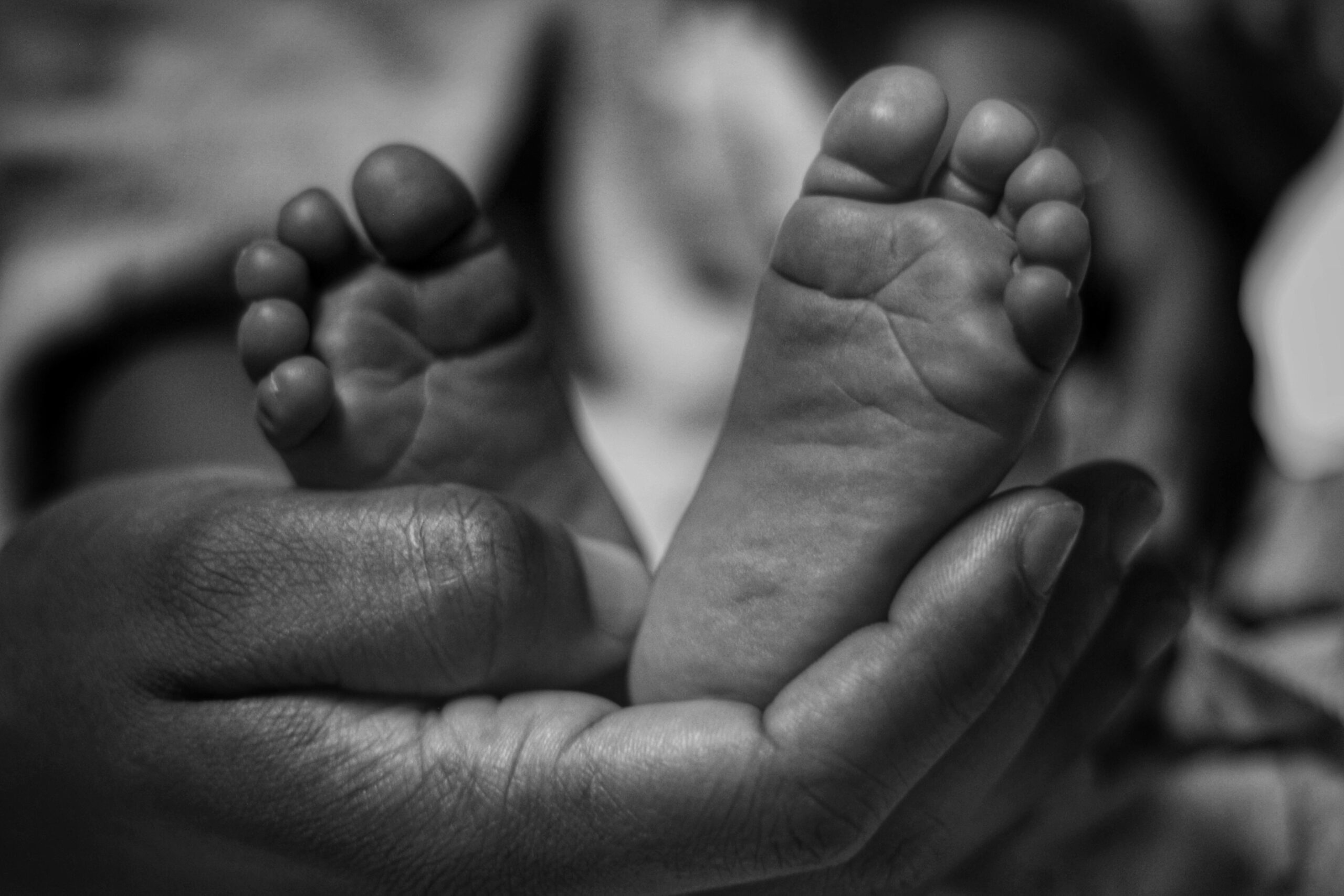
They breathe steadily, rhythmically,
Against my chest,
As the world melts;
Their eyelashes graze my chin–
Two sets of petals–
Rosy as the day flowers, ablaze
In rivulets and revolts,
Conflicts that cause
The pain we never hope
To hold in our arms,
Like we do these twin
Babes, swaddled in
The mirth and murk
Our world breathes–
The sun, she burns
Our eyes in honey.
Message: “Aunt nell, Nanti hettie. Dooey daiture and quinque, parker, Bona lavs, ducky. “
Polari translation: Listen, I am not straight. In 2025, I give you my best wishes, my dear.
In high school gym class, I often overheard conversations about sexual encounters, stories, ‘advice,’ and asking questions. I remember in ninth or tenth grade, a friend asked me questions about sexual experiences due to my being in a relationship. I felt uncomfortable, as this wasn’t something I wanted to discuss out in the open. I also didn’t want to discuss what started occurring in my life at 17 (that I hadn’t yet fully processed). Sex was an uncomfortable topic. Romance was different.
Finding the right words or labels
I had always felt romantic attraction towards others. My first crush was on a boy in my kindergarten class, and I realized in sixth grade that I was attracted to girls. Throughout my life, I thought of romantic attraction, not sexual attraction, as a vital component of a relationship.
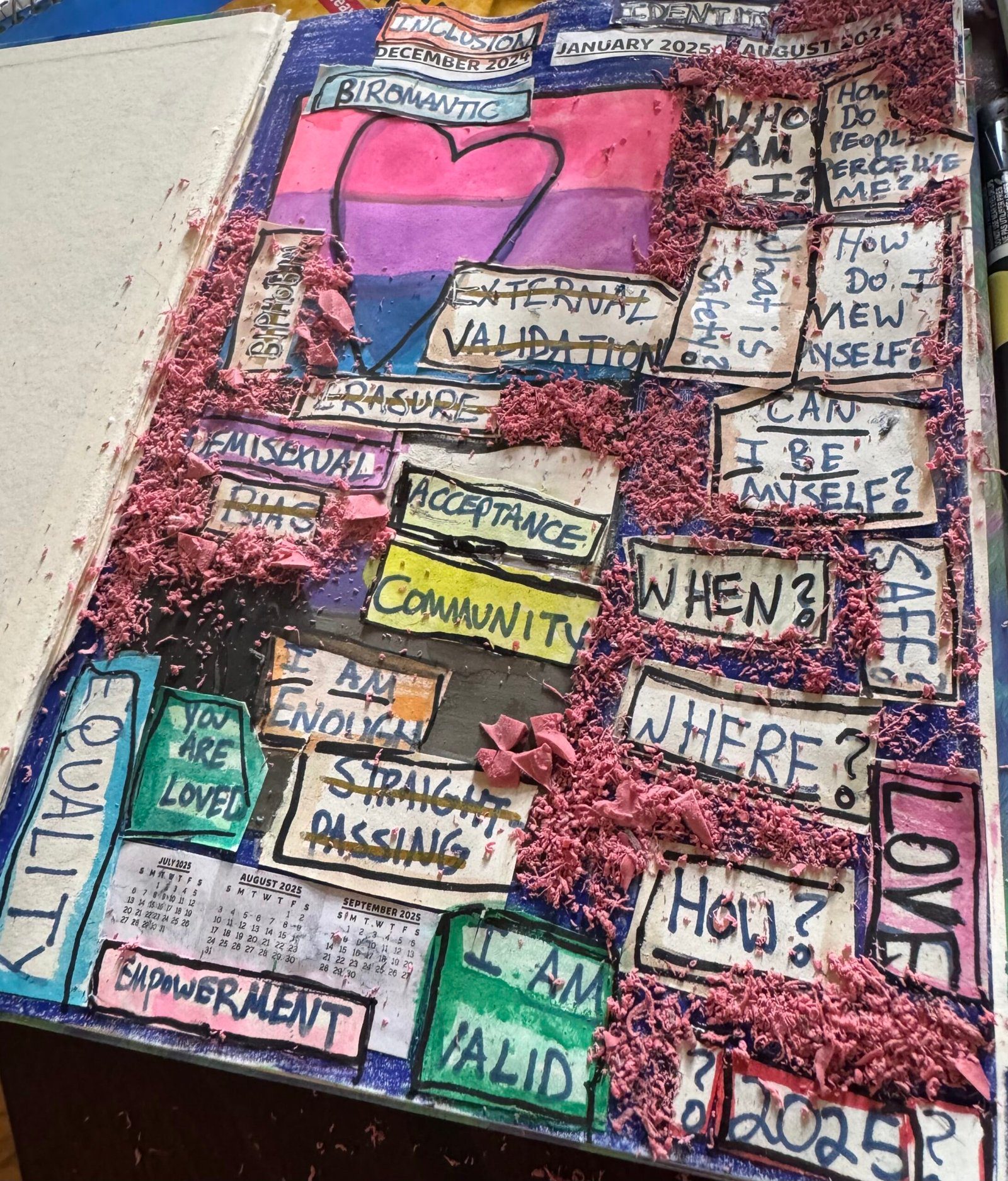
In seventh grade, I discovered the label bisexual. That identity lasted eight years, since I didn’t know there were other options to define myself. Earlier this year, I reconsidered if the label I had worn for so long was accurate to who I am. After thinking it over, I faced that the most accurate way to identify myself was biromantic and demisexual.
Biromantic is described as “being romantically attracted to more than one gender, not exactly in the same degree, same time, or in the same way.”
Biromantic to me means that I am romantically attracted to others, just not in the sexual sense.
Demisexual can be defined as “experiencing little to no sexual attraction without a strong emotional or romantic connection, falling under the ace umbrella (Asexual).”
To me, this means that I’m only sexually attracted to someone after thoroughly getting to know and trusting them on a deep, romantic level. I’ve never viewed myself as someone who could have a one-night stand or a friends-with-benefits situation.
For the past five years, I’ve reconsidered if it’s safe for me to be authentic in terms of my sexuality. With the rise of anti-LGBT laws and bills, I’m afraid to be open about it in public. If I’m with my close friends and in a safe environment, I’m able to speak about it in detail. Without my community, I’d feel lost.
The feeling of community does not always take the form of a connection that exists in person, since there are online friendships I hold dear to me. For basically ten years now, I have been an active member of the fandom that surrounds two of my favorite YouTubers, Dan and Phil.
Many within the fandom (phandom) are also LGBTQIA+. In addition, Dan and Phil themselves are queer individuals, and foster community within their fan base. This has been a positive space for me since I was thirteen, and first discovered my attraction to women/feminine-presenting people.
A friend of mine who I first met in the phandom once exclaimed while hanging out, “I’m here, I’m queer, I’m gay, and I slay.” This is an example of inclusion within the phandom.
Although I’m afraid to share my identity in some social situations, I have a safety net. The same net simultaneously protects and isolates me. Two years ago, my fiance and I became engaged. Due to bias and biphobia, I’m often viewed as straight because of my fiance’s gender.
For example, a classmate in high school asked me if I was “still bi” after beginning my relationship with my now-fiance. I’m sometimes not considered part of the LGBT community as a result of this relationship. That’s isolating.
Erasure is a concept that I internalize, and I have a difficult relationship with it. It makes me feel uneasy knowing that others dictate my identity. Being part of the community is part of my identity. The intersectionality of all my identities live within me: I am a woman, biromantic, demisexual, neurodivergent, and disabled — all at the same time.

The world we live in now
However, in this current climate, I’m privileged to have that safety net of being straight-passing. I am outwardly protected against hatred in some ways, but still discriminated against.
After a situation that happened to me a few years ago at a local restaurant, I’m scared to wear pride clothing. A nearby city didn’t have their first pride celebration until 2019. I know that not everyone in the area supports people like myself.
That protest during senior year
During my senior year of college last year, students found out about a restrictive policy that was passed by the board. This policy stated that transgender, trans, and nonbinary students were no longer eligible for admission; many of my former peers are trans and nonbinary.
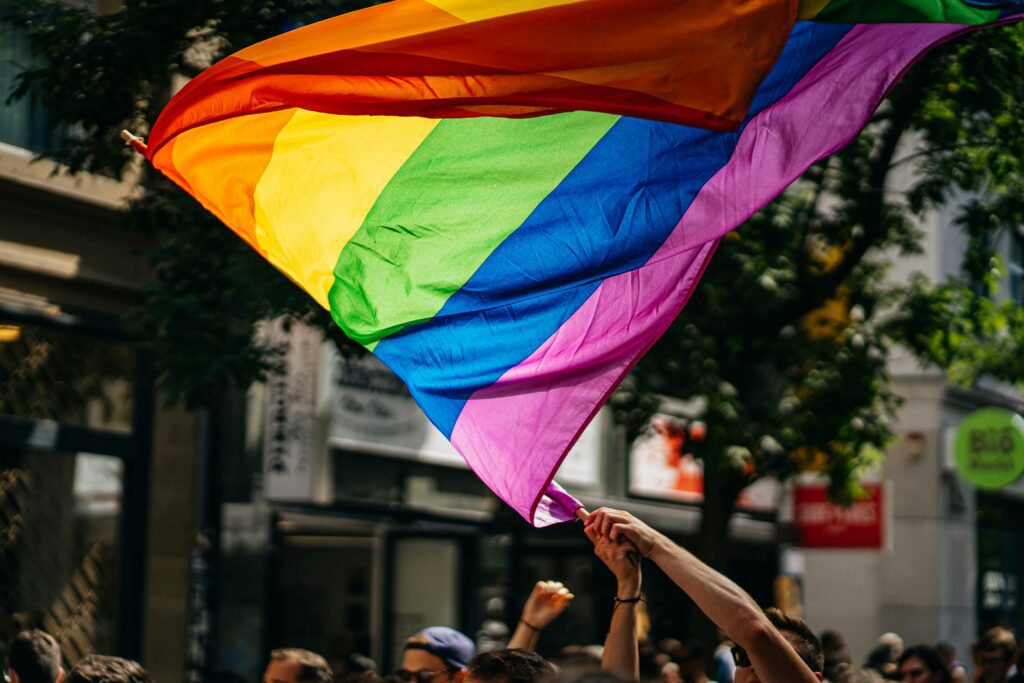
At a campus event with a guest speaker, I felt unfairly silenced. We were told we couldn’t speak out, couldn’t interrupt the speaker, yet weren’t allowed to leave yet. Students who weren’t seniors protested the policy by wearing all black and accessorized with pride flag pins. But, I was a senior.
Part of me knew that the college administration was restricting students, but part of me didn’t know to what extent. I knew I needed to use my voice for good, since the restrictions were even stricter for students who were not closer to graduating. People in my life warned me about protesting, told me to not get myself in trouble. I didn’t care, because it was my senior year and knew just one extra voice could make a difference. I crossed that line almost daily, every time the administration made changes. I constantly worried that I would be called into the dean’s office, but thankfully I wasn’t.
I was surprised to find out how restricted I was as a student, but not shocked at the same time. I believe I was surprised that the administration thought so low of students, as many of us would not have even attempted to interrupt the speaker — without being told not to. I felt a sense of disconnection between how we as students viewed ourselves and our peers vs. how the Admin viewed us. The local police showed up to the Annual Founder’s Day event after the meeting, without our knowledge. I felt as if Admin viewed anyone who spoke out as a threat, when most people were not.
Some faculty were supportive of students, and I understand why some were not in the position to risk their jobs in order to support us.
In response to feeling shut out before, that same month I attended a protest on campus where students joined together, raising our voices to “Rescind the policy.” The administration approved the protest ahead of time. It was student-led, with fixed guidelines allowing us to shout approved phrases, hold signs, and only protest during the approved time slot. The protest coincided with the week that a board of directors meeting was occurring on campus. Once the meeting was over, we could no longer protest.
Following the protest, I joined a few others who were planning on speaking to a local reporter. I didn’t know if I would be punished for speaking out afterwards, but I took that risk. Loved ones warned me not to do it, saying I would get in trouble. However, after the way the campus climate had shifted quickly under the appointment of a new commander, getting in trouble was the least of my concern.
Despite graduating from college and leaving that environment, I face bias and discrimination still, but primarily due to other parts of my identity.
Anxiety comes upon me whenever I see red MAGA banners in nearby cities or when I come across articles online that mention politicians’ stances. Anxiety creeps in when I visit cities that are dominated by primarily anti-LGBT institutions.
I often don’t tell others about my sexuality upon meeting them since I cannot be sure of their intentions. I wonder if I can attend local pride events — if it’s worth the possibility of being targeted online by someone from my hometown who is passionate in their anti-LGBT sentiments. How accepting a particular state is a variable in determining where to relocate.
As well as this, I never know what will happen to my loved ones who are part of the community in 2025. I wish there were protections in place for every LGBTQIA+ individual. I wish I could foster that progress.
How I define progress and resistance
I may be ridiculed in public when I wear a pride shirt, but I know my experience isn’t the same as LGBTQIA+ people in other states or around the world. I may have been outed in seventh grade — and called a slur when I publicly came out as bisexual on instagram in ninth grade — yet, I cannot compare my experience to those who were queer activists in the 60s, 70s, and onward. I don’t know what it’s truly like to fear my life on the daily for who I am.
I can’t relate to the community members who spoke a code language for decades in order to share everyday encounters with their friends. There are no direct terms for biromantic and demisexual in this language. Thus, I most likely would have been referred to as bibi palone (bisexual woman). Polari represents the history of the community during one of many dangerous time periods for those in the LGBTQIA+ community.
Survive and thrive
The historical basis for pride was to stand up against injustice, fight for those who can’t do so themselves, and make a difference. Pride at its root is about being authentic, even when social barriers are in place.
I’m not suggesting that others outside of myself should necessarily tackle injustice, as individuals exist in different circumstances than myself. I myself am sometimes worried about wearing pride clothing or accessories. Further, fostering change is not a monolith. It can be carried out through different methods.
Prioritizing well-being and self-care may be the only form of autonomy for individuals. Sometimes, resistance consists of survival and, eventually, thriving. Being true to who I am makes a difference.
I’m very glad to be able to live with my fiance now. Right now, for me, being myself is resistance enough.
She’s wrapped around the toilet,
face pressed into the cold, plastic lid,
tapping nails against the bowl–
yellow where the press-ons have popped off–
a fast rhythm, like the heartbeat in her head.
She can’t remember
switching from fast food to dry heaves,
but she does recall her folks’
hazy hours-long road trips in the old
broken-roll-down-window machine.
Cold coffee in paper cups, sulfur and spray deodorant,
AM talk radio hosts cut up with static and
bursts of fresh air as ash leaves the front windows.
Memory is sticky in her lungs.
There she sits
stinking of sweat and smoke,
near empty pack tucked into her bra;
shoes kicked off by the stall door,
stationary as the world moves around her
like lake water.
For the first time in forever,
for the third time this week,
she prays to God.
Swearing, cursing and bartering:
she’ll be nicer to the new neighbors–
and the old ones too–
she’ll swear off drinking on work nights
and start working on herself tomorrow
if he’ll just make it go away.
But saliva rushes against her teeth, and
there’s lightness in her pounding head, and
her stomach muscles quiver, and
tobacco lingers in her nostrils, and
she knows he can’t help her tonight.
As someone who grew up in a family that values excellence, I was preoccupied with perfection for most of my life, whether it was in school, relationships, or everyday life. I set impossibly high standards for myself, and I thought that only through flawlessness could I achieve success and happiness. It wasn’t until I hit a breaking point that I realized the desire for absolute perfection was what kept me from finding true contentment and success. It was only when I embraced my defects did I achieve a better outcome than I could have ever imagined.
All became clear when I was 23, my life marked by ambition and self-doubt. I had just graduated from a world-class Israeli university with a postgraduate degree, and was immediately seized by the ambition to get a PhD. My first job was in a biological research company in the UK where I was mandated to research a study titled Quorum Sensing Disruption by Urban Plant Volatiles: A New Avenue for Anti-Biofilm Therapy in Multi-Drug-Resistant Pathogens. The job was everything I had hoped for — challenging, fast-paced, and full of opportunities to prove myself. But along with the excitement came an overwhelming fear of failure. However, I was determined to show my worth, to stand out, to be perfect.
At first, I was meticulous in everything I did. Every email had to be perfectly worded, every presentation flawless, and every project completed with a near-obsessive attention to detail. I spent late nights tweaking reports, overanalyzing every decision, and second-guessing myself. But no matter how hard I tried, it never felt like I had done enough. My colleagues seemed to work more with less effort, and yet their work was praised just as much as mine, perhaps even more so. I couldn’t understand it.
My performance reviews, while generally positive, always left me feeling like I wasn’t living up to my full potential. I began to notice something unsettling: I was burning out. I would go to bed exhausted every night, only to wake up feeling the same sense of anxiety and pressure as the deadline approached. I was trapped in a cycle of trying to be perfect, yet never feeling satisfied with the outcome. In my mind, the only way to get ahead was to be flawless in everything I did, but it was taking a toll on my mental and physical health.
The turning point came during a major presentation to a group of executives. I had spent weeks preparing, rehearsing, perfecting the slides, and running through every possible scenario, yet the real challenge lay in the topic itself: a combination of plants, microbiology, and medicine. As a microbiologist, I had to be able to face and argue successfully in front of a panel consisting of individuals from a multidisciplinary field. On the day of the presentation, my nerves were at an all-time high. I could barely sleep the night before, and when I woke up, I had a knot in my stomach. I was convinced that one small mistake would ruin my chances of advancing in the company.
As I stood in front of the panel, I felt the weight of everyone’s eyes on me. I began the presentation, but my hands were shaking, my voice trembling. Halfway through, I stumbled over my words and froze. The silence in the room felt deafening. I could feel my face flush, and my mind was racing. “This is it,” I thought. “This is where it all falls apart.” But then, something unexpected happened. One of the executives, a woman named Victoria, spoke up. “Hey, it’s okay,” she said with a smile. “Take a deep breath. We’re all human. Let’s keep going.” At this point I remembered what my master thesis supervisor, Dr. Gidon Winters once told me: “Fredrick, everyone feels nervous, even after having published several peer-reviewed articles and made countless presentations, I am often nervous while presenting in a room full of people.”

That moment, so small yet deep, changed everything for me. The pressure I had put on myself to be perfect, to avoid any flaws, was suffocating me. Victoria’s kindness and her understanding of the situation made me realize that mistakes were not the end of the world. They were simply part of the process. I took a deep breath and continued the presentation. My hands still trembled, but I felt a sense of relief. The rest of the meeting went smoothly, and despite my initial panic, I received positive feedback, and the paper was ranked as one of the best research papers in the company. I realized then that the perfection I had been striving for wasn’t what mattered. It was how I handled the imperfections that made the real difference.
After that presentation, I started to shift my mindset. Instead of obsessing over every little detail, I began to focus on progress rather than perfection. I allowed myself to make mistakes and learn from them. Instead of spending hours perfecting a report, I focused on completing tasks efficiently and learning from feedback. I began to understand that imperfection didn’t equate to failure — it was an opportunity to grow.
Over the next few months, I noticed a change in how I approached research and work in general. I was more relaxed and more present, and I wasn’t constantly living in fear of making a mistake. I began to take on more challenging projects, and I wasn’t afraid to take risks. Some of those risks didn’t pay off of course, but others turned out to be some of the most rewarding experiences of my research. My team noticed a difference, too. I became a better collaborator, more willing to ask for help when I needed it, and more open to other people’s ideas.
But the benefits weren’t limited to just my research. I started to apply the same principles of imperfection to my personal life. I had always been self-conscious about my appearance, constantly comparing myself to others and trying to achieve an unattainable standard of beauty. I spent years dieting, exercising, and obsessing over my appearance, only to end up feeling frustrated and inadequate. I realized that I was never going to look like the models in magazines or the influencers on social media, and that wasn’t the point. What mattered was how I felt about myself.
I began to embrace my natural features, faults and all. I stopped worrying about every little flaw and started appreciating what made me unique. I no longer measured my worth by the number on the scale or the reflection in the mirror. I started to focus on things that truly mattered — like spending quality time with family and friends, pursuing hobbies, and learning new skills. And, most importantly, I permitted myself to be imperfect.
Sometimes I forget that I’m allowed to be flawed, that I’m allowed to be human. Perfection used to be an addiction forced onto me because everyone chased it. However, since I strived to accept my flaws, my drive has been different. I want to make mistakes and learn from them. I want to develop a better understanding of everything. I want to be held accountable for every mistake and bad decision, and to be gifted with the grace to grow. I have done a lot of imperfect things — from lying to breaking others’ hearts to ghosting people with no reason — but that’s the beauty of discovering myself.
I learned that all these faults don’t define me; instead, they are stepping stones to meeting the version of myself I can honor. I realized that I had embraced a part of myself that disguised itself as good, but it was the version of myself that prevented me from appreciating who I am. I have taken accountability and changed my ways, character, and behaviors. It’s funny how we often think that perfection is the key to success, but in reality, it’s our imperfections that make us human, and it’s through those imperfections that we truly grow.
Eventually, I discovered that it’s not about being flawless. It’s about showing up, learning from the mistakes, and being kind to yourself along the way. When I let go of the need to be perfect, I found not only better outcomes but also a sense of peace and contentment that I had been desperately searching for. Sometimes, it’s in our imperfections that we find our greatest strengths.
My punk history
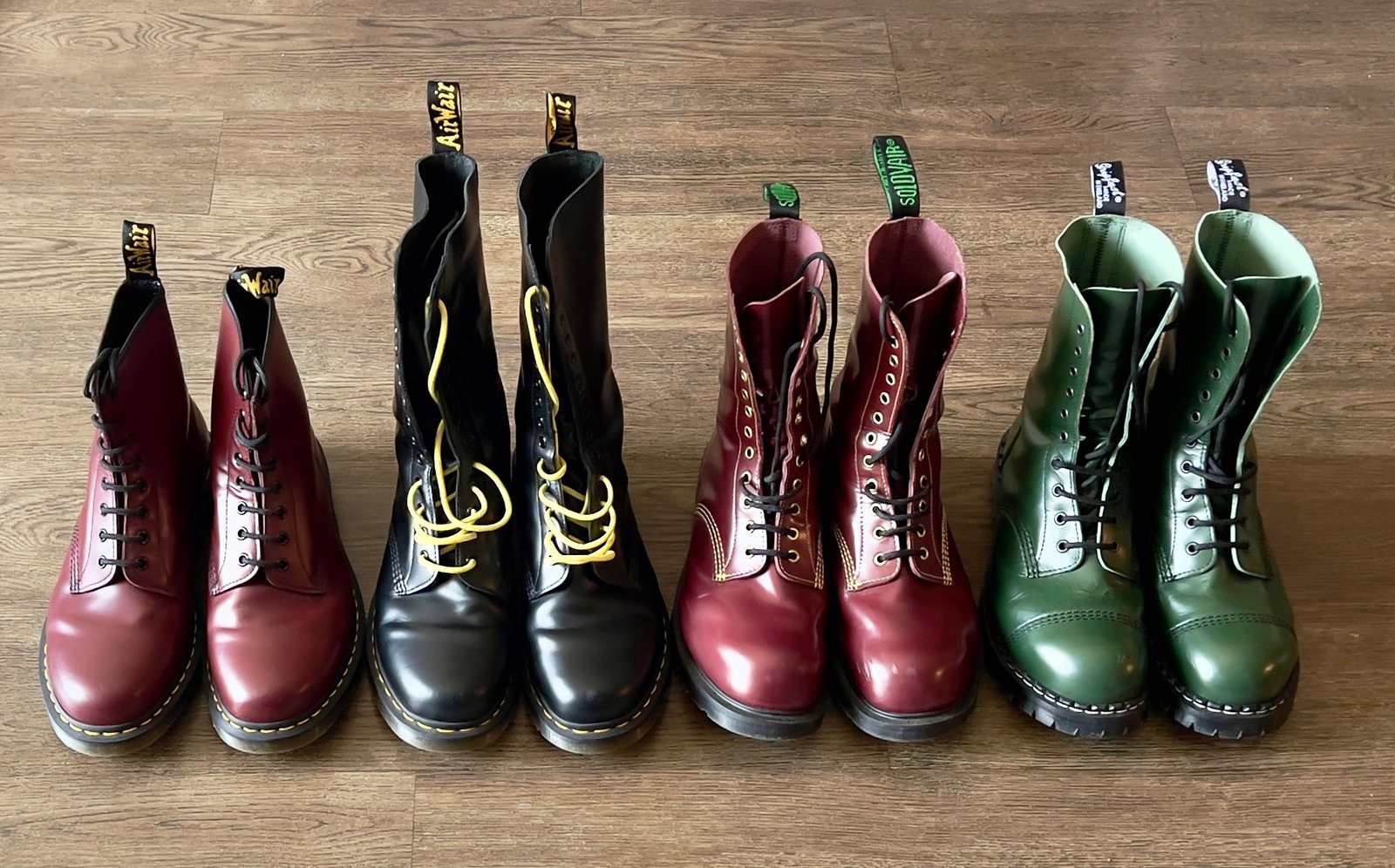
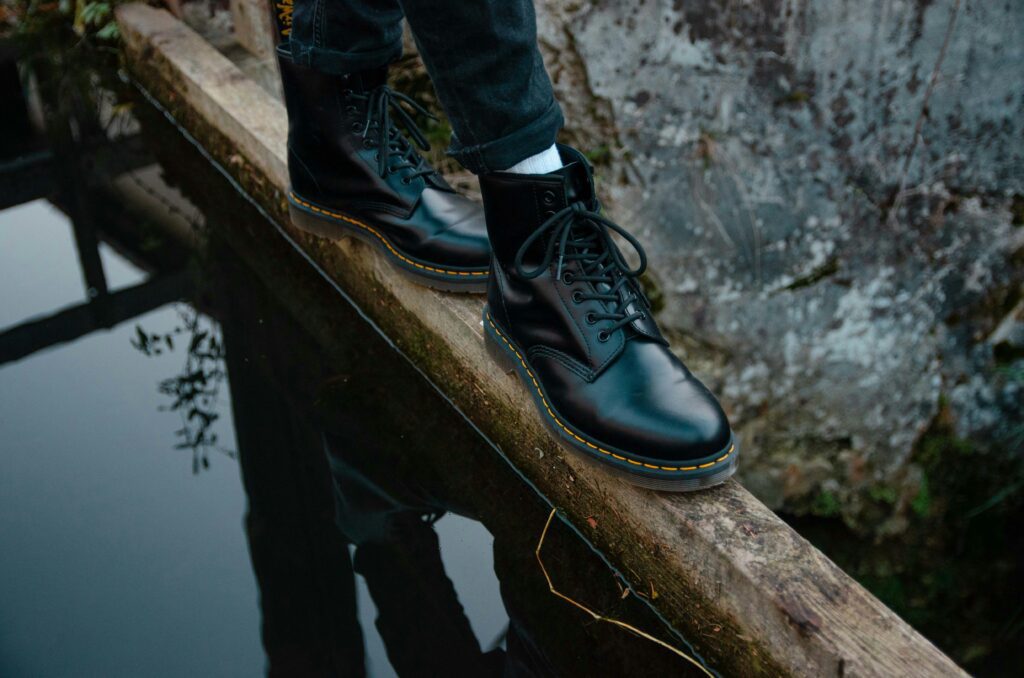
I wasn’t always into punk rock. The first genres that I was into were classic rock and metal. The first album I picked for myself was Guns N’ Roses’s Appetite for Destruction. My first concert when I was in the sixth grade was a Kiss concert. It wasn’t until I was at a friend’s house playing NCAA Football 06 that I heard my first punk song. The NOFX song “Jeff Wears Birkenstocks” came on, and I was instantly hooked. NOFX still stands as one of my favorite punk bands. Over the years I started getting into other sub-genres of punk and becoming interested in the culture. It wouldn’t be until recently, within the past six years, that I would get my first pair of Doc Martens.
My boots
A pair of 1460 smooth leathers in cherry red were my first pair. I chose these because they are a smaller boot, and seemed like less of a commitment in case I wasn’t into them. My only regret was not getting a more substantial pair first. My second pair, 14 eyelet 1914 Doc Martens, a taller boot, made more of a statement. This is the pair that would introduce me to colored laces and their importance. Unlike my first pair, which came with black laces, the 1914s came with yellow. There was a small paragraph explaining why yellow had become the staple for Doc Martens. It was chosen as a symbol against racism. There had been issues of extremist hate groups infiltrating the punk scene, which led to distinctions in lace color. I’m glad I read it because I almost made a crucial error.
White and red
Both white and red have strong ties to hate groups. White represents white power and subsequent ideologies, and red is for neo-nazi gangs. Red can mean the individual has committed a violent act. But red may also be worn by anti-fascists. Given the negative associations I’ll never sport either color, even if the meanings dramatically change. Not only do these colors represent things I stand against, I must consider the way I look. I’m a paper-white male who shaves his head. I’ve even been in the unfortunate situation of being greeted by a Huntington Beach skinhead gang member at the beach. I remember the greeting being something to the effect of, “Hey, brother.” I wasn’t even wearing anything that could be misconstrued. Black board shorts. It was simply because of my physical appearance and where I was. I ignored him and haven’t been back since.
Blue and green
Blue began as a way to identify individuals who had killed police officers, but I was unable to find evidence supporting this claim. And SHARPS, the group known for wearing blue, wore them as a symbol against racial prejudice and police brutality. Even though I align with those sentiments, the possibility of me wearing blue laces is low; I don’t want to be associated with groups of which I’m not a member. It reminds me of a biker bar near where I grew up. It was best not to wear red or green; the Hell’s Angel’s (red) and Vagos (green) MCs were known to go there. Running the risk of wearing the opposite faction’s colors could get me into trouble. Green is considered neutral in the States but can also be associated with anti-fascist groups in St. Petersburg. I’d rather err on the side of caution and forgo green altogether.
Black and purple
Black is the standard color and has no affiliations. It’s the color that is on three out of four of my boots. It’s a neutral lace that is always okay to wear. Purple is another color I would never wear, but not because of any negative implications. Purple laces are associated with gay pride. Being cisgender and straight, I wouldn’t find it appropriate to don these laces even in a show of support.
Narrowly dodging ignorance
Many people never give a second thought to the color of their shoelaces, even if they change them out for a new pair. When it comes to a pair of Docs or similar pair of stompers, lace color is significant. I almost made a mistake before I knew what each color represented. I came very close to buying a pair of white laces only because I thought black and white would look cool. Thankfully, I read that paragraph when I bought my second pair. I feel embarrassed about how close I came to being that ignorant; I hadn’t realized how many subliminal messages might be intertwined with the color of bootlaces until then, and I’m truly glad I found out before making such an error.
Here’s an idea
Over the past year, people have asked me many questions about my health, then proposed how I should approach seeking medical answers. At this point, the suggestions and perspectives overlap, muddling all of the feedback into one processing & storage facility within my brain. I know people have good intentions, but.
So it becomes complicated when there are so many factors that affect my ability to receive the correct diagnosis.
My health journey began in early summer of 2024, when bloodwork that was done during my voluntary psychiatric hospital stay indicated that part of my lab work was not within the “normal” range. I began experiencing widespread pain, dizziness, fatigue, and other symptoms after my lab results were examined. Since last summer, I have been limited in my mobility due to my symptoms, as I become extremely dizzy when my posture changes from sitting to standing. I know that my widespread pain and fatigue is because of my fibromyalgia, but I continue on my journey to receive the information that will allow me to further adapt in my daily life.
Posture and diagnosis
After rounds of regular bloodwork, head imaging, EKGs — plus two heart monitors — I do not have an official diagnosis for POTS (Postural Orthostatic Tachycardia Syndrome), yet it fits as “a group of disorders that feature orthostatic intolerance. Orthostatic intolerance is the term used to describe symptoms that occur when a person stands up and can be relieved by lying down.” I fit the criteria of having this condition, due to the fact that I become dizzy when standing, as well as my heart rate fluctuating before and after standing. Thus, my posture is part of the diagnostic criteria itself. Possibly.
About two months ago, I decided to go on a walk around my neighborhood, ignoring my body’s intuition that I overexerted myself. As a result, I endured presyncope/syncope and collapsed in the grass a few streets over. Since then, I do not attempt to regularly overexert myself. When I reach the breaking point, I listen to my body. It isn’t safe to collapse in grass, especially when your heart rate reaches the 150-160 beats per minute range. I suspect that I have POTS, but it has not been officially confirmed by a healthcare provider. It’s often hard for me to tell if the symptoms I consistently undergo are from my fibromyalgia (pervasive pain) or from what aligns with POTS (standing symptoms). I am unsure of which specific condition it is, as it seems to be one of three conditions on the POTS spectrum.
Although I am 23 and still figuring out how to adapt, I have many interests and ambitions that fill up the time I have lost. Even with lost time I could have spent at college parties or social events, I feel proud of who I am, and who I am becoming. I have gained a deep fondness for accessibility initiatives and disability rights. Activism and advocacy has become a love of mine, and it’s something I often research, to inform myself on a deeper level.
Accepting and adapting
Being a disabled woman is part of my identity, something I have learned to take pride in. The disability community is my community — my connection to others who can relate to my experience. My health journey has changed my outlook on the world, as I continually consider elements of my everyday life that I previously did not think of. For example, in social gatherings, I bring snacks, water, a portable fan, and a foldable camping chair, just so I can comfortably participate.
When traveling, I research the cities and their accessibility features. Will certain routes require more walking? Do certain hotels and buildings not have elevators? Do I need to bring my shower chair to the hotel? Are there seating areas inside and outside of popular destinations? Am I allowed to bring my own water bottle into museums? Depending on my energy level, I sometimes have to skip or delay traveling to further destinations within a city.
Overcoming hurdles
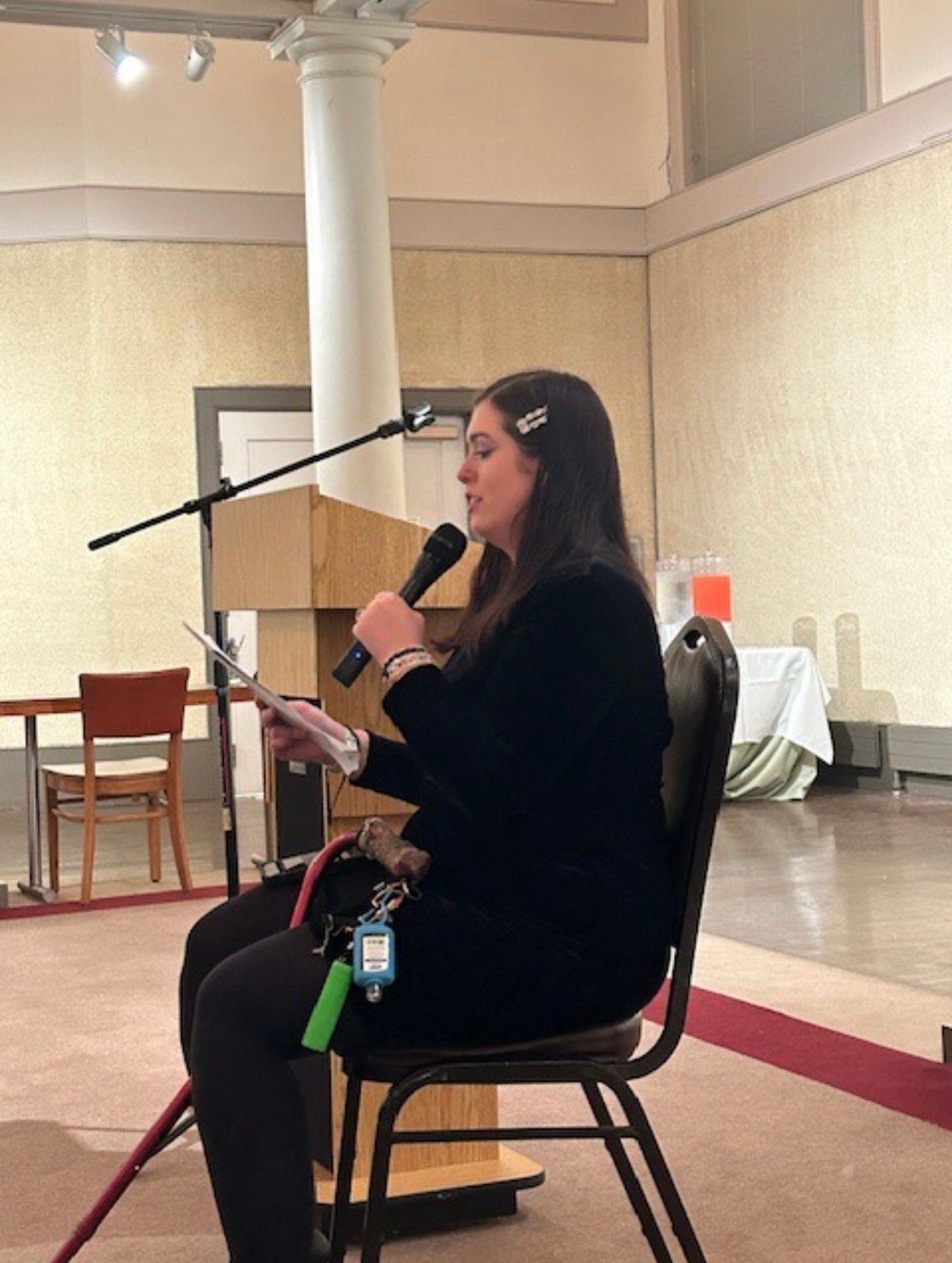
I attempt to adapt as best as I am able to, but it can be very difficult at times when I am unsure of which accommodations & support needs to utilize. In August of 2024, I purchased my first cane in order to independently support my balance when walking. Navigating a college campus was already challenging before I became more physically disabled, but it developed into something that was 10 times as difficult.
The college I recently graduated from is known for its historic features. Translation: it was not the most accessible.
For instance, traveling to academic buildings was extremely frustrating, as I would often have to cut through other buildings with fewer stairs to reach class. Moreover, I had to speak to several of my professors about having classes relocated to a different building, so it was easier for me to attend my courses. Going from my dorm that had an elevator to the cafeteria took me an extra six minutes with my route of shortcuts. Accommodating myself for one year on campus was not simple, yet I persevered and graduated.
Reality that is life
However, in less than six months, the grace period for repaying my undergraduate student loans will end, meaning I will start paying back my loans. I do not know if continuing to keep searching for verifiable results is a viable option for me in the near future, even though I view it as necessary.
To most, it’s just some writing on a piece of paper. Just something on my patient portal. Just words. People often ask me why I keep trying to figure out what is going on with my health, why I am getting myself into debt over it. I see it as something that is vital for myself. Wouldn’t I wish I didn’t have to owe a lot of money to doctors and hospitals just to figure it out.
Taxed if you do, taxed if you don’t
That’s the reality of being chronically ill. It’s either I get myself into medical debt or go without knowing for the rest of my life. That’s the disability tax: the extra money that I put into healthcare and mobility equipment so I can thrive in this world.
For myself, seeking a diagnosis is not about a label or just something that exists in my medical chart. A diagnosis will create the specific accommodations that will help me succeed. I need it. Accommodations are tailored, personal, and often based on your medical history. Without it, I will continue to have difficulty finding jobs I am able to perform as a result of the physical limitations my health has on my body. I aim to continue searching for a job where I do not have to stand for long periods of time or lift a lot of weight. Impossibly.
I know I will eventually reach this goal, because I know I have a support system and will have better access to resources when I am no longer in central Virginia.
I may be unsure of how my life will look in terms of my health, yet I approach this challenge through the lens of destigmatization and inclusion. I can accommodate myself to the best of my ability, while using my voice to speak up for those who cannot do so themselves.

When life feels tough, I remember a quote that has helped me through hard times, “Embrace the void, and have the courage to exist” — Daniel Howell.
To readers who can or will be able relate to my experience at some point — you are more than valid. You are seen, you are enough, and you belong. You will eventually have the medical results that you have sought after for so long.
You are not alone in your journey. When you are ready, there will be others in the disabled community who will welcome you.
Absolution
Tattoo my sins across my arms.
Turn to my chest
When words continue
And wingspan ends.
Write the story of my crimes,
The why, and when,
And who was hurt–
And what I lost–
I’ll bear these marks
Through my death.
Ink them deep,
So when they extract bones
From pitch bogs,
They’ll know,
But not too well.
Though you forgive,
You won’t forget,
So I dare not plead–
Absolve me, please.