Canada’s Election Results and Global Implications

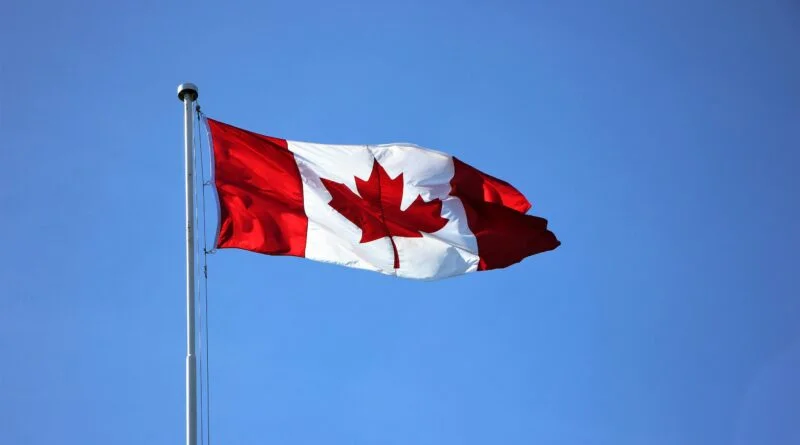
OTTAWA, April 30, 2025 — In a dramatic political shift, Mark Carney’s Liberal Party secured a fourth consecutive term in Canada’s federal election on April 28, winning 169 seats in the 343-seat House of Commons. Although falling just short of a majority, this outcome marks a significant comeback for the Liberals, who had been trailing in polls earlier this year. Carney’s victory is attributed to his firm stance against U.S. President Donald Trump’s aggressive trade policies and rhetoric, which resonated with Canadian voters concerned about national sovereignty. ​

The election was heavily influenced by escalating tensions with the United States, particularly President Trump’s imposition of sweeping tariffs on Canadian goods and provocative suggestions about annexing Canada. These actions sparked a surge in Canadian nationalism, leading to widespread boycotts of American products and a rallying cry for sovereignty. ​

Carney, a former central banker with no prior elected experience, positioned himself as a steady alternative to the populist rhetoric of Conservative leader Pierre Poilievre, who closely aligned with Trump’s policies. Poilievre’s failure to distance himself from Trump’s aggressive stance contributed to his party’s defeat and his own loss of a long-held parliamentary seat. ​

In his victory speech, Carney declared, “The old relationship with the U.S. is over,” signaling a shift toward a more assertive Canadian foreign policy. He emphasized the need to reduce economic reliance on the U.S. and explore deeper trade ties with Europe and Asia. ​

The election results have significant implications for global relations and trade. Canada’s move to diversify its trade partnerships may impact North American supply chains and economic dynamics. While U.S. Trade Representative Jamieson Greer expressed willingness to work with Carney’s government, the path forward remains uncertain amid ongoing trade disputes. ​

Carney’s leadership marks a new chapter in Canada’s approach to international relations, with a focus on asserting national sovereignty and redefining its role on the global stage. As Canada navigates this transition, the world will be watching to see how these changes influence the broader geopolitical landscape.​

Trump’s First 100 Days: Aggressive Overhauls and Mounting Controversy

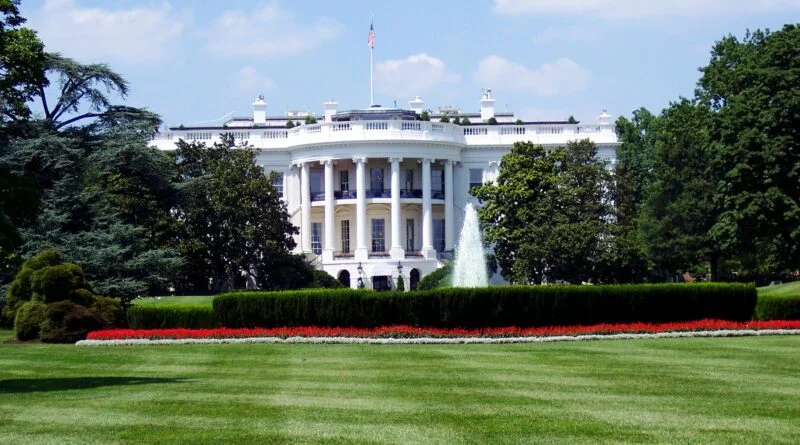
WASHINGTON; April 30, 2025 — President Donald Trump’s return to the White House has been marked by sweeping policy shifts, economic turbulence, and intensified immigration enforcement, drawing both fervent support and sharp criticism during his first 100 days in office.​

Economic Policies and Tariffs

On April 2, Trump announced significant tariffs on imports, leading to a 0.3% contraction in the U.S. economy for the first quarter of 2025—the first such decline in three years. The Commerce Department attributed this downturn to a surge in imports ahead of the tariffs and reduced government spending.

Despite the economic contraction, Trump defended his tariff strategy, stating that while American consumers might face higher prices, the long-term benefits would outweigh the short-term costs . Critics, however, likened the approach to the Smoot-Hawley Tariff Act of 1930, warning of potential long-term economic harm.

Immigration Enforcement Intensified

Trump’s administration has aggressively expanded immigration enforcement. Executive Order 14159, signed on January 20, intensified measures against undocumented immigrants, including expedited removals and penalties for non-compliance.

The administration also broadened the 287(g) program, enabling local law enforcement to act as immigration agents. Over 370 agreements have been signed, tripling the program’s size and raising concerns about potential civil rights violations.

In a controversial move, Trump invoked the Alien Enemies Act to deport Venezuelan nationals suspected of gang affiliations to El Salvador. Legal challenges ensued, with courts scrutinizing the constitutionality of such actions.

Institutional Restructuring and Governance

The administration has undertaken significant restructuring of federal agencies. Notably, Elon Musk was appointed to lead a new “Department of Government Efficiency,” tasked with streamlining federal operations. This initiative has led to mass firings and overhauls, drawing criticism for its rapid implementation and lack of transparency.

Additionally, the administration has targeted higher education institutions, threatening funding cuts and imposing new regulations, actions that have sparked widespread protests and legal challenges.

Public Response and Approval Ratings

Public reaction to Trump’s policies has been polarized. While supporters praise his decisive actions, opponents have organized nationwide protests, notably the “Hands Off” demonstrations opposing immigration policies and institutional changes. Trump’s approval ratings have declined amid these controversies.

As President Trump concludes his first 100 days, the nation remains deeply divided over the direction of his administration, with significant implications for the future political landscape.​

Mount Spurr Volcano Exhibits Elevated Unrest; Eruption Possible in Coming Weeks

ANCHORAGE, Alaska  April 30, 2025 — Mount Spurr, an 11,070-foot stratovolcano situated approximately 80 miles west of Anchorage, is currently exhibiting signs of heightened volcanic activity. The Alaska Volcano Observatory (AVO) has maintained the volcano’s status at Advisory (Yellow) since October 2024, indicating elevated unrest above normal background levels.

Increased Seismic Activity and Gas Emissions

Since April 2024, AVO has recorded over 3,400 earthquakes beneath Mount Spurr, with weekly counts exceeding 100 events. Most of these earthquakes are shallow, occurring less than 2.5 miles below sea level, and have magnitudes up to 2.7.  Additionally, ground deformation measurements indicate outward movement of approximately 2.6 inches at the closest GPS station, suggesting magma intrusion beneath the volcano.​

Gas emission studies conducted in March 2025 revealed significantly elevated levels of sulfur dioxide and carbon dioxide, particularly at the summit vent. Sulfur dioxide emissions were measured at approximately 450 metric tons per day, a substantial increase from less than 50 metric tons recorded in December 2024. 

Potential Hazards and Preparedness Measures

An eruption of Mount Spurr could have significant impacts on air travel and local communities. The volcano’s previous eruptions in 1953 and 1992 produced ash clouds that disrupted aviation and deposited ash on Anchorage. If a similar eruption occurs, ash plumes could reach altitudes of over 50,000 feet, posing risks to aircraft engines and systems. ​

Local authorities are advising residents to prepare for potential ashfall by acquiring N95 masks and goggles to protect against respiratory and eye irritation. Pet owners are also taking precautions; for instance, Anchorage pet supply stores have reported increased sales of protective gear for animals.

Monitoring and Future Outlook

The AVO continues to monitor Mount Spurr closely, utilizing seismic networks, satellite imagery, and gas emission measurements. While the current level of unrest does not guarantee an eruption, scientists emphasize that any significant changes—such as increased seismic activity, gas emissions, or ground deformation—could indicate that an eruption is imminent. 

Residents are encouraged to stay informed through official channels and to have emergency plans in place. Updates and detailed monitoring data are available on the AVO’s website.​

My Healing Dance

Life, like a tapestry, weaves together moments of joy, sorrow, and resilience. Yet, sometimes, we find ourselves ensnared in the knots of our past, unable to move forward. Seeking counseling became a way to unravel my knots and discover the beginnings of release.

I carry with me unhealing scars, wounds that refuse to mend. 

Instead of finding solace, I bottled up these scars, sealing them tightly. When I’m at my lowest, I uncap the bottle, and the pain rushes out as if the wounds were fresh. 

One morning, I woke up with a heavy heart burdened by old scars. Unable to bear it any longer, I decided to seek counseling. I found an online counselor, and during our virtual session, she emphasized the essential nature of healing. “Forgive yourself,” she urged after I confided in her. “You’re too hard on yourself.” I questioned her words, pondering why I am so harsh on myself and how I can find forgiveness. Perhaps laying out my scars and discussing them will be the first step towards healing. Was the first step.

Craving love

The abandonment by both my parents has left me deeply scarred, but it was my mother’s absence that cut the deepest. I yearned for her love more than anything else, and this longing fostered a sense of not being wanted with a painful feeling of being second best. 

I often told myself, “If your own mother doesn’t love you, who will?” Perhaps this is why I accepted unfair treatment, simply craving love. Now, at 22, I find myself unable to define what love truly is. I’ve never uttered the words “I love you,” nor have I heard them yet from anyone else. Tragically, my mother passed away without ever expressing those three simple words.

My inner child

“Do you have someone to talk to?” my counselor asked. 

I replied, “No, I don’t trust anyone.” 

Perhaps it’s because I don’t want to reveal my scars, as it’s become clear to me that my reluctance isn’t about a lack of willingness. Instead, it’s rooted in the fear of what might happen if I trust someone and share my vulnerabilities. What if they, too, abandon me like my mother did? I find myself caught between two versions of myself: the 22-year-old who seeks healing from the sense of abandonment, and the scared little girl who still resides within me. How can I convince that inner girl to forgive herself when she doesn’t even know how? To her, forgiveness feels like admitting fault, as if she did something wrong. But is it my fault that my mother abandoned me? The scar of abandonment will take time to heal. My 22-year-old self is ready to move forward, but the wounded girl within me is not quite there.

The now version of myself blames her for being so, and I carry the weight of self-blame. Should I have forgiven her? 

My inner child insists that my anger was reasonable because she never apologized. But my adult self reminds me of our given philosophy: forgiveness is for us, not them. Now I’m grappling with guilt. 

Perhaps my inner child is right — she was the elder one, and she should have asked for forgiveness. 

Abandonment scars are not the only ones I harbor. I am a home for many more. However, abandonment is my deepest scar. Counseling has pointed to a few issues that I need to deal with personally before moving forward on this healing journey. The little girl in me wants to be loved, and cared for. I tell myself: “Mama is gone now, little girl.” Yes, we grieved, and yes, we loved Mama even though we were angry at her. But now it’s time to love ourselves and stop expecting it from someone else. 

I promise

Tears burn my eyes, and my heart swells with the realization that I should begin to love myself. My counselor was right — I hate myself, and I didn’t realize it until she pointed it out. From today on, I promise to try and love myself more. Maybe loving myself is the second step towards a sense of healing. The pain is too much for me to handle now, but I promise to love myself and care for me. “Little girl, the time is now to take this first step”. 

Jumbled healing

(Image courtesy of Hilarycl via Morguefile)

I’m discovering that healing isn’t linear; it’s a lengthy journey. Sometimes, you don’t even know where to start if you never realized you needed healing. 

But I’m embarking on this path now. Healing is like a dance — the music changes, but the steps carry on. Two crucial steps I’ve learned are self-compassion and acceptance. By acknowledging the scar and embracing self-compassion, I’m willing to heal. I’m discovering again and again that healing isn’t linear, but a jumbled journey. 

I’m willing to heal.

Devastating Explosion at Iran’s Shahid Rajaee Port Claims Dozens of Lives

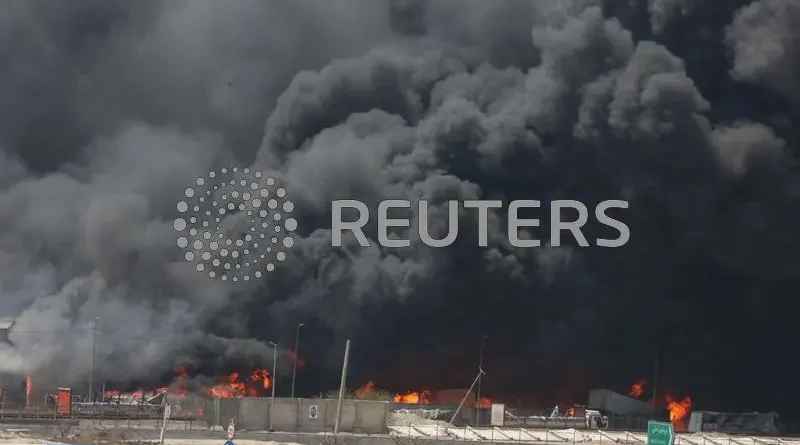
Bandar Abbas, Iran: A catastrophic explosion struck the Shahid Rajaee Port in Bandar Abbas, southern Iran, on Saturday, April 26, 2025, resulting in at least 46 fatalities and over 1,000 injuries..

The explosion, which occurred around midday, ignited a massive fire that continued to burn for nearly 24 hours, significantly impacting air quality and prompting the closure of schools and offices in nearby Bandar Abbas.

Initial investigations suggest the blast may have been caused by the improper storage of chemicals, possibly ammonium perchlorate—a chemical used in missile propellants . However, Iranian authorities have not confirmed the exact cause.

The explosion has raised concerns about safety protocols at the port, which handles a significant portion of Iran’s trade. The incident has also drawn international attention, with Russia dispatching emergency aid to assist in the aftermath.

As rescue operations continue, Iranian President Masoud Pezeshkian visited the injured and urged a thorough investigation into the cause of the explosion. The Iranian government has taken legal action against media outlets for speculation about the nature of the explosion, underscoring concerns about public perception and misinformation.

The Shahid Rajaee Port is a critical hub for Iran’s maritime trade, and the explosion has disrupted operations, affecting both domestic and international shipping routes. Authorities are working to assess the full extent of the damage and restore normal operations.

This incident coincides with renewed U.S.-Iran nuclear talks, which have been described as constructive and are set to continue. The explosion has added a layer of complexity to the already tense geopolitical landscape in the region.

As investigations continue, the international community is closely monitoring the situation, offering support and awaiting further developments.

What is Fear?

What is Fear?

Whenever I plan to write, the white empty paper scares me.

This year, I turn 31. What did I achieve in these years and days of my life? How do I define myself?

My passport says that I am Egyptian, even if I spent more than half my life outside the country. Should I start telling my story from 1993? I was born in Khor Fakkan in Shariah, United Arab Emirates, the youngest of seven children. My parents named me Khadija.

I graduated from high school and returned to Egypt. I participated in a revolution which didn’t achieve its goals. I got married after a great and epic love story…or that’s what I thought, until I got divorced.

I gave birth to two amazing kids. I graduated from Sharjah University with a degree in English literature and translation.

I spent my twenties with my son Qassem. Life was beautiful until I gave birth to my daughter Layla and fell into a hole of postpartum depression. Alice in Wonderland was running after the rabbit, but I was running after myself.

What lessons have I learned from my life? What is the moral of my own story?

I can bake apple Bundt cake, lemon cake and chocolate banana bread. I cannot work under pressure. I used to hide my problems. I love life and in the same way loathe it. I love to prepare my meals with passion  and eat them slowly. I love to spend time with my friends.

I know the sound of typing pleases me. I love writing and literature. I believe that there is a special connection between me and literature and I discover that day after day.

I am fond of language. I lose and I win. I am ambitious. I dream of becoming a great translator. I dream of winning the best mom ever prize (if there is such a thing)!

Why do I hate the Egyptian revolution? The revolution fell from paradise to the earth like Adam’s apple. I wonder, did Adam hate the apple? Did he swear at her?

I was living such a simple life in Dubai in 2011, when the flame of revolution ignited in the Middle East. I was a high school student. The revolution seemed like the greener grass on the other side. I dreamed of being part of what was happening. But since that time, I have been enduring a series of personal and public defeats. Can life lead to better outcomes? Can the course of life change?

(Image courtesy of Melanie Wasser via Unsplash)

Once you have been broken and tasted fear, fear becomes a habit. Do you know who I am?

I am the girl who at the age of 19 almost got caught by the central security forces at a protest. As I felt them pull my arms and grab me, I screamed “I want my mom!” Since then fear knows my address and acts like that friend who, no matter how many times you avoid her, keeps ringing your doorbell… 

EcoCupid Had to Start Somewhere!

Scroll
Scroll
Scroll
And I still haven’t found my calling. 

Pictures of cats, babies holding cutesy conversations, and the latest gaming news all litter my Instagram feed, giving me the serotonin and dopamine boosts I need to overcome my daily existential dread in the morning. The procrastination cycle just doesn’t stop. I have told myself that I have an inkling of making a difference in this world and that should be my legacy. But this calling has not been fulfilled as of late as I am just stuck doomscrolling on the ‘gram.

Maybe I should just be a writer or an influencer, LMAO. You know, make the content instead of consuming it. I will at least have some value by becoming a creator — a little something social media gurus tell us constantly. Cringe. Who wants to take advice from a spambot account?

In all fairness, making content could fulfill me and be my new thing.

If I had to make content, I hope I can hold a candle to EcoCupid, a Southeast Asian environmental media community. They promote locally led environmental initiatives that have a story to tell, are sustainable, and need media support. Now these folks are the kind of advocates I would aspire to be, and encourage others to follow. 

The founding team consisted of a Malaysian, a Singaporean, a Thai, and a Vietnamese who all met while on an academic fellowship to the United States. This academic fellowship is annually organized by the Young Southeast Asian Leaders Initiative (YSEALI) founded by former US President Barack Obama in 2016. This fellowship program is the US State Department’s commitment to helping Southeast Asian Youth form community initiatives and solutions.

EcoCupid calls itself an environmental media project that is Southeast Asia’s ecology-focused platform that curates inspirational eco-projects and educational content through multilingual media. 

Team chemistry

Usually, participants also compete for grants at the end of the program by proposing a project for sustainable development. EcoCupid was born out of this process and won such a grant in 2023 after the team visited the state of Montana for their fellowship trip. Bryan Yong, one of the co-founders and their resident Chief Editor/ Grant Writer commented that a good team dynamic was the key to their first success in their maiden year. He says that while everyone in Montana (the southeast asian academic fellows and their cohort) did pitch decks, the EcoCupid team’s founders were far ahead with their plans. “We went a little bit extra. We did a full-on documentary video while we were still in the US. Our team filmed and wrote narrations, wrote the script, and planned the production process. It was all fun and pushed us over the tipping point of trust and chemistry. We knew how each of us worked.” 

In the nature of grant competitions, hackathons, and the like, it is easy for random people to just tag along with makeshift solutions. However, this is not how the game is meant to be played. It would be more desirable to be part of a dedicated and collaborative team like EcoCupid whose member skills complement one another. Having good camaraderie also helps. 

From the US to Chiang Mai, then Singapore

Using their success in getting a grant provided by the US State Department, the EcoCupid fellows went to Chiang Mai, Thailand, where they made a documentary about air pollution. This was their first serious media project to launch the confidence of the team, all young adults. Using this momentum, the founding team went on to apply for more grants and is now expanding to Singapore, where Pranav, their Business Development Lead, is a citizen. 

The Singaporean team is hoping for a grant of up to 70,000 Singaporean Dollars (about US$53,000) to launch their initiative and aims to recruit more members of their operations team. 

Impact: a year on

Beyond the impact of just promoting groups of environmentalists in Southeast Asia and connecting people in their network, EcoCupid is actively figuring out their impact. One good story Bryan Yong shared was about a woman from Thailand who became an organic farmer in the northeastern countryside. Her name is Nun.

Initially, the villagers she worked with had a hard time understanding her reason for moving there. She came from the city after graduation and would not make bank by being a farmer. However, Nun persisted and committed to her mission of wanting to change how her province does agriculture. Farmers around her used excessive chemical fertilizers and this led to soil degradation. With Nun’s economics background  and media skills, she sought to educate people while earning a decent living, and thus disproving the disbelief and presumptions of those around her. She now sells good organic produce to high-end and Michelin-star restaurants. 

What good media can do

Shortly after filming a documentary about Nun, EcoCupid followed up with her and asked if the documentary did anything for her. 

What followed from the documentary filming was positive indeed. 

Nun’s educational workshops swelled with more participants, and she now utilizes the documentary while she pitches for grants. She actually won a major grant from China for agricultural innovations. Good media does translate to tangible impact across borders even if people speak different languages. 

(Image courtesy of Hristina Eftimova via Unsplash)

Nun by the way doesn’t speak English or Chinese. The whole documentary is in her Thai dialect with English subtitles. You can watch it here: Nun Runs an Organic farm

Pope Francis Dies at 88: A Papacy Marked by Humility, Inclusion, and Quiet Revolution

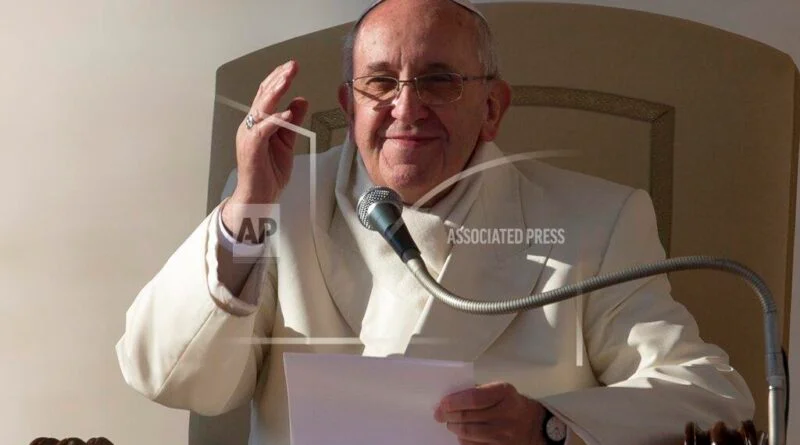
Vatican City — Pope Francis, the first Latin American pope and a moral voice for the world’s marginalized, has died at the age of 88. His passing was confirmed by Vatican officials on Easter Monday, marking the end of a papacy that redefined the modern Catholic Church and its relationship with the world.

Francis passed away at 07:35 CEST at his residence in the Domus Sanctae Marthae within Vatican City, following complications from double pneumonia. His health had been in decline in recent months, with multiple hospitalizations earlier this year.

Born Jorge Mario Bergoglio in Buenos Aires, Argentina, Francis made history when he was elected in 2013 — becoming the first Jesuit pope, the first from the Global South, and the first to choose the name “Francis,” a reference to Saint Francis of Assisi, known for his devotion to peace and the poor.

Over his 12-year papacy, Francis became known for breaking tradition in quiet but powerful ways. He lived in modest quarters, shunned the pomp of the papal palace, and emphasized a church “for the poor, not the powerful.” Under his leadership, the Vatican opened new conversations around LGBTQ+ rights, climate change, economic inequality, and the Church’s own failings — including historical abuses.

His death leaves behind a Catholic Church that is still wrestling with deep internal divisions but also one that has been pushed closer to the concerns of everyday people. For millions — both inside and outside the Church — Francis represented a shift from authority to empathy, from doctrine to dialogue.

Pope Francis’s tenure was not without controversy; he faced criticism from conservative factions for his progressive stances and from progressives who felt his reforms did not go far enough. Nonetheless, his impact on the Church and the world was profound, as he sought to make the Church more inclusive and responsive to contemporary issues.

The Vatican has confirmed that Pope Francis will be buried in the Basilica of Santa Maria Maggiore, a site of special personal significance to him. The papal conclave to elect his successor is expected to begin in between May 06 and 11, 2025  in the Sistine Chapel.

As tributes pour in from around the globe — from religious leaders to heads of state to citizens — Pope Francis is being remembered not just as a pope, but as a human being who tried to bring the Church closer to humanity.

Not Just an Export Shock: How US Tariffs Could Reshape India’s Trade Landscape

India, 18 April 2025: A sweeping 26% US import tariff is sending shockwaves through global trade—and India could be one of the biggest collateral casualties. But is this crisis also an opening for opportunity? 

Despite the Modi government’s swift and strategic move to cut tariffs on over 50% of US imports in a fresh trade deal worth $23 billion, the real test lies ahead: navigating both the perils and possibilities of this tariff tsunami.

The Immediate Jolt: Exports Under Pressure

At the most direct level, the steep US tariffs will dent India’s export competitiveness, especially for sectors where products are easily replaceable. As Anirban Sanyal, an RBI employee, put it:

“The proposed 26 per cent tariffs, therefore, are going to hurt India’s export intensity to the US. But to what extent? That depends upon the tariff elasticity. As per IMF estimate, the tariff elasticity of India’s exports is around 0.9.”

In plain terms, that means if tariffs go up by 10%, India’s exports to the US could drop by about 9%—a near one-to-one hit.

Sectors like processed foods, textiles, and low-end consumer durables are particularly vulnerable. “These products… can be easily substituted with products from other countries,” Sanyal noted. So the hit won’t just be theoretical; it’s likely to affect thousands of small and medium-sized exporters across the country.

A Silver Lining? Trade Diversion Opportunities

But the story doesn’t end in gloom. There’s also a window of opportunity—and India may be uniquely positioned to seize it.

“With several other Asian exporters facing the same levies, India may emerge as a viable alternative for US buyers—particularly in pharmaceuticals and light manufacturing,” Sanyal emphasized.

The last US-China trade war offered a preview: Indian exporters saw modest gains in sectors like chemicals, machinery parts, and electronics. This time, the gains could be broader and deeper. Countries like China, Vietnam, and Bangladesh—also targeted by US tariffs—are losing their price edge, making India a more attractive alternative for US firms scrambling to diversify sourcing.

Economic reforms must also be part of the equation, say experts.

“Middle-class Indians are struggling. Residential building sales, passenger vehicles and two-wheelers (sales) have declined… It is important domestic policies focus on the root cause,” said Kunal Kundu, India economist at Societe Generale, in an interview with Business Standard.

He emphasized the urgent need for a structural economic shift:
“India needs a 1991 moment,” Kundu said, referencing the landmark liberalization reforms introduced by then finance minister Manmohan Singh.

“We believe the tariff war offers a perfect opportunity for India to embark on this much-needed journey. Otherwise, despite being the fastest-growing large economy in the current low global growth environment, India is likely to fall significantly short of its long-term objective of becoming a developed nation.”

The Hidden Threat: Import Dumping on Indian Shores

Yet even as India eyes potential trade diversion gains, there’s a lurking threat from the east.

“India may face the burden of cheap import dumping from its neighbors,” Sanyal warned. Displaced by the US market, exporters from countries like Vietnam, Cambodia, and China may offload their goods in India, flooding domestic markets with low-cost products.

This surge in cheap imports could be devastating for India’s micro, small and medium enterprises (MSMEs), many of which are still recovering from the aftershocks of COVID-19 and global inflation. Industries such as electronics, footwear, and garments are particularly at risk.

A Bigger Picture: Macroeconomic Ripples

Beyond trade, the impact of US tariffs is set to reverberate through broader economic channels.

“The global growth slowdown will accelerate as trade policy uncertainty elevates,” Sanyal wrote. The WTO expects global trade to decline by at least 1%, and that’s just the beginning. Commodity prices, from crude oil to metals, are already showing signs of softening amid weaker demand forecasts.

“There’s also an early sign of US dollar weakening,” Sanyal added, pointing to a potential appreciation in the Indian rupee—which, while helping tame inflation, could further hurt export competitiveness.

India at a Crossroads: Strategic Response Needed

As the world reconfigures its supply chains, India has a rare opportunity to reposition itself. The government’s recent tariff cut on US imports is a step in the right direction—aimed at securing better access for Indian goods in a friendlier trade environment.

But more must follow. To withstand import dumping, India needs tighter safeguards and more agile trade enforcement. And to truly capitalize on trade diversion, it must ease regulatory barriers, enhance infrastructure, and push ahead with long-delayed export incentives.

In Sanyal’s words:

“The impact of the tariffs may have a larger impact through global growth slowdown and subsequent reactions in commodity prices. The trade impacts will be felt… but the impact will be of lesser magnitude.”

Tariffs may rewrite trade maps—but it’s India’s response that will define its future.

Court Finds Probable Cause for Criminal Contempt in March Deportation Flights Case

WASHINGTON D.C. (Yuvoice) April 16, 2025  — A federal judge has found probable cause to believe the U.S. government willfully violated a court order by deporting dozens of Venezuelan migrants after a temporary restraining order barred their removal, setting the stage for potential criminal contempt proceedings against officials involved in the operation.

U.S. District Court Judge James E. Boasberg issued a 90-page opinion late Tuesday, detailing how two plane loads of detainees were flown to El Salvador on March 15, 2025—hours after his court had enjoined the Trump administration from carrying out deportations under a presidential proclamation invoking the Alien Enemies Act of 1798, the first time it has been invoked since World War II.

The judge said the government’s actions demonstrated a “willful disregard” for the court’s authority, noting that officials continued with the operation even after receiving explicit instructions to halt all removals and return any planes already in transit.

“The Constitution does not tolerate willful disobedience of judicial orders — especially by officials of a coordinate branch who have sworn an oath to uphold it,” Boasberg wrote. “There is probable cause to conclude that the government acted in criminal contempt.”

While no individuals have yet been named, the court’s findings pave the way for further proceedings that could result in criminal charges against federal officials. Because the Department of Justice represented the government in the underlying litigation, the judge is expected to appoint a special prosecutor under Federal Rule of Criminal Procedure 42 due to an apparent conflict of interest.

Legal experts say the court’s authority to appoint an outside prosecutor—often a former U.S. Attorney or independent legal expert—ensures that enforcement of court orders remains insulated from political influence.

The deportations were carried out under a March 2025 presidential proclamation signed by Donald Trump during his second term, invoking the 18th-century Alien Enemies Act to target members of Tren de Aragua, a violent Venezuelan gang labeled a terrorist organization. Plaintiffs in the case—five Venezuelan nationals—claimed they were wrongfully identified as gang members and were denied due process.

After a series of emergency hearings on March 15, the court issued a temporary restraining order halting removals and clarifying that any detainees already in the air were to be returned to U.S. custody. Instead, two flights landed in El Salvador and transferred detainees to a high-security prison. Government officials later retweeted social media posts appearing to mock the court’s order, including a message from Salvadoran President Nayib Bukele that read, “Oopsie… Too late.”

The Supreme Court has since vacated the restraining order on narrow procedural grounds, ruling that the case should have been filed as a habeas corpus petition in Texas rather than under the Administrative Procedure Act in Washington. However, Boasberg emphasized that the government was still obligated to comply with the order until it was reversed through proper legal channels.

“Even a legally unsound order must be obeyed at the risk of contempt,” the judge wrote, citing long-standing precedent.

The court has not yet announced whether it will appoint a special prosecutor or refer the case to an external authority. However, the findings mark a rare and significant moment in which the judiciary has accused the executive branch of openly defying its orders—raising serious constitutional questions and setting the stage for a possible confrontation over the rule of law.