A fun fact about me: I hate running! I have always walked briskly and hiked a lot. Running was not a priority for me because I was always paralyzed by the fear of injury. I was also self-conscious about looking like a lame fat guy, new to running and doing it all wrong. (Working on letting go of my toxic vanity might be a different journey altogether.)
I am overweight, and I am only just recovering from a fatty liver episode. In addition, my family has a history of diabetes. Maybe running is meant to be a remedy for me, but I just don’t enjoy doing it, particularly outside.
That all changed one day with an accidental discovery I want to call a “Low-Stakes Eureka Moment.”
My discovery didn’t happen in a gym or under the guidance of a trainer. It happened in the quiet, shaded concrete of a stadium concourse.
Though it was evening and the tropical heat was cooling down, I still struggled to bear my first hurdle: the humidity. But while I was at the stadium, I started doing something that felt almost too simple to be effective: I stretched for a minute, then ran in place for thirty seconds, followed by a minute of brisk walking. I was so glad to have stretched because the discomfort in my calves could have developed into a cramp if I had not taken great pains to warm up. (Did I mention I also hate warming up?)
I felt a bit self-conscious at first — wouldn’t people think it’s weird to run in place at a stadium meant for actual running? But as I repeated the cycle, I realized I had accidentally stumbled into my own version of high-intensity interval training (HIIT).
I have been improving slowly in the past three weeks since I started doing my variation of a HIIT workout. Here is the result so far: I am now able to sustain a sprint for one minute and jog for a full ten. By giving myself permission to start with what I thought was a “half-assed” routine in a stadium hallway, I actually began running and jogging the real way. I am working on getting my strength back up too, but am taking it one day at a time.
Nasi Lemak, a dish featuring rice boiled in coconut milk. Calorific. | Image courtesy of the author, taken in a local eatery called The Green Rice.
For someone who has not exercised in years, the excuses I piled on felt like they were all melting away. Having lived in Japan for a time, I became accustomed to a diet that was balanced in ingredients and portions. After returning to Brunei, I went back to consuming our national cuisine — one that can only be described as overindulgent, with its dishes usually high in cholesterol and sugar. Add this to the fact that I could eat my mum’s cooking again, my health had begun to take a downturn and I developed fatty liver disease. But by improving my specific diet, plus learning to exercise in a way that works for me, my energy has been restored and my health has improved.
Overcoming my fear of running began with a clumsy attempt, but as I reflect on my progress, who has not ever had to learn something first without looking foolish? It’s the same thing with learning other things like languages, baking, and cooking for yourself. Beginning humbly is how we finish like a master.
So readers, do any of you have a similar journey, and do you think running in place is good for you? Do comment or write to us to share your stories of personal discovery!
I remember as if it were yesterday: the feelings of doubt deriving from low self-esteem, the sense that something needed to change, my dissatisfaction with the way I looked. Two years of excessive partying, coupled with how little I exercised, ended up taking its toll leaving me looking unhealthy, to say the least. So when I saw that a gym had opened down the street, I took it as an opportunity to improve the image I had of myself – literally. What I didn’t yet know was the level of commitment I would soon devote to lifting weights.
Gym rat
My physical fitness journey began as a way to drop what I called “the party weight.” I noticed early on that my body, despite weighing the same, was changing in build. As I filled out with muscle, I got hooked on the look. This prompted me to start taking my workouts more seriously, planning exercises to work isolated body parts on specific days. With bodybuilding now my focus, I was lifting weights a minimum of four times per week and eating five to six times a day. I slowly packed on the pounds.
All of these changes led to signing up for my first natural bodybuilding competition when I was 24. I also competed again at 27. Although I didn’t win at either event, I was happy with my performance, so the losses never bothered me. If anything, they only motivated me to lift even more. I would continue training through muscle strains and colds, out of the irrational fear that I would lose muscle the moment I took even one extra day off. I trained as hard as I could. I quit going out, and if I did, I only drank water and ate before leaving the house.
I had traded one extreme for another.
In the years I wasn’t competing, I would do absurd bulks (6,000 calories/day) so I could gain as much weight as possible (including fat) just to gain more muscle. At my heaviest, my 5’11” frame carried 260 pounds. This weight was by far the most uncomfortable I have ever been. It hurt my shoulders to sleep on my side and I was snoring like a wild boar.
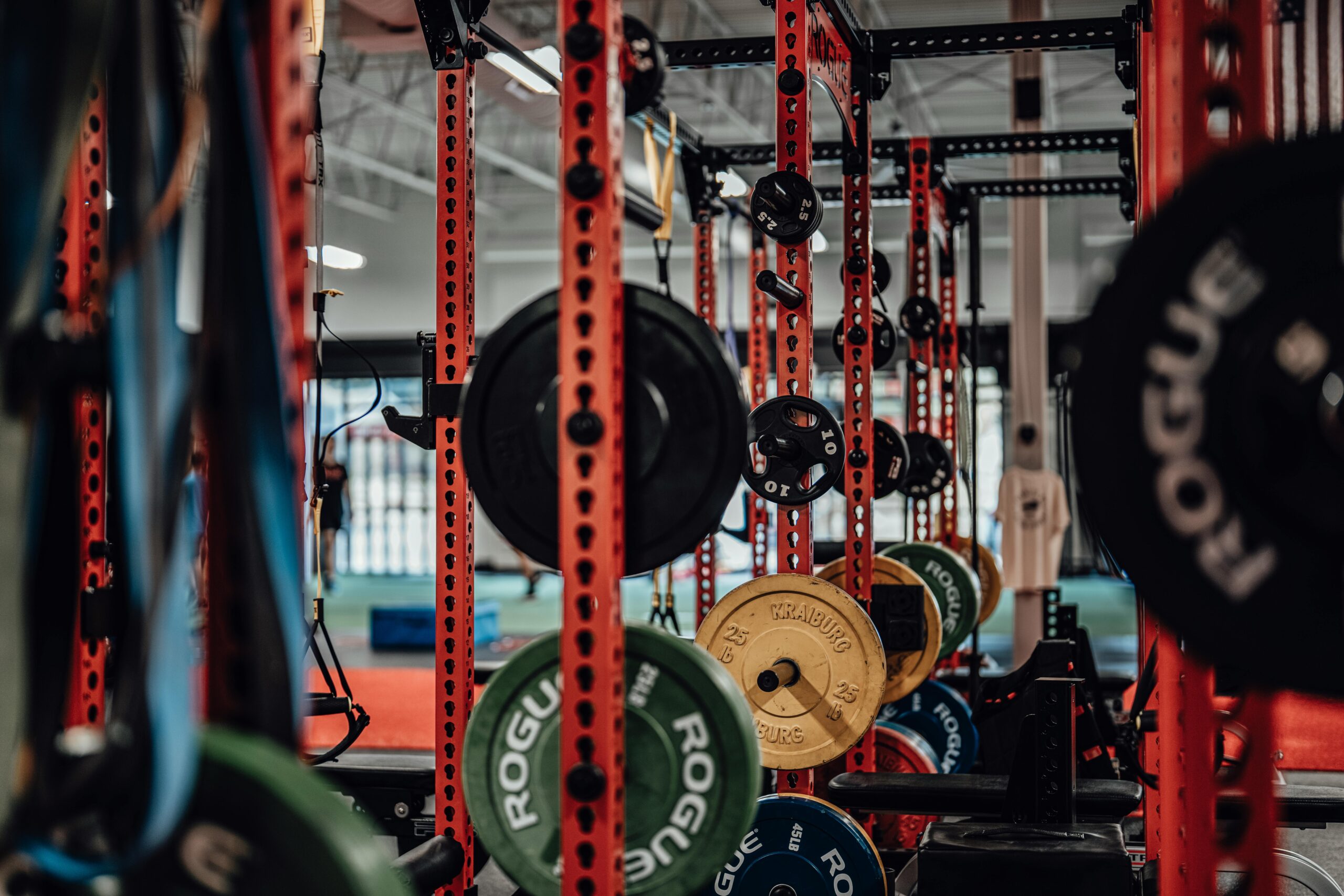
(Image courtesy of Cristian Guillen via Unsplash)
My burden
Eventually, I did end up shedding the extra weight from my past bulk, reaching a more comfortable 220 pounds. The mental toll of keeping up with the workouts and meals was exhausting. Weighing every gram of protein, carb, and fat that went into my body was beginning to have the opposite effect on my mental health. The satisfaction was now gone, replaced by the disappointment of diminishing returns. Finally, I experimented by taking a break from it at the beginning of this year, only working out once or twice per week. I still weighed my food, but I relaxed the constraints of my overall diet.
Unfortunately, after about six months of this, I relapsed and started living like a bodybuilder again. I found it difficult to shake what had become such a large part of my identity. I went at it for a few months, but it didn’t last; I just didn’t care for bodybuilding anymore. I would dread my meal between a normal person’s lunch and dinner. It had been getting in the way of other interests such as writing. I also began to feel guilty about the amount that I ate, that I was wasting the food. The thing I had devoted so much of my time to had started to defeat me. It was time to let it go.
Freedom through balance
Today, I still train hard, but only twice per week and no longer on specific days. I do it when it is convenient for me to do so. I enjoy beer and whiskey on weekends, both at home and with friends. I only eat three times per day and maybe have a snack at night. The food scale is now collecting dust in one of my cabinets. I have more time to write, read, listen to music, watch movies, and spend time with friends. Most importantly, this life change has afforded me much more time with my wife. In the end, denying aspects of myself like I had was never going to be the answer. What I really needed was balance. My new lifestyle is allowing me to become a more well-rounded individual.
New Year’s resolutions. Weight loss journeys. Fitness kicks. Meditation. Everyone has a reason for wanting to exercise, whether they’re driven by motives of result or satisfaction, but those just starting out may need a tactic to maintain motivation from week to week.
I was at one time one of those people, unable to muster the willpower to commit to any exercise routine. Many attempts were short-lived.
Then one day, after years of trying and failing to make any exercise stick, I was introduced to what would eventually become one of my greatest obsessions — parkrun.
Welcome to parkrun
Saturday no longer exists outside of parkrun. Saturday is parkrun day.
Parkrun is a collective network of five kilometer runs, taking place every Saturday at 9am in hundreds of locations across the UK and other countries around the world. Each event is free to attend, run by community-based volunteers, and the results for each attending runner are calculated and released via parkrun’s website and their app.
As of April 2025, 23 countries are actively hosting parkrun events, with over 2,000 individual parkrun locations and over nine million registered users. It’s a whopping community – one, and that played a massive part in immediately catching my interest.
A social outing that includes movement instead of a solitary jaunt at the gym? Sign me up.
Humble beginnings
It began with a social media post. Rather, it began with an onslaught of posts from a friend of mine and my dad’s — Caroline.
Caroline was a volunteer at her local course in Northampton, welcoming first timers and showing them the ropes. She also had a penchant for bombarding social media with constant encouragementcalls for new runners.
On a whim, my dad and I finally decided to try our first parkrun at ourthe local park to see what all the fuss was about. Maybe Caroline was onto something.
It was New Year’s Eve in 2022, and winter that year was a cold one.
To give you a better understanding of my utter lack of experience with running, I stupidly decided to rock up wearing a pair of’ll share with you my outfit of choice for that day — jeans and a button-down shirt. I was, to say the least, ill-equipped to run.
My dad, meanwhile, had tried on several occasions to get into the unrelated “Couch to 5K” program in his own time. Try as he might, the process never seemed to stick.
I’m not sure what madness compelled ushim to finally answer Caroline’s frequent bids for running, but he did.
Despite the frigid temperatures and our minimallack of running experience, we resolved to have fun at the very leastthat day. As it turned out, that’s exactly what parkrun catered to.
We were immediately struck by a sense of camaraderie — more than 200 people had dragged themselves out of bed on this festive day, each of them linked by the same, slightly insane purpose of running a 5k before 10am. Everyone was friendly and open to chatting about their parkrun journeys; some runners had even travelled from overseas just to be a part of a different parkrun group.
Imagine travelling the world just to do a 5k with a group of people you’ve never met before…… That’s super inspiring.
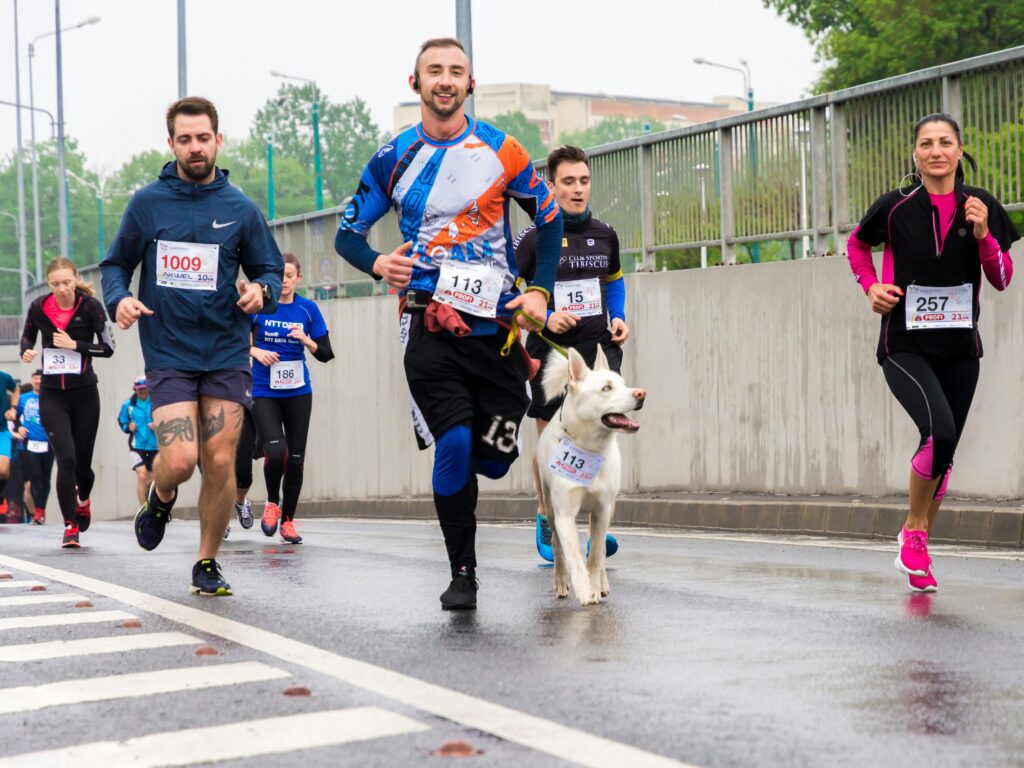
The volunteers leadingrunning the event were supportive, assuring us that runners of all levels would be treated equally. We discovered later that one of the mandatory volunteer roles includes “tail walkers,” whose job is to walk along with the back of the crowd to ensure no one finishes in last position. That was reassuring. Equally, runners were encouraged to bring dogs and young kids along, provided they stayed within reach of their respective adults. There was no concern from my dad or me on falling behind or looking out of place. The sentiment was very much, “We’ve all been beginners at some point.”
Image courtesy of Tara Glaser on Unsplash
Accountability buddies
Our first parkrun certainly wasn’t our fastest, with both of us clocking in around the 40-minute mark. We noted how gratifying it was to run alongside like-minded people — the rush of racing from a starting gate in a stampede. Everyone held each other accountable to achieve only the best that could be managed on that day.;
Tthere was no competition with each other, or even past personal records.
If we slowed to a walk, those overtaking would spur us along to keep us moving. The marshals around the course would cheer as we arrived at every checkpoint. Truly, witnessing the support network was incomparable.
Fitness tourism
Once I returned to university in 2023, I started clocking regular parkruns with my good friend John (who was something of a parkrun buff already). Through our frequent outings, I learned even more about the parkrun lifestyle.
Courses are run on a variety of terrains — parks, forests, trails, promenades, beaches, hills, and wherever else permissions can be granted. The range of difficulties and experiences has given rise to a phenomenon called “parkrun tourism.”
Many runners set personal challenges — for example, completing a parkrun starting with every available letter of the alphabet, necessitating trips to countries such as Poland or the Netherlands to knock off tricky letters such as “Z.” UK-based parkrunners might try to complete at least one course in each of the major regions of the United Kingdom. John is one parkrun away from completing all the current 65 courses in the Greater London area, an achievement aptly named “LonDone”.
I’m only at a measly 22.
(Image courtesy of Sherise Van Dyk on Unsplash)
Transformation
I’d always been interested in running throughout school and university, but something kept holding me back. Perhaps I felt too shy to demonstrate such a level of exertion in public, or maybe I had a stigma that I was more of a sprinter and could never build up my endurance.
Parkrun changed all of that. The community spirit is transformative — and one of the highlights of my week. Almost three years later, I’m 80 parkruns down and achieving sub-23-minute times regularly. I’ve started completing runs twice more in the week on Tuesdays and Thursdays. My fitness and happiness levels have improved tenfold; as a writer, it’s easy to sink into ideas without coming up for air, and running has become my tactic for modulating that burnout. I hope to continue exploring new parkruns and achieving milestones far into the future.
In searching for a new fitness regimeway to commit to consistent exercise, I initially saw parkrun as a starting point.
Looking back now, starting was the easiest part for me.