International aid organisations see tough year ahead

“We’re running on fumes,” says Sarah Shaw, associate director of advocacy for MSI Reproductive Choices, which provides contraception and abortion services in 36 countries. “This year has been a really bad year, next year is going to be a really bad year,” she told The Sentinel in an interview late last year about the impact of aid cuts.

U.S. President Donald Trump’s decision in 2025 to shut down the U.S. Agency for International Development (USAID) has hit development programmes around the world. At least 23 million children stand to lose access to education, and as many as 95 million people to lose access to basic healthcare, potentially leading to more than three million preventable deaths a year as a result, according to an Oxfam report in November.

The impact of cuts by the world’s largest aid donor has not just been at the front line of providing aid, but has also affected logistics and the delivery of supplies, according to Shaw.

“Trump dismantled USAID, which is the delivery arm for the world’s development programme. He just stopped 50 years of programming, and the fall-out from that has massively impacted our service delivery.”

For example, some U.S.-funded contraceptives intended for poor nations and worth nearly $4 million have been stuck in a Belgian warehouse since the U.S. aid freeze. They could become unusable by mid-2026, Reuters reported in October.

MSI has diversified its funding sources in recent years, following past cuts in U.S. aid. However, the global impact on the ground of the latest cuts has meant the organisation has needed to help fill gaps elsewhere:

“The closure of USAID and the speed at which it happened has caused so much chaos at country level, it’s blasted a massive hole in health budgets,” Shaw says.

“Governments are exhausted and they’re broke. We’re having to step in in a lot of countries and actually move the contraceptives around for the Ministry of Health to get them to the right place.”

In addition, European governments have been slower than in the past to fill funding gaps, embattled as they are by the economic impact of the COVID-19 pandemic and defence spending needs due to the war in Ukraine.

“The broader trend across Europe is, funding falling massively short of fast‑growing needs,” says Nihad Sarmini, global head of business development and partnerships at Action For Humanity, which delivers life-saving support in over 14 countries.

“There are women in Syria who may have to travel 100 kilometres for a maternity clinic, which may not be there next month when they need it again. Children in Yemen are succumbing to medieval diseases like cholera and diphtheria, entirely preventable and treatable, because governments are withdrawing funding and leaving humanitarians to plug gaps elsewhere.

Non-governmental organisations (NGOs) such as Action for Humanity and MSI are also braced for a planned cut in UK aid spending to 0.3 percent of gross national income (GNI) in 2027 from the current 0.5 percent. This latest cut in UK aid follows a cut in 2021 in response to the pandemic.

UK international development organisation network Bond said in an October briefing note that it was hearing that the UK government was considering ending its aid partnerships with several countries in Africa, including Malawi, Mozambique, Rwanda, Sierra Leone and Zimbabwe.

MSI’s programmes include a major health project in West and Central Africa which is funded by Britain’s Foreign, Commonwealth and Development Office.

Aid cuts are short-sighted, as every dollar invested in sexual reproductive health saves $130 in other development costs, according to Shaw.

“An investment in contraception is way wider than just a health investment. It breaks generational cycles of poverty, it enables women and girls to leverage opportunities by staying in education, by becoming economically independent,” she says.

Sarmini also stresses the far-reaching nature of slashed funding:

“Cuts to one organisation quickly ripple through the system, and communities pay the price.”
Fewer babies, more growth?

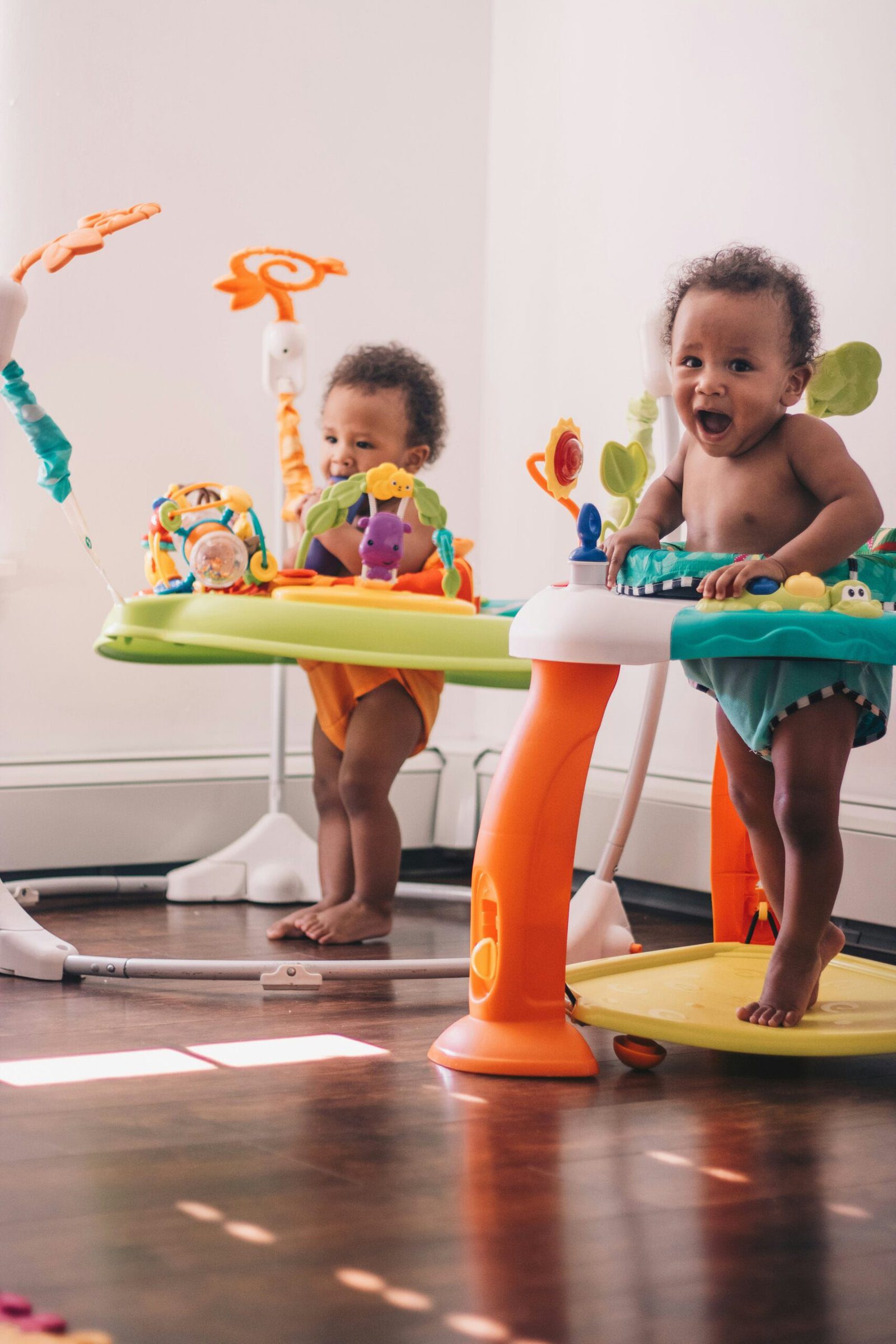
Who doesn’t love babies? They’re cute and they will grow up to support us in our old age. But there’s a problem – people are having fewer of them. Global fertility rates have fallen by more than one child per woman since 1990, to 2.2 live births in 2024, according to United Nations data. The growing financial burden of people living longer has caused alarm throughout the globe. China dropped its one-child policy in 2016, relaxing it further to allow families to have three children in 2021, yet the UN still estimated China’s 2024 birth rate at only just over one child. Latest data from Britain shows fertility rates are at their lowest since records began in 1939, at 1.41 birth per woman. Other European countries have even lower rates, including countries usually regarded as family-orientated, such as Italy and Spain.  But governments which have looked to replace their own populations with younger immigrants have faced pushback. The Brexit vote in Britain to separate the country from the European Union was linked to the EU’s open immigration policy towards its member countries, and anti-immigrant protests have continued in Britain this year.

However, there’s an upside to falling fertility rates. Emerging markets economist Charlie Robertson sees the lower number of births as a boon for developing countries with young populations such as Kenya.

“It’s incredibly dangerous, the Western media narrative about how awful ageing societies are, implying that high fertility rates are a good thing,” he told Yuvoice in an interview.

In Kenya, where the average birth rate has dropped to just over three, compared with nearly five 20 years ago, growth will be turbo-charged in the next few years because in smaller families, parents can afford to put aside savings. More savings mean more money in the banking system, and when the banks are flush with cash, they tend to lend to businesses at lower interest rates. This makes it easier for businesses to expand, driving economic growth. “It’s impossible to have a big banking system with high fertility,” says Robertson.

Fertility rates have played a major role in Western history. Robertson says Marx was wrong on demographics, as he assumed that the high fertility rates of mid-nineteenth century Britain would continue. This would increase competition for jobs, leaving many jobless and ultimately leading to revolution. Instead, “the fertility rate began to slow and continued to decline, we didn’t reach that tipping point”, Robertson says.

The key to lower birth rates is education. When women are educated, they often have fewer children. “You give them the possibility to have a career, to have a choice,” according to Robertson.

So which developing countries are set to benefit from lower fertility rates? In addition to Kenya, Robertson highlights Egypt as poised for take-off after its fertility rate fell in 2019 below three, the magic number for kickstarting growth. Nigeria, with a fertility rate of 4.4, will take longer to industrialise.

In Asia, a fertility rate of 2.1 in Bangladesh translates into faster growth than in Pakistan, for example, where the rate is 3.5. In Afghanistan, meanwhile, a lack of education for women will guarantee the country has “continuing decades of poverty” according to Robertson, because fertility rates will remain high.

His views are controversial with those who feel that a higher birth rate is helpful for families in countries with no social security net. A recent report from development economics platform VoxDev, for example, shows that when women in Africa have a higher income, they have more children to safeguard their long-term economic security.

On the whole, economists in developing countries are on board with the importance of lower fertility rates, according to Robertson, but “politicians don’t get it”. Maybe baby-hugging is just too attractive a photo opportunity for politicians to discard it.

Resilience

The Epilogue

To the one who has arrived
Bringing lucidity to an interrupted-
And wandering life
That was once tribulated,
But is now contented

To the one I wear as a second skin
Bringing glee-
And carving pathways to the light within
Filling voids to manifest a fading dream,
Breathing life back into a once dimming gleam

To the one who has heard
And answered a heart in need-
With a love deserved
And set a caged bird free.

I’ve always struggled to be present. To be in the moment, to experience life fully as it is in the present moment, and more importantly, enjoy it. That is kind of how despair works, I suppose. The only thing that got me through the more harrowing moments where I felt empty was my longing for a better future. The belief that things would eventually work out is what kept me going. That is hope. My hope lies in the future, the epilogue, and this is my ode to it.

Image of the landscape of South Africa. It features massive plateaus and green valleys. Above, the sun shines across a cloudy sky.
(Image courtesy of Thomas Bennie on Unsplash)


Child of Alkebulan.

Dear world…

You don’t know who I am.
To you,
I’m just a face among billions of other faces.
A body among billions of other bodies.
Billions of faces and bodies you encounter daily.
But I am one among those many,
A face, a body,
Connected as one.
A mind, a heart,
Two parts,
In spirit.
Dear world,
Call me,
Human.
Define me,
As
Being.

I, Indigo child,
Seed of Alkebulan,
From the womb of invisibility
Appear,
As I am born and-
My consciousness-fuelled-wails of a babe-in-arms,
Give a voice to existing.

Yet world,
Even in the midst of my many new roars
Still, you do not hear of me
WORLD, listen, I am present.
In your space, “I AM”.

World,
You plunder-
And I
March in strong opposition,
To your affliction filled and bloodied deeds
I am awake
While you search for different ways to remain asleep
You divide, conquer, and contaminate
I fight you in hidden actions and in manifested speech
World,
You try to silence me with your reluctance to understand
That I am more than some other woman
or just another man,
But “I AM”.
I AM”.
World, do you hear me?
I AM!”

World,
You will hear of me-
And,
Your noises stilled
By the deafening war-cries of the rising dynasty
Rooted indelibly,
In the fertile soils of my ancestry-
A home within which I,
Drift in the connecting oceans of my tranquillity
Basking in every glorious vision
Of an emerging me.

Africa’s struggle to come into her own resonates with me deeply. It reminds me of the challenges I’ve faced in defining my identity apart from outside influences and the divisions those influences caused in me.
Now just like her, slowly rising, finding her voice, and embracing her roots, I, too, am boldly declaring who I am, being true to myself, and taking her wherever I go.