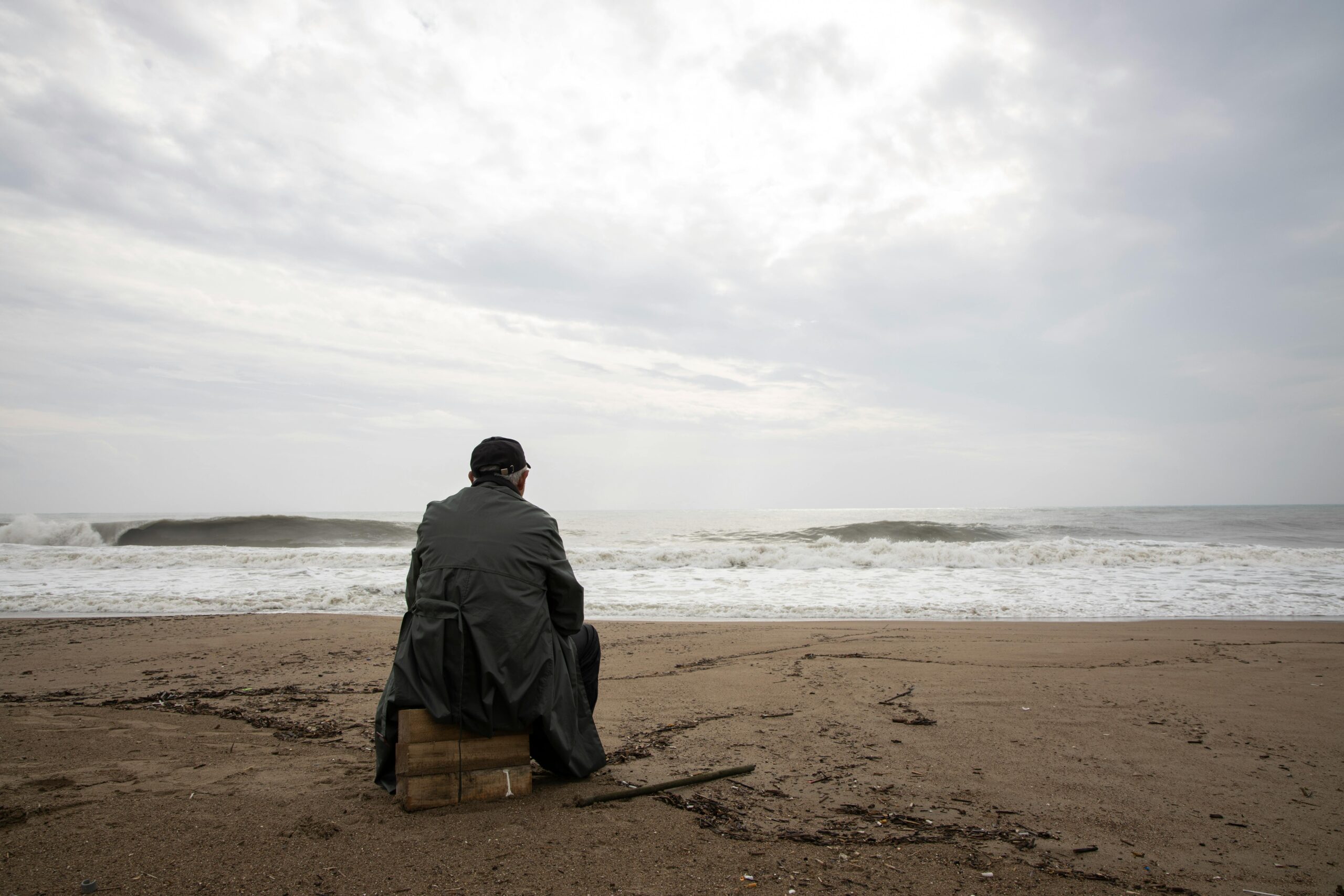

Wandering, Wondering

Yuvoice Duet: Read another inspiring story about rediscovering life with Autism here.

Imagine being lost in a large bookstore when you were little. You are surrounded by pictures, puzzles, book covers, and other unfamiliar things. It’s a strange place, where so many stories live, including magic, mystery, and science. This array was what caught your attention when your parents were only there to buy some paper. After a while, you lose sight of your parents or they lose sight of you. You think for a moment, about what to do and run around; the place seems so significant to you. After thinking for a while you give up the fight and wait by the entrance.

You weren’t afraid. Not really. The colorful and beautiful things around you were fighting for your attention. You didn’t think then — how could you? — about how long it’s been since you’d been lost and how your parents must be worried. You stood calmly by the guard, thinking about which dinosaurs you would draw when you got home.

You knew they’d find you. 

This moment meant little to me then but it was very near and dear to my mother. It was one of the earliest moments when she was astonished at what I could do and what was going on in my head. But, now, I wonder what it really is.

Then & now

Years ago, when I was young, I was diagnosed with Autism Spectrum Disorder, a condition I barely understood then. 

It is the early 2010s, and things are very different now. I’m more confident and appreciate what it means to myself and others around me. The world I see out there isn’t much clearer than the world of the bookstore. I’m still caught up in the wonder of it all with all the same questions in mind. When I first found out about my diagnosis, I felt like it was a superpower that made me special and set me apart from the crowd. I had a name for what made me better at school and different from the other kids. I had the luxury of looking at it with fondness.
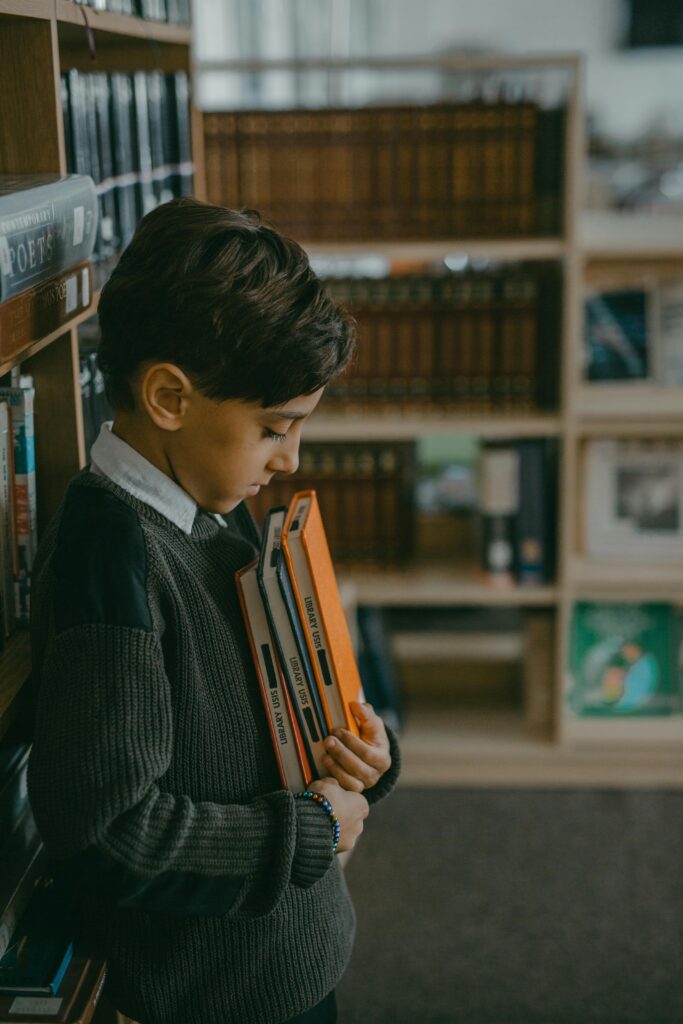
(Image courtesy of Mikhail Nilov via Pexels)

But things are different now

The closer I get to the real world, the more distinct it becomes. I have been living in the Philippines with my superpower, aka Autism Spectrum Disorder (ASD), and have realized that my life was supported by a privilege that protected me from the real world. 

I grew up wealthy. My parents supported me when I acted up at school. They kept me away from the harshness meant for the little miscreant that others might have seen me as. Now, much of that wealth is gone. As I grew up and went to college, my superpower started to feel different in my hands. I met some people who were more successful and popular, and great with studies, and a few who were not. These people showed me more of the truth. I had never met anyone who revealed their struggles with bullying, society, and familial issues before, and that enlightened me to just how much my parents had protected me since I was little.

Now, I also understand how much my mother struggled to get the required care for my condition and how scarce therapy centers are. I’m a grown-up, and don’t need as much care anymore; I have an excellent social life with my classmates, and can easily make friends. But when I do need it, I hear stories repeated in various places, and all of them remind me of how hard it is to get care for ASD in general in my country.

Revisiting the bookstore

When I visited that bookstore as an adult, my mother did not mind. Why would she? Of course, she remembered the story I shared above; it was just that the present was more important. The interiors were changed. The bookstore had been remodeled; the shelves were shorter and the place was more spacious, so it was much harder for a child to get lost now. It was bigger, certainly. The colors and wonders were still there for the adults looking around. All the stories and adventures promised on those beautiful covers were still there. If I had more money, perhaps I could buy one someday. If I had more time, I could have browsed and looked at them all.

This place was the same as I remembered it, even after the changes. I walked past the guard at the entrance and into the aisles with my family to pick up some stationery. My mother knew we could finish this and make time for the trip home. I wanted to spend some more time there, but I knew I couldn’t. With our finances and changing schedules in flux, I knew better than that. I am a grown-up now and no longer have the luxury of getting lost here.
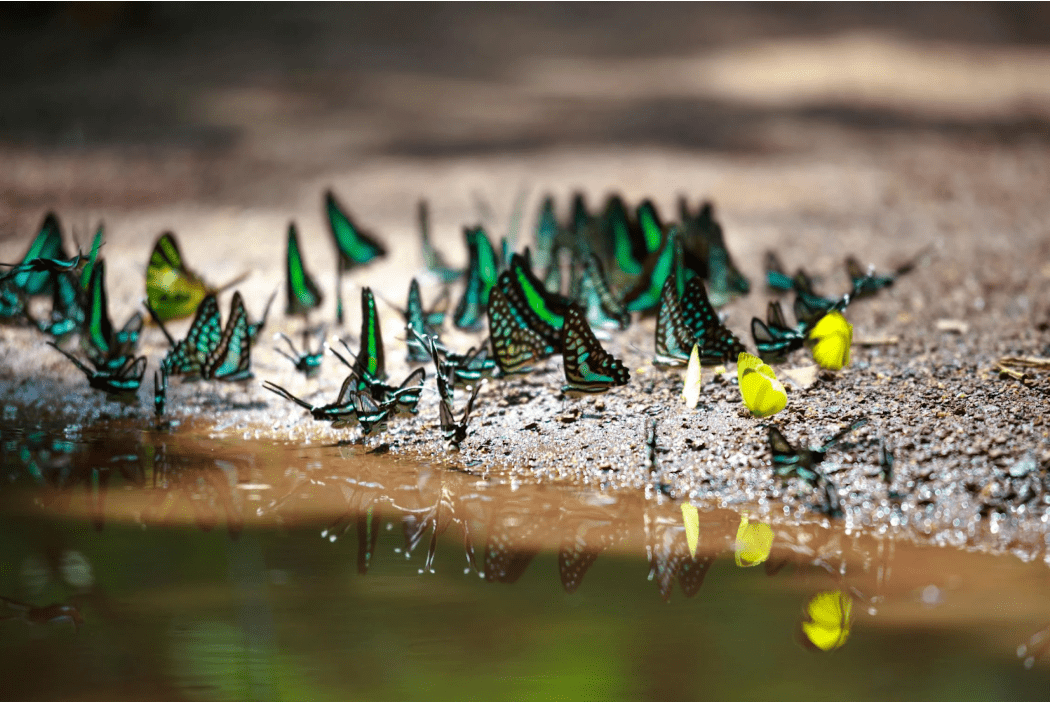

I Have Killed a Dozen Butterflies

I have killed a dozen butterflies…
Had their powder dust my fingers
As I grasped my hand tighter and tighter
Afraid to let them fly away

They were my conquests
Such delicate, almost ethereal things
I watched them fly,
Hoping someday I can too

I have killed a dozen butterflies…
Afraid to let their beauty fade away
I wasn’t content with just looking
I wanted assurance that they would stay

I have killed a dozen butterflies…
Even though I didn’t want to
That wasn’t my goal
But as I flit from one extreme to another
Their wings were losing their dust
My desire to protect them from the world 
Cut off their scales
Destroyed their wings
Made them die a slow death

I killed those butterflies…
I’m sorry
But I wanted to be in control
And this was the only way I knew how

Misery Loves Company

“People who are hurting tend to hurt other people,” my mom says while holding me close and listening to me cry about the day’s events.

“Why?” I ask in between sobs.

“Because they are just unhappy with their own lives and feel miserable, they choose to make other people feel bad about themselves. It’s a vicious cycle, and misery loves company.”

It took me many years to fully understand what my mom was saying in those moments of desperation and utter sadness when I was a teenager. I fully understood the impact of her words and the lesson she was trying to teach me only in my late twenties while living alone. 

The takeaway is to take everything people say with a grain of salt because their opinions will not matter in ten years. They are irrelevant.

Misery does, in fact, love company, and due to the ever-changing economy, rising cost of living, unemployment, the pandemic, and advancements in technology, it has become so much easier to spread hate worldwide. 

How I respond to haters

Most people don’t even bat an eyelash when throwing insults at strangers on the internet. I have noticed that many are angry, hateful, and very ignorant of their own biases. They often judge people without a second thought, based on their profile picture and the content on their page.

Whenever people insult me on Instagram for commenting and leaving an opinion on a post, I try to tackle their hate, judgment, and ignorance with kindness and compassion. I raise awareness of why some people are overweight or prefer to surround themselves with cats rather than people.

People don’t care to understand the struggles of other people. I have noticed supervisors do the same thing and discriminate against an employee when it is illegal to do so in the working environment, but that doesn’t stop them from finding ways to make an employee feel crappy.

So when these types of situations and circumstances occur, I try to reframe the negativity by pointing out how cruel they are by saying, “God bless your hateful, ignorant, and miserable soul.” Then, I proceed by letting them know about how certain health conditions can impact a person’s looks by affecting their weight and skin in a variety of different ways, such as taking mental health medications,  having a vitamin deficiency,  an autoimmune disorder, or a hormone imbalance such as a thyroid condition. 

I ask them to educate themselves further on this topic before automatically spewing their hate toward people they don’t know on the internet. Usually, when I respond to these types of offensive comments with kindness and awareness, many people end up not responding, which leads me to think that, perhaps, they will think twice before choosing violence and responding to someone’s opinion with mean comments the next time.

Our responsibility

Everyone we meet in life is fighting an unknown battle, one we know nothing about. We must do better as a society if we wish to have any hope for future generations. We must consider what type of example we are setting for our children by exhibiting bullying behavior towards strangers. 

It all starts at home, with the example set by the children’s family members

They come into this world already knowing how to love, and unfortunately, it is ultimately the people we surround ourselves with who choose to teach us how to hate, based on how the world treats us as individuals.

A Diagnosis

There was something off; I knew it. I couldn’t quite name it. But it was deeper, darker than what had previously bothered me. 

I was diagnosed with depression at fifteen and generalized anxiety disorder at seventeen. Depression, being familiar to me, seemed like a well-worn jacket weighing me down. Anxiety seemed like a scarf, too tight, wrapped around my throat, restricting my breathing. 

I learned how to manage and to wear them. But this… this was different.

The story behind my diagnosis

For several months, at the end of my freshman year of college and into my sophomore year, I was plagued by misery. I was nineteen and in an abusive relationship that was making me question everything; who I was, my place in the world, my purpose, and my destiny. I started exhibiting troubling symptoms — symptoms that were more extreme than I had experienced before. 

I wasn’t sleeping. I was like a zombie, wandering through the days and nights, lost in the fog of my mind. I was losing my sense of time; hours would pass in a blink, and I could not remember how I had moved from point A to point B. I felt an overwhelming sense of hopelessness. 

I was numb, frozen. 

Some days, I was agitated, jittery, and unable to stop myself from moving. I needed to act, to jump headfirst into whatever I could — projects, games, or adventures. I needed distractions. I needed action. I desired constant motion, my mind racing along with my heart. It was like I was running a marathon and couldn’t stop. 

My depression was unlike anything I had experienced in my young life. It overshadowed my every waking thought, leaving me helpless and weak, lost and confused. I would vacillate wildly from barely moving, eating, and breathing, to being so wired and alert that I couldn’t focus. Either way, I wasn’t functioning. 

It was obvious to anyone who saw or talked to me that something was wrong. I was so unlike myself; it was shocking. I was transforming into some other-worldly version of myself, the opposite of the person I was, a photo negative of the girl I once knew. It was frightening, unsettling, and frustrating. 

(Image courtesy of Ron Lach via Pexels)

The revelation 

It all ended in a burning, blistering, ugly way one night. 

It was late at night and dark. We were somewhere in Boston, outside a liquor store. The boy I was seeing revealed his hand: he had been cheating. All my suffering, all the back and forth, all the mind games, it was all in vain. I started to implode. I cried, I screamed, I fought. I was shattered. 

All I could think about was death. I had been teetering on the brink of suicide for the better part of six months at that point, but now it had become all-consuming. I was ready to end it all. I wanted the suffering to stop, hard, fast, and cold. 

I had a vague notion of a plan, but he stopped me. He wrestled me into the car, drove me back to the college campus, and left me alone to lick my wounds. 

The next morning I was still reeling from the aftershocks, still contemplating ending it all.

But I had survived the night, and that had to count for something. So, instead, I chose to take a leave of absence and headed home. 

I found comfort in the embrace of my family and sought answers from my medical providers to understand what was wrong with me. 

During a session with my provider, she asked direct and unusual questions. Then, she had me fill out a questionnaire. I was as honest as I could, even though I wasn’t entirely sure what I was filling out. I handed it to her; she examined it briefly and then revealed what was on her mind.

The new diagnosis 

A diagnosis that we had somehow missed during my years in talk therapy with her. It took exacerbated circumstances to reveal the more extreme symptoms, but it was clear that I didn’t just have depression. 

I had bipolar disorder. 

Specifically, bipolar II. It is characterized by a severe depressive episode, feelings of hopelessness or intense sadness, coupled with a period of mania and elevated or irritable mood. 

A pendulum of emotions. 

At first, I felt empty. Bipolar was a scary word, a word that felt foreign, unfamiliar. I knew nothing about it. It was bitter in my mouth. The weight of it seemed overwhelming. I tried to wear it on and understood how it fit. It was a little too big, too cumbersome, too heavy. 

But then I tried to sit with it. I considered it. There was comfort in at least having a term for what I had been experiencing. 

Power is in knowing and in having a treatment path. We were going to change my medicine, reach out to my therapist, and work on bipolar-focused treatment instead of just depression. I wasn’t going to be left in the dark with the weight of this new diagnosis. I had a way forward. 

Though the treatment took some time, I did notice improvements. My moods didn’t swing so wildly; my sadness was not as deep, and my mania was not as high. I was becoming more even-keeled and returning to my old self, the self I could recognize in the mirror, the one I loved. 

I kept my diagnosis a secret for a long time. I knew that there was a stigma around being bipolar; I feared people would just assume I was “crazy”. But, as I understood my own experience with it and what living with bipolar actually looked like, I found myself shedding my shame. 

It’s been ten years now of living with this diagnosis. Ten years of treatment. Ten years of understanding how to manage emotions that sometimes feel unmanageable. 

I have accepted my diagnosis with love and understanding, and now I treat myself gently

Having better knowledge of my mind is a blessing. I do not shy away from it and don’t use it as an excuse. It is a part of me, and I have learned to live with it, wear it, move with it, and embrace it. 

(Image courtesy of  Julia Kuzenkov via Pexels)

Falling into Your Orbit

I’ve thought about
The way the wind would whip my hair
Away from my face just seconds before
I find my end there
On the rocks below
Before your very presence brought
A kind of happiness I wasn’t aware existed
The kind I thought was mythical, you know?

There were days nothing could pierce
The dark and heavy clouds
With agony fierce in my chest
And over my head
I’d wish I was dead.
I’d wish I never existed.

But then you came, the proverbial ray
Of sunshine that could
Make my day bright in a way
It had never been before
You didn’t cure my depression but
You made me care in a way I wasn’t even sure
I was capable of.

And with a reason to give a shit
A reason anyone could benefit from
My existence on this planet
In this galaxy
In the middle of nothing surrounded by more
And vaster nothing in it.

I will never forgive you.
It was easier before I knew
Before when my crises were existential
Not born out of the pull
Of your gravity, your sparkle
But born of a life so lacking in light
It felt as if I was born in darkness
And would remain hidden in fright
And rage at a world so destroyed
So bustling and annoyed
That I couldn’t find my breath

But then there was you
You with your face and voice and
It was then I knew you’d ruin me
I knew the score, waiting for the other shoe
To drop as I learned I would never be your choice
But still. Still, I pined and whirred around you
Suddenly manic, a micro planet
Stuck in the pull of your gravity’s force
I know you didn’t mean for it to be this way
It’s just how you are. It’s just what you do.

And so here I am a satellite, or perhaps space debris
I’m certainly not a rocket
I’m only me
Falling, falling, falling.
Into your orbit.

Image of a woman falling into water. She’s wearing a floral dress.
Image courtesy of Kenneth Surillo on Pexels

Get Well Soon

The echo of heels and dress and shoes,
fills the silence outside my room.

I will meet
the doctor tomorrow.

Today’s session will mend;
Aversion Therapy.

The ailment that stills my mother’s lips,
makes her wrest her eyes
when she sees us.

Her long fingers grasp your locks
as she heaves you out of my room and my memory —

The faint taste of cherry on my tongue.
It is the only thing that brings me comfort.

I sit in this chair with wires
cemented to my arms.
Now, there are jittery muscles and blisters.
Sit still!
You will be healed!

Image of a person's hands tied together with white fabric.
Photo by lil artsy on Pexels

Unconventional Tuesday

The morning of the first Tuesday of December, I was staying at my uncle’s house because, until the night before, we had had a very unstable week. 

Otherwise, I’m not someone who spends the night anywhere outside.

There was something about that morning that did not add up. 

I swear, the little ten-year-old me felt something was off about it but could not really make sense of it. Everything about that morning seemed yellow.

My uncle, his wife, my two cousins, and I were having breakfast at 7 am. Everyone was looking at me with a look of pity. I was sure everyone could sense that feeling. I’m not saying that there should be a reason for people to be nice to each other, but being “over-nice” is pretty recognizable, even for a ten-year-old kid.

My cousin and I took off for school at 7:30 am. (They were trying to make it a “normal day”). Nonetheless, I chose not to pay extra attention, as I had a French class that morning with Miss Nacera.

“Allez tout le monde prend sa place pour commencer la leçon!” (Come on, everyone take their place to start the lesson!)

It all began in French class

Let me tell you something. Miss Nacera wasn’t to be messed with. She had firm features and made it clear her purpose in life was to teach French. 

An hour later, I was back to being smart, nosy, and chaoting. I yelled answers without permission, talked to my classmates, and laughed. I was as wild as they get. 

Miss Nacera said, “Hichem! Viens ici! Tu fais beaucoup de bruit, t’es malade où quoi!” (Hichem! Come here! You’re making a lot of noise, you’re sick or what!) and slapped me in the face. 

Given the fact that I admired Miss Nacera, I did not take it personally. Indeed, I knew I was making too much noise. I went back to my seat with shy red cheeks and an embarrassed face. 

Not a minute later, my cousin got off of her chair, headed to the teacher, and whispered something in her ear. I saw that, but couldn’t guess what she told her. Miss Nacera’s face turned from furious to teary. 

What is going on?! I thought.

She came to me, took me to the back of the classroom, and hugged me so tight while sobbing and said: “Oh Mon Dieu, Hichem! J’suis vraiment désolée, je ne savais pas . . . .  J’suis très désolée mon fils!” (oh my god, Hichem! I’m really sorry, I didn’t know . . . . I’m very sorry, my son!)

All I could think of at that moment was, “Why is she hugging me? It was not the 1st nor the 20th slap.” For the next three minutes, she held me tight while repeating the same words and crying, and I was still wondering what was up with all this drama. It was just a slap, and it was my fault! 

She continued the class with a heavy heart and kept looking at me out of pity while I still could not make sense of the whole situation.

We took off again when the bell rang at 10:30 am and headed home for a lunch break to come back for afternoon classes.

On the way home, we did not speak a single word till we got to our neighborhood. We parted ways like we already knew we were not heading back to her house again. “See you at 12:45 pm,” I said, and she nodded her head without any response and left. 

Image of a man with his head in his arms.
(Image courtesy of Ryanniel Masucol on Pexels)

When everything became clear

I was six minutes away from my house. In those six minutes, I reflected on how weird today was

I remember it being a clear day in December. 

The last minute of getting to my doorstep involved taking a left turn and walking straight ahead for twenty meters. Then, taking another left, I could see my house, the one before the last one. So I did, I took the first left and walked those twenty meters, and then took a second left where I could see my house. And a green-painted box lying right next to it.

A green box, eight feet in length and three feet in width. 

In our culture, a box of that type and paint color lying outside has only one explanation. It was pretty clear, even for a ten-year-old kid, regardless of having seen it before or not.

As I took that last left and saw the box, a thousand thoughts drowned my mind simultaneously. Everything suddenly made perfect sense in the weird day I was having so far. 

At that very moment, I was experiencing two very complex sentiments at the same time: the joy of things adding up after being as blurry as they were and the pain of realizing what they actually meant.

As I got to my doorstep, I stared at the box all the way, even as I opened the door and walked inside. I took a turn and walked up seven stairs towards the final wooden door that led inside. I heard recognizable crying voices.

I knocked on the door, and someone opened it. I saw some thirty women inside our home, wiping away their tears with tissue paper. Each of them hugged me as I walked towards the big guest room, not knowing whether I should head there or not but following the path they were drawing for me by moving left and right. I headed towards the room that happens to be the one you see right when you open the main wooden door that I had just walked into, the one that I couldn’t see because of the crowd on the way. 

On my left was the main room where I saw my mom and my sister sitting on the floor in the middle of a circle of women surrounding them and petting their shoulders while they were crying their hearts out. 

As I kept walking forward, I finally reached the big guest room, and there he was, lying on another open wooden box with a white sheet covering his entire body except for his face.

I bent down on my knees to kiss him goodbye, as told by many of the women there, “Kiss him goodbye before they come to take him, Hichem, be careful not to tear on him, honey…” Not a single tear fell before, during, or after these scenes penetrated my mind. All I did was stare in every direction in shock.

“My father is dead? How? They said he’s getting better! I just saw him at the hospital last weekend! He gave me money to buy the pair of shoes that I kept talking about and told me to return the change when he came back this weekend. My mom lied? My brothers, too? My closest sister! He was dead this morning before school? My cousin knew before I did!”

This was the beginning of what came to be a lifetime struggle with post-traumatic stress disorder. Just like a craftsman creates a piece of art, these questions running through my mind were crafting a new unprecedented version of me, that was going to dictate different rules compared to the ones I knew so far. While the ten-year-old me had yet to discover it at that time, he knew that something different and very complex had just happened to him. However, he was still not able to make any sense of it yet… 

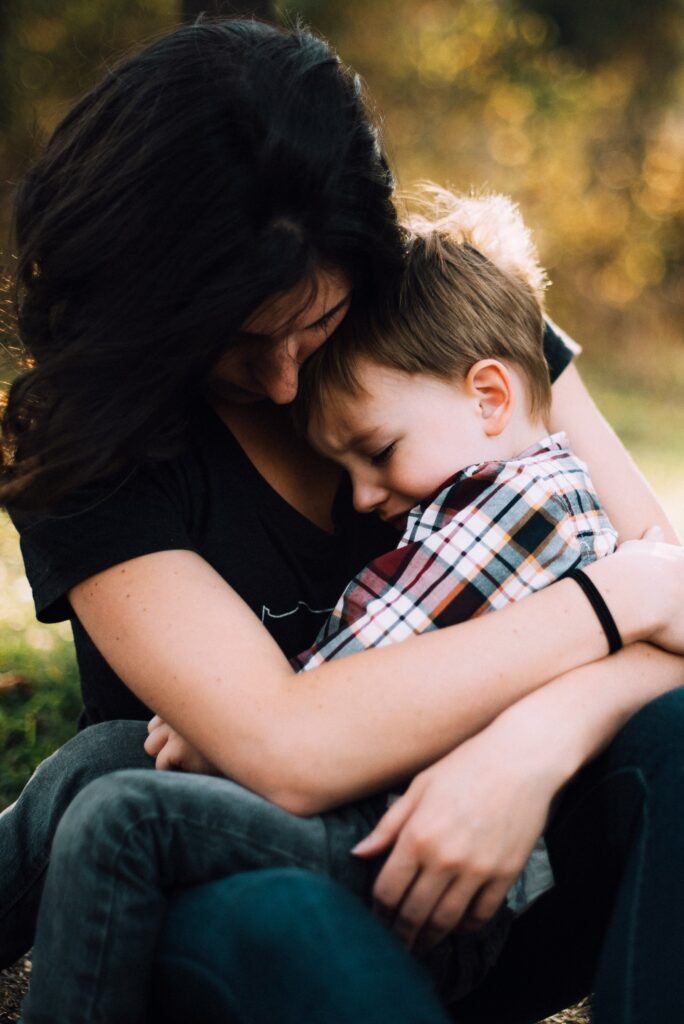
Image of a woman hugging a young boy sitting on her lap. The boy appears upset.
(Image courtesy of Jordan Whitt on Unsplash)

Two Secrets

When you discover a secret, you have two options. 

I say “discover” because a secret is not made to be found out, except only by accident. 

I say “when” because most secrets are easy to discover, and your two options are measured upon a scale. 

The lowest end, the part with less weight, the easiest and most sane thing to do, would be to keep it as it is. To leave it be and walk the other way (much like your lecturers do when they discover your answers while walking around an exam room). The second option, and the one that will earn you pats on the back even as you feel like the shittiest person (because unless you are a rock, you will), is what you, as an arsehole, will do.

There were two secrets that ruled Newton’s life.

The first one was kept from him until he was old enough to handle it, though he doubts anyone can ever be old enough to hold the gravity of such a secret. 

He kept the second one because he did not know he was keeping it. He did not understand it even though it lived in him.

The second secret

“I’m bipolar,” he starts. “I recently got the diagnosis from a psychiatrist I have been seeing since February.”

Newton did not grow up with any information about his mother other than the fact that she was dead. “She passed away when I was a baby. That is all I was ever told whenever I asked my uncle.”

He doesn’t remember half his childhood, unlike you, who recalls nothing under the age of eight. “There are lapses of time, even very long periods of my life, sometimes, that I do not remember. I used to make fun of it in school. We would be in class waiting for the next lesson, and, when the teacher came in to start the lesson, I would not understand shit because I was basically not around when previous classes were taught. I mean, I sat in for the class, but I had no memory of it. My body, an empty shell, sat in the desk, but that was it.”

He didn’t really understand what was happening. The only explanation he could think of was that he was a slow learner. “I thought I lacked book smarts, but I remembered everything I studied half of the time. I just always said I was average.”

The first real episode he remembers was a party. “A friend from school was home alone since her parents had traveled. So she was throwing a party and invited everyone who could come. My uncle was never going to let me go. He never let me do anything, so I didn’t even bother asking for permission.” 

He snuck out.

“I told my uncle I wasn’t feeling well. Probably a stomach thing because a stomachache is easier to hide than a headache.” A stomachache can be pretended by holding onto your abdomen and doubling over, accompanied by just the right facial expression. “A lot of frowning makes you look like you are pooping, and a bit less than required makes parents think you are not really hurting.”

So he snuck out and went to the party. 

Only, he didn’t go. 

“Listen, to help you understand it, you will need to believe me. Most people don’t. I went to that party. I swear. I went there, and I met my friends, and we had an epic time. EPIC. I know that because I have memories of it happening. I still smell the alcohol from that night. I do.”

When he got to school on Monday, his friends were furious!

“Ah Newt, wewe ni mtu bure sana!” (Ah Newt, you are a very vain person!)

“Why sasa?” (Why now?) 

 “Why would you make us wait on you, and you don’t show?”

“Newton, man, I always thought you were a solid guy, my guy…”

“Newton, btw, mimi, I can’t even. I just can’t!”

“They were relentless. And I tried telling them that I did not understand what was going on, but, before I had the chance to, the bell rang. I was so confused.” They all settled down to class; his mind far from stillness. He wrote a note to his deskmate.

/Jay, kwani, what is going on? /

Deskmate opened the note and frowned at him. [Not as severe as Newton’s stomachache performance, but frowny enough to let him know they were in murky waters] Desk Mate handed him back a note

/Dude, you chezad us bana! /

/What did I do? /

/You didn’t show up, man. :(/

/What do you mean I didn’t show up? I came!/

Deskmate shook his head in disappointment.

“Turns out I never went to that party,” he finally says. “It’s a weird thing, being bipolar. I have episodes where I am irritable, and I don’t even know why. Sometimes I am manic, other times depressed; then there are long periods of time when nothing happens. Nothing. And I forget. It takes up to months! There was a time I went for seven full months. Then I had the worst depression in my life. I almost killed myself.”

The first secret

When he turned eighteen, his uncle sat him down because he was “old enough” and told him the first secret of his life. 

“My mother killed herself. They think it was postpartum depression that caused it; but my uncle said she was just like me. She could shift through moods similarly like she was flipping through a flimsy book.”

His mother, bless her heart, did all she could. She had met a man, fallen head over heels, and opened up to him about her mental condition. He said he would love her through it all. He still left. Newton’s uncle does not know when exactly. After he was born, his uncle had dropped by to see his nephew and found his sister in the worst state ever. “He said she looked like she had not slept for weeks. She was distressed. She told my uncle that my father walked out on her because she was too sad all the time.” Then, she asked his uncle to hold him for a minute while she took a shower. She walked into her bedroom and never walked out of that room.

He started making sense of everything he had been going through when he researched his mother’s condition. He studied everything on postpartum disorder, mental health, and, particularly, bipolar disorder. “There are so many types of bipolar disorder; some don’t even have scientific names yet to study or research. Each person reacts differently to it. The levels of hyperactivity (mania) and placidity (depression) are different in everyone. It’s all very complicated.”

His psychotherapist is heavensent. They began by unpacking all his unresolved feelings towards his mother. “I started seeing him a few months ago, and I talk to him every time I have an episode. He is amazing at helping me manage my episodes. I learned that I would forget things I did because I was physically there, but my mind was in an episode. That I could be perfectly calm on the outside but be fighting for my consciousness to be one with my body, and that by fighting it, I was sinking deeper into the episode. I am still learning. My therapist says I should learn to let go of everything, and that I should stop trying to act normal because I’m not.”

Newton had two secrets in his life. The one he hid from the world in his mind and the one his mother and uncle hid from him. 

Turns out, it was the same secret.

[May is Mental Health Awareness Month, and this week we are learning about Bipolar Disorder. I found a really helpful article by Dove International Mental Health Center here. You can read through it to learn more on the disorder, its symptoms, and what you can do to help someone in each of the extremes. Stay safe, alligators!]

Movie characters and why I wish I was one

I wish that I was traumatized like people in movies are traumatized

I wish that other people could escape into my sad story to hide from their own

I wish that I was sardonic, I wish it made me funny

I wish that I was haunted not by entire years of life but by one single soundbite, a few flickering frames of film, something small enough to lock away and forget

I wish that the memories were in third person, distant, not seen through my eyes and made inescapable by perspective 

I wish that it was precise, I wish I could remember each word well enough to repeat inside my head until it turns into a prayer

I wish that I woke from nightmares and sat bolt-upright, panting in bed with glycerine sweat on my brow, disheveled but somehow sexy as well

I wish that the nadir of my downward spiral was me crying and punching my own reflection in a bathroom mirror

I wish that emotional music played over the rock-bottom scenes, two thirds of the way through the movie to kid the audience that it’s all going to end right now

I wish that even as I cut into myself and the corn-syrup blood spurts from little tubes hidden under silicone skin, as artificial tears roll down my cheeks over ersatz bruises, my face would be stony and still like a statue of a saint 

I wish that I would be rushed to hospital in a haze of red and blue lights and that my rescue would be medically accurate and miraculous

I wish that people around me would care

I wish that at my lowest point a manic pixie dream girl would take my hand and teach me to love life again, as if the issue isn’t what life has done to me but my attitude towards it

I wish that years of trauma could be negated by minutes of happiness

I wish that the parts of me that are trauma-formed were simply layers that obscure who I really am, that they could be shed like a snake sheds skin it no longer needs

I wish that they weren’t inseparable from me

I wish that those around me would be endlessly patient and understanding as I make my slow but steady progress, because they can see the good in me that is there for the benefit of the audience

I wish that I would have only a single setback in my recovery, and that my misery and fear would be resolved with a pep talk and a hug

I wish that I would take some minor but symbolic baby-step at the end of the movie that shows it’s all going to turn out okay

I wish that it would go the way the audience wants it to go

I wish that the ending of my movie would be happier than the start

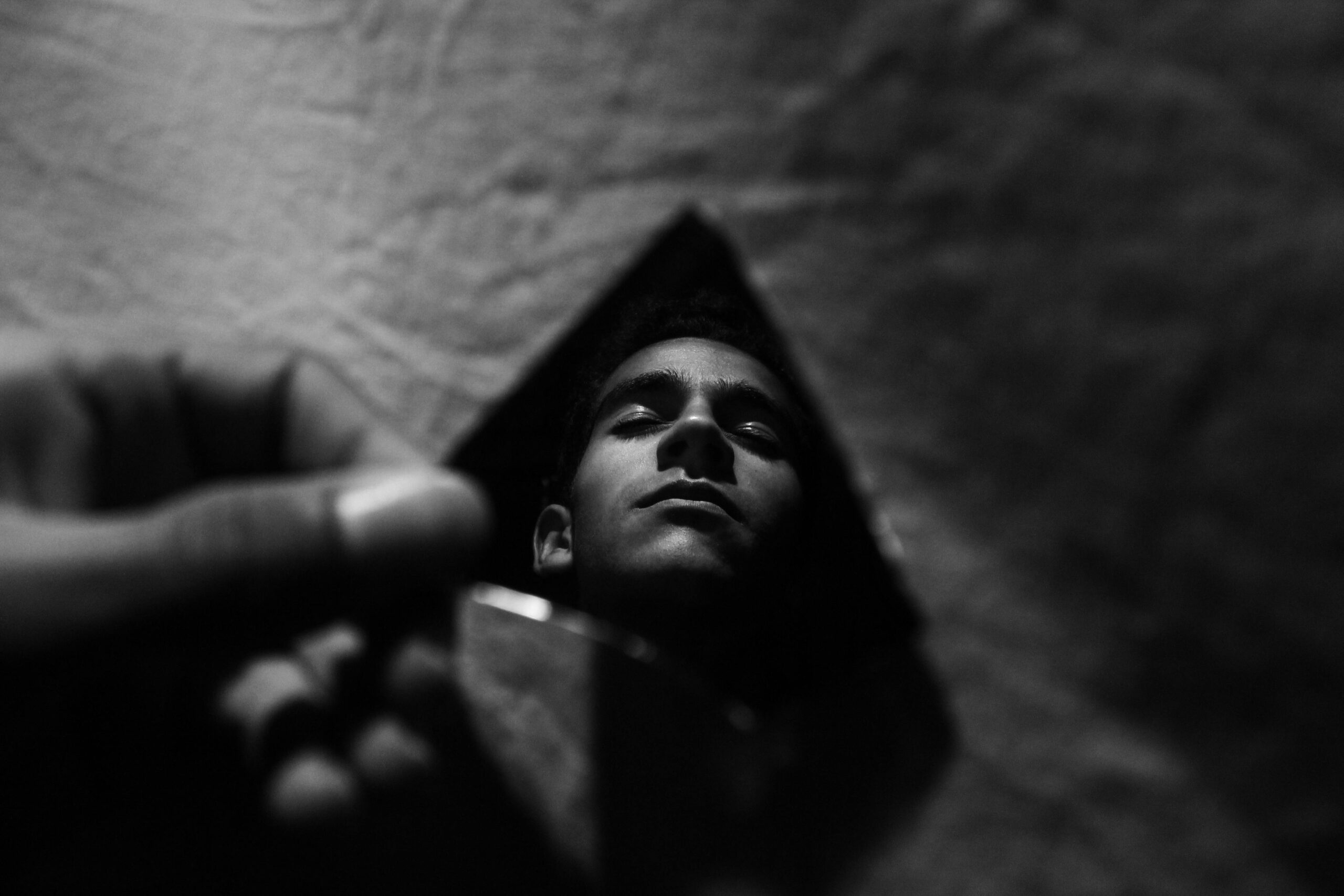
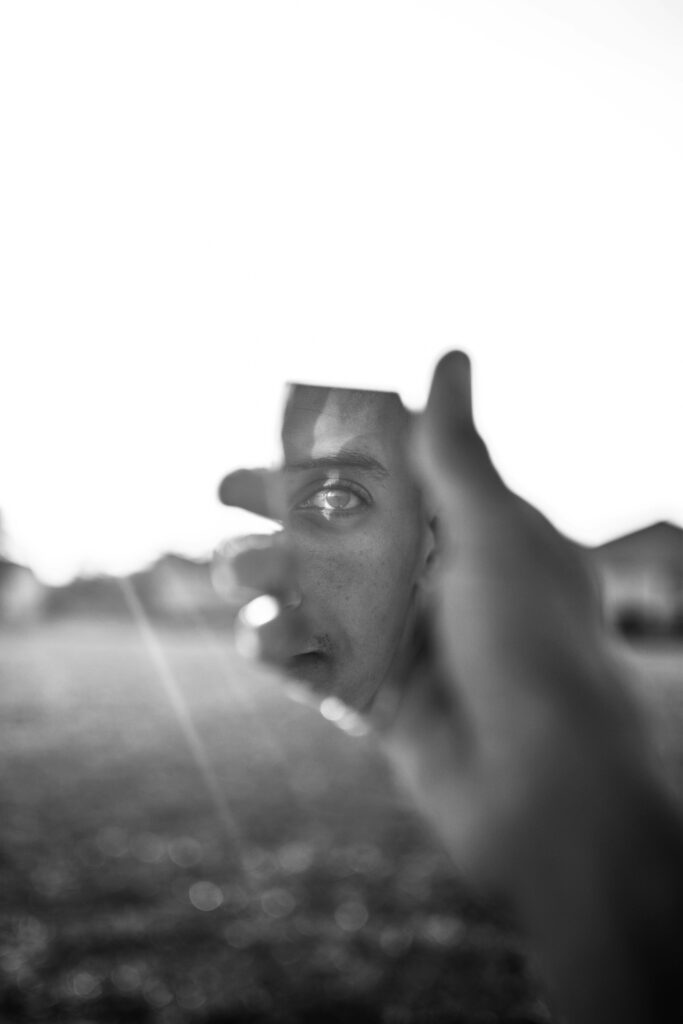
Image of a man holding a mirror shard in his hand. He stares at his reflection in the shard. In the distance, the sun shines down.
Image courtesy of Amine M’siouri on Pexels

Tidal Waves

some days are tidal waves
knocking me breathless
i gasp for air that won’t fill my lungs
drowning in the waters of worry

other days
i drift gently as a feather
floating on winds of hope
i bask in the warmth of joy
soaking in calm

healing is not linear
progress flows and ebbs like tides
some days i slip beneath the surface
fighting to stay afloat

other days
i soar high above the darkness
seeing light ahead
i breathe easier knowing
the low tides always recede

i softly embrace my broken spirit
cradle myself with kindness
mend slowly with care
fill its cracks with gold

i honor the darkness
for without it
i would not recognize the light
pain bears gifts if i am open

today i will walk gently
bare feet grounded on earth
heart open to sky
receiving whatever comes
with arms stretched wide

Image of waves crashing against rocky cliffs.
Photo by Олег Мороз on Unsplash