Resolutions, Schmesolutions

I have a lot of hobbies. I started cross stitching in middle school and knitting and crocheting in college. So, for most of my crafting life, I have been balancing learning these crafts and going to school. Now, in my early 30s, I must squeeze in whatever craft time I have with my work and taking care of my family. I love my life, but having my skills often stagnated is often emotionally taxing.

I’ve always had very high standards for certain things. No good baked or dish cooked has ever been perfect. After trying the fruits of my labor, I always have to make a note about an ingredient that needs adding or that the cooking time needs to be adjusted. This deep need to sharpen my skills is why I went to grad school. The idea of knowing everything about a subject was enticing. I so desperately wanted to deepen my language skills (in multiple languages) and develop my research skills. Imagine my disappointment when I realized that learning everything was impossible.

This desire, however, still exists in my crafting life. It is not enough to be good at my chosen crafts. I expect my products to be impeccable. I must be able to win the blue ribbons at state fairs (I have never entered a project into a contest, nor have I been to a state fair. But the expectation remains). Other crafts also call to me: sewing (quilting especially, but also hand quilting), embroidery, basket making, loom weaving, spinning, nålbinding, bobbin lacemaking, yarn dyeing (with both natural and artificial dyes) – the list goes on! There lives in me a desire to learn carpentry despite knowing that I absolutely do not have the coordination to be around power tools. This bucket list is not taking into account the instruments I do and want to play, the languages I want to learn, the movies I want to watch, the books I want to read. I thank whoever responsible that I was not born with the talent to draw or paint, because that would open another can of worms. 

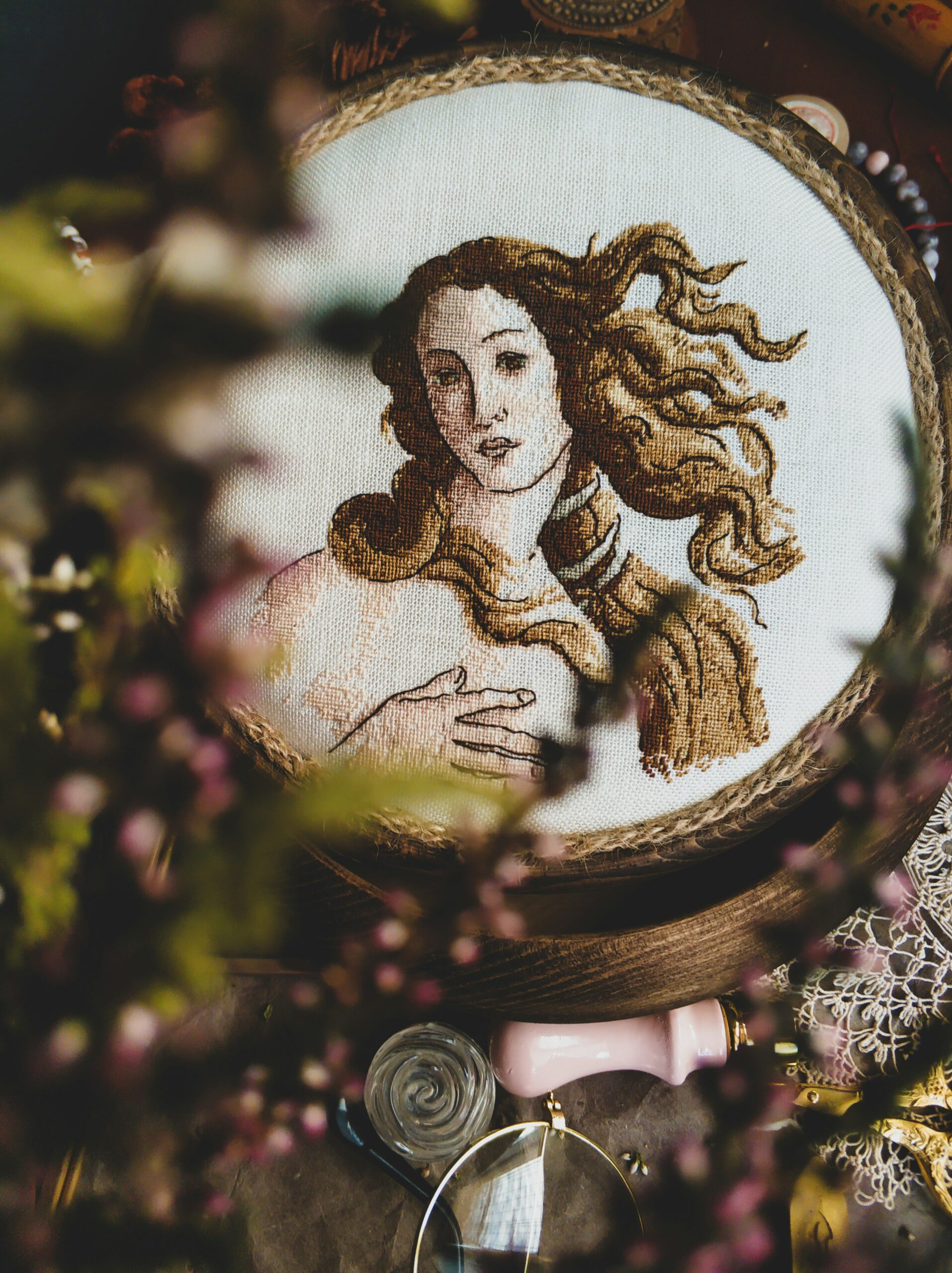
So, when the holiday season rolls around and we’re inundated with talk of New Year’s resolutions, it is not a surprise that I make an ambitious list of projects that I never finish. For example, I started a reproduction of Long Dog Samplers’s “Pandemic” cross-stitching pattern. Created while most of the world was in quarantine during the early days of the COVID-19 global emergency in 2020, this pattern was designed to keep stitchers entertained while staying indoors. The piece is mammoth. The finished project is about 20 inches wide by 24 inches high. 

I managed to score a copy when the company was giving it away for free in late 2020 and put it at the top of my project queue. Having acquired the necessary materials for Christmas, it was my resolution to start and finish the piece in 2021. Also on my list were: learn how to use my sewing machine, knit a sweater, and learn how to crochet doilies. 

In 2022, I resolved to finish it.

In 2023, I resolved to finish it.

In 2024, I finished the piece on Thanksgiving Day.
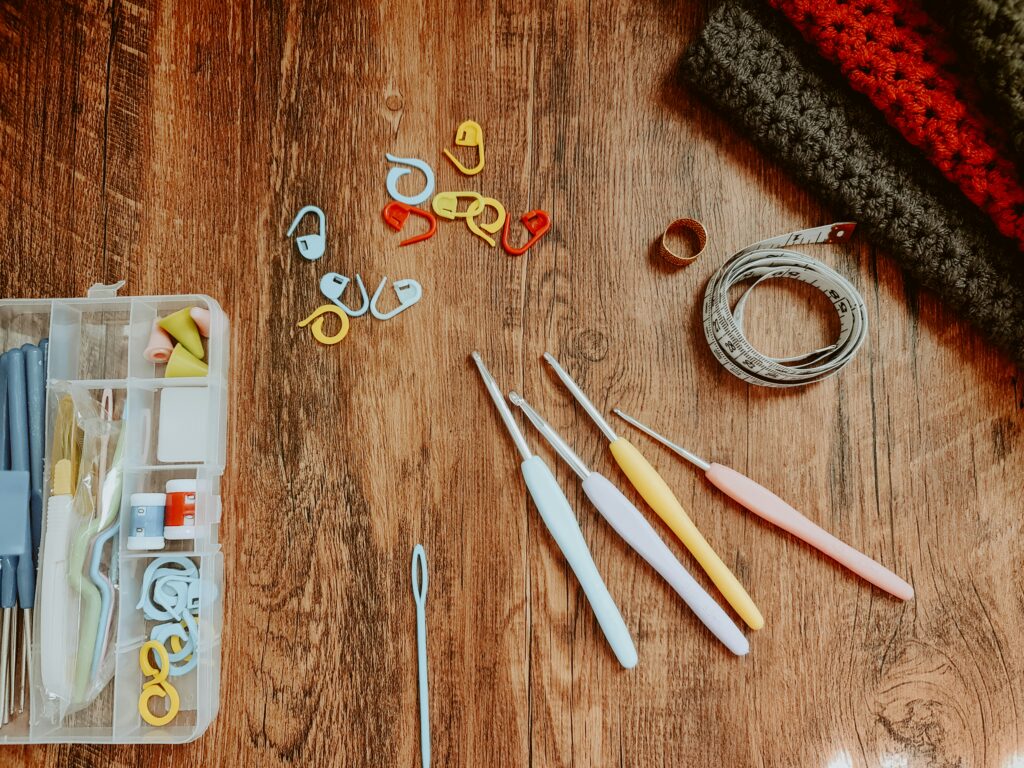
A tabletop covered with various notions associated with crocheting: stitch markers, a tape measure, crochet hooks, and a tapestry needle among them.
(Image courtesy of Edz Norton via Unsplash)

Of course, I wasn’t dedicating every single second of every single day to “Pandemic.” I was in grad school. I was spending time with my dogs and my husband. I was giving birth, at one point. I was, admittedly, working on other cross-stitching projects concurrently. I do not regret the time it took to complete this huge accomplishment. I am so proud of my work.

But, at the same time, I have yet to develop the skills necessary to knit a sweater. I only just learned how to crochet doilies this past year (unexpectedly, the patterns make a lot of sense to me, and I am very good at making them). Years have come and gone, resolutions made and unfulfilled, and I feel as if my skills have remained stagnant.

And usually this doesn’t bother me. Lately, my life is too busy to be distracted by my harsh self-critiques. I can bounce from project to project with enthusiasm and whimsy. That is, until I visit everyone’s worst enemy: social media.

First, before I break down the negative, I want to say how grateful I am for the resources social media provides that wouldn’t have been accessible in the past. I have countless sources of information at my fingertips. I can go on Ravelry and find tens of thousands of knitting and crochet projects within seconds. I can watch a YouTube video for a tricky method instead of having to resort to written instructions. Posts on Instagram give me color and pattern inspiration. And, not to be rude, I learn from the mistakes others make (if I had a nickel for every time I exclaimed, “With that color combination?” to myself while scrolling).

Platforms like Instagram, TikTok, and Reddit inundate us with narratives of perfection every day. Usually users purport physical perfection, aided by the use of filters. But there exist the feelings of imperfection one gets when looking at the life events that people choose (and choose is an important word here) to share. People rarely share the negative aspects of their lives. So, when crafters share flawless shots of their WIPs (works in progress) or FOs (finished objects), it’s just as likely one will be inspired as much as they could feel inadequate.

Sometimes, this feeling can be instructive. If someone’s stitches are neater than mine, I can take that in, find strategies to improve, and grow. But the pressure still exists, and it is not always constructive. For example, about once a year I attempt to learn how to knit Continental style (holding the yarn with the left hand) instead of English style (holding the yarn with the right hand). This is because so many Continental knitters boast about their speed and how their style is more efficient than that of English knitters (despite the fact that English knitters often have better tension, and therefore better-looking FOs). My mind just cannot grasp Continental, no matter how much I try. But then I think: when I finally achieve my dreams of being able to make garments without agonizing over how to do it, am I going to remember how speedy I was?

Then, there are the variables that I cannot control, namely the depressing obsession with scrolling social media instead of working on my projects, but also: other people’s family lives might not be as hectic or demanding; they might have more disposable income to buy better materials; they might have been taught by a family member and, because of this, don’t have to learn the Italian Cast On from blurry videos on YouTube. For some, their craft is their job. They have unlimited hours in the day to become better.

It’s important, to me and for me, that I keep these things in mind when I start to compare my abilities to others’. Comparison does not only steal joy, it can lead to depression if I don’t keep my comparisons in check. I spent much of my late adolescence depressed and I have no intention of going back to that. Frankly, I can’t afford to. I refuse to go back to laying in the dark, wasting away while the world spins on around me. 

So where does this leave me with my unfulfilled resolutions and my inability to feel accomplished? I think I’ll keep making resolutions at the start of every year, be they a handful of new projects, a goal to read x number of books, or what-have-you. Achieving the goals is a nice thought, but the journey is the important part. Even if I spend the whole of 2026 never finishing a project, I’ll still be working toward something. What’s worse: not finishing by some made-up due date or having never started at all?

But I really do need to stay off social media.  
Why Can’t We All Exercise?

The motivation of wanting to work out – including eating right – often attacks me in full force before the New Year begins. I refuse to start new routines of any kind on January 1st, as I know they won’t stick no matter how hard I try. Instead, what actually seems to work for me (at least for the past two or three years), is fully committing to and beginning my resolutions in November and December. By fully committing myself to waves of motivation when I happen to be inspired, I am able to ensure that these new goals will stick. 

The furthest I’ve ever gotten on my personal “record” was that I successfully managed to work out from December through March of 2021. During that time, I was able to truly stick to my desired routine by starting out slowly with working out for thirty minutes everyday, twice a day. I found that living with this positive mindset improved both my physical and mental health.  Seeing as how I hadn’t experienced such clarity since high school, it truly seemed like this New Year’s resolution was going to stick with me. Unfortunately, life sometimes gets in the way at the most inconvenient times, and one day I broke the cycle that led to the end of the resolution. 

But now, as we reach the end of 2025, the final three holidays of the year are once again upon us. Regardless of how you celebrate, I do know that having a “resolution” of any kind seems to be a mandatory individual choice for someone to follow to “better themselves” once the dawn of a New Year passes. 

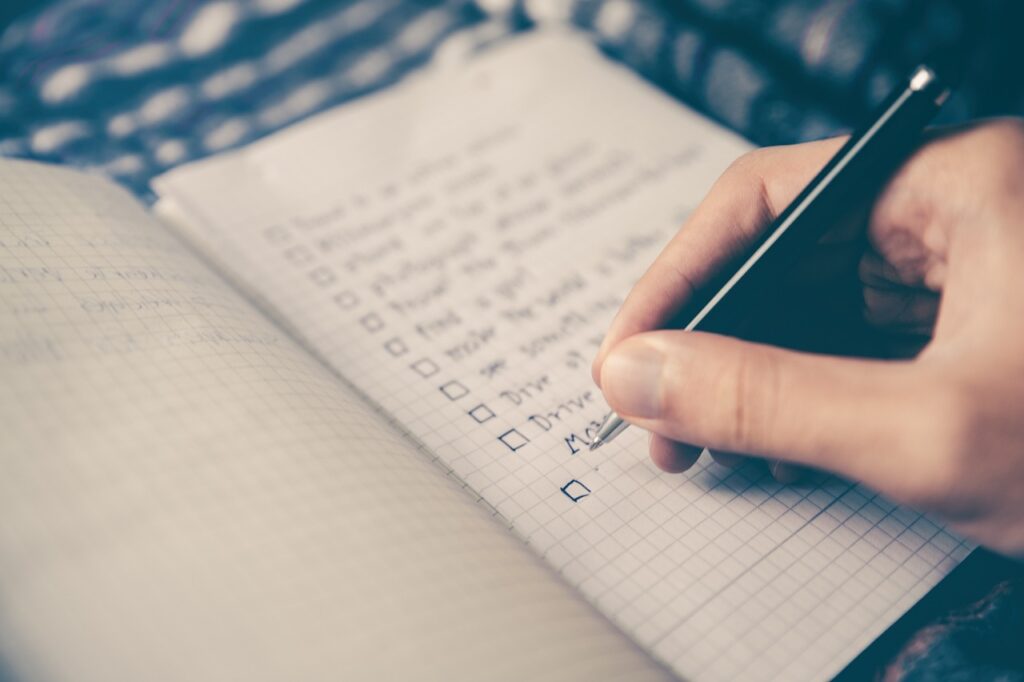
An open journal page containing a new “to-do” list. 
(Image courtesy of StockSnap on Pixabay)

Looking back, the concept of having a New Year’s resolution was originally brought on by my parents, who encouraged me to think of something new to improve myself for the next year. This is similar to my  participation in Lent where I’ve easily given up chocolate, junk food, and even tried to have less screen time. However, while my endeavors to eat healthier and reduce screen time had succeeded when I was a teenager, the resolution that now seems the most important to me is physically moving my body and trying to get in better shape than I already am. 

Despite turning 26 on December 31st, I am still relatively young and healthy (or at least, I try to be healthy). As such, as I get older, I want to take on every day to the fullest and that includes feeling great about what I eat and drink. I also know that staying on top of your motivation no matter how big or small the change may be, you should act on it. While the motivation always lies within me, I unfortunately do not have the action. Moving forward, the “acting steps” are what seem to be most challenging for me, hence my inability to actually commit to starting out slow with a new workout routine. 

Now, as the New Year is once again upon us, I know that (especially considering the current state of the world and all the challenges that come with hosting family for an extended period of time) pursuing this resolution will be an excellent change. I know that this resolution is considered the “easiest” and the “one that fails the most” among people, but I’m positive that this won’t stop me. I’m also aware that most people try to avoid keeping up with this tradition or end up coming up with something different for the New Year. I know I have! I even skipped it a year in high school because I genuinely could not think of a single thing to bring with me to improve myself as a person for the New Year. 

Exercising is one of the most important activities you can do for your body. It not only feels great, it can potentially help you live longer. Moving our bodies is something that no single person should avoid unless they want a huge pile of problems to struggle with later on in life. I have not fully taken the time to workout in 2025 (minus a few stretch routines), and I can already feel that “beginning layer” of complications. My diet is off, and I’m not as flexible as I used to be. Even my creativity manages to slip away from me every so often. 

I sometimes think back to my high school days, when my physical and mental clarity were much sharper because of my place on the rowing team. I was more energetic, I could focus better in school and on my assignments, and my diet was the best it had ever been. Now, I’m hoping that as this New Year approaches, I can reach that same level of clarity I once had. I’m not asking for it to make me perfect — who is? — but sticking with this will at least give me some level of stability moving forward with my ever-changing adult life. 

We’ll Always Have the Cinema

After 30 years living in my childhood home, I finally moved away last year.

Moving was in the cards for a while, with the cost of living in the UK making living in such a big house unsustainable. After an incredibly stressful year that consisted of having improvements done, putting the house on the market, finding a new place to live, finding a buyer, and then going through the whole process of moving, I was relieved when the dust settled and I was free to enjoy my new life.

After the first few months, I’d mostly been able to move on from everything I missed from my old home. My new house had everything I needed in a good location with great transport links, and I was able to visit my niece and nephew more often, only 10 minutes away.

Everything was great, but there’s one thing I missed after moving: seeing my dad regularly. He and my mum split amicably in 2007 and he moved to a little flat about five minutes away, so it was never too difficult to see him when I wanted. That’s changed now that I’m living in a whole new place while he’s stayed in that little flat. My mum, brother, sister and her children live nearby, but he’s stubbornly refused to talk about moving whenever we’ve broached the subject.

He’s 75 years old and has some mobility problems that means he can’t get out as much as he used to. He can still drive, so he does visit me every so often. He also still has friends in the area, so it’s not like he’s completely alone. However, this is the first time in my life where I’ve lived far away from him, and I can’t help but feel guilty that I can’t see him as often as I used to.

Take me out to the movies

This is why our occasional trips to the cinema have become such an important part of my life. We used to go all the time before I moved, as the cinema is only a 10 minute walk from where we lived and I’ve strived to carry on this pastime. Even though it’s not as frequent anymore, it’s still a special thing for both of us.

My parents have always loved movies, and it’s something they passed on to us at an early age. I have fond memories of birthdays and Christmases spent watching some film or another on the TV. This has changed over the years, from animated movies and Christmas films to horror movies at Halloween, but it’s always been something that helped us bond. It’s helped me as well in a way I never would have expected. It was writing reviews of movies I’d seen that made me realize how much I loved writing, and it’s the reason I write for a living today. My life wouldn’t be the same if my parents and I hadn’t bonded over our love of movies.

This is why I still make the long journey back to my home town whenever I can. In the last year, a new restaurant opened up next to the cinema, and it’s become traditional to grab something to eat there after the film. It sounds mundane. In many ways it is. We see a film, grab a table, and order some pretty standard food — usually pizza or pasta. 

In an increasingly stressful time, it’s become something I look forward to every time. There are times where we’ll go to the big cinema in town for big movies like the new Mission Impossible, but most of the time we’ll go to the small independent cinema in Whitley Bay and see a quieter, smaller-scale film. Even if the film isn’t very good, I’m still grateful for the time I get to spend with my dad. 

Stepping out and stepping back

Cinema has always been an escape from the real world for me, a chance to not think about the outside world for a few hours at least. Following my move, it’s become so much more than that, and I’m so glad that my parents shared their love of movies with me. It’s helped me bond with my dad, and it’s helping me keep in touch with him even after I’ve moved away. 

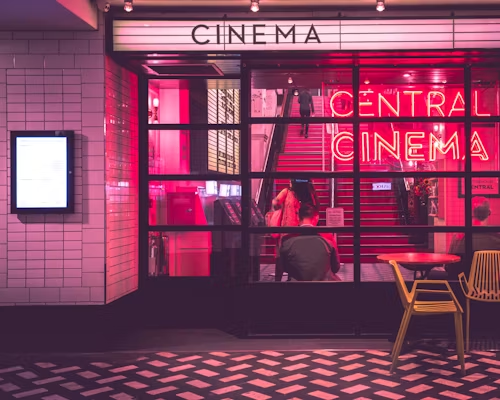
Movie theater with neon sigh reading “Cinema”
(Image courtesy of Myke Simon via Unsplash)

The Answer Is No

I was never a big New Year’s resolution kind of guy. I’m not sure if this is because I’m not very superstitious, if I’m just non-conforming, or if I’m simply able to stick to a goal. I’m not trying to toot my own horn and say I am the most disciplined person in existence, but typically if I really want to do something, I don’t resolve to, I just do it. 

When I decided to go back to college I didn’t deliberate for months on end if it would be worth it. I barely did any research into the path this decision would take me on. I made a decision, and the next day began filling out my application forms (I was lucky that it was the enrollment period). 

Not making New Year’s resolutions was working for me. Until it wasn’t. I started noticing a feeling of being taken advantage of too often, both at work and in my personal life. A few years ago was the first time I made a real effort at a New Year’s resolution. My resolution was to say no. 

Just say no

I might be more of a people-pleaser than I’d like to admit, since this resolution took some practice. I didn’t think it would be hard to use at a job I genuinely dislike. But I was surprised at the awkward feelings of guilt that came over me when I would say no. 

Things I said turned down started with covering extra receptionist shifts (I’m not a receptionist, I’m a trainer). I would end up working seven days per week with no overtime when I did this. I stopped handling inventory management, which included ordering, tracking, and stocking the supplies for no extra pay. I realized that doing these tasks would get me nowhere. I was denied raises and promotions without reasonable explanations with the expectation I would keep handling extra duties with nothing but a smile on my face (who wouldn’t love an employee to take complete advantage of?). Looking back, it seems ridiculous, since my training numbers were good enough to keep me employed on their own.

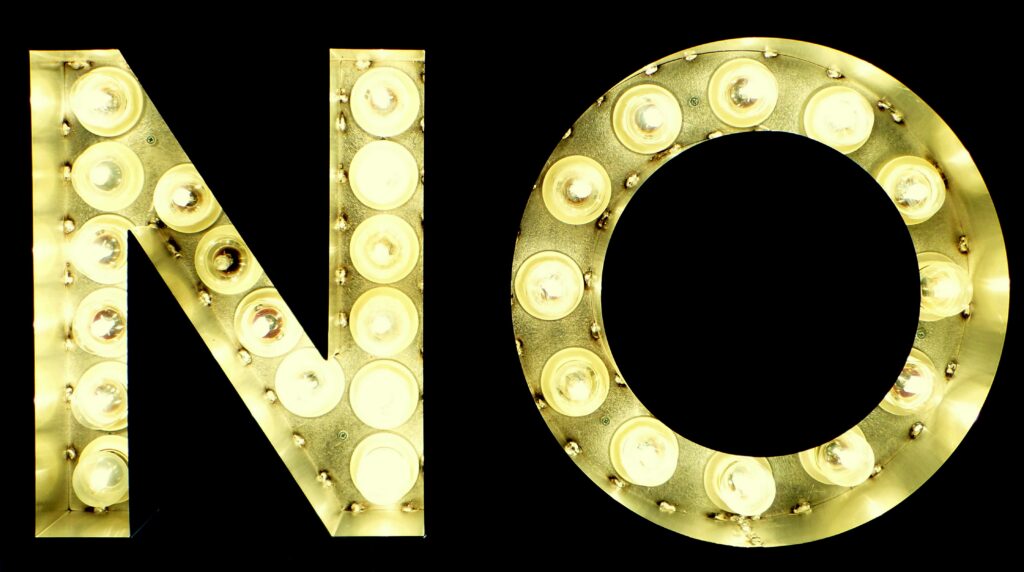
 A big sign that reads “NO,” composed of multiple lightbulbs against a black background.
(Image courtesy of Morgan Bryan via Unsplash)

With all things considered, I still felt guilty when I began this resolution. I realized how hard I found it to put myself first. Now that my answer is no, work is less stressful, and I am no longer bothered to pull extra weight that shouldn’t be my problem in the first place. I began drawing hard boundaries on what I found acceptable. It’s almost as if I started being respected. While saying no at work may have seemed difficult, saying no in my personal life would make it seem like a cakewalk.

Saying no to family can be rough. They’re family after all. But sometimes they overstep. 

Just say no to rugs

Don’t get me wrong, if my family needs help with something, I’m there. It’s when there are random jobs every time I go over there to work out, which in the past has been several times per week, that I draw the line. 

No one needs a rug moved every week, and the chair will be fine in its current spot for a couple more days. Saying no to things like this can be weird. They seem simple at first but when they become daily requests, it is more time out of my day, and when there is a commute to consider, time is everything. I prefer to know about these jobs ahead of time so I can plan, and mentally prepare accordingly. Everyone seems to have gotten used to me saying no to the smaller things. It’s nice being able to drop in for a workout and say hello without it being accompanied by a chore. 

My favorite thing

Saying no has gotten easier. It’s my favorite word. Every year I re-up the resolution by trying to set even firmer boundaries. Do I fall back into old people-pleasing habits sometimes? Of course. But I do my best to stay conscious of what I’ve set out to do. Saying no hasn’t negatively affected my life yet, and it is something I plan on continuing. 

Until there is no one left to say no to.

When Too Much Tidiness Brings Too Little Joy

I’ve always been a collector of chaos. Throughout my life, I tried to look decent and proper, yet I often found myself in a mess, unable to pinpoint how I got there. My apartment was a testament to all that. Stacks of books on the shelf and others scattered on the couch in the living room, not to mention clothes spilling from the wardrobe, showed how carelessly I handled my belongings. 

Got milk? Got soap?

It wasn’t hoarding, exactly. It was all just life, piling up. Cluttered home, uncluttered mind. One time, a friend visited and was shocked by how many unnecessary things I owned. All these books and clothes and shoes, even as I lacked some things he considered essential, like hand soap in the sink or milk in the fridge. I saw his point, and, as life piled ever higher, I decided enough was enough. As much as I treasured my belongings, I was becoming overwhelmed.I needed order, joy, and change. That’s when I dove into the world of Marie Kondo, the Japanese organizing consultant, author, and TV personality.

I added her bestselling book, The Life-Changing Magic of Tidying Up: The Japanese Art of Decluttering and Organizing, to my already absurdly overflowing collection. But this book struck a chord. Kondo’s philosophy deconstructed everything I thought I knew: keep only what sparks joy. Well, honestly, I’m that kind of person who gets attached to his belongings. But here, I’m reading from a tidying expert whose main advice is to get rid of the “unnecessary” stuff, the life piling up. It was really difficult to fully incorporate her ideas of tidying and rearranging my room, but if I wanted change, I had no option but to follow her instructions. After all, she convinced me that a messy room is a reflection of a messy mind, an idea that struck me with guilt. 

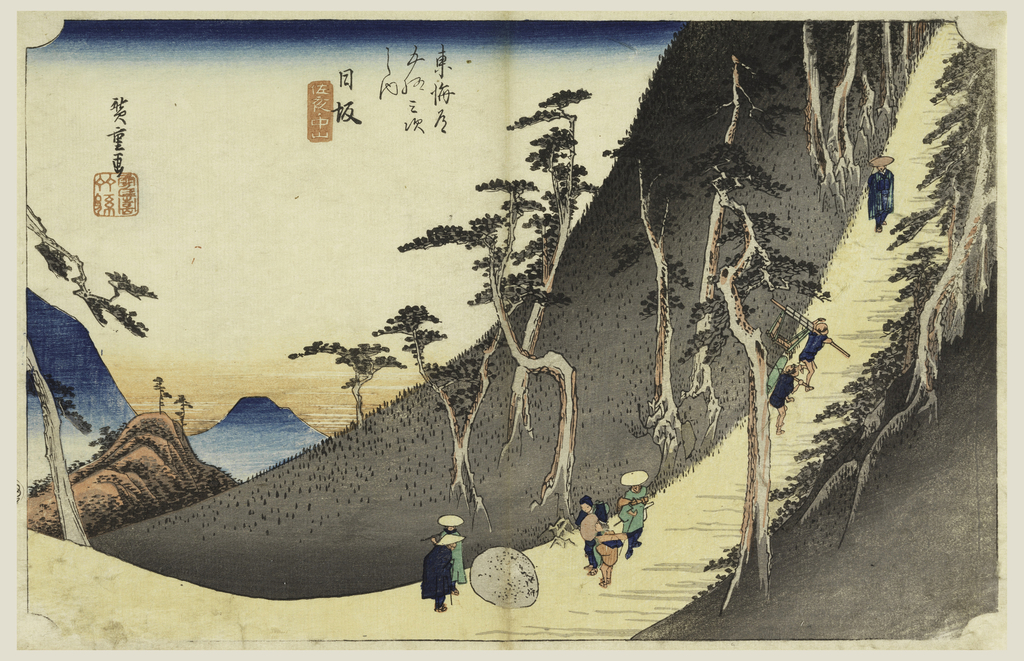
1834 Japanese woodblock print of climbing a mountain road by artist Ando Hiroshige
(Image courtesy of Cooper Hewitt Museum)

The cleaning

I envisioned my space transformed into a serene haven where every item was curated,, tastefully displayed, and dripping with meaning, like a museum exhibit. That weekend, I emptied my closets onto the living room floor. Clothes piled up like a mound of cotton. And as any good mountaineer will tell you, the most dangerous part of the climb is on the way down.

I held each piece, waiting for that elusive spark. Does my favorite designer hoodie bring me joy? What about the suit I wore on my first date with my girlfriend seven months ago? She’s now my ex-girlfriend. There is still a spot of mustard on the cuff. A faint flicker of yellow. Fear disguised as  joy. Now mostly guilt. It needs to be cleaned. Instead, it went out. Goodbye bitter suit. Hello uncluttered joy. I applied this strategy to everything in my house. If it brought me happiness, I kept it.

Afterward, I had a huge pile of clothes, books, wallpapers, and even utensils, all ready for donation.  I partly  felt like I betrayed my stuff, for instance my very lucky sports shoes that I used to win races back in high school had to go. I shed a tear actually. Surely, if they were to talk, they would have convinced me to keep them. But the process felt cathartic, like shedding old skin.  And when I finally let go? Magical. 

That feeling of blissful emptiness

I folded my remaining clothes into neat rectangles, standing them upright in drawers like little soldiers, per Kondo. Socks were paired lovingly, with no more orphans. I thanked each book I discarded, whispering Kondo’s ritual of gratitude. It felt silly at first, but soon it became calming. My space felt lighter, and the sunlight streaming through the open windows brightened the room.

For a while, it worked. The good lighting created a happy atmosphere, and I stopped worrying about cleaning utensils, as I only used the necessary ones. There is no sink full of dishes where there are no dishes. My laundry basket was immaculate. It stood empty,  complaining about a lack of dirty clothes. Living without was liberating at first. Less was more. 

I saved money. Time. Mental energy. No more deciding what to wear. Everything matches when it’s all you got. My apartment felt spacious, blissfully empty, even. I filled the quiet hours with mindfulness podcasts, ginger root tea, and self-gratifying laughter at the genius of my new adaptation. I thought happiness lay in subtraction.

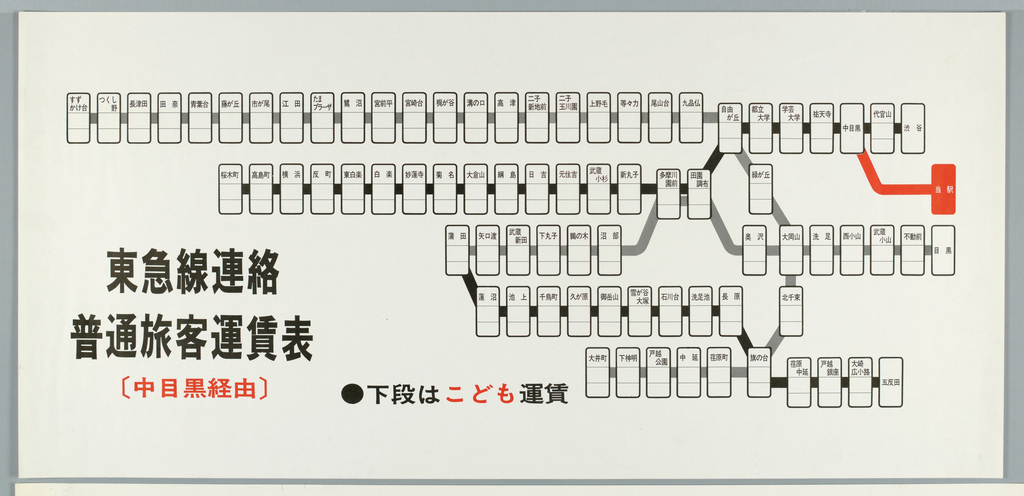
Tokyo subway diagram
(Image courtesy of Cooper Hewitt Museum)

Perhaps

But empty rooms have a way of becoming echo chambers. 

The joy sparked by my tidied items began to fade. Perhaps I had been wrong to think that getting rid of my stuff would make me happy. I realized those items had a purpose. While Kondo’s method felt right, it left my house feeling soulless. I missed the haphazardly arranged books, the overflowing laundry basket, and the sink filled with unwashed dishes. The walls seemed to stare back, blank and accusatory. Where were the photos of friends and the postcards from my travels? 

Minimalism extracts a dear price. It takes away the clutter, but you also lose your soul. Your unique identity. An empty space is a cold universe. Damn that Marie Kondo. She took away a big part of me. I began to crave color, texture, and abundance. Life!  So I decided to bring back wallpapers, velvet cushions, and different textiles.

Joy returned! But so did the feeling of being overwhelmed. Dusting became an all-day task; finding anything meant rearranging everything. The abundance that once thrilled now suffocated. I would alternate between elation and exhaustion. 

One night, though, while watching documentaries under my blanket, I finally saw the light. Marie Kondo, minimalism, maximalism — they were just concepts imposed on my life like a weight. They sparked temporary joy but missed the essence: my home should reflect me, not a trend. I needed to find my own way, blending different elements into something genuine.

Lazy Sundays and stray socks

I started small, viewing my space with fresh eyes. I kept Kondo’s joy-sparking ritual but relaxed the strictness. Some of my greatest messes brought me the most joy, I discovered. I kept clothes unfolded and wrinkled in baskets — practical for my lazy Sundays. At the same time, Kondo’s minimalism taught me to appreciate negative space, so I cleared one wall entirely, allowing it to breathe like a blank canvas. Maximalism inspired me to create curated clusters: a bookshelf filled with beloved reads, surrounded by photographs and wallpapers that evoked real memories.

Friends noticed the change when they visited. “It’s so you!” one said. My apartment felt alive and loved, not overwhelming. Contentment settled in quietly. It wasn’t the jolt of joy from tidying or the thrill of new things. It was steady, like a heartbeat. I moved through my space without tripping, searching, or second-guessing. I found happiness in imperfection: a stray sock under the couch and a stack of unread magazines promised future delights.

Looking back, those concepts were stepping stones. Marie Kondo taught me to discern between minimalism and maximalism. True contentment comes from blending the two — creating a space that evolves with me. Today, as I sip tea by the window, watching leaves swirl outside, I feel it: This is my sanctuary. Messy in parts. Minimal in others. And fully me. In that, joy abounds.

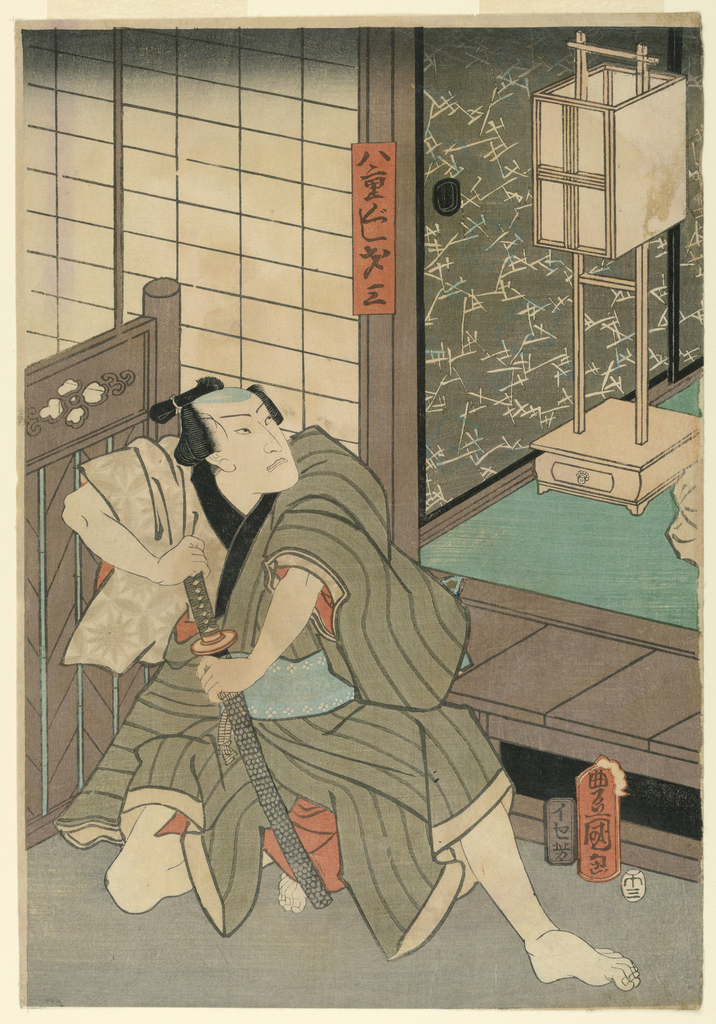
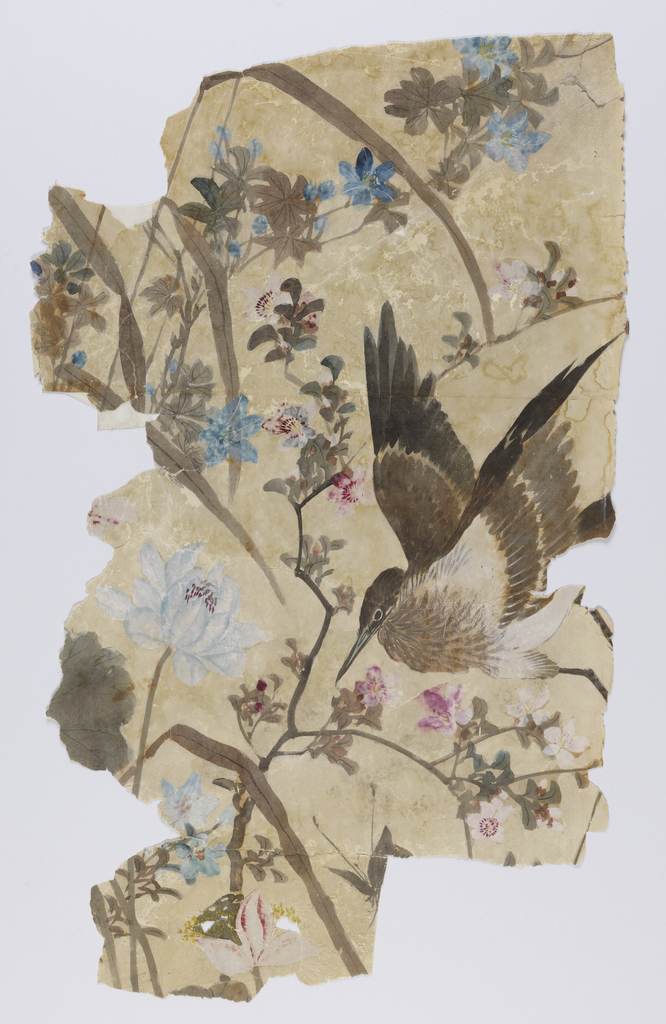
Scenic Bird and Flowers
(Image courtesy of Cooper Hewitt Museum)

A Renaissance of LARPing: The Modern Age

The basics

LARP is defined by The Merriam-Webster Dictionary as “a live-action role-playing game in which a group of people enact a fictional scenario (such as fantasy adventure) in real time typically under the guidance of a facilitator or organizer.” While LARPing may slip under the radar for most, it is a growing community in more ways than one. I am a LARPer, but probably not the kind you are thinking of. The live-action role-playing that I have been participating in since I was a child is airsoft.

Airsoft is an activity in which players use military replica weapons that fire plastic pellets. Compared to what is used today, the equipment used initially was rather crude. They were simple, limited to basic handguns and only a few kinds of rifles. None had the automatic or battery-powered features that are now the standard of today. Having been made from clear plastic with bright orange tips, the overt harmlessness of the design also made playing in our neighborhood much easier. Another major difference between iterations was the significant increase in power. Back then, getting hit by an old spring-powered gun would likely leave you with a red mark for the day or even a welt if you were hit close enough. Nowadays however, modern versions are powered by both a spring and a motor, giving them far more force than before. I have the literal scars to prove how powerful they have become. Their realistic appearance also presents new challenges. They look so much like actual firearms that they require a rifle bag for transport – something you can buy at most airsoft retailers. This authenticity also makes it difficult to find acceptable places to LARP without drawing unwanted attention.

Questionable decision making

I remember the last time my friends and I  went airsofting in public like it was yesterday. We found what seemed like a perfect spot in the creek bed – deep and hidden from the road – but our crucial mistake was that it backed up against a parking lot. This resulted in someone spotting us and calling the police, and the afternoon ended with a detainment in handcuffs and a good long talking-to by the responding officers. 

Thankfully, being kids undoubtedly helped our case, as we were let off with only a warning. We eventually solved the problem by moving our games to official airsoft parks like Hollywood Sports and SC Village. With a safe and affordable place ($37 for the entire day,) our weekends were suddenly booked solid. In the end, the experience was incredible; we could join huge “fights” with over 100 players per team, all within a structured environment with a defined set of rules.

A regulated environment

The first stop after getting your wrist band is the chronograph station, usually just referred to as the chrono test. In order to ensure the safety of the participants, the purpose of the test is to measure the muzzle velocity of the arsenal you plan to use that day. If an airsoft rifle shoots too fast and hard, it can cause injury to the other players. The standard tool is a digital reader that is placed over the end of the barrel. The referee will instruct you to fire a few BBs (round plastic pellets) to accurately measure the speed and force your rifle produces.

I remember I failed my first chrono test. I had just gotten a new rifle; it was fresh out of the box and never even been fired. I plugged in the battery and excitedly waltzed over to the testing booth. When I took a shot, it registered at 500 feet per second, 100 over the limit. I felt horrible that I had failed the test and would not be allowed to use the rifle. We later discovered there was a manufacturing error, and my rifle had accidentally been given a higher gauged spring. This was ultimately a simple fix, and I still own it to this day, over ten years later. 

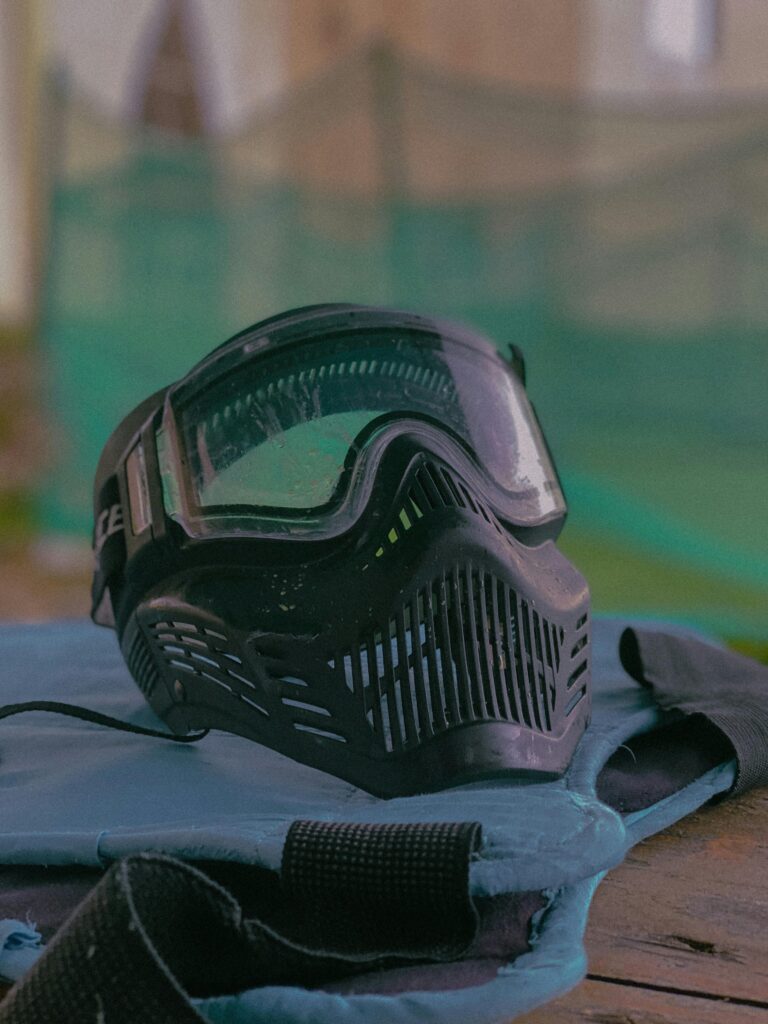
A close up picture of a full-face mask and goggles, resting on a tactical vest.
(Image courtesy of Hanniel Yaks)

The next major rule is the ten foot rule. If you come within ten feet of another player you must call out “bang bang” instead of shooting them in order to avoid serious injury. There was a time where it was common to yell out “surrender,” a term I continued to use even after it became antiquated. It often got a laugh out of people. In reality, when out on the field, it is easy to get startled rounding a corner and fire off ammunition point blank at each other. This is something I have been on the giving and receiving end of before. People are cool about it and everyone apologizes but there is always that one guy or group being asses about everything. 

The other strictly enforced rule is the prohibited use of pyrotechnics. No smoke bombs and certainly no fireworks. Another banned item that loosely falls into this category is what is called Thunder Bs. If you’re familiar with a flash-bang, a Thunder B is the bang with no flash. These were banned at one of our local fields after someone lost hearing in an ear, or so the story goes. None of us ever witnessed anything so dramatic in all our years of playing. The last but most important safety rule is to wear a full face covering rated for airsoft and or paintball that includes ear protection. Nobody wants to lose an eye, burst an ear drum, or swallow a pellet.

MILSIM

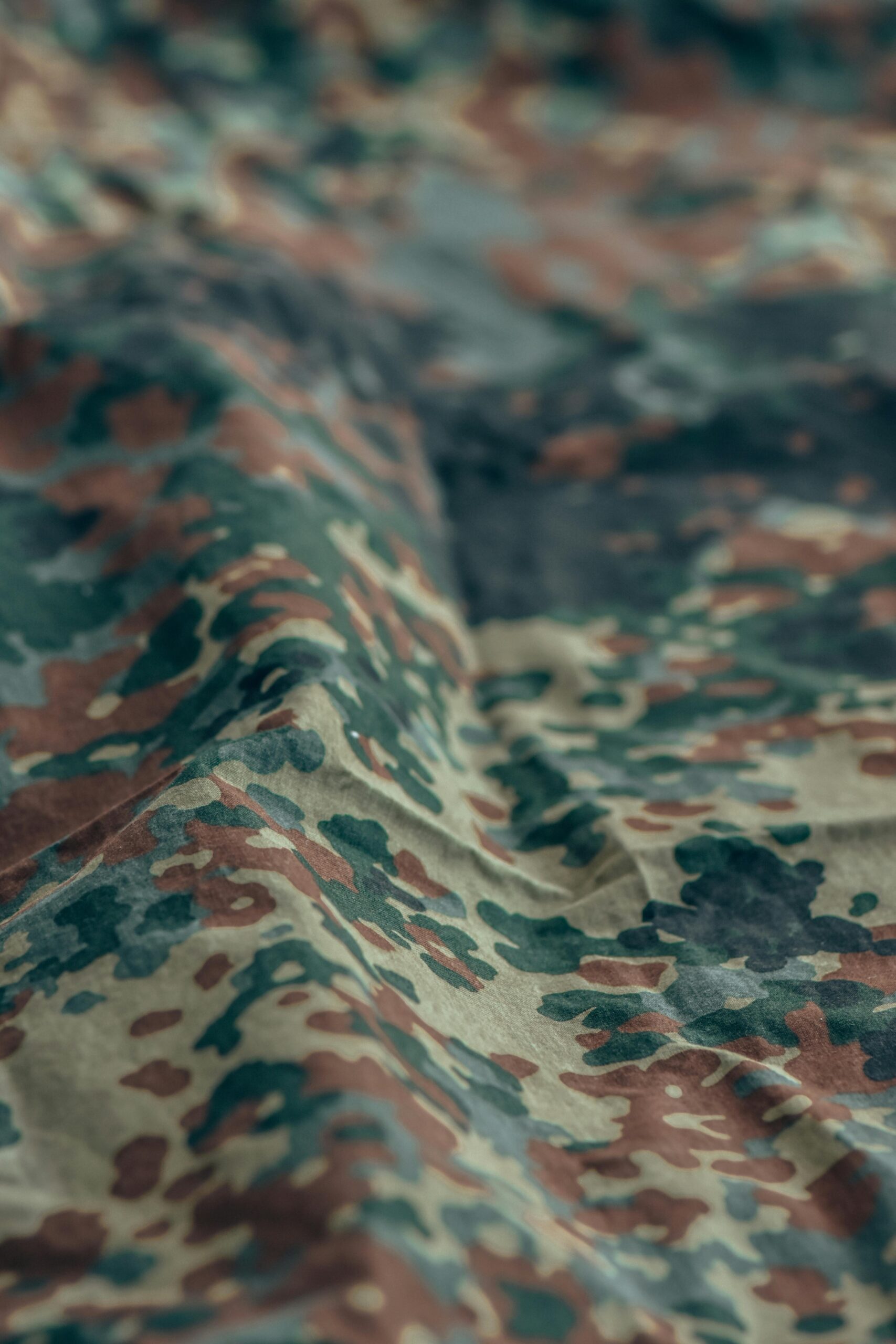
There is another level to the world of airsoft which are military simulation games, MILSIM for short. These games can last for days, have more detailed objectives, chain of command, and come with uniform requirements to play. This can mean that each team requires a certain type of camo to differentiate from each other. They also do not always require the same safety gear as public games at sports parks. People only wearing safety glasses is a common sight. I have not had the pleasure of participating in such games, only watching through YouTube. In my area of Southern California, they are not that common and can be expensive. I also do not own specific camo gear. I normally wear a black T-shirt and cargo shorts for comfort. If the opportunity were to arise and I was able to get away for a few days I absolutely would.

A Simple Matter of Aesthetics

So why can airsoft be considered LARP, but paintball cannot? It’s all in the look. In classic LARPing people don suits of armor, swords, shields, and bows to portray soldiers of a different era. The airsoft community cosplays as modern warfighters (sometimes specific eras such as Vietnam), and at the very least, the weaponry resembles actual firearms. Paintball does not share this quality as the equipment is unique to the activity. Paintballers never wear anything resembling the military. My personal airsoft attire is not military either, however, I do go for a general insurgent-type look. That is simply because I feel weird dressing as military personnel having never served.

While airsoft is not the first thing people associate with LARPing, it fits the bill. It simulates fighting your way to victory through strategy and teamwork (with a welcome lunch break). More importantly, it is a way for you and your friends to get out and have some fun.

Perfectly Imperfect

As someone who grew up in a family that values excellence, I was preoccupied with perfection for most of my life, whether it was in school, relationships, or everyday life. I set impossibly high standards for myself, and I thought that only through flawlessness could I achieve success and happiness. It wasn’t until I hit a breaking point that I realized the desire for absolute perfection was what kept me from finding true contentment and success. It was only when I embraced my defects did I achieve a better outcome than I could have ever imagined.

All became clear when I was 23, my life marked by ambition and self-doubt. I had just graduated from a world-class Israeli university with a postgraduate degree, and was immediately seized by the ambition to get a PhD. My first job was in a biological research company in the UK where I was mandated to research a study titled Quorum Sensing Disruption by Urban Plant Volatiles: A New Avenue for Anti-Biofilm Therapy in Multi-Drug-Resistant Pathogens. The job was everything I had hoped for — challenging, fast-paced, and full of opportunities to prove myself. But along with the excitement came an overwhelming fear of failure. However, I was determined to show my worth, to stand out, to be perfect.

At first, I was meticulous in everything I did. Every email had to be perfectly worded, every presentation flawless, and every project completed with a near-obsessive attention to detail. I spent late nights tweaking reports, overanalyzing every decision, and second-guessing myself. But no matter how hard I tried, it never felt like I had done enough. My colleagues seemed to work more with less effort, and yet their work was praised just as much as mine, perhaps even more so. I couldn’t understand it.

My performance reviews, while generally positive, always left me feeling like I wasn’t living up to my full potential. I began to notice something unsettling: I was burning out. I would go to bed exhausted every night, only to wake up feeling the same sense of anxiety and pressure as the deadline approached. I was trapped in a cycle of trying to be perfect, yet never feeling satisfied with the outcome. In my mind, the only way to get ahead was to be flawless in everything I did, but it was taking a toll on my mental and physical health.

The turning point came during a major presentation to a group of executives. I had spent weeks preparing, rehearsing, perfecting the slides, and running through every possible scenario, yet the real challenge lay in the topic itself: a combination of plants, microbiology, and medicine. As a  microbiologist, I had to be able to face and argue successfully in front of a panel consisting of individuals from a multidisciplinary field. On the day of the presentation, my nerves were at an all-time high. I could barely sleep the night before, and when I woke up, I had a knot in my stomach. I was convinced that one small mistake would ruin my chances of advancing in the company.

As I stood in front of the panel, I felt the weight of everyone’s eyes on me. I began the presentation, but my hands were shaking, my voice trembling. Halfway through, I stumbled over my words and froze. The silence in the room felt deafening. I could feel my face flush, and my mind was racing. “This is it,” I thought. “This is where it all falls apart.” But then, something unexpected happened. One of the executives, a woman named Victoria, spoke up. “Hey, it’s okay,” she said with a smile. “Take a deep breath. We’re all human. Let’s keep going.” At this point I remembered what my master thesis supervisor, Dr. Gidon Winters once told me: “Fredrick, everyone feels nervous, even after having published several peer-reviewed articles and made countless presentations, I am often nervous while presenting in a room full of people.”

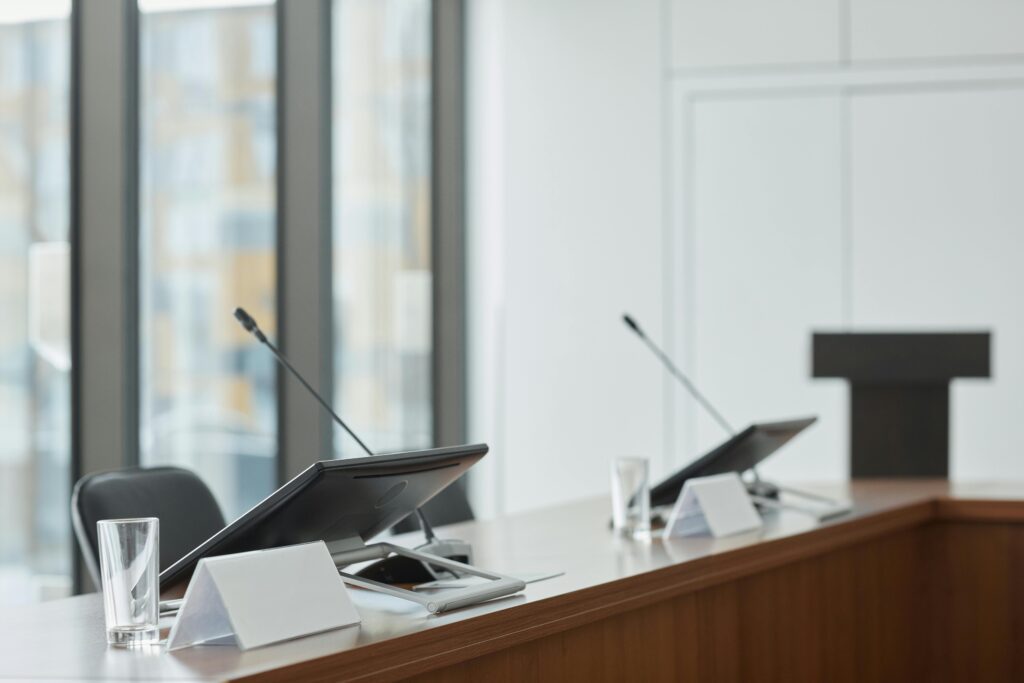
An image of two monitors and long, skinny microphones atop a conference table with a podium in the background.
(Image courtesy of Werner Pfennig via pexels)

That moment, so small yet deep, changed everything for me. The pressure I had put on myself to be perfect, to avoid any flaws, was suffocating me. Victoria’s kindness and her understanding of the situation made me realize that mistakes were not the end of the world. They were simply part of the process. I took a deep breath and continued the presentation. My hands still trembled, but I felt a sense of relief. The rest of the meeting went smoothly, and despite my initial panic, I received positive feedback, and the paper was ranked as one of the best research papers in the company. I realized then that the perfection I had been striving for wasn’t what mattered. It was how I handled the imperfections that made the real difference.

After that presentation, I started to shift my mindset. Instead of obsessing over every little detail, I began to focus on progress rather than perfection. I allowed myself to make mistakes and learn from them. Instead of spending hours perfecting a report, I focused on completing tasks efficiently and learning from feedback. I began to understand that imperfection didn’t equate to failure — it was an opportunity to grow.

Over the next few months, I noticed a change in how I approached research and work in general. I was more relaxed and more present, and I wasn’t constantly living in fear of making a mistake. I began to take on more challenging projects, and I wasn’t afraid to take risks. Some of those risks didn’t pay off of course, but others turned out to be some of the most rewarding experiences of my research. My team noticed a difference, too. I became a better collaborator, more willing to ask for help when I needed it, and more open to other people’s ideas.

But the benefits weren’t limited to just my research. I started to apply the same principles of imperfection to my personal life. I had always been self-conscious about my appearance, constantly comparing myself to others and trying to achieve an unattainable standard of beauty. I spent years dieting, exercising, and obsessing over my appearance, only to end up feeling frustrated and inadequate. I realized that I was never going to look like the models in magazines or the influencers on social media, and that wasn’t the point. What mattered was how I felt about myself.

I began to embrace my natural features, faults and all. I stopped worrying about every little flaw and started appreciating what made me unique. I no longer measured my worth by the number on the scale or the reflection in the mirror. I started to focus on things that truly mattered — like spending quality time with family and friends, pursuing hobbies, and learning new skills. And, most importantly, I permitted myself to be imperfect.

Sometimes I forget that I’m allowed to be flawed, that I’m allowed to be human. Perfection used to be an addiction forced onto me because everyone chased it. However, since I strived to accept my flaws, my drive has been different. I want to make mistakes and learn from them. I want to develop a better understanding of everything. I want to be held accountable for every mistake and bad decision, and to be gifted with the grace to grow. I have done a lot of imperfect things — from lying to breaking others’ hearts to ghosting people with no reason — but that’s the beauty of discovering myself.

I learned that all these faults don’t define me; instead, they are stepping stones to meeting the version of myself I can honor. I realized that I had embraced a part of myself that disguised itself as good, but it was the version of myself that prevented me from appreciating who I am. I have taken accountability and changed my ways, character, and behaviors. It’s funny how we often think that perfection is the key to success, but in reality, it’s our imperfections that make us human, and it’s through those imperfections that we truly grow.

Eventually, I discovered that it’s not about being flawless. It’s about showing up, learning from the mistakes, and being kind to yourself along the way. When I let go of the need to be perfect, I found not only better outcomes but also a sense of peace and contentment that I had been desperately searching for. Sometimes, it’s in our imperfections that we find our greatest strengths.

Am I Posturing?

Here’s an idea

Over the past year, people have asked me many questions about my health, then proposed how I should approach seeking medical answers. At this point, the suggestions and perspectives overlap, muddling all of the feedback into one processing & storage facility within my brain. I know people have good intentions, but. 

So it becomes complicated when there are so many factors that affect my ability to receive the correct diagnosis.

My health journey began in early summer of 2024, when bloodwork that was done during my voluntary psychiatric hospital stay indicated that part of my lab work was not within the “normal” range. I began experiencing widespread pain, dizziness, fatigue, and other symptoms after my lab results were examined. Since last summer, I have been limited in my mobility due to my symptoms, as I become extremely dizzy when my posture changes from sitting to standing. I know that my widespread pain and fatigue is because of my fibromyalgia, but I continue on my journey to receive the information that will allow me to further adapt in my daily life. 

Posture and diagnosis

After rounds of regular bloodwork, head imaging,  EKGs — plus two heart monitors — I do not have an official diagnosis for POTS (Postural Orthostatic Tachycardia Syndrome), yet it fits as “a group of disorders that feature orthostatic intolerance. Orthostatic intolerance is the term used to describe symptoms that occur when a person stands up and can be relieved by lying down.” I fit the criteria of having this condition, due to the fact that I become dizzy when standing, as well as my heart rate fluctuating before and after standing. Thus, my posture is part of the diagnostic criteria itself. Possibly. 

About two months ago, I decided to go on a walk around my neighborhood, ignoring my body’s intuition that I overexerted myself. As a result, I endured presyncope/syncope and collapsed in the grass a few streets over. Since then, I do not attempt to regularly overexert myself. When I reach the breaking point, I listen to my body. It isn’t safe to collapse in grass, especially when your heart rate reaches the 150-160  beats per minute range. I suspect that I have POTS, but it has not been officially confirmed by a healthcare provider. It’s often hard for me to tell if the symptoms I consistently undergo are from my fibromyalgia (pervasive pain) or from what aligns with POTS (standing symptoms). I am unsure of which specific condition it is, as it seems to be one of three conditions on the POTS spectrum.

Although I am 23 and still figuring out how to adapt, I have many interests and ambitions that fill up the time I have lost. Even with lost time I could have spent at college parties or social events, I feel proud of who I am, and who I am becoming. I have gained a deep fondness for accessibility initiatives and disability rights. Activism and advocacy has become a love of mine, and it’s something I often research, to inform myself on a deeper level.

Accepting and adapting

Being a disabled woman is part of my identity, something I have learned to take pride in. The disability community is my community — my connection to others who can relate to my experience. My health journey has changed my outlook on the world, as I continually consider elements of my everyday life that I previously did not think of. For example, in social gatherings, I bring snacks, water, a portable fan, and a foldable camping chair, just so I can comfortably participate. 

When traveling, I research the cities and their accessibility features. Will certain routes require more walking? Do certain hotels and buildings not have elevators? Do I need to bring my shower chair to the hotel? Are there seating areas inside and outside of popular destinations? Am I allowed to bring my own water bottle into museums? Depending on my energy level, I sometimes have to skip or delay traveling to further destinations within a city. 

Overcoming hurdles

I attempt to adapt as best as I am able to, but it can be very difficult at times when I am unsure of which accommodations & support needs to utilize.  In August of 2024, I purchased my first cane in order to independently support my balance when walking. Navigating a college campus was already challenging before I became more physically disabled, but it developed into something that was 10 times as difficult. 

The college I recently graduated from is known for its historic features. Translation: it was not the most accessible. 

For instance, traveling to academic buildings was extremely frustrating, as I would often have to cut through other buildings with fewer stairs to reach class. Moreover, I had to speak to several of my professors about having classes relocated to a different building, so it was easier for me to attend my courses. Going from my dorm that had an elevator to the cafeteria took me an extra six minutes with my route of shortcuts. Accommodating myself for one year on campus was not simple, yet I persevered and graduated.

Reality that is life

However, in less than six months, the grace period for repaying my undergraduate student loans will end, meaning I will start paying back my loans. I do not know if continuing to keep searching for verifiable results is a viable option for me in the near future, even though I view it as necessary.

To most, it’s just some writing on a piece of paper. Just something on my patient portal. Just words. People often ask me why I keep trying to figure out what is going on with my health, why I am getting myself into debt over it. I see it as something that is vital for myself. Wouldn’t I wish I didn’t have to owe a lot of money to doctors and hospitals just to figure it out. 

Taxed if you do, taxed if you don’t

That’s the reality of being chronically ill. It’s either I get myself into medical debt or go without knowing for the rest of my life. That’s the disability tax: the extra money that I put into healthcare and mobility equipment so I can thrive in this world. 

For myself, seeking a diagnosis is not about a label or just something that exists in my medical chart. A diagnosis will create the specific accommodations that will help me succeed. I need it. Accommodations are tailored, personal, and often based on your medical history. Without it, I will continue to have difficulty finding jobs I am able to perform as a result of the physical limitations my health has on my body. I aim to continue searching for a job where I do not have to stand for long periods of time or lift a lot of weight. Impossibly. 

I know I will eventually reach this goal, because I know I have a support system and will have better access to resources when I am no longer in central Virginia. 

I may be unsure of how my life will look in terms of my health, yet I approach this challenge through the lens of destigmatization and inclusion. I can accommodate myself to the best of my ability, while using my voice to speak up for those who cannot do so themselves. 

Small European robin with orange face and breast, calling out with open beak.
(Image courtesy of hotblack via Morguefile)

When life feels tough, I remember a quote that has helped me through hard times, “Embrace the void, and have the courage to exist” — Daniel Howell.  

To readers who can or will be able relate to my experience at some point — you are more than valid. You are seen, you are enough, and you belong. You will eventually have the medical results that you have sought after for so long. 

You are not alone in your journey. When you are ready, there will be others in the disabled community who will welcome you.

Campfire Stories: Kindling for Enduring Friendships

Under the clear night sky with countless stars, the campfire crackled with joy and elation at the camp. It brought our now-getting-cold evening retreat back to life on the riverbanks of the Lelesan near Eldoret, Kenya. 

The images of that night still flash vividly in my mind. It was those moments when you feel like time should stop for a while so that you can enjoy every tick without it moving. I had just turned 23 then and had just finished school. I was filled with the spirit of adventure, and this triggered an urge that would later lead to the best camping moment of my life. 

Sharing the spirit with me were my two buddies, Tony and Joshua. Having a common goal, that is to go camping somewhere far away from the monotonous home environment, we embarked on a journey that would later lead us to Lelesan Park. The park is a very beautiful spot that is really nice for decompressing and reconnecting with nature with a stunningly gorgeous popular cliffside lodge overlooking the Kenyan landscape.

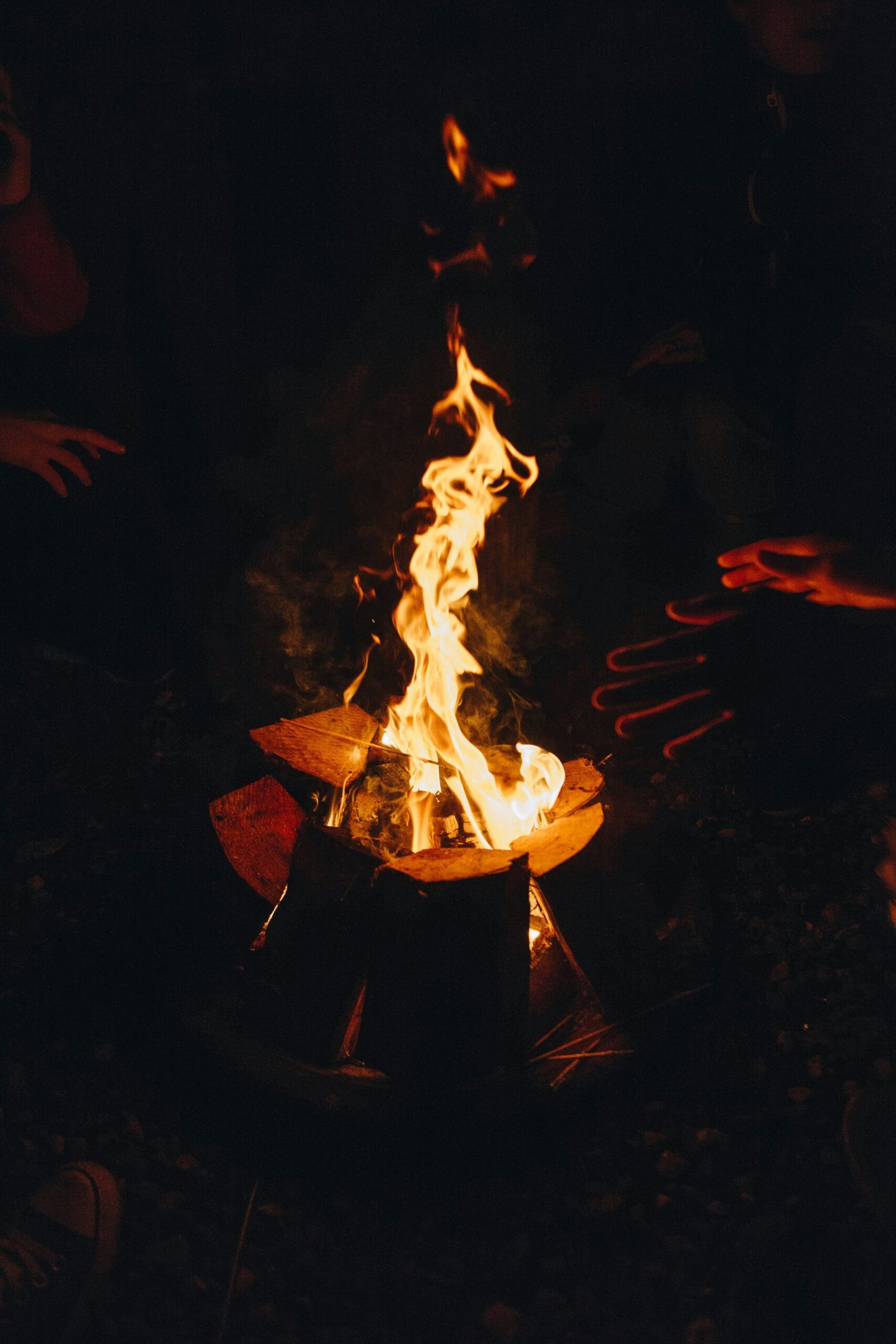
We gathered around the fire after a long day of swimming and fishing in the river. Our hands extended towards the fire, palms out and fingers stretched, as if we were pushing the fire away. Of course, in reality, it was a technique to help our bodies conduct the heat very fast, which was sorely needed as the temperature had quickly dropped as the sun fell.

At the same time, Tony was busy roasting the fish we had caught during the day. Several other people joined us, strangers and friends alike. At this point, one of the campers broke the silence. He suggested we introduce ourselves, now that everyone was at ease with each other and getting along. The invisible bonds among us seemed to be strengthening so quickly that we had reached a point of storytelling without even noticing.

Joshua was the first to go. He cleared his voice dramatically in a bid to capture our attention. “Alright, everyone, gather around. I’ve got a story that will send a cold shiver down your spine.” 

On hearing this, Tony began to complain, “Really, man? I’d rather not ruin the night with your scary stories.”

Joshua was known as the friend who loved watching horror movies and enjoyed every minute of the terror. This was something that Tony and I found very fascinating, as we could not even stand a scene of a horror movie. Despite our hesitance, the majority of the group was fine with whatever chaos Joshua could come up with, so Joshua was free to begin.

Joshua leaned forward, his face struck by the flickering flames. “It was a night much like this one back in my village. There was a funeral taking place, and so, as the culture and tradition dictate, the members of the village and friends always came to have a night vigil. It’s basically to keep the bereaved company as they awaited burying their kin the following day. Now, midnight came, and everything was moving on just normally until immediately before dawn…

“Then, a scream was heard from one of the corners of the compound. It was so sharp that it superseded the noises that came from chatting and dancing, as it is a tradition to give the deceased a ‘last dance.’ Everybody went dumb, staring at the direction of the scream. It was a bush walking towards where the crowd had gathered. Everyone stood to their feet and froze for a minute…

“What happened next would remain a story that would always be said to question the courage of the members of the community. Everybody scrambled to hide so as not to be caught by this mysterious walking bush. They said that that was the spirit of the deceased that was not happy with how his last moments were being celebrated.” Joshua ended this story, leaving us asking many questions that he said he could not answer. 

Indeed, it was a scary story because in its wake, no one wanted to listen to any other story of the sort for the rest of the night. 

“You guys remember back in high school when we broke into the school farm to steal melons?” Tony started drawing us away from the previous scary story of a walking bush. “I remember Joshua was the first to shift the blame after we were caught by the security guards. He was so terrified to a point he was almost pissing in his pants.” 

This did not seem to sit well with Joshua. While I cannot remember word-for-word what he said exactly, the story he decided to bite Tony back with was so brutal that Tony decided to leave the campfire. Joshua reminded him of when, during a school event, we decided to mingle with other students after the function was over, especially those from girls’ schools. Joshua thought he could win over one of the girls who seemed to have captured every boy’s attention, but when he approached her, it was as if the girl had planned to single him out and snub him. The humiliation that came with the action made Joshua swear never to approach any girl again.

Despite Tony’s abrupt departure, the banter went on. Each of us piling on, embellishing the story with details that may or may not have happened. That’s how campfire stories work — half truth, half legend, all heart. Other memories unraveling and coming back to life. The nostalgia felt like the moments happened yesterday and not years back. The rest of the night faded into more stories, pranks, and memories that felt like they belonged in a movie. 

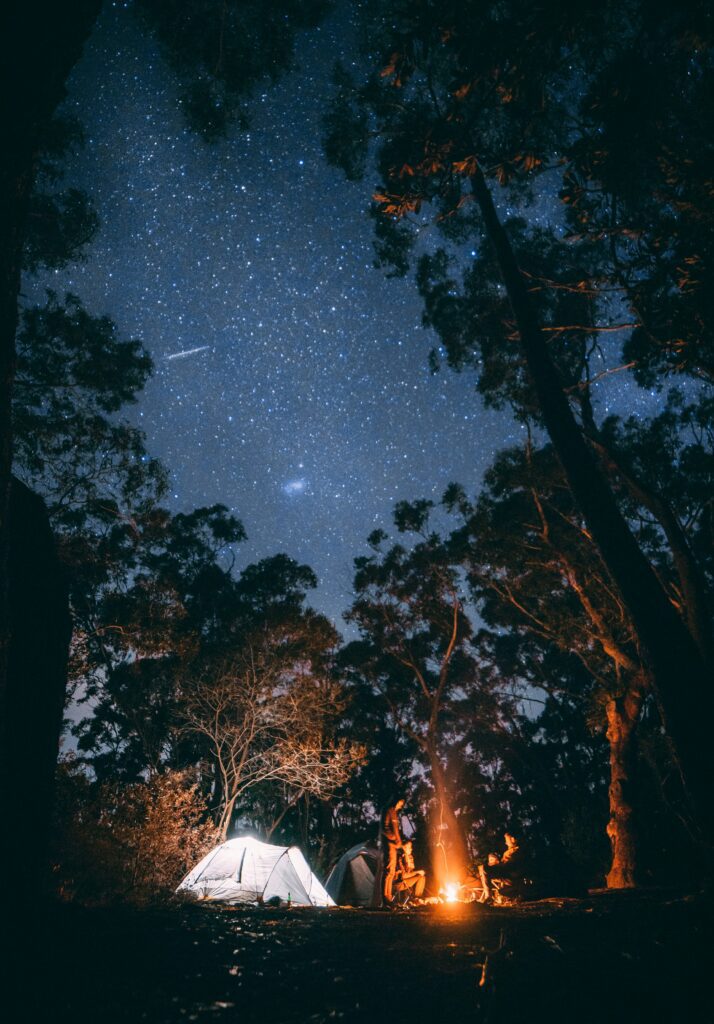
An image of a campsite surrounded by trees, with the stars shining above.
(Image courtesy of Jonathan Forage via Unsplash)

At one point, we all went silent, listening to the crackle of the fire and a distant hooting owl. It was one of those rare pauses when you realize that you’re just right where you need to be with the right group of people who know you well.

We did not see Joshua leave, nor did we realize that he was not at the campsite until he let out a loud yell. It sounded as if he was in grave danger, and this made us panic so badly. We gathered courage and walked slowly and cautiously to where the noise had come from. 

We found Joshua sweating profusely and in shock. We had no idea what was happening until he pointed towards a bush. I have never been shocked like that in my life. You won’t believe it if I tell you the bush was moving much like it had legs. It was unbelievable, just like some voodoo spell. 

Nobody thought this could be a prank until we were almost fainting, did Joshua jump up laughing at us. The whole time, he had connived with one of the campers who had joined us for the campfire to pull a prank on the rest of us. A plan that went well, because if you could see the terror in our faces, you could just know that we were traumatized by the event.

By morning, the campfire was just ashes, and we were feeling bleary and covered in mosquito bites. Packing up the tents was a mess, and Tony somehow lost a shoe in the river due to the night’s fracas, but we were still laughing, still trading jabs about who’d been the most scared of the bush. 

Those nights around the fire, swapping stories and pulling pranks, became the kind of memories we’d carry forever, the kind you pull out years later when someone says, “Remember that time we went camping?”

As we drove back to reality, I looked out the window and thought about how those stories — half-true, half-made-up — were what tied us together. They were our history, our glue, the kind of thing you can’t plan or force. Just a bunch of idiots around a campfire, living for the moment, making memories that would go past the flames.

Overloaded, Overwhelmed, and I Don’t Like It One Bit

Yes, how to cope with information overload?

I can remember complaining about the dire state of the news cycle all of 10 years ago now, and I have to state it hasn’t gotten any more appealing in the decade since. ‘Cope’ is an interesting word here, as it suggests ‘a lived-with condition’, a sickness, an illness of sorts is being tolerated. It gets me thinking perhaps that’s the best way to consider information overload, an illness in need of treatment that isn’t going anywhere. Now I’m no doctor, but I can talk about what I’ve done and without a copay.

Slow the roll

I’m of the opinion that the news is in need of slowing way down. I’ve found this opinion shared by voices including Ian Hislop and Trevor Noah, who have had to read news daily as part of their jobs. Both are of the opinion that you don’t need to read/consume news every day. Trevor Noah going as far as saying once a week is a lot more reflected and accurate summation of real-time world events. So, while the 24/7 of social media isn’t going anywhere, our consumption of news certainly can be lessened. In my experience, a weekly check-in on news hasn’t cost me anything and left me with a much clearer head.

While the onslaught of information we face isn’t going to change anytime soon, I’d argue our relationship with it can be altered on an individual basis. I’ve witnessed my habits around news and information consumption have required me to be mindful. My worst habit was perfectly innocuous, just a news site… yet I’d find myself, on autopilot, typing in the site on my phone, scanning, scrolling, zoning out. Nothing to do with the content in front of me — all to do with dissociation and escapism. I found myself blocking an innocent news site just to break an empty escapism habit. Vacant doom-scrolling sites are worth getting away from. That’s my take.

Curate your recursive algorithm

I’m something of a YouTube head currently. I don’t think it’s a great app. I have no particular love or affinity for it, but as someone not seeking much TV right now, I find it a great source to listen to music and podcasts in the background. YT is my go-to for that easy convenience. However, like the rest of us, I’ve found that just a single search on a given curiosity tends to fill the entire feed within a matter of minutes. It’s immediately overstimulating content pushed in my face that may have nothing to do with what I actually want.

My contention is: any form of social media or platform requires a consistent degree of pruning. Sad or not, mindful cultivation is a must. Just to avoid a feed full of asinine garbage there to grab my attention, irrespective of any value. I’ve found myself every so many weeks, or sometimes days, purposely doing this. Due to how tailored our individual algorithms are, I think the grim reality of their purpose is easily forgotten.

Their desire is to grab our attention, to keep us clicking, to trigger the advertisements and feed revenue streams. We are simply the users, using and to a degree being used all in the name of data. I’ve found the more carefully I use any social media platform, the less overwhelmed, drowned, or flattened I feel. Spending just a few minutes clicking -Not interested- or -See less of this- has significantly lessened the mindless, unwanted engagement here.

Is the medium the mess?

Last but not least, the format — online, the internet — is this not a considerable vein of the problem? Considering my own relationship with information overload, it’s struck me this is not only a contemporary problem, it’s an entirely digital one. If I look around my flat right now and look at the stacks of books… there was never a complaint of too much information in an entirely analogue world. There was never a declaration that one could read too many books. In fact, you can’t.

My hunch is… this could be key to combatting information overload; be judicious and pick your sources. If scrolling and screens are driving you loopy, swap them out for books and pages. I’m not stating this is the path for everyone, but hasn’t reading  been valued and performed for centuries? 

Try to find your information overload that way, and I bet you never will, and might just get smarter along the way.

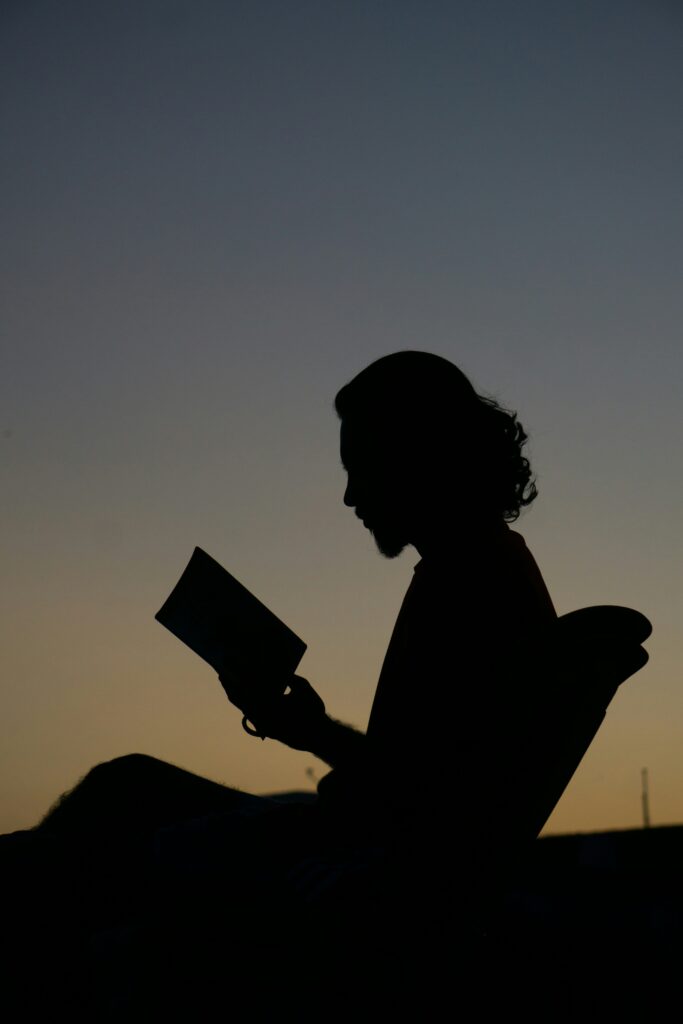
A young reader silhouetted against the sunset.
(Image courtesy of Daniel Joshua via Unsplash)