
SCIENCE & TECHNOLOGY

Brazilian named among the 10 most important scientists of the year

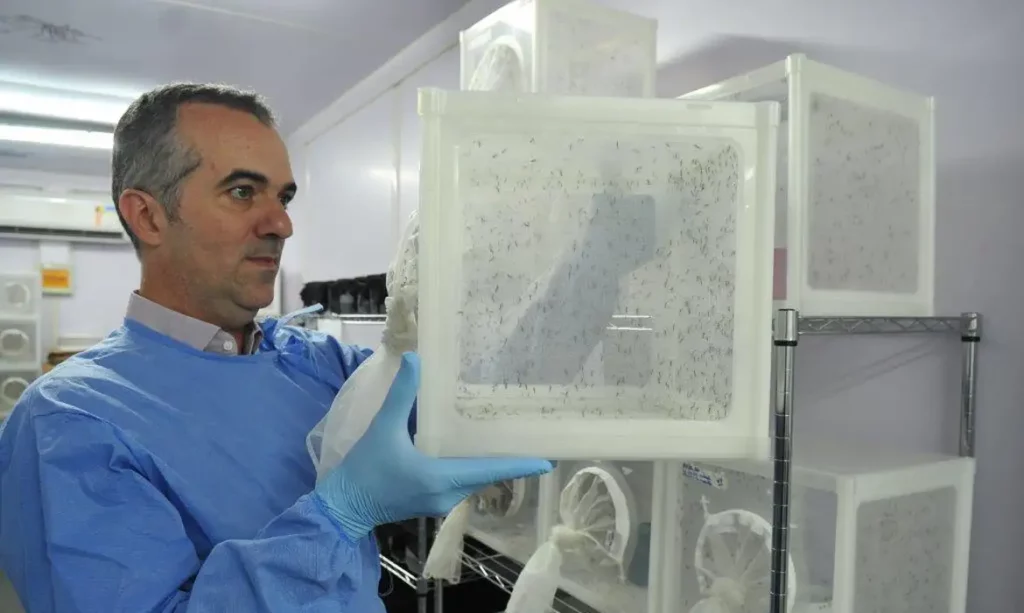
The journal Nature has released its list of the 10 people who shaped science in 2025. Among them is Brazilian scientist Luciano Moreira. His work focuses on inhibiting the transmission of diseases carried by the Aedes aegypti mosquito through the use of the bacterium Wolbachia.

An agronomist engineer and a licensed researcher at the Oswaldo Cruz Foundation (Fiocruz), one of the most important biomedical research institutions in Latin America, Moreira has worked for over 30 years in the search for alternative methods to combat mosquito-borne diseases.

According to the World Health Organization (WHO), insects are responsible for transmitting diseases that kill more than one million people every year worldwide.

In response to this challenge, Moreira developed the Wolbachia method, which consists of introducing the bacterium into mosquito eggs, thereby preventing the replication of pathogenic viruses.

The relevance of Luciano Moreira’s research becomes even more significant within the Brazilian context, where diseases such as dengue, chikungunya, and Zika continue to recur as annual epidemics, especially during the warmer seasons.

In 2024, Brazil recorded a historic peak, with more than 6 million cases of dengue throughout the year, 45 percent of which occurred during the summer months.

According to experts, the combination of a tropical climate, unplanned urbanization, and climate change favors the proliferation of the disease-carrying mosquito.

“The Wolbachia Method is one of the most promising and innovative strategies to reduce dengue transmission (as well as Zika and chikungunya). It is not a ‘treatment’ for people who are already ill, but rather a form of prevention that acts directly on the mosquitoes that transmit the viruses,” explains biologist Nathalia Costa.

She emphasizes that, despite major Brazilian scientific discoveries, the country still does not invest sufficiently in the biomedical field, causing many research projects to be interrupted.

Carolina Batista, a biomedical scientist at the Federal University of Rio de Janeiro (UFRJ), argues that instability in research funding leads to demotivation among professionals in the field.

“Brazil is recognized worldwide for training great scientists. I often say that we don’t do science, we perform miracles. Because of this great creativity in solving problems, Brazilians are highly sought after abroad in all areas of knowledge. What is missing? Beyond financial incentives, proper infrastructure. Power outages, lack of water, high taxes on laboratory reagents, everything discourages researchers. Many ‘brains’ have left the country in recent years.”

She also highlights the importance of the Wolbachia Method not only for the population but also for the environment.

“The project is wonderful because it found a natural way to combat mosquitoes while maintaining environmental balance, unlike what happens when a species is simply removed from nature. In addition, it is a cheaper health technology than vaccinating or treating the entire population.”

The so-called “anti-dengue” mosquitoes, still in the production phase, have become part of Brazilian public policy. The city of Niterói, in the state of Rio de Janeiro, is a pioneer in using these mosquitoes to reduce cases of epidemic diseases.

With a significant reduction of up to 89 percent in the tested neighborhoods, the experiment demonstrates the success of the method, proving to be a sustainable public health strategy that protects the entire community.

Recognized by the global scientific community, Luciano Moreira’s work goes beyond Brazil’s borders and influences public health policies around the world.

The Wolbachia Method is being implemented through the World Mosquito Program (WMP) in around 15 countries, including Australia, Colombia, Indonesia, among others.

Moreira’s presence on Nature’s list symbolizes not only an individual achievement, but also the recognition of the potential of Brazilian science to produce solutions capable of saving lives on a global scale.

Meet the other people on Nature’s list

In addition to Luciano Moreira, the magazine also highlights: 

  • Susan Monarez, from the United States, a leading advocate for science-informed public policy;
  • Achal Agrawal, an Indian scientist known for exposing scientific fraud and retractions;
  • Tony Tyson, from the United States, a pioneer in telescope development and leader of the Vera C. Rubin Observatory project;
  • Precious Matsoso, from South Africa, regarded as a key figure in negotiating the global treaty against pandemics;
  • Sarah Tabrizi, from the United Kingdom, for her efforts to advance treatments for Huntington’s disease;
  • Mengran Du, a Chinese geologist responsible for the discovery of new ecosystems in the deep ocean;
  • Liang Wenfeng, also from China, for innovations in collaborative artificial intelligence;
  • Yifat Merbl, an Israeli scientist, for breakthroughs in understanding the immune system; and
  • K.J. Muldoon, a baby born in the United States who has become a symbol of progress in hyper-personalized gene therapy, marking a milestone in the treatment of rare diseases.

READ MORE

Comments

Be the first to share your thoughts!

We value diverse perspectives and respectful debate.