In our Mental Health pieces, individuals may be receiving unexpected diagnoses, ruminating upon symptoms impacting daily life, and engaging (and reengaging) with coping mechanisms. Are you brave enough to delve into the facets of your own mental health journey?
I have been depressed before, and depressed since. Arguably I am always hovering at some degree of “depression,” but at this time in my life, in early 2019, it was a darker, uglier color than it had ever previously been. I was immobile, frozen in time; I had become nothing but a fixture on my couch that occasionally moved to lay down in bed instead. I had long shed any sense of personhood and was a shadow of myself.
When my weekly check-ins with my therapist proved to not be enough, she referred me to a partial hospitalization program in Greenfield, Massachusetts. It would only be for two weeks, she assured me, and I wouldn’t have to stay overnight. I was hesitant, but I was also desperate. I knew I needed a lifeline out of the stagnant sea, no wind in my sails, that I was lost in. I agreed to try.
A partial program is a safe option for those who are struggling, for those who are stuck or frightened or immobile, like I was. It allows for a sense of freedom since you only have to attend during the days and can return home at night. It is also great encouragement for self-reliance, that you are able to get yourself to and from the program each day.
The partial program was straightforward: multiple group meetings in various rooms on the third floor of the hospital throughout the day led by clinicians who would focus on a specific topic or coping mechanism. There was a room with a fish tank, a room with almost a dozen windows, and one room that was very beige. We were encouraged to participate to our comfort level, which meant that I was completely silent the first three days. But after I finally allowed myself to listen to what was being said, I realized that I was the only one who could pull myself from the depths, and I decided to let myself be free and speak. I mentioned my feelings of loss, of hopelessness, of fear, of failure. And somehow, others related. It turned out I wasn’t alone in what I was experiencing.
We learned about grounding and mindfulness. We discussed responding to situations instead of reacting. We practiced being kinder to ourselves. The two weeks were spent relearning how to listen to what was going on inside of me, instead of ignoring my own pain, and treating that pain gently instead of with disdain or hatred.
During one of my one-on-one meetings with one of the clinicians, we went over my symptoms and what led me to the current moment. I hadn’t realized how much pain I had been carrying inside, how much I had tried to stifle it within me and ignore it. She prescribed me an antipsychotic, which I was nervous to try, but if it was part of the healing process, I was willing to give it a go.
The partial program didn’t cure me, necessarily. There were many aspects that I found lacking – lots of platitudes and generic optimism. But I went. I made it out of the house every day. I was reminded of my own humanity. I was reminded that my suffering was not unique to me, that I was not alone in the expanse.
Entering into the program was simple. I simply needed a referral from my therapist and met with an admitting clinician who determined my eligibility. The program itself was not strenuous, often very meditative and relaxing. I recall one session where we laid on yoga mats and listened to instrumental music. The mat was surprisingly soft beneath me and I had a small pillow. The music, coming from a radio across the room, played what could only be described as spa music while the clinician led a guided meditation. I felt my body relax and my mind wander through the meditation, and I was at peace, just for a little while.
It can feel daunting to admit that you may need to take a step for more serious therapeutic services. I know that I was hesitant and afraid of the stigma that may be attached to a partial program. But I also recognized that I was no longer able to function in a healthy way, that I no longer recognized myself. Attending was the first step on the road to recovery.
It is always difficult for me to explain what depression is and how it makes me feel. I’ve seen and read people describing it as a big black dog, or drowning. The two metaphors that stick out to me are shadows and Sisyphus.
In Greek Mythology, Sisyphus is punished by Zeus to push a boulder up a hill for all eternity due to cheating death twice. Whenever he gets close to the top, the boulder rolls back down to the bottom. Is the giant boulder my depression or my happiness? Or is the top of the hill my happiness?
As an African American woman, I’m viewed as strong and successful. I’m able to hold down two jobs, one of which gained me four promotions in seven years. I’m able to be caring to friends and assist with their troubles and plight. I have all my ducks in a row and push my feelings down deep enough to be able to be productive at work. But My Shadow peers around every corner, waiting to find its time to invade. Its cold grip on my heart scares away my sense of success and pride, forcing me to re-play every conversation I had to have, making me worry if I offended someone who laughed with me at a joke I made. My Shadow feeds on my self-doubt, and pushes my perfectionist tendencies into negative spaces, where I work myself to the limits of my health and stretch myself too thin.
It’s always there
It is always lurking and no matter how much I try to outrun it; it finds a way to appear. In fact, not feeling like myself gave me my first inkling I was depressed. I was working in a retail job after graduating college. My paid internship had also ended. In some ways I liked my job, with the bright, eye-catching decorations.
But then there were the managers.
I worked at that job for two to two and a half years, and in those years, I had four to five different managers. I was overworked and overlooked.
I was reliable, I was responsible, I was punctual, and I was a team player. I was taken advantage of.
I was named Safety Captain – a position I was supposed to have held for one month. I held the title for a year and a half. I worked markdowns Tuesday mornings with two to three people. Soon, it became just me. I’d be the first person to ask if someone needed a shift covered or if I could pick up an extra shift. I was told I was being looked at for a seasonal managerial position only to have a new hire work for two weeks and then become the new manager. I had to work during a Category 2 hurricane (which resulted in a fear of driving during storms as the car I was driving to go home after that shift almost tipped over twice).
Yet I had to beg someone to switch shifts with me or cover for me to attend a friend’s memorial service because my manager “forgot” my leave request.
Throughout all of this, I had a short temper. I would lose it over something as small as a stapler not put back in the right place. In turn, I would feel nothing while working at my library job which I loved and used to be excited to go to every day. I was angry all the time but had to pretend I was normal so no one would catch on. There was a swift change in my personality and mood which I thought I was doing a great job of hiding, until one of my retail managers left. I was excited for this manager to leave due to how horribly she was managing and running the store. I ran all the way from the parking lot to my apartment, burst through the door, and loudly declared, “She’s gone!”
My sister saw me and said, “Wow, I haven’t seen you this happy in a long time.”
Or is my depression My Shadow, making me feel like a lesser version of myself?
One day
My sisters and I all have dark brown hair and dark brown eyes. We all like to write, read, play video games, eat good food, watch movies, watch anime, and read manga. We don’t all have depression and anxiety. With my depression, I feel as if I’m part of another world and it’s one I hope they don’t ever gain access to. A world where your shadow is its own body and lifeforce, instead of trailing behind, one step at a time out of sight and rarely making itself known unless you choose to see it.
One day I will conquer that boulder, and My Shadow will just be a figment of my imagination. Right now, he’s sitting on my shoulder, watching as I type, waiting for his moment to take over, which I shoo him away to stay in his rightful place behind me.
I have OCD (obsessive-compulsive disorder), ED (eating disorder), depression, severe anxiety, and ADHD (attention deficit/hyperactivity disorder). I’ve always gone to therapy because my mother is a psychologist.
I can’t even remember my age when I started, but I had more than five psychologists. I established a rapport with none until my first visit to a psychiatrist, when my undeniable mental health was crumbling. My psychiatrist never gave me a proper answer, but she was, and still is, the only therapist who I felt did not give up on me. Many others diagnosed me with borderline personality disorder.
Since I was young, I was always labelled as the “bad,” “problematic,” “rebellious,” and “naughty” kid, from kindergarten to adulthood. People often didn’t even remember my name, but they recognised that out of 14 cousins, I was the troublesome one.
So I started to believe that, too, and my behaviour didn’t change; in fact, it worsened throughout my development stages.
The beginning pangs
And as a teen, I began to self-harm. Eventually, my body felt numb, with no sadness, no fears of being misunderstood or good, pretty, and skinny. After that, my high school suggested my parents take me to a psychiatrist.
Hello, psychiatric medication. I still take them, though I still haven’t been properly diagnosed.
I can’t remember what happened during my first depression episode; I only have blurry memories of the fourteen days I was sent to a psychiatric ward and how I didn’t leave my room the whole time I stayed there.
After that, my depression began to fade, though I was never the same again. Alcohol, drugs, kisses with older men, and so on were part of my adolescence. My grades were awful, and it took me almost nine years to finish high school.
Of course, I felt like no one cared. I was already the disappointment of my family and always had been, so they just didn’t even try to understand me, not when I was a toddler, when I was a teenager, or even now.
When I decided to apply to college, the OCD set in. Perfect became my goal in every aspect of my life. All my focus was on my studies. My first panic attack happened during class hours; I remember running out of the class and collapsing in the hallway,
In my second year, my goal was to maintain my perfect grades and lose some weight. I’ve always been chubby, and after a few months, anorexia nervosa knocked on my door. I received her like someone I had been waiting for my whole meaningless life. Binge eating eventually appeared, and that was when my whole controlled, perfect life crumbled.
This is where I am now, fighting eating disorders, a second depressive episode, and more.
(Image courtesy of Mike Erskine on Unsplash)
The change in the tides
But now, as a clinical psychologist, I know how to fight. We don’t have to give in to the social belief that we are a problem that needs to be fixed, changed, or eradicated. Rather, we believe that people with mental health issues must be treated with compassion and provided with equal rights. Rather than focusing on the disability or disordered aspect of mental health, we focus on our strengths and learn how to rely on them.
My biggest strength is helping others; doing so makes me feel worth it and empowered, despite and because of my experience, even as hurtful as they are, gave me tools to lift others from their own struggles and dark places. I see a little hope in those little steps of others on their path to wellness.
As we grow older, we start learning and differentiating one emotion from the other, and at the same time, our range of emotions gets bigger. Defiant behaviour sometimes is a sign of depression and/or frustration because you haven’t yet developed the emotional tools to make others understand what you are really feeling. My adolescence was marked by naughty, unruly behaviour that I had been carrying since childhood, which became dangerous and painful to me. I did not have the tools to understand what I was feeling. Past trauma had left its marks on me. Adulthood marked the desire to maintain control of my life, appetite, and surroundings instead of letting my emotions have control of me again. And yet, many times, I failed.
My work changes lives
My role as a psychologist focuses on getting mental health the proper awareness it deserves. We need to raise awareness for this marginalised, stigmatised, labelled and misunderstood community regarding mental health and the lack of opportunities that low socioeconomic status communities have in accessing education and healthcare.
Today, I work in a private organisation as a clinical psychologist, both with group therapy between employees and employers and individual follow-ups. This year, I received the incredible opportunity to start working with the jail population by making new programs that focus more on rehabilitation rather than punishment alone. DINALI is a subsection inside the Ministry of Defence in charge of the Uruguayan policies related to imprisoned people. My main area will be helping people close to finishing their sentences. The main goals are reinsertion into society. I want to give them tools on how and where they can get help on having their basic needs satisfied (food, clothes, a roof above their heads), getting a job and start working on their social life to build a close circle that helps them find purpose in life and feel loved and appreciated.
Sometimes, I’m still a mess. Sometimes you might be, too. But as I’ve learned throughout every painful twist in my life, if you can’t help yourself, help others.
One Saturday in August 2019, parents, grandparents, and children were shopping for school supplies at an El Paso Walmart when they came face to face with a gunman set on taking as many Brown lives as possible. While this was happening, I was at Walmart in El Paso, buying school supplies for my son. I just happened to be at a different Walmart in town on that fateful day.
I spent the rest of the day watching the news and video clips online. I cried a lot. I attended a vigil at a high school football stadium. I was shaking. I felt the kind of fear you have that’s not for yourself, but for your child, who is smaller and more helpless. My son was with his father that day and although I received a text that they were ok, it wasn’t enough. I needed to hold my baby, to hug him and kiss him. I needed that as a mom. It was the first time I ever realized that I needed that reassurance because I had never experienced a moment like this.
My son is my first child, and he was four years old at the time of the shooting. I was still very much new to parenting. I didn’t know it at the time, but I was experiencing parental anxiety triggered by the mass shooting. I had intense worry and emotion that my son was not safe. These fears were irrational, and although I knew he was safe, I felt otherwise.
After the Walmart shooting, I sought therapy, and it helped immensely. I was offered helpful ways to cope with my worries. Now, I make use of tools that I know will reduce my anxiety. My favorite calming activities include listening to my vinyl records, baking, reading fiction, exercising outdoors, and taking my son to community events. I usually have a good stretch of time before the next mass shooting.
Parental anxiety is a normal reaction to something as upsetting as a mass shooting. But considering that mass shootings occur so often in the U.S. they are now part of our culture, this is a reaction that can recur frequently. Now, when a mass shooting occurs, especially if it is one that involves children, a school, or a place I frequent with my son (like a store), I feel this intense worry again and the need to keep him safe. I recognize the fear and I work toward improving my mental health, identifying rational or irrational fears, and using coping mechanisms to reduce my parental anxiety. But sadly, mass shootings are the norm and the cycle of events for parents can look something like this:
(Image provided by author)
A Community Shaken
When a tragedy like a mass shooting happens to your own town, it changes you. It changes everybody. I should say that El Paso is not like other cities. To say we are close-knit is an understatement. The people here speak to their neighbors, confide in strangers, and support each other. This is not the kind of city where you can meet someone at the mall and then never see them again in your life. I have had pharmacy techs speak to me like they’re my sisters, panaderia workers regard me as a daughter, and grocery checkout people tell me about their day and genuinely ask me about mine. This city truly does have a “small town feel.”
On weekends we go to local festivals or Farmers’ Markets. In the mornings and evenings, we walk dogs in our neighborhoods and greet our neighbors. Our kids make lemonade stands and sell chocolates door-to-door. Carolers come to your door at Christmas. If your dog runs out the door, a neighbor will bring him in, so he is safe. We take care of each other, and we care for each other. This is what it means to be an El Pasoan.
This is the kind of community that quells your anxiety. When a heinous act like a mass shooting happens, it leaves an impact. For days after the shooting, there were reports of people, especially elderly people, being afraid to go in grocery stores. They waited outside and even asked workers to get items for them. Years later, I still cannot step foot in the Walmart where the shooting occurred.
Among the victims were friends of my coworkers. One was going to be a guest at my coworker’s upcoming wedding. Also killed was my husband’s former bus driver. A family was broken when two parents shielded their baby boy, saving his life but losing theirs. This was our community. People we knew, saw, and remembered.
The victims of Uvalde, mostly children, lost their lives in May, 2022. Every time a shooting happens, I hope that will be the last shooting. But in hoping and praying, every time a shooting happens, I will also act. First, I must take care of myself and my family. I cannot be a good mother to my son if I am suffering and not taking care of my own mental health. In doing so, I make sure my family feels healthy and secure. Then I take care of my community, doing everything I can to make positive change.
I vote, I march, I prepare.
This is what it means to be a mother in the era of mass shootings.
I’m sorry I haven’t talked to you in a bit. It’s just been hard.
I don’t know what to say to you, or even bring anything up with you. I think about you all the time, especially late at night. You’re on my mind, and I wanted to tell you… I hope you know none of what happened was either of our faults. The world, it’s just messed up. And we just got caught in the middle of it all.
Please don’t hate yourself. Please don’t hate me.
I’m sorry we went through everything we did. We didn’t deserve that. You didn’t deserve that. You were only 14. You didn’t deserve to go through what you did. Any of it.
But I promise you, so much has changed since then. We’ve gotten better. We’re trying to heal. We have somebody who loves us unconditionally, who treats us with love and care now. Somebody who respects us and our boundaries, and I promise you that we turn out okay. But I can’t promise you that we’ve healed completely. It’s not possible to have completely healed in the time since. There’s been too many incidents, too many stories. We haven’t healed as fast as we would’ve liked. I feel that it’s near impossible, but I do think it’s within reach. We’re getting help now, real help. But sometimes it doesn’t feel like enough. When I think of you, what happened to us, I get uneasy. You tried so hard to get help, and no one helped us. It makes me doubt if anybody is really going to help us now.
I’m sorry. I’m sorry we haven’t talked, it’s just. Like I said, you know? It’s hard to talk to you. Sometimes I try to pretend you don’t exist. As if you’re not part of me and who I am now. As if you aren’t the reason I am who I am. The reason I’m so scared of living. It’s hard to confront you when I don’t want to remember you. I’ve pushed you away for so long. Hidden you deep within me, praying you’d never see the sun. Screaming out “Merciful G-d help me please,” all while begging that you didn’t exist, that what we went through didn’t exist. But it did, and it hurts. It hurts so fucking bad, and I hate you for it. Why couldn’t you have been stronger? Why couldn’t you have stood up for yourself? Why didn’t you? Why? Why did it happen to us? Who let this happen to us? Why? Just why? Tell me, please. I want to know. I really need to know. It hurts and I hate it. I hate you. Every day, every night, every waking moment of my life, I fear you and I hate you. I hate the idea of existing when I know you still live within me, when their touch still lingers on my skin and there’s no turning back time, no taking it all back. I want it to disappear. I want the you of who I once was, to disappear.
I don’t want to live like this; I don’t want you to exist within me. I want to be happy. But instead I struggle waking up every morning and cry myself to sleep at night. I live every day feeling like I don’t deserve to be here, and I hate that. I hate it so much. I want to be healed of all that was you, all of what you went through, and who you are to me. I want that part of me to be gone. I want to never have hurt the way I hurt before. I want everything that has happened to me to never have happened to me.
So why did you let it happen to us? Why did it happen to us? How did it happen to us? Why us? Why? Why me? Why can’t we just let it go? Why can’t we heal? Why are we stuck in the past of who we once were when we‘ve come so far? Why can’t we be okay? Why can’t we just be okay? Please, please tell me.
I’m begging you. I want to know. I need to know.
Why did all of this happen? Why can’t I be okay? Why? Why did this happen to us? Who up and decided, yes. Her. Make her suffer. Make her wish she was never born. Make her feel like the worst mistake to have ever been made. Make her feel like her existence is horrendous and have her suffer every second that she’s alive. Make her hate herself. Consume her from the inside out until there’s nothing left within her. Make her feel like an empty shell of a human being that doesn’t deserve anything. Make her feel like the worst piece of shit alive.
I’m sorry. I’m blaming you for that one thing, as if there wasn’t more that contributed to our pain. But do you see? See what happens when I talk to you? All of this. All of this comes rushing out. All of these tears. All of this hurt. It doesn’t feel the best, but I think it’s long overdue. I don’t know how to talk to you without crying. I don’t know how to feel. I’m sorry if it takes a while for us to talk again. I just. I can’t handle who I am whenever we do. I just wish you knew what I know now. I know you desperately wanted it all to end. All the pain and anguish.
I know you; I am you, and I’ll admit there are times where I still feel that way. But it’s different now. Our life is different now. You’re loved in so many different ways, by so many different people. You matter, and I know it doesn’t feel that way, but you do. You really do. We’ve honestly come so far. I wish I could have told you all of this back then. We could’ve started our healing process sooner.
Sometimes for play. Sometimes for storage. Sometimes for secrets. Too often for hiding.
One year ago today, I moved into an attic for the second time in my life. Instantly, the first attic came back to mind in a flash of childhood memory. A precious moment of safety: my mother below me on the ground floor, me above her in the attic. She reaching toward me, me ready to let go. She wishing me a good night, me knowing it would finally be so. Sweet dreams, little child.
Some men in my family couldn’t fit up there. So, they couldn’t hurt me. These types of monsters weren’t under my bed, but inside of me. The pressure. The nightmares made real. In the middle of the night they’d rape me at the home that was being renovated. To avoid the construction noise, my family moved into this small apartment with that perfect attic just big enough for my brothers and I to fit. A safe place to hide.
But eventually we had to return to our improved home where the incest abuse continued. There, I created an attic in my mind — an imaginary place where I could escape to feel safe. Every secret instance of incest I stored there. Then, my brain locked the door and kept the key. My subconscious became a place of hidden memory where the unwanted junk that couldn’t be thrown away, was held in a chest so I didn’t have to look at it everyday. All that was left was nightmares and pressure. Dissociative Amnesia — the inability to remember traumatic experiences — is common for children who suffer from incest abuse.
I moved out of my childhood home at 18 and suddenly became symptomatic — depression, anxiety, fatigue, fixation, pain. More nightmares. The monsters no longer lived under my bed, but were trapped in my head, inside my body. More pressure. The instances of incest stuffed into my mind’s attic could no longer fit. The door was bursting open, shaking the body below now broken. I showed up to listen.
My sweet inner child above me in the attic, me below her on the ground. Me reaching toward her, her not ready to come down. Me inviting her to a new day, her not believing she was safe. So instead, I climbed the proverbial stairs to meet her back in her attic, found the key, opened the locked chest of hidden memory, and welcomed back my secret history.
Memory retrieval for incest abuse survivors often happens long after the abuse took place. I was 24 years old. I disclosed what happened. My family chose to side with those who harmed me. The providers by day, monsters by night. Instead of the sister, the daughter. So I left home and everything I had ever known to seek safety, but I had nowhere to go.
It’s been hard to heal from incest when even mentioning the word makes people squirm. Society has an attic too. Subjects welcome to discuss in public and in homes, while so many of our stories are still stuffed into rooms above and silenced. The sweetness of our dreams trapped in nightmares. The missing of memories of safety so foundational to a healthy and fulfilling adult life. The silencing of incest survivors is historical.
One example was the Freudian Cover-Up. Sigmund Freud discovered childhood sexual abuse to be the root cause of women’s hysteria, only to recant his own research to protect his status when the aristocrats who were harming their children protested.
“The survivors are liars,” he said.
Then again in the 1980s by The False Memory Foundation, founded by people who committed incest abuse, that worked to convince society and medical professionals that Dissociative Amensia wasn’t real. The memories of survivors were made up.
“The survivors are monsters,” they said.
Even after #MeToo went viral in 2017, incest abuse remains the silent subject that few speak about. Google it and find articles condoning it, questioning it, maybe a few helpful pieces about how to heal from it. The lack of representation and misrepresentation in the media continues to cause confusion at best and ignorance at worst around this taboo topic.
Children are left vulnerable in their homes. Survivors isolated in their healing. People who harm free to reoffend. All of us hiding in the attics in our heads, the homes with the monsters in our beds. Our lives living nightmares. The pressure on children to disclose and survivors to break their silence. To heal themselves without much help. To seek some sort of justice without the support of systems that are supposed to be just.
If you scroll down far enough, eventually my story will be found. I freed myself from society’s attic, broke the silence forced upon me, and published what happened on any outlets that would share it. I wanted to shift the narrative and raise awareness. I reclaimed my identity apart from how history held the stories of incest survivors.
“I am not a liar, but a truth teller,” I said.
“I am not a monster, but a messenger.”
Publishing the identity “incest survivor” digitally connected me to others doing the work to end incest. Together, we have been engaging the media for the authentic witness of our stories. Writing that reflects our solutions for prevention, intervention, recovery, and transformation. Although we have been speaking, we are still waiting to be heard. Hoping to be met at the top of the steps leading to the place we’ve been forced to reside, to hide, in the attic of our minds and society’s conditioned confines.
Then the day finally came. Roe vs. Wade was overturned by the Supreme Court case Dobbs vs. Jackson. Suddenly, I listened as the word, “incest,” was spoken from the lips of President Joe Biden: “The healthcare crisis is women can’t get an abortion even in a case of incest, even in the case of rape.”
For months, I have heard the echos of legislators as they discuss exceptions to abortion bans — or the lack thereof — for rape and incest survivors. The verbal conversation published in articles all over digital and print platforms using hypothetical cases of incest abuse to push progressive agendas for safe abortion access or defend fetal personhood regardless of the method of conception. For months, incest has been used as an assumed sensational narrative necessary to shock the public into action around abortion. Or, to debate whether the impregnation of a child by a family member is a worthy exception in anti-abortion legislation.
I hoped that when this word finally made headlines on this many platforms that I would feel relieved. But instead, I feel angry. For me and so many of my friends, incest isn’t hypothetical. Incest is our history. Our stories are not sensational. Our stories are real. More common than most want to admit. They should be shared with caution, consultation, conviction, and care.
Safe abortion access most certainly needs to remain available for all women and pregnant persons, especially incest abuse survivors. But the truth that continues to be neglected from public discourse is that incest survivors should never have had to get abortions in the first place. If a child has been impregnated by a family member, then we are too late. We have failed as their community to keep them safe. Using the stories of incest survivors to push abortion legislation without discussing prevention is yet another violation. The right to safe abortion access in any case, most especially incest, is not up for debate.
Today, I sit in my new attic as the trauma compounds with this misrepresentation. The word that shares my story is finally being plastered all over the news for all the wrong reasons. The pain from being used over and over for someone else’s ends in the past has returned to the present once again. The nightmare continues. The pressure on me to now right and write this story.
The attic in my mind shakes. The monsters still in my head. I can’t sleep in bed. I practice the lessons learned in recovery to return to the present. I remember that I’m just remembering. Triggers. I remind myself in this safe space, in this small place: no one can hurt me here. I’m an adult now. No longer trapped in the attic of my mind, nor restricted by the confines of society’s expectations of silence. No longer under the weight of his body or my wounds.
Today, I have agency. Today is an opportunity.
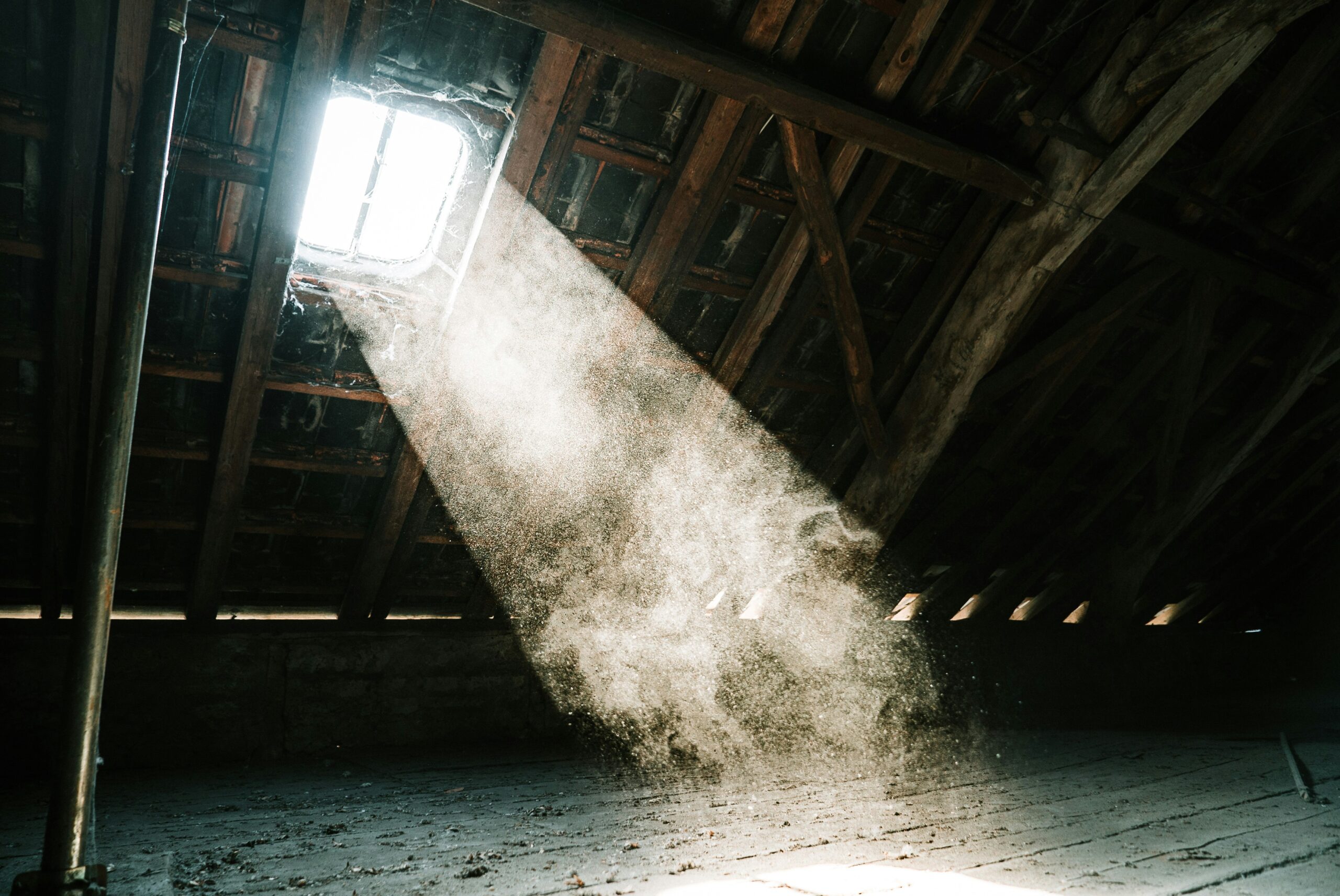
(Image courtesy of Muhammed Aslam Aslam via Unsplash)
In 2021, #MeTooIncest went viral in France. In response, the French government created the Independent Commission on Incest and Sexual Violence Against Children, which collected over 10,000 testimonies from childhood sexual abuse surivors, as well as interviewed a number of professionals in the field.
They published a report of their findings (translated to English by Incest AWARE), as well as proposed solutions. According to the report, 8 out of 10 participants are victims of incest, while 7 out of 10 victims have suffered the violence repeatedly. The report includes 20 recommendations that address how to create a “culture of protection” through methods of prevention, intervention, recovery, and the transformation of justice including:
Systematic identification of victims by trained adults and professionals to relieve the burden of disclosure from children.
Removing people who harm from homes immediately, while keeping the child in their safe and familiar home environments.
Creating safer ways to guide victims through the judicial process.
Financially compensating survivors to support their multi-disciplinary, lifelong healing efforts.
What is happening in France, can be replicated in the United States. They climbed the attic stairs of their social systems and took responsibility for what was hiding there. The reclamation of repressed memory must be a communal process to end cycles of violence. If US legislators are going to use the stories of incest survivors to inspire the public around abortion access, then they must also be committed to keeping children safe in the first place.
Together, we can develop a culture of protection that ensures that no child ever has to hide from their abusive family members in an attic too big for them to fit. Nor suffer the stuffing of their memories into the little attic in their minds to be processed too in life. That no adult survivor should have to rent an attic where no one can find her to feel safe from a society that has silenced her story in its own confined space. Or, get an abortion from a forced rape by a family member.
Today, I say farewell to this attic and all the ones that came before. I choose to no longer hide in a space way too small for the bigness of me and my dreams for safety. I share the memories stored in the attic of my mind, the pressure of my body, publicly now. I still have nightmares. Still manage the monster in my body. Still struggle to sleep in my bed. But none of it keeps me from dreaming and working toward a future where attics are only ever used to store meaningful objects packed with safe memories. Or for pretend and the expansion of the imagination. Where children hide and seek for play. Where they sleep for fun. And when they are wished goodnight from the safe caregiver standing below, we can all trust it will finally be so.
Sweet dreams, little child. Sweet dreams, inner child.
My childhood was broken up into pieces, with parts of me left in different countries around the world. These memories are blurry, like faded pictures in my head.
I see faint echoes of my younger self in my mind but many events and memories are dull. But the feelings that I experienced still linger; there was discomfort, embarrassment, and this overwhelming feeling of loneliness.
I remember crying. I remember the fear.
The younger years
My family lived together in Australia for six years until we had to go back home to the Philippines. The family split apart three years later when my dad’s job took us away again. My parents, my older sister and I went to Belgium. My two other older siblings, who were about to enter college, decided to stay home to pursue their studies in the Philippines rather than start from scratch in a new place. Since they were much older, they were allowed to make this choice and live away from us. At the time, I didn’t understand the friction and tension that this decision brought upon us. It was hard for everyone involved, but being as young as I was, I felt like an outsider to it all. Plus, I didn’t realize how much this separation would impact my relationship with my siblings as we got older.
Looking back now, I wondered if this unstable family situation was the catalyst for many of the anxieties and doubts I felt growing up, and it was only recently that things finally clicked. This sense of displacement, of never belonging somewhere, is a feeling that followed me my whole life. To add to that, I’ve always been shy and full of nervous energy. I never felt comfortable with my own existence but I never understood why.
My growing pains morphed into a cocktail of self-doubt, unease, and later on, depression, unknowingly due to the difficult relationships in my family and our overall living situation.
It seemed pointless to connect with other people because we would be leaving them sooner or later. This belief bled into my friendships at school and even into the relationships I formed in adulthood.
We would always end up moving away, so I never understood the point of social interactions. Why would I open up my fragile little heart to these friendships if I had to let them go at the end? If I had a hard time making friends in one place, how could I guarantee that I would have friends in the next?
I couldn’t believe that I was worthy of being loved.
This negative outlook made up a significant portion of my teen years and even my early twenties. Even now, I’m still learning to move past this mindset.
When I did decide to open my heart to people, I loved intensely and the thought of losing their friendship, especially in moments of self-doubt, scared me.
A new place, a new outlook?
It wasn’t until my family moved to Canada that I finally started to see a change in my mindset. I started to crave human connections. I reached a point where I knew for certain that I wanted to stay here for good. We found a community and for once, I could see myself having a future with these people. I met most of these people in a youth group at my local church, and while I didn’t have high hopes about making any connections, these people eventually felt like home. It wasn’t just because we had similar views or beliefs, it was because they were so welcoming. I felt I was accepted, and even wanted.
This strong community that kept building me up no matter how much I broke down is what helped me the most. Even if I tried to shut people out, they kept coming back and didn’t give up on me; they checked up on me and invited me out and truly wanted to get to know me. I felt safe sharing the broken parts of myself because they continued to show me that they loved me. It wasn’t that they saved me or anything. Rather, they helped me see that I am worthy of love and that it’s okay to love people back.
This is what gave me the courage to keep working on myself.
Knowing that I am loved and believing that I am more than what I used to be is still a struggle, but I am proud to finally have the courage to face these doubts head on.
Growing up, I could barely look at myself in the mirror because I was so uncomfortable with my own existence, but now, I am fighting these negative thoughts and truly living.
It is my hope that people find a place that they can call home and receive the love and encouragement that they deserve. Everyone should be given a chance to grow, be loved, and have a community to support them.
By sharing this part of my story I hope that people will know that there will be a safe space for them too where they can heal and grow at their own pace. Your healing might look different from mine, and that’s okay. Whatever it looks like, I hope that you find the kind of community you are looking for.
As for me, I will keep working on taking care of my mental health and my friendships because I deserve it.
Polycystic ovarian syndrome (PCOS) is a condition that affects some women, mostly in South Asian countries. It causes several health imbalances like obesity, hormonal malfunction, and amenorrhoea. But not a lot of people talk about how this syndrome affects women’s mental health. It affects women differently, such as increasing the likelihood of brain fog, depression, anxiety, and more.
This syndrome has affected me in the past, and this prose poem I’ve written talks of its origins; it teases the notion that women develop this syndrome because their mental health is in a bad state, which is in turn because they have been restricted in a way or have restricted themselves due to societal conditioning.
Denomination
Why, I asked him, do we have to return to our dorms at dusk, like pigeons into pigeonholes, while they don’t — their freedom resounding like the condor’s cry as they walk the dark streets. The ‘security’ guard leered, patting the low parapet he was sat on; ‘come here, and I will tell you,’ he drawled, like he was any better than the unhinged rapist he was supposedly protecting me from. So many rules. Rules to keep me safe, apparently. Rather, rules to keep me existing, but not really alive. Don’t go up to the terrace, don’t linger, don’t make eye contact when they stare at you like they want to devour you. How can I not notice when going to the shops morphs into a game of dodgeball? Or when their aim is flawless, and they walk away with their power trip? How can I brush it off? How can I muzzle myself? But my outrage was only stifled with sighs of ‘this is how the world is… you have to be sensible.’ As if asking for freedom is senseless. I’ll never forget when my heart went out to my classmate’s ignorance as she told me that I should be happy with all the devious desires on the streets, because her ebony skin was ever ignored. Truly, perhaps it was me that was ignorant of her plight, more than she was of mine; those so-called differences pitting women against each other in this game of patriarchy. I look back at all those movies, where dainty feet with tinkling anklets was the only ideal to achieve, to ultimately be the caretaker, the less-than-him, the sidekick, or even reduced to just a romantic interest: there to dance when the music plays. At every instance, my mother told me to grow out my hair, for it is the only way for a woman to be. At every instance, my friends’ mothers told me to wear some jewellery, for it is the only way for a woman to be. But it was a slow-acting venom, to conform, yet to be told that the thing you have conformed to will always be less than the other. If these were the only ways for a woman to be, then I must be a man. I, so unladylike with my bare neck and bob; the non-female. I was puzzled at the homophobes, bleating through the night, calling for correctness, for equality, when what can be more equal than a man and another man? Or a woman and another? And is this the reason I daresay, that the women of this world celebrate the gay ships as they float by? Because they crave that level of equity with a man that they know they can’t get in any other way? And slowly, my breasts were strangers to me. I had hair on my chin and cysts in my ovaries. Menstruation, a thing of the past. And when I confronted her, my body asked me eagerly, ‘this is what you wanted, right?’ But is this what I had wanted? Was I becoming a man to be seen as equal to one? They sent me to the doctors and labelled me diseased. It was physical, they said, not psychological. But was it? It’s a polycystic epidemic out there, they said. But why was it? Lose weight, they said, and it will be fine. But will it? To diagnose this tree, I excavated for fortnights to find its root. And at the root was a syndrome, not a transition. At the root was non-conformity playing an identity crisis. At the root was the audacity of this world telling me I needed to be a man to be seen as human. I throw these fresh fruit for thought: Am I syndromed because you believe I lay about the house all day, eating potato chips? Or because applying to intern at an environmental agency in the Andamans was forbidden? Heck, doing or being me was entirely forbidden. Heck, stating a thought would soon be forbidden if I let it. Did my depression gift my ovaries with cysts, or did the cysts give my brain depression? Sure! Yell away into megaphones about educating the girl child. And when she wants to do all the things she’s read can be done, snuff out the flame and tell her if only… if only she had a key where she has a keyhole… Now that could open any door, hey? I am not a man; I am a woman. But I am only this woman, not any other woman. Especially not the woman some poet, politician, swamiji or any other sanctimonious degenerate desperately needs me to be. I am this woman — still a woman. And so is she who does not want to study ‘that degree more suited for women’. And she with all those tattoos. She who dreams of riding a Ducati. The one who wants to travel to Peru over the summer, as is the one who says all she wants to do is stay home and cook for her husband. Women. And we will not laud ourselves with titles like Queen or Goddess, as if we are invaluable only if we are born as them. We are invaluable simply because we are women. In it, lies our splendour. And you may no longer contain this splendour in a cage by christening it ‘protection.’ No longer pat yourself on the back for all these ovaries dipped in patriarchy.