Attics, Abuse, and Abortion: Prevention Not Sensationalization Will Keep Children Safe

Attics are used for many things. 

Sometimes for play. Sometimes for storage. Sometimes for secrets. Too often for hiding. 

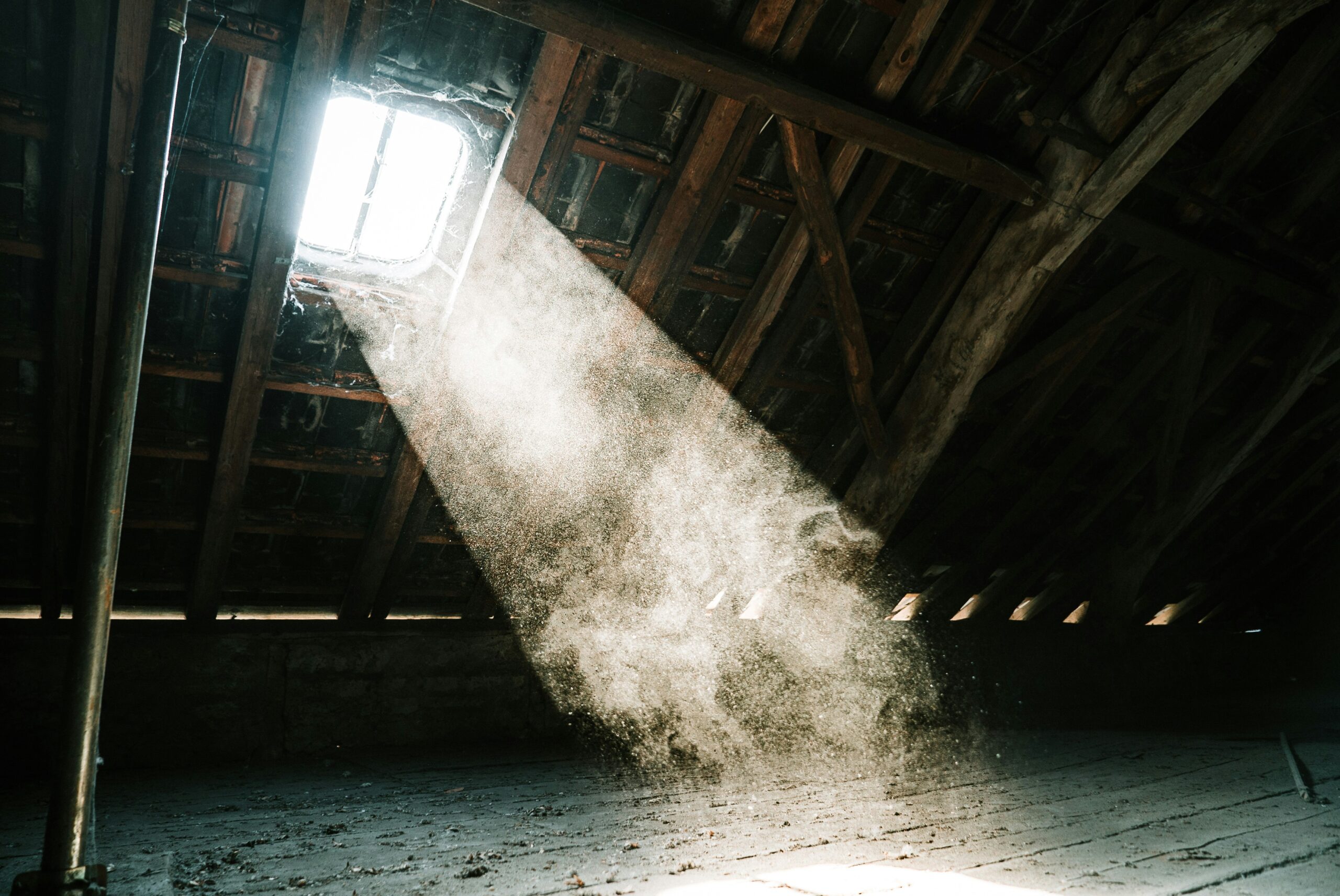
One year ago today, I moved into an attic for the second time in my life. Instantly, the first attic came back to mind in a flash of childhood memory. A precious moment of safety: my mother below me on the ground floor, me above her in the attic. She reaching toward me, me ready to let go. She wishing me a good night, me knowing it would finally be so. Sweet dreams, little child.

Some men in my family couldn’t fit up there. So, they couldn’t hurt me. These types of monsters weren’t under my bed, but inside of me. The pressure. The nightmares made real. In the middle of the night they’d rape me at the home that was being renovated. To avoid the construction noise, my family moved into this small apartment with that perfect attic just big enough for my brothers and I to fit. A safe place to hide.

But eventually we had to return to our improved home where the incest abuse continued. There, I created an attic in my mind — an imaginary place where I could escape to feel safe. Every secret instance of incest I stored there. Then, my brain locked the door and kept the key. My subconscious became a place of hidden memory where the unwanted junk that couldn’t be thrown away, was held in a chest so I didn’t have to look at it everyday. All that was left was nightmares and pressure. Dissociative Amnesia — the inability to remember traumatic experiences — is common for children who suffer from incest abuse.

I moved out of my childhood home at 18 and suddenly became symptomatic — depression, anxiety, fatigue, fixation, pain. More nightmares. The monsters no longer lived under my bed, but were trapped in my head, inside my body. More pressure. The instances of incest stuffed into my mind’s attic could no longer fit. The door was bursting open, shaking the body below now broken. I showed up to listen. 

My sweet inner child above me in the attic, me below her on the ground. Me reaching toward her, her not ready to come down. Me inviting her to a new day, her not believing she was safe. So instead, I climbed the proverbial stairs to meet her back in her attic, found the key, opened the locked chest of hidden memory, and welcomed back my secret history.

Memory retrieval for incest abuse survivors often happens long after the abuse took place. I was 24 years old. I disclosed what happened. My family chose to side with those who harmed me. The providers by day, monsters by night. Instead of the sister, the daughter. So I left home and everything I had ever known to seek safety, but I had nowhere to go.

It’s been hard to heal from incest when even mentioning the word makes people squirm. Society has an attic too. Subjects welcome to discuss in public and in homes, while so many of our stories are still stuffed into rooms above and silenced. The sweetness of our dreams trapped in nightmares. The missing of memories of safety so foundational to a healthy and fulfilling adult life. The silencing of incest survivors is historical.

One example was the Freudian Cover-Up. Sigmund Freud discovered childhood sexual abuse to be the root cause of women’s hysteria, only to recant his own research to protect his status when the aristocrats who were harming their children protested. 

“The survivors are liars,” he said. 

Then again in the 1980s by The False Memory Foundation, founded by people who committed incest abuse, that worked to convince society and medical professionals that Dissociative Amensia wasn’t real. The memories of survivors were made up.

“The survivors are monsters,” they said. 

Even after #MeToo went viral in 2017, incest abuse remains the silent subject that few speak about. Google it and find articles condoning it, questioning it, maybe a few helpful pieces about how to heal from it. The lack of representation and misrepresentation in the media continues to cause confusion at best and ignorance at worst around this taboo topic. 

Children are left vulnerable in their homes. Survivors isolated in their healing. People who harm free to reoffend. All of us hiding in the attics in our heads, the homes with the monsters in our beds. Our lives living nightmares. The pressure on children to disclose and survivors to break their silence. To heal themselves without much help. To seek some sort of justice without the support of systems that are supposed to be just.

If you scroll down far enough, eventually my story will be found. I freed myself from society’s attic, broke the silence forced upon me, and published what happened on any outlets that would share it. I wanted to shift the narrative and raise awareness. I reclaimed my identity apart from how history held the stories of incest survivors.

“I am not a liar, but a truth teller,” I said.

“I am not a monster, but a messenger.”

Publishing the identity “incest survivor” digitally connected me to others doing the work to end incest. Together, we have been engaging the media for the authentic witness of our stories. Writing that reflects our solutions for prevention, intervention, recovery, and transformation. Although we have been speaking, we are still waiting to be heard. Hoping to be met at the top of the steps leading to the place we’ve been forced to reside, to hide, in the attic of our minds and society’s conditioned confines.

Then the day finally came. Roe vs. Wade was overturned by the Supreme Court case Dobbs vs. Jackson. Suddenly, I listened as the word, “incest,” was spoken from the lips of President Joe Biden: “The healthcare crisis is women can’t get an abortion even in a case of incest, even in the case of rape.” 

For months, I have heard the echos of legislators as they discuss exceptions to abortion bans — or the lack thereof — for rape and incest survivors. The verbal conversation published in articles all over digital and print platforms using hypothetical cases of incest abuse to push progressive agendas for safe abortion access or defend fetal personhood regardless of the method of conception. For months, incest has been used as an assumed sensational narrative necessary to shock the public into action around abortion. Or, to debate whether the impregnation of a child by a family member is a worthy exception in anti-abortion legislation.

I hoped that when this word finally made headlines on this many platforms that I would feel relieved. But instead, I feel angry. For me and so many of my friends, incest isn’t hypothetical. Incest is our history. Our stories are not sensational. Our stories are real. More common than most want to admit. They should be shared with caution, consultation, conviction, and care. 

Safe abortion access most certainly needs to remain available for all women and pregnant persons, especially incest abuse survivors. But the truth that continues to be neglected from public discourse is that incest survivors should never have had to get abortions in the first place. If a child has been impregnated by a family member, then we are too late. We have failed as their community to keep them safe. Using the stories of incest survivors to push abortion legislation without discussing prevention is yet another violation. The right to safe abortion access in any case, most especially incest, is not up for debate.

Today, I sit in my new attic as the trauma compounds with this misrepresentation. The word that shares my story is finally being plastered all over the news for all the wrong reasons. The pain from being used over and over for someone else’s ends in the past has returned to the present once again. The nightmare continues. The pressure on me to now right and write this story.

The attic in my mind shakes. The monsters still in my head. I can’t sleep in bed. I practice the lessons learned in recovery to return to the present. I remember that I’m just remembering. Triggers. I remind myself in this safe space, in this small place: no one can hurt me here. I’m an adult now. No longer trapped in the attic of my mind, nor restricted by the confines of society’s expectations of silence. No longer under the weight of his body or my wounds.

Today, I have agency. Today is an opportunity. 
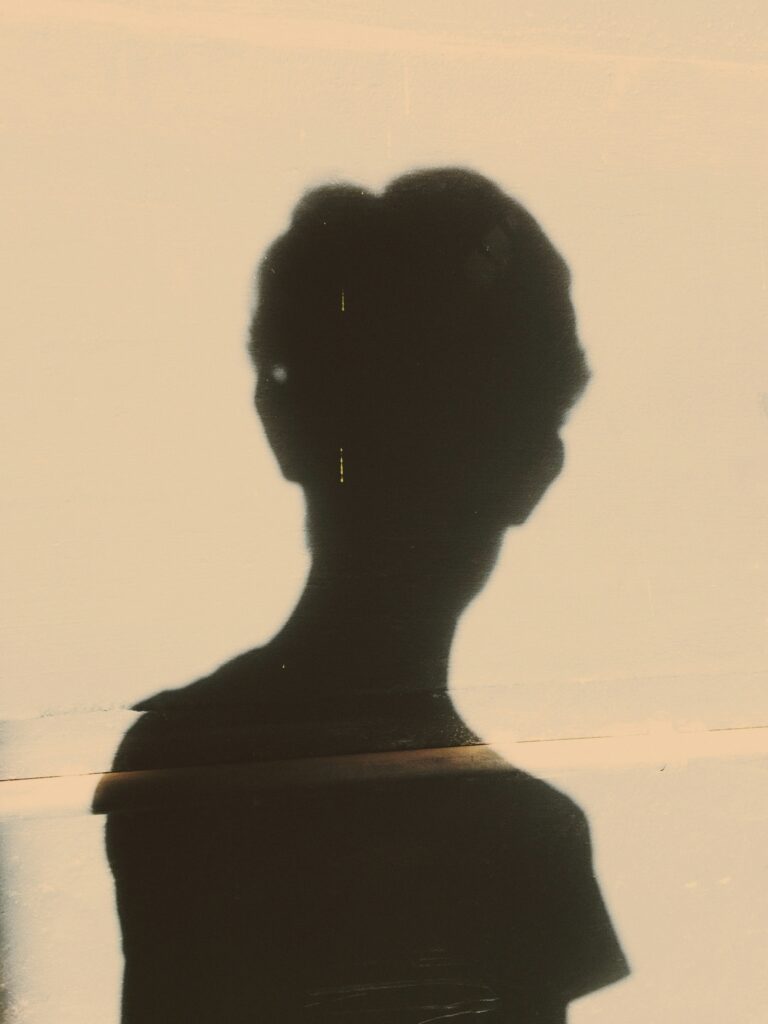
The shadow of the back of a person’s body projected onto a tan wall.
(Image courtesy of Muhammed Aslam Aslam via Unsplash)

In 2021, #MeTooIncest went viral in France. In response, the French government created the Independent Commission on Incest and Sexual Violence Against Children, which collected over 10,000 testimonies from childhood sexual abuse surivors, as well as interviewed a number of professionals in the field. 

They published a report of their findings (translated to English by Incest AWARE), as well as proposed solutions. According to the report, 8 out of 10 participants are victims of incest, while 7 out of 10 victims have suffered the violence repeatedly. The report includes 20 recommendations that address how to create a “culture of protection” through methods of prevention, intervention, recovery, and the transformation of justice including:

  • Systematic identification of victims by trained adults and professionals to relieve the burden of disclosure from children.
  • Removing people who harm from homes immediately, while keeping the child in their safe and familiar home environments.
  • Creating safer ways to guide victims through the judicial process. 
  • Financially compensating survivors to support their multi-disciplinary, lifelong healing efforts.

What is happening in France, can be replicated in the United States. They climbed the attic stairs of their social systems and took responsibility for what was hiding there. The reclamation of repressed memory must be a communal process to end cycles of violence. If US legislators are going to use the stories of incest survivors to inspire the public around abortion access, then they must also be committed to keeping children safe in the first place.  

Together, we can develop a culture of protection that ensures that no child ever has to hide from their abusive family members in an attic too big for them to fit. Nor suffer the stuffing of their memories into the little attic in their minds to be processed too in life. That no adult survivor should have to rent an attic where no one can find her to feel safe from a society that has silenced her story in its own confined space. Or, get an abortion from a forced rape by a family member.

Today, I say farewell to this attic and all the ones that came before. I choose to no longer hide in a space way too small for the bigness of me and my dreams for safety. I share the memories stored in the attic of my mind, the pressure of my body, publicly now. I still have nightmares. Still manage the monster in my body. Still struggle to sleep in my bed. But none of it keeps me from dreaming and working toward a future where attics are only ever used to store meaningful objects packed with safe memories. Or for pretend and the expansion of the imagination. Where children hide and seek for play. Where they sleep for fun. And when they are wished goodnight from the safe caregiver standing below, we can all trust it will finally be so. 

Sweet dreams, little child. Sweet dreams, inner child.

Finding My Way Home: A Journey of Self-Reflection and Acceptance

#ILIVEON

My childhood was broken up into pieces, with parts of me left in different countries around the world.  These memories are blurry, like faded pictures in my head.

I see faint echoes of my younger self in my mind but many events and memories are dull. But the feelings that I experienced still linger; there was discomfort, embarrassment, and this overwhelming feeling of loneliness. 

I remember crying. I remember the fear.

The younger years

My family lived together in Australia for six years until we had to go back home to the Philippines. The family split apart three years later when my dad’s job took us away again. My parents, my older sister and I went to Belgium. My two other older siblings, who were about to enter college, decided to stay home to pursue their studies in the Philippines rather than start from scratch in a new place. Since they were much older, they were allowed to make this choice and live away from us.  At the time, I didn’t understand the friction and tension that this decision brought upon us. It was hard for everyone involved, but being as young as I was, I felt like an outsider to it all. Plus, I didn’t realize how much this separation would impact my relationship with my siblings as we got older. 

Looking back now, I wondered if this unstable family situation was the catalyst for many of the anxieties and doubts I felt growing up, and it was only recently that things finally clicked. This sense of displacement, of never belonging somewhere, is a feeling that followed me my whole life. To add to that, I’ve always been shy and full of nervous energy. I never felt comfortable with my own existence but I never understood why. 

My growing pains morphed into a cocktail of self-doubt, unease, and later on, depression, unknowingly due to the difficult relationships in my family and our overall living situation. 

It seemed pointless to connect with other people because we would be leaving them sooner or later. This belief bled into my friendships at school and even into the relationships I formed in adulthood.

We would always end up moving away, so I never understood the point of social interactions. Why would I open up my fragile little heart to these friendships if I had to let them go at the end? If I had a hard time making friends in one place, how could I guarantee that I would have friends in the next? 

I couldn’t believe that I was worthy of being loved. 

This negative outlook made up a significant portion of my teen years and even my early twenties. Even now, I’m still learning to move past this mindset. 

When I did decide to open my heart to people, I loved intensely and the thought of losing their friendship, especially in moments of self-doubt, scared me.

A new place, a new outlook?

It wasn’t until my family moved to Canada that I finally started to see a change in my mindset. I started to crave human connections. I reached a point where I knew for certain that I wanted to stay here for good. We found a community and for once, I could see myself having a future with these people. I met most of these people in a youth group at my local church, and while I didn’t have high hopes about making any connections, these people eventually felt like home. It wasn’t just because we had similar views or beliefs, it was because they were so welcoming. I felt I was accepted, and even wanted. 

This strong community that kept building me up no matter how much I broke down is what helped me the most. Even if I tried to shut people out, they kept coming back and didn’t give up on me; they checked up on me and invited me out and truly wanted to get to know me. I felt safe sharing the broken parts of myself because they continued to show me that they loved me. It wasn’t that they saved me or anything. Rather, they helped me see that I am worthy of love and that it’s okay to love people back. 

This is what gave me the courage to keep working on myself. 

Knowing that I am loved and believing that I am more than what I used to be is still a struggle, but I am proud to finally have the courage to face these doubts head on. 

Growing up, I could barely look at myself in the mirror because I was so uncomfortable with my own existence, but now, I am fighting these negative thoughts and truly living. 

It is my hope that people find a place that they can call home and receive the love and encouragement that they deserve. Everyone should be given a chance to grow, be loved, and have a community to support them. 

By sharing this part of my story I hope that people will know that there will be a safe space for them too where they can heal and grow at their own pace. Your healing might look different from mine, and that’s okay. Whatever it looks like, I hope that you find the kind of community you are looking for.  

As for me, I will keep working on taking care of my mental health and my friendships because I deserve it.

Image of a person holding a dandelion. Behind the dandelion, the sun appears to be setting.
Image courtesy of Aleksandr Ledogorov on Unsplash

My Immigration Story: From France to Canada

I was born in eastern France near the German border, into a large family of modest origin, all raised by a single mother working as a cleaning lady. We are Algerian, Berber and Muslim, and have been educated in this double French-Algerian culture, which was so unique because of its history.

Despite a socially-valued job, my day-to-day life was sorely lacking in meaning. I was no longer interested in it. I had achieved a dream and I was aware of it and grateful for it, but boredom was getting to me more and more. I kept asking myself: what would the next step in my life be? What new chapter could I write?

Following my dismissal and a romantic breakup, I had the opportunity to travel for a few months, which allowed me to think about what I really wanted to do. 

Back in Paris, I tried to apply for jobs, but to no avail. I was mostly turned down or didn’t get any response. The frustrating thing about France is that you never know if the rejections or lack of a response is due to you, your profile not matching the criteria, mistakes in your application, the availability of another more suitable candidate, or due to the discrimination faced by non-white people.

According to a 2021 study conducted by DARES (i.e. Research, Studies and Statistics Institute – “Direction de l’Animation, de la Recherche, des Études et Statistiques”): “On average, for comparable quality, applications whose identity suggests a North African origin are 31.5% less likely to be contacted by recruiters than those with a first and last name of French origin.”

Frustrated and losing confidence because of these rejections and the lack of responses, I continued my applications to resume my studies. I was convinced that this would give me an extra asset to distinguish my profile and get a job.

After many ups and downs, I got an offer from a prestigious American university, UC Berkeley. However, I couldn’t accept it because I couldn’t afford the tuition fees and cost of living in the San Francisco region, which was crazy expensive, nor did I have solid guarantees to apply for a loan. But looking back, I think that deep down, I didn’t want to do it then. I wasn’t ready. I had more personal things to accomplish, other adventures to live, and all things considered, I told myself that I would probably do it later. I decided not to because I preferred to defer the pursuit of my studies for when I will be ready personally and financially.

“To my great surprise, although I no longer expected it (…) I was randomly selected to apply for a visa to Canada.”

When I was no longer expecting it and had resigned myself to continuing my fruitless search for a job I wouldn’t like, I was drawn to apply for a visa to Canada.

Hope surfaced again when I saw a goal ahead of me. It was as if an angel was guiding me towards another path, my path, the one on which I would finally find myself and experience fulfillment.

I was deeply happy to move towards a purpose, to have a new challenge, to seek and renew myself elsewhere, despite the many worries about the distance from my friends, the precariousness of my situation, and the uncertainty of such a project.

What was I looking for in Canada? What would I find there? Would I find anything? Would I be happy? I asked myself countless questions, but those questions didn’t stop me from smiling broadly when I talked about it.

The application process went well as there are tutorials for french applicants. As French citizens, we have a specific advantage: the working holiday visa is a two-year visa, unlike for other Europeans.

I wanted to live in a North American and English speaking environment, and Canada was a good compromise between European and North American cultures. I heard that Canada was a more open society in terms of gender and identity, unlike France, which follows a logic of assimilation. 

“Despite the odds, all these people continue to move forward, to dream, to dare, to live.”

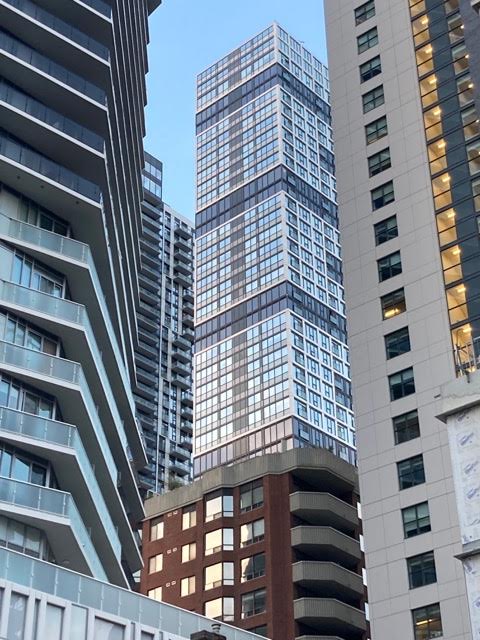
Overlapping skyscrapers
(Image courtesy of Malik)

A few months later, I arrived in Canada. Everything is different here; the buildings, the people, the language, even the air I breathe. I feel full of energy, overflowing with enthusiasm, surfing on a wave that brings a radical change to my person. The excitement is immense, I want to try many things, to meet people, to experiment, to enjoy life even more. I have real curiosity that needs to be quenched. 

However, I must admit that the pressure is strong. The imperative to find a job and a place to live in order to integrate quickly and to be autonomous is not easy when you arrive in a new country where you don’t know anyone and where you haven’t yet mastered the culture. 

I was in Toronto for two months, planning to move to Montreal in the future, and I felt that it was very hard to connect with people here. I noticed that everyone seemed to be in their bubble and I noticed the lack of interaction between people. 

Toronto is a career-driven city where people seem to pursue personal goals whatever they are without connecting with others, which is really different from Paris and France in general, where things are going on in the streets and where people interact with each other. Although even that seems to be mostly arguments! The most I could get from others was small talk without learning their opinions and perspectives on things, whereas French people have an opinion on everything which I admit can be exhausting sometimes.

The thing I love here is the openness of people and that they care about mental health. They won’t judge you based on your identity or your appearance which is very freeing. The work culture is different and seems to care about people’s well-being, or at least more than in France.

Then I met a group of French people who also recently immigrated along with others who have been in my adopted country for longer. Many of the stories I have collected are inspiring. 

Some of them made a real impression on me, like the account of a 30-year-old young man who was selected to immigrate here last spring and had left everything, even sold his house, in order to come and live in Canada. He told me about his dream of becoming a pilot, which was simply born after taking an airplane flight course that his relatives had given him for his birthday. Today, he is going to Alberta to work at a ski resort for a while and wants to train to soar in his chosen field.

Then, there are two girls who left Montreal to move to Toronto to pursue their Canadian dream and improve their English. I also met a girl from Liège in Belgium who came to be a teacher in Canada and had to change her plans because of the pandemic. She is now an au pair and seems happy.

As I continue to live in Canada and explore more, I aim to discover more about myself and who I want to be, and this doesn’t go without the career pursuit which will come later. I will also keep in contact with the people I meet. As I am moving to Montreal soon and will be meeting a lot of other immigrants and locals, I will nurture and inspire myself with their stories to create mine. In the meantime, even if I do connect with others, I want to write my own story and I need to reflect on all of that to pursue my quest of self accomplishment.

It is all these stories of immigration experiences that are different from mine, and which may seem more classic, that sustain my hope. Behind each person is a story. Despite the odds, all these people continue to move forward, to dream, to dare, to live. They have a thirst for life and experiences that make me say to myself that everything will be fine, and that despite the setbacks, I will land on my feet. Because of them, I now feel that I don’t need to stress myself out trying to achieve an ideal immigration experience, or accomplish a specific ambition, but that I can just live this new adventure more humbly and simply.

I’d like to conclude by sharing that I wrote a list of 30 things to do before and during the year of my 30th birthday, when I had written that I wished to live abroad and especially in North America. I don’t know if it’s a manifestation or a twist of fate, but I think I’m about to realize a dream!

Somebody Shot My Hometown

On the morning of July 4th, 2022, I was lying in bed watching videos on my phone when my mom called me. Earlier that week, we had discussed the possibility of meeting at my parents’ house for a barbecue or a short visit, so I didn’t think anything of the call. However, when I picked up the phone, it was immediately clear that something was wrong.

The usual preamble to our calls, the “Hi, how are you? What’s new?” etc., was replaced by a nervous “Where are you?” After I reassured her that I was safely at home and that my brother had returned to his house in Milwaukee the night before, my mom told me that she and my dad were currently fleeing the downtown area of my hometown, Highland Park, Illinois, because there were gunshots at the Fourth of July parade.

My immediate reaction to learning my loved ones were in danger from a mass shooter was not what one might expect. When I worked in schools, I went to work every day knowing that there was a possibility of a stranger or even one of my students coming into the building with a gun. During quiet moments at my desk, I would think about how I could best protect myself and my students if there were to be a shooting, occasionally glancing out the window to see if there was a safe place to land. Similarly, when I go to the movies, I prefer to go to theaters with emergency exits in the back, so I can sit far away from the entrance and I know I have a place to go if a shooter were to come in. So when my mom called to let me know there was a mass shooter at the parade, I was scared for the people there, but I wasn’t surprised.

For the remainder of the morning, I continued to lie in bed, waiting for the call that would tell me my parents had made it home safely. While I waited, I constantly refreshed a Google search for Highland Park, desperately hoping for new details to come out about what was going on.

When my mom called me the second time, it was to tell me she, my dad, and a group of parade goers had taken refuge at the nearby beach, and she was waiting for a friend to come and pick them up. She also informed me in hushed tones that one of the young men at the beach with them seemed suspicious, and had been smiling the entire time they were there. Hearing this scared me, so it’s hard to fully imagine what she must have been feeling at the time. There was no information what the shooter looked like or where he went, and for all she knew another bout of gunfire was about to erupt where they were now. How could anywhere feel safe after what they had just experienced? After that phone call was the first time I cried that morning, thinking of my parents shuffling through a crowd of people just as scared as they were, not knowing if another round of gunfire was about to erupt in their midst.

I was incredibly fortunate to have my parents make it home that day unharmed, a luxury not everyone from Highland Park can say about that day. This didn’t stop me from feeling a profound sense of loss. Members of my old community had lost their lives at the site of so many wonderful childhood memories. Were I to associate words with Highland Park I would have said quiet or safe, but now I was seeing headlines literally describing it as a warzone.

As details emerged about the shooter, I was shocked to learn he was the son of the owner of a deli that I had frequented for years. I remembered that behind the counter the owner had hung some of his children’s artwork. I wondered if the colored pencil drawing of Iron Man I had admired had been done by a mass murderer. 

Never a community to take things lying down, the town quickly adopted the slogan “HP strong” and began multiple initiatives to help the victims and their families get through this trying time. From local businesses to children with lemonade stands, people did their best to raise much-needed funds for hospital bills, therapy, and medical devices that some victims will have to use indefinitely or for the rest of their lives due to injuries. However, as Highland Park rallied, the events of the day began to quickly fade from the consciousness of those unaffected by it.

Image of a person holding a candle during a vigil.
(Image courtesy of David Dibert via Pexels)

Mass shootings have become a fact of life in America. There have already been over 300 shootings in 2022, and the sad truth is that more will probably occur between my writing this and when this article is published. It’s impossible for people to fully process each one of these tragedies with the gravity they all deserve. It’s easy for people who are disconnected from these events to think that the effects of a mass shooting only last for the duration of the event itself. However, for people who were there or for the community at large it leaves a scar that does not heal quickly.The last time I spoke with my mom, she mentioned that she still checks the rooftops around her while she is in public spaces since that is where the HP shooter attacked from. 

Highland Park residents were scandalized to learn that a website was selling “HP Strong” T-shirts, not to benefit the victims, but to make a profit. The site incidentally has paraphernalia for a variety of mass shooting incidents, capitalizing on the tragedies of not just our community but many.

The Fourth of July parade that the shooter chose to target was a staple of our small town, one that I have memories of attending for years as a child. Now, instead of simply being a time for the town to get together and have some fun, if the parade continues it will be an annual reminder of the tragedy that took place in our town square.

Another aspect of experiencing a shooting in your community is the outside pressure to move on. Whether it’s feeling guilty or selfish for not being as affected by other mass shootings or the toxic positivity of those who didn’t have a personal connection to the attack, I’ve found myself starting to feel crazy for not having moved past it yet. I know I’m not alone in feeling this way as my partner has expressed her own similar feelings. Like me, she also spent the morning worried and unsure if my parents were safe, however, by as early as that evening her mother was making it seem like my partner was overreacting to still be so upset about it. I’ve stopped several times while writing this and had to convince myself that not only am I allowed to be upset about this, but that I should be.

If there’s anything you take away from my experience and those of the people close to me it’s this: As frequent as they are, we should not allow ourselves to start thinking of mass shootings as normal. Other countries seem to have figured out how to get gun violence in check, so it’s clear that there are steps that can be taken to help prevent these attacks from happening. However, people don’t take action to change things they see as natural occurrences. I’ve heard people compare mass shootings to natural disasters which is a dangerously dismissive way to think about the issue. There is no legislation that will stop a tornado, and you can’t regulate a hurricane. People should be able to go to a parade, or to a movie, or to school and not have to worry about being shot, but I do and I’m not alone.

Denomination

Polycystic ovarian syndrome (PCOS) is a condition that affects some women, mostly in South Asian countries. It causes several health imbalances like obesity, hormonal malfunction, and amenorrhoea. But not a lot of people talk about how this syndrome affects women’s mental health. It affects women differently, such as increasing the likelihood of brain fog, depression, anxiety, and more.

This syndrome has affected me in the past, and this prose poem I’ve written talks of its origins; it teases the notion that women develop this syndrome because their mental health is in a bad state, which is in turn because they have been restricted in a way or have restricted themselves due to societal conditioning.

Denomination

Why, I asked him, do we have to return to our dorms at dusk, like pigeons into pigeonholes, while they don’t — their freedom resounding like the condor’s cry as they walk the dark streets. The ‘security’ guard leered, patting the low parapet he was sat on; ‘come here, and I will tell you,’ he drawled, like he was any better than the unhinged rapist he was supposedly protecting me from. So many rules. Rules to keep me safe, apparently. Rather, rules to keep me existing, but not really alive. Don’t go up to the terrace, don’t linger, don’t make eye contact when they stare at you like they want to devour you. How can I not notice when going to the shops morphs into a game of dodgeball? Or when their aim is flawless, and they walk away with their power trip? How can I brush it off? How can I muzzle myself? But my outrage was only stifled with sighs of ‘this is how the world is… you have to be sensible.’ As if asking for freedom is senseless. I’ll never forget when my heart went out to my classmate’s ignorance as she told me that I should be happy with all the devious desires on the streets, because her ebony skin was ever ignored. Truly, perhaps it was me that was ignorant of her plight, more than she was of mine; those so-called differences pitting women against each other in this game of patriarchy. I look back at all those movies, where dainty feet with tinkling anklets was the only ideal to achieve, to ultimately be the caretaker, the less-than-him, the sidekick, or even reduced to just a romantic interest: there to dance when the music plays. At every instance, my mother told me to grow out my hair, for it is the only way for a woman to be. At every instance, my friends’ mothers told me to wear some jewellery, for it is the only way for a woman to be. But it was a slow-acting venom, to conform, yet to be told that the thing you have conformed to will always be less than the other. If these were the only ways for a woman to be, then I must be a man. I, so unladylike with my bare neck and bob; the non-female. I was puzzled at the homophobes, bleating through the night, calling for correctness, for equality, when what can be more equal than a man and another man? Or a woman and another? And is this the reason I daresay, that the women of this world celebrate the gay ships as they float by? Because they crave that level of equity with a man that they know they can’t get in any other way? And slowly, my breasts were strangers to me. I had hair on my chin and cysts in my ovaries. Menstruation, a thing of the past. And when I confronted her, my body asked me eagerly, ‘this is what you wanted, right?’ But is this what I had wanted? Was I becoming a man to be seen as equal to one? They sent me to the doctors and labelled me diseased. It was physical, they said, not psychological. But was it? It’s a polycystic epidemic out there, they said. But why was it? Lose weight, they said, and it will be fine. But will it? To diagnose this tree, I excavated for fortnights to find its root. And at the root was a syndrome, not a transition. At the root was non-conformity playing an identity crisis. At the root was the audacity of this world telling me I needed to be a man to be seen as human. I throw these fresh fruit for thought: Am I syndromed because you believe I lay about the house all day, eating potato chips? Or because applying to intern at an environmental agency in the Andamans was forbidden? Heck, doing or being me was entirely forbidden. Heck, stating a thought would soon be forbidden if I let it. Did my depression gift my ovaries with cysts, or did the cysts give my brain depression? Sure! Yell away into megaphones about educating the girl child. And when she wants to do all the things she’s read can be done, snuff out the flame and tell her if only… if only she had a key where she has a keyhole… Now that could open any door, hey? I am not a man; I am a woman. But I am only this woman, not any other woman. Especially not the woman some poet, politician, swamiji or any other sanctimonious degenerate desperately needs me to be. I am this woman — still a woman. And so is she who does not want to study ‘that degree more suited for women’. And she with all those tattoos. She who dreams of riding a Ducati. The one who wants to travel to Peru over the summer, as is the one who says all she wants to do is stay home and cook for her husband. Women. And we will not laud ourselves with titles like Queen or Goddess, as if we are invaluable only if we are born as them. We are invaluable simply because we are women. In it, lies our splendour. And you may no longer contain this splendour in a cage by christening it ‘protection.’ No longer pat yourself on the back for all these ovaries dipped in patriarchy.