J&K’s Public Schools in Crisis as Private Coaching Centers Surge

Enrollment in government schools drops to 52% as parents flock to private coaching; officials promise reforms, but challenges persist.

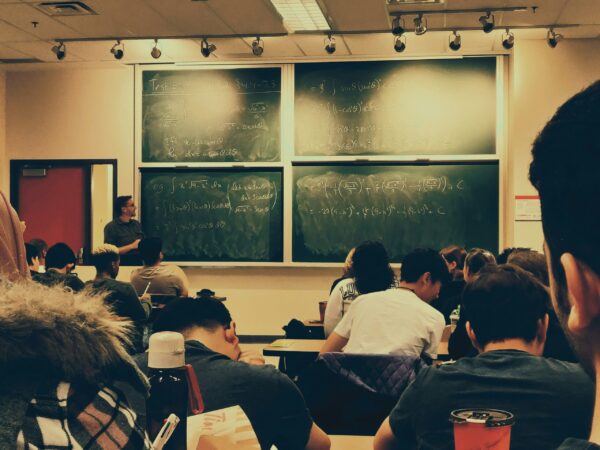
SRINAGAR: Government schools in Jammu and Kashmir (J&K) are rapidly losing ground to private coaching centers, with the latest National Achievement Survey revealing that enrollment in public schools has fallen from over 85% in the 1980s to just 52% by 2021.

This sharp decline reflects growing public distrust in government education, driven by underfunded infrastructure, inconsistent teaching quality, and the mushrooming growth of private coaching centers—now a ₹500 crore industry in the region.

“Parents see coaching centers as a lifeline,” says Prof. Tariq Ahmad, an education sociologist at the University of Kashmir. “But many rely on untrained tutors and rote learning—it’s a false promise.”

Government Pushes Reforms Amid Slow Progress

In response, the J&K government has rolled out initiatives aimed at revitalizing public education:

  • Smart classrooms in over 1,200 schools
  • Training for 15,000 teachers in collaboration with NCERT
  • Schemes such as free textbooks, mid-day meals, and scholarships for girls

However, implementation remains slow. At Srinagar’s Government Boys Higher Secondary School, upgrades have stalled. “Funds are delayed, and progress is patchy,” said a senior Education Department official who requested anonymity.

Teachers and Parents Caught in the Middle

While many families opt for private coaching, some educators are choosing to back public schools with personal conviction. Arshid Khan, a government teacher in Doda, enrolled his daughter in a government school. “If we don’t trust our own system, who will?” he asks.

A 2023 survey by the J&K Teachers’ Forum found that 68% of government teachers still send their children to public schools—seen by many as a quiet stand in favor of restoring trust.

Parents, however, remain divided. Mohammad Yusuf, a carpenter from Anantnag, took a loan to cover his son’s ₹20,000-a-month coaching fees. “Even graduates drive taxis now. I can’t risk my child’s future,” he says.

But experts caution against overreliance on private institutes. “Coaching centers don’t guarantee success,” says Dr. Neelofar Khan, an economist at Central University Kashmir. “In fact, 60% of J&K’s civil service qualifiers in 2023 were government school alumni.”

Community Interventions Offer Hope

Some grassroots efforts are filling the gap. The Hope Foundation, for example, runs free evening tutoring in 30 Budgam schools, staffed by retired government teachers. This initiative has led to a 22% rise in enrollment.

Online campaigns like #MeraSchoolMeraGarv are also making an impact. In Baramulla, students from a government school recently developed a water conservation app—highlighting the untapped potential within the public system.

What Lies Ahead

Experts suggest urgent reforms to regain public confidence:

1. Transparent fund allocation and timely infrastructure upgrades

2. Community engagement, empowering teachers and local leaders

3. Curriculum reform that includes vocational training and mental health support

Education Minister Sakina Itoo acknowledges the uphill battle: “This isn’t just about buildings—it’s about rebuilding faith, one classroom at a time.”

For now, parents like Razia Bano remain watchful. “If teachers fight for these schools,” says Razia Bano, “maybe I’ll bring my children back.” Until then, the battle for trust—and the future of public education in J&K—remains unfinished.


Heathrow Airport Restarts Operations After Fire-Induced Power Outage Causes Day-Long Chaos

London – Heathrow Airport, one of the busiest travel hubs in the world, was brought to a standstill on Friday following a massive fire at a nearby electrical substation that triggered a complete power outage across several terminals.

The fire, which broke out at around 11:23 PM on Thursday, March 20, at a North Hyde substation, caused significant damage to the power supply infrastructure serving the airport. Emergency crews worked through the night to extinguish the blaze, and engineers from UK Power Networks raced against the clock to restore electricity throughout Friday.

As of 6:30 PM, Heathrow Airport confirmed that power had been restored to all terminals and systems were coming back online.

“We have begun the phased resumption of operations at Heathrow. Our teams are working hard to support passengers and reconnect disrupted flights. We thank everyone for their patience during this unprecedented situation,” the airport’s spokesperson said.

Thousands of travellers were caught off-guard by the disruption, with many stranded inside terminals or stuck in long queues outside. Some flights that had already departed were diverted to alternative airports, while inbound flights were held or rerouted entirely.

Amar Krishna, who was travelling back to Heathrow from Trivandrum, India, shared his experience being diverted to Germany when the fire struck.

“People felt helpless,” he said. “We had no access to our checked in bags and no one knew what to do. It was a sudden and unexpected incident, and the uncertainty made it worse. We ended up staying overnight in Frankfurt Airport in Germany with barely any communication in the beginning.”

We were just about to board when everything shut down. The screens went black and no one knew what was going on,” said Rashida Khan, a passenger flying to Dubai from Heathrow. “It’s chaos.”

Transport Secretary Rachel Maclean has called for an emergency response team to assess the situation and ensure passenger safety. “Our priority is to support affected travellers and get the airport operational again as quickly as possible,” she said.

Heathrow Airport issued a formal apology via social media, asking travellers to avoid coming to the airport unless absolutely necessary and to contact their airlines directly for updates.

There have been no reported injuries related to the fire. An investigation is currently underway to determine the cause.

Travellers are advised to check with their airlines before heading to the airport and to consider alternative travel routes if possible.

Kashmir’s Unemployed Youth Struggle as Government Measures Fall Short

Jammu and Kashmir’s unemployment rate has surged to 23.1%, one of the highest in India, according to the latest Centre for Monitoring Indian Economy (CMIE) data. This figure starkly contrasts with India’s national average of 7.4%, highlighting the alarming employment crisis in the region. Despite multiple government initiatives, thousands of job seekers continue to struggle as slow hiring processes and a weak private sector stall opportunities.

The J&K Directorate of Employment reports that the number of unemployed youth rose from 3.52 lakh in 2024 to 3.70 lakh by January 2025. The crisis disproportionately affects highly qualified graduates, many of whom are now forced to take up low-paying or informal jobs.

Hiring Delays, Weak Private Sector Growth

The J&K administration has launched self-employment schemes and job drives, but aspirants argue that these efforts have not yielded tangible results. While government job recruitment remains delayed due to legal and administrative hurdles, the region’s lack of industrial growth further limits private-sector employment.

A senior J&K Service Selection Board (JKSSB) official acknowledged the backlog, stating:

“We are working to expedite hiring processes, but legal challenges and administrative delays continue to slow down recruitment.”

Despite the administration’s push for private-sector growth, Kashmir still lacks large-scale manufacturing hubs, IT firms, and corporate offices, leading to heavy reliance on government employment.

“Kashmir’s industrial infrastructure remains weak, and investment is low. Without strong private-sector participation, unemployment will remain high,” said a senior Kashmir University economist.

Educated Youth Struggle for Jobs

While the administration highlights employment drives, many highly qualified graduates remain jobless.

Zahoor Hussain Hakeem, a Political Science postgraduate with a B.Ed., has applied for government jobs for years. Today, he sells Ayurvedic medicines door-to-door.

Rizwan Amin, who holds a Master’s in Public Administration, now runs a grocery store in Srinagar.

Zahid Ashraf, a B.A. graduate with IT certifications, works as a private cab driver, far from his dream job in the tech sector.

Hilal Ahmad Sheikh, a 48-year-old postgraduate in English with a B.Ed., is now overage for most government positions. “I did everything—studied, qualified, applied. But now, I don’t even meet the age criteria,” he says.

Rising Mental Health Concerns

A study in the Journal of South Asian Economic Studies links joblessness in Kashmir to increased stress, anxiety, and depression among youth.

“Young people feel hopeless. Many are overqualified for the jobs they are forced to take,” said Dr. Mudasir Ahmad, a Srinagar-based mental health expert.

Government Response and the Road Ahead

The J&K administration has urged unemployed youth to explore self-employment, but job seekers argue that loans and financial aid for startups remain difficult to access due to bureaucratic hurdles. Officials claim that new initiatives are in the pipeline, including simplified loan processes and efforts to attract private investment.

A government spokesperson stated:

“We recognize the challenges and are working to create more employment opportunities through industrial growth and entrepreneurship support.”

However, economists emphasize that urgent policy shifts are needed, including:

Faster, more transparent government recruitment to clear backlogs.

Investment in industries and IT sector growth to create sustainable jobs.

Improved entrepreneurship support with easier access to loans.

Market-aligned skill development programs to enhance employability.

With thousands of graduates entering the job market every year, experts warn that without significant reforms, Kashmir’s educated youth will remain trapped in a cycle of unemployment, frustration, and financial insecurity.

Gujarat Child Murder Sparks Debate on Superstition-Driven Crimes

A four-year-old girl was allegedly murdered in Gujarat in what authorities suspect was a superstition-driven crime, sparking calls for stricter laws against such practices. BJP MLA Abesinh Tadvi has urged “exemplary punishment” to deter future incidents.

 The accused, reportedly of unsound mind, allegedly killed the child as part of a tantrik practice, according to his police statement. “It appears that this brutal killing has been committed as part of superstition. It has anguished me and tainted the image of the community,” Tadvi told reporters, adding that he had spoken to Home Minister Harsh Sanghavi about imposing the death penalty to prevent similar incidents.

According to the FIR filed by the victim’s mother, the accused “dragged the child from her custody into his house, where he hacked her to please the gods.” District police officials are investigating whether the accused acted alone or was influenced by external beliefs.

This case has reignited concerns over superstition-driven violence in India. In 2023, over 100 cases of human sacrifice and black magic-related crimes were reported across the country, according to the National Crime Records Bureau (NCRB). Experts say that many such crimes go unreported due to fear and deep-rooted cultural beliefs.


During Holi celebrations, a ritual is observed in various regions of North India, people leave diyas and worship materials at intersections, believing they absorb negative energy. If someone unknowingly steps over them, they fear inheriting the bad luck.. 

Renu Kumar, resident of Rohini, Delhi  says, “It is a belief that if you ward off the evil eye and place the ingredients at an intersection, it takes away negative energy and various problems. If someone crosses over those ingredients, the negative energy gets transferred to them.”

“We were always told not to leave the house 3-4 days before Holi and sometimes after as well.” says another resident, Rahul Kumar, 

It has been known to cause stress, if one passes over the material kept at cross sections, believing that someone else’s problems are now their burden. This ritual is not usually discussed and is passed down from one generation to the next due to the nature of the belief.

Several villages in Uttarakhand were noticed not celebrating the festival of holi, in interviews conducted by Times of India, it was found that Holi celebrations were ceased due to a superstition. The belief is that if the community celebrates the festival it will bring disaster and decease. In one of those villages, Holi has not been celebrated for 90 years, because a ‘Cheer bandhan’ flag that marked the start of the festival was stolen and no one dared to start the tradition again. Communities threatened to take adverse actions against anyone to tries to fight the superstition, instilling the need to follow these superstitions out of fear. 

While some rituals are cultural, others have resulted in severe consequences, including murder, ostracization, and mental distress. Social scientists say that superstition-based fears, once passed down through generations, become ingrained and difficult to break.

Sociologist Dr. Stuart Vyse told the American Psychological Association, “In the modern age, we adopt science and reason as our standards. When we call something superstitious, it’s because it doesn’t meet those criteria and doesn’t fit with that worldview.”

In response to rising superstition-related crimes, activists have urged the government to strengthen laws and raise awareness about the dangers of blind faith. While states like Maharashtra and Karnataka have laws against black magic and human sacrifice, experts argue that more stringent enforcement is needed nationwide.

With growing concerns over superstition’s impact on society, lawmakers and activists continue to push for education and legal measures to prevent further tragedies.

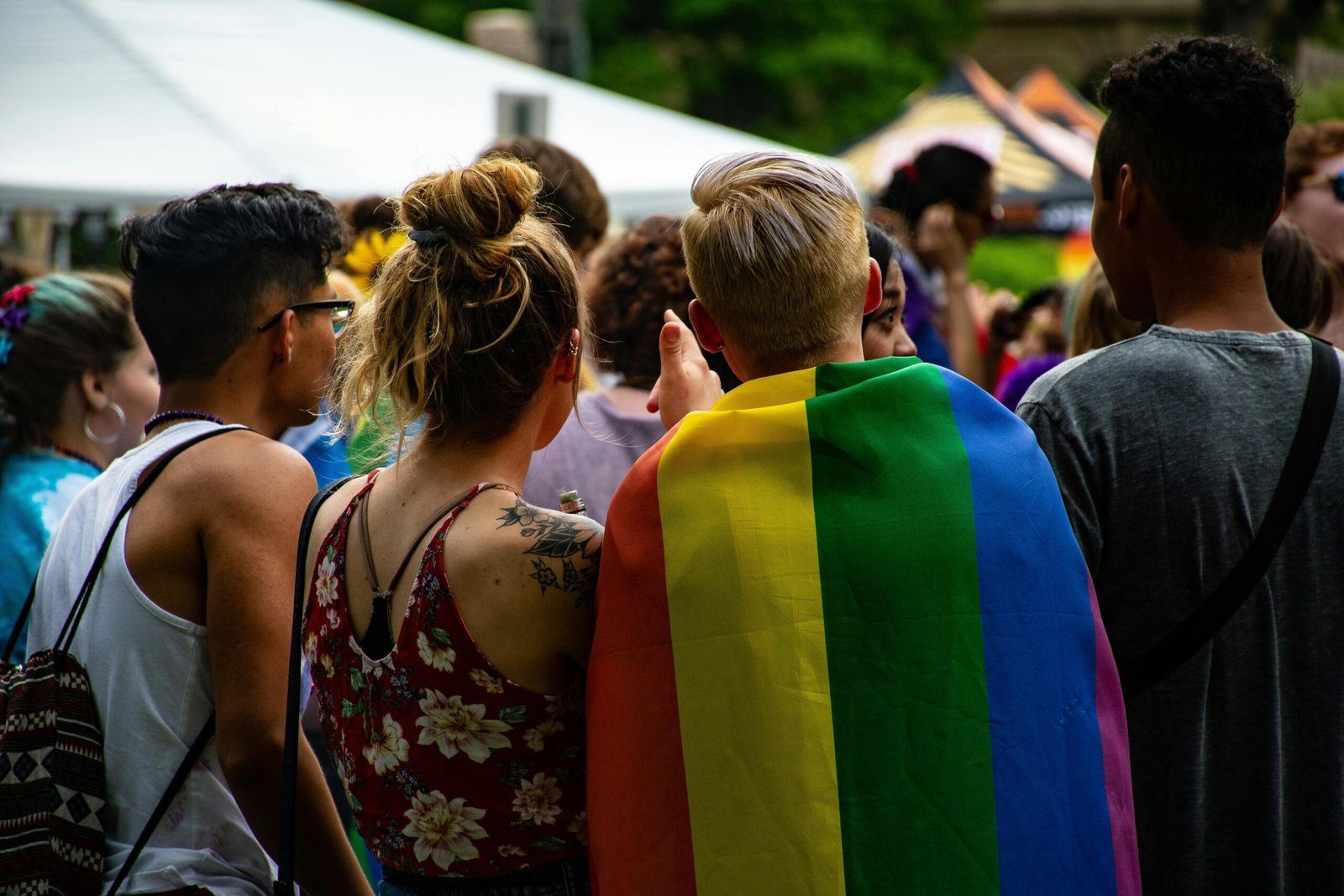
Nigerian LGBTQI+ Community Reacts to Trump’s Presidency: Fears Over Travel and Funding Cuts

As Donald Trump assumed office as the 45th President of the United States in 2017, many members of Nigeria’s LGBTQI+ community faced a wave of uncertainty. The election of a conservative U.S. leader known for his nationalist and restrictive policies sparked fears about travel limitations, foreign aid reductions, and a decline in global LGBTQI+ advocacy.

Fear of Travel Restrictions

Several members of Nigeria’s LGBTQI+ community, who requested anonymity, expressed growing fears about the potential tightening of U.S. immigration policies under Trump.

“I have always dreamed of seeking asylum or furthering my education in the U.S.,” said a member of Nigeria’s LGBTQI+ community. “But with Trump’s election, I fear that people like me will be shut out.”

Trump’s administration implemented restrictive immigration policies, notably Executive Order 13769, commonly known as the 2017 travel ban. While Nigeria was not initially included, the order signaled a broader shift toward stricter visa regulations. In 2020, additional visa restrictions were imposed on Nigeria, heightening concerns that marginalized communities, including LGBTQI+ individuals, could face greater barriers to travel and asylum.

Funding Cuts and Impact on LGBTQI+ Advocacy

One of the most immediate concerns among LGBTQI+ activists in Nigeria was the potential decline in U.S. foreign aid, particularly through the United States Agency for International Development (USAID).

“Many of the programs that support LGBTQI+ rights and HIV/AIDS treatment in Nigeria rely on USAID funding,” said another source who requested anonymity. “If that funding is cut, our community will suffer immensely.”

The Trump administration moved to dissolve USAID, leading to significant funding cuts and the loss of livelihoods for many community members who depended on these programs. According to reports, USAID funding for Nigeria’s HIV/AIDS programs dropped by approximately $100 million, directly affecting organizations, which had to scale back critical health services.

Additionally, Trump reinstated and expanded the Mexico City Policy, also known as the Global Gag Rule, which restricted U.S. funding for organizations that provided or even discussed abortion services. Although primarily targeting reproductive health initiatives, this policy had a broader chilling effect, limiting the ability of NGOs that support LGBTQI+ rights and healthcare to access essential funding.

Weakened U.S. Support for LGBTQI+ Rights Globally

Beyond funding cuts, many in Nigeria’s LGBTQI+ community worried about the weakened U.S. support for LGBTQI+ rights on the global stage. Unlike the Obama administration, which actively promoted LGBTQI+ rights, Trump’s presidency marked a stark departure from such advocacy.

“Under Obama, there was a clear message that the U.S. stood for LGBTQI+ rights. With Trump, that support has disappeared,” an activist noted.

In 2018, the Trump administration opposed a United Nations resolution condemning the death penalty for same-sex relationships. Such diplomatic positions raised concerns that anti-LGBTQI+ policies in countries like Nigeria could be further emboldened without international pressure to uphold human rights.

Recent Executive Actions and Their Implications

In 2025, during his second term, President Trump signed several executive orders that have further implications for the global LGBTQI+ community:

  • Defending Women From Gender Ideology Extremism And Restoring Biological Truth To The Federal Government (January 20, 2025): This order established federal policies recognizing only two genders—male and female—across all government agencies, effectively erasing recognition of transgender and non-binary identities. Such a policy shift could influence international norms and embolden anti-LGBTQI+ sentiments in countries like Nigeria.
  • Reevaluating and Realigning United States Foreign Aid (January 20, 2025): This order initiated a 90-day pause on all U.S. foreign development assistance programs to conduct a review, with exceptions only for emergency food assistance and military aid to Egypt and Israel. The suspension and potential realignment of aid could severely impact NGOs in Nigeria that rely on U.S. funding for LGBTQI+ advocacy and healthcare services.
  • Ending Radical and Wasteful Government DEI Programs and Preferencing (January 20, 2025): This order eliminated all Diversity, Equity, and Inclusion (DEI) programs within the federal government, including those related to LGBTQI+ initiatives. The dismantling of such programs signals a broader shift away from supporting marginalized communities and may influence international partners to adopt similar stances.

Hope Amid Uncertainty

Despite the fears surrounding Trump’s policies, some Nigerian LGBTQI+ individuals remained hopeful that advocacy efforts and grassroots movements could sustain progress.

“There is always fear when a conservative leader takes power,” one respondent said. “But our fight for equality does not depend on just one country. We will continue to push for our rights, with or without U.S. support.”

While the U.S. administration’s policies under Donald Trump have significantly impacted the Nigerian LGBTQI+ community, from travel restrictions to cuts in crucial funding, the fight for equality remains strong. With concerns about the long-term implications of Trump’s policies, many in Nigeria’s LGBTQI+ community are left to navigate a future that is increasingly uncertain, yet driven by hope and determination.

Massive Wildfire Rages in California, Thousands Evacuated

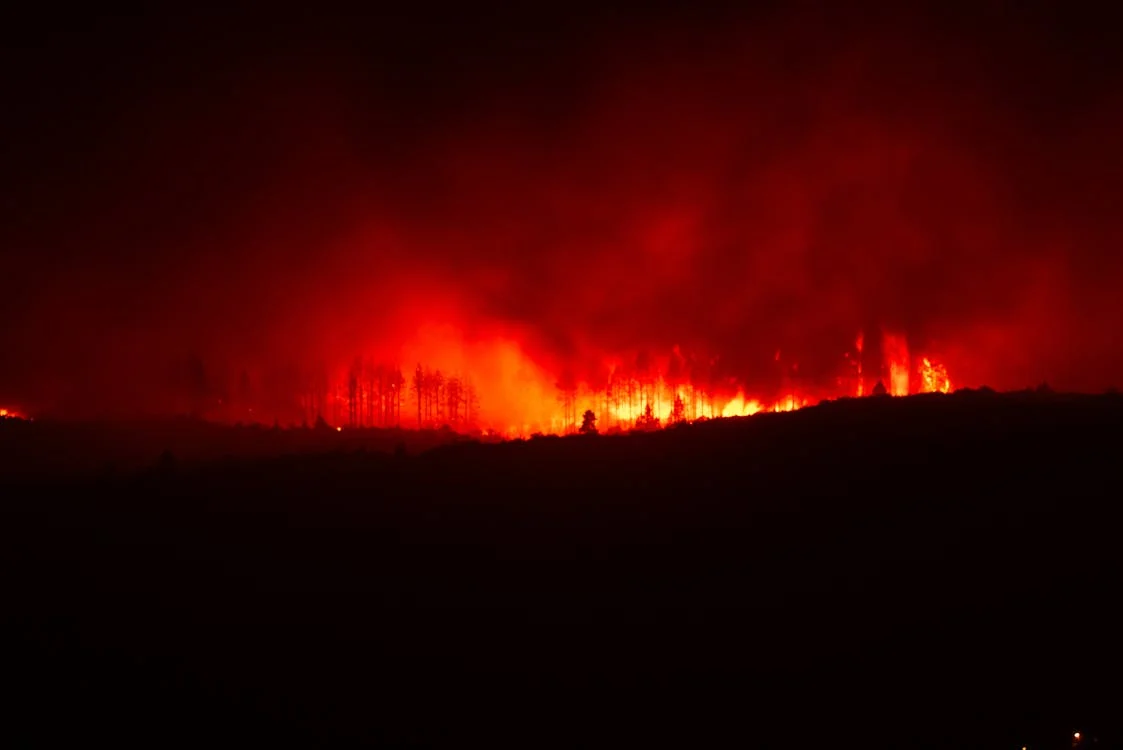
A massive wildfire erupted across Los Angeles late Wednesday night, forcing thousands of residents to flee their homes as flames engulfed more than 10,600 acres and destroyed more than 100 structures within hours.

The fire spread rapidly due to dry conditions and powerful Santa Ana winds reaching up to 100 miles per hour.

According to The National Weather Service “extremely critical fire weather conditions” will “continue for portions of the Southern California Coast with critical conditions persisting into Thursday.”

Los Angeles resident Natile George, who was forced to evacuate her home, shared her fear: “It happened so fast. One minute, we thought we were safe, and the next, we were packing up and leaving everything behind. It’s terrifying.”

“What we saw here in the last 24 hours is unprecedented,” says Chief Jim McDonnell, Los Angeles Police Department during the discussion with President Joe Biden and Governor Gavin Newsom on Wednesday.

As of Wednesday night, the Palisades fire has been reported as the largest active fire burning between Santa Monica and Malibu (17,234 acres), followed by Eaton fire (10,600 acres), burning north of Pasadena, then the Hurst fire (855 acres), to the north east of the city. Lidia fire (348 acres), in the hills north of Los Angeles. Sunset fire (43 acres) in the historic Hollywood Hills area near many famous landmarks, including the Hollywood sign. Two small fires have been contained: Woodley fire and Olivas fire, burning over 30 acres and 11 acres respectively.

Gov. Gavin Newsom has declared a state of emergency in the affected region, mobilizing additional resources, including the California National Guard. “We are doing everything possible to contain the fire and protect our communities,” Newsom said in a statement.

The fire has caused significant disruption, with highways closed and power outages reported in several areas. Hospitals are on high alert, preparing for potential injuries, casualties or respiratory issues caused by smoke inhalation.

Emergency shelters have been set up in schools and community centers to accommodate displaced families.

Gavin Newsom, Governor, shared early Thursday that more than 7,500 firefighting personnel and almost 1,200 fire trucks have been deployed across Southern California. 

Climate scientists have emphasized the role of rising global temperatures in strengthened wildfire in the region.

As the efforts continue, the focus remains on ensuring public safety and minimizing damage. 

The first fire started at 10:30 am on Tuesday in Pacific Palisades, Los Angeles.

Though the winds have weakened (50-80 km/h), the fires are still active. As per the weather department, the winds are expected to strengthen by late Thursday night till Friday morning, but not as strong as Tuesday. 

It is predicted that winds will subside by Friday and all the red alerts on fire warnings will be removed later that evening.

At least five people are known to have died and several people have been injured as per the recent reports.