I was accepted into the doctoral program and was offered a full scholarship. Most people would have immediately taken.
But I didn’t.
The pride I felt from being accepted into the program and not having to put myself into more debt for it was one of the most satisfying moments of my life. I had worked my ass off to get to that point; I received my Bachelor of Arts degree in three years and was accepted to the one and only Master of Arts program I had applied to. The master’s program was the most difficult experience of my life (and it lasted for two years, from 2018-2020). Long nights at the library, endless research and writing and proofreading, course readings and assignments, graduate assistant duties, student athlete mentor duties. My day was scheduled down to the last minute. But it was all worth it because I had gotten into the doctoral program. It was the goal, and I had achieved it, but I could not ignore the gnawing feeling in my gut.
The hidden cost of master’s programs
While I do not regret pursuing my master’s degree, the experience was miserable. I fell into old habits of barely eating, mostly because of stress and lack of time, but also because of financial instability and my mental health. I was in a constant state of anxiety and depression. My anxiety led me to believe that I did not have time to eat, sleep, or take care of myself, and my depression led me to think that I did not deserve to.
But my mental well-being did not get better. I was overwhelmed and exhausted, and not the best version of me. I felt sad, and then I felt bad for being sad. My mind would not stop racing about all the tasks I had on my “to-do” list and what would happen if I didn’t complete the tasks. But at the same time, my mind told me to stay in bed and rewatch New Girl for the 50th time. I barely slept, or ate, or saw my family and friends. And when I did spend time with my family and friends, I was absent mentally and emotionally because of my graduate school responsibilities. I would vent with my peers in the graduate program while consuming an unhealthy amount of alcohol. They offered validation and encouragement, but it was not hard to tell that we were all overworked and exhausted, too.
About a year into the program, I reached out to my university’s mental health center. I was informed that there were no openings for over a month. I was discouraged and attempted to look for help off of campus but realized I would not have time in my day to see a therapist. My days were packed with my graduate assistantship, mentor job, homework, research, and hours_long graduate classes. In between all of that, I needed to find time to eat, sleep, and maybe go to the gym, but only if there was time. How can I drive 20 minutes off campus, pay for parking at the medical facility, talk for an hour, and drive 20 minutes back?
I had been told that there is always time for mental health and that I need to take care of myself first, but I could not see how that was a possibility for me.
I told myself that I could make it through the year and that I was strong, smart, and capable. I faked it. And then, about halfway through my last semester in the program, the pandemic hit. Everything went virtual and all of my responsibilities became even more difficult and overwhelming than they were before. But, I made it through.
I completed and passed my thesis virtually. My family celebrated my graduation with a Zoom party my mom put together, and I had the opportunity to walk at graduation a year later. Everything I went through culminated in my acceptance into the doctoral program.
Image courtesy of Giorgio Trovato on Unsplash
Is this program worth my wellbeing?
There was a sense of pride when I received my acceptance into the doctoral program, but that gnawing feeling in my gut could not be ignored. If I were to accept, I would be committing myself to at least six more years of the misery I had been living. That gnawing feeling in my gut told me what I already knew: I could not survive six more years. I knew from the moment I opened that email that I would not accept it. However I told everyone that I was not sure what I would do. I did not know how to tell my family, friends, professors (especially the ones who fought for me to be in the program), and peers that I did not want to accept it.
“But it is such a wonderful opportunity!”
“It’s entirely paid for.”
“Won’t you regret it?”
I had not been honest about my mental well-being, so it was difficult to explain why I could not accept the offer. I felt as though I owed everyone an explanation, but it was an explanation I did not know how to give. My husband, then fiance, was the first person I told. He was there with me through it all (except for the six months he was deployed), and he saw my struggles first hand. He was a constant support throughout all of it, and I do not think I have thanked him enough for it.
The next person I told was my mom, who has been and continues to be, my greatest support in life. The last thing I wanted was for my mom to be disappointed in me. While I acknowledge my own hard work and perseverance, I recognize those traits; I got them from my mom. But I was ready to rest and my mom understood. She accepted my decision and confirmed that she was not disappointed with me.
So, I emailed my rejection to the program and let others spread the word for me.
It has been about three years since I decided not to pursue the doctorate, and I do not regret it. I made the right choice for myself, and am thankful I trusted my gut. Although I am struggling to find employment, I am relieved that I am not in a doctoral program. It is cliche, but trust your gut and stay true to yourself, and life will figure itself out.
Turning from the busy conundrum of a dream full of lies, A bittersweet goodbye; Passion so strong Somehow feels so wrong, A meaningless feat, Undeniable defeat; What used to be alluring colorful lights, Now flickering, almost dying, Buzzing sound of glorious harmony, Reduced to a humming melancholy, Hauntingly beautiful. Dreams of golden honey, Fading into distance so uncanny, Bittersweet memories creeping, As nightmares awaken my being. Lightning strike, As grandfather clock struck Witching hour of three, Sky started to cry freely, Downpour came in torrents, Realization abhorrent, Liquids seeping through the crack on the wall, Flowing steadily onto the floor, Blotted it out with crumpled papers to dry, As I stare afar, Paper now drenched, Torn apart into pieces, By the window I perched Pen held tight, No paper in sight, Wanting to write But cannot, So I just sat tight, As the paper on the floor dissolved into unrecognizable mess, Just like my thoughts, Wandering through time lost.
One of the biggest lies we are told is that it is possible to live fully in the moment, but the truth is we never can.
By the time we process any moment, it is already in the past, and that who we are is so wholly defined by our past experiences that any given moment is viewed through the lens of our entire lives. Our pasts can sneak up on us in ways that we never expected. Without taking the time to unpack what led us to certain bad habits or harmful thought patterns, it is too easy to fall right back into them without noticing.
That happened to me when I decided to become a high school teacher.
The role of teachers
If you know anyone who works in schools, you may have heard that teachers tend to act similarly to the students they teach. For example, K-5 teachers tend to be bubblier. They wear their personalities on their sleeves and know how to have fun.
High school teachers are also like their students. We think we’re right about everything, we believe instructions given by administrators are bullshit that we don’t have to listen to, and we ultimately spend way more time complaining about things than actively trying to change them.
Don’t get me wrong, every teacher I know works tirelessly to do what they think is best for their students, and we don’t get a lot of thanks for it. However, I have yet to work in a school that does not have this toxic underbelly of cynicism at the slightest suggestion of change or progress.
In my junior year of high school, I was hospitalized for depression. Shortly after that, I would learn that the extreme nausea and light-headedness that had become a staple of my daily school experience was actually an undiagnosed anxiety disorder. While some people might be relieved to be able to understand what they were experiencing and be excited about the prospect of working on skills to cope with their specific mental health issues, I was not some people.
I was embarrassed. I had been brought up in a home where I was constantly reminded how good I had it compared to my parents at my age. I was told to stop whining or not to “be a baby” at the slightest complaint or show of unhappiness. I knew a lot of people with ADHD who exhibited similar symptoms and behaviors to me, but I was never given an evaluation because my parents didn’t believe it was real.
My slipping grades were chalked up to my lack of effort or a perceived apathy on my part towards doing well in school. Having mental health issues, for me, was just another proof I was a disappointment, squandering my potential. I convinced myself that everyone around me must be feeling the same things I was, and I was just too weak to deal with it.
Too weak to deal with it, or just human?
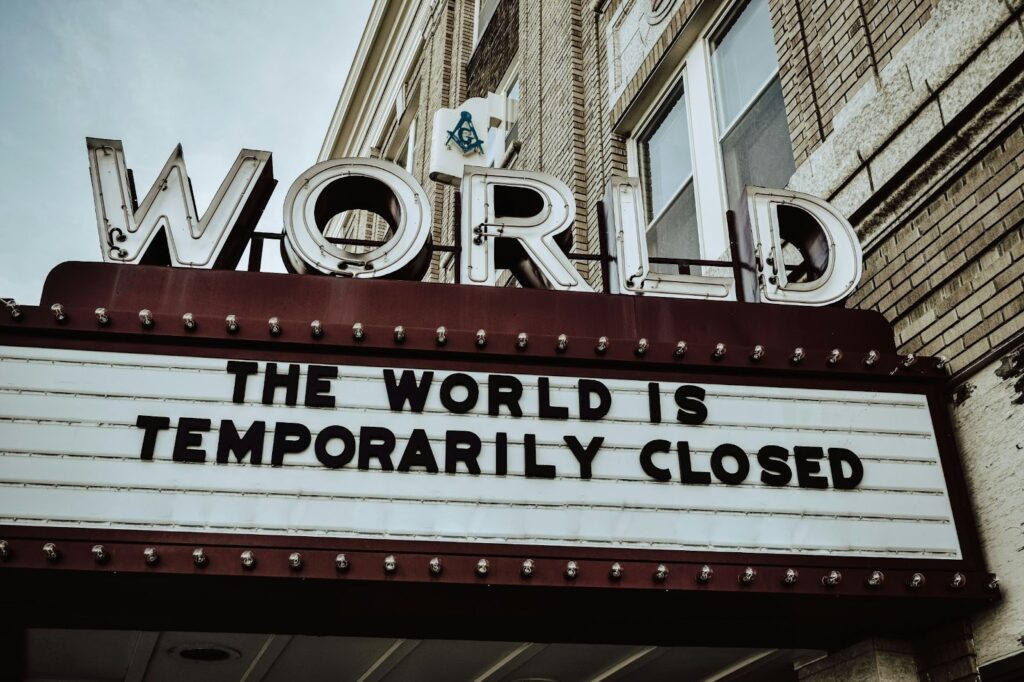
(Image courtesy of Gadiel Lazcano on Unsplash)
This sense that my mental health issues were my fault led me to an inelegant and temporary solution: I ignored them. I simply acted like everything was fine without ever putting in the work to make it that way.
After my hospitalisation, I lied to my therapist about how much better things were for me. I lied to my parents so that I wouldn’t have to keep going to therapy. Worst of all, I perpetuated the lie to myself that I was to blame for everything, and all I needed to do was change my attitude, or at the very least, bury my true feelings so deep that they wouldn’t affect me. A mere seven months after being hospitalized for depression, I was off my anti-depressants because my friends had started drinking and I wanted to join in. Nobody around me questioned that I was somehow all better, and eventually, neither did I.
Except for a messy relationship that neither I nor my partner were emotionally mature enough to handle well, I managed my depression and anxiety very well throughout college and my first few years working professionally. I spoke in the past tense about my struggles with my mental health, as though they were something dead and buried as opposed to something lurking in the shadows. After working in freelance film and TV production, I wanted to find more consistent work, preferably something that felt more meaningful to me than carrying around a tripod or slowly sliding a camera to the right on occasion.
Then, one day, believing that I had conquered all my problems from my past, I decided to pivot to a career in education.
My goal was to help students like me who were struggling and felt they had nobody to help them, without realizing I had never actually learned to help myself through that time in a healthy and effective way.
My first few years subbing and teaching weren’t so bad. I was so concerned with learning all the skills necessary for a new teacher that I couldn’t focus on much else. However, due to never having fully confronted my own problems, I quickly realized I would not be able to help the way I would have liked to. I was able to be understanding and flexible when it came to offering extra help and time on assignments to students who struggled, but I hadn’t gotten into teaching to help improve students’ grades. I began to feel like I had failed since I couldn’t have the impact I had sought to have. Worse still, several of my students were hospitalized for mental health issues, and while a healthier me recognizes that I couldn’t have stopped that from happening, at the time, I blamed myself.
In February of 2022, just four years into my career in education, I found myself pretty much where I was in the fall of 2011: on medical leave from work due to my depression. This time I wasn’t hospitalized, though. This time I could seek help without waiting for my parents to understand how dire my symptoms were.
Putting in the work
I took a few months away from my job to participate in an intensive outpatient program five days a week. I was, and still am, lucky enough to be dating someone who has struggled with her own mental health issues. She has been entirely supportive of my needs and urged me to take my recovery seriously this time. No more shoving things down just to get the stamp of approval from my program to go back to work. By using the cognitive behavioral therapy (CBT) and dialectical behavioral therapy (DBT) skills from this program, I finally confronted the issues in my past and understood the types of cognitive distortions that led me to harmful thought and behavior patterns. I was also finally able to start internalizing that I am allowed to feel what I feel and try not to be ashamed or embarrassed about my personal struggles.
Now, I’m not saying that I’m all better, or that getting here was easy. I’ve learned my lesson about thinking I can “cure” my depression in a matter of months. I also recognize I have a long way to go from where I am. Even writing this article took a lot of time, because I kept wondering if it was even worth writing.
I still have that nagging voice in my head telling me that what I’ve been through doesn’t matter, and I should just stop whining about it. The only thing that got me to go through with it was the hope that you, the reader, might feel the same way.
You might need to be told, or reminded that you matter regardless of what anyone tells you, and that things will only get better once you begin to take them seriously, instead of ignoring them.
And if you, like me, have tried to stuff down unresolved issues in the past, I urge you to confront them in a healthy and direct manner, before they come back worse than before.
When I first started college, I always believed I would make something of myself. I would get a degree, see the world, and become a successful journalist. I had it all planned out, and after the toll my harrowing years of high school took on me, I felt adulthood had something better to offer mentally.
I soon had reality hit me like a freight train.
People always ask: “What would your younger self think of your current self?” It’s a question I can never answer easily. You might as well be asking me to find the circumference of the moon. Even then, I feel like I’d have an easier time finding an answer.
Truthfully, I don’t think my younger self would be proud of who I am today. Mentally, we’re still on the same wavelength, and I don’t believe I’ve made much neurological progress since then. I still think about suicide just as much as I did when I was fifteen but without all the additional teenage angst. I thought going to college would’ve exorcized at least a few demons inhabiting my brain, but it only opened up rent for more.
Along came COVID
The year I started my last semester of college was the same year the COVID-19 pandemic started. Instead of spending my spring venturing into the city and taking on new internships, I was at home with nothing to keep me busy besides a new 5SOS album and a few episodes of The Golden Girls.
It’s hard to believe that it’s been three years since the pandemic started. I mean, seriously? You’re telling me it’s already been that long since I’ve had a couple of my adult years snatched from me and that long since I’ve felt my mental health reboot towards its downward spiral? It can’t be. It’s terrifying to think about now and how that time in isolation catapulted me to where I am today. Whatever progress I had made post-high school was ripped from me in the blink of an eye. I was back to square one, trying to navigate through the darkness while the sun was still shining on the outside.
I don’t think the world has truly grasped just how detrimental that isolating time was for everyone. Jokes are made about it now, but it’s clear that it’s only an attempt to put a bandage over what has already left a scar for many. Within the last two years, people have faced loss in more ways than one. I simply find it impossible to gloss over.
As a young adult, seeing how the pandemic affected others within my age group wasn’t difficult. Many took to social media as an outlet to share their private thoughts, devastated that they were losing some of their most formative years to a public health emergency all while expressing trepidation about the future. It crushed my heart to witness so many promising young voices feel that the road ahead was bleak. But I understood it. When you’re encompassed with nothing but loneliness and hollowness, everything becomes foggy. Life feels like it doesn’t have a purpose anymore, and neither do you.
Image courtesy of Edwin Hooper on Unsplash
There’s still something missing
Fast forward to a year later, and I had finally graduated college with my bachelor’s.
I should’ve been happy, but why wasn’t I? I was about to start my career; shouldn’t I have been grateful? It was only then that I had to humble myself and remember that the ‘career’ in question didn’t even exist yet. The pandemic cut into a time when I was supposed to create a durable landing pad post-grad, anything to make sure I wouldn’t fall into an interminable vacuum of uncertainty. That was my biggest fear, and now, a year later and without a job, it looks like those demons residing in my head won after all.
I think the pandemic and everything that came after it took a piece of my soul that I don’t think I’ll ever be able to get back.
I spend each day scrambling for missing pieces of a puzzle that once came close to being completed. I’ve shed so many tears that I could’ve drowned myself in them. I’ve thought of death in so many ways because I don’t feel like I’m meant to be here anymore. It feels like my world has already come crashing down, and it’s too late to fix any of this. Feeling like I was destined for greater things and having nothing to show for it isn’t just a blow to the ego but to the heart as well.
I’ve come past the point of despair. The helplessness that I’ve felt for the last two years has mutated into a flat-out numbing sensation, the same kind you feel when dipping your hands into ice water for too long.
But instead of attempting to fish my hands out of the cold, I’ve accepted it. I can’t turn back time nor tape over what’s already been shattered.
All I can do is hope for a miracle and continue to pray to the moon each night that I’ll finally be able to put myself together again.
and when she told her mother of the “incident” she was told never to speak of it again. Silence served as protection. It served as a convenient denial and an acceptability of these dirty men are everywhere.
Hers was a sack of body odour she never bothered to turn around and see, even as he pressed himself against the back of her thigh, even as she felt him grow against her, even as she tried to make space in a crowded local bus filled with people; I was too scared to say something she said.
Hers, lived with them, cared for them, cooked and cleaned for them, and some nights he took to servicing himself instead. I don’t like it when my parents go out at night, the eight-year-old would say, still feeling his hands in places they should never have been.
Hers happened at markets, in shops, out walking ignoring a whistle or two, a snide remark till courage would find his feet, and he would encroach upon the space she called her own. I wish I didn’t have boobs; she cried to her friends.
Hers was a doctor, an uncle, the neighbour’s son home for the holidays with nothing much to do. The delivery man, her math tutor, the building lift man, the driver, the electrician her family had used for over fifteen years, the family priest and that first boy she liked in school.
I handed over my watch and shoes, and we approached the turnstile where I was to enter. He supported my hand, moving it towards the small glass panel where a red beam would have scanned my thumb. Instinctively, I struggled and kicked. I was instantly cuffed by the four men who accompanied me there. The cold metal of the handcuffs cut into the skin of my wrists. I stopped struggling so that I wouldn’t hurt myself.
I was firmly pushed through the turnstile, then led by the shoulder down a passageway. We turned right into a room. The door made a dull and heavy sound as it closed behind me. An opaque slab immediately slid over a small rectangular opening in the upper half of the door.
Once shut, the outline of the door vanished into the rest of the wall.
The room was sealed.
The walls were lined with stiff square vinyl cushions that were uniformly positioned and fixed, like bloated coasters on a surface. The ceiling and the floor were likewise treated. Once inside, it would seem as though one were in an endless box that looked the same from every angle. I did notice that the height of the room was longer than its length, which gave me a sense of being in a cupboard of sorts. It was a bit different from a cupboard, for it was dimly lit, or maybe brightly lit. I can’t quite remember now. In any case, white light from the ceiling illuminated the room.
There was nothing in the room, not a bed nor a chair. There was no window, nor a place to relieve oneself if necessary.
My body was tense. I could hear the absence of sound around me. Quite suddenly, I felt weak in my legs and flopped to the floor. I fell hard on the cushions and was surprised that I stayed down. I had half-expected that I would rise up and bounce, as one would on a trampoline. I closed my eyes, then, wondering if I was dreaming, opened them. The light had gone out and the room was in total darkness. I could have been in space, I could have been anywhere. I closed my eyes again. I didn’t think about standing up. I lay there motionless. I thought I was going to die, that I had been left there to die. What if I ran out of oxygen?
I realised that I was gulping air. I began to tell myself to breathe regular breaths. In, out. In, out. I breathed deeply but slowed down. Life seemed to return, and I could hear my heart beating. It was pummelling so hard I thought it would jump out of my body. I couldn’t tell if time had slowed down, or if it had stopped completely. I concentrated on my breathing. I focused directly on the air streaming in through my nostrils and out through my mouth. I didn’t move. I didn’t bang on the walls hysterically, or cry or scream. My mind told me to conserve any last bit of energy that I might have, just in case I needed it. I needed to stay alive until the door opened again.
After what seemed like a very long time, I would be released from the padded cell. I had somehow fallen asleep. I woke to the heavy sound of the door. The door opened wide. Light from the outside flooded the room. It was bright and glaring. The room took shape once more, with its square white vinyl cushioned walls.
Two men came into the room and I was given a plastic cup of water. I swallowed its contents without hesitation. I was helped to stand up, and was again being led down the corridor. I noticed the corridor’s grey concrete floor and the dirt that had accumulated between the crease where the wall met the floor. I was placed into a normal cell. Instead of a wall enclosing the cell, the side facing the corridor was made of an installation of bars. It felt like being in a cage. The room smelt of stale piss, and I could hear the sound of a whirring fan. In one corner was a stainless steel urinal, and in the other was a mattress without a sheet.
I had no idea what would happen to me next. Sometimes, I still don’t.
I have been depressed before, and depressed since. Arguably I am always hovering at some degree of “depression,” but at this time in my life, in early 2019, it was a darker, uglier color than it had ever previously been. I was immobile, frozen in time; I had become nothing but a fixture on my couch that occasionally moved to lay down in bed instead. I had long shed any sense of personhood and was a shadow of myself.
When my weekly check-ins with my therapist proved to not be enough, she referred me to a partial hospitalization program in Greenfield, Massachusetts. It would only be for two weeks, she assured me, and I wouldn’t have to stay overnight. I was hesitant, but I was also desperate. I knew I needed a lifeline out of the stagnant sea, no wind in my sails, that I was lost in. I agreed to try.
A partial program is a safe option for those who are struggling, for those who are stuck or frightened or immobile, like I was. It allows for a sense of freedom since you only have to attend during the days and can return home at night. It is also great encouragement for self-reliance, that you are able to get yourself to and from the program each day.
The partial program was straightforward: multiple group meetings in various rooms on the third floor of the hospital throughout the day led by clinicians who would focus on a specific topic or coping mechanism. There was a room with a fish tank, a room with almost a dozen windows, and one room that was very beige. We were encouraged to participate to our comfort level, which meant that I was completely silent the first three days. But after I finally allowed myself to listen to what was being said, I realized that I was the only one who could pull myself from the depths, and I decided to let myself be free and speak. I mentioned my feelings of loss, of hopelessness, of fear, of failure. And somehow, others related. It turned out I wasn’t alone in what I was experiencing.
We learned about grounding and mindfulness. We discussed responding to situations instead of reacting. We practiced being kinder to ourselves. The two weeks were spent relearning how to listen to what was going on inside of me, instead of ignoring my own pain, and treating that pain gently instead of with disdain or hatred.
During one of my one-on-one meetings with one of the clinicians, we went over my symptoms and what led me to the current moment. I hadn’t realized how much pain I had been carrying inside, how much I had tried to stifle it within me and ignore it. She prescribed me an antipsychotic, which I was nervous to try, but if it was part of the healing process, I was willing to give it a go.
The partial program didn’t cure me, necessarily. There were many aspects that I found lacking – lots of platitudes and generic optimism. But I went. I made it out of the house every day. I was reminded of my own humanity. I was reminded that my suffering was not unique to me, that I was not alone in the expanse.
Entering into the program was simple. I simply needed a referral from my therapist and met with an admitting clinician who determined my eligibility. The program itself was not strenuous, often very meditative and relaxing. I recall one session where we laid on yoga mats and listened to instrumental music. The mat was surprisingly soft beneath me and I had a small pillow. The music, coming from a radio across the room, played what could only be described as spa music while the clinician led a guided meditation. I felt my body relax and my mind wander through the meditation, and I was at peace, just for a little while.
It can feel daunting to admit that you may need to take a step for more serious therapeutic services. I know that I was hesitant and afraid of the stigma that may be attached to a partial program. But I also recognized that I was no longer able to function in a healthy way, that I no longer recognized myself. Attending was the first step on the road to recovery.