Sifting Through the Ashes

I thought it was strange that my mom called me so early in the morning. It was 7:30am for me, so it must have been 4:30am for her. 

It was Wednesday, August 9th.

“I wanted to call you before you saw the news. There’s a fire in Lāhainā, Kīhei, and Kula. Everyone in our family is safe and accounted for. I might go pick up grandpa from Kīhei today. Your cousin was in Lāhainā, but escaped to Nāpili. Aunty has not heard from him since last night. I will keep in touch.”  My cousin called my aunty the next day to check in. He was safe and helping with the boats looking for people and bringing in supplies.

We exchanged “I love youʻs” and “take care’s” before hanging up. I went to my social media (because I knew I would get news more quickly from the people I follow who still live on Maui) and saw the footage of the fire. My tears pooled as I scrolled through all of the unaccounted for posts, friends and classmates who hadenʻt heard from their loved ones since the fire. 

Keiki (children) and kupuna (elders) unaccounted for. 

The week was a blur of grief as I consumed the ongoing fires in Maui. Stories began to pour about people being trapped on Front Street, people jumping into the ocean to escape the fire, the alarm systems never sounding, and the realization that the fires swallowed more people than I could comprehend. 

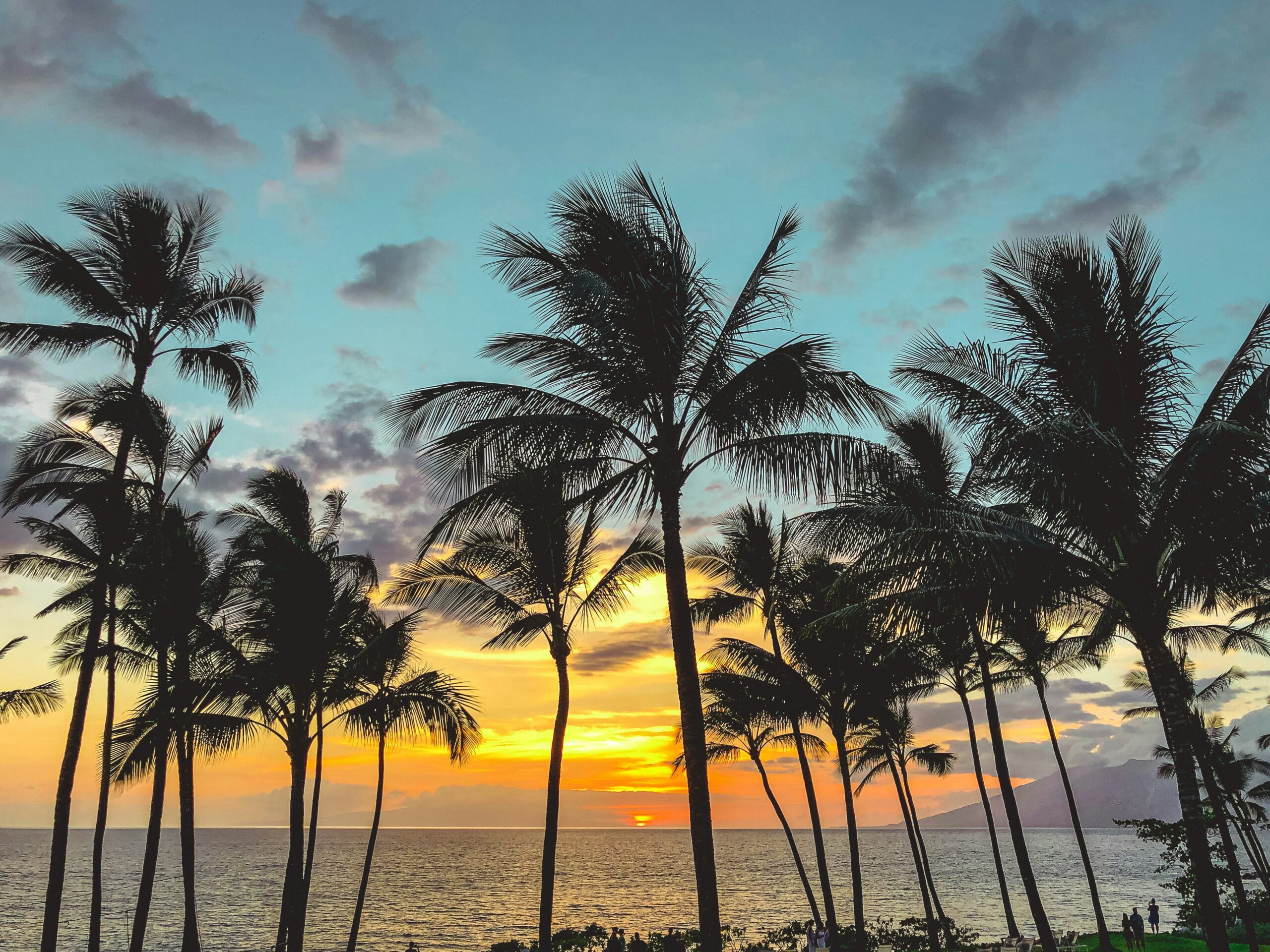
Lāhainā holds moments of my life that are now just memories. Memories that I can no longer physically visit because Lāhainā is gone, in ash. So many of my people have lost their home, the place that their ancestors are rooted. I don’t have the words to fully describe the immeasurable loss that is shared in our community. Those who were able to escape the flames made it out with just the clothes on their backs, while others were swallowed by the fire. And within these same moments of Lāhainā disappearing, Kula was on fire too, adding to the lives lost and people displaced.

115 lives lost and over 1,000 people still missing. Nearly three weeks later, victims are being identified.  

The grief I feel is a collective grief, one felt by my Lāhui, Maui community. 

We are grieving for the lives lost, for the friends and family, the keiki, and the kupuna who did not have time to escape. 

We are grieving for our island, our ʻāina (land), the first capital of the Kingdom of Hawaiʻi. 

We are grieving for those who came before us and for those who will live after us. 

But in this grief, we come together to kōkua (help/support) each other. From compiling GoFundMe and Venmo accounts, to cooking and giving out free food, the mass share of information and kāhea (call) to help, our Lāhui was able to get people the supplies they needed to survive. 

Unfortunately, structures of colonialism make it difficult for Kanaka (Native Hawaiians) and Locals to continue their grassroots efforts to help those in need. Investors and realtors have already begun contacting the survivors of the devastating fires. Maui residents are pleading for tourists to cancel their trips and fly home,while the governor has opened the parts of the island not in ash to the tourists. Maui Electric Company is facing lawsuits that blame the company for the fire, and the man who was in charge of the alert system that never sounded has resigned.

First responders from Hawai’i and the continent are currently searching for remains with their cadaver dogs, while tourists take videos and photos of the devastation for social media clout and snorkel in the same waters our people jumped into to escape fire

We can not just grieve, but we must also fight for our ʻāina and lāhui. And it is exhausting.   

“We are Lāhainā Strong. Yes, but please allow us to also be, Lāhainā Sad. Lāhainā Tender. Lāhainā Worried. Lāhainā Messy.” – Uʻilani Tevaga 

If you feel called to kōkua, please consider monetary donations to these organizations:

Direct Aid for ʻOhana displaced by fires 

Hawaiʻi Peopleʻs Fund

Maui Mutual Aid

Council of Native Hawaiian Advancement, Alakaʻina and Kakoʻo Haleākalā
ʻĀina Momona

Maui Food Bank 

Maui Humane Society 

The Immigrant Perspective: A Tale of Resilience

I was four years old then. Yet I still vividly remember feeling the ground shake beneath me, the windows shattering during every air strike hitting our area, leaving our house barren and unrepaired. I knew beyond doubt that we would be under the rubble any time soon, buried with the memories and dreams of a life that once was.

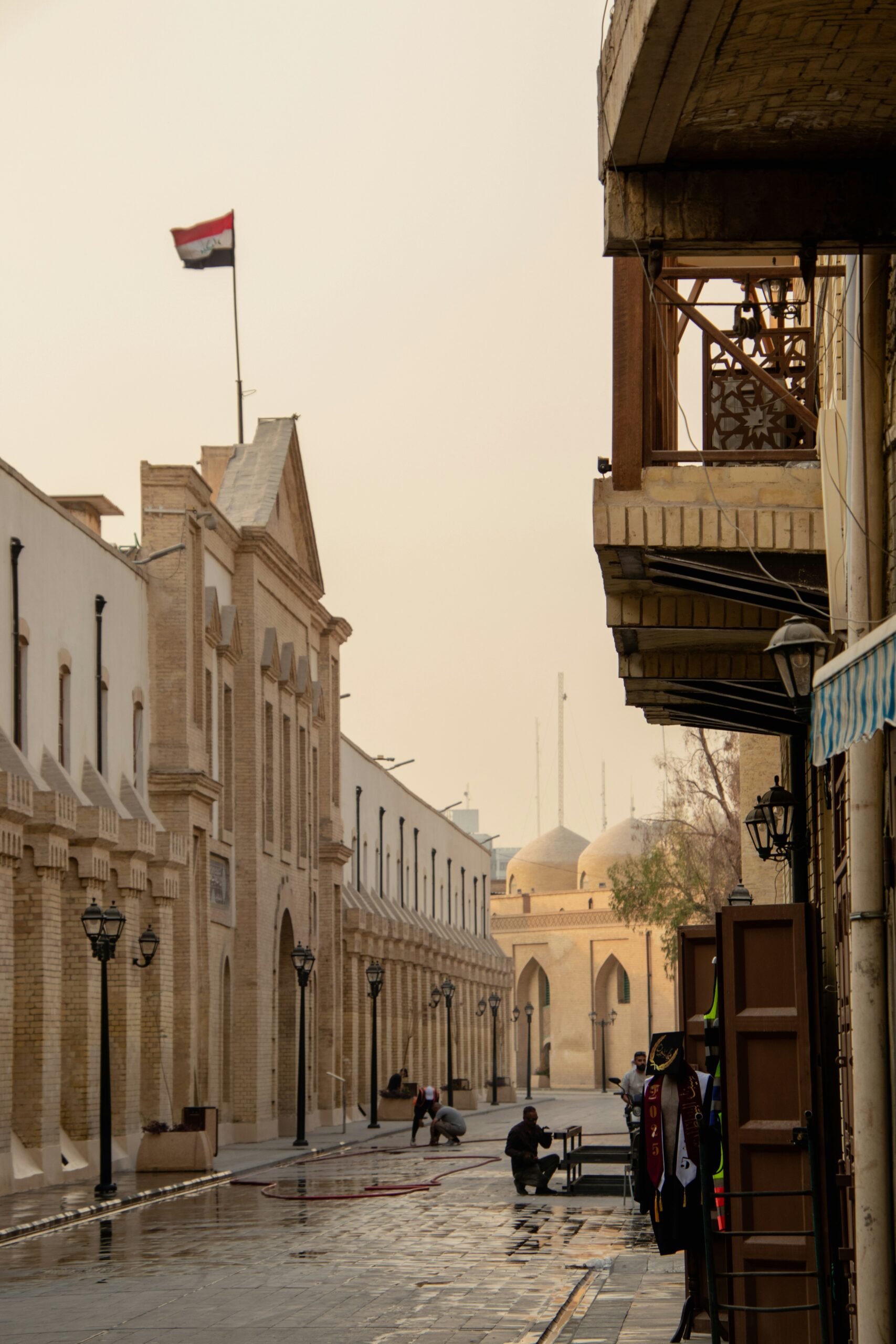
April 9, 2003 marks the day when many Iraqis’ lives changed forever. After a month of constant cruise missile attacks on the country’s capital, Baghdad, the American forces completely seized the land and began a full-fledged invasion. 

My brother and I slept in our parents’ bed the night Baghdad fell so that we either lived or died together no matter what happened. As children, we were only told that the “Americans were invading.” We were not spared any further explanation – leaving our imagination to make up the political story that later dictated every aspect of our lives. 

What was once a country that harbored family, friends, free education, quality healthcare, historical monuments, and most importantly, a sense of belonging for its citizens became one of the most dangerous places in the world—all in a matter of months. Stuck between a rock and a hard place, many families from neighboring countries, like Syria and Jordan, seek refuge and better lives. Even then, continuous political turmoil and unequal opportunities in the region forced many of these displaced Iraqis to move to Western countries for only the chance of a more secure future.

After miraculously surviving three years of terrorism, internal conflict, and a debilitating embargo, my parents decided to take us and finally seek refuge in Jordan–shortly after our elementary school was attacked. After that, my family and I moved to multiple countries, including Jordan and the UAE, before settling in Canada. But ever since then, I have not had the chance to revisit my homeland and childhood home. 

Instead, I always wonder about other Iraqis’ refugee stories and where they are today.

One such story is Omnya’s, a colleague of mine in a student-led UNICEF society at our university. She, too, was born in Iraq and left for Syria when she was only two years old during the 2003 war. Syria’s beauty and nature became her home for about seven years until 2010, after which she and her family immigrated to Canada through her aunt’s help and the UN’s family sponsorship program.

With long-held dreams of attending university and advocating for minorities, Canada was the perfect place to make the achievement of Omnya’s goals possible. Surrounded by an academically oriented family, Omnya was heavily influenced to pursue such a learning path – especially since her father was a university professor in Syria. Currently, she is in her fourth year of the Global Rights program at the University of Western Ontario, a degree that wouldn’t have been as easily attainable if she hadn’t moved to Canada. Moreover, because of Canada’s strong political influence and vast advocacy opportunities, no action is too trivial to create a change, however small, toward the positive. The only thing that Omnya needed to fulfill her dreams of protecting vulnerable populations and advocating for her community was the initiative. She certainly had plenty of that.

While most Iraqis had high hopes of making this venture, their lack of opportunity to move abroad had them lose complete access to quality healthcare, safety, and education as they stayed back in what had now become their poverty-stricken homeland. Unlike this large majority, Omnya luckily had family in Canada who helped sponsor her travel and settlement there. 

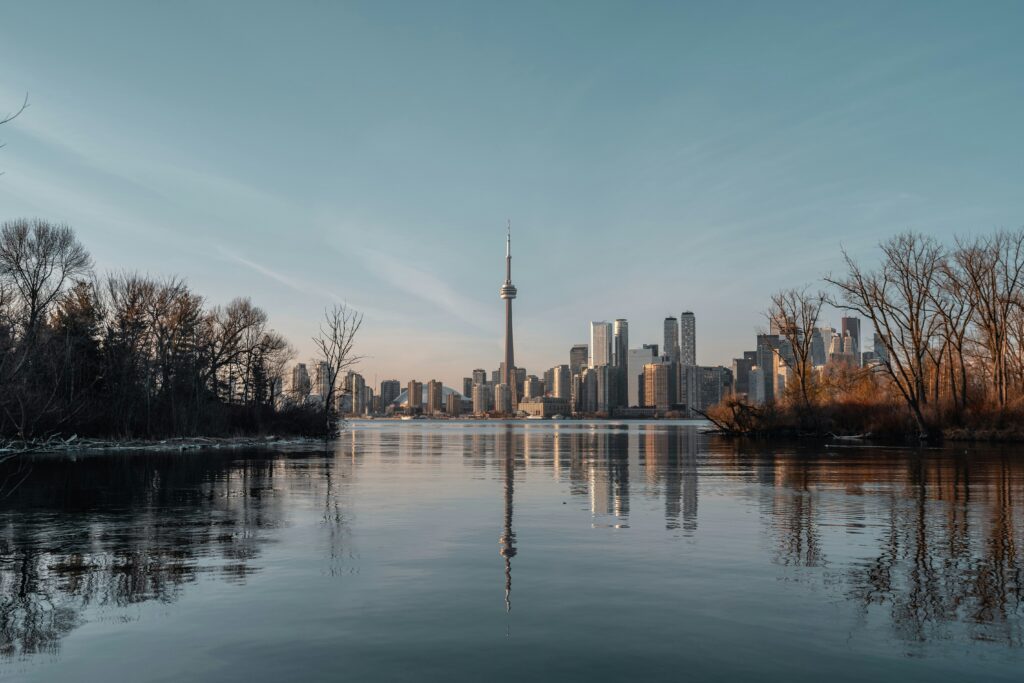
An image of the Toronto skyline and its reflection shining in Lake Ontario.
(Image courtesy of Jan Wever via Unsplash)

In contrast, many others only dream of being able to pursue a better life in the West. Recognizing this major obstacle in the lives of immigrants and refugees alike, Omnya aspires to make the immigration process easier than its currently daunting state. She plans to enact this change by increasing the availability of family sponsorship programs across the country. As an active member of the London Cross-Cultural Learner Center, Omnya and her team have made strides in helping immigrants with community integration and settlement, especially given the language barrier and cultural shock that a lot may struggle with at first. This was a difficulty that faced Omnya upon her move to Canada, often feeling inferior and disconnected from her classmates due to her limited English proficiency. 

Through the challenges, she became the Project Development Director at RefuHope, a non-profit organization aiming to integrate new refugees. She was the current co-president at UNICEF Western, operating under UNICEF Canada. Omnya has made significant accomplishments in advocacy and support of refugee and immigrant integration. She plans to continue working to reach the ultimate goal of “living in a world where we don’t feel the need to protect one another. 

Despite the devastating loss of her father, her biggest role model, to COVID-19 early in the pandemic, Omnya’s resilience to “keep going forward,” as she eloquently puts it, has never been stronger. From the early days of leaving her homeland and moving countries to learn to adapt to new environments and recover from hardship, which really tested her strength. Omnya is a notable example of perseverance. She learned to cope with her challenges by seizing every opportunity and giving back to immigrants whose shoes she was once in. 

Such is only one of the success stories of the Iraqi underdog, who, despite the political turmoil and displacement, still made the most out of themselves and helped others. In short, it truly is inspiring to witness the many stories of immigrants and refugees rising from the ashes – an admirable feat, if there ever was one.

Somebody Shot My Hometown

On the morning of July 4th, 2022, I was lying in bed watching videos on my phone when my mom called me. Earlier that week, we had discussed the possibility of meeting at my parents’ house for a barbecue or a short visit, so I didn’t think anything of the call. However, when I picked up the phone, it was immediately clear that something was wrong.

The usual preamble to our calls, the “Hi, how are you? What’s new?” etc., was replaced by a nervous “Where are you?” After I reassured her that I was safely at home and that my brother had returned to his house in Milwaukee the night before, my mom told me that she and my dad were currently fleeing the downtown area of my hometown, Highland Park, Illinois, because there were gunshots at the Fourth of July parade.

My immediate reaction to learning my loved ones were in danger from a mass shooter was not what one might expect. When I worked in schools, I went to work every day knowing that there was a possibility of a stranger or even one of my students coming into the building with a gun. During quiet moments at my desk, I would think about how I could best protect myself and my students if there were to be a shooting, occasionally glancing out the window to see if there was a safe place to land. Similarly, when I go to the movies, I prefer to go to theaters with emergency exits in the back, so I can sit far away from the entrance and I know I have a place to go if a shooter were to come in. So when my mom called to let me know there was a mass shooter at the parade, I was scared for the people there, but I wasn’t surprised.

For the remainder of the morning, I continued to lie in bed, waiting for the call that would tell me my parents had made it home safely. While I waited, I constantly refreshed a Google search for Highland Park, desperately hoping for new details to come out about what was going on.

When my mom called me the second time, it was to tell me she, my dad, and a group of parade goers had taken refuge at the nearby beach, and she was waiting for a friend to come and pick them up. She also informed me in hushed tones that one of the young men at the beach with them seemed suspicious, and had been smiling the entire time they were there. Hearing this scared me, so it’s hard to fully imagine what she must have been feeling at the time. There was no information what the shooter looked like or where he went, and for all she knew another bout of gunfire was about to erupt where they were now. How could anywhere feel safe after what they had just experienced? After that phone call was the first time I cried that morning, thinking of my parents shuffling through a crowd of people just as scared as they were, not knowing if another round of gunfire was about to erupt in their midst.

I was incredibly fortunate to have my parents make it home that day unharmed, a luxury not everyone from Highland Park can say about that day. This didn’t stop me from feeling a profound sense of loss. Members of my old community had lost their lives at the site of so many wonderful childhood memories. Were I to associate words with Highland Park I would have said quiet or safe, but now I was seeing headlines literally describing it as a warzone.

As details emerged about the shooter, I was shocked to learn he was the son of the owner of a deli that I had frequented for years. I remembered that behind the counter the owner had hung some of his children’s artwork. I wondered if the colored pencil drawing of Iron Man I had admired had been done by a mass murderer. 

Never a community to take things lying down, the town quickly adopted the slogan “HP strong” and began multiple initiatives to help the victims and their families get through this trying time. From local businesses to children with lemonade stands, people did their best to raise much-needed funds for hospital bills, therapy, and medical devices that some victims will have to use indefinitely or for the rest of their lives due to injuries. However, as Highland Park rallied, the events of the day began to quickly fade from the consciousness of those unaffected by it.

Image of a person holding a candle during a vigil.
(Image courtesy of David Dibert via Pexels)

Mass shootings have become a fact of life in America. There have already been over 300 shootings in 2022, and the sad truth is that more will probably occur between my writing this and when this article is published. It’s impossible for people to fully process each one of these tragedies with the gravity they all deserve. It’s easy for people who are disconnected from these events to think that the effects of a mass shooting only last for the duration of the event itself. However, for people who were there or for the community at large it leaves a scar that does not heal quickly.The last time I spoke with my mom, she mentioned that she still checks the rooftops around her while she is in public spaces since that is where the HP shooter attacked from. 

Highland Park residents were scandalized to learn that a website was selling “HP Strong” T-shirts, not to benefit the victims, but to make a profit. The site incidentally has paraphernalia for a variety of mass shooting incidents, capitalizing on the tragedies of not just our community but many.

The Fourth of July parade that the shooter chose to target was a staple of our small town, one that I have memories of attending for years as a child. Now, instead of simply being a time for the town to get together and have some fun, if the parade continues it will be an annual reminder of the tragedy that took place in our town square.

Another aspect of experiencing a shooting in your community is the outside pressure to move on. Whether it’s feeling guilty or selfish for not being as affected by other mass shootings or the toxic positivity of those who didn’t have a personal connection to the attack, I’ve found myself starting to feel crazy for not having moved past it yet. I know I’m not alone in feeling this way as my partner has expressed her own similar feelings. Like me, she also spent the morning worried and unsure if my parents were safe, however, by as early as that evening her mother was making it seem like my partner was overreacting to still be so upset about it. I’ve stopped several times while writing this and had to convince myself that not only am I allowed to be upset about this, but that I should be.

If there’s anything you take away from my experience and those of the people close to me it’s this: As frequent as they are, we should not allow ourselves to start thinking of mass shootings as normal. Other countries seem to have figured out how to get gun violence in check, so it’s clear that there are steps that can be taken to help prevent these attacks from happening. However, people don’t take action to change things they see as natural occurrences. I’ve heard people compare mass shootings to natural disasters which is a dangerously dismissive way to think about the issue. There is no legislation that will stop a tornado, and you can’t regulate a hurricane. People should be able to go to a parade, or to a movie, or to school and not have to worry about being shot, but I do and I’m not alone.