
UNBREAKING THE NEWS

The New Generation of World Skateboarding: At 17, Rayssa Leal Wins the Super Crown for the Fourth Time

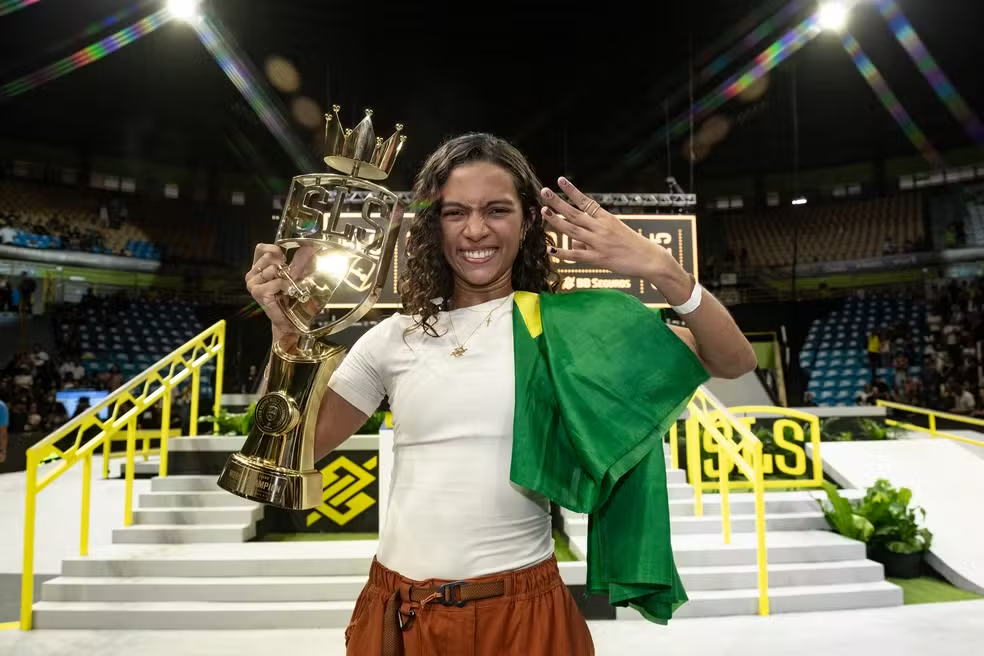
Rayssa Leal writes yet another chapter in her own story and in the global history of skateboarding as a sport. On December 7th, the young athlete from Maranhão secured her fourth SLS Super Crown, held in São Paulo, in Brazil. 

In a tightly contested event, Rayssa was crowned champion even before performing her final tricks, following Chloe Covell’s fall in her last run. 

The Super Crown brings together the best skateboarders in the world, based on their results throughout the season. By winning her fifth title at the Pro Tour STU Rio 2025, Brazilian skater Rayssa Leal earned a direct spot in the final of the world championship. 

Her victory comes at a time of significant renewal within the sport. In recent years, skateboarding has been marked by the rising of prodigy talents, athletes who are increasingly younger. 

Among the rivals who competed directly with the Brazilian were Chloe Covell, a 15 years old Australian, and japanese skaters Funa Nakayama (20), Yumeka Oda (19), and Coco Yoshiwaza (16). These exemplary athletes bring a new energy to the ramps. 

In this way, the championship has become a showcase for the transition between seasoned experience and emerging talent. 

Revealing athletes, expanding opportunities, and building new stories, the blend of veterans and rookies create a competitive atmosphere that accelerates the evolution of the sport and ensures a promising future for young riders. 

This renewal is also strong in the men’s division. Rising star Ginwoo Onodera, age 15, won his first world title, competing against renowned veterans such as Giovanni Viana (24) and Nyjah Huston (31).

The São Paulo arena witnessed skateboarding at its highest technical level, with the title also being decided on the final run.

Double Journey 

Beyond her win on the board, Rayssa celebrated another major achievement: her high school graduation. Balancing the life of an athlete with the classroom, she completed this chapter as the valedictorian of her class.

In a social media post, the teenager thanked her teachers and highlighted the importance of education in personal and professional development.

“To the teachers, thank you so much for each lesson inside and outside the subjects. You were like guides, mentors, and, beyond that, we became friends throughout this journey.”

Her attitude serves as an example to many young people, showing that it is possible to grow in sports without giving up one’s studies.

With her fifth STU Rio title and her fourth Super Crown victory, the “Fadinha” (“Little Fairy”) has solidified her name as one of the greatest in world skateboarding. (Rayssa earned the nickname “Fadinha” after a video of her skating in a fairy costume went viral when she was younger.)

Urban Culture

Skateboarding, which began as an urban practice tied to the streets and youth culture, became an Olympic sport without losing its essence. Upon joining the Games, it carried with it the aesthetics, attitude, and narratives of the streets, expanding its reach and opening new paths for athletes worldwide.

Events in the sport continue not only to showcase competitions but also to honor the roots of skateboarding. By recognizing and incorporating elements of urban culture, championships create a welcoming environment for both athletes and audiences.

With rap and hip-hop performances, rap battles, artistic interventions, and many other forms of creative expression, these events stimulate the creativity and cultural identity of the streets.

Among those who attend STU Rio editions is Maria Eduarda Caus, a young spectator who, despite not practicing the sport, sees the championship as a major gathering and celebration of urban culture.

“I think everyone is on the same vibe, they live the sport and lifestyle… It’s an event where the audience really matches the proposal, everyone is there to have a good time.”

With the strength of the new generation, the presence of urban culture, and increasingly engaged audiences, skateboarding reaffirms itself as a broad, inclusive sporting and cultural phenomenon.

READ MORE

Comments

Be the first to share your thoughts!

We value diverse perspectives and respectful debate.