“It’s going to snow,” my temple tour guide, Seokun, told me. The grey clouds covered the sun, and the wind picked up, causing chimes to sound in the distance. Seokun looked back at me and asked, “Can you help the monks shovel snow tomorrow morning?”
Naturally, I accepted. I had been waiting for this moment, expecting it, for the past eleven years since South Korea became my home. It became my tradition to take time off to refresh in one of the many beautiful Buddhist temples across South Korea.
This time, it meant more. This was my final temple stay in a country I came to develop great affection for. It was the perfect start to my 2018 before starting my new life in Venice, Italy for a new career.
Jeondeungsa, hidden in South Korea’s beautiful Ganghwa Island, became the chosen temple to begin my farewell tour in. Nestled on a quiet hill overlooking the sleepy island, it’s hard to believe that two bustling cities, Seoul and Incheon, are neighbors only a few kilometers apart.
Learning from the temple guides
When I arrived, I walked up the steps inside the fortress that led to the temple. With each step, I was reminded afresh of the beauty I would live with for the next five days.
When I arrived, I was greeted by gracious temple guide experts. They explained the history, customs, and activities I needed to know. Regardless of how many times I have done this, each time felt like the first. Learning from the temple guides was always an enjoyable experience. It was a chance to ask questions that you might not find in the tour books.
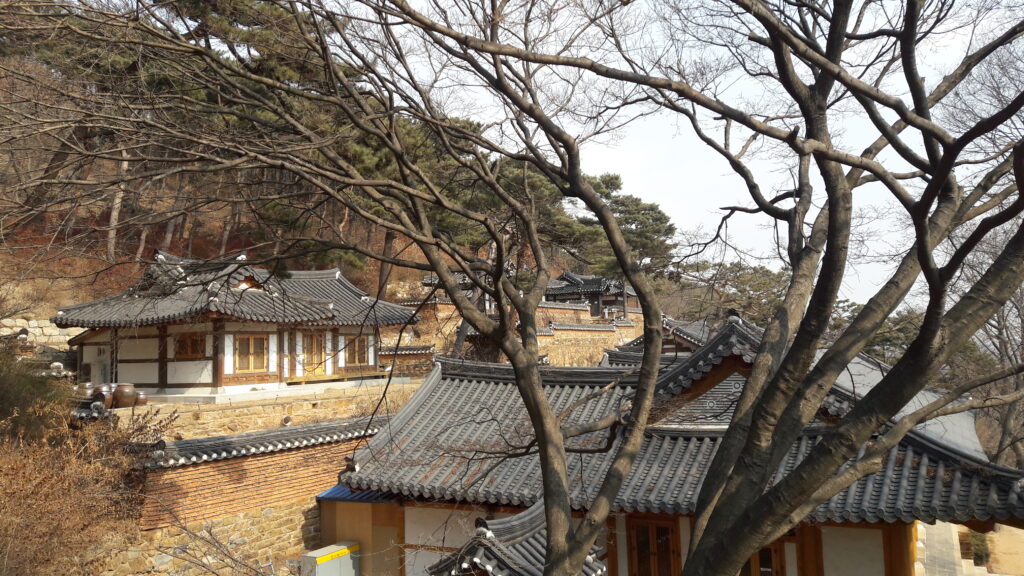
The temple itself has a fascinating history, as described by Seokun during my temple introduction and in my readings about the temple during my stay. Seokun said that Jeongdong was built in the eleventh century. He told me that the fortress was at the center of vicious battles between Koreans and French and Japanese foreign invaders.
I learned from him that, during a battle against an invading French naval fleet, Korean soldiers rushed inside the original main temple to carve their names on the columns and the walls, asking Buddha for protection in battle. I also learned that the engraved names of these soldiers are still visible around the walls, that the monks constantly point out in solemn reflection the lives lost to protect this temple.
After my orientation, I spent my first four hours preparing for the days of reflection by dressing in the visitor attire provided by the temple. It was surprisingly comfortable. The clothes were traditional garb for Buddhist followers spending time in the temple. Wearing these clothes, given their simplicity, immediately stripped away all the daily vanity that people tend to get caught up in when wearing regular clothes.
Food for the soul
The cold led me inside the temple’s teahouse, where I sipped on the most enjoyable tea, “yuja-cha,” a Korean citron tea served in a handcrafted ceramic cup. When I was warm enough, I walked along the hills of the temple walls overlooking the farms below. After the walk, dinner was served. Along with meditation and relaxation, eating temple food brings me much joy.
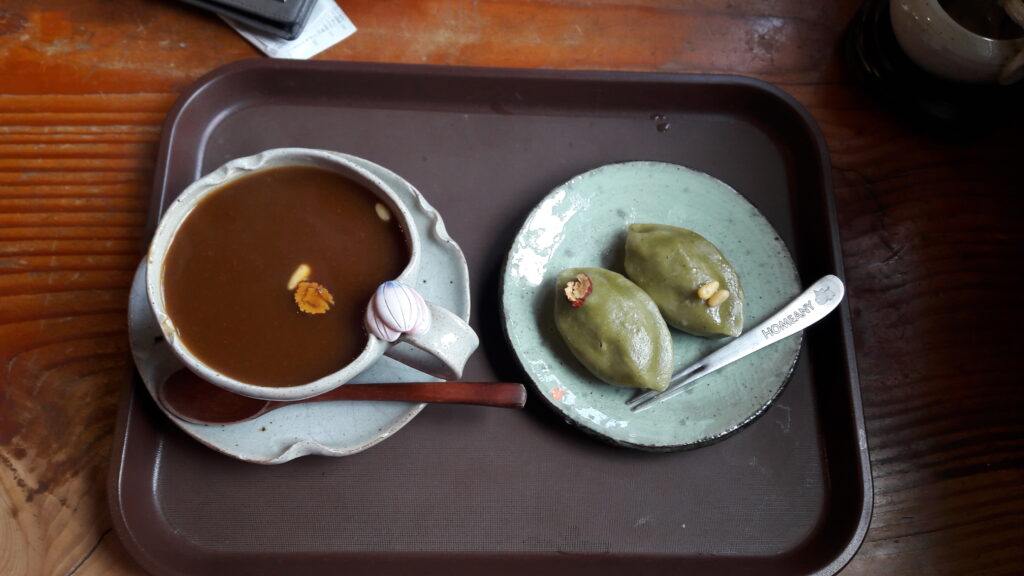
The food was prepared each day with love, care, and sophistication. Replenishing your body with clean, healthy, and locally sourced food is just as important as refreshing your soul. The food at Jeondeungsa was exceptional. Eating here gave me an insight into the culinary soul of not just Korean Buddhism but Korean culinary culture as a whole.
I believe Korean Buddhist food is often passed over by barbecues and other meat-rich dishes. The ingredients used for temple cuisine taste fresh and organic, and the ingredients at Jeondeungsa were no exception. The techniques to create the dishes were very delicate and required quite a bit of skill. The cooks were masters who followed the ancient recipes of the Korean temple cuisine tradition.
Finding peace in Korea
After eating, there was time for reflection. Often, I spent time reading one of the many books on Buddhism from the temple’s library. Jeondeungsa had a large selection of English books on Buddhism, too. On this trip, Thich Nhat Hanh’s ”Anger” was recommended to me.
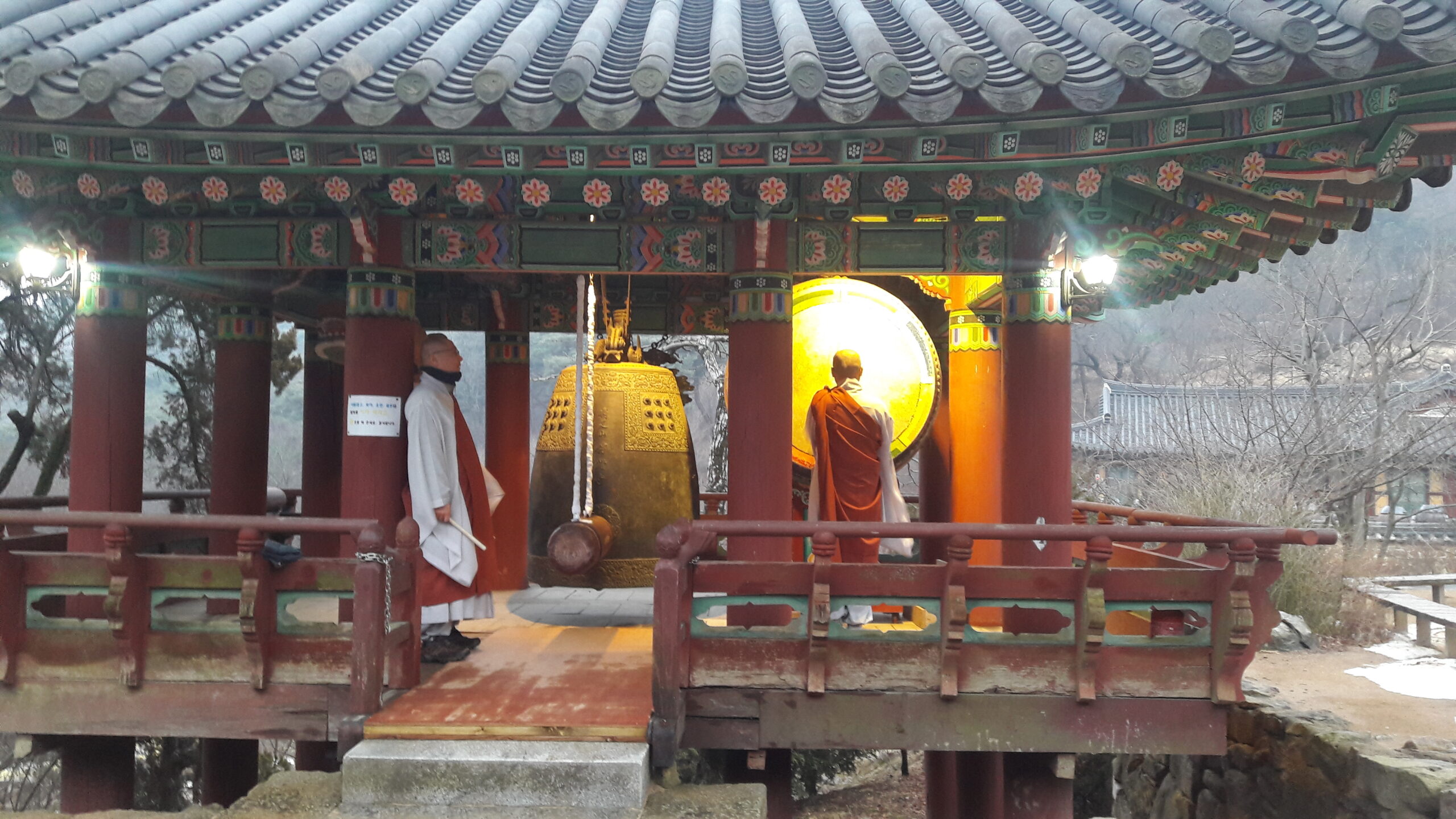
After an hour alone, the drums began, awakening all the spirits within the natural elements. The drum and bell signaled the monks and temple stay participants to make their way to the main temple for evening chanting.
While inside Jeondeongsa’s newest temple and awaiting the monks in silence, I was instantly brought to a peace that is often hard to find in my busy life. During these evening chants, I learned to be present with my breath and the words of the chant.
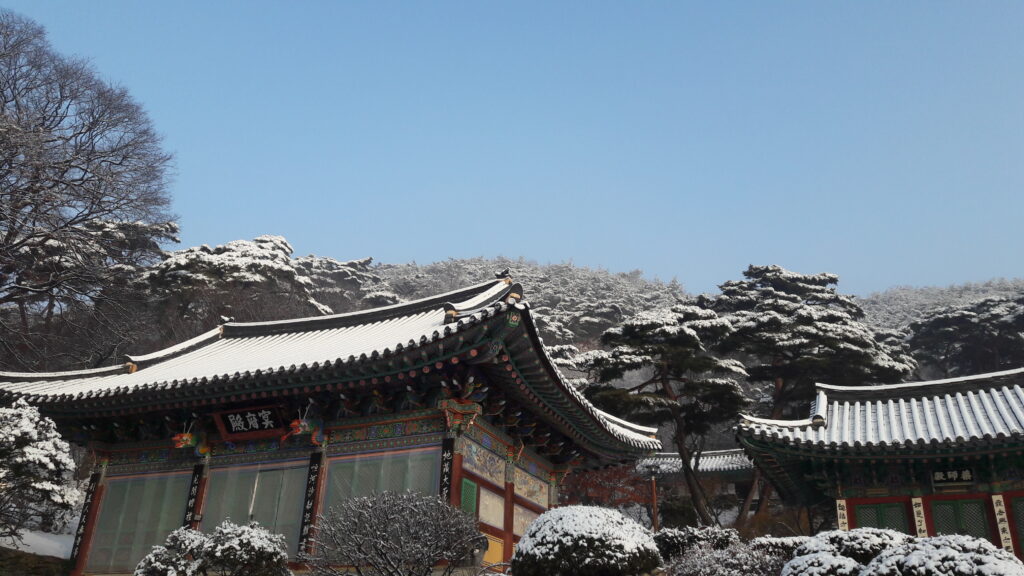
“Being present is the most important step to actualizing peace,” Seokhun told me.
I often get swept up in what I have to do next. However, bowing and chanting with the monks freed me from worrying about what was next.
After the evening prayers, I walked into my simple yet very comfortable room. I enjoyed the silence with no televisions, computers, or phones to distract me. Every night, I found a quote from a monk or the Buddha and reflected upon it. This helped me not only to stay present but also to see how I could apply meaningful lessons to my life.
I realized that when we are left with only our “self” and not with “things,” we can truly hear ourselves.
In the mornings, I woke to one monk chanting as he gently banged his “moktak,” a Korean Buddhist percussion instrument in the shape of a wooden fish. It was nice not needing an alarm clock.
When the doors to my room opened, I was greeted by what looked like thousands of stars, each more beautiful than the next.
4:30 morning prayers began, and I was again reminded to stay present. Temple stay participants could take part in bowing 108 times. The 108 bows were a time to reflect on things I had often neglected or lacked in my life.
Monks get angry, too!
As the days at Jeondeungsa marched forward, I was able to stay present. I was never bored or tired. In the afternoons, I would take hikes to explore the fortress while in quiet walking meditation.
Later in the day, it brought me great pleasure to enjoy drinking tea while reading the teachings of a monk. Before dinner, I sat in silence in the original main hall and took the time to practice my breathing.
At one point, Seokhun even gave me a chance to speak with a monk. I shared a delightful and lively discussion with one of the main monks, who had prepared invigorating green tea which he shared with us again in beautiful handcrafted ceramic cups. He was cheerful and answered every question with real insight.
I left our long discussion with a sense of happiness and a new perspective on “The Matrix.” He was a big fan of Morpheus.
On my final day, I was fortunate enough to have one more opportunity to speak with another insightful monk to discuss the topic of anger. It was a sincere conversation in which the monk admitted that many things frustrated him. He told me something that gave me a new perspective on my own issues with anger.
“I am here to figure out all of these heavy emotions humans have, to understand them, then share my answer with you. Let me do the work,” the monk said. “That is why I am here and you are here – to get answers. No need to struggle.”
Clearing snow after clearing mind
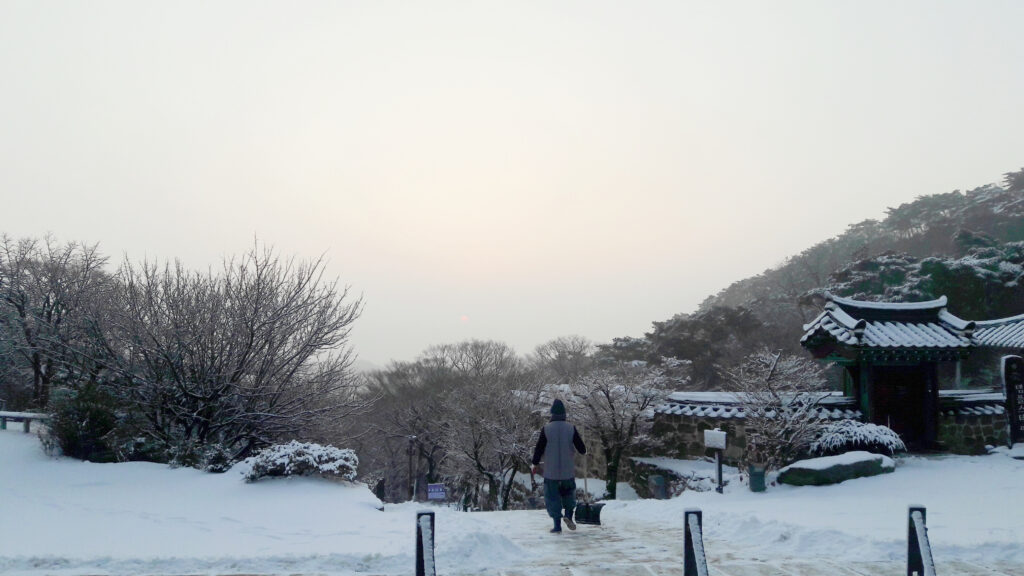
Each experience at Jeondeungsa felt new. Each encounter with the monks or temple stay staff was warm and hospitable. However, in all the years I have been staying in temples, I yearned to participate in shoveling snow with the monks. I am not sure why. Perhaps I had always wanted to feel like I could be a part of the temple life, not just a spectator.
Well, the snow did fall.
When it did, I was ready. It was a magical moment that illuminated this important temple’s full splendor and beauty. I felt like nature had rewarded me. As I shovelled with the monks, following their orders, we silently worked as a group. Each did their part to make sure that the paths were clear for temple guests.
What I have come to learn in this exercise of clearing snow is that life is full of paths that are blocked. But with the right mind and guidance, you can clear any path.
Thank you, Jeondeungsa.