UNBREAKING THE NEWS

State, Crime, and Power: Ramaphosa’s Inquiry Opens a Window into South Africa’s Political Underworld

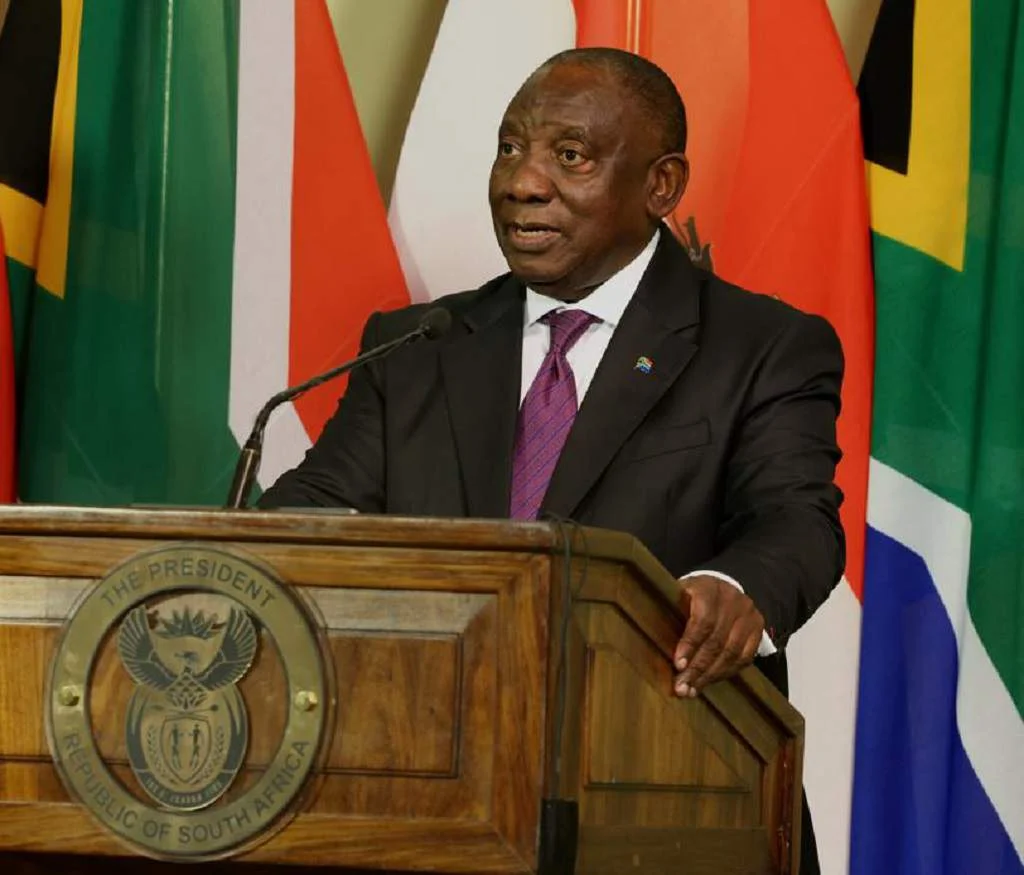
In a country battling record high crime, collapsing public trust, and deep political fragmentation, President Cyril Ramaphosa’s announcement of a judicial commission of inquiry into allegations of collusion between senior politicians, law enforcement, and organised crime marks a defining moment for South Africa’s democracy.

The inquiry, announced in a national address on July 13, follows claims by KwaZulu-Natal’s provincial police commissioner, Lieutenant General Nhlanhla Mkhwanazi, that a powerful criminal syndicate had infiltrated the state. The syndicate allegedly influenced political assassinations, compromised murder investigations, and manipulated senior police appointments. Most disturbingly, Mkhwanazi alleged that the task team investigating political killings in the province had been disbanded under pressure from political actors.

In response, Ramaphosa suspended Police Minister Senzo Mchunu and appointed Acting Deputy Chief Justice Mbuyiseli Madlanga to head the commission, which has been mandated to investigate “the alleged capture of the South African Police Service, the Directorate for Priority Crime Investigation (Hawks), and the justice system by criminal networks.” The president called the allegations “serious” and “threatening to the credibility and integrity of state institutions,” noting that “no person or institution is above the law.”

Shortly after the announcement of the commission, civil society in Durban mobilized in support of Lt-Gen Nhlanhla Mkhwanazi. Ntokozo Mkhize, national spokesperson for the Concerned Citizens of South Africa (CCSA), affirmed the groundswell of local support, stating: “We are not a political party or affiliated with any political entity… we are just ordinary citizens who are fed up with the lies propagated by politicians.

While shocking, these claims are not entirely surprising. South Africa has long battled blurred lines between state institutions and criminal enterprises, most notably during the “state capture” years under former President Jacob Zuma. But this moment feels different. These are not only claims of corruption or mismanagement. These are allegations that the state has become a vehicle for organized crime.

The stakes are high. The violence plaguing South African communities ranging from assassinations, extortion rackets, drug trafficking to illegal mining, is no longer simply a policing issue. It’s a governance crisis. According to a 2024 World Bank study, crime costs the South African economy roughly 10% of its GDP annually, due to lost investment, reduced productivity, and overburdened healthcare and justice systems.

Globally, South Africa is not alone. In Italy, the infiltration of the ’Ndrangheta and Camorra into politics and public procurement became so entrenched that entire municipalities were dissolved. In Germany, investigations into drug trafficking at the Port of Hamburg revealed a 750% increase in cocaine seizures since 2018 and evidence of public officials being bribed by transnational cartels. In Mexico, political assassinations and narco financing of campaigns have allowed organized crime to shape who governs and how resources are allocated.

In South Africa, political assassinations, especially at the local government level, have become a chilling norm. The Global Initiative Against Transnational Organized Crime, recorded at least 10 politically related assassinations between January and April 2024. This contrasts with 31 political assassinations recorded across 2023.

Ramaphosa’s move to establish a commission is intended to send a message: the state will no longer tolerate criminal capture. But critics are wary. Civil society groups and opposition parties argue that commissions of inquiry have become an expensive substitute for prosecution. The Zondo Commission, which exposed state capture during the Zuma era, cost over R1 billion and took four years to complete. Although some progress has been made, over R2.9 billion recovered and R12.9 billion in assets frozen, and only a handful of high profile arrests have followed.

The credibility of the new inquiry hinges on several factors: whether it leads to prosecutions; whether it names sitting political leaders; and whether it delivers interim findings quickly. The inquiry has been given 12 months to complete its work but is expected to submit reports to the president and chief justice at three-month intervals.

Ramaphosa’s commission may be his final opportunity to prove that the rule of law still matters in South Africa. The question now is not whether syndicates exist, they definitely do, but whether the state has the political courage and institutional muscle to fight back.

READ MORE

Comments

Be the first to share your thoughts!

We value diverse perspectives and respectful debate.