
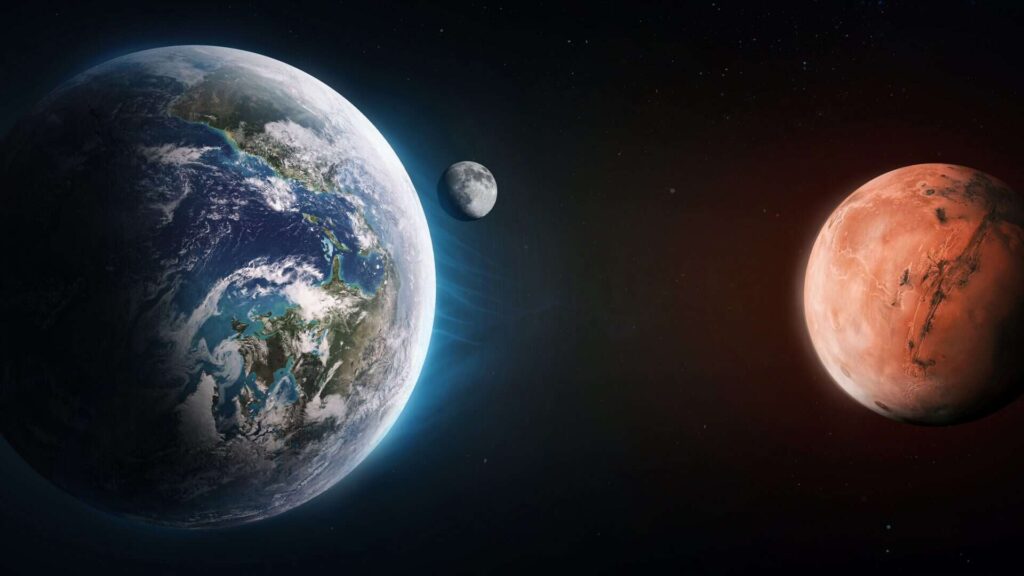
A Brazilian research project, initiated in 2015, used simulations and the trajectory of an asteroid as a reference to shorten the round-trip travel time between Earth and Mars. The study, published in the international scientific journal Acta Astronautica, proposes an alternative to conventional trajectories and rekindles debate over new possibilities for crewed missions to the Red Planet.
Scientist Marcelo de Oliveira Souza holds a degree in physics from the Federal Fluminense University, a public federal university in Brazil. He currently serves as a professor and researcher in the field at the State University of Northern Rio de Janeiro, a state university located in Rio de Janeiro state, in the city of Campos dos Goytacazes, southeastern Brazil.
He is the only astronomy specialist in a city of approximately 500,000 inhabitants. His study was recently published in the international scientific journal Acta Astronautica, which is associated with the renowned International Academy of Astronautics (IAA).
The journal is one of the most important in the field of astronautical science worldwide, publishing around 2,500 pages annually and covering discoveries and technological advances in the area.
“I started looking for asteroids that had some possibility, even a very small one, of passing close to Earth. Then I found the trajectory of an asteroid that had the possibility of passing near both Earth and Mars. So I thought, why can’t I use that trajectory as a reference to try to find a trajectory for a crewed trip to Mars?” Marcelo explained in an interview with The Sentinel by Yuvoice, describing how the study began.

Comments
Be the first to share your thoughts!
We value diverse perspectives and respectful debate.