Co-working app takes on café life with one-hour slots
By Carolyn Cohn
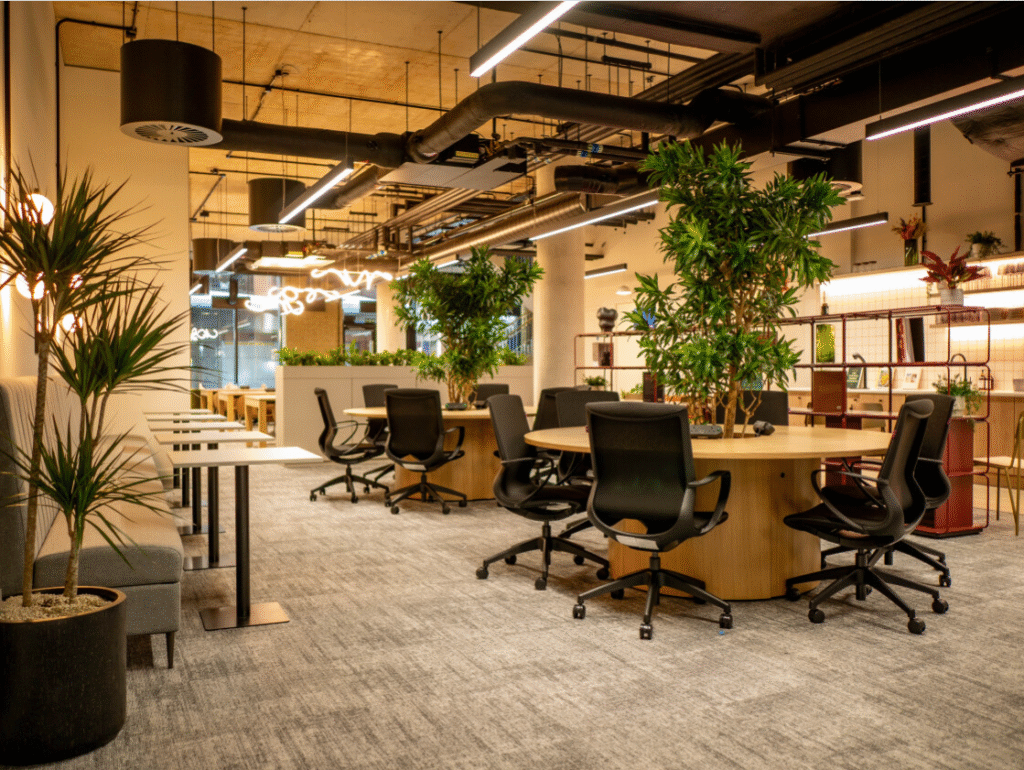
Lounge at the Flex @ Tide building, Bankside, London | Photo by NewFlex marketing team, via Newflex
Are you fed up with working from home? But also fed up with spotty wi-fi and glaring staff when you rock up to a café to work? Struggling to find an acceptable alternative workspace to the bedroom has been a headache for many laptop workers over the past few years. However, two start-up founders who met on Brighton’s storied beach in southeast England are hoping to change that.
Cameron Foskett and Connor Tagg are seeking angel, early-stage investors for their app, Werksy, which launched a year ago and is designed to make co-working far more flexible.
Co-working has become increasingly attractive to both big companies and small start-ups in the past few years, as The Sentinel reported earlier this year. The United Kingdom and Ireland are in the forefront of that co-working boom. In co-working, freelancers or employees of different firms share office space, and often lounge and leisure facilities.
Since the COVID-19 pandemic, it has become more popular for people to use booking platforms to book co-working spaces for as short a time as a day, or even half a day. However, Werksy is going one step further by offering co-working space for as little time as one hour.
This short-term space is in direct competition to café life, and as Foskett told The Sentinel, there are some basic barriers to cross.
“Some people don’t even know about co-working, the number of times I’ve had to explain what co-working is, as a concept.”
However, as Tagg points out: “The problem with working from a café is that after about an hour you’re sat there with a cold cup of coffee that you’re trying to nurse and you’re feeling a bit awkward and the barista is making eyes at you.”
Subscribe to The Superhero Brief!
Free access to the CEO's newsletter.
The views expressed in this newsletter are those of the CEO and do not necessarily reflect the views of the organization.
Some London café owners are discouraging laptop workers from using their space, because of the downer that a silent laptop worker can have on the café atmosphere.
Café frequenters argue that their working space is free, but Foskett says that this does not take into account that co-working spaces offer free coffee. No more making your one flat white last 60 minutes. Wi-fi in co-working space is also more reliable, Foskett adds.
Foskett, with a background in sales, and Tagg, with a background in product design, had a Eureka moment in a chance meeting on Brighton beach in 2020, when Foskett heard about Tagg’s idea to make popping into a workspace as easy as tapping in and out of a Brighton bus ride. Werksy already has more than 3,000 users. The founders have been financing the venture themselves, helped by income from their existing careers. More investment could enable them eventually to expand beyond Britain, they told The Sentinel.
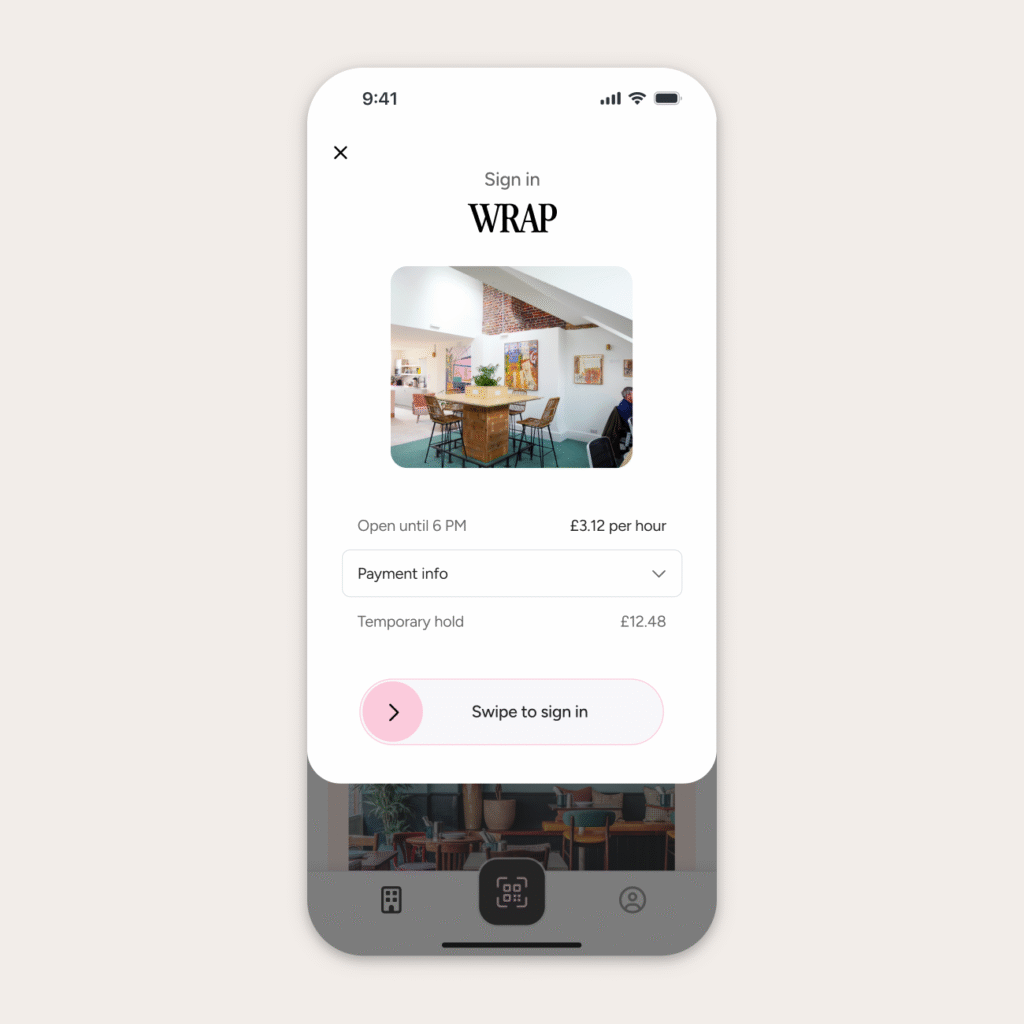
Screenshot from the Werksy app, via https://werksy.notion.site/press
Once Werksy users are logged onto the app, entry to co-working space is via QR code. Scanning in and out means there is no requirement for anyone to check whether app users have overstayed their time, unlike with conventional booking platforms, Foskett says.
Entry gives you access to co-working lounges, rather than to dedicated desk space.
However, lounge quality has improved in recent years, according to Nathan Carpenter, head of central sales at flexible workspace operator NewFlex, which offers Werksy users space in its co-working lounges.
“All of the lounges are fully kitted out with USB ports and plug sockets, you get coffee and you get refreshments and it’s a nice place to work. It makes a big difference for remote workers, who will have spent most of their time in a Costa or Starbucks trying to get signal, if you have a place which is really dedicated for you to work.”
Werksy user Aimen Chouchane, head of marketing for AI-powered video surveillance firm IntelexVision, says Werksy enables him to find reliable places to work in between meetings when he spends a day in London. He prefers this option to coffee shops, where “wifi can be unpredictable. Finding a perfect one can be hard, sometimes they’re too noisy.”
The nature of Chouchane’s work also means that security is important, that no one is looking over his shoulder.
Fashion designer Noemie Jouas, who also acts as an ambassador for Werksy, helping to promote the app, says the flexibility is ideal for workers with a varied schedule:
“The kind of work that I do is really, really different every single week. I might have photo shoots somewhere, or sometimes I have fabric shopping. My job takes me everywhere, Werksy saves a lot of time travelling in London.”
Prices can be a little more expensive than the cost of one coffee. The usual range for an hour in a Werksy space is between two and seven pounds, Foskett says, compared with £2.50 for a flat white in a London Starbucks. But users say the more appealing workspaces and the offer of free refreshments make up for that.
However, Fleura Bardhi, professor of marketing at City St George’s, University of London, told The Sentinel that short-term working risks removing the sense of community that co-working spaces have tried hard to foster:
“Booking for a day is a new development. Because it’s so flexible, it’s ‘why not?’ Then it comes with a damage to the community. A lot of people join so they are part of the community. If you have outsiders in and out for an hour and a day, it’s different.”
Foskett disputes that, pointing out that some Werksy users regularly use the same co-working space, and that a conventional co-working community that requires a monthly payment of several hundred pounds excludes many.
“We’ve got a lot of entrepreneurs, freelancers and people that just either don’t have the money, or don’t have the need to be restricted to one office.”


Comments
Be the first to share your thoughts!
We value diverse perspectives and respectful debate.