
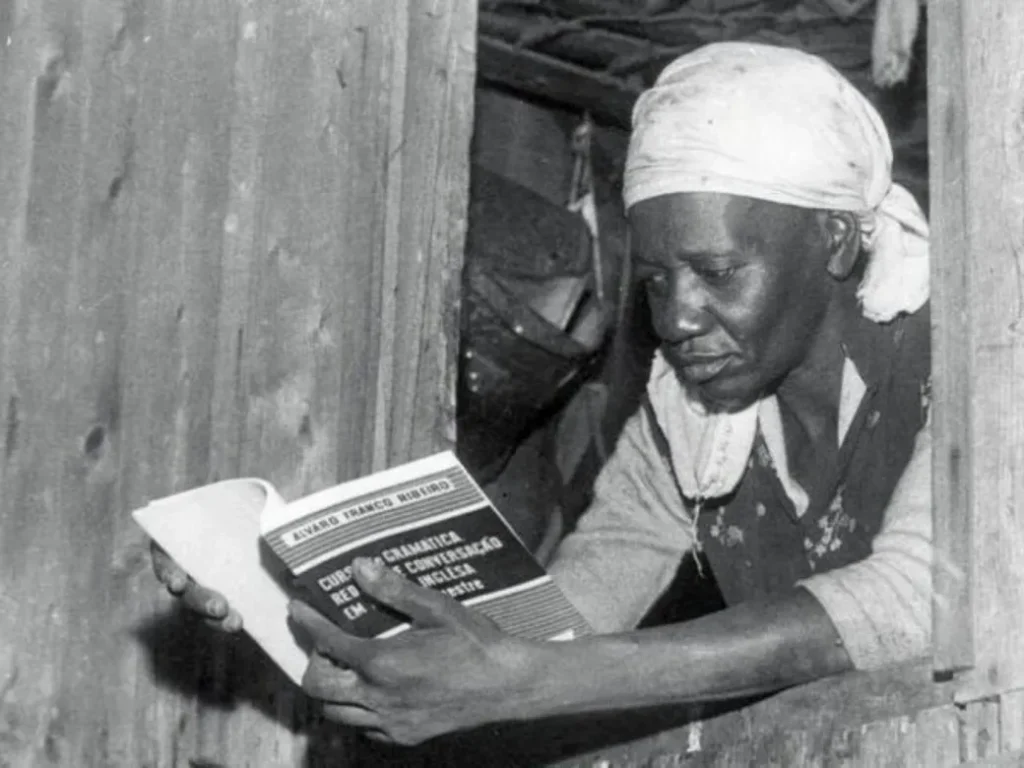
During Brazil’s 2026 Carnival, one of the most celebrated names was that of writer Carolina Maria de Jesus. She was honored by Unidos da Tijuca, a major samba school from Rio de Janeiro competing in the country’s top division. Her life story became a samba anthem, echoed by thousands of voices along the Sambadrome — the iconic parade avenue where Rio’s Carnival unfolds each year.
But my first encounter with Carolina did not happen at Carnival.
I was 13 years old when I first read ‘Quarto de Despejo’ 1960, at the beginning of my adolescence, for a school assignment. It was the first time I was confronted with a narrative that spoke about hunger in a real way. Until then, hunger had been a distant word — a textbook statistic, a concept that fit neatly into exams and classroom debates.
For the first time, hunger stopped being social data and gained a voice, a body, and a daily life. Carolina, a Black woman from a favela — often translated as “urban slum,” but more accurately a marginalized community shaped by structural inequality — who survived by collecting paper, wrote in order to live. Her direct, raw language was the only one possible in the face of daily violence.
One simple sentence stopped me: “Hunger is also a teacher.”
I remember closing the book for a few seconds. Reading does more than move us — it leaves a mark. It makes us think about our world, how we live in it, and reminds us that it is not the only world that exists. Reading allows us to reflect on the different realities and experiences of every human being.That book showed me that writing can be a form of resistance and that no human being is defined by the conditions into which they are born.


Comments
Be the first to share your thoughts!
We value diverse perspectives and respectful debate.