Silence in the Pub Trade:Do Pub Companies Enable Alcoholism in Their Staff?
By Kathryn Rolfe
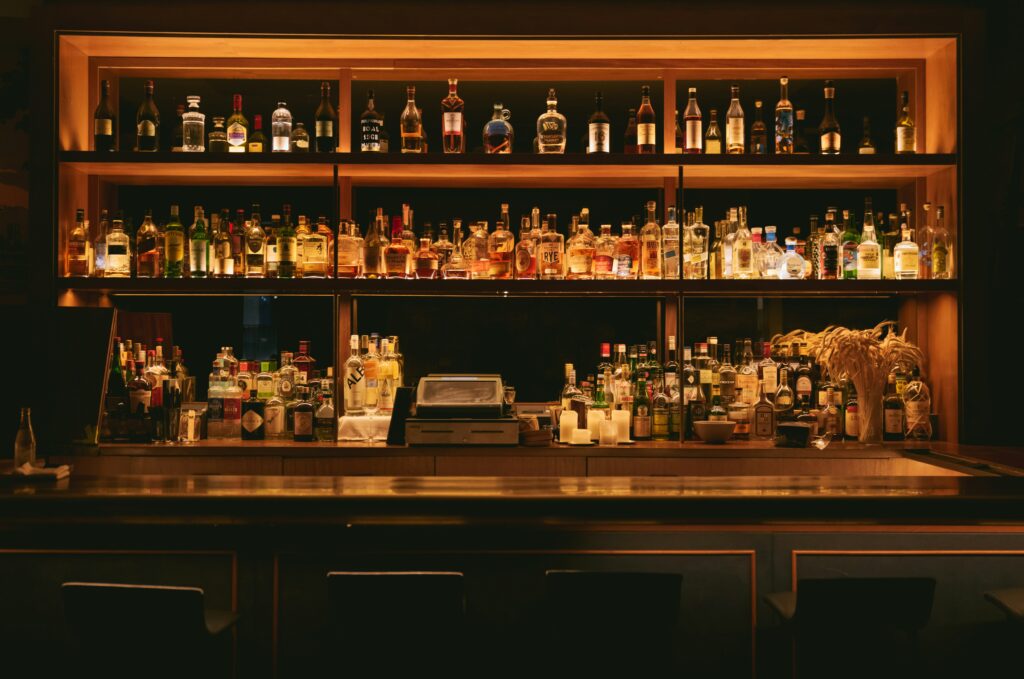
(Image courtesy of Edgar Chaparro via Unsplash)
Trigger Warning:Alcoholism, suicide, sexual assault
After-work drinks, generous customers, access to stock, brewery days, meetings in pubs, beer festivals, wine and spirit product tasting, line-cleaning sessions, and being surrounded by alcohol all day. Working in a pub not only facilitates regular drinking, it is actively encouraged. For some, this sounds like a dream.
Enthusiastic about drinking back in the early 2000s, I was drawn to working in the industry. But with an already developed alcohol problem stemming from my teens, I found that working in a pub fueled this at an extreme rate. Today, the sober-curious movement has introduced a wide array of alcohol-free alternatives in pubs for the customer.
But there is still very little being done by pub companies and breweries to safeguard their staff. In a 2021 study by BMC Public Health, 353 UK jobs were analyzed. The study found the most significant ratio of heavy drinkers were publicans and managers of licensed premises. Certainly, an industry that would benefit most from prevention programs.
Early exposure
I grew up in Yatton, a village halfway between Bristol and Weston-super-Mare in the south west of England. It was a fairly idyllic 1980s childhood with kickabouts in our cul-de-sac and cricket in the fields surrounding our streets. But I often had a pang of sadness in me. I was quiet as a child and never shared how I felt, which led to feelings of disconnect and loneliness.
I started experimenting with alcohol at 12 and instantly fell in love with how it made me feel. It was a kind of liberation. It released me from the feeling of being trapped within myself. My teenage years were then all about where the next party was and how we were getting our booze. I couldn’t get enough and quickly gained a hedonistic reputation.
Subscribe to The Superhero Brief!
Free access to the CEO's newsletter.
The views expressed in this newsletter are those of the CEO and do not necessarily reflect the views of the organization.
But on each occasion, I got carried away and passed out, being told what I did or what was done to me the next day. By the time I was 15, I was depressed. But no one spoke about mental health in the nineties and I couldn’t understand what was happening to me. Alcohol allowed me to escape the depression. At least, initially.
But by 17, I was drinking alone and at crisis point. Struggling secretly, I planned my first suicide attempt. But I fought my way through and completed my A-Levels, never telling anyone what I was going through. I just knew that qualifications were my opportunity to escape.
The drinker’s double life
In 2000, age 18, I moved to London to attend the Metropolitan University’s communications and audio visual production course. I didn’t get into halls but found a house-share with six others in a large property in Stratford, East London. But after a few months of drinking and hangovers, I stopped attending university. Instead, I found a bar job, which I loved. I made friends, worked hard, partied hard, and felt like I belonged somewhere.
But it didn’t take long for this to get out of control. I found myself in the cycle of drinking every evening and passing out anywhere from a corner in a pub, on the tube, or on the street. Regularly, I woke up somewhere I had no idea where I was and had to take myself home for a quick shower and then back to work amid a mighty hangover fog.
I’d make it through the day, but after pouring beer all day. And, in an attempt to hide from my problems, I’d finish with “a few” pints after work again. Being surrounded by alcohol normalized daily drinking. I thought it’s what everyone did, especially at my age. The lifestyle came with its dangers, though. Over ten years, I was raped multiple times and found myself in countless situations where I didn’t know what I was doing or who I was doing it with. I felt utterly trapped in a cycle of self-hatred and attempts to alleviate the shame with more drink every day.
But throughout this period in my life, I was actually very high-functioning. Known as the “drinker’s double life,” functioning alcoholics often have steady careers, disposable incomes and positive relationships while they hide the seriousness of their alcoholism from those close to them.
Management and misuse
I ran my first pub when I was 25. Working for a large London brewery, I climbed from bar server to general manager through extensive management progression training. I learned about profit and loss, licensing and legislation, stock control, recruitment, training and disciplinaries, kitchen hygiene, and cellar work. But I never learned about responsible drinking, managing stress and mental health, or interventions or prevention programmes for staff who may develop drinking problems.
The pub was trading well and I was making good bonuses. So after paying rent and bills, I still had a significant disposable income to spend on more booze. Friends and family could always rely on me to be up for a drink and a good time. Often, they witnessed me having too much, perhaps passing out somewhere or falling over, but that was all in the spirit of the lifestyle. Life was all about enjoyment and I thought alcohol was the only way to achieve this. But, hidden to many, I was struggling with severe depression and drinking daily to deal with it.
I often woke up without remembering the end of the night. Sometimes on the floor. Sometimes in a bus terminal. Sometimes in a stranger’s house. The shame was too painful to acknowledge; I would do my best to push the feelings down and put on a smile. Alcohol made this easier. However, this progressively detached me from any emotions at all, and my true self sank away. Soon, all I knew was the shiny exhibited version – the side my customers saw. I had no idea who I was or what I liked.
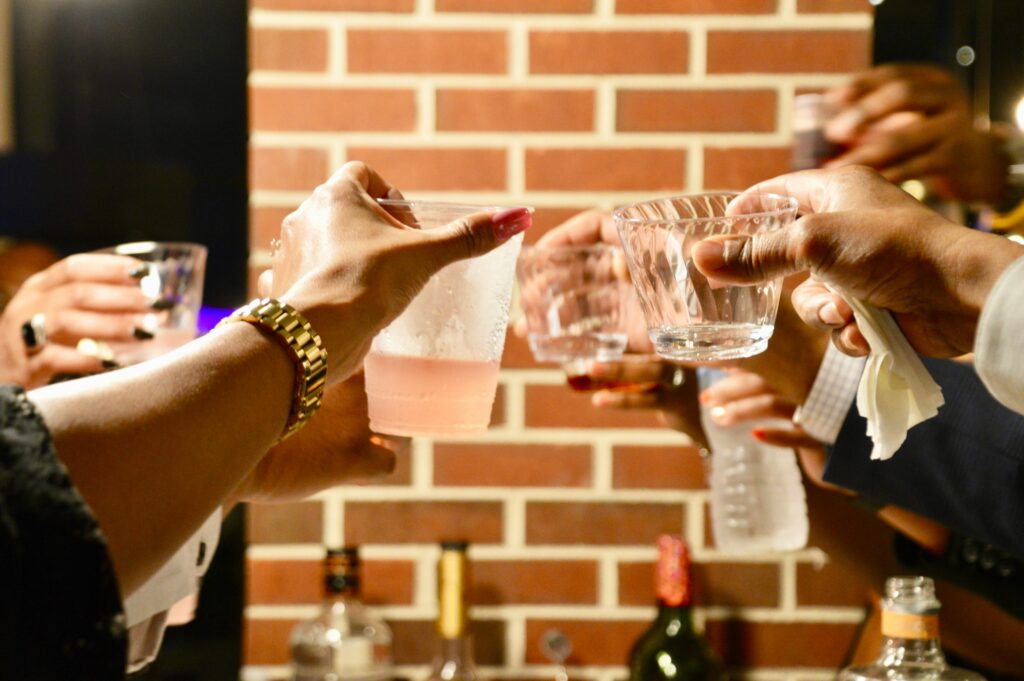
(Image courtesy of Andra C Taylor Jr. via Unsplash)
Over time, the murky underbelly of my life grew bigger, infiltrating me like a poisonous gas. I was suffocating. Backed into the last remaining corner, it became too hard to hide from the shame and it became impossible to keep the smile on. Consequently, I became suicidal again as I was desperate to escape the exhausting cycle of pretence and remorse.
Attempting to get a grip on my drinking, I often told myself in the morning that I wouldn’t drink that day. But after spending hours pouring pints, I would have a few “in the till” from customers by the end of my shift or I would know which beer currently had a large stock surplus and I’d pour myself one. Propped up at the end of the bar and chatting with my staff and customers, who were all of a similar age and who I considered my friends, it felt completely normal to spend my evenings off this way.
Of course, as an alcoholic, I wasn’t able to stop at one or two and this led to several drinks before stumbling home. Friday nights were line-cleaning nights. After we closed and cleaned up, three pints from each lager and cider tap were poured into jugs for us to drink before the line-cleaning chemicals came through. It was quite a skill to stop it just in time. This was very often the start of drinking until dawn.
Monthly area meetings were always in one of our pubs, with drinks on a company credit card afterwards. Then, a few months into my role, I was given the additional title of Ale Champion, as the only manager in the area enthusiastic about cask ale. This role allowed me one day each month out of my pub to taste and learn about beer at beer festivals or at the brewery. I was literally being paid to drink. The next few years saw a few mental health crises and leaving jobs to escape my increasingly intolerable headspace, twice leaving the UK to escape. I kept running until I was 35. Eventually, though, I gave up pub work and finally gave up drinking. I’m now six years sober.
Working in pubs did not make me an alcoholic, and my experiences are extreme. It did, however, facilitate and enable my alcoholism.
Industry silence and call for change
In April 2023, I contacted 11 of the biggest UK pub companies to inquire whether there were any policies in place for safeguarding staff and whether they had any interventions for when it had gotten too far. Only two replied.
Nicholson’s sent me an alcohol responsibility policy, but this was for guests and the sale of alcohol, not for staff. Marstons told me their policies were internal and not for the general public. Their silence is staggering. Since 2001, when I started my first bar job, there has been no improvement.
I recently met with Dru from Club Soda, a small organization committed to helping people drink more mindfully and live better by promoting low and alcohol-free drinks, providing courses, and setting up alcohol-free events.
Dru told me he is “continually disappointed” by the big pub companies, who he says are difficult to engage with. He says many of them offer yoga days, vegan days, and promote well-being with their staff, but they go silent when the dangers of alcohol are mentioned.
Obviously, it’s not good business sense to tell the world that your core product is harmful, but shouting about the good work you’re doing to safeguard your staff could be excellent PR. The good news, though, is that there is some movement among smaller companies.
Club Soda works with The Drinks Trust, a charity dedicated to the drinks and hospitality workforce. They offer a service for businesses that can’t provide an employee assistance program due to the size of their company, and it is the smaller businesses that are most receptive to safeguarding their staff.
Alessandra from The Drinks Trust told me their free service for hospitality professionals was set up to benefit staff wellbeing. She added that their work with Club Soda has already helped thousands of people change their relationship with alcohol. Although with only 120 people per year signing up for Club Soda’s courses, there is still a long way to go.
The team at Bristol Beer Factory are also doing great things. I contacted Tom Clermont, head of sales for BBF. He reported that BBF invests more time and money into promoting Clear Head, their 0.5 percent alcohol IPA, than any other product. The beer was brewed with their primary charity partner, Talk Club, a Bristol-based mental fitness charity for men. Five percent of every bottle or pint sold goes directly to keeping Talk Club sustainable through regular cash donations to keep building a community of positivity and mental fitness.
Tom also told me BBF invests in their managers by enrolling them in mental health training. He also says BBF is on its way to achieving B-Corp status, a certification of proven excellence across staff happiness and policies, environmental impact, charitable giving, and community engagement.
Unfortunately, the wine industry is still a little sniffy about alcohol-free alternatives, instead adopting the mantra, “drink less, drink better.” A cynical mind could view this as an upselling technique. However, Liberty Wines, a wine wholesaler and importer based in London, has been working with Club Soda on an in-house workshop, Discover Mindful Drinking, to promote a mindful drinking culture within their company.
On a larger, global scale, Healthy Hospo supports drink brands to promote health and wellbeing, which, they claim, is tackling the problem at its source. I met with Jason Knüsel, co-owner and director of the non-profit organization. We discussed why so many are attracted to the job, such as the buzz you get from being around lots of people in a fast-paced environment and the passion for food and drink.
He told me that workers are still trained in many food and drink tastings but not about the dangers of excess, which he believes is due to the large-scale benefit of tax to governments worldwide. Healthy Hospo offers courses raising awareness, and educates staff about drinking habits and the science of neuroplasticity, the way the brain rewires itself through new routines.
But Jason tells me that hospitality is a mess. Since the pandemic, the industry has been losing a third of its workforce every year on an international level, citing mental health, cost of living, and life reevaluations in lockdown as a few of the causes. Industry sustainability is diminishing fast.
I don’t blame the pub industry for my alcoholism. This was well-developed on my own. But it’s been on reflection that perhaps pub companies need to take some responsibility for their employees. People who are attracted to working in pubs are often enthusiastic drinkers, making them susceptible to the progressive nature of regular heavy drinking. This is entwined in the culture.
Companies and organizations like Club Soda, The Drinks Trust, Healthy Hospo and Bristol Beer Factory are paving the way for culture change. Others need to follow.
The next steps are to implement company policies for prevention and processes for alcohol responsibility and awareness among staff. Interventions should also be planned for when an employee’s alcohol intake tips from social to dependent drinking. Hopefully one day, the big pub companies will follow the smaller organizations and breweries to take some responsibility as well.
Kathryn Rolfe grew up in North Somerset in the southwest of the UK. She began writing in 2022 with previous careers in pub management and teaching. Kathryn has lived in London, South Africa, and Bristol, and writes about her experiences of alcoholism and mental health challenges. Kathryn is now living in Somerset and working on her memoir of her experience of alcoholism in the pub industry. You can follow her blog and find her on Twitter under the username krolfewrites. Kathryn is also due to appear on two podcasts about sobriety later in 2023. Links will be posted on her blog.


Comments
Be the first to share your thoughts!
We value diverse perspectives and respectful debate.