Don’t you utilize, monopolize, or anthropomorphize me
According to our saintly and ever-correct oracle the Internet, the word ‘employment’ has two primary definitions.
“The state of having paid work”.
“The utilization of something”.
I’d be curious to poll the average person on the street as to which of these definitions typically comes to mind on hearing the word.
And by ‘on the street’, I of course mean those tireless and valiant 9-5 workforce soldiers on their lunch breaks, as they spend their hard-earned money on pre-packaged processed carbohydrates at the cream of our cities’ chain coffee conglomerates. Not those people literally on the street by virtue of not being utilizationed or in a state of having paid work.
Go ahead, utilize me
You see, I think these two definitions are linked — me being utilized by having paid work. And I’m surprised to find myself admitting that, because I used to say that there was no value in working my fingers to the bone or my brain cells to their nuclei to serve a corporation, community or country that didn’t serve me in return. Maybe my views would’ve been different if my council tax payments bought me something more than a wheelie bin emptied and returned to the wrong house once a fortnight. Or maybe my views would’ve been different if I’d worked in an industry whose primary work product was something tangible, rather than a service. You know, if I’d been making car tires or little cakes or something…
Subscribe to The Superhero Brief!
Free access to the CEO's newsletter.
The views expressed in this newsletter are those of the CEO and do not necessarily reflect the views of the organization.
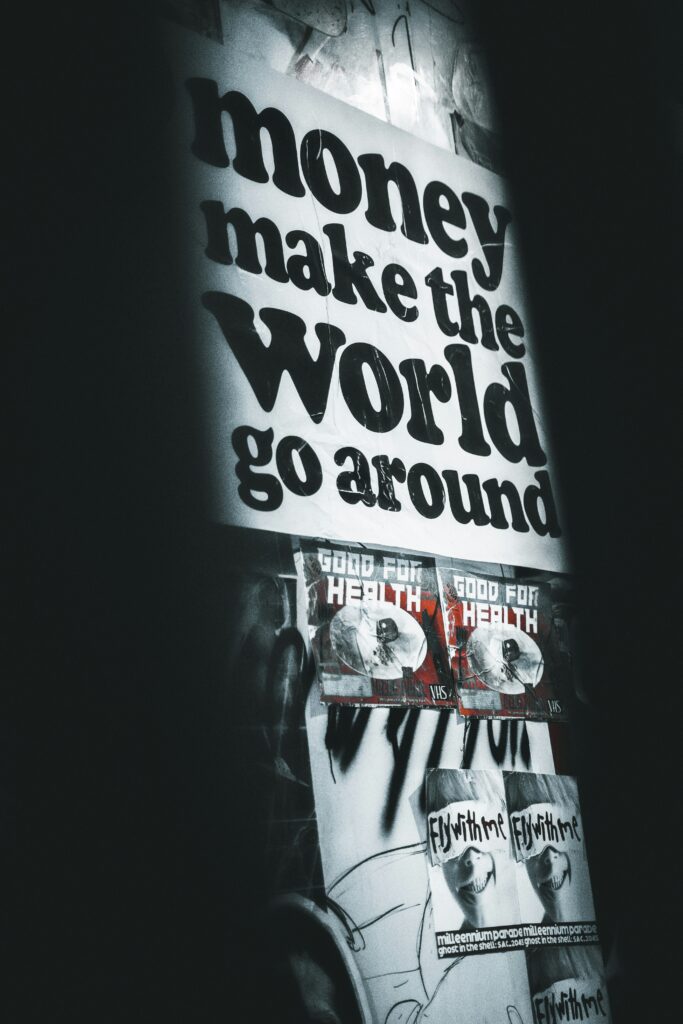
In my endless quest for prose and provocation, I often like to say that our real currency in life is time, or honesty, or love, or some other such abstract and intangible concept. But, in reality (whatever that is), I know that the only actual currency we have is CURRENCY. Pounds, shillings, and pence. Dollars, dimes, nickels, and cents. They weren’t wrong when they said money makes the world go round, even if it is making it go round the twist. Though I’d prefer to be participating in a place which prioritizes peace as its primary political pledge and considers communication above the concerns of commerce, that’s not the hand we’ve been dealt.
Take a break, but what time is it?
I write these words a year into a period of unemployment, a time I’ve described to everyone on the outside of my own brain and trusted circle of friends as a ‘career break’ or a ‘career change’ but which has served as a constant internal reminder of the need to earn money. A ticking financial and self-worth time bomb with detonation set for 0:00…and it’s been five minutes to midnight since I collected my last pay packet.
Have I been utilized in the last year? Sure I have. I’ve written somewhere near 500,000 heartfelt words for various publications, research papers, fictional works and factual projects. I got married. I’ve been to California. I’ve recorded an album with my band. But I haven’t earned any steady money, and even someone as headstrong when it comes to utopian societal dreams as me can’t escape the notion that I need money to be happy.
Blame it on Monopoly
Perhaps it’s because from the moment we exit the womb we’re drip-fed that our most significant contribution to our world is financial: the generation of wealth. An idea reinforced by every happy family game of Monopoly, from station to station, house to hotel, where fulfillment rests on the roll of a dice and the turn of a CHANCE! Where, if the cards are stacked against us, we’re better off in jail.
But where I’d once have cursed society’s plan for me as a preordained conspiracy geared towards the generation of wealth for others — those faceless offshore yacht owners, stubbing out cigars on the trade union banners that adorn their penthouse walls like historical works of art — I don’t think like that anymore. The wealth we’re really generating is the ability to fund the lives we want to live. If even the most visceral human experience costs money to attain, then the true value in paid work is how we use that pay to generate for ourselves: our livelihood.
What’s it all about?
So maybe that’s okay, as I wanted to write something about this strange phenomenon for a while, where my self-worth is inextricably linked to my earning capacity. I was scared to acknowledge it for fear that the exploratory process of one’s own psychological relationship with money (or lack of) would run out the clock and explode that time bomb before I secured my dream job. One that allows me to practice the skills I’ve amassed, my creativity and flair and my passion for mentorship: all roads lead to Academia. I found my energy waning, replaced by the worry of securing a new career, or what the failure to do so means for my finances and my self-worth. The fear of having to accept a job I didn’t want to do if the righter opportunity didn’t reveal itself.
But it did.
Freed from the shackles of welfare worry, I can become spiritually and creatively utilized again. In a good way.
I’ll never stop campaigning for a fairer society, where we take just enough from our supermarkets, and where we recycle everything.
Where we treat every conversation as an opportunity to make someone’s day better.
Where we invest properly in good holistic education across all facets of academic and vocational challenges.
But I’ll do so in the knowledge that the value in my work isn’t only in the direct impact I’ll be having on my students, but in regaining a monopoly over my own life’s course — hopefully with the occasional free parking surprise and a couple of beauty contest wins. My money is, in the truest sense, monopoly money.
Jordan Frazer is a freelance writer and musician. He writes as C.P. Doosly — the Anxiety Uncle of the Millennial Generation — and is lead vocalist and guitarist of London band The Stylus Method. He is vegetarian, a yoga & meditation enthusiast, and Beatles-obsessive. He loves almond croissants and supports Newcastle United. He is married to Samantha. He is an ex-commercial litigator, qualified personal trainer, and is working on several fiction and non-fiction book projects centered around arts & culture.



Comments
Be the first to share your thoughts!
We value diverse perspectives and respectful debate.