As someone who grew up in a family that values excellence, I was preoccupied with perfection for most of my life, whether it was in school, relationships, or everyday life. I set impossibly high standards for myself, and I thought that only through flawlessness could I achieve success and happiness. It wasn’t until I hit a breaking point that I realized the desire for absolute perfection was what kept me from finding true contentment and success. It was only when I embraced my defects did I achieve a better outcome than I could have ever imagined.
All became clear when I was 23, my life marked by ambition and self-doubt. I had just graduated from a world-class Israeli university with a postgraduate degree, and was immediately seized by the ambition to get a PhD. My first job was in a biological research company in the UK where I was mandated to research a study titled Quorum Sensing Disruption by Urban Plant Volatiles: A New Avenue for Anti-Biofilm Therapy in Multi-Drug-Resistant Pathogens. The job was everything I had hoped for — challenging, fast-paced, and full of opportunities to prove myself. But along with the excitement came an overwhelming fear of failure. However, I was determined to show my worth, to stand out, to be perfect.
At first, I was meticulous in everything I did. Every email had to be perfectly worded, every presentation flawless, and every project completed with a near-obsessive attention to detail. I spent late nights tweaking reports, overanalyzing every decision, and second-guessing myself. But no matter how hard I tried, it never felt like I had done enough. My colleagues seemed to work more with less effort, and yet their work was praised just as much as mine, perhaps even more so. I couldn’t understand it.
Subscribe to The Superhero Brief!
Free access to the CEO's newsletter.
The views expressed in this newsletter are those of the CEO and do not necessarily reflect the views of the organization.
My performance reviews, while generally positive, always left me feeling like I wasn’t living up to my full potential. I began to notice something unsettling: I was burning out. I would go to bed exhausted every night, only to wake up feeling the same sense of anxiety and pressure as the deadline approached. I was trapped in a cycle of trying to be perfect, yet never feeling satisfied with the outcome. In my mind, the only way to get ahead was to be flawless in everything I did, but it was taking a toll on my mental and physical health.
The turning point came during a major presentation to a group of executives. I had spent weeks preparing, rehearsing, perfecting the slides, and running through every possible scenario, yet the real challenge lay in the topic itself: a combination of plants, microbiology, and medicine. As a microbiologist, I had to be able to face and argue successfully in front of a panel consisting of individuals from a multidisciplinary field. On the day of the presentation, my nerves were at an all-time high. I could barely sleep the night before, and when I woke up, I had a knot in my stomach. I was convinced that one small mistake would ruin my chances of advancing in the company.
As I stood in front of the panel, I felt the weight of everyone’s eyes on me. I began the presentation, but my hands were shaking, my voice trembling. Halfway through, I stumbled over my words and froze. The silence in the room felt deafening. I could feel my face flush, and my mind was racing. “This is it,” I thought. “This is where it all falls apart.” But then, something unexpected happened. One of the executives, a woman named Victoria, spoke up. “Hey, it’s okay,” she said with a smile. “Take a deep breath. We’re all human. Let’s keep going.” At this point I remembered what my master thesis supervisor, Dr. Gidon Winters once told me: “Fredrick, everyone feels nervous, even after having published several peer-reviewed articles and made countless presentations, I am often nervous while presenting in a room full of people.”
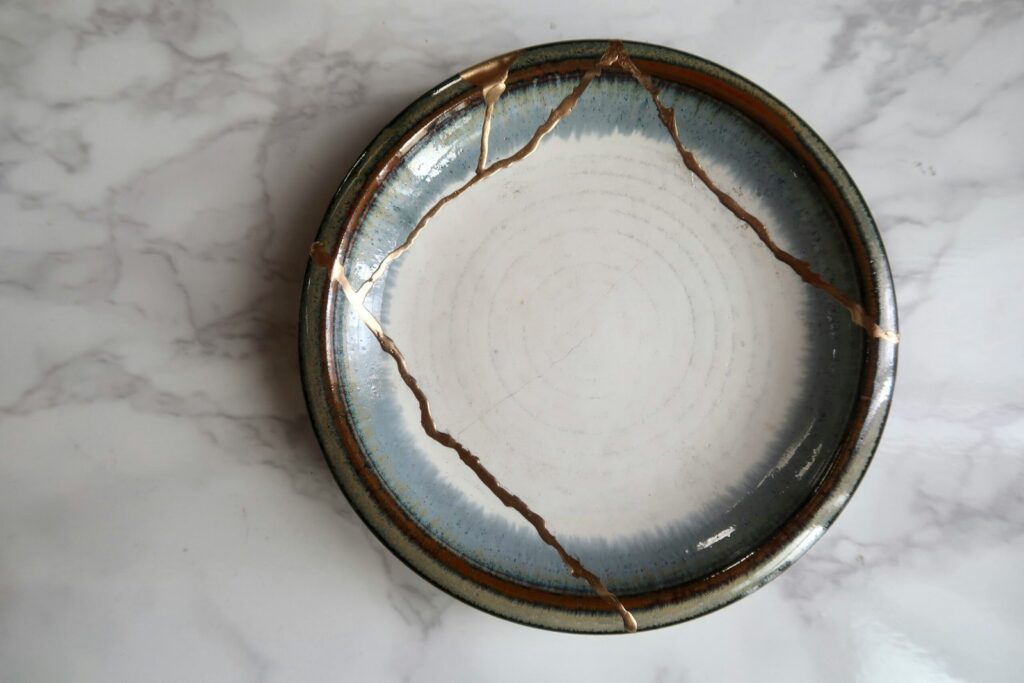
(Image courtesy of Werner Pfennig via pexels)
That moment, so small yet deep, changed everything for me. The pressure I had put on myself to be perfect, to avoid any flaws, was suffocating me. Victoria’s kindness and her understanding of the situation made me realize that mistakes were not the end of the world. They were simply part of the process. I took a deep breath and continued the presentation. My hands still trembled, but I felt a sense of relief. The rest of the meeting went smoothly, and despite my initial panic, I received positive feedback, and the paper was ranked as one of the best research papers in the company. I realized then that the perfection I had been striving for wasn’t what mattered. It was how I handled the imperfections that made the real difference.
After that presentation, I started to shift my mindset. Instead of obsessing over every little detail, I began to focus on progress rather than perfection. I allowed myself to make mistakes and learn from them. Instead of spending hours perfecting a report, I focused on completing tasks efficiently and learning from feedback. I began to understand that imperfection didn’t equate to failure — it was an opportunity to grow.
Over the next few months, I noticed a change in how I approached research and work in general. I was more relaxed and more present, and I wasn’t constantly living in fear of making a mistake. I began to take on more challenging projects, and I wasn’t afraid to take risks. Some of those risks didn’t pay off of course, but others turned out to be some of the most rewarding experiences of my research. My team noticed a difference, too. I became a better collaborator, more willing to ask for help when I needed it, and more open to other people’s ideas.
But the benefits weren’t limited to just my research. I started to apply the same principles of imperfection to my personal life. I had always been self-conscious about my appearance, constantly comparing myself to others and trying to achieve an unattainable standard of beauty. I spent years dieting, exercising, and obsessing over my appearance, only to end up feeling frustrated and inadequate. I realized that I was never going to look like the models in magazines or the influencers on social media, and that wasn’t the point. What mattered was how I felt about myself.
I began to embrace my natural features, faults and all. I stopped worrying about every little flaw and started appreciating what made me unique. I no longer measured my worth by the number on the scale or the reflection in the mirror. I started to focus on things that truly mattered — like spending quality time with family and friends, pursuing hobbies, and learning new skills. And, most importantly, I permitted myself to be imperfect.
Sometimes I forget that I’m allowed to be flawed, that I’m allowed to be human. Perfection used to be an addiction forced onto me because everyone chased it. However, since I strived to accept my flaws, my drive has been different. I want to make mistakes and learn from them. I want to develop a better understanding of everything. I want to be held accountable for every mistake and bad decision, and to be gifted with the grace to grow. I have done a lot of imperfect things — from lying to breaking others’ hearts to ghosting people with no reason — but that’s the beauty of discovering myself.
I learned that all these faults don’t define me; instead, they are stepping stones to meeting the version of myself I can honor. I realized that I had embraced a part of myself that disguised itself as good, but it was the version of myself that prevented me from appreciating who I am. I have taken accountability and changed my ways, character, and behaviors. It’s funny how we often think that perfection is the key to success, but in reality, it’s our imperfections that make us human, and it’s through those imperfections that we truly grow.
Eventually, I discovered that it’s not about being flawless. It’s about showing up, learning from the mistakes, and being kind to yourself along the way. When I let go of the need to be perfect, I found not only better outcomes but also a sense of peace and contentment that I had been desperately searching for. Sometimes, it’s in our imperfections that we find our greatest strengths.
Fredrick Odongo is a father, writer, tutorial fellow, and researcher. He writes on areas of biological and physical sciences, lifestyle, and psychology. He is currently exploring several nonfiction and fiction pieces on mental health.
Thank you to Emily Delnick and Eric Mabry for their inspired edits on the piece.




Comments
Be the first to share your thoughts!
We value diverse perspectives and respectful debate.