Therefore, the central ethical question of the digital age is not simply whether technology connects us. It is: what kind of human beings does technology encourage us to become?
Gen Z is the first generation whose political consciousness has developed within an algorithmically mediated public sphere. Its global solidarity therefore presents a paradox: the same algorithms that allow young people to recognise struggles beyond national borders can also fragment truth, intensify outrage and manipulate attention.
From Screen to Street
The emergence of youth-led protests in different parts of the world has made this global generational consciousness increasingly visible.
In Turkey, protests erupted following the detention of Istanbul Mayor Ekrem İmamoğlu in March 2025. His detention, amid legal proceedings that his supporters and opposition figures criticised as politically motivated, triggered demonstrations involving large numbers of young people.
The generational question was broader: Does political power belong to the people who currently possess it, or also to the generation that must live with its consequences?
The same question appeared in a different form in Nepal. In September 2025, young people took to the streets following the government’s blocking of several social-media platforms. What began around restrictions on digital platforms developed into a much broader youth movement addressing corruption, political privilege and dissatisfaction with governance. Reuters reported that young protesters used platforms including TikTok, Viber and VPNs to mobilise.
The Digital Self-Rule (Swaraj)
India provides perhaps one of the most complicated examples of this generational transition.
On 15 August 2026, India marked its 80th Independence Day, nearly eight decades after gaining independence from British colonial rule. For the generation of 1947, independence meant freedom from foreign rule. For Gen Z, independence must increasingly mean something more complicated: freedom from poverty, institutional arbitrariness, unemployment, discrimination, misinformation, environmental degradation and the inability to participate meaningfully in decisions affecting one’s future.
India’s philosophical tradition also offers an interesting framework. For Mahatma Gandhi — the leader of India’s independence movement — swaraj was not merely the replacement of British rulers with Indian rulers. It involved self-rule as an ethical discipline: the capacity of individuals and communities to govern themselves responsibly.
In the digital age, this idea acquires a new meaning.
What does self-rule mean when algorithms constantly compete for our attention?
Can an individual be politically free while being psychologically manipulated by systems designed to maximise engagement?
Can democracy remain healthy when citizens cannot distinguish information from engineered outrage?
Gen Z may therefore need a new form of swaraj: digital self-rule — the ability to use technology without surrendering independent judgement to it.
India’s significance in the global Gen Z conversation is also demographic. Government figures indicate that approximately 65% of India’s population is under the age of 35. The Government has consequently placed youth at the centre of its Viksit Bharat @2047 vision. The state has responded through initiatives including Skill India, the Pradhan Mantri Kaushal Vikas Yojana, apprenticeships and the National Education Policy 2020. The restructured Skill India Programme approved in 2025 brought together major skilling initiatives, while the government reports that more than 16 million people had been trained through PMKVY since its launch. Article 51A of India’s Constitution asks citizens to develop “scientific temper, humanism and the spirit of inquiry and reform.” It also calls for harmony across India’s religious, linguistic and regional diversity and for protection of the natural environment. In this sense, India’s constitutional philosophy already contains an ethical vocabulary capable of speaking to Gen Z.
The challenge is not necessarily to invent an entirely new moral framework. It may be to take existing principles seriously in a new technological environment. The real question is whether India’s young population has sufficient opportunities to convert education, ambition and ability into meaningful lives.
In 2026, youth protests in Jharkhand and Delhi over alleged irregularities became part of a broader national conversation about examination integrity, employment and institutional trust. Reuters reported that thousands of young people participated in demonstrations and that the unrest reflected wider concerns about corruption in education and limited opportunities.
John Rawls — the American political philosopher best known for his theory of justice as fairness — argued that justice requires institutions to be arranged in ways that people can reasonably accept as fair. When institutions repeatedly appear inaccessible, arbitrary or structurally unequal, legitimacy begins to weaken.
Morals of Gen Z
The emergence of Greta Thunberg illustrates how this generation can express its underlying demand for a future based on human dignity. In August 2018, fifteen-year-old Greta Thunberg — the Swedish climate activist who was then still a schoolgirl — began a school strike outside the Swedish Parliament. What began as an individual act became Fridays for Future, a transnational youth climate movement. The movement explicitly sought to place moral pressure on political leaders to listen to scientific evidence and respond to climate change. Greta’s significance lies not merely in environmental activism. Her intervention represented a moral challenge to political power:
Why should the present generation enjoy the benefits of a system while transferring its costs to generations that had no role in creating it?
This question has a philosophical lineage. Immanuel Kant — the eighteenth-century German philosopher — imagined, through his idea of cosmopolitanism, human beings as members of a broader moral community rather than merely citizens of individual states. Hans Jonas — the German-American philosopher writing in the second half of the twentieth century — later developed an ethics of responsibility centred on humanity’s responsibility toward future generations.
Gen Z has inherited this philosophical problem in an intensely practical form. Climate change makes the future morally present. Hannah Arendt’s account of political action helps explain why a single teenager’s protest carried such weight. Arendt argued that appearing before others — speaking and acting where one can be seen and judged — is what turns a private conviction into a public, political fact. A girl sitting alone outside a parliament building was, in Arendtian terms, an act of appearance: a refusal to let a private conviction remain private, repeated daily until it became impossible to ignore.
That idea travels well beyond the climate movement. It demonstrates that the concerns of Gen Z cannot be reduced to any single cause or understood solely through the lens of affluent societies.
The First Truly Global Generation?
Generation Z is often described as if it were a single global generation — with the same internet, the same slang, the same music, the same anxieties and the same aspirations.
But there is an uncomfortable truth beneath that global identity: being Gen Z in Sweden is not the same as being Gen Z in Nepal, India, Turkey, Bangladesh or Kenya. The internet may have erased geographical distance, but it has not erased economic or political reality. A young Turkish student’s experience of democracy, a Nepali student’s experience of political instability and unemployment, and a young Swede’s experience of climate anxiety are not interchangeable.
It would be premature to claim that Gen Z is politically unified. Its members disagree profoundly about religion, nationalism, capitalism, gender, migration, democracy and the role of the state. Its unity is therefore not ideological. It is experiential. They have grown up amid the same globalized information environment, experienced the COVID-19 pandemic as a shared disruption, watched climate anxiety become mainstream, witnessed wars through smartphones and entered adulthood during rapid technological and economic transformation. The smartphone did not create their anger. It gave their anger a nervous system.
But there is also a danger in romanticizing Gen Z protests. Not every young protester is politically informed. Not every viral movement is democratic. Not every revolution produces a better government. Social media can mobilize people quickly, but it can also replace political thought with outrage, and organization with virality.
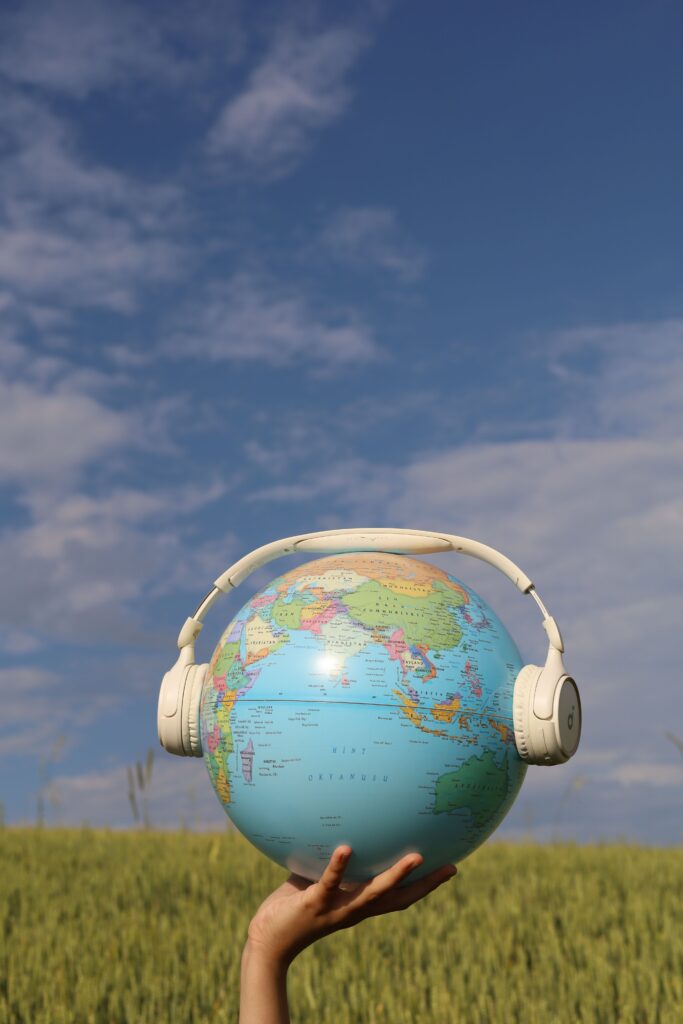
Gen Z is growing up in a world where information routinely crosses those borders before governments, institutions and even individuals have time to process it. That does not make Gen Z one people. It makes it a generation capable of seeing itself as part of a common human conversation— not the belief that everyone has the same struggle, but the recognition that different struggles can still belong to the same world.
Gen Z can turn its extraordinary ability to mobilise into the ability to govern, negotiate, tolerate disagreement and build institutions. Protesting against power is one kind of courage. Learning how to use power without becoming what you once opposed is another. That may ultimately become the defining test of Gen Z: not whether they can make governments listen, but whether they can build a world worth listening to.


Comments
Great article, really enjoyed it! Waiting for the next update.