“Human beings don’t like accepting that they are at fault; instead, they would rather blame others.” This statement just sounded to me like any other psychological way to prove theories until I found myself deep into this trap. I came to realize that “carrying your cross” is an actual thing and not just any other quote. Doubtless, there is a reason for this. But why is it so difficult to own a fault and apologize instead of sugarcoating the mistake with endless deflections.
If I did anything wrong — If
I get goosebumps when I recall the day I first encountered the phrase “anything wrong” used in place of a genuine apology. I was coming home from work after a long day in the office, just one of those days where you wished the time would move faster so at least you can go home and decompress. Of course, the evening setting sun was just the kind of therapy I needed as it hit me. Just as I was about to cross the street that led to my apartment, I got a phone call from a friend asking if we would meet up for a cup of coffee. I agreed quickly, as it had become a relaxing routine to go out for coffee together while discussing our lives and ways forward. Moreover, talking to someone would still help me relax.
That evening, though, was not like the usual. That casual comment hit me so hard that it left me both stunned and boiling with anger and disappointment. He had said, almost as an afterthought, “If I did anything wrong, then I’m sorry.”
Subscribe to The Superhero Brief!
Free access to the CEO's newsletter.
The views expressed in this newsletter are those of the CEO and do not necessarily reflect the views of the organization.
This was supposedly him giving an apology to me for a sin he had committed against me. Immediately, it dawned on me that under that conditional remark lay an avoidance of true responsibility. I felt very disrespected and demeaned. This hit me hard. For years I had boasted how I always owned up to my mistakes and flaws, and now I was falling victim to my insecurity. But was I right to get annoyed or displeased?
Yet when confronted with my flaws, I too sometimes found myself peppering my language with qualifiers. I began to examine my past and noticed patterns where I would say, “If I did something wrong” rather than a plain, “I’m sorry.” These words, though soothing to my ego, are deep down loaded with ambiguity, disguising accountability behind a curtain of uncertainty. They allowed me to retreat from taking full responsibility, leaving the hurt unaddressed and the issue unresolved. If they existed at all.
However, the turning point came on one of the fine days when I was scrolling through Facebook, when a post came up that I felt was addressing me. Memories of past crises and unspoken apologies began flooding my mind as though they were fresh. I remembered an incident at work when I had unintentionally taken credit for a colleague’s idea. To make matters worse, instead of admitting my mistake totally, I offered a conditional apology during a meeting, saying, “If I did anything wrong, I apologize.”
Do not crucify me! At the time, I thought this was a very diplomatic way to ease tension while maintaining my aura, but the resentment in my colleagues’ eyes was a clear indication that I just added more salt to the wound. It was clear that my half-hearted words were nowhere close to owning my mistake. I began to see that true accountability meant embracing the full weight of my actions without diminishing them with uncertainty.
Who’s responsible?
Taking responsibility is not simply about saying a few words — it’s a commitment to self-reflection and growth. I soon realized that a genuine apology requires clarity. It demands that you acknowledge the specific harm you’ve caused and lay the blame squarely on your actions rather than sheltering behind “if” statements. There is no room for empty excuses if you truly care about the people you hurt. This realization came gradually, through multiple conversations, quiet evenings of self-sanitization, and the honesty of a few trusted friends who assisted me by pointing out where my apologies had fallen short.
I decided to set out on a journey—not just to mend broken relationships, but also to mend the parts of myself that had become accustomed to self-protection. I started by revisiting every incident where I had used phrases like “if I did anything wrong.” One memory was particularly touching. I had been in a heated argument with a sibling over a long-overlooked family issue. In the aftermath, I used that conditional apology, hoping that it would mend the rift. Instead, my sibling felt that I had not acknowledged the depth of the hurt I had caused. The realization hit me: the conditional “if” was a loophole, a word shield that allowed the severity of my actions to be insignificant in my own eyes. I learned that true remorse requires vulnerability and complete ownership of one’s mistake.
Taking responsibility also meant facing the consequences of my actions. In my relationships and in my professional life, I discovered that accountability was often the first step to rebuilding trust. For instance, I led a project in which certain decisions resulted in unexpected losses. Rather than clarifying my role and admitting my error, I tossed around a conditional apology that left my team questioning my commitment. The resulting project delays and bruised egos eventually forced me to confront a hard truth: a half-apology was like a bandage on a deep wound — it might cover the surface, but it did nothing to help the healing. I learned that effective communication and complete admission of missteps not only repair relationships but also foster an environment of trust and learning.
The journey to becoming someone who truly takes responsibility was far from simple. It required a daily commitment to honesty, even when that honesty is uncomfortable. I began to practice writing down my thoughts at the end of each day, reflecting on moments when I might have hurt others. Journaling became my silent confidant, a place where I could confront my mistakes without judgment.
Through this process, I started replacing the conditional if I did anything wrong with clear and definitive statements. I would write, “I realize that I made you feel terrible, and why, so I am deeply sorry for the injustice I caused.” Over time, this not only helped mend relationships but also allowed me to grow as an individual. I found that those I hurt respected my willingness to admit my faults, even if it left me feeling exposed.
Reflecting on these experiences now, I see that the phrase “if I did anything wrong” is a poor substitute for a meaningful apology. It is a disclaimer that shields one from full responsibility rather than offering heartfelt remorse. True accountability demands that we shed our defensive language and embrace the reality of our actions. By doing so, we not only mend what was broken but also pave the way for a more honest, reflective, and compassionate way of living.
Let’s be clear
Today, I strive to approach every relationship with clarity and integrity. I remind myself that owning up to mistakes is not a sign of weakness but rather a reaffirmation of my commitment to improving as a person. Every genuine apology is a chance to build bridges, to show that I value the feelings of those around me over my own need to always be right. In embracing my missteps, I found that I was also embracing my connection to myself. To forgive myself.
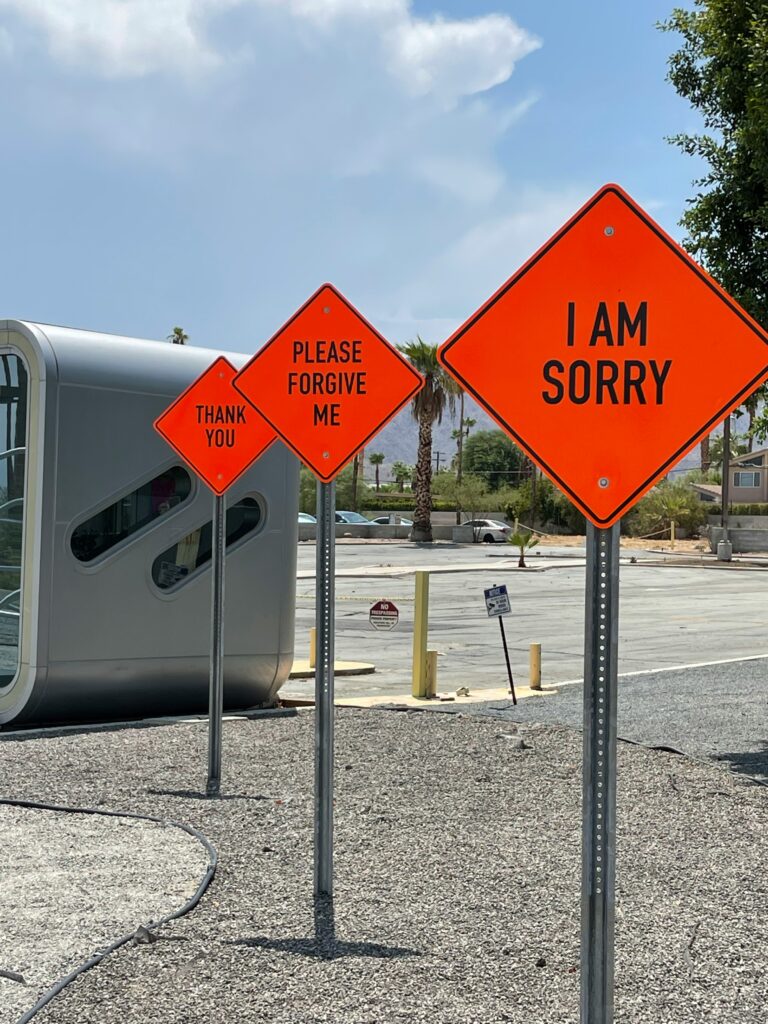
In a world where it’s all too easy to hide behind conditional statements, I’ve learned that the courage to say, “I am sorry that I did this thing” unburdens my soul and lays the foundation for a more empathetic future where accountability and sincerity are held sacred.
Because if I am not sure what it was that I did wrong, how will I avoid it next time? This journey is ongoing, a path of continuous learning that I hope will inspire others to examine their words, to take full responsibility for their actions.
Fredrick Odongo is a father, writer, tutorial fellow, and researcher. He writes on areas of biological and physical sciences, lifestyle, and psychology. He is currently exploring several nonfiction and fiction pieces on mental health.
Thank you to Yosef Baskin and Julianna Wages for their inspired edits on the piece.




Comments
Be the first to share your thoughts!
We value diverse perspectives and respectful debate.