I gave birth to my daughter during a very hot, very smoky July afternoon on the outskirts of Baltimore. We moved to Maryland a year before, and I spent my whole pregnancy trying to adjust to our new state, while deeply wishing we could go back to the Midwest. Besides the distinct use of English, there was nothing that this new place had in common with the region in which I had spent the previous 20 years of my life.
The way people drove was different, the way they walked through the aisles of the grocery store was different (and in my opinion, terrible). Even the trees were different. I had food cravings for things that weren’t sold here — though I did manage to find some Scooperman ice cream, thank God. Primary colors!
By the time the sun rose on what would be my daughter’s birthday, I, confined to my hospital bed due to my epidural, watched the sun rise, a bright pink orb in the sky. The sun being an electric magenta would have been beautiful, had it not been a consequence of a sky full of wildfire smoke that had drifted over the Eastern seaboard from the West. Here I was, without my family (save for my husband), witnessing the downfall of our climate in real time, and wondering how I was going to make peace with the fact that the place I abhorred would be the place that my child would ever know as home.
Small potatoes, big world
To be honest, almost three years later, I’m not sure I know the solution to this quandary. I am an Old Bay Seasoning convert, have come to love crabcakes, and have come to enjoy many more things about my (still) new home. And though I have moved quite a bit in my life, this is the first time I’ve struggled with the adjustment.
Subscribe to The Superhero Brief!
Free access to the CEO's newsletter.
The views expressed in this newsletter are those of the CEO and do not necessarily reflect the views of the organization.
Moving away from your hometown is a natural life step for many young Americans. Off to college or a new job, it’s almost passé, now, to stay in the place that has seen your infancy, your awkward tween phase, your teenage rebellions. The world is big, and it’s the duty of the youth to forge new paths elsewhere.
I have never had a hometown.
By the time I graduated college, I had lived in five different states. If I were to tell this to an army brat, they would say it’s small potatoes. But comparing my case to everyone I knew, I felt like a nomad. Though the United States is one nation, the vast land mass our country occupies means we have countless dialects, cuisines, methods of communication, etc.
My Midwestern parents taught me that carbonated beverages are called “pop,” but everyone I knew in Texas called it “coke” in any brand or flavor. In Michigan, I have no problem making a quick friend in the aisles of the grocery store, but I’m met with side-eye if I attempt the same in Maryland.
But, in America, there is one standard that is the same no matter where I go: baseball.
Let’s back up. Baseball has been in my life for as long as I can remember. Being the daughter of two sports fans, I was a disappointment to my parents when I showed no interest in throwing the ball around as a toddler. All my life, I’ve heard that I have the build of a gymnast or a swimmer, that I have a mean pitching arm, that my musculature has a natural power of which I do not take advantage. When my brother, born almost three years after me, showed an almost-immediate athletic gift — he ran before he could walk — my black-sheep status was further cemented.
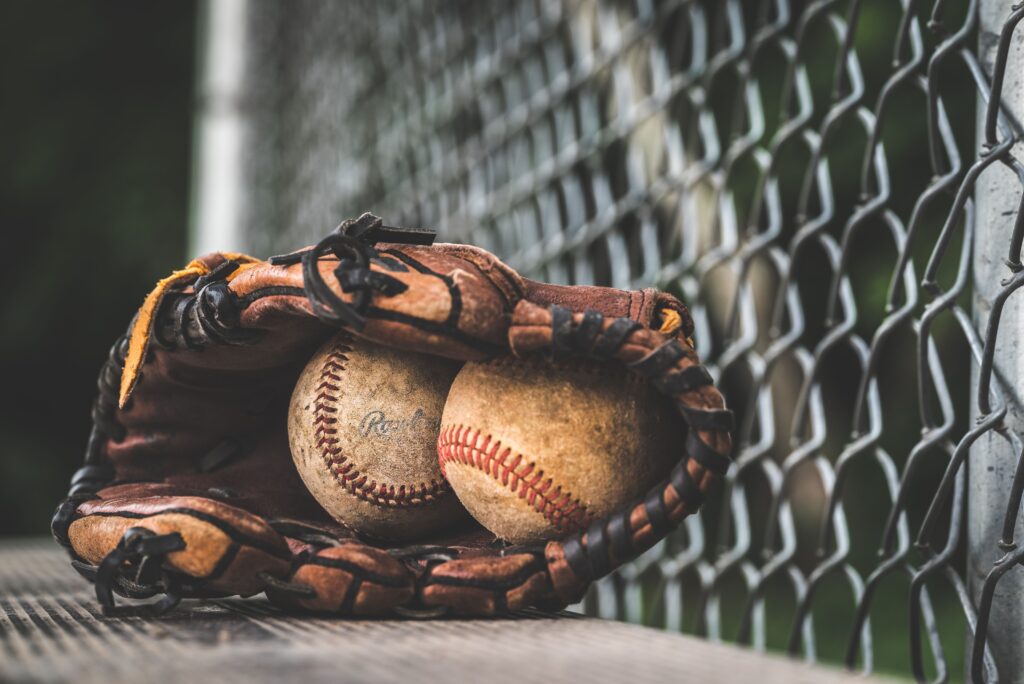
During my childhood, I was often dragged out of my room, away from my books and the comfort of air conditioning, into the heat of the Texas sun to help my brother practice throwing and catching a baseball. I could keep up easily enough, the mitt felt natural on my hand, but I was bored.
Even more boring was having to go to my brother’s little league games and practices. I often resorted to counting the number of cars that made up the trains passing right by the field, or foraging for berries that were, miraculously, not poisonous. If I was lucky, I could find a few quarters during the week with which I would buy a root beer at the concession stand during Saturday games (they always had Mug, which is better than A&W, but worse than Barq’s.)
Despite the few distractions that would pass the time, I learned the rules of the game quite quickly. I could help my mother keep score, confirming whether a hit resulted in a legitimate hit or a foul. Baseball still makes sense to me in a way that American football, arguably the most popular American sport, never has. When we moved to Michigan and my brother became enamored with soccer, I found I missed the structure that baseball provides with its innings and fixed positions in and around the diamond. Over the years, I have come to love the sport that bored me in my youth. And my love for it has helped me greatly.
(Image courtesy of Chris F via Pexels)
The seed worth a billion
Years later, the day after I gave birth, my husband and I had to make what I’m sure was a short distance to my fragile daughter in the NICU. To me, this trip made every two hours, in accordance with feedings, felt like miles for two reasons. One, my body was still recovering from the trauma it had endured the day before. Even staying awake was a chore. Secondly, to a new mother, six inches away from her baby is too far, let alone a different wing of the hospital. This distance was in and of itself traumatic, but that’s a story I might never tell.
Anyway, we were walking to the NICU to visit, when we walked by a man emptying a trash can in the hallway. Being good Midwesterners, my husband and I bade him hello (sometimes in Maryland this is welcome, sometimes it is not, and I have not discovered how to figure out which one you’ll get) and he replied in kind. We exchanged more conversation, but to be honest, I have no memory of this. At some point, I must have awkwardly shoehorned in that we were not from around here. I know this because I am an awkward person, and as a result, I take conversations to an awkward place. But I also know this because he said about my daughter, “As long as she’s a Ravens and Orioles fan, she’ll be fine.”
She’ll probably never be a Ravens fan, because my husband, a diehard Packers fan, would never allow it. But an Orioles fan? Why not?
Here I will get off track a bit: During my stay in the hospital, it was this man (and the others on the janitorial staff) and the woman with my meals who were the kindest to me during my two and a half days in the hospital. That’s not to say that the doctors and nurses weren’t, but it was the non-medical workers on staff that made me feel like a person during a time when I was not completely connected with reality. I think they should make a billion dollars a year and have unlimited time off. I’m not being hyperbolic.
The blossom
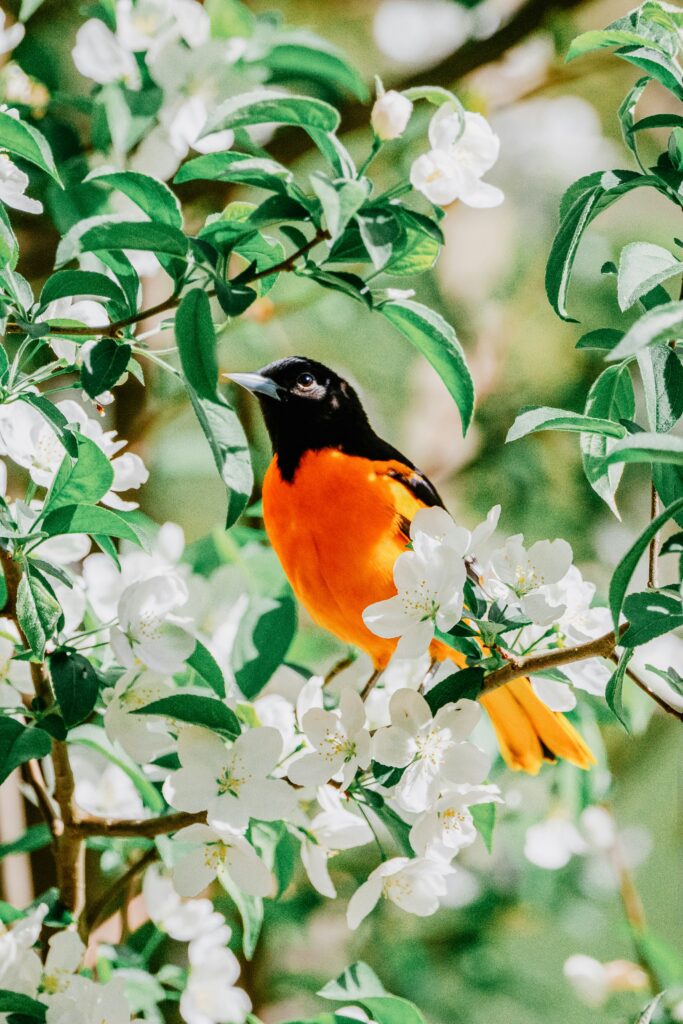
That man’s kindness stayed with me through the first months of my baby’s life and, when Opening Day 2024 drew closer, I remembered his words. I remembered loving watching and listening to baseball, so why didn’t I do it more often? If it turned out that it was no longer something I wanted to engage in, what did I have to lose? I found an online stream for the WBAL broadcast of the game, and so goes the hackneyed phrase, the rest is history.
It may happen that my daughter takes after me and is not athletic, and she may hate watching sports. But developing my long history with America’s sport has helped ease my homesickness. I try to listen to every Orioles game I can, and when I’m unable, I still keep track of how the game is going. Baseball’s heavy schedule (a team plays 162 games within about 6 months) means that I have something to mark the days with. Though I haven’t yet been able to visit Camden Yards — my now-toddler would not tolerate sitting in a seat for nine innings — knowing that roughly half the games I’m listening to are happening but 20 miles away helps me like where I live.
This isn’t to say that my new fandom has been easy. Last season, the O’s lost more games than they won. This season, they may have a slightly improved but similar record. But having a favorite sports team, like having a home, is about acknowledging the negatives while treasuring the positives. Even if I moved back to the Midwest tomorrow, there would be things about it that wouldn’t make me happy. So couldn’t I, in theory, feel the same way about Maryland?
I’m so thankful that the hospital man extended just a little kindness in conversing with us. It was a life raft for me then. Now, I see it as a planted seed, gently sown, that blossomed into a hobby, a passion.
Vena Wever is a graduate student and mother currently residing in the mid-Atlantic United States. Her interests, outside of Hispanic literature, include spending time with her family, engaging in fiber arts, and taking TV too seriously.
Thank you to Yosef Baskin for his inspired edits on the piece.



Comments
Be the first to share your thoughts!
We value diverse perspectives and respectful debate.