Missiles That Attack Your Heart Thousands of Kilometers Away
By Ayaz E
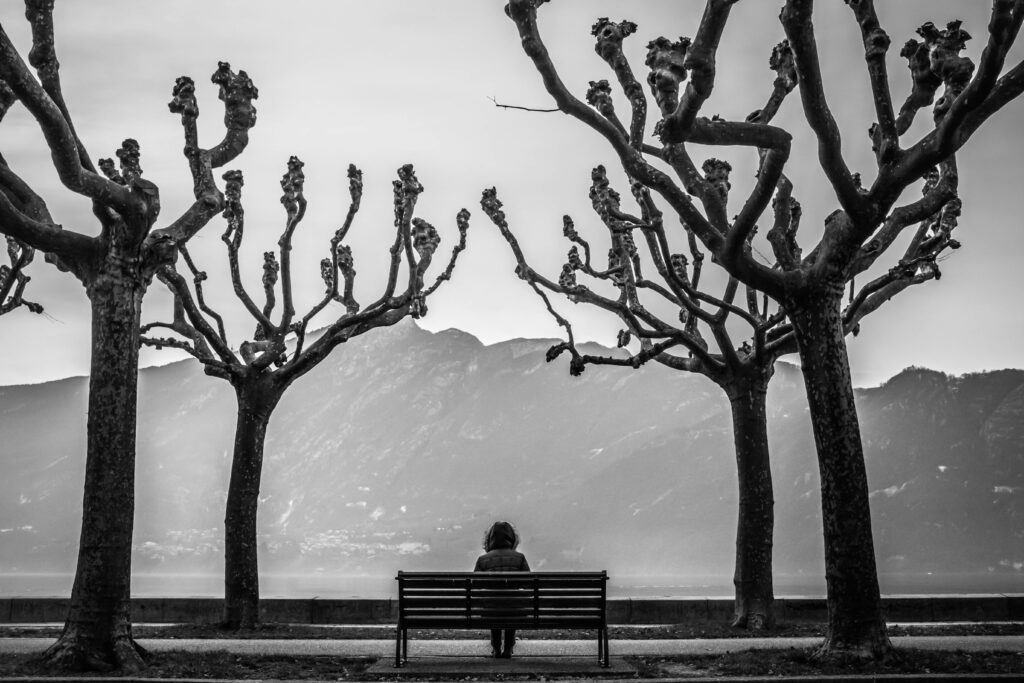
(Image courtesy of Christophe Dutour via Unsplash)
My first experience with war — yes, the first one — was when I was five years old. I remember it clearly.
I was born in the winter of 1982, about a year and a half after the Iran–Iraq War began. Until I turned five, my city, Tabriz, famous for its handmade carpets and the largest covered bazaar in the world, had remained relatively safe. Some infrastructure outside the city had been attacked, but I was too young to remember.
Then, in the winter of 1987, the city was bombed, and we were forced to leave.
My grandfather had a white Peykan, the iconic first Iranian-made car that evokes national nostalgia. He drove my grandmother, my mother, my two-year-old brother, my aunt — who was in the last month of pregnancy — and me, out of the city. My father and my aunt’s husband stayed behind to protect the house and our belongings. Looking back, it seems both frightening and absurd: how could two men protect a home from missiles with their bare hands?
I remember the cold winter day we left Tabriz for Miyaneh, a small city about two hours away, where relatives lived.
Maybe it was the wrong decision.
The day we arrived, Iraqi bombers attacked Miyaneh. A girls’ high school — Zeinabieh High School — was hit. Even today, nearly four decades later, a sign at the entrance to the city reads: “Welcome to the city of the martyrs of Zeinabieh High School.” It remains the most tragic event in the city’s history.
But the memory that stayed carved in my mind happened just before that. As we entered the city, my grandfather stopped at the bazaar to buy some nuts for the relatives we were about to stay with — we had left Tabriz so suddenly that we had brought nothing. At that moment, a jet fighter broke the sound barrier overhead. The explosion of sound shattered the windows of every shop around us.
Subscribe to The Superhero Brief!
Free access to the CEO's newsletter.
The views expressed in this newsletter are those of the CEO and do not necessarily reflect the views of the organization.
The plane flew so low that, in my childish imagination, I thought I could reach up and catch it.
Years later, when I learned in physics class about supersonic speed and the breaking of the sound barrier, I already knew exactly what it meant. I had experienced it in the most real laboratory imaginable.
No child should ever have to learn physics through war.
A few days later, my cousin was born.
Her birth filled the house with joy. As a child, it helped me forget the fear of that attack. We soon returned to Tabriz with the newborn baby, and only years later, did those memories come back to me.
* * *
Years later, while studying in Italy, I once heard fighter jets flying over the city for a national day celebration. The sound instantly brought back that childhood fear. I could not continue studying.
For many years afterward, life in Iran felt like a different kind of battle. Especially as a girl, I was in a constant, invisible fight with the regime’s inhumane rules — a compulsory hijab among them. But despite repression, there was no real war again until the summer of 2025.
By then, I was already living in exile.
We knew this was the regime’s war, not the people’s. Unlike the war with Iraq, this conflict was not even with a neighboring country; it was with a state the Iranian regime refuses to recognize. The war lasted only twelve days, nothing compared with the eight-year war of my childhood.
This time, many regime officials were assassinated, and nuclear facilities were attacked. Civilians were also killed, and residential buildings were destroyed — tragically, as in every war. Yet many Iranians felt relief that those responsible for decades of repression were gone.
But the most terrifying experience — even for those of us in the diaspora — was the complete communications blackout. The internet, phone lines — everything cut.
We could not hear the voices of our loved ones to know if they were alive.
The internal enemy that has held Iranians hostage for forty-seven years feels more dangerous than missiles.
* * *
And now I find myself living through the third war of my lifetime.
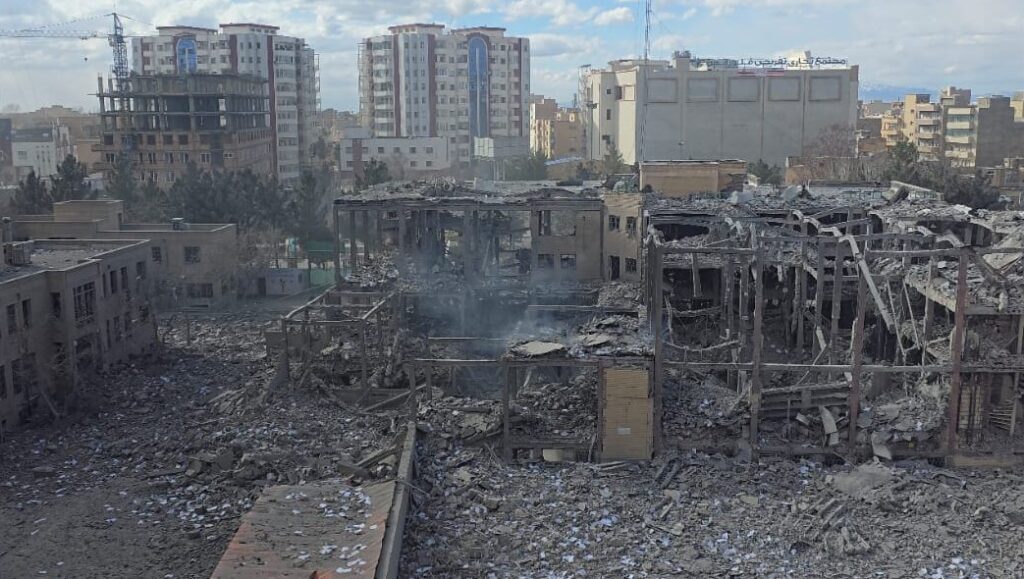
On the eleventh day of this war, a police building next to my family’s home was struck by a missile.
That day was the hardest day of my life in exile.
Destroyed police station in Tabriz, Iran. | (Photo by Anonymous)
Since the beginning of the war, I had spoken with my mother only once, for less than a minute. The communications channels were blocked again. That morning, I woke at 4:30 a.m. with a terrible headache. I took a painkiller and tried to go back to sleep, but could not.
I started the day as usual, pretending to live a normal life in exile while my country was at war.
Around noon, in the middle of an online meeting, my brother suddenly called.
“We are safe,” he said quickly. “Don’t worry. But the police station next to the house was hit hours ago.”
When he told me the exact time, I realized it had happened at 4:30 a.m.— the moment I woke up.
Thousands of kilometers away, yet somehow my mind was still there.
As a physicist, I should not believe in telepathic connections. But not everything in life can be explained by science.
When I finally heard my mother’s voice, it was a huge relief. She tried to reassure me.
“I had just cleaned the windows for the New Year,” she said lightly. “Now they’re all broken.”
I knew she was downplaying it to protect me. But when she ended the call with “I love you so much,” I heard the fear she did not say out loud.
For the past three days, we have had no connection again.
No internet. No phone.
Who could imagine that during war — when communication is vital— a regime would deliberately cut people off from the world?
I even feared my family might be in danger because we had spoken critically of the regime during that call. In Iran, that can be more dangerous than missiles.
I cannot stop thinking: if that missile had deviated by only a few meters, what would have happened to my family? And how could I have continued living?
That day I took two more painkillers. Even three days later, the pain has not fully subsided.
After sunset, I walked for hours, crying. I wanted desperately to hug someone, but exile is a lonely place. Instead, I hugged the trees along the path.
I imagined their branches wrapping around me.
When you hug a tree, you notice something: its skin is rough, not soft like human skin. Perhaps that is because it has survived many harsh winters. The bark grows thick to endure them.
It reminded me that my own skin must also grow stronger.
Trees teach us something else: after every long winter, spring eventually arrives.
But there is one difference between trees and people like me. Trees are rooted. In the past four years of exile, moving across four countries, I have not been able to take root anywhere.
My roots remain in my beloved Iran.
And I carry a small seed of hope in my heart, waiting for the day I can plant it in a free Iran.
Ayaz E is a woman, a scientist, and a storyteller from Iran, living in exile yet rooted in curiosity. Her writing weaves together the wonder of science with the human struggle for freedom and resilience, and understanding across borders, highlighting the journeys of displacement and the human side of scientific discovery.
Thank you to Daphne Kasriel for her edits on the piece.



Comments
Be the first to share your thoughts!
We value diverse perspectives and respectful debate.