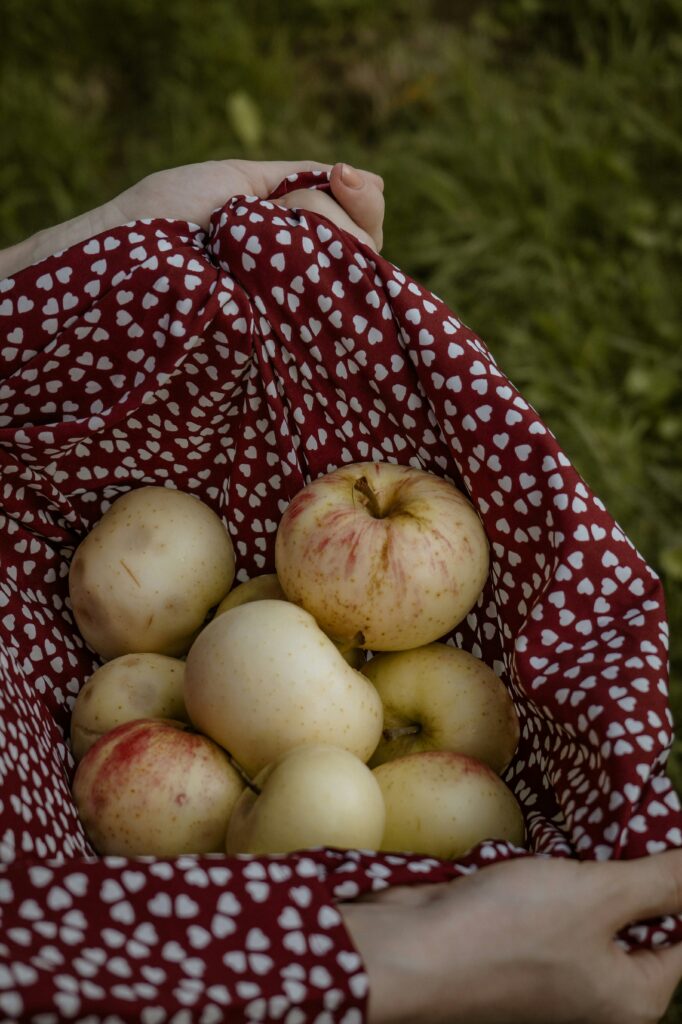
(Image courtesy of Valentina Ivanova via Unsplash)
“A Cabin, a Small Town, and Pixelated Turnips: Stardew Valley is for Transcendentalists”
By Henry David Thoreau
I could hardly believe the glowing device the time traveler had handed me. He claimed to be from Massachusetts – my Massachusetts – yet from a time far beyond my own. He casually spoke of an “Institute of Technology,” as if Concord’s humble schools had turned into towering structures while I was away. When the tablet lit up, its moving images startled me. It felt like I was holding a living dream, a lantern slide brought to life by some spirit unknown to Nature. The man explained that these images were made of “pixels,” tiny dots of light. I wondered if Seurat, the French master of pointillism, had secretly guided the creators of this incredible device.
The “video game,” as he called it, started with a scene as bleak as any I have encountered in literature. A dying old man, gentle and tired, comforts the main character in a memory so far away it could be a whispered prayer. His words resonated with the sad truth I once wrote: “The mass of men lead lives of quiet desperation.” But the old man on the screen did not offer despair; he offered a solution. “There will come a day,” he says, “when you feel crushed by the burden of modern life… and your bright spirit will dim before growing emptiness. When that happens, my dear, you will be ready for this gift.”
That gift was, astonishingly, the deed to the main character’s grandfather’s farm. Not wealth, not status, nor the empty comforts of society, but land. Soil. A place to escape the noise of the world and remember what it feels like to live.
Subscribe to The Superhero Brief!
Free access to the CEO's newsletter.
The views expressed in this newsletter are those of the CEO and do not necessarily reflect the views of the organization.
And so, with just a click of a button, I was taken from the dullness of the modern office to a forgotten farm in a place they call “Stardew Valley.” To my surprise, it was the closest thing to Walden Pond that this new century seems capable of imagining.
The game began in a workplace so stifling and saturnine that I almost thought it was a mockery made in my honor. A dull office, rows of gray cubicles, lives spent tied to screens akin to the one I now held firmly in my hands – if ever there was a reason to escape society’s machine, it is this. So when the main character inherited a farm from a grandfather who clearly understood freedom, the escape feels not just plausible, but necessary. Had I known I could get a cabin and several acres just by opening a letter, I might have avoided the trouble of sawing wood at Walden.
When I arrived, the farm was a small wilderness: overgrown, messy, scattered with rocks, logs, and thorny bushes. How familiar it feels. Nature offers no refined welcome; she provides work. I cleared my own 2.5-acre bean field at Walden with sheer determination and a hoe, and so too must the player reclaim the land here in the valley. Digital or otherwise, it teaches the same lesson: a person should not waste their time elsewhere when they can earn a living through hard work.
Indeed, although presented in glowing pixels, the land follows natural rhythms. Mornings and nights return with quiet grace, accompanied by the symphony of seasons; storms pass through the sky, and each epoch brings its own character. I found myself basking in the soft pink blossoms of spring, the golden stillness of fall, the stark calm of winter. Even here, in an imagined countryside, what I once wrote at Walden holds true:
“Live in each season as it passes; breathe the air, drink the drink, taste the fruit, and resign yourself to the influence of each.”
It is odd – and perhaps significant – that a digital valley can gently remind modern people of this truth more effectively than the world outside their windows.
You begin in this place with little: a fragile cabin, a patch of untilled soil, and a few seeds. Such simplicity is not deprivation. Rather, a single well-kempt room is worth more than a mansion filled with frivolous belongings. In Stardew Valley, you learn – perhaps for the first time – that having only what you need is a fortifying kind of wealth.
And even I, revering intentional bouts of solitude, do not aim to completely escape society. Pelican Town offers companionship in various forms: the anxious and pretentious shopkeep; the fisherman who enjoys silence; the young woman who sees beauty as purpose; the weary soul who drowns his sorrow at the saloon while pining for such purpose. Their problems are humble and real. Visiting them reminds players that community, in its raw humanity, shapes us just as much as our time alone.
What I admire most within Stardew Valley is its unwavering refusal to be rushed. The outside world is frantic, frenetic, demanding speed while offering distraction. Here, crops grow at their own pace. Animals require daily care. Friendships cannot be hurried – not even with the offering of fish and other boons. The game is not a race but blossoms as a garden would. It does not rush; it breathes.
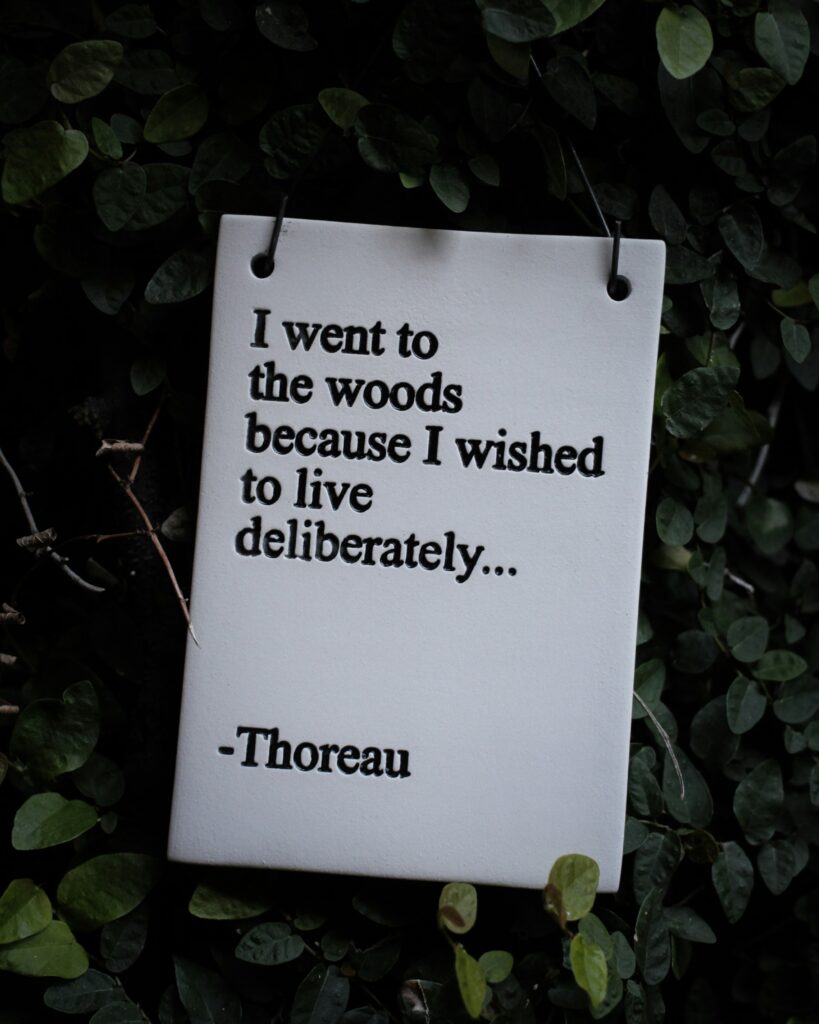
And, perhaps, that is its quiet wonder: this small, insignificant diversion asks the very questions I once pondered while Nature kept me company. What is truly essential? What is a deliberate life that aligns with the fundamentals of reality, where my soul should find harmony with Her?
If you seek to focus only on the essential facts of life, Stardew Valley is a worthwhile experiment. Go, I say, to plant your turnips. Let the seasons change you just as they transform the verdure in cyclical art, year to year, without fail. Let the temporal world fade away until only what matters remains.
You may find, as I once did, that simplicity – even that which is built from pixels, little lights – is a profound form of freedom.
Danial is a literature graduate seeking to write more. He is from a small Southeast Asian country called Brunei. He graduated in Australia and was a teacher in Japan for six years



Comments
Be the first to share your thoughts!
We value diverse perspectives and respectful debate.